Showing posts with label majjhimedesa. Show all posts

Sunday, May 19, 2024

Ancient Greeks converted to Buddhism


The Ancient Greeks who converted to Buddhism
(ReligionForBreakfast) Greece is far from the heartland of early Buddhism, which is in parts of modern Afghanistan and Pakistan [ancient Gandhara] and India [Magadha and Bihar].

The historical Buddha
But thanks to the Macedonian Alexander the Great, Hellenistic and Buddhist cultures came into contact in the 4th century BCE, creating a cultural synthesis known as Greco-Buddhism.
  • 00:00 A Greco-Bactrian Buddhist inscription
  • 1:41 The Hellenistic "Far East"
  • 4:10 Pyrrho: a Buddhist for Greece?
  • 7:42 Emperor Ashoka and his Dharma conquest
  • 10:23 King Menander (Milinda): the most famous Greek Buddhist
  • 13:26 Greco-Buddhist art of Gandhara
  • 15:23 Syncretism?
  • 16:44 Nebula! Indie creators being awesome
Select imagery/video supplied by Getty Images and Reuters. Get Nebula using link for 40% off an annual subscription: go.nebula.tv/religionforbreakfast... Watch Archaeology Quest: nebula.tv/videos/realscience...

Join Patreon community: religionforbreakfast One-time donations: paypal.me/religionforbreakfast... Sign-up for mailing list to be notified of online classes: classes.religionforbreakfast....

Sunday, November 12, 2023

Ancient pyramid found in Buddhist Central Asia

Aristos Georgios, Newsweek; Dhr. Seven, Amber Larson (eds.), Wisdom Quarterly Wiki
Buddhist pyramid built recently at the Fo Guang Shan headquarters in Taiwan (pinterest.es)
This pyramid would be older than the historical Buddha, but Buddhism is older due to the 27 previous buddhas the Buddha talked about in this fortunate kalpa, and would have been from Central Asia (Majjhimedesa) like the cultural features (stupas, kurgans, tumuli) the Buddha was drawing on as a cultural legacy of previous buddhas.
Yantra: a mandala disc with sacred geometrical patterns depicting world as a mind map
Borobudur, Java: When fully fleshed out, this is a Buddhist pyramid capped by a stupa
.
Archaeologists discover pyramid built more than 3,000 years ago
Archeologists have discovered a pyramid structure in the steppes of Central Asia that is thought to be more than 3,000 years old.

The monument, known as the Pyramid of Karazhartas, was uncovered during excavations conducted along the Taldy River in the Karaganda region of Central Kazakhstan.

The pyramid was constructed by the Begazy-Dandibai culture, which emerged in Central Kazakhstan during the Late Bronze Age.

This is the largest excavated Buddhist temple in the world, second to Mes Aynak, Afghanistan
Inside the sarcophagus, researchers found a skull belonging to a local ruler who was buried there. This is an aerial view of the step pyramid found on the steppes of Central Asia (© Aibar Kassenali).
Borobudur pyramid temple is aligned with Pawon and Mendut Monastery, Central Java
Stupa or kurgan of the Sakas (Trizna 1899)
This culture consisted of semi-sedentary communities primarily based on metallurgy [Scythians/Shakyians created Mes Aynak by the mines and were goldsmiths] and animal husbandry.

These communities achieved a relatively high level of economic prosperity thanks to the metal trade that extended to various parts of Eurasia.


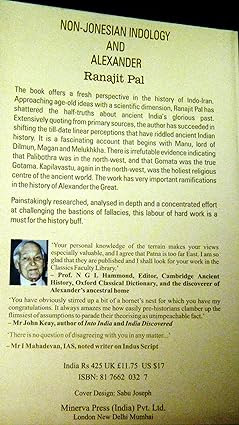
Dr. Pal linked the Buddha
The high profits from metal exports created a new aristocratic class among the Begazy-Dandibay communities.

The Pyramid of Karazhartas was constructed as a mausoleum for a representative of this aristocratic class, historian Serhan Cinar and archeologist Aybar Kasenali — one of the coordinators of the excavations with the Kazakh National Museum — told Newsweek.

Unexcavated Mes Aynak ("Copper Hill" Mine) overview East hill, Afghanistan

This is a massive and incredible stupa hewn directly into the rock, Mes Aynak
.
Buddhist gold coin from Tillya Tepe site
The pyramidal tomb is one of the most "striking monuments" of the Begazy-Dandibai culture, the researchers said.

During the excavations, which were conducted by the Sary Arka Archaeological Expedition of Karaganda University, researchers found that the structure was a square pyramidal mausoleum consisting of step-like layers.
The Sakas/Scythians were semi-settled nomadic warriors on horseback, experts goldsmiths.
Scythian is broad term, East=Sakas
The mausoleum, which contains a burial chamber, measures around 65 feet by 98 feet across and stands about 5 feet high at its peak. The excavation of monumental stone mausoleums from the Begazy-Dandibai culture began in 1933.

Researchers have since discovered several pyramidal step tombs in the region of the Taldy River valley, in which great leaders were buried.

"The newly discovered Karazhartas stepped pyramidal mausoleum is the largest burial structure of the Begazy-Dandibay elite," Cinar said.

Pyramid base for stupa, Taiwan
"Considering the cut stones found in the Karazhartas pyramid and the monumental size of the mausoleum, the construction of such a gigantic structure in the Bronze Age — in a very arid region such as the steppe — is indicative of the high artistic understanding and rich spiritual beliefs reached by the Begazy-Dandibay communities."

Investigations at the Karazhartas Pyramid have identified a sarcophagus structure surrounded by granite stones, which was found in the burial chamber.

Sojiwan Buddhist Temple, SW of Prambanan Hindu Temple, near Borobudur, Indonesia (wiki)

Inside, researchers found a sarcophagus structure surrounded containing a skull.

In one area in the upper part of the burial chamber, archeologists uncovered a bronze arrowhead and a mysterious pottery fragment. Finally, animal bones, which were frequently used in the traditional ceremonies of steppe tribes, were found in various parts of the burial chamber and the step sections of the pyramid.

The features of the tomb, as well as the accompanying items, highlight the high status of the buried individual, according to Kasenali.

Analysis of organic materials found at the pyramid, carried out by Queen's University in the United Kingdom, has enabled researchers to date the pyramid structure to the 15th-14th centuries B.C.

Archeologists also uncovered evidence of a proto-city settlement named Kent in the same region as the mausoleum, which they attributed to the Begazy-Dandibai culture.

Spread over an area of 15 hectares, Kent was characterized by labyrinthine gates, ditches, and walls, according to the researchers.

Greek culture in Bactria
The settlement featured a regular, planned street network and water collection systems. And next to the settlement, archeologists found special sacrificial altars where ceremonial offerings to the gods were made.

"In the rituals of the Bronze Age inhabitants of Kazakhstan, offerings were made to the sun, fire, moon, and protective 'ongun' spirits," Cinar said.

The findings at Karazhartas provide detailed information about the historical identity, cultural connections and socioeconomic structure of the Begazy-Dandibay culture, according to Kasenali. More
The word kurgan [Buddhist stupa] is of Turkic origin and derives from Proto-Turkic kur- ["to erect (a building), to establish"]. In Ukraine and Russia, there are royal kurgans of Varangian chieftains [the Buddha being raised to be a Shakyian chieftain], such as the Black Grave in Ukrainian Chernihiv (excavated in the 19th century), Oleg's Grave in Russian Staraya Ladoga, and vast, intricate Rurik's Hill near Russian Novgorod. Other important kurgans are found in Ukraine and South Russia and are associated with much more ancient steppe peoples, notably the Scythians (e.g., Chortomlyk, Pazyryk) and early Indo-Europeans (e.g., Ipatovo kurgan) The steppe cultures found in Ukraine and South Russia naturally continue into Central Asia, in particular Kazakhstan. More

Newest Buddhist pyramid, Fo Guang Shan
Pyramid under Buddha: Fo Guang Shan Buddha Museum 佛光山佛陀紀念館, Taiwan
.
What does it have to do with the Buddha Shakyamuni (Saka-Muni)?
The Buddha was a royal Saka
The Sakas [Buddhist Shakas or Shakyas] were closely related to the Scythians, and both groups formed part of the wider Scythian cultures [9], through which they ultimately derived from the earlier Andronovo culture, BMAC, while also carrying East Asian genetic ancestry [10], with the Saka language forming part of the Scythian languages.

However, the Sakas of the Asian steppes are to be distinguished from the Scythians of the Pontic Steppe [8, 11]; and although the ancient Persians, ancient Greeks, and ancient Babylonians respectively used the names "Saka," "Scythian," and "Cimmerian" for all the steppe nomads, the name "Saka" is used specifically for the ancient nomads of the eastern steppe, while "Scythian" is used for the related group of nomads living in the western steppe [8, 12, 13].


While the Cimmerians were often described by contemporaries as culturally Scythian, they may have differed ethnically from the Scythians proper, to whom the Cimmerians were related, and who also displaced and replaced the Cimmerians [14].

Gandhara Greco-Buddhist art
Prominent archeological remains of the Sakas include Arzhan [15], Tunnug [16], the Pazyryk burials [17], the Issyk kurgan, Saka Kurgan tombs [18], the Barrows of Tasmola [19], and possibly Tillya Tepe.

In the 2nd century BC, many Sakas were driven by the Yuezhi from the steppe into Sogdia and Bactria and then to the northwest of the Indian subcontinent, where they were known as the Indo-Scythians [20, 21, 22].

Other Sakas invaded the Parthian Empire, eventually settling in Sistan, while others may have migrated to the Dian Kingdom in Yunnan, China.

In the Tarim Basin and Taklamakan Desert of today's Xinjiang Uyghur Autonomous Region, they settled in Khotan, Yarkand, Kashgar, and other places [23]. More

PHOTOS: Buddhist pyramids are ancient feature and modern feature of temples
Four surrounding towers, like minurets, seem to replicate famous Bodhgaya Temple, India

Thursday, August 3, 2023

Buddhist lore: Hollow Earth world of Agartha

Finding Agartha: The Search for the Hidden World
 in the Center of the Earth
(The Why Files) Premiered Aug. 3, 2023. The Why Files: Operation Podcast Cultures around the world have myths that speak of a mysterious underground kingdom that exists deep within the earth, hidden away from the primitive and violent surface-dwellers: us.

Picture a society untouched by time, unscathed by war, and unaffected by natural disasters. A culture thrives in the vast open spaces inside our Hollow Earth. Throughout history, many have looked for physical evidence of its existence, tempted by stories of a peaceful but powerful subterranean civilization with advanced technology and ancient knowledge long forgotten by modern humans.

This is the story of the underground Kingdom of Agartha and the explorers who’ve said that not only is it a real place, but they know where it is.
  • [Look under the Potala Palace, in Lhasa, Tibet, the seat of Tibetan Vajrayana Buddhism on the Tibetan Plateau in the Himalayas, a kind of Vatican for the previous dalai lamas, excluding the 14th Dalai Lama.]
  • Hollow Earth: The Long and Curious History of Imagining Strange Lands, Fantastical Creatures, Advanced Civilizations, and Marvelous Machines Below the Earth's Surface (paperback) by David Standish https://amzn.to/458BvWa
  • The Kingdom of Agarttha: A Journey into the Hollow Earth by Marquis Alexandre Saint-Yves d'Alveydre https://amzn.to/3YbKXGj
  • The Missing Diary of Admiral Richard E. Byrd (paperback) by Adm Richard E. Byrd https://amzn.to/3YlNygP
  • The Hollow Earth: The Greatest Geographical Discovery in History by Raymond Bernard, Ph.D. https://amzn.to/44NTSjt
  • The Smoky God: A Voyage to the Inner World by Willis George Emerson https://amzn.to/3Oedqqg 

EXECUTIVE PRODUCERS: Gino Gentile Jennifer Gentile AJ Gentile Patreon Members. THANKS TO MODS: jengen13 (Mrs. Why Files) Victoria Young Loolykins JohnnyBGood Cricket Hybrid Paul Rohrbaugh Mischief Guilty Kiam Timothy Weal Messor Synful Original Jim - Reddit. THANKS TO PATREON MEMBERS.

VICE interview with Dianne Robbins: vice.com/en/article/9bne3... Robbins’s website: diannerobbins.com
🙏 SUPPORT THE WHY FILES 🙏 https://www.patreon.com/thewhyfiles (fun, free perks) 👽 BUY WHY FILES MERCH 👽 https://shop.thewhyfiles.com (Code: LIZZIDPEEPLE for 10% off first order) 👽 💬 CHAT ON DISCORD  💬 https://thewhyfiles.com/discord 💬 

🌐 OFFICIAL WEBSITE: https://thewhyfiles.com 🕵️ Submit a topic, suggestion, or just say hi: 🕵️ https://thewhyfiles.com/tips 🎨 Have a product suggestion or want to design artwork for TWF? 🎨 https://thewhyfiles.com/merch 📸 BE A WHY FILES MODEL (and get free stuff!) 📸 Send a photo of you/family/friends watching TWF, 📸 wearing TWF gear, using TWF merchandise: 📸 https://thewhyfiles.com/wild

🎧 THE PODCAST VERSION 🎧 https://thewhyfiles.com/podcast 🎧 
▪TWF ON THE WEBS ▪https://www.reddit.com/r/TheWhyFiles/ ▪https://twitter.com/OMGTheWhyFiles ▪https://www.instagram.com/OMGTheWhyFiles ▪https://www.rumble.com/thewhyfiles ▪https://thewhyfiles.locals.com ▪ https://www.tiktok.com/@thewhyfiles ▪https://www.facebook.com/OMGTheWhyFiles

🐠 BETTER CHANNELS TO WATCH: 🐠 / hecklefishmoriarty 🤓 / thewhyfilesbackstage

Thursday, September 10, 2020

"Meetings with Remarkable Men" (film)

G. I. Gurdjieff; Peter Brook via Mindwalk; Ashley Wells, Dhr. Seven (eds.), Wisdom Quarterly


Prince Siddhartha Gautama, who became the Buddha at age 35, was from Afghanistan (not Nepal), as Dr. Ranajit Pal discovered. The Scythians/Shakyians, Asokhs, and other tribes from this vast wilderness wasteland of indefensible territory (maha-janapada) is the "graveyard of empires" and the dividing line between East and West, known as Central Asia or the "Middle Country" (majjhimadesa) of ancient proto-India (Maha Bharat) around such Vedic sites as Harappa and Mohenjo-daro. It is near the Caucasus Mountains blending European and Asian features with the "Aryans" of Iran and the Middle and Near East.

Filmed in Afghanistan, Meetings with Remarkable Men is a 1979 British film directed by Peter Brook based on the book of the same name by Greek-Armenian mystic G. I. Gurdjieff, first published in English in 1963.

Shot on location in Afghanistan (except for dance sequences, which were filmed in England), it stars Terence Stamp with Dragan Maksimović as the adult Gurdjieff. The film was entered into the 29th Berlin International Film Festival, in competition for the Golden Bear award.

The plot involves Gurdjieff and his companions' search for truth in a series of dialogues and vignettes, much as in the book.

Unlike the book, these result in a definite climax — Gurdjieff's initiation into the mysterious Sarmoung Brotherhood. The film is noteworthy for making public some glimpses of the Gurdjieff movements. More

What's it about?
The autobiography Meetings with Remarkable Men is the second volume of the All and Everything trilogy written by the Greek-Armenian mystic G. I. Gurdjieff. It was originally published in 1963 and tells the tale of the young Gurdjieff growing up in a world torn between his unexplainable experiences and the developing modern sciences.

The book takes the form of Gurdjieff's reminiscences about various "remarkable men" he has met, beginning with his father. They include the Armenian priest Pogossian, his friend Soloviev, Prince Lubovedsky, a Russian with metaphysical interests, and others.

In the course of describing these characters, Gurdjieff weaves their stories into the story of his own travels and into an overarching narrative that has them cooperate in locating spiritual texts and/or masters in various lands (mostly in Central Asia). Gurdjieff calls this group the "Seekers of Truth."

Most of them do in fact find "truth" in the form of some suitable spiritual destiny. The underlying philosophy, as articulated in an appendix, amounts to the assertion that people generally live their lives asleep, are unconscious of themselves, and accordingly behave like machines, subject to outside pressures and causes.

One of the chief assessments of the novel is that the people of past epochs lived in more suitable outer conditions and at higher inner levels of development than people today. Many additional hidden harmonies are noted or alluded to.

Thursday, May 10, 2018

Native American "Hollow Earth" (video)

NightTerrors; Xochitl, Dhr. Seven, Pat Macpherson, Crystal Quintero (eds.), Wisdom Quarterly(Divine Truth) David Wilcock, Corey Goode, Conscious Life Expo, "Inner Earth Beings"

Creek Indian Entrance to Our Hollow Earth Proof, Map, Expedition, Theory
Numerous New World passages allow access to our hollow earth. Although Hopi Indians are forbidden to reveal the Grand Canyon entrance leading to the "inside world," other tribes will freely share such information with a trusted ally.

A description was passed down from the first human civilization of Mesopotamia of the first mountain ever to receive a name, Mount Mashu. After traveling through the darkness of a tunnel through the mountain, one man found an entrance to a bountiful, green subterranean garden.

That was only the first clue that the planet Earth is either partially or entirely hollow. Numerous locations for entrances to the Hollow Earth have been documented:
  • Paris, France
  • Staffordshire, England
  • Montreal, Canada
  • Hangzhou, China
  • the Amazon Rainforest
  • [Under Potala Palace, Lhasa, Tibet].
We told you so. Most would not listen to us.
The Hopi Indian elders are forbidden to reveal the entrance hidden in the Grand Canyon, which leads to the "inside world." Of course, the most widely known openings are at the North Pole and South Pole.

It was the 8th Earl of Clancarty who first recognized that the only way all icebergs could be composed of frozen fresh water was if there were freshwater rivers flowing from the inside of the planet to the outside.

Edmond Halley, the English astronomer who computed the 76-year orbit of Halley's Comet, also figured the Earth is made up of a hollow shell 500 miles thick, with more concentric shells inside, separated by a luminous atmosphere.

Escaping gases cause the Aurora Borealis or "Northern Lights." The inventor of calculus, Leonhard Euler, an eminent mathematician, calculated against the idea of multiple shells in favor of a centrally located interior sun, providing light to advanced civilizations living on the inner surface of the Earth.

Advanced peoples built the pyramids.
In 1913 a full explanation of the formation of hollow planets was published by Marshall Gardner of Illinois. One year before the release of his treatise, he registered a United States patent on a working model of the Hollow Earth, complete with interior sun represented by a light bulb.

The pulp magazine Amazing Stories ran a series of factual articles between 1945 and 1949 in which it was disclosed that a superior, pre-historic race once lived under the crust of our planet, and their descendants live there still.

Thousands of readers posted letters to the editor affirming that they had indeed been able to hear voices from inside the Earth.

Jean Le Clerc Milfort fought in the American Revolution. He was caught in a duel at the court of King Louis the XVI in France and, having killed a servant in the king's household, was forced to emigrate to America.

On the side of the British he led a contingent of Creek Indians into battle. Near the end of the war when the Indians wished to return home, he further led them to present-day Louisiana, where the Creek Nation allowed him access to an enormous tribal domain underground, which he estimated could easily contain 20,000 families.


Potala Palace (Pueblo structure), Tibet
The Hindus of India believe in Patala ("Under the Feet"), a subterranean heaven.

[NOTE: The "Tibetan Buddhist Vatican" is called Potala Palace in the capital of Tibet, Lhasa, which shares a great deal of philosophy with Hinduism in what is called Vajrayana Buddhism.]

The Dalai Lama lived in Potala Palace
Patala is filled with splendid jewels and beautiful groves of trees. A sweet fragrance fills the air, and sweet music can be perceived at the threshold of hearing. There is no sunlight in the lower realm, but the darkness is dissipated by the shining of jewels.

Underground riches are also represented in the beliefs of Tibetan Buddhists. An endless cavern is filled with ancient machinery, the majority of which has not been used in thousands of years. The writer Lobsang Rampa describes the activation of one such machine beneath the Himalayan mountains, which illuminates the ghosts who walk among the living.

Their molecules, after departing this world, are so widely dispersed that a ghost can walk right through walls without contact with the atomic structure of the wall itself.

A monument stands in Hamilton, Ohio, to John Cleves Symmes, who proposed an expedition to the entrance passage at the North Pole.

US President John Quincy Adams offered the financial support of the government for this effort. But the next president, Andrew Jackson, cut funding for the expedition.

The renowned spiritualist Lady Paget predicted that the entrance to the underground kingdom will be found in this century, after the year 2017.

License links may all be found at creativecommons.org Thumbnail credit: "Fail: Indian girl.jpg" by BonjourMiaAyana, Attribution 3.0 Unported (CC BY 3.0), bonjourmiaayana.deviantart.com...

Monday, February 12, 2018

Hollow Earth is real: Shambhala (video)

Robert Sepehr (Atlantean Gardens); Dhr. Seven, Pat Macpherson (eds.), Wisdom Quarterly


Mysterious Buddhist Caves, Inner Earth, Atlantis
Originally streamed live on Oct. 16, 2016
Robert Sepehr has made presentations on ancient history, archeology, genetics, astrotheology, and mythology. A colonial British hunter was killing tigers for sport when he stumbled upon a cave entrance, a rock cut Buddhist temple (Ajanta Caves of India like the Ellora Caves) built right into the rock with unknown technology and uncanny precision aligning with the solstices. Let's enter Agartha, in Tibetan Shambhala, a cavernous Shangri-La with multiple entrances. A Thai Buddhist cave shrine...