Showing posts with label metropolitan museum of art. Show all posts

Tuesday, May 7, 2024

Met Gala Katy Perry: Let 'em drink milkshake

What Katy Perry has worn on her breasts (31 pictures) (acidcow.com)
Why would AI pick on poor Cat Purr? Surely, it has others to pick on like Sydney Sweeney's?

I can shake things up, G. Joe, if you want.
Long ago, when France was starving, someone supposedly asked a great princess what her starving subjects could do. She answered in the annoyed voice of an uber-privileged royal: "Let them eat cake." Now, as The Revolution approaches and the U.S. is starving for truth, what are citizens to do, King Biden? We can stare at beautiful Lana Del Rey in the meantime, except that she's glomming on to reviled Kim Kar Dash, who got booed mercilessly (but that was edited out). Just ask Kevin Hart.

The absolute worst dressed stars at the 2024 Met Gala
(The List) May 6, 2024: There are three rules for the Met Gala – honor the theme, don't be safe, and don't trip on the stairs. While no one literally took a tumble, plenty of stars' looks fell flat at the 2024 gala. #MetGala #ChrisHemsworth #KimKardashian
  • Zoë Saldana 0:00
  • Alexandra Kopelman 0:37
  • Alexandra Daddario 1:07
  • Cole Escola 1:30
  • Gustav Magnar Witzøe 1:58
  • Jordan Roth 2:23
  • Josh O'Connor 2:49
  • Chris Hemsworth 3:10
  • Cynthia Erivo 3:40
  • Kylie Minogue 4:07
  • Alton Mason 4:33
  • Charlotte Tilbury 4:58
  • Kim Kardashian 5:21
Katy Perry had the most viral Met Gala look of the night and she wasn't even there
Katy Perry does it every year at the Met Gala.
Oohs and aahs could be heard far and wide as Katy Perry's ethereal forest fairy look spread across the vast internet last night during the 2024 Met Gala red carpet.
AI outdid me for 2024!!!
Chronically online onlookers were about to bestow the title of "Best Dressed" upon the singer until they realized one thing: It wasn't real.

The "I Kissed a Girl" hitmaker's dress was the product of artificial intelligence (AI), and Katy Perry, did not, in fact, grace the museum's iconic steps on fashion's biggest night.

But if you were one of the victims who was bamboozled by the computer-generated image, don't feel too bad because Perry's own mom got got, too.


She's wearing a garden in time, get it? (AI)
The deepfake of Perry started to circulate as celebrities made their arrivals to the gala and instantly went viral, in large part because fake-Perry in her fake-dress absolutely nailed the evening's dress code, "Garden of Time."

The beautiful AI ballgown looked straight out of a fairytale; it featured a plunging V-neckline, corset bodice, voluminous skirt with a massive circular train, and a wide lush green hem that looked like grass.

But I'm a good Christian preacher's daughter
Flowers in every pastel shade, lively green vines, and fluttery butterflies climbed all the way up the frock, creating the appearance of majestic woods coming to life.

Another slide showed her in a second fake look. This one was a minidress with a bronze armor-like bodice and green skirt made out of vines, leaves, and flowers, complete with a wet hairdo. More: 

Tuesday, June 13, 2023

Tree & Serpent: Early Buddhist Art (The Met)

The Metropolitan Museum of Art (metmuseum.org); Andrea K. Scott (newyorker.com, May 22, 2023); CC Liu, Ashley Wells, Dhr. Seven (eds.), Wisdom Quarterly, Wiki edit
Where did ancient Sumer (Sumeria) and the Middle East get ideas of a talking serpent?

Having left the bodhi tree, why was the Buddha covered by this shapeshifting royal serpent?


Tree & Serpent: Early Buddhist Art in India at The Met
Ancient Sumerian story
Overview: This is the story of the origins of Buddhist art. The religious landscape of ancient [proto-] India was transformed by the teachings of the Buddha, which in turn inspired art devoted to expressing his message [the Dharma of Awakening].
  • Fifth Avenue, Gallery 999
  • Upcoming: July 21-Nov. 13, 2023
  • The Met (free with museum admission)
Sublime imagery adorned the most ancient monumental religious structures in ancient India, known as stupas [Central and North Asian burial mounds].

The stupa housed the relics [sariras, unique crystallizations left in the cremation ashes of fully enlightened beings] of the Buddha and also honored him through symbolic representations and visual storytelling.

Original relics and reliquaries are at the heart of this exhibition, which culminates with the Buddha image itself.

"Dragons" are a worldwide phenomenon
Featuring more than 140 objects dating from 200 BCE to 400 CE, the exhibition presents a series of evocative and interlocking themes to reveal both the pre-Buddhist origins of figurative sculpture in [pre-] India and the early narrative traditions that were central to this formative moment in early Indian art.
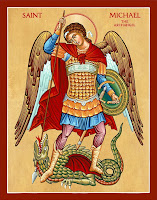
Celestial avians vs terrestrial reptilians 
With major loans from a dozen lenders across [modern] India, as well as from the United Kingdom, Europe, and the United States, it transports visitors into the world of early Buddhist imagery that gave expression to this new religion as it grew from a core set of ethical teachings into one of the world’s great religions.

Objects associated with Indo-Roman exchange reveal India’s place in early global trade.

The exhibition showcases objects in various media, including limestone sculptures, gold, silver, bronze, rock crystal, and ivory.

Highlights include spectacular sculptures from southern India — newly discovered and never before publicly exhibited masterpieces — that add to the world canon of early Buddhist art.

The exhibition is made possible by Reliance Industries Limited, The Robert H. N. Ho Family Foundation Global, and the Fred Eychaner Fund.

These are sariras or funerary "relics."
Major support
is provided by the Estate of Brooke Astor, the Florence and Herbert Irving Fund for Asian Art Exhibitions, and the E. Rhodes and Leona B. Carpenter Foundation.

The symposium is made possible by the Fred Eychaner Fund.

The catalogue is made possible by the Florence and Herbert Irving Fund for Asian Art Publications.

Additional support is provided by Albion Art Co., Ltd. More
Trees & Serpents at The Met
Andrea K. Scott, The New Yorker (newyorker.com)
First The New Yorker starts talking seriously about UFOs, and now it's reptilians.
.
Just as flowers take root in graveyards...Ages before the invention of mindfulness apps, Buddhism was born at the base of a tree, in northern [Bihar, in future] India, where a [former] prince sat down to meditate and — [one time by a pond during a rainstorm while meditating came] under the protection of a seven-headed snake [a shapeshifting royal naga named Mucalinda*] — [after he had already] reached enlightenment [previously under a Ficus religiosa tree at another location].

“Tree and Serpent: Early Buddhist Art in India, 200 BCE–400 CE,” at The Met, revisits the first 600 years of artistic response to the tradition, through more than 125 objects, including recent finds from ancient Buddhist monastic sites. (Opens July 21.) ♦
  • Although WQ commonly translates naga as "reptilian humanoids, snake, serpent, or dragon," the term is much broader and refers to any mighty creature (like nature spirits known as yakkhas, like the Iranian/Persian genies or djinn) or a magnificent tusker elephant.
Dhr. Seven, Pat Macpherson (eds.), Wisdom Quarterly Wiki edits

Among the notable nagas of Buddhist tradition is *King Mucalinda naga-raja ("royal-reptilian") a protector of the Buddha. In the Vinaya Sutra (I, 3), shortly after his enlightenment, the Buddha is meditating in a forest when a great storm arises.

Graciously, King Mucalinda gives shelter to the Buddha from the storm by covering the Buddha's head with [by shapeshifting into a massive cobra with] seven heads [20]. The king then takes the form of a young Brahmin and pays homage to the Buddha [20].

Why did Europeans worship dragons/nagas?
In the Tibetan/Himalayan Vajrayāna and Mahāsiddha traditions [21] nagas in their half-human form are depicted holding a nagas-jewel, kumbhas of amrita ("jugs of ambrosia"), or a terma that had been elementally encoded by adepts.

In Tibetan Buddhism, nagas are known as klu or klu-mo [sea serpents]. They are associated with water and cleanliness, as they live in oceans, rivers, lakes, and springs, and do not want their environments to be disturbed or polluted [22].

The two chief male disciples [corresponding to his two chief female monastic disciples Ven. Khema and Uppalavana] of the Buddha, Ven. Sariputta and Ven. Moggallāna are both referred to as mahā-nāga or "great nāga" [23].

Some of the most important figures in Buddhist history symbolize nagas in their names such as Dignāga, Nāgāsēna and, although other etymons are assigned to his name, Nāgārjuna. More

Thursday, March 12, 2015

Restoring Los Angeles' RIVER system (video)

(AS) Arroyo River Parks presents an exciting approach to stream restoration and watershed management in L.A. County's Arroyo Seco. Parks and open spaces along the river can be restored to make a living river. (Featuring Tim Martinez and Tim Brick, produced by Derrick DeBlasis for the Arroyo Seco Foundation).

LA's raging watershed, Devil's Gate
With regard to backward-thinking pro-capitalist nature of daylight savings, Native American wisdom teaches: "Only a fool can cut a foot off of the top of a blanket, sew it onto the bottom, and think that [one] now has a longer blanket" (BB). The same is true of our native Los Angeles river system, ruined to make concrete flood control channels only to realize Nature had done a far better and more sustainable job in the first place. Now the Army Corps of Engineers wants to restore the river to its natural state.
 
Restoring a Living River
LA River's mountain tributaries (sgranf/wiki)
HAHAMONGNA, Los Angeles - This year (2015) we have a historic opportunity to restore and even enhance the Arroyo Seco River, one of the main tributaries to the famous waterway that made possible the world's largest metropolitan area.

Arroyo River Parks map
The U.S. Army Corps of Engineers has adopted an ambitious $1-billion proposal to restore 11 miles of the mostly concrete Los Angeles River, and attention is turning to the Arroyo Seco (Spanish "dry creek bed" or intermittently dry wash, stream) and its future.
 
The Arroyo Seco confluence (merging area) with the Los Angeles River is included in the Army Corps' L.A. River Study, but the Corps has also been conducting a similar plan for the Arroyo Seco extending up to the San Gabriel Mountains, the range of foothills and peaks at the northern border of the massive County of Los Angeles.

Hiking to the top of the San Gabriel Mountain watershed above the city (Wisdom Quarterly)
Los Angeles native trout upstream in the L.A. foothills. Contact Tim Brick.
 
The Army Corps' concrete river (LA Times)
The Corps' "Arroyo Seco Watershed Ecosystem Restoration Feasibility Study" provides an enormous opportunity for river restoration throughout the urban portion of the Arroyo watershed (the area where most of the water exits the mountains onto the desert plains of Los Angeles and pours, or used to pour, into the nearby Pacific Ocean).

In response to the Corps' desire for community involvement, the Arroyo Seco Foundation has developed a guiding vision for this restoration -- the Arroyo River Parks Program.

River Parks Vision
Himalayas to the sea: Zanskar river, Ladakh
The goal of the Arroyo River Parks Program is to link existing parks and open spaces to each other and to the city's once vibrant river. Rather than focusing on a few key sites along the 11-mile urbanized water course, Arroyo River Parks is an approach that will integrate the more than 30 parks and open space linkages.

These linkages line the concrete-lined seasonal stream, and the goal is to make them part of a cohesive network supporting hydrological, ecological, and social connections -- to emphasize respect for place. Rather than just being parks that overlook a river, these parks and open spaces will be reconfigured as part of the river system.
 
We look forward to your involvement and support as we pursue this exciting opportunity for the restoration of the Arroyo Seco watershed. More
  • The Arroyo Seco Foundation
  • Why I refuse to eat or use plastic
  • California plant natives: many sages
  • Attorneys Mitchell M. Tsai and Christina M. Caro filed the lawsuit against the LA County Flood Control District on Dec. 11, 2014. After that, the hard work began, painstakingly going through the extensive administrative record and monitoring the regulatory permitting issues and process. In Feb. 2014 a mandatory settlement conference was held to explore whether an agreement on the sediment removal program could be reached without going through a trial. No settlement was reached. More
World-famous Pasadena Rose Bowl just below Hahamongna dam, northeast LA (woo/wiki)
Suing L.A. to save pre-Los Angeles Native American land in Hahamongna (now upper Pasadena), standing on dam in front of JPL with San Gabriel foothills in the distance (AS).

Friday, July 26, 2013

Buddhist Gandhara (Ancient Northwest India)

Dhr. Seven, Ashley Wells, Amber Larson, Wisdom Quarterly; Heilbrunn, MetMuseum.org
The Buddha was first depicted in the Gandhara style (freebody.zhang/flickr)
PHOTOS: Metropolitan Museum of Art Gandharan slideshow
How old is "India" (Great Bharat)? It has its roots in the fantastical Indus Valley Civilization
 
Synthesis of foreign styles with Indian forms is typical of the multi-ethnic character of Gandharan taste.

Gandhāra Buddhist Texts (gardendigest.com)
Gandhara is the ancient name of a region in India [which in 1948 became Pakistan] bounded on the west by the Hindu Kush mountain range [part of Himalayan range] and to the north by the foothills of the Himalayas. 
 
In 330 B.C., Alexander the Great [whom Dr. Pal reexamines along with Ashoka the Great and Diodotus I] conquered this region and, together with the Indo-Greek kings that succeeded him, introduced classical traditions that became an important part of Gandhara's artistic taste over the next seven centuries.
 
This contact resulted in the establishment of overland trade routes through the Parthian empire and Indo-Greek cities like Ai-Khanoum in northern Afghanistan. Starting about 50 B.C., this trade dramatically increased with the introduction of ocean routes employing monsoon winds to cross the Arabian Sea.
 
The Buddha, Indo-Greecian, Central Asian "Gandhara" style (RelationalBuddhism.org)

 
These sea routes supplied an expanding overland trade network that passed through Gandhara and continued on to Central Asia and China. Gandharan control of the high mountain passes vital to this international commerce made the region wealthy; the resulting cosmopolitan elites became some of the most powerful Buddhist patrons in all of South Asia.
Ancient India (Bharat) extended far to the west. Buddhism and cultural interactions existed all over modern Afghanistan, Iran (Persia), ancient Greece (Bactria, etc.), and up Central Asia through the 'stans into Russia and Europe's Kalmykia (berzinarchives.com).
 
Second- to the first-century B.C. luxury goods found in ancient fortified cities constitute some of the earliest remains from Gandhara attesting to contact with the Mediterranean world. Typical of this production is a stone dish (1987.142.307), which likely had a domestic religious function.

Proto "India": Indus Valley Civilization
Carved into the face is a representation of Daphne turning to look back at the approaching figure of Apollo, a composition that reveals the artist's familiarity with Hellenistic motifs and narrative structure, and perhaps even the story itself. Related in format is a silver roundel depicting the goddess Hariti (1981.460.2), a protector of children, only in this instance the linear treatment of drapery is stylistically akin to imagery of the Parthian empire. 
 
As is typical of many Gandharan compositions, Hariti wears jewelry and sits on a throne that has clear South Asian origins; this synthesis of foreign styles with Indian forms is typical of the multi-ethnic character of Gandharan taste. More

Related: Timelines (7), Primary Thematic Essays (6), Other Thematic Essays (18), Maps (8), Index Terms (33)

Sunday, January 13, 2013

Buddhism on the Silk Road (The Met, NYC)

 
Along the Silk Road (Asterix611/flickr.com)
The fifth and fourth centuries B.C. were a time of worldwide intellectual ferment. It was an age of great thinkers, such as Socrates and Plato, Confucius and Laozi.
  
In India, it was the Age of the Buddha, after whose passing a religion developed that eventually spread far beyond its homeland.

The Gupta period, from the fourth to the sixth century A.D., in northern India, sometimes referred to as a golden age, witnessed the creation of an "ideal image" of the historical Buddha.
Along the Silk Road (Asterix611/flickr.com)
Siddhartha, the prince who was to become the Buddha, was born into the royal family of Kapilavastu, a small kingdom in the Himalayan foothills [likely in what is now Afghanistan, traditionally believed to be in modern Nepal]. 
 
His was a [beginning associated with a dream by his mother, Maya, and spoken of as a [divine conception and miraculous birth], at which sages predicted that he would become a universal monarch, either in the physical [or the spiritual realm].
  
It was the latter conquest that came to pass. Giving up the pleasures of the palace to seek the true purpose of life, Siddhartha first tried [meditation and samadhi under two yogis then] the path of severe asceticism, only to abandon [these efforts] after six years as a futile exercise [not getting him to enlightenment and the final end of all suffering].
  
Buddhism along the Silk Road at the Met, New York City, Jan. 9, 2013 (Asterix611/flickr)
  
He then sat down in yogic meditation beneath a banyan tree [pipal or "sacred fig," the Ficus religiosa, the forebear of world's oldest historically documented tree] until he achieved enlightenment. He was known henceforth as the Buddha, or the "Enlightened One."
  
He found the Middle Path, rejecting both hedonism and asceticism. Buddhism proposes a life of good thoughts, good intentions, and straight living, all with the ultimate aim of achieving nirvana, release from [all conditioned] existence. 
 
(Asterix611/flickr.com)
For most beings, nirvana lies in the distant future, because Buddhism, like other dharmas [doctrines] of India, believes in a cycle of rebirth.
 
Beings are reborn many times, each time with the opportunity to further perfect themselves or devolve. And it is their own karma -- the sum total of deeds, beneficial and harmful -- that determines the circumstances of future births. 
 
Aukana Buddha, Sri Lanka (visitserendib.com)
The Buddha spent the remaining 45 years of his life teaching a doctrine and discipline and making vast numbers of converts. When he entered final nirvana, released from all rebirth, his body was cremated as was customary in India.

The cremated relics of the Buddha were divided into several portions and placed in relic caskets that were interred in large hemispherical mounds known as stupas. Such monuments are centrally placed in Buddhist monastic complexes. They attract pilgrims from far and wide who come to experience the teaching, the monastic order, and even some small portion of the remains of the Buddha. 
 
Stupas are enclosed by a railing that provides a path for respectful circumambulation. The sacred area is entered through gateways at the four cardinal points. More
























