This world has lost Erich von Däniken, influential author of Chariots of the Gods?. Swiss author Erich Anton Paul von Däniken (April 14, 1935–January 10, 2026) was the author of several scientific (critics deem "pseudoscientific") books that claimed extraterrestrial (ET) influences on early human culture, including the bestselling Chariots of the Gods?, which was published in 1968. Däniken was one of the main figures responsible for popularizing the ancient astronauts or "paleo-contact" hypothesis. More
(Claire Villarreal) May 4, 2022: Buddhist Wisdom Modern Life. Happy May the 4th, fellow Star Wars nerds! 🤓
If, like me, you've ever wondered, "Is the Force real?" then this video is perfect for you!
Let's look at a few impressions and thoughts on ideas from Buddhism and Asian martial arts about the literal animating principle or "life force" energy (qi, ki, chi, prana, etc.) that circulates through the body and throughout the living world around us.
Lucas was naming real things.
Did you know that when the creator George Lucas came up with the Jedi, he was inspired in part by Zen Buddhism? Yoda looks like a Buddha statue and speaks in the bad syntax of the 14th Dalai Lama.
The coincidences are real because Asia seemed exotic but close enough to us in a shared reality. Yep.
So nerd out with me, and if you have other Star Wars/Buddhism questions, please drop them in the comments! "May all living beings be well and happy," as the Buddha used to say. 🙏
Explore the podcast
171 episodes
Buddhist Wisdom Modern Life
Claire Villarreal (YouTube); Who Said It: Yoda or The Buddha? (tricycle.org); Doug's Dharma (video Buddhist book review); enhanced and expanded by Seth Auberon, Dhr. Seven, Sheldon S., Pfc. Sandoval, CC Liu (eds.), Wisdom Quarterly, 2024
(Penguin Books UK, 2/7/22) Author James Nestor says we're all breathing wrong. Here he breaks down five ways to transform our breathing, from increasing our lung capacity for longevity to stopping breathing through our mouths.
There is nothing more essential to our health and wellbeing than breathing: Take air in, let it out, repeat 25,000 times a day. Yet, as a species, we humans have lost our ability to breathe correctly, with grave consequences.
In Breath, journalist James Nestor travels the world to discover the hidden science behind ancient breathing practices like yoga to figure out what went wrong and how to fix it.
Modern research is showing us that making even slight adjustments to the way we inhale and exhale can [as the Buddha recommended in the practice of mindfulness of in-and-out breathing called anapanasati:
jump-start athletic performance
rejuvenate internal organs
halt snoring, allergies, asthma, and autoimmune diseases
even straighten scoliotic spines
improve the beauty of the face.
None of this should be possible, and yet it is. Drawing on thousands of years of ancient wisdom and cutting-edge studies in pulmonology, psychology, biochemistry, and human physiology, Breath turns the conventional wisdom of what we thought we knew about our most basic biological function on its head.
We'll never breathe the same again.
(Nature/WUCF) What Plants Talk About (full science documentary)
When we think about plants, we don't often associate a term like "behavior" with them. But experimental plant ecologist JC Cahill wants to change that. The University of Alberta professor maintains that plants do behave and lead anything but solitary and sedentary lives. What Plants Talk About teaches us all that plants are smarter and much more interactive than we thought!
Now take a breath -- a long, deep breath
in. Hold it for a
count of five. Exhale fully. Repeat three times. Still here? Good!
Today and tomorrow, take some time for yourself. Stop. Practice deep
breathing. I know it may seem silly at first, but it is an extremely
healthy
practice. It really cleans out the mind and brings oxygen to the
cells. Practice it three or four times a day. Here's a link to my
favorite deep breathing exercise:
(Denver7) Lab says pesticides stay on marijuana much longer. Unlike California, Colorado has standards. [When smoked burning makes pesticides much more toxic. California produces the most weed yet has no regulations on toxic additives -- flavorants, fungicides, preservatives.]
Pesticide laced pot: lab results, statements
Vaping would be safer except for pesticides.
Here are the complete results of Steep Hill Lab's testing of marijuana products purchased from 15 California dispensaries in Los Angeles, Orange, San Bernardino, and Riverside counties.
At each dispensary, NBC4 bought one sample of flower marijuana (bud commonly used for smoking) and one brand of "vape" cartridge (which are filled with concentrated cannabis oil, petrochemical flavorants, other chemicals, and used for inhaling marijuana vapor).
There are no standardized names or label rules.
Some dispensaries also gave out complimentary samples since the NBC4 buyers were first-time customers.
NBC4 obtained 44 products in all. And Steep Hill Labs in Berkeley, one of the largest cannabis testing labs in the nation, tested them for 16 pesticides.
Forty-one out of 44 of the samples, or 93 percent, tested positive for pesticides above the allowable limits in Oregon, Washington, Massachusetts, and Nevada. [California has no limits and does not regulate the poisoning of medical marijuana for public consumption.]
These are states that currently regulate the use of pesticide in cannabis and are being used as models for possible future California regulations. Currently, California does not regulate the use of pesticides in marijuana, but the state says it will have regulations in place by January 2018.
Who regulates California pot shops for naming, potency, CBC, THC, pesticides? (KFI AM)
.
California does not regulate the testing of marijuana products by commercial laboratories for potency, poisons, fumigants, additives, or anything else. State officials have yet to develop standards for product testing.
As a result, there can be discrepancies in test results from lab to lab. Several dispensaries and manufacturers tell NBC4 that the labs they have used to test their products provided them with different results than Steep Hill Lab.
The list of results tells one the dispensary where the items were purchased, the name/type of items, the total pesticide levels, and whether they would have passed or failed regulations in other states.
The pass/fail determination in those states is based on the levels of individual pesticides. If a product exceeds the limit on any of them, the product cannot be sold.
NBC4 has provided total levels on the chart. Individual levels for each pesticide can be found in the attached lab reports. More
All materials on this site are submitted by editors and readers. All images, unless otherwise noted, were taken from the Internet and are assumed to be in the public domain.
In the event that there is still a problem, issue, or error with copyrighted material, the break of the copyright is unintentional and noncommercial, and the material will be removed immediately upon presented proof.
Contact us by submitting a comment marked "private."
Do not follow this journal if you are under vinaya or parental restrictions. Secure protection by Sucuri.
Wisdom Quarterly: American Buddhist Journal is licensed under a Creative Commons Attribution-Noncommercial-Share Alike 3.0 United States License. Permissions beyond the scope of this license may be available at creativecommons.org/about/licenses.

_-_R_1_-_Area_di_Zurla_-_Nadro_(ph_Luca_Giarelli).jpg)


%20WIKI.jpg)


 When we think about plants, we don't often associate a term like "behavior" with them. But experimental plant ecologist JC Cahill wants to change that. The University of Alberta professor maintains that plants do behave and lead anything but solitary and sedentary lives. What Plants Talk About teaches us all that plants are smarter and much more interactive than we thought!


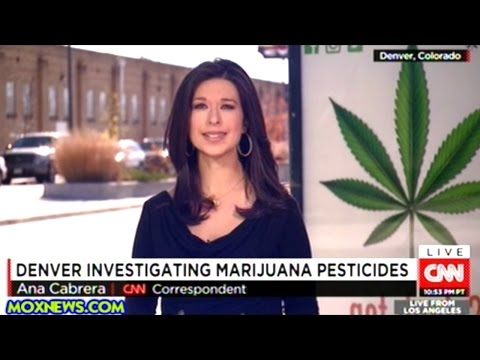
 (Denver7) Lab says pesticides stay on marijuana much longer. Unlike California, Colorado has standards. [When smoked burning makes pesticides much more toxic. California produces the most weed yet has no regulations on toxic additives -- flavorants, fungicides, preservatives.]


 Forty-one out of 44 of the samples, or 93 percent, tested positive for pesticides above the allowable limits in Oregon, Washington, Massachusetts, and Nevada. [California has no limits and does not regulate the poisoning of medical marijuana for public consumption.]


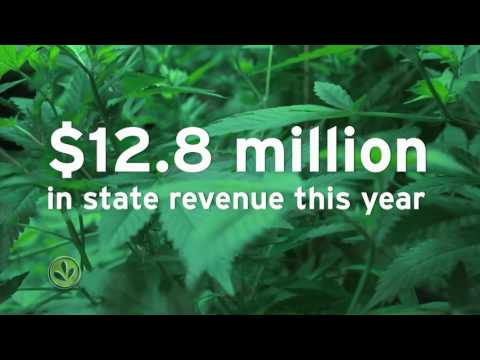


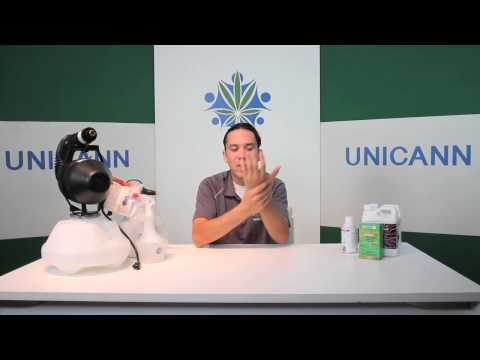


 Worker Protection around pesticides in the marijuana industry, Part 1 of 2 (Colorado Department of Agriculture) Federal Worker Protection Standard applies when pesticides are used to produce an agricultural commodity...





















































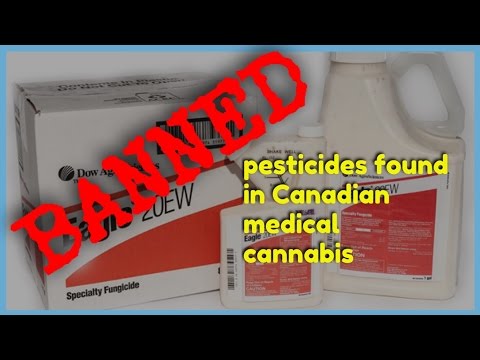



_-_R_1_-_Area_di_Zurla_-_Nadro_(ph_Luca_Giarelli).jpg)