Showing posts with label yantra. Show all posts

Friday, October 18, 2024

Secrets to change perspective on life


Ancient Sumerian secrets will change perspective on life
(Video Advice) Summer 2024: This Tablet Holds the Truth About Humanity. Eric Rankin, a renowned expert in the field, guides us through the intricate connections between sound frequencies and geometric patterns, revealing how these elements form the very matrix of reality.

The universe looks like this diagram: mandala
Discover how ancient knowledge and modern science converge in Sonic Geometry, offering insights into the fundamental structures of the universe. Rankin's compelling presentation not only explains the theoretical foundations but also demonstrates the practical implications of these patterns in our understanding of reality.

Speaker Eric Rankin footage provided by Storyblocks and Artgrid. Music provided by Epidemic Sound and Artlist. References used under Fair Use Law. 📩 For any concerns or business inquiries, please get in touch with us at videoadvice@yahoo.ro.

STAY UPDATED WITH THE INSIDE EDGE: Register for upcoming events eventbrite.com/o/the-inside...
  • Eric Rankan (Video Advice, Aug. 12, 2024; Dhr. Seven and Pat Macpherson (eds.), Wisdom Quarterly

Saturday, November 11, 2023

Tibet treasury: 84,000 new manuscripts found

Lilly Ravenwood, History Enhanced; Dhr. Seven, Amber Larson (eds.), Wisdom Quarterly
Tibet used to be a Himalayan empire with many treasures, spiritual/temporal (Richard Mortel)
Just Beyond the Wall of the Buddhist monastery (©Source: Richard Mortel/flickr.com)
Unseen: 84,000 unread manuscripts discovered in Tibetan lamasery (©Richard Mortel/flickr)

The Dalai Lama finishes a sand yantra
In the heart of Tibet stands the Sakya Monastery, a silent witness to centuries gone by. This special place held a secret.

For years, behind old walls, lay a library filled with ancient manuscripts. These papers tell tales from long ago, and they waited patiently, hidden from the world, to share their stories, until now.

Many had walked the Buddhist monastery's halls, unaware of the treasures that lay just out of sight.

JUST BEYOND THE WALLS: The old books and scrolls have seen empires rise and fall. They've captured the wisdom and adventures of people from ages past.

They know about ancient kingdoms and great adventures. When discovered, it was like finding a map to another time.

Thursday, December 21, 2017

Sacred Sexuality? Tantric meditation (live)

Dhr. Seven, Ananda M., Jen B. (DMI/PasaDharma/Dharma Punx), Wisdom Quarterly; Hariprem


I have never felt so much blissful intimacy.
At its essence, tantra combines meditation, breath, movement, and sound to assist the body's chakra energy system to open.

(Never mind that; what about the sacred sexuality?)

This opening allows dormant energy to move up from the pelvis, along the spine. The movement of this life-force energy can help heal us by loosening constrictions in the body that have developed over time.

The expansion of the energy body increases sensitivity, empathy, and the ability to connect with others.
 
Partners bow to one another as goddess and god in union, as in video below (SheKnows).
  • Tantrism is a contested concept, according to The Origins of Yoga and Tantra by Geoffrey Samuel, who says that Tantra Yoga may be described as practices in 9th to 10th century Buddhist and Hindu (Saiva, Shakti) texts that included yogic practices with elaborate deity visualizations using geometrical arrays and drawings (mandala), fierce male and particularly female deities, transgressive life-stage related rituals, extensive use of chakras and mantras, and sexual techniques, all aimed to help one's health, long life, and liberation. 
  • VIDEO: How sacred sex heals shame and trauma
The expanded ability to connect with an intimate partner draws many to tantra. Aside from improving communication and intimacy, tantric practices can expand the energy body toward a higher purpose — meditative absorption, cosmic union, merging [consciousness] with the breath called prana or chi.

There are ecstatic benefits to tantra in an of itself. And it feels good to practice it for its side benefits with a partner. But how can we be open and intimate with anyone else when we have yet to be that way with ourselves?

Los Angeles, Dec. 21, 2017
Partner yoga twist (Kelly Bailey/SheKnows)
Everyone will have the chance to find out as Dharma Meditation Initiative (by Disclosure Project), Dharma Punx, and PasaDharma lead a two-hour tantric meditation and yoga workshop that includes Partner Yoga led by Neptune, Tantric meditation, guided visualization, potluck and desserts (vegan).
  • Tantric Meditation Workshop and Potluck
  • RSVP: Dharma Meditation Initiative
  • FREE (donations accepted)
  • Thursday, Dec. 21, 2017, 6:45-8:30 PM
  • 301 N. Orange Grove Bl., Pasadena, CA 91103
    (Hariprem) Lesson 1, a simple tantric meditation for couples

    Saturday, June 22, 2013

    Richard Gere's Buddhism (Vajrayana)

    Dhr. Seven, Bela Larson, Wisdom Quarterly; Japanese-Buddhism.com
    Richard Gere with living Buddhist Master Ajahn Jumnien (right) in Theravada Borbudur, Indonesia, the largest discovered Buddhist complex in the world (ego.globo.com/WQ)

     
    [Vajrayana Buddhism's exalted priesthood, pomp and circumstance, and nearly forgotten nuns often lead to easy comparisons with Roman Catholicism, in form if not function.] Vajrayana Buddhism involves esoteric visualizations, symbols, and complicated rituals that can only be learned by study with a master. This explains why Vajrayana is also referred to as Esoteric Buddhism. Vajrayana Buddhism lays great emphasis on mantras (incantations), mudras (hand gestures) and mandalas (diagrams of deities and cosmic forces), as well as on magic and a multiplicity of deities... 

    Mandala (kasina) in Vajrayana esoteric meditation (indiebookevent.com)
    Meeting the current Dalai Lama (left) in Washington, D.C. (japanese-buddhism.com)
     
    Gere, Cindy Crawford (redlist)
    Emmy and Golden Globe Award winning American actor Richard T. Gere has another identity. In the spiritual dimension of his life, far from his worldly Hollywood fame, he is a Vajrayana Buddhist.
     
    Gere was raised by Methodist Christian parents. He began his search for the beauty of Buddhist tranquility in 1978 when he was traveling in Nepal with a Brazilian painter named Sylvia Martins.

    Liz Taylor, Martins, hipster (Getty)
    Since then he became an active supporter of the 14th Dalai Lama, the former spiritual-political leader of Tibet, now the head [quasi "pope"] of the Gelug branch of Tibetan Vajrayana, the "Diamond Way" or "Thunderbolt Vehicle."

    Tibetan Buddhism is composed of four principal schools, namely, the Nyingma (ancient) School, the Sakya School, the Kagyu (Oral Tradition) School, and the Gelug (Tradition of Virtue or "Yellow Hat") School. Tsongkhapa is the pioneer of this Buddhist school.
    In trouble in India for kissing (richardgere.tv)
    After spending about 20 years studying with Nyingma, Sakya, Kagyu, and Kadam (Oral Instruction) teachers, the concept of Gelug came into being through the insight of Tsongkhapa in the early 15th Century. More
    Short history of Vajrayana Buddhism
    Wisdom Quarterly (Wikipedia edit)
    Vajrayana/Bon masks and rituals in Himalayan culture (madamepickwickartblog.com)
      
    Vajrayana (onmarkproductions.com)
    Although the first tantric Buddhist texts appeared in India in the 3rd Century and continued to appear until the 12th century (Williams, 2000, p. 194), scholars such as Hirakawa Akira assert that the Vajrayana school probably came into existence in the 6th or 7th Century (History of Indian Buddhism, 1993, p. 9), while the term Vajrayana itself first appeared in the 8th century (Macmillan Encyclopedia of Buddhism, 2004).
     
    Vajrayana was preceded by the Mantrayana, and then followed by the Sahajayana and Kala-chakra-yana (Schumann, Buddhism: an outline of its teachings and schools, 1974). The period of Indian Vajrayana Buddhism has been classified as the fifth (Akira, 1993) or final (Macmillan, 2000) period of Indian Buddhism. The literature of Vajrayana is absent from the oldest Buddhist literature of the Pali Canon and the Agamas.

    But practitioners claim mythological origins for the Tibetan Buddhist tradition. Those origins claim that the historical Shakyamuni Buddha taught tantra. But since these are "secret," occult, or esoteric teachings, confined to the guru/disciple relationship, they were generally written down long after the Buddha's other teachings -- the Pali Canon and the Mahayana sutras. 
     
    The Vajrayana tradition holds that its teachings were first expounded by the Buddha 16 years after his great enlightenment. Historians have identified an early stage of Mantra-yana beginning in the 4th Century, and they argue that assigning the teachings to the historical Buddha is "patently absurd" (Kitagawa, The Religious Traditions of Asia: Religion, History, and Culture, 2002). More
    American actor Richard Gere (whose real name is Richard Tiffany Gere), winner of Emmy Awards and Golden Globes, has another identity in the world of spiritualism, far apart from the rest of the worldly life and fame. He is a Buddhist.

    Richard Gere and the Dalai Lama

    Gere, who was raised by Methodist parents, began his search for the beauty of tranquility in 1978 when he was traveling in Nepal with a Brazilian painter named Sylvia Martins. Since then, he became an active supporter of his holiness the Dalai Lama who leads religious officials of the ‘Gelug’ branch of Tibetan Buddhism.

    Tibetan Buddhism is composed of four principal schools, namely, ‘ the Nyingma (ancient) School’, ‘ the Sakya School ’, ‘ the Kagyu (Oral Tradition) School’, ‘ the Gelug (Tradition of Virtue, sometimes known as the 'Yellow Hat') School’. Tsongkhapa is the pioneer of this last born ‘Gelug’ Tibetan Buddhism school.

    After spending around 20 years studying with Nyingma, Sakya, Kagyu and Kadam (Oral Instruction) teachers, the concept of ‘Gelug’ came into being through the insight of Tsongkhapa in the early fifteenth century.
    - See more at: http://www.japanese-buddhism.com/richard-gere-buddhist.html#sthash.4XcrciX7.dpuf
    American actor Richard Gere (whose real name is Richard Tiffany Gere), winner of Emmy Awards and Golden Globes, has another identity in the world of spiritualism, far apart from the rest of the worldly life and fame. He is a Buddhist.

    Richard Gere and the Dalai Lama

    Gere, who was raised by Methodist parents, began his search for the beauty of tranquility in 1978 when he was traveling in Nepal with a Brazilian painter named Sylvia Martins. Since then, he became an active supporter of his holiness the Dalai Lama who leads religious officials of the ‘Gelug’ branch of Tibetan Buddhism.

    Tibetan Buddhism is composed of four principal schools, namely, ‘ the Nyingma (ancient) School’, ‘ the Sakya School ’, ‘ the Kagyu (Oral Tradition) School’, ‘ the Gelug (Tradition of Virtue, sometimes known as the 'Yellow Hat') School’. Tsongkhapa is the pioneer of this last born ‘Gelug’ Tibetan Buddhism school.

    After spending around 20 years studying with Nyingma, Sakya, Kagyu and Kadam (Oral Instruction) teachers, the concept of ‘Gelug’ came into being through the insight of Tsongkhapa in the early fifteenth century.
    - See more at: http://www.japanese-buddhism.com/richard-gere-buddhist.html#sthash.4XcrciX7.dpuf

    Thursday, June 20, 2013

    Tibetan Buddhism Series: The Path (video)

    Bela Larson, CC Liu, Wisdom Quarterly; Richard Gere (onlinelearning.fpmt.org)
    Lisa Simpson discovers Springfield's Buddhist Temple and meditates with Carl and Lenny

    This is an overview of the entire Tibetan Buddhist or Vajrayana "path to awakening." It begins with a study of the life story of the historical Buddha Gautama, known as the "Sage of the Shakya Clan" (Shakyamuni) and opens to the lam-rim or graduated path to enlightenment. If only there were some way to learn what Lisa Simpson could not when she went in search of spiritual truth beyond the borders of "religion." She found what Richard Gere, Lenny, Carl, and the Dalai Lama had already found.
     
    Lisa, you can want stuff! Wisdom and all kinds of happiness here and now.

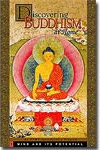
    Discovering Buddhism
    Learning Vajaryana/Mahayana Buddhism at home (fpmt.org)
     
    Each Discovering Buddhism module consists of teachings, meditations and practices, readings, assessment questions, and a short retreat.
     
    Students may do some or all of these component parts of each course, as they wish and are interested.
     
    Those who complete all of the components receive a completion card for that course. When all 14 modules have been completed, students receive a certificate of full completion.

    This awards the satisfaction of having completed a very comprehensive engagement with the Vajrayana/Mahayana path to enlightenment. It is symbolic of one's commitment to spiritual awakening. Rejoice deeply when you receive it!
     
    The courses do not need to be completed in order, and Module 14, Special Integration Experiences should be started as early as possible in the program, as it takes some time to complete. Module 14 includes practice retreats available at many FPMT centers.
      
    Each Discovering Buddhism at Home module contains audio recordings of teachings and meditations given by qualified Western teachers, and a text CD containing the course materials and written transcripts of the audio teachings. Packages are available in... More

    Tuesday, November 17, 2009

    Faith (saddha) Discourse

    Wisdom Quarterly translation: Saddha Sutra (AN 5.38)


    There are these five beneficial results of confidence (saddha) for lay followers. What are the five?

    1. When good people [noble ones and such] in this world show compassion, they first show compassion to confident people, not those lacking confidence.
    2. When they visit, they first visit confident people, not those lacking confidence.
    3. When they accept gifts [or hospitality], they first accept gifts from confident people, not those lacking confidence.
    4. When they teach the Dharma, they first teach it to confident people, not those lacking confidence.
    5. A confident person (with faith well placed), at the break up of the body, after death, rearises in a good destination, even in celestial worlds.
    These are the five beneficial results of confidence.

    A lay follower replete with confidence [in Buddha, Dharma, and Sangha] is like a large Bo tree growing at a crossroads: It is a haven for birds that come from four directions. Just so a confident lay follower is a haven for monks, nuns, male lay followers (upasakas), and female lay followers (upasikas).

    A great Bo tree laden with figs and leaves
    With shoots and roots and abundant fruit
    There birds of every feather rest and rejoice together
    In an environment they call home
    Who seeks fruit finds fruit
    Who seeks shade finds shade
    It is just the same with a person of faith
    Who is virtuous, humble, gentle, sensitive, caring, and mild
    To such a person come those unfettered
    Who are free from greed, hate, and delusion
    Who are a great field of merit for the world
    They teach a Dharma that dispels all ill
    Which to understand frees one from all fetters culminating in nirvana

    Friday, May 8, 2009

    Who are the Jews of India?


    India has been a home and haven for generations of Jews whose ancestors fled from persecution centuries ago. At its peak there were about 37,000 Jews living in India. When Rabbi Gavriel Holtzberg and his wife Rivka were murdered in the terror attack in Mumbai last year, this horror story became the public face of Judaism in India.

    The truth is that, apart from this random attack by foreign terrorists, India has been an oasis of calm and freedom for Jews -- giving them citizenship and complete freedom to practice their faith, build many synagogues, and celebrate their traditional festivals with an added Indian zest.

    Lavina Melwani is a New York-based journalist who writes for several international magazines. She is launching her blog/zine Lassi with Lavina next month.

    Photos courtesy of The Indian-Jewish Congregation of the USA.
    Continued on Slide 2: India's Jews Consist of Four Groups »

    Monday, March 2, 2009

    Secret Sri Lanka: Kataragama

    Patrick Harrigan (xlweb.com)


    Âlatti Pûja, Kataragama Mahâ Dêvâle

    In the dry jungle of remote southeastern Sri Lanka lies Kataragama or Katir-kamam, the (place of) "light and love-passion," a shrine complex of exceptional antiquity and sanctity that attracts many thousands of Buddhist, Hindu, and even Muslim devotees.

    They come year round, particularly during the fortnight-long Aesala Festival in July-August. It is at this time that a small casket believed to contain the secret of the god's birth -- some say the god himself -- is taken out in a solemn, yet joyful, torchlit procession nightly. It is escorted by his female-votaries and troupes of riotous dancers. The latter represent the animal, human, chthonic, and heavenly spheres.

    An archaic spirit of paradox, fertility, rejuvenation, and play, the Kataragama god also preserves an essential soteriological dimension as the Divine Psychopomp. He guides his followers beyond the Portals of Death into an unconditional realm of freedom from the tyranny of the pairs of opposites.

    Sri Jñâna Pandita: Murugan as Expositor of Gñosis with His symbols the Vêl or Spear of Wisdom = axis mundi and vehicle/totem the peacock = Phoenix. Behind Him dawns the rising sun symbolizing the awakened mind (bodhi). Early 20th cent. painting by NS Balakrishnan, Madurai.

    A host of local indigenous, Sinhalese [Buddhist], Tamil [Hindu], and Islamic legends purport to explain the origin, character, and exploits of the Kataragama god. His reputation for sacred or mysterious power extends far beyond his immediate forest domain however.

    Broadly speaking, scholars, and cult-adherents alike identify him with the ever-popular Tamil hill god Murukan ("Tender One"). This god is said to have arisen before the dawn of history and has long been considered as the Dravidian counterpart or expression of the pan-Indian war god Skanda-Kumara, "son" of the great mountain-dwelling god Shiva.

    Skanda -- tutelary god of warriors, kings, yogis, scholars, and (as Guha, "the Hidden") patron of all secret knowledge and covert activities -- once quit his home on Mount Kailasa in the trans-Himalaya and, according to various traditions, made his way south in a series of exploits culminating at Kataragama. He engaged in a secretive courtship and marriage to the indigenous Vedda maiden Valli, which is the... More>>

    Gods of Feminine Power
    .
    ...Of particular interest, however, is the god's longstanding association with the number six and the shatkona yantra or "six-cornered magical diagram." For the shatkona yantra (etched upon a metal plate) is precisely what is believed to be contained in the small casket that is taken out in procession at Kataragama.
    .
    A full discussion of the subject of the "calculus" of symbolic forms goes beyond the scope of this article. Suffice it to say that the god, whose Sanskrit name Shanmukha (Tamil: Arumukam) means "having six faces," is homologized to the hexagram: a figure composed of two intersecting equilateral triangles representing the mother-principle and the father-principle in balanced union. From this there is the Holy Child known to mythologies all over the world.

    .
    In the traditions of Europe and West Asia, the hexagram is well known as the "Seal of Solomon." This alludes to its widespread association with the conjunction of sacerdotal authority and temporal power.
    .
    Moreover, the yantra in conjunction with the vel or spear corresponds to the archetypal warrior's shield and spear or, in another context, to the axis mundi and the chakra (wheel) or loka (plane of existence) through which the axis mundi or "solar ray" passes as an axle around which a wheel turns.

    The yantra is another product of India's indigenous, non-discursive schools of ritual magic. As such it is intended not merely for decorative purposes but for its magical efficacy. Its etymology offers a clue to the yantra's function and reason for being.
    .
    Like the similar terms mantra and tantra, it consists of a verbal root yam ("to hold") plus the suffix -tra denoting instrumentality. Hence, ya(m)-tra or yantra, "a device that holds," that is, a magical snare, trap, or container -- especially one designed to hold a spirit, demon, or god (deva).
    .
    In this function, the yantra parallels the pervasive South Indian pattern of place-goddesses (e.g. Madurai Meenakshi Amman or Valli Amman of Kataragama) who first attract and then "hold" wandering gods to those places as their husbands.
    .
    In the context of Kataragama, the yantra in the holy of holies may be understood to "hold" or "contain" the god of six faces or directions. This is what the Ark of the Covenant was understood to "contain," namely, the Shekinah or "presence" of the Holy Spirit of god Jehovah....

    More