Showing posts with label WQ editorial summary. Show all posts

Friday, February 15, 2019

Scots Festival, Los Angeles (Feb. 16-17)

ScotsFest (queenmary.com); Pat Macpherson, Dhr. Seven, Wisdom Quarterly

Eighty-eight years ago, in the quaint seaside town of Clydebank, Scotland, construction began on the Queen Mary. Exemplifying the finest craftsmanship of the country, the Queen Mary’s heritage is celebrated throughout the two-day ScotsFestival honoring Scottish culture.
 
The Queen Mary is pleased to welcome back the annual ScotsFestival & International Highland Games XXVI February 16 & 17 (9AM - 6PM). Experience the rich culture and history of Scotland first hand through an array of authentic activities, athletics, dancing, entertainment and cuisine, paying homage to the Queen Mary’s Scottish legacy.
ScotsFestival honors nearly fifty Scottish clans & vendors throughout the weekend with professional and amateur competitions in piping, drumming, massed bands, darts, Highland dancing, and the brand new North American Professional Highland athletics. The Scottish Highland Games, a precursor to today’s Olympic Games, were designed to test the strength, skill, and technique of ancient warriors through face-offs. With falconry, sheep herding and a large array of other activities, guests will have culture at every turn!
 
Whisky tasting sessions with aged malt experts are available for adult festivalgoers while the wee laddies & lassies can bear witness to Queen Mary’s coronation, knighting ceremonies, and even take part in the Wee Highland games.
 
This February, join us for our 26th annual ScotsFestival celebration. More: 2019 schedule and official guide map

Thursday, May 28, 2015

How shall we meditate now? (video)

Wisdom Quarterly EDITORIAL BOARD; Ven. Ñanamoli (Wheel 17, BPS.lk), Amber Larson, Dhr. Seven, Crystal Quintero; Mindah-Lee Kumar (enthusiasticbuddhist.com); DemocracyNow.org
Ancient Buddhist-Afghanistan: Mes Aynak, Bamiyan, Hadda, Ajina Tepe... (film/video)
The Dhammapada is great Buddhist reading. Are you there, God? It's me... (Bex Finch).
.
Some fake quotes are very nice.
The new editor elect, Pat Macpherson, has made changes at Wisdom Quarterly. He has decided to return the format to quarterly posts. That certainly works for the Dharma editors (see below), but it has caused much consternation among the features editors who want to cover many breaking stories on a daily basis.

There are over 67 stories in the kitty that could go to press today, so what's the hold up? (Send related comments and complaints marked "Dear Mr. Macpherson" in the comments section). There is much to cover like discussions of Vesak, the thrice blessed Buddhist holiday, the synthetic drought in California, needless man-made flooding in Texas, new U.S. Army whistle blower Chelsea Bradley Manning and heroic Edward Snowden and WikiLeak's Julian Assange revelations, as well as those of nuclear whistle blowers, crimes against humanity by the U.S.-sponsored military industrial complex in more foreign wars and covert campaigns than the American public can keep track of...

Macpherson wants ads among the posts.
Buddhists in Burma are abusing the Muslim Rohingya minority, the boat people of Europe are drowning, Israel is becoming more draconian but the U.S. State Department and its propaganda arms in the popular media are trying to make it illegal and "anti-Semitic" to criticize the "State of Israel" (what the illegal occupation officially calls itself in ancient Palestine under the U.S.-groomed war criminal Netanyahu) or in any way compare its actions to Nazi Germany and their former leader.

Freedom of speech must be stopped (MW).
The Pacifica Radio Network (e.g., KPFK, KPFA) is struggling to keep revealing the truth, but Sonali Kolhatkar and Mitch Jeserich keep broadcasting. Coast to Coast keeps pumping the airwaves with supernatural and extraterrestrial discussions as well as the occasional whistle blower. The NSA is not being stopped by new laws but just shifting its known storage space from a government espionage agency to the hands of private for-profit companies who gladly turn information over to the NSA, CIA, FBI, NSC, the Pentagon, and other alphabet-agencies whenever asked.

(The Enthusiastic Buddhist) Whatever else is true or untrue, believable or unbelievable, uplifting or downcasting, there are still these four ennobling truths, the contemplation of which leads to freedom from all suffering: The Four Noble Truths at the heart of Buddhism.

(The NSA and other spying agencies will still secretly spy and keep all the records they want, breaking laws along the way, because they are not only under the de jure but also the de facto "behind the scenes or "shadow" government that runs country and NATO and the MIC). Oliver Stone is still trying to get the word out that most of what we have been told about "American history" is propagandistic distortions. Did he speak to whistle blower historian Douglas Dietrich to get even deeper in the weeds? Probably not. And why worry about politics when there is a much, much bigger picture to contemplate as explained by maverick historian, anthropologist, and forbidden archeologist Michael Cremo?

A funny Buddhist is good to find.
There is still an Occupy Movement even if it does not call itself "Occupy" Everything. Kyle Cease is coming to town. Thich Nhat Hanh is ill. Our beloved Buddhist-Afghanistan is being ground to dust by the Empire (with China waiting in the wings to take out its first bite and destroy the amazing Mes Aynak). Impoverished Buddhist-Hindu Nepal as the earth slips out from under it is crumbling and Mt. Everest is closed. There is a massive and deadly heatwave in India. Enlightenment beckons. But how shall we meditate -- and when and where? Here, and now, by just doing it.
DAILY BREAKING NEWS
DemocracyNow.org


What does Buddhism have to do with anything?
Mindah-Lee Kumar (enthusiasticbuddhist.com); Ven. Ñanamoli (Three Cardinal Discourses of the Buddha, Wheel 17, BPS), Dhr. Seven, Amber Larson, Crystal Quintero, Wisdom Quarterly
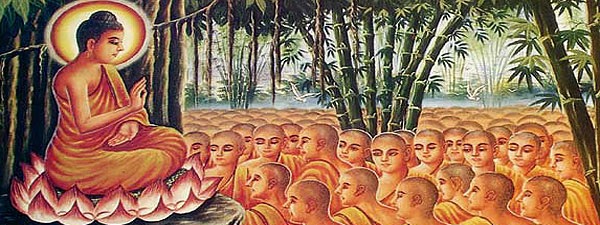
Shakyamuni, the historical Buddha Gautama, as first represented in human form in Afghanistan, Gandhara, Indo-Pakistan, Central Asia, and ancient Greece in Hellenized lands like Bactria and Scythia (WQ).
.
The Four Noble Truths, the fourth of which is the Noble Eightfold Path, are fundamental Buddhist teachings in all Buddhist traditions. They are equally important among all Buddhist schools because they form the core of all Buddhist teachings. Buddhists may mistakenly be criticized for always talking about "suffering" (unsatisfactoriness, disappointment), which exists and is stated in the First Noble Truth, but that ignores the Third Noble Truth that says "all suffering may be brought to an end."

Generosity (nongreed) brings happiness. - the Buddha
How do we explain that the majority of Buddhist teachers we come across are the most peaceful and happy people we meet? Surely there is much more to Buddhism than recognizing and talking about suffering (dukkha). That there is a problem is just the first step to finding a cure or solution to the problem we face. There is freedom-from-all-suffering (nirvana). There is enlightenment (bodhi). There is a great deal of happiness and bliss (sukha and piti) to experience.

Golden Buddha, Burma (flickr.com)
In this video above Mindah explains how the Buddha taught the Four Noble Truths to show humans and angels (devas, godlings, fairies, bright spirits) how we can move from a state of unrest to final liberty and peace and happiness, which is known as nirvana (Pali, nibbana). First, like any good physician would do before prescribing a course of treatment, the Buddha (sometimes called the Master Physician) diagnosed the problem we face living in the universe. Then he points out its cause (Dependent Origination and its weak link which we can directly do something about, craving). Then he points out that there is such a thing as complete liberation, emancipation, deliverance, freedom from ALL suffering.

Pilgrimage to India, Nepal, Oct. 2015
Finally, in the Fourth Noble Truth, he shows the path to freedom, the path to purification, the path to enlightenment and nirvana. Why do we feel less than 100 percent happy almost all of the time? There is something we can do. Karma is the hopeful message that it is in our hands right NOW.

Suggested reading: There is an excellent article by the comedic, enlightened, British Theravada Buddhist monk living in Australia, Ajahn Brahm, where he is abbot of a Buddhist monastery and a nunnery: "Joy At Last To Know There is Happiness in the World" or no happiness.
 
"My religion is very simple. My religion is kindness" - Dalai Lama (art by Mindah-Lee Kumar, Australia, fineartamerica.com).

Sunday, June 24, 2012

The Fruits of Being a Buddhist Recluse

Wisdom Quarterly based on Tipitaka.net ("Fruits of Recluseship," Samannaphala Sutta, DN 2)
WHAT
Monks,  Chiang Mai (HipRoad/flickr.com)
The discourse on the Fruits of Recluseship is the second sutra in the Long Discourses of the Buddha. It gives the background to the fraticidal King Ajatasattu, who became a lay disciple of the Buddha like his father but a little too late.
  
It starts with Ajatasattu in his palace seeking advice from his ministers which wandering ascetic or Brahmin he should visit. Ignoring recommendations from six ministers, the king turned to Jivaka Komarabhacca for advice.
  
Komarabhacca informed Ajatasattu that the Buddha was staying at his mango grove and suggested making a trip there. Ajatasattu set out on his royal mount to meet the Buddha, together with Komarabhacca, and a large number of women on elephants, and a procession of torch-bearing attendants.
  
Later it is revealed that the king had previously spoken to the six recommended ascetics but was not pleased with their teachings.
  
According to the Buddha, King Ajatasattu would have become a stream-winner if not for the hienous crime of killing his father.
   
WHERE
At Komarabhacca's mango grove in Rajagaha, the capital city of Magadha
  
WHEN
On the full moon night of Komudi in the month of Kattika, after Ajatasattu had already usurped his father King Bimbisara as the ruler of Magadha.
  
WHO
The main dialogue is between the Buddha and Ajatasattu. Other personalities mentioned are Queen Vedehi, Prince Udayibhadda, and the six famous ascetics of the Buddha's time.
  • King Ajatasattu is the son of Queen Vedehi.
  • Prince Udayibhadda is Ajatasattu's newborn son.
  • Aggivessana is the family name of Nigantha Nataputta called "Mahavira" (Great Hero), the historical founder of Jainism.
The Six Ascetics
The six contemporaries mentioned are considered representatives of various Indian philosophical movements of the time. They are: Purana Kassapa, Makkhali Gosala (originally Mahavira's student), Ajita Kesakambala, Pakudha Kaccayana, Sancaya Belatthaputta, and Nigantha Nataputta (literally, the "Possessionless-One, Son of Nata," Mahavira). 
  
The sutra opens a window into their individual teachings, as reported by King Ajatasattu to the Buddha. Unfortunately, each of these accounts is very brief.
 
Not all who wander are lost.
  
Respect for Wanderers
This sutra reveals a culture that respected truth seekers who were wandering ascetics (shramanas), that is, spiritual wayfarers. They were an alternative to conventional Brahmin temple priests who held the Vedas as their sacred texts and ultimate authority, much as St. Issa (Jesus) wandered rather than being involved with the temple hierarchy and unquestionable sacred texts like the Talmud (part of Judaism's Bible).
   
The Buddha's India, the Middle Country
An ascetic (recluse, samana or shramana) here refers to any person who gives up family and social relations to go in search of enlightenment, real happiness, answers to life's persistent questions, and liberation from rebirth and suffering.
  
King Ajatasattu, who usurped his powerful father King Bimbisara's position to become the ruler of the most influential area (Magadha) in India at the time, expressed his respect for any recluse, even if the person used to be his servant.
  
WOMEN
Until the Buddha accepted women into his Monastic Order, all female recluses were Jains, since Mahavira had earlier accepted women. Buddhism became the first world religion to elevate women to equal spiritual status and social standing (at least within the Sangha). Jainism never caught on outside of India. However, the sexual equality the Buddha established was eventually subverted: Additional rules (garudhammas) were instituted and backdated as if the Buddha had always intended to subordinate women, which does not make historical sense as explained by Ven. Tathaloka.
  
The Fruits of Recluseship
Novice meditating, Burma (Dvlazar/flickr.com)
The title of the sutra means the fruits (phala) of being a recluse (samana). Those benefits or rewards of leading a monastic life, the completely purified supreme kind of life (brahmacariya).
Basic rewards
When asked about the fruits of Buddhist recluseship, the Buddha explained to these to the king:
  1. respect, protection, and provisions from the king and lay people. These were benefits even other wandering ascetics could expect in ancient India with its charitable dana system -- reciprocal benefits of spiritual seekers aided and in turn aiding the people and society.
  2. endowment with morality as explained in the "The Net of All-Embracing Views" or Brahmajala Sutra.
  3. guarded sense faculties (indriya samvara)
  4. mindfulness and clear comprehension (sati-sampajana)
  5. contentment (santosa).
Intermediate rewards
Detached from the Five Hindrances, greater benefits arise from the successful practice of meditation:
  1. the four material absorptions (jhanas)
  2. insight-knowledge (vipassana nyana)
  3. advanced spiritual capabilities
Highest rewards
The highest rewards, the ultimate goals of the Buddhist path, is the complete realization of the Four Noble Truths and liberation from samsara -- rebirth and suffering.

Tuesday, May 19, 2009

What was the war in Sri Lanka? (WQ)

WQ editorial summary; Time.com story below
A 25-year civil war in Buddhist island of Sri Lanka has been brought to a decisive conclusion. It was launched by ethnic Tamil separatists tormented under majority Sinhalese rule. After decades, the guerrilla war ended as "Buddhist X-mas" (Vesak) celebrations continued around the world.

Once aided, abetted, and to a greater or lesser extent instigated by India, the Tamil Tigers of Eelam (LTTE) behaved like an unpredictable tiger: It and its legendary leader, Velupillai Prabhakaran, assassinated the Indian prime minister.

More horrifying was the fact that a Sri Lankan head of state was found secretly supporting the LTTE in an effort to play both side and maintain power. The LTTE assassinated him in return. International attempts to intervene led to an uneasy peace over the years with sporadic fighting and ongoing guerrilla tactics. These included massacres of Buddhist pilgrims, surprise Tamil offensives, and the imposition of martial law in terrorizing "counter-terrorism" efforts. It was the excessive use of state power that originally encouraged Tamils to rebel.

Recent Sinhalese offensives have collaterally killed many Tamil civilians. The Tamils fear the state more than their fellow freedom fighters. It is also alleged that Tamils used civilians as shields. In either case, Sri Lankan soldiers seemed content to disregard imperiled civilians. In modern warfare as taught by the USA, noncombatants are treated like combatants.

The Sri Lankan army pressed forward in a deadly offensive that finally broke Tamil rebel resistance. LTTE controlled territory was wrested from Tamil control. Little, however, has been done to appease Tamil pleas for fair and equal treatment in Sri Lankan society. Many expat Tamils have been visible and vocal protesters keeping world attention on the calamity, notably in Europe and Canada.

Sri Lanka is a small teardrop shaped island off the southern tip of India with a large Sinhalese majority and a prominent, long standing Tamil minority. The Indian state of Tamil Nadu, with a large Tamil majority, lies just across a narrow strait. The island has a long history of British and European colonization; these powers set ethnic factions one against the other throughout Asia and the new world. (This conflict, too, is part of the appalling legacy of the UK's divisive strategy that infamously kept it in power for centuries).

It is notable that this conflict did not come to an end through American aid or support. It was funded by the Chinese government, who provided the support Sinhalese forces needed to wage a large offensive that ended with the execution of Tamil leaders. It is not clear what India or the US gained by this longstanding civil war, but it is clear they did little to actually end it.

WQ sympathizes with the Sri Lankan government. However, this nominally "Buddhist" power has frequently not behaved as such. In no way can WQ believe that Hindus in general or Tamils in particular are enemies. Although this has never been a religious conflict, it has correlated to religious sentiments along ethnic lines.

Calls for civic equality -- whether as a separate state or some equivalent accommodation -- must be heeded. So conscience forces WQ to criticize both sides after a visit to the conflict in support of all its citizens. As a Buddhist-majority island, Sri Lanka has long welcomed all faiths.

The Life and Death of a Tiger (Time.com)

Jyoti Thottam (New Delhi)

Velupillai Prabhakaran, 54, the leader of the Liberation Tigers of Tamil Eelam (the LTTE) was declared killed by the Sri Lankan government on May 18. He had decades to think about how his end would come. It could have come from the cyanide capsule that he -- like many Tiger fighters -- wore around his neck, a pledge to commit suicide in case of capture by the Sri Lankan Army.

He had been fighting a war for an independent homeland, or eelam, for the island's Tamil minority since 1983. The army pursued him throughout the jungles of the north and east for decades. In 2002, during a press conference near the beginning of a four-year ceasefire, Prabhakaran revealed that he had asked his aides to kill him if capture was near and he was unable to kill himself. More>>