Showing posts with label five ascetics. Show all posts

Sunday, November 20, 2022

There is no self (sutra)

Ven. Nanamoli, Three Cardinal Discourses of the Buddha edited by Dhr. Seven, Wisdom Quarterly
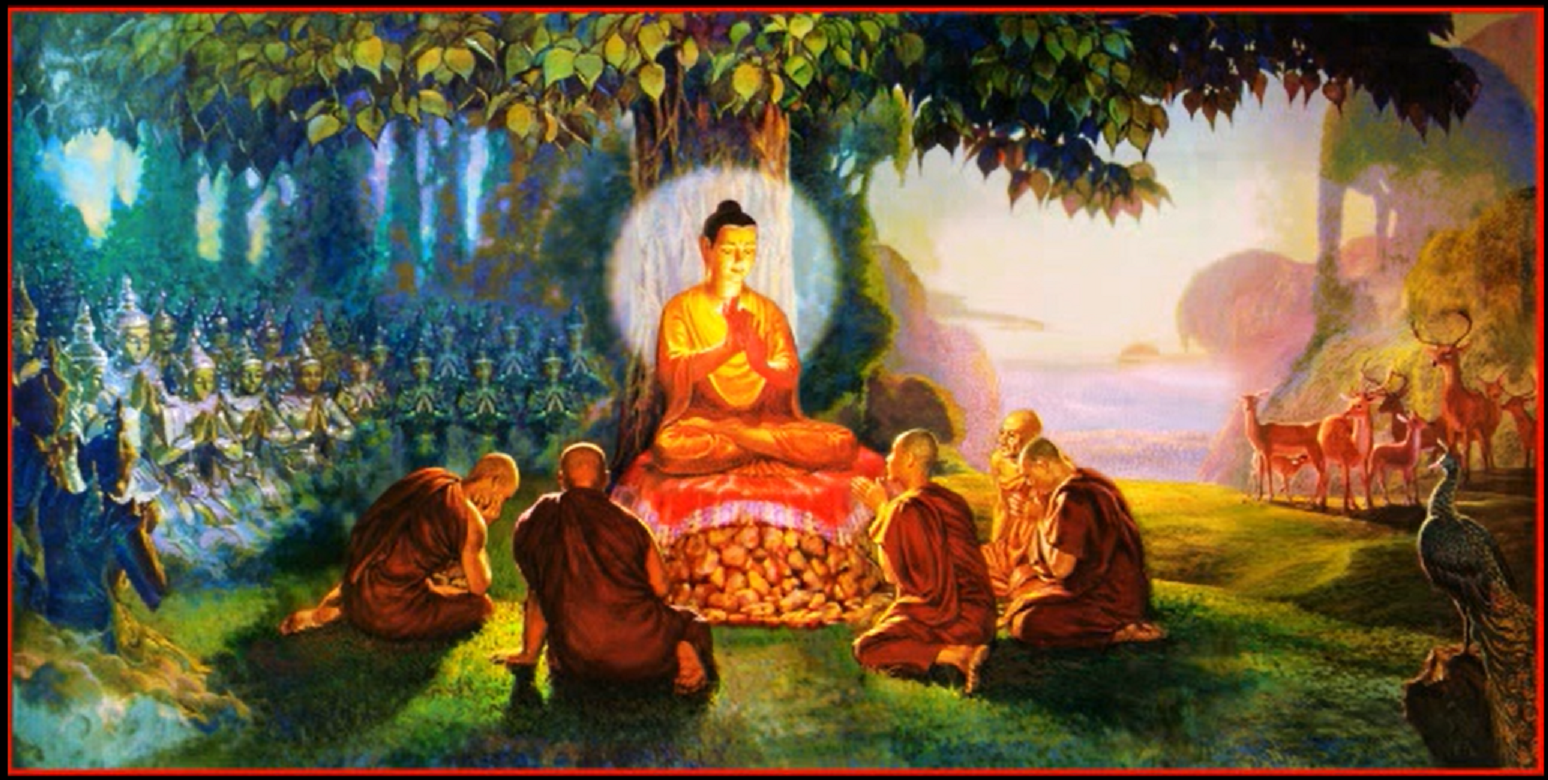
Thus have I heard. On one occasion the Blessed One (the Buddha) was living at Benares (Varanasi, India), at the Deer Park at the Resort of Seers. There he addressed the wandering ascetics [called] the Group of Five: "Meditators."

"Venerable sir," they replied. Then the Blessed One said this:

"Meditators, form is not-self. Were form self then this form would not lead to affliction, and one could get from form: 'Let my form be thus, let my form be not thus.'

"Since form is not-self, it leads to affliction, and none can get from form: 'Let my form be thus, let my form be not thus.'

"Meditators, feeling is not-self...

"Meditators, perception is not-self...

"Meditators, determinations are not-self...

"Meditators, consciousness is not self. Were consciousness self then this consciousness would not lead to affliction, and one could get from consciousness: 'Let my consciousness be thus, let my consciousness be not thus.'

"Since consciousness is not self, it leads to affliction, and none can get from consciousness: 'Let my consciousness be thus, let my consciousness be not thus.'

"Meditators, how do you conceive of it, Is form permanent or impermanent?"

— "Impermanent, venerable sir."

"Now is what is impermanent painful or pleasant [disappointing or fulfilling]?"

— "Painful, venerable sir."

"Now is what is impermanent, what is painful since it is subject to change, fit to be regarded thus: 'This is mine, this is I, this is my self'"?

— "No, venerable sir."

"Is feeling permanent or impermanent?...

"Is perception permanent or impermanent?...

"Are determinations [mental formations like will or intention] permanent or impermanent?...

"Is consciousness permanent or impermanent?"

— "Impermanent, venerable sir."

"Now is what is impermanent pleasant or painful?"

— "Painful, venerable sir."

"Now is what is impermanent, what is painful since it is subject to change, fit to be regarded thus: 'This is mine, this is I, this is my self'"?

— "No, venerable sir."

"So, meditators ANY kind of form whatsoever -- whether past, future, or presently arisen, whether gross or subtle, whether in oneself or external, whether inferior or superior, whether far or near -- must be regarded thus with right view as to how it actually is: 'This is not mine, this is not I, this is not my self.'

"Any kind of feeling whatsoever...

"Any kind of perception whatsoever...

"Any kind of determination whatsoever...

"Any kind of consciousness whatsoever -- whether past, future or presently arisen, whether gross or subtle, whether in oneself or external, whether inferior or superior, whether far or near must be regarded thus with right view as to how it actually is: 'This is not mine, this is not I, this is not my self.'

"Meditators, when a noble [arya, enlightened] follower who has heard (the truth) sees thus, that person
  • finds estrangement in form,
  • finds estrangement in feeling,
  • finds estrangement in perception,
  • finds estrangement in determinations,
  • finds estrangement in consciousness.
"When one finds estrangement, passion fades out. With the fading out of passion, one is liberated. When liberated, there is knowledge that one is liberated. One understands: 'Rebirth is exhausted, the supreme life has been lived out, what can be done has been done, of this there is no more beyond.'"

That is what the Blessed One said. The meditators were glad, and they approved of his words.

Now during this utterance, the hearts of the meditators of the Group of Five were liberated from taints through clinging no more [which is to say, they awakened, were enlightened, were liberated from suffering]. — SN 22.59
 
Explanation
FORM
: Pali rupa (what appears, appearance, matter, the evident, in particular this body). As the first of the Five Categories (or Five Aggregates) clung to as self, it is defined in terms of the Four Great Elements, namely:
  1. earth (hardness),
  2. water (cohesion),
  3. fire (temperature),
  4. air (distension and motion),
  5. [along with the negative aspect of space (what does not appear, what is not evident, what delineates matter)].
From these are derived all secondary phenomena such as persons, features, shapes, and so on: These are regarded as secondary because, while form can appear without any of them, they cannot appear without form.

It is also defined as "that which is being worn away" (ruppati), thus underlining its general characteristics of instability, impermanence, and fading away.

NOT-SELF: Together with the Four Ennobling Truths (truths leading to enlightenment), this truth of all things being impersonal is taught only by buddhas. Anatta (not-self) is a general characteristic (a universal mark of existence) without exception.

The characteristic of impermanence does not become apparent because, when rise and fall are not given attention, it is concealed by continuity:

(1) The characteristic of pain (dukkha) does not become apparent because, when continuous oppression is not given attention, it is concealed by shifting postures (changing from one posture to another, waking and sleeping).

(2) The characteristic of not-self does not become apparent because, when resolution into the various elements (that compose whatever some "thing" is) is not given attention, it is concealed by compactness (the opposite of the truth, which is that all things are composite and single things in and of themselves). — Path of Purification (Visuddhi-magga Ch. XXI).

Self-identification (identifying with things that are not self) and hunger for permanence and bliss form the principal manifestations of craving (tanha = desire, lit. thirst), guided by view that is wrong because it is not in conformity with ultimate truth.

When confronted with the contradictions and the impossibility of identifying with any of the Five Categories of Clinging's objects, craving seeks to satisfy this need by imagining a "soul" (individual or universal self).

But since no such soul, however conceived, escapes falling within the Five Categories of Clinging's objects, this solution is always doomed to failure.

Similarly, any attempt to identify self with nirvana must always fail for the same reason.

Nirvana conceived as identical (with self) or (self) as apart from it (emanence) or inside it (immanence), or nirvana conceived as "mine" is misconceived (MN 1).

This does not prevent an Awakened One from using conventional speech current in the world in order to communicate clearly with others, but one does it without misapprehending it, as is shown in the Dhammapada:

Self is savior of self;
What other savior could there be?
For only with (one-) self well tamed
One finds the savior hard to find.

Only by self is evil done,
Self-born and given being by self,
Oppressing one who knowledge lacks
As grinding diamond does a stone.
— (Dhammapada, Verses 160-1)

Similarly with the expression "in oneself" (ajjhattam) in the Second Sutra, this is simply a convenient convention for the focus of the individual viewpoint, not to be misapprehended.

A monastic heard the Buddha saying, as in the Second Sutra here, that the Five Categories are "not mine," and so on, and wondered:

"So it seems form is not-self; feeling, perception, determinations, and consciousness are not-self. What self, then, will the action done by a not-self affect?"

He was severely rebuked by the Buddha for forgetting the conditionedness (dependently originated nature) of all things (MN 109).

"It is impossible that anyone with right view should see any idea as self" (MN 115). "Whatever philosophers and deities (devas) see self in its various forms, they see only the Five Categories [clung to as self], or one or other of them" (SN 22.47).

FEELING: (vedana, sensation, impression) this is always confined strictly to the affective feelings of (bodily or mental) pleasure and pain with the normally ignored neutral feeling of "neither-pain-nor pleasure." These can be subdivided in various ways.

PERCEPTION: (sañña) means simply recognition.

DETERMINATIONS: a great many different renderings of this term are current, the next best of which is certainly "[mental] formations." The Pali word sankhara (Sanskrit samskara) means literally "a construction" [a fabrication] and is derived from the prefix sam (con) plus the verb karoti (to do, to make).

Compare the Latin conficere from con plus facere (to do), which gives the French confection (a construction).

The Sanskrit word means ritual acts with the purpose of bringing about a good rebirth.

As used in the Pali language by the Buddha, it covers any aspects having to do with action, willing, intending, motive, making, planning, using, choice, and so on (anything teleological). Of these, contact (phassa) is often placed at the head of lists defining it. Otherwise defined as bodily, verbal, and mental action (deeds, karma).

CONSCIOUSNESS: (viññana) is here the bare "being conscious" left for consideration when the other Four Categories have been dealt with.

It is only describable in individual plurality in terms of the other four categories, as fire is individualized only by the fuel it burns (see MN 38 and MN 109). Otherwise, it is regarded as an infinite (MN 111) dependent upon the contemplation of it as such.

It is only impermanent, impersonal, and unable to ever satisfy (anicca, anatta, dukkha) because however it arises, it can only do so dependent on the other categories, that is, on conditions that are themselves impermanent, unsatisfactory, and not-self.

It never arises unless accompanied by co-nascent [simultaneously arising] perception and feeling. It has six "doors" (see under Eye and Mind) for cognizing its objective fields and no more.

ESTRANGEMENT: the Pali noun nibbida and its verb nibbindati are made up of the prefix nir in its negative sense of "out" and the root vid (to find, to feel, to know intimately).

Nibbada is thus a finding out. What is found out is the intimate hidden contradictoriness in any kind of self-identification based in any way on these things (and there is no way of determining self-identification apart from them — see NOT-SELF). Elsewhere the Buddha says:

Whatever there is there of form, feeling, perception, determinations (mental formations), or consciousness, such ideas one sees as impermanent, as subject to suffering (and never a source of fulfillment but only disappointment), as a sickness, as a tumor, as a barb, as a calamity, as an affliction, as an alienation, as a disintegration, as a void, as not-self (impersonal).

One averts one's heart from those ideas, and for the most peaceful, the supreme goal (nirvana), one turns one's heart to the deathless element, that is to say, the stilling of all mental determinations, the relinquishment of all substance, the exhaustion of craving, the fading of passion, cessation, extinction (MN 64).

The "stuff" of life can also be seen in this way. Normally the discovery of a contradiction is for the unliberated mind a disagreeable one.

Several courses are then open. It can refuse to face it, pretending to itself to the point of full persuasion and belief that no contradiction is there. Or one side of the contradiction may be unilaterally affirmed and the other repressed and forgotten.

Or a temporary compromise may be found (all such expedients being haunted by insecurity). Or else the contradiction may be faced in its truth and made the basis for a movement towards full liberation from all suffering.

So, too, on finding estrangement, two main courses are open — either the search, leaving "craving for self-identification" intact, can be continued for sops to allay the symptoms of the sickness, or else a movement can be started in the direction of a cure for the underlying sickness of craving, and liberation from the everlasting hunt for temporary solutions, whether for oneself or others.

In this sense alone, "Self-protection is the protection of others, and protection of others self-protection" (Satipatthana Samyutta). More

Saturday, May 4, 2019

The Discourse on Not-Self (sutra)

Ven. Nanamoli Thera (trans.), Anatta-lakkhana Sutra, from Three Cardinal Discourses of the Buddha edited by Dhr. Seven, Amber Larson, Ellie Askew, Wisdom Quarterly 2019
.
The Discourse on the NOT-SELF Characteristic
The Group of Five ascetics follow the Buddha, 35
Thus have I heard. On one occasion the Blessed One (the Buddha) was living in Benares, in the Deer Park at Isipatana (the Resort of Seers). There he addressed the group of five ascetics: "Monastics."

— "Venerable sir," they replied. Then Blessed One said this:

"Meditators, form [the body] is not-self. Were form self, then form would not lead to affliction, and one could have it of form: 'Let my form be thus, let my form be not thus.'

"Since form is not self, so it leads to affliction, and none can have it of form: 'Let my form be thus, let my form be not thus.'

"Meditators, feeling is not self...

"Meditators, perception is not self...

"Meditators, formations are not self...

"Meditators, consciousness is not self. Were consciousness self, then consciousness would not lead to affliction, and one could have it of consciousness: 'Let my consciousness be thus, let my consciousness be not thus.'

"Since consciousness is not self, so it leads to affliction, and none can have it of consciousness: 'Let my consciousness be thus, let my consciousness be not thus.'

"Meditators, what do you say (how do you conceive of it): Is form permanent or impermanent?"

— "Impermanent, venerable sir."

"Now is what is impermanent disappointing or pleasant?"

— "Disappointing, venerable sir."

"Now is what is impermanent and disappointing because it is subject to change fit to be regarded as: 'This is mine, this is I, this is my self'"?

— "No, venerable sir."

"Is feeling permanent or impermanent? ...

"Is perception permanent or impermanent? ...

"Are formations permanent or impermanent? ...

"Is consciousness permanent or impermanent?"

— "Impermanent, venerable sir."

"Now is what is impermanent pleasant or disappointing?"

— "Disappointing, venerable sir."

"Now is what is impermanent and disappointing because it is subject to change fit to be regarded as: 'This is mine, this is I, this is my self'"?

— "No, venerable sir."

A more realistic artist's rendition of what the situation would have actually looked like, as the newly enlightened Siddhartha, 35, now "the Buddha" [the Awakened One], delivering his second sutra to old Brahmin wandering ascetics who had formerly accompanied him in his yoga, extreme austerities, and search for enlightenment and liberation from all suffering (WQ/Sadhguru).
.
"So, meditators, any kind of form whatsoever -- whether past, future, or presently arisen, whether obvious or subtle, whether internal or external, whether inferior or superior, whether far or near -- must, with right understanding as to how it really is, be regarded as: 'This is not mine, this is not I, this is not myself.'

"Any kind of feeling whatsoever...

"Any kind of perception whatsoever...

"Any kind of formation whatsoever...

"Any kind of consciousness whatsoever -- whether past, future, or presently arisen, whether obvious or subtle, whether internal or external, whether inferior or superior, whether far or near -- must, with right understanding as to how it really is, be regarded as: 'This is not mine, this is not I, this is not my self.'

"Meditators, when a noble [awakened, enlightened] follower who has heard (the Truth, the Dharma) sees things in this way, that person
  • finds estrangement in form
  • finds estrangement in feeling
  • finds estrangement in perception
  • finds estrangement in formations
  • finds estrangement in consciousness.
"When one finds estrangement (nibbida), passion fades out. With the fading of passion, one is liberated.

When liberated, there is knowledge that one is liberated. One understands: 'Rebirth is exhausted, the supreme life has been fully lived out, what can be done has been done, and of this there is no more beyond.'"

That is what the Blessed One said. The monastics were glad, and they lauded his words.

Now during this utterance, the hearts of those five meditators (called "the group of five" ascetics) were liberated from taints by letting go fully and no more clinging [to anything as self].

Thursday, September 20, 2018

Sutra on the Not-self Characteristic

Ven. Ñanamoli Thera (trans.), Anatta-Lakkhana Sutra: "The Discourse on the Not-Self Characteristic (SN 22.59); Eliza Darcey, Dhr. Seven (eds.), Wisdom Quarterly
Thus have I heard. On one occasion the Blessed One was living at Benares, in the Deer Park at Isipatana (the "Resort of Seers"). There he addressed the meditators called the group of five [wandering ascetics]:

"Meditators!"

— "Venerable sir," they replied. Then the Blessed One said this:
  1. "Meditators, form [the physical, the material, the tangible, body] is not self. Were form self, then this form would not lead to affliction, and one could command of form: 'Let my form be thus, let my form not be thus.' Since form is not self, it leads to affliction, and no one can command form: 'Let my form be thus, let my form not be thus.'
  2. "Feeling is not self...
  3. "Perception is not self...
  4. "Determinations are not self...
  5. "Consciousness is not self. Were consciousness self, then this consciousness would not lead to affliction, and one could command consciousness: 'Let my consciousness be thus, let my consciousness not be thus.' Since consciousness is not self, it leads to affliction, and no one can command consciousness: 'Let my consciousness be thus, let my consciousness not be thus.'
"Meditators, how is one to conceive it: Is form permanent or impermanent?"

— "Impermanent, venerable sir."

— "Is what is impermanent painful or pleasant?" — "Painful, venerable sir."

— "Is what is impermanent -- and painful because it is subject to change -- fit to be regarded in this way: 'This is mine, this is I, this is myself'"?

— "No, venerable sir."

"Is feeling permanent or impermanent?...

"Is perception permanent or impermanent?...

"Are determinations permanent or impermanent?...

"Is consciousness permanent or impermanent?"

— "Impermanent, venerable sir."

— "Is what is impermanent pleasant or painful?"

— "Painful, venerable sir."

— "Is what is impermanent -- and painful since it is subject to change -- fit to be regarded in this way: 'This is mine, this is I, this is myself'"?

— "No, venerable sir."
"Therefore, meditators, any kind of form whatsoever -- whether past, future, or presently arisen, whether gross or subtle, whether internal (of oneself) or external (of another), whether inferior or superior, whether far or near must, with right understanding of how it truly is, be regarded: 'This is not mine, this is not I, this is not myself.'
 
"Any kind of feeling whatsoever...

"Any kind of perception whatsoever...
 
"Any kind of determination whatsoever...

"Any kind of consciousness whatsoever -- whether past, future, or presently arisen -- whether gross or subtle, whether internal or external, whether inferior or superior, whether far or near must, with right understanding of how it truly is, be regarded: 'This is not mine, this is not I, this is not myself.'

"Meditators, when a noble [i.e., enlightened] follower who has heard (the truth, the Dharma) sees things [namely, the Five Aggregates Clung to as Self, as they truly are] in this way,
  1. one finds estrangement in form,
  2. one finds estrangement in feeling,
  3. one finds estrangement in perception,
  4. one finds estrangement in determinations,
  5. one finds estrangement in consciousness.
"When one finds estrangement, passion fades out. With the fading of passion, one is liberated. When liberated, there is direct knowledge that one is liberated. One understands: 'Birth is exhausted, the pure life has been lived, what can be done has been done, of this [suffering in birth] there is no more beyond.'"

That is what the Blessed One said. The meditators were glad, and they approved of his words.

Now during this utterance, the hearts of the meditators of the group of five were liberated from taints through utterly letting go and clinging no more.

Sunday, June 2, 2013

"The NOT-SELF Characteristic" (sutra)

Amber Dorrian and Dhr. Seven, CC Liu, Wisdom Quarterly; Ven. Ñanamoli Thera (Anatta-lakkhana Sutta, SN 22.59) from Three Cardinal Discourses of the Buddha WH 17 (BPS.lk)
The Buddha, gilded, in rare supine pose (Neumeyer/flickr.com)
 
Thus have I heard. Once the Buddha was living in Benares, at the Deer Park, in the Resort of Seers. 
 
There he addressed the group of five: "Meditators!" 
 
"Venerable sir," they replied. The Blessed One said this [later epitomized as the basis of the famous Mahayana Heart Sutra].
 
Gleaming Buddha (Hereward J. Bunch/flickr)
"Meditators, form is not-self. Were form self, then this form would not lead to affliction, and it could be gained from form: 'Let my form be this way, let my form not be that way.' But since form is not-self, it leads to affliction, and from form it cannot be gained: 'Let my form be this way, let my form not be that way.'
 
"Meditators, feeling is not-self...
 
"Meditators, perception is not-self...
  
"Meditators, volitions (determinations, mental formations) are not-self...
 
"Meditators, consciousness is not self. Were consciousness self, then this consciousness would not lead to affliction, and one could have it of consciousness: 'Let my consciousness be this way, let my consciousness not be that way.' But since consciousness is not-self, it leads to affliction, and it cannot be gained from consciousness: 'Let my consciousness be this way, let my consciousness not be that way.'
 
"Meditators, how do you conceive it: Is form permanent or impermanent?" — "Impermanent, venerable sir." — "Now is what is impermanent unpleasant or pleasant?" — "Unpleasant, venerable sir." — "Now is what is impermanent and (being subject to change) unpleasant fit to be regarded: 'This is mine, this is I, this is myself'"? — "No, venerable sir."
 
"Is feeling permanent or impermanent? ...
 
"Is perception permanent or impermanent? ...
 
"Are volitions permanent or impermanent? ...
 
"Is consciousness permanent or impermanent?" — "Impermanent, venerable sir." — "Now is what is impermanent pleasant or unpleasant?" — "Unpleasant, venerable sir." — "Now is what is impermanent and (being subject to change) unpleasant fit to be regarded: 'This is mine, this is I, this is myself'"? — "No, venerable sir."
 
"So, meditators, any kind of form whatsoever -- whether past, future, or arising in the present, whether gross or subtle, whether in oneself or external, whether inferior or superior, whether far or near -- must, with right understanding, be regarded: 'This is not mine, this is not I, this is not myself.'
 
Buddha addresses the five ascetics (buddhisam)
"Any kind of feeling whatsoever...
 
"Any kind of perception whatsoever...

"Any kind of determination whatsoever...

"Any kind of consciousness whatsoever -- whether past, future, or arising in the present, whether gross or subtle, whether in oneself or external, whether inferior or superior, whether far or near -- must, with right understanding, be regarded: 'This is not mine, this is not I, this is not myself.'
 
"Meditators, when a noble follower who has heard (the truth, this Dharma) knows-and-sees this, that person finds estrangement in form, finds estrangement in feeling, finds estrangement in perception, finds estrangement in volitions, finds estrangement in consciousness.
 
"When one finds estrangement, passion fades out. With the fading of passion, one is liberated. When one is liberated, there is knowledge [intuitive certainty] that one is liberated. One understands: 'Rebirth is exhausted, the high life has been lived out, what can be done is done, of this there is no more beyond.'"
 
That is what the Blessed One said. The group of five were glad, and they approved his words.
 
Now during this utterance, the hearts of the group of five were liberated from taints through letting go and clinging no more.

Saturday, October 4, 2008

The Buddha's First Sermon


The Buddha delivering first discourse to Five Ascetics and many devas.

The First Sermon
Dhammacakkappavattana Sutra -- "Setting Rolling the Wheel of Truth"

Thus have I heard. On one occasion the Blessed One was living in the ancient kingdom of Benares in the Deer Park at Isipatana (the "Resort of Seers"). There he addressed five ascetics.

"Recluses, these two extremes should not to be cultivated by one gone forth from the house-life. What two? Devotion to indulgence in pleasure in the objects of sensual desire -- which is inferior, low, vulgar, ignoble, and leads to no good -- and devotion to self-mortification, which is painful, ignoble, and leads to no good.

"The middle way discovered by a Perfected One avoids both these extremes. It gives rise to vision, knowledge, and leads to peace, to direct acquaintance, to discovery, to nirvana (full liberation). What is that middle way? It is simply the Noble Eightfold Path, which is to say, right view, right intention; right speech, right action, right livelihood; and right effort, right mindfulness, right concentration. That is the middle way discovered by a Perfected One, which gives rise to vision, knowledge, and which leads to peace, to direct acquaintance, to discovery, to nirvana.

DUKKHA: the full range of woe
"Unsatisfactoriness, as a noble truth, is this: Birth is unsatisfactory, aging is unsatisfactory, sickness is unsatisfactory, death is unsatisfactory, sorrow and lamentation, pain, grief, and despair are unsatisfactory; association with the loathed is unsatisfactory, separation from the loved is unsatisfactory, not to get what one wants is dissatisfying — in short, the five groups of clinging are unsatisfactory.

"The origin of this unsatisfactoriness [this unpleasantness and suffering], as a noble truth, is this: It is craving that produces renewal of being accompanied by enjoyment and lust, enjoying this and that; in other words, craving for sensual desires, craving for continued-being, craving for non-being.

NIRVANA: the end of all suffering
"The cessation of suffering, as a noble truth, is this: It is the remainderless fading and ceasing, giving up, relinquishing, letting go, and abandoning of craving.

"The way leading to the cessation of suffering, as a noble truth, is this: It is this very Noble Eightfold Path, which is to say, right view, right intention; right speech, right action, right livelihood; and right effort, right mindfulness, right concentration.

"Unsatisfactoriness, as a noble truth, is this.' Such was the vision, the knowledge, the understanding, the finding, the light that arose in me with regard to things not heard by me before. 'This unsatisfactoriness, as a noble truth, can be diagnosed.' Such was the vision, the knowledge, the understanding, the finding, the light, that arose in me with regard to things not heard before. 'This suffering, as a noble truth, has been diagnosed.' Such was the vision, the knowledge, the understanding, the finding, the light that arose in me with regard to things not heard before.

"'The origin of unsatisfactoriness, as a noble truth, is this.' Such was the vision...'This origin of unsatisfactoriness, as a noble truth, can be abandoned.' Such was the vision... 'This origin of unsatisfactoriness, as a noble truth, has been abandoned.' Such was the vision...with regard to things not heard before.

"The cessation of unsatisfactoriness, as a noble truth, is this.' Such was the vision... 'This cessation of suffering, as a noble truth, can be verified.' Such was the vision... 'This cessation of suffering, as a noble truth, has been verified.' Such was the vision...with regard to things not heard before.

"'The way leading to the end of suffering, as a noble truth, is this.' Such was the vision... 'This way leading to the cessation of suffering, as a noble truth, can be developed.' Such was the vision... 'This way leading to the cessation of suffering, as a noble truth, has been developed.' Such was the vision...with regard to ideas not heard before.

"As long as my knowing and seeing of how things actually are was not quite purified in these twelve aspects, in these three phases of each of the Four Noble Truths, I did not claim in this world with its devas ("demigods"), its Maras ("killers") and brahmas ("high divinities"), in this generation with its ascetics and brahmins, with its princes and humans to have discovered the full and supreme Awakening. But as soon as my knowing and seeing of how actually things are was quite purified in these twelve aspects, in these three phases of each of the Four Noble Truths, then I claimed in the world with its demigods, its demons and divinities, in this generation with its ascetics and brahmins, its princes and humans to have discovered the full and supreme Awakening. Knowing and seeing arose in me thus: 'My heart's deliverance is unassailable. This is the last birth. Now there is no renewal of being to come.'"

That is what the Blessed One said. The ascetics of the group of five were glad, and they approved his words.

Now during this utterance, there arose in the senior ascetic Kondañña the spotless, immaculate Vision of the Dharma: "Whatever is subject to arising is also subject to cessation."

When the Wheel of the Truth had thus been set in motion by the Blessed One the demigods (bhumi-devas) raised the cry: "At Benares, in the Deer Park at Isipatana, the matchless Wheel of Dharma has been set a rolling by the Blessed One, not to be stopped by ascetic or priest or deity or death-angel or high divinity or anyone in the world!"

On hearing the demigods' cry, all of the devas in turn in the six celestial worlds of the Sensual Sphere took up the cry until it reached beyond the Retinue of the High Divinity in the Sphere of Pure Form. And so indeed in that hour, at that very moment, the cry soared up to the World of High Divinity, and this ten-thousandfold world system shook and rocked and quaked, and a measureless radiance surpassing the luminescence of the deities went out through the world.

Then the Blessed One uttered the exclamation: "Kondañña knows! Kondañña knows!" And that is how that venerable ascetic [who had entered the first stage of enlightenment, gaining the Vision of the Dharma] acquired the name Añña-Kondañña — "Kondañña who knows."


The sutra set in stone where it was delivered, Isipatana Deer Park, India (Ankur)

The famous event chiseled in stone, the First Sermon (metmuseum.org)

TEXT SOURCE: Hinduwebsite.com.

*The measureless radiance and devas taking up a cry that rang throughout the world-system was a later addition to punctuate the momentousness of the Dharma again being made known to the world after aeons of absence and darkness (ignorance).

























