At UC Berkeley, my roommate Nathaniel and I used to mull over the Big Questions -- rebirth, telepathy, PSI, ultimate reality, physics, infinity, the nature of space, psychic powers, black holes, UFOs, the meaning of life, the futility of death, and the importance of birth control, in addition to debating whether reading fiction (like The Hitchhiker's Guide to the Galaxy) could serve any practical function. Those were the salad days, under a powerful red light in a half-mannequin lamp in otherwise very hippie digs, there was no question we would not tackle. I came at things from mysticism, literature and psychology, whereas he was the numbers man, practical engineer, and theoretical physicist.
He loved sports, I loved music. He did homework (problem sets) with all his free time, and I meditated at the Berkeley Zen Center and more or less gazed at my navel the rest of the time. He was much smarter, but I got better grades. We were in school to be schooled and went on to grad school to continue the cat and mouse, chasing GPAs and glory of a most trivial and nerdy sort. Because what college really gives a person of privilege is the leisure to think, philosophize, question, debate, foster intellectual creativity, and expand. How sad that so many people spend it drinking or doing all the things they missed out in high school from having to study so much to get into a place like Cal, Harvard, Stanford, UCLA, or Yale in the first place. We were sober for our discussions.
If only I had done more math, if only he had taken a real philosophy class (instead of accidentally landing himself in a course on logic), what might have been? We'd be two doctors having this debate:
Natty, my good man, let me propose a problem for analysis.
Yeah-yeah, Dawg, wassup?
As you are a privileged white male in our society, having undertaken a full and rigorous course of mathematics up to and including calculus, I have a thought experiment for you.
Aw, Man, drop that b*tch, and let's hear it.
Would you mind, Friend, dispensing with the urban diction?
The whuh?
The Ebonics or whatever manner of slang you're currently employing.
Say whut, Nugs? I be talkin' like I always be talkin! Word!
You never talk like this! Anyway, if it's what you prefer, it's just that you're making a mockery of these proceedings.
Ahh, yeah, lemme git da redlight! Sounds like an all nighter to wax on 'bout.
Here it is. I say pi (π, 3.14159...) is stupid because it is, as you say, "irrational." I want it to be rational rather than go on forever. And I think I thought up a way to do it.
Do whut, Dawg?
Get it to end, get it to be rational, get it to divide cleanly (without remainder), get all the measurements in order, from say a perspicacious, anal, or OCD drive in me to make better pyramids, architecture, and other low-to-no margin of error constructions by making the calculations in the blueprints better.
"Better"?
They'll be better in that they come out without infinite remainders of trailing digits beyond the decimal point.
No need, my Brutha.
This has never been about a need. This is pure science with no (apparent) application, research for its own sake, and you're just the man to do. Take this back to your professors and put it to them. They may see the wisdom of such a pursuit in building, calculating, and approaching the verities of life in a perfect simulation/world.
Pi can'ts bee evenly divided; it stays irrational.
I know. But I have a way to evenly divide it and make it rational, that is, to turn it from an odd number to an even number.
Ain't gonna happen, Bruh.
That's what the purpose of this thought experiment is! I'm going to make it happen. See if you don't agree, as my mind is not bogged down with all the math knowledge, rules acceptance, and numerical assumptions you labor under, I think I'm onto something. It's very easy in theory. How it would be proven, that I leave up to you. I'm the visionary madman making a creature. You are a white lab coat wearing functionary in this thought lab.
STEP 1: Switch from Base 10 to another base, such as Base 11 (or 13, 22, 7, 28, 60, 364, or 365). We'll start with those first.
STEP 2: Calculate pi. I bet it will break even without all those digits after the decimal.
Aww, ai don't think it'll work, Dawg, ai'ight?
STEP 3: Keep plugging in different bases until it does work.
Whut's da use? If it ain't workin, how's swtichin gonna work it?
I suggest we try Base 11.5 or Base 5. Then Base 10.66 or 10.67. See Base 10 is even, and I think that's the fundamental problem, so let's switch to an odd base.
"Odd base"?
Yes, something that is not even like 10.
Ya may be onto sumthin.
I know. And I need you to prove it. Otherwise, I'm going to have to resort to Mathletics, AI, Chat GPT, Grok, and other demonic entities to work it out. And you know they can't, for all they can do is tell me what a genius I am and how I just invented a new math system, and all that other back patting and feelgood replying they do to sincere saps who resort to such compliments when, in fact, they need pushback.
I ain't sure Texas Instruments calculators can handle this job cuz, internally, they might be juzz as jacked as math books in publik schoolz, ya hear?
Yeah, I hear. We may have to use a computer or supercomputer for this one. Doesn't your physics class have a lab with just such a program or IBM, Apple, or Hewlett Packard device?
Supporting mixed-level math learning: Mathletics success story from elementary
In classrooms where students read at different levels, teaching math becomes a double challenge: helping students understand both the mathematics and the questions [word problems] themselves.
Teaching a split class in rural Alberta, Canada, Jennifer Doherty at Alder Flats Elementary School needed a program flexible enough to support all her students.
She found that solution in Mathletics, an online math program for schools that has become an essential tool for building numeracy [the number version of literacy] skills and confidence.
Watch Doherty explain how Mathletics works in her classroom every day, from audio support to clear progress reporting. More
Li Bai (Chinese 李白, Pinyin Lǐ Bái) (circa 701-762), who is also known by his courtesy name of Taibai (太白), was a Chinese poet acclaimed as one of the best and most important poets of the Tang dynasty, even the whole of Chinese poetry.
He and his friends such as Du Fu (712–770) were among the prominent figures in the flourishing of Chinese poetry of the Tang dynasty, often called the "Golden Age of Chinese Poetry." The expression "Three Wonders" denotes
Li Bai's poetry,
Pei Min's swordplay, and
Zhang Xu's calligraphy [1].
Around 1,000 poems attributed to Li are extant. His poems have been collected into the most important Tang dynasty collection, Heyue yingling ji [2], compiled in 753 by Yin Fan.
Thirty-four of Li Bai's poems are included in the anthology Three Hundred Tang Poems, which was first published in the 18th century [3].
Around the same time, translations of his poems began to appear in Europe. In Ezra Pound's famous work Cathay (1915), Li Bai's poems enjoy the lion's share (11 out of 19) [4]. Li Bai's poems became models for celebrating the pleasures of... More
Skritter; Learn Chinese Now; CC Liu, Crystal Quintero, Dhr. Seven (eds.), Wisdom Quarterly Wiki edit
(Galaxy Vault) Marine scientists using AI (artificial intelligence) finally decode whale "language" -- and what they've been saying is a surprise. Whale vocalizations? These earthling giants of the ocean have a real language with many dialects and great sophistication? We can now communicate with them? Project CETI (CEtation Translation Initiative), following the model of the SETI program, leads the way.
According to current scientific theories, whales (which are mammals not "fish") evolved from land-living mammals.
They must regularly surface to breathe air, although they can remain underwater for long periods of time. Some species, such as the sperm whale, can stay underwater for up to 90 minutes [2]. They have blowholes (modified nostrils) located on top of their heads, through which fresh air is taken in and expelled.
They are warm-blooded and have a thick layer of fat, called blubber, under their skin. With streamlined fusiform bodies and two limbs that are modified into flippers, whales can travel at speeds of up to 20 knots, though they are not as flexible or agile as seals. Whales produce a great variety of vocalizations, notably the extended songs of the humpback whale.
Although whales are widespread, most species prefer the colder waters of the Northern and Southern Hemispheres and migrate to the equator to give birth. Species such as humpbacks and blue whales are capable of travelling thousands of miles without feeding.
Males typically mate with multiple females every year, but females only mate every two to three years. Calves are typically born in the spring and summer; females bear all the responsibility for raising them. Mothers in some species fast and nurse their young for one to two years. More
Galaxy Vault; Crystal Q., CC Liu, Pfc. Sandoval (eds.), Wisdom Quarterly Wiki edit
Seclusion is for those in meditative absorption (jhana).
As monsoon winds drive the clouds during the rainy season,
so thoughts concerning seclusion
impel me.
A black crow, making its home in a charnel ground
[of corpses], inspires within me
mindfulness
—
rooted in dispassion for —
the body [2].
One whom others guard not,
who do not guard others,
such a monastic who lies down in ease,
unconcerned
with sensual passions.
With clear waters and massive boulders,
frequented by monkeys and deer,
covered with moss and water weeds,
such rocky crags
refresh me.
I have lived in wildernesses,
canyons, and caves,
isolated dwellings
frequented by predator and prey,
but never have I known
an ignoble, aversive resolve:
"May these beings
be destroyed,
be slaughtered,
fall into pain."
The Teacher has been served by me;
The Awakened One's bidding I have done;
This heavy load I have laid down;
The guide to becoming [3] uprooted.
And the goal for which I set forth
from the home life into the left-home life
I have reached:
the end
of all fetters.
I delight not in death, delight not in living.
I await my time
like a worker his wages.
I delight not in death, delight not in living.
I await my time
mindful, alert.
NOTES
1.
Ujjuhaana. The Commentary offers two interpretations for this word. The first is that it is a hill covered with jungle and many streams that tend to overflow during the rainy season. The other is that it is the name of a bird that can stay comfortable even when exposed to cold, wind, and rain. The second alternative has been chosen here. K.R. Norman speculates that the term could be written ujjahaana, in which case it would be the present participle for a verb meaning "abandoned or cast off." However, none of the manuscripts support this speculation.
2.
In other words, the sight of the crow taking up residence in skulls and other body parts provided a chastening perspective on how the mind takes up residence in the body [for each rebirth in the sensual sphere].
3.
The guide to becoming [rebirth, relinking, rearising, reappearing, being reborn] is craving.
Who is the one behind our eyes? Buddhist insights beyond no-self
(Buddhism Podcast) Buddhism Explained. Right now, it feels like someone is watching from behind our eyes. Who is it? Buddhism teaches that what we call “self” (atta, atman, soul, ego, personality, essence) is not what it seems.
The Buddha didn’t just deny the self — he pointed to something much deeper, something that remains when the seeker disappears. This video follows the teachings on awareness, no-self, and the quiet presence that doesn’t need a name. The Buddha’s answer isn’t something to find — it’s what’s always been here.
00:00 - "No one there"...but why does it still feel like someone's watching?
05:37 - Not a person, just a process
10:25 - The final trap: holding onto "no-self"
14:46 - No one is seeing, but seeing still happens
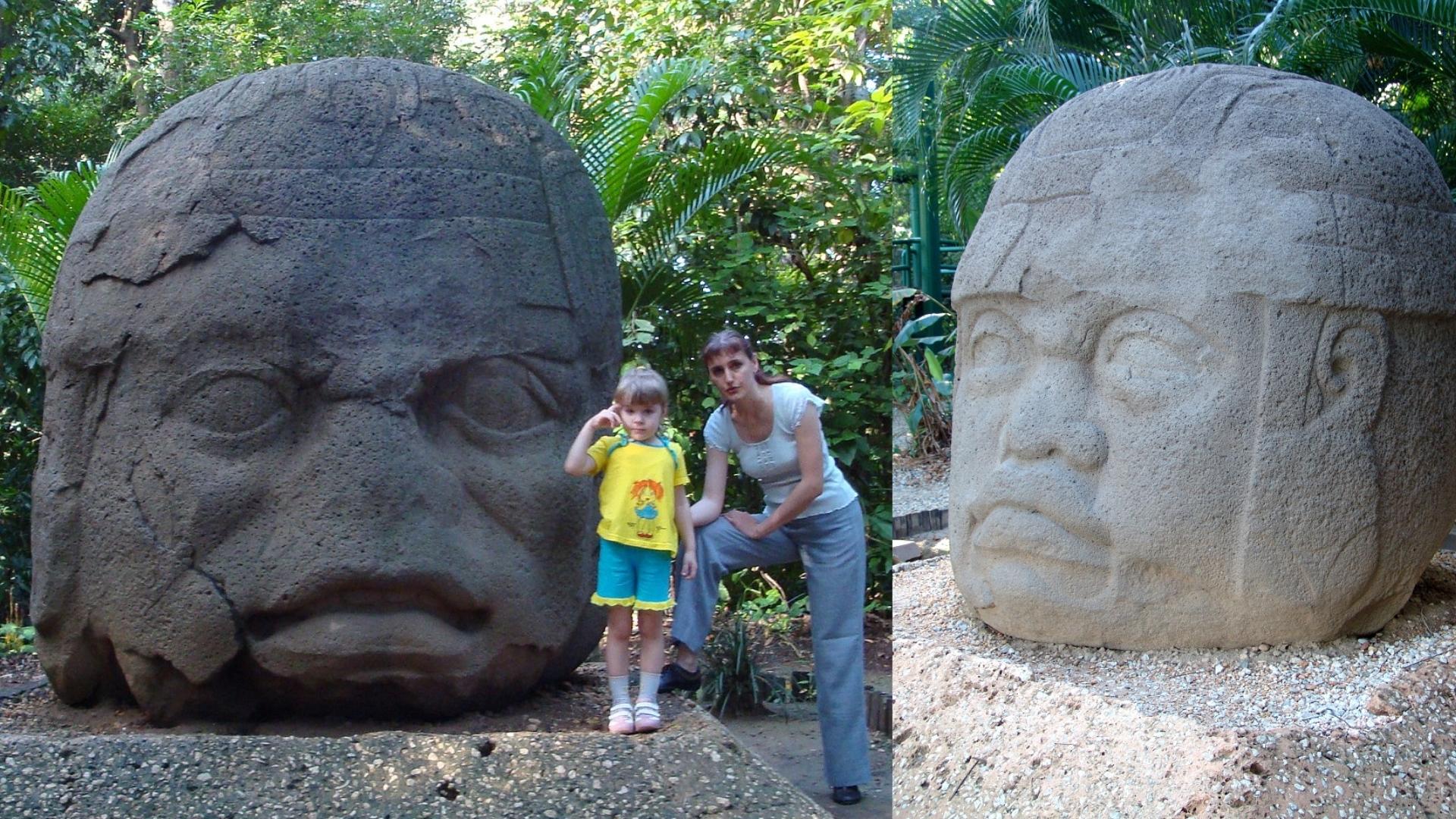
(Black Stories Untold) History tells us that Cristobal Columbus "discovered" America — but what if that’s not the whole story? Evidence suggests that African explorers arrived in the Americas long before European conquest, leaving their mark on ancient civilizations like the Olmecs. From striking stone carvings to cultural similarities, the clues are there — but mainstream history refuses to acknowledge them. Who were these early Black navigators? How did they shape the Americas? And why has their story been buried? Who was Harvard's Leo Wiener? #blackhistory#columbus
Who were first Mesoamericans? Indigenous Mexicans blended with Africans? Drupal
We look alike? It's a total coincidence, Man. I've never been here. (Olmec Heads of Africa)
There is such a thing as thoughtless consciousness, bare awareness without commentary, without chatter, inner silence. It can happen. How it happens, what brings it about, that is hard to say. Begin with outer silence. Bring the mind to a single object for long enough, and it may happen. Feel the freedom. There is full knowing, better knowing than when words/thoughts are intervening. But it must be experienced to believe how wonderful the silence and stillness is. (Jhana or "meditative absorption" moves away from the noise toward the sweet silence and sanity of stillness).
The Paradox of Thoughtless Consciousness
(The Mountain) March 28, 2025: The eye sees only what the mind is prepared to comprehend.
#quantumconsciousness #paradox #selfawareness
Where was Aztlan? It was a faraway island or continent in the middle of the sea. It may have been inside our Hollow Earth (called Agartha in some traditions), with an internal sea described by Brooks Agnew, separated into seven giant caves or caverns with different groupings or tribes of people. And the people came to Mexico by boat long ago with a memory of their origins in that highly developed civilization, which they recreated in a great empire of temples and pyramids, monuments to the ET "gods" (star people) and dragons (Nāgas, reptilians) and others who shaped them.
Aztec mythology and the origins of humanity | Fate and Fabled
(Storied) July 20, 2022: If the word Nahua (/nah-wah/) sounds unfamiliar, it’s probably because one is used to hearing about them referred to as the “Aztecs.” That is a completely made up name by Anglo researchers.
The history is complicated, but the name Aztecs was popularized by a German explorer in the 1800s to describe the powerful Mesoamerican empire. Nahua culture is richly complex, with stories that reflect and explain the sometimes-confusing duality of nature. Beyond mythology, the Nahua had an interesting political structure, impressive agricultural system, and TWO calendars. Yet, most people these days do not even know them by their real name, the Mexica (source of the name Mexico).
Hosted by Dr. Moiya McTier and Dr. Emily Zarka, FATE & FABLED explores the stories and characters of mythologies from all around the world -- why they came to be and how they impact us still today. Host/writer: Moiya McTier, PhD. Director: David Schulte. Executive Producer: Amanda Fox. Producer: Thomas Fernandes/ Editor/Animator: P.W. Shelton. Assistant Editor: Jordyn Buckland. Illustrator: Sophie Calhoun. Script Editors: Emily Zarka, PhD. and Moiya McTier, PhD. Script Consultant: David Tavárez. Fact Checker: Yvonne McGreevy. Additional Footage: Shutterstock. Music: APM Music. Executive in Charge (PBS): Maribel Lopez. Director of Programming (PBS): Gabrielle Ewing. Assistant Director of Programming (PBS): John Campbell Fate & Fabled is produced by Spotzen for PBS Digital Studios. Descriptive Audio & Captions provided by The Described and Captioned Media Program.
USA's Aztec/Mayan culture: Chaco Canyon of the Southwest is a civilization, an empire of 50,000 square miles, with the "Vatican" like city of Chaco, a female line (each with a sixth toe)
(The Premier Discovery) Oct. 30, 2024: Top 20 Biggest Trees in the World. Trees have long stood as silent witnesses to the passage of time, some for thousands of years, growing to sizes that seem impossible. How big can a tree get? From trees so big they can’t be cut down to behemoths that survive fires because of how thick they are. The scale of some trees defies imagination. Here are trees from around the world that are bigger than our imagination can hold.
The Premier Discovery creates unique content for educational and entertainment purposes and represents only the opinions of the channel. It takes content seriously and all content meets legal standards for licensing or fair use. Any attempts to falsify content strikes via the YouTube copyright system will be dealt with by its legal team. The content presented in videos is intended solely for entertainment purposes. While it may draw upon facts, rumors, and fiction, viewers should not interpret any part of the content as factual or definitive information. Please enjoy responsibly.
Lisa, I want to learn Zen in Japan from an old master, so I'm going to need some "ha sos" and "chop chops," you know, some Japanese lessons. Think you can help me with that? Hai?
Interested in Tokyo? Check out my comprehensive guide to this fascinating Japanese city. "TOKYO COMPLETE GUIDE" includes:
📖 A detailed over 150-page overview of Tokyo, catering to various tourist needs.
🚇 Information on navigating Tokyo's complex transportation system.
🍣 Recommendations for top dining and entertainment options, including bars, izakayas, and clubs.
🗣️ Must-know Japanese phrases specifically for travel.
🌱 Recommended spots and options for vegans/vegetarians.
🎉 Favorite nightclubs for the ultimate Tokyo nightlife experience.
Get "TOKYO COMPLETE GUIDE" now: takashifromjapan.com/tokyocom...
All materials on this site are submitted by editors and readers. All images, unless otherwise noted, were taken from the Internet and are assumed to be in the public domain.
In the event that there is still a problem, issue, or error with copyrighted material, the break of the copyright is unintentional and noncommercial, and the material will be removed immediately upon presented proof.
Contact us by submitting a comment marked "private."
Do not follow this journal if you are under vinaya or parental restrictions. Secure protection by Sucuri.
Wisdom Quarterly: American Buddhist Journal is licensed under a Creative Commons Attribution-Noncommercial-Share Alike 3.0 United States License. Permissions beyond the scope of this license may be available at creativecommons.org/about/licenses.


.png)


%20were-jaguar%20wiki.jpg)


.jpg)

























































![La Venta [sacrificial?] Altar 5 (Ruben Charles) - The African Olmecs: were-jaguar](https://en.wikipedia.org/wiki/Olmecs#/media/File:La_Venta_Altar_5_(Ruben_Charles).jpg)
.jpg)
