Showing posts with label Buddhist lent. Show all posts

Wednesday, February 18, 2026

Catholic Buddhist Lent: Ash Wednesday


Holy [Hindu style) ashes on Ash Wednesday
Happy Ash Wednesday, the beginning of Lent for most Christians. Wisdom Quarterly's Mexican Buddhist Crystal Q. is torn between celebrating abstinence, the Five Eight or Ten Precepts, Ten Commandments, and reverting to simplicity. Since ancient Indian times, ashes from the pyre have been used by wandering ascetics as a way of getting clean. (Ashes are absorbent, and when collected from a funerary pyre, they are a strong reminder of this body's mortality). Buddhist David Bowie perhaps quoted the Anglican prayer book best when he sang, "Ashes to ashes, funk to funky, we know Major Tom's a junkie" (David Bowie's "Ashes to Ashes").

The tilma of Juan Diego: Our Lady of Guadalupe

Madonna and Child? Kwan Yin
Why would a Mexican be Buddhist? One strong reason in the past was the arrival of Buddhist missionaries from Afghanistan and China before the arrival of Christianity. See American researcher Edward P. Vining and his published findings in An Inglorious Columbus: Or Evidence that Hwui Shan and a Party of Buddhist Monks from Afghanistan Discovered America in the Fifth Century, A.D.) Of course, in modern times Mexican Americans would love Buddhism for its many qualities and perhaps recognizing in the Buddhist Goddess of Compassion Guan Yin a great deal of the Virgin of Guadalupe.


So it's time for a field trip to church (Catholic mass) to see these smearing of cremation ashes across foreheads in Los Angeles. Ananda is eager to see what this is all about. CC took us to the giant Buddhist temple east of Los Angeles in the very Asian San Gabriel Valley, where we enjoyed the Aztec dancers dancing for the Chinese Mahayana Humanist Buddhist crowd. So this explosion/clash of Mexican and European church tradition ought to be a Roman spectacular.

WHAT HAPPENED?
St. Andrew's Church (Pasadena)
Pasadena, California, has many Catholics, and "church" (mass) was packed. The one we attended is beautiful inside, much more beautiful than the usual Holy Roman Empire version. It has a picture of God unlike any other Euro Catholic church building we've ever seen, a massive mural. And next to the God are beautiful devas ("angels"), drawn in gold and very colorful. The many pews were full, and there is a Spanish language service going on in the school building across the street. This church building is on the corner of Fair Oaks and the 134 Freeway, with a big belfry and clock (campanile). Inside, it's like a mausoleum of imported stone. And the attendees are a mix of Hispanics, Italians, Europeans, and a sprinkling of Blacks and Asians. Everyone is very nice and seem repentant as they line up for their pyre ashes, almost certainly incense stick remnants and coal. Wine and gluten crackers are served, if one doesn't mind mixing saliva with everyone else, but it's wiped with a white towel between sips, which is certainly sterilizing through prayer and God's power or the priest's magic. The officiant and his altar boy assistants said some nice words, encouraged people to be good and observe the Ramadan Lenten (Latin Quadragesima, "Fortieth") self-purification practices for the next month and ten days, and to do acts of abstinence, restraint, charity, and kindness, all beautiful sentiments for those who live up to the best of their religion. It is very much like the Buddhist Rains Retreat (Pali Vassa).

Meat eating during the Holy Season?

We agree: Let animals live by not eating them.
Historically, abstinence from meat was a requirement on the days of the Lenten season, including Sunday, the "Lord's Day") [20]. In Eastern Christianity -- including Eastern Orthodox, Eastern Catholics, Eastern Lutherans, and Oriental Orthodox -- Great Lent is observed continuously without interruption for 40 days starting on Clean Monday and ending on Lazarus Saturday before Holy Week [21, 6] and the big finale of the real New Year's Day, Easter, the first day of spring (time of renewal, when the "son" rises after being as dead as the winter, as explained by Astrotheology). More


In India, cremation ashes are called phool ("flowers"). They are collected from the pyre in a rite-of-passage called asthi sanchayana then dispersed. This signifies redemption of the dead in waters (like those of the "holy" Ganges or Jordan River) considered to be sacred and a closure for the living (Hinduism, Note 28).


American Pope's first Lent

Kendrick Lamar's Lefty Gunplay, Grammy Award winning LA Latino
Dr. Dre made mad money signing Eminem, so Kendrick adopted Lefty Gunplay (F. Scott Holladay)


Viking berserkers got high first?
Hollywood's Hart is Catholic?
(HP) Christianity erased the truth, but the evidence remains: Viking "berserkers" were said to fight in a trance of unstoppable fury. Some historians believe this rage may have been triggered by psychoactive plants like henbane or hallucinogenic mushrooms. Seeds found in a Viking grave in Denmark suggest these substances were known and possibly used. Christians systematically destroyed much of the old pagan knowledge. This video explores the evidence behind one of Viking history’s strangest questions. More

Saturday, October 25, 2025

'Buddhist Lent' ends w/ Kathina (10/25-26)


FREE. All welcome. (N. Hollywood)
For the entire month following the Rains Retreat or Vassa, the super meritorious Kathina ceremony is performed at Theravada Buddhist temples (viharas) across Buddhist countries. Los Angeles has countless Buddhist temples from all parts of the world -- on par with the most concentrated number of different Buddhist temples on earth, Bodh Gaya ("Enlightenment Grove"), Bihar, India. But that is an anomaly with spiritual embassies sent from around the Buddhist world (Buddhadom) and only tiny communities to look after them or receive visitors during the high season when weather allows. Los Angeles, however, has Buddhist communities from all over the world and not all of them with their own temples yet built. This week, beginning Saturday, Oct. 25, 2025, the Sarathchandra Buddhist Vihara of North Hollywood, has all night paritta chanting. This is with its Mexican American monk (bhikkhu), Ven. Los Angeles Sanatha Vihari Bhikkhu. Their larger Kathina ceremony is on Sunday, with hundreds in attendance, providing free food and dana (charitable support) to the resident and visiting Theravada Buddhist monks. FREE. Wear white as is the Sri Lankan island custom. Lunch and refreshments served. There is also a big Burmese celebration in the San Gabriel Valley on Sunday, Oct. 26, 2025:

Burmese Theravada tradition: Pa Auk Tawya, L.A.

The most meritorious giving for lay Buddhists
Buddhism and dana made it to ancient Greece in Gandhara, Bactria, and other outposts.
.
Kathina is a Theravada Buddhist festival that comes at the end of the Rains Retreat or "Buddhist Lent" (Vas or Vassa), the three-month rainy season intensive practice period for Theravada Buddhists in South and Southeast Asia:
  • Burma (Myanmar)
  • Sri Lanka (Ceylon)
  • Thailand (Siam)
  • India
  • Bangladesh (where it is known as Kaṭhina Cībar Dān)
  • Cambodia
  • Laos
  • Vietnam
  • Malaysia
  • Singapore [2][3].
The Rainy Season during which a monastery may hold its culminating Kathina ceremony is one month long, beginning after the full moon of the 11th month on the Lunar calendar (usually October).


It is a time of practicing letting go, generosity, giving, sharing (dana, donating), a time for lay Buddhists to express gratitude and support to Buddhist monastics (bhikkhus and bhikkhunis) [4][5].

Lay practitioners bring donations (requisites such as robes, food, medicines, necessities) to Buddhist monasteries, nunneries, and temples, especially premade new robes or cotton cloth and dyes for monastics to sew new patchwork robes.


The gift of the Eight Requisites [6] (aṭṭha parikkhārā or atapirikara in Sri Lanka) is also part of the offerings [2][4][5].

Origins at the time of the Buddha
Kaṭhina (also Kaṭina) is a Pali word referring to the sturdy wooden frame used to measure the length and width by which Buddhist monastic robes are cut [7].


As the legend goes, 30 monks were journeying with the intention of spending the Rains (Vassa) with the Buddha (Siddhartha Gautama) [2]. However, the Rains began before they reached their destination and they had to stop at Saketa [2][8].

According to the Buddha's guidelines for Vassa, mendicant (wandering ascetic) monastics should not travel during the rainy season, as this may cause unintentionally harm to crops and insects during the journey [9]. This is an ancient custom that preceded the Buddha but to which the Buddha agreed.


Rains Retreat schedule 2025 (LABV)
As such, wandering Buddhist monastics had to stop [2][8]. They passed their time together without conflict, intensively practicing the Dhamma (the Buddha's Teachings). So afterwards, the Buddha rewarded them by demonstrating a way to practice sharing and generosity.

A lay Buddhist disciple had previously donated pieces of cotton cloth to the Buddha, so he gave these pieces to the group of monks and told them to make it into a sturdy outer robe then offer it as a gift to the one of them who had practiced most in line with the monastic rules.

The frame, called the Kathina, was used to hold those pieces while they were being made into one robe [2][8]. This ancient tradition continues to this day in Theravada monasteries and nunneries around the world. More
  • Kathina Ceremony Oct. 18-19, 2025
  • All-night paritta chanting on 18th
  • Food, festivities, and procession on 19th
  • Mindfulness Meditation Center
  • (626) 731-8105
  • Los Angeles Buddhist Vihara (LABV)
  • 1023 N. Glendora Ave., Covina, CA 91724

Thursday, July 24, 2025

Vassa: What is Buddhist Rains Retreat?


What is the Buddhist Rainy Season or Rains Retreat (Vassa)? What is the Rains Retreat or "Buddhist Lent"? Understanding the Vassa and Kaṭhina ceremonies
Each year, Theravāda Buddhist monastics all over the world make a determination to stay in a single monastery for a three-month period of the Rainy Season also known as the Vassa, the Rains Retreat. This year it begins July 10th.

One will hear the term “Vassa” often in this article, so please bear it in mind. Traditionally, it starts the day after the Full Moon Day in July or the day after the Āsāḷha full moon as it is known in the Pāḷi language.

If monks move around a lot and one needs to rely on a teacher, one can at least expect monks to stay at a single monastery for a full three months without moving around. Some make determinations to practice harder, while others who already follow a steady practice simply continue their daily routine as usual.

In this article, let's look at the origins of Vassa, the different types, the allowances to leave the Vassa on business or emergencies, if it affects the age of a monastic, and what happens at the end of the Vassa.

The Origins of Vassa
During the Buddha’s time, monastics (samanas or "wandering ascetics") wandered on foot between different monasteries (viharas), forests, groves, and villages. They would wander during all times of the year, even during the period or season of heavy rains. However, laypeople—especially farmers—began to complain:

“How can the Sakyan [Scythian, Saka, Shakyian] monastics go wandering in the winter, in the summer, and even during the rainy season? They’re trampling down the green grass shoots, oppressing one-sensed living being, and destroying many small creatures. Even the monastics of other doctrines (religions), with their flawed (imperfect) teachings, settle down for the rainy season. Even birds make a nest in the top of a tree and settle down for the rainy season. But not so the Sakyan monastics.”

Out of compassion and to match the culture of the time, the Buddha responded with a new instruction: Anujānāmi, bhikkhave, vassaṁ upagantun'ti. “I allow you, monastics, to enter the rains residence.”*

This rule brought the monastics the Rains Retreat period of three months that met the expectations of the lay communities during the time of the Buddha. It now inspires the practice and striving of monastics, as it has for generations, all the way to the present. Moreover, it inspires laypeople in the present.

Two Kinds of Vassa
The Buddha allowed for two entry points into the Rains Residence: Dvemā, bhikkhave, vassūpanāyikā: purimikā ca pacchimikā ca: “There are two entries, the earlier and the later.” Purimikā (First Vassa) begins the day after the Āsāḷha full moon. Pacchimikā (Second Vassa) begins one month later.

Sometimes referred to as “Second Vassa.” This allowance for two Vassas shows the Buddha’s practical wisdom and compassion because not everything goes right the first time, as will be discussed later. It should be noted that the determination to stay in one monastery for three months is actually the day after the full moon day. This is when the new month starts.

Although most monasteries have the Vassa ceremony on the full moon day and it is a time for a large gathering, that is just for laypeople because they have that day off. Monastics really make the official determination the next day. Most of laypeople will probably never know it really happens on the next day.

Leaving during Vassa: seven-day business rule
Monastics are expected to remain in their Vassa location for the full three months. However, issues may come up where a monastic needs to leave. The Buddha allowed what is called, Sattāhakaraṇīya or “seven-day business.” Some of the many valid reasons include: More

Wednesday, July 23, 2025

Temporary ordination for one Rains Retreat


.
(Nick Keomahavong) Many people are looking for the opportunity to become Buddhist monastics, especially Buddhist monks at Thailand's Wat Phra Dhammakaya.

Temporary ordination
All ordination is temp up to enlightenment
There is a specific program for international practitioners who want to become monastics for a few days or weeks is called IDOP, which is short for the International Dhammadayadas Ordination Program.

This program gives Westerners the opportunity to live and train as Theravada monastics. The program is in English and welcomes males from all over the world, not limiting itself to Buddhists.

Once the temporary 30-45 day ordination program is completed, the temporary monks enter the three months Rains Retreat or Phansa or Vassa at Prachinburi Province.

The Rains Retreat is a time for them to continue their monastic training, living a life of Dhamma and meditation.

Life for them slows down as they experience what it is like to truly live the life of a monk. This video was created to give an exclusive inside look and education into what is the annual three months Rains Retreat is like for all Theravada Buddhist monks.

American nun Ven. Tathtaaloka
Thailand also has maechis, or "Eight or Ten Precept Nuns," for females motivated to become monastics. These options are rarer than the traditional male samaneras and bhikkhus. But recent developments have restored even FULL ordination for women in Theravada Buddhist countries so that they can live out the life the Buddha made possible by establishing the Dhamma (Dharma) for their benefit just as well as that of males.

Monday, October 28, 2024

Buddhist Lent: Kathina ceremony (10/27)

Golden Buddha from ancient Gandhara, modern Afghanistan (from Saving Mes Aynak)

Golden Buddha polished to brilliance in Burma
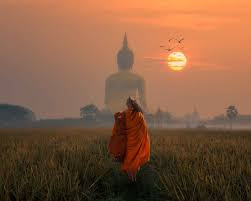
The Buddhist holiday season has just begun in the Theravada Buddhist world, as the Lent period comes to a close with a culminating ceremony called the Kathina ("Unshakeable") robe offering. It is a kind of Mardi Gras (Fat Tuesday) after the fast rather than before it.

It is said that this is the most meritorious ceremony lay people participate in, generating a great deal of beneficial karma (punya, kusala kamma).

What happened?

The new facilities can hold ~1,000 people
The Buddhist temple (Mindfulness Meditation Center) was never more crowded. Both lots were full with cars overflowing onto the neighboring suburban streets.

Nearly everyone was dressed in white just like at the time of the Buddha. There were giant tents and chairs set up near the bodhi tree (a descendant of the original tree wandering ascetic Siddhartha sat under to become the Buddha, the "Awakened One"). Snack boxes were being given out, and monks were gathering in the hall.

Two Vietnamese Theravada nuns were filming the abbot, who is said to be over 100 years old. Abbot Ahangama Dhammarama may not be a centenarian yet, but he does hold the record for the longest person (more years in robes) than anyone in America. Although he may have committed defeat offenses as some say, he is still credited with the longest ordination period or years of seniority (more than 80).

The nuns gathered around him to take selfies as the monks assembled in the pews before lining up to go outside and take their seats at long tables under a giant tent. They chanted (having chanted until midnight the night before) blessings (parittas). Then the parade (perihera) began on the boulevard in front of the temple complex. We lined up to give offerings (dana) to the monastic who walked by with bowls and robes and large gift bags.

The monastics were then served delicious foods, both hard and soft, and devotees offered them their fill so they could return to their meditation. But this day marks the end of the intensive retreat period ("Lent"), so it was on to the awarding of the ceremonial "durable robe" for the temple's monastic resident who had best adhered to the Discipline in the preceding three months of the Rains.
Marvels of monumental Chinese Buddha statue
Knowing Our Festivals 005: KATHINA
International Buddhist flag with Dharma wheel
(HARMONICO) 𝗞𝗻𝗼𝘄𝗶𝗻𝗴 𝗢𝘂𝗿 𝗙𝗲𝘀𝘁𝗶𝘃𝗮𝗹𝘀: 𝗞𝗔𝗧𝗛𝗜𝗡𝗔. Kathina is a Buddhist festival, which comes at the end of the Rains Retreat (Vassa), the three-month rainy season retreat for Theravada Buddhists.

Let’s watch this episode from the KNOWING OUR FESTIVALS series to understand more about the festival.

This looks at Malaysia, but this holiday festival is celebrated around the world in every country with a Theravada Buddhist population (Thailand, Burma, Sri Lanka, Cambodia, Laos, India, Malaysia, Singapore, America, Germany, England, Bangladesh, Indonesia, Australia, Vietnam...)
Penang Harmony Corporation (HARMONICO) would like to thank the Malaysian Buddhist Meditation Centre, Nandaka Vihara, Bukit Mertajam, and Dr. Li Feng for contributing to the production of this video, Oct. 30, 2021.

Sunday, August 18, 2024

Rains Retreat service, Super Blue Moon

Supermoon rises over Los Angeles' snow covered San Gabriel Mountains behind the megacity
Full moon, Surprise, AZ, on 8/1/23 (Diannie Chavez, The Arizona Republic via USA Today)
.
Where is the Moon Goddess?
A rare sky spectacle will occur Monday night that (probably) won't happen again for years:

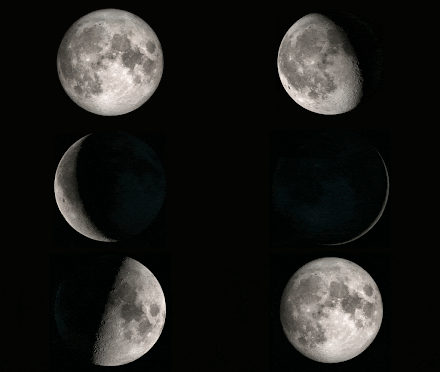
A full moon that can be called both a "supermoon" and "blue moon" will grace the night skies over the U.S.

Dubbed a "super blue moon," the rare combination occurs when the different cycles of blue and supermoons happen to align on the calendar, says NASA's Noah Petro, Lunar Reconnaissance Orbiter project scientist.
If that's not confusing enough, astronomers also have varying definitions for what counts as a supermoon and what counts as a blue moon. (Just last year a full moon met the criteria for both, by some definitions). Here's why Monday's full moon is special:

What is a supermoon?
What's super about it? Its size from proximity
When the moon’s orbit brings it closer to Earth than usual, this cosmic combo is called a supermoon. A supermoon occurs when the moon’s orbit is closest to Earth at the same time the moon is full.

The term was coined by astrologer Richard Nolle in 1979. "Different publications use slightly different thresholds for deciding when a full moon is close enough to the Earth to qualify as a supermoon," NASA explains.

"Because the orbit of the moon is not a perfect circle, the moon is sometimes closer to the Earth than at other times during its orbit."
When the moon reaches its closest point to Earth, about 226,000 miles away, full moons appear larger and brighter than at other times. A supermoon will appear 30% brighter and 14% larger than a typical full moon.

What is a blue moon?
Yes, look! It's all blue in color and cloudy!
There are two types of blue moons, seasonal and monthly. The one Monday will be of the seasonal variety. A seasonal blue moon occurs when there are four full moons in a single season (on this occasion, summer). When this happens, the third of the four is considered a blue moon.

The second definition – which arose from a misunderstanding of the original – is the monthly blue moon, referring to the second full moon in any single calendar month.

In either case, blue moons earn their reputation for being rare because of a quirk in the typical rhythm of one full moon per month [which always only had one full moon until the Vatican thrust the Gregorian Calendar on the world and divorced us from our planet's natural timekeeper].

The moon's cycle takes 29.5 days [28 days by our count of four weeks in a moonth, which means the time between full moons].

But, as Missouri State University Professor of Astrophysics Mike Reed notes, months [in the convoluted Gregorian Calendar] can have 28, 29, 30, or 31 days [to keep the number of days in a year with only 12 rather than the natural 13 moons that there should or used to be, given than 13x28=364+1 New Year turnaround day].

The two cycles create odd mismatches resulting in one more moon in a season or month than is typical – and that's a blue moon. Months usually have only one full moon – unless there's a (monthly) blue moon.

And seasons typically have three full moons – unless there's a (seasonal) blue moon.

Blue moons are not blue in color. Monday's full moon is unlikely to appear blue: Blue-colored moons in photos are usually made using special blue camera filters or photo editing apps.

Launch of a SpaceX Falcon 9 rocket on Starlink 8-9 mission, Launch Complex 40, Cape Canaveral Space Force Station, Florida, July 3, 2024, viewed from the Banana River.
.
How rare is a super blue moon? When will the next one occur? "It's tricky to answer, because it depends on your definition of a supermoon and a blue moon," Edward Bloomer, senior astronomy manager at the U.K.'s Royal Observatory Greenwich told USA TODAY via e-mail.

The answer is different depending on whether you're talking about a seasonal blue moon or a monthly blue moon. If you tweak what counts as a supermoon, the answer also changes.

In general, a blue moon happens once every two or three years on average, according to NASA. The time between super blue moons can be as much as 20 years – but in general, 10 years is the average.

So when will the next super blue moon actually occur? A safe bet is January 2037, according to NASA. However, depending on what you count as a super blue moon, you may hear of another one rising before then. Source

Rains Retreat (Vassa) Buddhist Observance Day (Uposatha)
The Buddha under full moon (JUNAIDI/DeviantArt)
Every seven days, observant Buddhists honor the lunar observance day (the sabbath, which stands for "Saturday," the holy day of the Bible in Abrahamic faiths before it was changed to the Son's day without anybody noticing other than Jews, Seventh Day Adventists, and diehard Christian sects). This is weekly and in accord with the phases of the Moon (Soma/Chandra, Luna) everyone can look up and see. Of all four in a month, of particular significance is the one that falls on the full moon. It is kept in the same way, observing the Eight Precepts and "fasting" after noon (only eating between sunup and midday). It is a day to visit the monastery (vihara), nunnery, pagoda, or temple to study, hear the Dharma (Dhamma in the form of Bana or instruction), ask questions, practice meditation, and observe the additional precepts.
    This article originally appeared on USA TODAY: Monday's rare super blue moon is a confounding statistical marvel
    • Doyle Rice, USA TODAY, Aug. 17, 2024; Sheldon S., Dhr. Seven, Seth Auberon (eds.), Wisdom Quarterly

    Sunday, February 25, 2024

    How's your Lent vegetarianism going, SD?

    Pfc. Sandoval, Dhr. Seven, Ananda (Dharma Bud Meditation), Crystal Q., Wisdom Quarterly

    (Dan Piraro/bizarrocomics.com)
    "San Dee" (Pfc. Sandoval) has let go of eating meat for Lent. So like Ananda's friend Doggone, who tried to muscle his way to meditation, Wisdom Quarterly asks, How's this special Buddhist-Catholic Lent going? Let's find out.

    WQ: Why abstain from meat for Lent?

    SD: A little research reveals that the whole reason for Lent was to give up flesh eating. [Carnival is a Latin derived term that means "remove meat."]

    "Forget Lent. Eat it! Devour any bloody flesh you desire."

    Looks like he's dead. Let's eat him! - You crazy?
    A pope [JP II] who wanted to popularize and grow the Universal Church (Holy Roman Catholic Empire) was a collection of pagan celebrations and beliefs for Emperor Constantine and others. The pope are the new princes of the Empire (Church). Whatever good there was got turned to serve the psyops Joseph Atwill writes about in Caesar's Messiah.

    What makes a human human? Biologically it's our culture and DNA, but rebirth is NOT random. That, according to the Buddha, happens by past and present deeds (actions = karma).
    Butchering is hard, but it's good eating, huh?
    What deeds lead to rebirth on the human plane (which is much wider than the surface of this planet)? It is keeping the Five Precepts, which first of all means to abstain from killing.

    It's the most basic thing. Every being wants to live, wishes not to die, so how can one honestly go around killing -- or more often causing butchers to kill by paying them for the slaughtered flesh they produce in a bloody pool of salmonella and feces from the entrails? That's be pure hypocrisy. I was tired of being a hypocrite. Karma is a better way.

    Not only would I not kill, I wouldn't ask anyone to kill for me
    People say the Buddha didn't order anyone to do this or that. He didn't force anyone to be a vegetarian. He did, however, talk about kindness, compassion, happiness-n-the-happiness of others, and treating everyone in an unbiased way as the supreme (brahma) abodes (viharas) or ways of abiding in the world.

    More than that, he laid down monastic rules for Buddhist monks and nuns in his order (Sangha) saying meat should never be eaten under four circumstances:
    1. When one has seen
    2. heard
    3. or suspects that an animal had been killed for one;
    4. or when it is a particular kind of animal [human, bear, tiger, etc.]
    Give the whole world your metta.
    Why is this important given that none of these circumstances involves killing by the eater of the dead body?

    It shows that even when not killing oneself, to induce, suggest, pay, or seem to promote the killing of animals should never be done. It is bad karma, a violation of monastic rules, and a complete contradiction to the entire spirit of nonharming (ahimsa).
    Buddha's Heart (S. Snyder)
    If Buddhism is anything -- and if Christianity/Catholicism actually stand for anything -- it is the marriage of wisdom and compassion. Is it wise to kill? No. Is it compassionate to kill? Of course not.

    But people make excuses, crave flesh, and rationalize themselves into terrible karma and terrible health and die with all the deaths they caused on their heads. Deeds (karma, actions) will bear their results (vipaka and phala). It doesn't seem to do it fast enough to stop anybody, but it is a regularity of the universe, an impersonal "law."

    But isn't difficult to remove meat?
    Whoever doesn't love cows doesn't know them.
    SD: It's easy now. Avoiding deep friend junk food feels good. There are so many more vegan options when one branches out to eating a compassionate diet. It tastes better.

    But there's every flavor. There are faux burgers for the textures and savoriness we're used to. It's all available 100% plant-based. Why would anybody kill or encourage others to kill -- at least for blooming Lent. C'mon, it's not like becoming a hermit in an ashram for life or in a Himalayan cave for death.

    Thank you for letting me live and for this flower.
    And John 5, the new guitarist for Motley Crue, is a vegan -- no drugs, drink, sugar, or death. He's on his way to the Rock 'n Roll Hall of Fame for his licks. And why? Because as a vegan his mind is so clear and his hands so dexterous.

    WQ: Wiki has a lot to say about Buddhist vegetarianism in Mahayana, the dominant school. That's next to look at more closely. It's enough that it's clear in Theravada, even though it's not a rule for laypersons.

    Doggone is jealous of you, SD, that you are able to stick to it, and we're all proud and happy to see the positive changes and your improved health.

    The flesh trade is so bad it's prohibited
    Wisdom Quarterly translation, Vanijja Sutta ("Business Discourse")
    The Buddha: "Meditators, a lay follower [of this Dharma] refrains from engaging in five types of business. What are those five?

    "They are business [buying, selling, trading, commerce] in: 1) weapons, 2) living beings [such as human trafficking], 3) MEATS, 4) intoxicants, and 5) poisons. These are the five kinds of business a lay follower refrains from engaging in" (AN 5.177).