Showing posts with label Scientific American. Show all posts

Tuesday, November 12, 2024

Racism in science: Neil deGrasse Tyson


The coup to overthrow the US government by racists in an armed overthrow

"American Coup: Wilmington 1898": Film examines massacre when racists overthrew multiracial US government
Attack Negroes then blame them?
(Democracy Now!) Nov. 12, 2024: American Coup: Wilmington 1898 premieres tonight on PBS and investigates the only successful [January 6th style] insurrection conducted against a U.S. government.

Self-described white supremacist residents stoked fears of "Negro Rule" then carried out a deadly massacre in Wilmington, North Carolina.

MLK, Vietnamese Buddhist Thich Nhat Hanh
Their aim was to destroy Black political and economic power and overthrow the city's democratically elected, Reconstruction-era multiracial government, paving the way for the implementation of Jim Crow laws just two years later.

DN! features excerpts from the documentary and speaks to Co-Director Yoruba Richen, who explains how the insurrection was planned and carried out, and how the filmmakers worked to track down the descendants of both perpetrators and victims, whose voices are featured in the film.


ABOUT: Democracy Now! is an independent global news hour that airs on over 1,500 TV and radio stations Monday through Friday. Watch livestream at democracynow.org Mondays to Fridays 8-9 am ET. Subscribe to Daily Email Digest: democracynow.org/subscribe

Thursday, June 22, 2023

New form of English discovered in USA

Phillip M. Carter (Scientific American, 6/14/23); Crystal Quintero (ed.), Wisdom Quarterly
Revolution in Cuba could've spared El Norte from this blended outcome.
Yo soy Mickey Mouse Club's Christina Aguilera (Krissy Eagle), white Latina, lover of makeup.
.
Latinx power, ese.
A new English dialect is emerging in South Florida, linguists say:

“We got down from the car and went inside.”

“I made the line to pay for groceries.”

“He made a party to celebrate his son’s birthday.”

These phrases might sound off to the ears of most English-speaking Americans. In Miami, however, they’ve become part of the local parlance.

According to recently published research (by the author of this article), these expressions – along with a host of others – form part of a new English dialect taking shape in South Florida.

This language variety came about through sustained contact between Spanish and English speakers, particularly when speakers translated directly [too literally] from Spanish.

When French collided with English
I am a Dream (#DefendDACA)
Whether English speakers live in Miami or elsewhere, chances are we don’t know where the words we know and use come from.

We’re probably aware that a limited number of words – usually foods, such as “sriracha” or “croissant” – are borrowed from other languages. But borrowed words are far more pervasive than we might think.

They’re all over our English vocabulary: “pajamas” from Hindi (India), “gazelle” from Arabic via French, and “tsunami” from Japanese.

Borrowed words usually come from the minds and mouths of bilingual speakers who end up moving between different cultures and places [called "code-switching"].

This can happen when certain events like war, colonialism, political exile, immigration, or climate change put speakers of different languages into contact with one another.
When the contact takes place over an extended period of time – decades, generations or longer – the structures of the languages in question may begin to influence one another, and the speakers can begin to share each other’s vocabulary.

[Blacks (Moors) ruled England for 800 years then the French for 200 years]
"Get down from the car" or "get out of the car"? (Roberto Schmidt/AFP via Getty Images)
.
One bilingual confluence famously changed the trajectory of the English language. In 1066, the Norman French, led by William the Conqueror, invaded England in an event now known as the “Norman Conquest.”

Soon thereafter, a French-speaking ruling class replaced the English-speaking aristocracy, and for roughly 200 years, the elites of England, including the kings, did their business in French.

English never really caught on with the aristocracy, but since servants and the middle classes needed to communicate with aristocrats – and with people of different classes intermarrying – French words trickled down the class hierarchy and into the language.

During this period, more than 10,000 loanwords from French entered the English language (medium.com), mostly in domains where the aristocracy held sway: the arts, military, medicine, law, and religion.

Words that today seem basic, even fundamental, to English vocabulary were, just 800 years ago, borrowed from French: prince, government, administer, liberty, court, prayer, judge, justice, literature, music, and poetry to name just a few.

Spanish meets English in Miami

"Latinx" means Latino/Latina.
Fast forward to today, where a similar form of language contact involving Spanish and English has been going on in Miami since the end of the Cuban Revolution in 1959.

In the years following the revolution, hundreds of thousands of Cubans left the island nation for South Florida, setting the stage for what would become one of the most important linguistic convergences in all of the Americas.

Today, the vast majority of the population is bilingual. In 2010, more than 65% of the population of Miami-Dade County identified as Hispanic or Latinx (Latina/Latino), and in the large municipalities of Doral and Hialeah, the figure is 80% and 95%, respectively.

Of course, identifying as Latinx is not synonymous with speaking Spanish, and language loss has occurred among second- and third-generation Cuban Americans. But the point is that there is a lot of Spanish, and a lot of English, being spoken in Miami.

Among this mix are bilinguals. Some are more proficient in Spanish, and others are more skilled English speakers. Together, they navigate the sociolinguistic landscape of South Florida in complex ways, knowing when and with whom to use which language – and when it’s okay to mix them. More: Scientific American

Thursday, June 11, 2020

How many trees are there in the world?

ScientificAmerican.com, 9/9/15; Pat Macpherson and Dhr. Seven (eds.), Wisdom Quarterly
The Buddha's life is replete with trees: He was born under a sal tree, entered meditation under a rose apple tree, had his life saved by the women Sujata and Punna under a banyan, became enlightened under a pipal (all buddhas have a special tree), passed into nirvana under twin sals.


All those trees thriving on carbon (Getty)
How many trees? It’s a simple question, but as Nature Video describes it, getting the answer required 421,529 measurements from 50 countries on six continents.

The answer is that the world is home to over three trillion trees — with almost half of them living in tropical or subtropical forests [mainly in the Amazon and Siberia]. There are roughly 400 trees for every human.

Tropical and subtropical trees in climate chaos
But 12,000 years ago, before the advent of agriculture, Earth had twice as many trees as it does now [nearly 7 trillion]. Currently, the planet is losing 10 billion* trees a year.

Researchers represented the number of trees across the globe using bars that are taller for denser forests. This report was published in Nature on September 2, 2015.
  • *Editor’s Note (11/27/18): This sentence was edited after posting to correct the statistic.

Tuesday, April 22, 2014

Me, Myself, and Why: Science of Self (video)

Pat Macpherson, CC Liu (eds.), Wisdom Quarterly; author Jennifer Ouellette (Scientific American's "Cocktail Party Physics"), host Sonali Kohlhatkar (UprisingRadio.org)
Eat cr*p! Do it for yourself! - Eat kindly. Do it for yourself and others.
 
The colors, look at all the colors
Scientists are celebrating the success of a new experiment to make precision changes to the DNA of scientifically-tortured mice to cure a human liver disease. 

The DNA “edits,” as they are calling them, are the latest in a series of genetic studies that are part of a scientific push stemming from the Human Genome Project and related gene sequencing surveys.

We are taught in high school biology that genes are inherited from parents and determine, to a limited extent, our physical, physiological, and even psychological traits. (Epigenetics would differ from this point of view but has yet to become widely known). Humans share an overwhelmingly large proportion of our genes with one another. 

What I do I do for science (JF).
What then creates the stunning diversity we observe among humans? Karma, which is a psychological basis of our subsequent physiology? Chance, which is how science used to explain everything, which is no explanation at all? Do our genes direct our behaviors and our disposition to diseases? What determinant wins in the age-old question, Is it nature or nurture?
 
Attempting to ask and answer these questions is Scientific American science writer and journalist Jennifer Ouellette, who does not drink much but dropped acid (the entheogen LSD) in her subjective quest for objective science. LISTEN

Radical radio host and future TV star Sonali Kolhatkar is a scientist or was. Last week she gave this TedX address at Moorpark College in the Valley: "My Journey from Astrophysicist to Radio Host, or How I Found Meaning in My Life"

Me, Myself, and Why
Me, Myself, and Why
Her new book is Me, Myself, and Why: Searching for the Science of Self. Her previous book is [a horror story] called The Calculus Diaries. She has written for the Wall Street Journal, Washington Post, Discover, Salon.com, and Nature. Her science and culture blog is "Cocktail Party Physics," an odd name since Ouellette like us is nearly a teetotaler, who explains: 
 
As diverse as people appear to be, all of our genes and brains are nearly identical. Me, Myself, and Why dives into the miniscule ranges of variation to understand just what sets us apart. Drawing on cutting-edge research in genetics, neuroscience, and psychology -- enlivened with a signature sense of humor -- the book explores the mysteries of human identity and behavior. 

Readers ride along on a surprising journey of self-discovery as Ouellette has her genome sequenced, her brain mapped, her personality typed, and even samples a popular 1960s hallucinogen, which more importantly is an entheogen, under very controlled and scientific conditions.

Bringing together everything from Mendel’s famous pea plant experiments and mutations in The X-Men to our taste for cilantro (coriander) and our relationships with virtual avatars, Ouellette takes us on an endlessly thrilling and illuminating trip into the science of ourselves. More

Monday, November 15, 2010

Bubbles Extending from the Milky Way

Hidden in Plain Sight: Researchers Find Galaxy-Scale Bubbles Extending from the Milky Way
John Matson (Scientific American, Nov. 15, 2010)

An analysis of public data from a NASA satellite turns up massive galactic structures. Artist's conception showing the approximate scale of the newfound Fermi bubbles above and below the Milky Way (NASA/GSFC).

A group of astrophysicists has located two massive bubbles of plasma, each extending tens of thousands of light-years, emitting high-energy radiation above and below the plane of the galaxy.

The researchers found the structures in publicly released data from NASA's Fermi Gamma-Ray Space Telescope, which was launched in 2008 to investigate sources of extremely energetic photons — namely, gamma rays, which have higher frequencies than x-rays.

From its orbital perch hundreds of kilometers above Earth's surface, Fermi has charted the location of gamma-ray sources with its Large Area Telescope (LAT). But just where the gamma rays originate is not always clear; the foreground of Fermi's view is clouded with emission from events such as cosmic rays striking dust in the Milky Way's disk.

To get a better picture of the gamma-ray environment, Douglas Finkbeiner of the Harvard-Smithsonian Center for Astrophysics and his colleagues carefully subtracted those sources based on maps showing locations of cosmic dust, models of the galactic disk, and known emitters of gamma rays, such as active black holes in other galaxies. More>>

[And the ancient Indians knew what they knew about the universe, math, and architecture because visitors from space told them. The Vedas are a detailed record of that knowledge, particularly the Vimana Shastra. Here Vishnu is seen in space, where the bubbles seem to represent entire cosmos.]

Controlling the Brain with Light
With a technique called optogenetics, researchers can probe how the nervous system works in unprecedented detail. Their findings could lead to better treatments for psychiatric problems.
Climate Heretic: Curry Turns on Colleagues

Saturday, April 11, 2009

The First Time Machine (Discovery Channel)

Clip from the Discovery Channel documentary "The First Time Machine"

Recently reports of a laser array experiment to create temperatures much hotter than the sun were reported. Such an expensive experiment makes little sense -- until this physics principle is understood (see minute 1:30). Light bends time. It does so better than motion. And with the help of lasers...


High-Intensity Lasers that Curve
Researchers defy the laws of physics by making a laser beam bend
Ultra-intense lasers hold much promise for improving scientific tools such as laser-induced breakdown spectroscopy (LIBS), and deepening researchers' under-standing of atomic, molecular, optical, and plasma physics. The enormous intensity of these lasers (attributed to the brief but powerful pulses of energy they emit), however, makes it difficult for scientists to fully characterize and understand them.

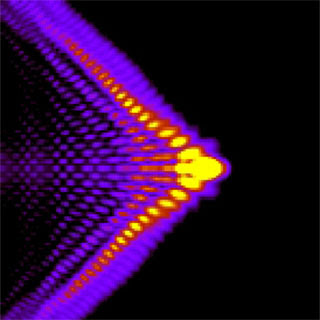
Researchers at the University of Arizona in Tucson (U.A.) and the University of Central Florida in Orlando (U.C.F.) report in Science this week that they have found a way to bend a high-intensity pulsed laser beam, a breakthrough they are hoping will help them better understand how ultra-intense laser pulses travel through the air and find potential new uses for the technology.

"People expect lasers to do certain things, like propagate in a straight line," says lead researcher Pavel Polynkin, an associate research professor at U.A.'s College of Optical Sciences. "The fact that a laser beam actually curves is quite unusual." More>>

World's Largest Laser Ready to Fire

Artist's rendering shows a National Ignition Facility (NIF) target pellet inside a hohlraum capsule with laser beams entering through openings on either end. Photo: Lawrence Livermore Nationa Security, LLC, Lawrence Livermore National Laboratory, and the Department of Energy.

After more than a decade of work and $US3.5 billion ($AU5.2 billion), US engineers have completed the world's most powerful laser, capable of simulating the energy force of a hydrogen bomb and the sun itself.

The US Energy Department will announce today that it has officially certified the National Ignition Facility at the Lawrence Livermore National Laboratory in California, clearing the way for a series of experiments over the next year that eventually is hoped will mimic the heat and pressure found at the centre of the sun.

The facility, the size of a football field, comprises of 192 separate laser beams, each travelling 300m in a one-thousandth of a second to converge simultaneously on a target the size of a pencil eraser.

While the NIF laser is expected to be used for a wide range of high-energy and high-density physics experiments, its primary purpose is to help government physicists... More>>