Showing posts with label edward de vere. Show all posts

Tuesday, September 17, 2024

World Happiness Report 2024

Why are you happy? - Well, I'm a Buddhist nun, and the Dharma and Sangha are so beautiful.

Buddha, why are you always smiling?
In this issue of the World Happiness Report we focus on the happiness of people at different stages of life.

In the "Seven Ages of Man" (listed below) in Shakespeare’s hypnotic As You Like It, the later stages of life are portrayed as deeply depressing.

But happiness research shows a more nuanced picture, one that is changing over time.

Explore the 2024 report for the latest findings on the happiness of the world’s young, old – and everyone in between.

Shakespeare: All the world's a stage
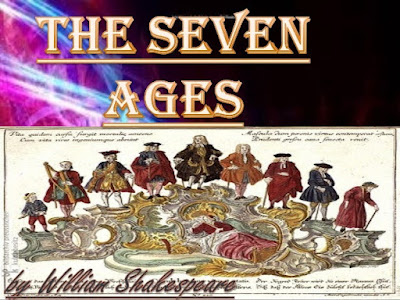
The Seven Ages by William Shakespeare (Kanish Mahajan/slideshare.net)
.
Act II, Scene VII, Line 139 features one of [Edward De Vere's aka] Shakespeare's most famous monologues, spoken by the character Jaques, which begins:

And all the men and women merely players;
They have their exits and their entrances,
And one man in his time plays many parts"

The central metaphor, stated in vivid verbal sketches, is that a human lifespan is a play in seven acts. These seven "acts," or "ages," are:

At first, [1] the infant,
Mewling and puking in the nurse's arms.
Then [2] the whining schoolboy, with his satchel
And shining morning face, creeping like snail
Unwillingly to school. And then [3] the lover,
Sighing like furnace, with a woeful ballad
Made to his mistress' eyebrow. Then [4] a soldier,
Full of strange oaths and bearded like the pard,
Jealous in honor, sudden and quick in quarrel,
Seeking the bubble reputation
Even in the cannon's mouth. And then [5] the justice,
In fair round belly with good capon lined,
With eyes severe and beard of formal cut,
Full of wise saws and modern instances;
And so he plays his part. The sixth age shifts
Into [6] the lean and slippered pantaloon,
With spectacles on nose and pouch on side;
His youthful hose, well saved, a world too wide
For his shrunk shank, and his big manly voice,
Turning again toward childish treble, pipes
And whistles in his sound. Last scene of all,
That ends this strange eventful history,
Is [7] second childishness and mere oblivion,
Sans teeth, sans eyes, sans taste, sans everything."

Read the Report
We prefer to think of smiling as face yoga, Thich Nhat Hanh, not just the mouth.

Sunday, August 4, 2024

'As You Like It' FREE Shakespeare in Park, LA

2024 Festival — Independent Shakespeare Company in Griffith Park, LA (iscla.org)

Edward de Vere is 'Shakespeare'
Shakespeare in the Park is a long tradition in American theatre. Los Angeles, being a cultural hub of the, well, West Coast, has the Independent Shakespeare Company. This summer As You Like It is running most nights, FREE, from July 10 to September 1.

As You Like It is one of Shakespeare’s most popular plays. It offers a powerful choice: natural order as experienced by the banished Duke and his followers in the forest versus a selfish, superficial consumer society represented by the usurping Duke Frederick.

Those who go on this adventure in the Forest of Arden find that with class and gender boundaries shattered, they discover themselves and a tolerance for others.

ISCLA is serving up a heartfelt screwball romantic comedy with songs inspired by Al Bowlly (a crooner popular in 1930’s Britain) to evoke an atmosphere of falling in love.

Performances run from Wednesday to Sunday @ 7:00 pm. The Immersive Prologue begins @ 6:00 pm. 2024 Calendar — Independent Shakespeare Co. (iscla.org)

Friday, September 1, 2023

FREE: A Midsummer Night's Dream (9/3)

Ashley Wells, Ananda (Dharma Buddhist Meditation), Seven (eds.), Wisdom Quarterly

Fairy Queen Tatiana (John Simmons)
A Midsummer Night’s Dream
by William Shakespeare [or the guy who really wrote it, namely, Edward de Vere*] runs at 7:00 pm Sunday, Sept. 3, 2023.

Join the Independent Shakespeare Company at Griffith Park (near the old zoo, above the old merry-go-round) for a wild and joyous night of laughs that features live music and more than a few surprises.

Author (de Vere Society Australia)
The mortal and the magical (human and fairy) are intertwined in Shakespeare’s most intoxicating comedy. As the fairy king and queen battle, four young Athenian lovers go on the run, and a group of hilarious amateur actors (including Bottom) prepare for the biggest performance of their lives.

Final week of performances (8/30-9/3)


Stage set up in Griffth Park (iscla.org)
Free Shakespeare in the Park, under the rare Super Blue Moon, enjoy the classic source of all sitcom humor, the ancient and poetic "A Midsummer Night's Dream.

"It's a play-within-a-play in two worlds, as four star crossed human lovers struggle to be with the person they love, while mystic fairies in the forest create mischief, mirth, and amusements for themselves toying with mortals and their youthful lust and romantic pursuits.

  • Secret Messiah (Joseph Atwill)
    WHAT'S THIS PLAY ABOUT? One prince loves a princess, but he's Black, so the Latino dad doesn't want him to marry his white daughter. He wants her to marry the Latin guy. But that Latin lover had sex with another princess, the first princess' best friend, and now she's all whipped on the handsome Latin guy. Meanwhile, working class British dummies are rehearsing to do a play, but this one guy named Bottom (the ass), keeps stealing the show. He gets the most laughs. The fairy people are doing magic, spells, love potions, and witchcraft, messing up the humans' plans. The play inside the play is about two hot young people, Pyramus and Thisbe, in love trying to hook up but separated by a wall until they decide to run off together. But there's a misunderstanding and some suicide, though it's just a play. There's still a real world a dreamy world of spirits, who are also very real in their own kingdom.

  • A Midsummer Night's Dream (Wiki)

Diverse crowds in Los Angeles (iscla.org)
The fairies have troubles of their own. The Fairy King Oberon wants a Buddhist/Hindu boy from India, who's in the care of the Fairy Queen Titania and will do anything to get him, even use his fairy servant Puck (played by this funny young punk rock girl with a mohawk) to get him some flower potion, which placed in the eye causes any person to fall in love with the next person one sees.

What to bring to the park for a good time

So the fairy queen is made to fall in love with a transformed human turned into an ass (one of the players rehearsing in the forest), and one lover falls in love with another's love by the misuse of the love potion.

Meanwhile, the King of Athens Theseus prepares to wed a foreign princess, Hippolyta, who's unhappy as he sides with a father trying to boss his beautiful daughter around and telling her who to marry. That's as good a summary as any. RSVP FREE:

Sunday, April 26, 2020

Happy birthday, Shakespeare (Ed de Vere)

WJ Ray (wjray.net/shakespeare...); Dhr. Seven, Ashley Wells (eds.), Wisdom Quarterly


Edward de Vere, Welbeck portrait
For every reader of the First Folio, from Sir George Greenwood and W.W. Greg to Leah Marcus, the Droeshout portrait of "Shakespeare" has been an unsolved puzzle, symbolic of the disturbing mystery:

Who wrote the Shakespeare canon of plays?

Emerson considered this “the first of all literary questions.” Nor have we solved the riddle of the “To the Reader” on the facing page.

Without an understanding of these blatant challenges, the most knowledgeable follower of “Shakespeare” is kept from the author and how he lived, essential to appreciating any work of art. The key that turns the lock opens the door.

Secrets of the Droeshout Portrait in Shakespeare’s First Folio
The Droeshout portrait, frontispiece of the First Folio, was contrived as a collection of linguistic and visual puns to impart the name and title of the Shakespeare plays’ author, Edward de Vere, 17th Earl of Oxford.

The ulterior use of such puns — foreign language, typographical, numerical, and visual — are evident throughout the introductory materials.

Martin Droeshout portrait of  "Shakespeare"
Historically, the title page and facing poem have been taken at face value and the anomalies shrugged off.

Consensus belief, commercial promotion, and analytic neglect, perhaps intimidated by tradition, together perpetuated the original deception and gave it credibility by default. More

    Friday, June 29, 2018

    Shakespeare or Shaksper? (controversy)

    Jstor.org; Iscla.org; Dhr. Seven, Ashley Wells, Crystal Quintero, Wisdom Quarterly
    The crowds grow bigger every year in Griffith Park for Independent Shakespeare LA.
    The man from Stratford, "Shakespeare," didn't write? Whose pen name was it?

    Consistently some of the best Shakespeare in Los Angeles, Topanga (theatricum.com)

    I know "Shakespeare" is really the work of Edward de Vere, Earl of Oxford, but still!
    Independent Shakespeare Co., Los Angeles presents A Midsummer Night's Dream.
    ISCLA.org SCHEDULE runs all summer long, starting Satruday, June 30th, 2018.

    Friday, April 29, 2016

    The man who wrote Shakespeare (video)


    Then who was the author?

    The face on the portraits is a mask.
    This question attracts everyone from the casually curious to the passionately academic.


    Many others who fall along the compelling continuum pose the question about the greatest literary challenge of all time: understanding the author behind Shakespeare’s plays and poems.

    Courtier poet Edward De Vere -- the 17th Earl of Oxford -- was identified as a candidate in 1918 by J. Thomas Looney.

    (It is pronounced low-nee, and jokes serve only to detract from the seriousness of the investigation). Looney was a writer and an English teacher who assembled a profile of the author based on the contents of the body of work.

    Further investigation has only augmented and illuminated the case for Edward De Vere, 17th Earl of Oxford, to the point where he has become the leading candidate for the man behind the pseudonym or pen name.

    Adherents to the theory, who are called Oxfordians, are a large and ever-growing group. They find the body of evidence persuasive.

    The De Vere Society, founded in 1986, supports and encourages this investigation and conversation in order to reach a better, deeper understanding of the works and the world that supported their creation. More

    The Shakespeare conspiracy theories (video)

    Dhr. Seven, Seth Auberon, Wisdom Quarterly; ; R. Emmerich (Anonymous); Emory U
     Who really wrote the regal works credited to the vulgar actor Will Shakespeare? (Alamy)

      
    Holding a mask to stay anonymous
    There is so little known about the real William Shakespeare.

    It is, therefore, hardly surprising that plenty of theories about the most famous (English) bard and his work have arisen. It was, after all, Mark Twain who said:

    “So far as anybody actually knows and can prove, Shakespeare of Stratford-on-Avon never wrote a play in his life.”
     
    Not always as easily dismissed as Shakespeare champions would have you believe, here are the most widely known theories about the authorship of the plays.
     
    Various authors
    Here the mask is more obvious
    In 1848 the American Joseph C. Hart wrote a book putting forward the argument that the plays were written by several different authors.
     
    In 1856 the American Delia Bacon wrote an article to support this theory and attributed the authorship to a group of people who were overseen by Sir Francis Bacon and Sir Walter Raleigh.
     
    Edward de Vere
    Edward de Vere, the 17th Earl of Oxford was also the Lord Great Chamberlain of England and a courtier poet. There is [much] evidence that suggests he did write them.

    But some believe there are references in the plays to de Vere's life and that there are a series of codes in the writing that implicate the 17th Earl of Oxford as the true author. This is the theory put forward in the film "Anonymous." More

    Conclusion? 
    We don't know for certain who wrote these works, but we know for certain it was not the man given credit. That the Earl of Oxford would write poetry anonymously, wear a mask, and ask Shakespeare to take credit, that makes sense.
      
    10 reasons Shakespeare was not the author
    (Anonymous Movie's Channel) Filmmaker gives 10 reasons the uneducated Will Shakespeare -- even if he had been born a genius and prodigy -- could not possibly be the author.
    The Establishment view

    Dr. Patricia Cahill of Emory U. shoots down conspiracies surrounding Shakespeare's works.

    Wednesday, February 11, 2015

    Real American and British CANNIBALISM

    Ashley Wells, Dhr. Seven, Pat Macpherson, Wisdom Quarterly; Amanda Mabillard (Macbeth Glossary, Shakespeare Online, Aug. 20, 2009 (accessed Feb. 11, 2015); Shakespeare.MIT.edu
    Orson Welles' so-called Voodoo production of Macbeth (National Archives/wiki commons)

    Flesh, flesh, bloody condensed flesh with other industrial excipients like rat droppings.

    .
    What did you say is in this?
    Thank goodness we're vegetarians. Shakespeare's Macbeth reveals how easy it is to get Westerners to engage in cannibalism without a second thought.

    Hey, human, I want some of that dog food!
    Most already eat bloody flesh of other species and would try "jungle meat" of other hominid primates, so why not the next door neighbor? How does the flesh industry get us to eat blood and poo?

    Tell everyone it's for health, a cure all, a panacea, and they'll knock down the doors to get some. Readers may recall that Chinese scientists created an edible gelatin (generic Jell-O) from human flesh. Yum (barf), read labels before eating anything in a box or plastic package.
    Now what human flesh was once all the rage for eating? Powdered Egyptian mummy, but since authentic Egyptian mummy was hard to come by, entrepreneurial Jews (according to records) ground up ordinary corpses with other items related to execution. Ah, nothing like death to give life, one supposes is the logic here.

    Turkey full of fecal bacteria.
    "I would never eat it!" people say. Would you eat insects (or toads, bats, slugs, worms)? "H*ells no!" How about deep fried? "What difference does that make?" we ask and still we claim, "NO way!" Yet, they (the industry that profits and the mainstream media that acts in collusion) will soon have all meat eaters eating crickets and grasshoppers, and loving it, and demanding more. Then comes the poop (fecal matter) many are already eating. Why not dehydrated human flesh?

    "Shakespeare" (the apparent pen name of Edward de Vere, 17th Earl of Oxford) lists the ingredients the Three Witches or Weird Sisters use in their potion:

    Three Witches (Macbeth)
    Shakespeare.mit.edu
    Macbeth, "The Scottish Play"
    ACT IV, SCENE I. A cavern. In the middle, a boiling cauldron.
    Thunder. Enter the three Witches
    First Witch
    Thrice the brinded cat hath mew'd.
    Second Witch
    Thrice and once the hedge-pig whined.
    Third Witch
    Harpier cries 'Tis time, 'tis time.
    First Witch
    Round about the cauldron go;
    In the poison'd entrails throw.
    Toad, that under cold stone
    Days and nights has thirty-one
    Swelter'd venom sleeping got,
    Boil thou first i' the charmed pot.
    ALL
    Double, double toil and trouble;
    Fire burn, and cauldron bubble.
    Second Witch
    Fillet of a fenny snake,
    In the cauldron boil and bake;
    Eye of newt and toe of frog,
    Wool of bat and tongue of dog,
    Adder's fork and blind-worm's sting,
    Lizard's leg and owlet's wing,
    For a charm of powerful trouble,
    Like a hell-broth boil and bubble.
    ALL
    Double, double toil and trouble;
    Fire burn and cauldron bubble.
    Third Witch 
    Evil Lady Macbeth (John S. Sargent)
    Scale of dragon, tooth of wolf,
    Witches' mummy, maw and gulf
    Of the ravin'd [glutted] salt-sea shark,
    Root of hemlock digg'd i' the dark,
    Liver of blaspheming Jew,
    Gall of goat, and slips of yew
    Silver'd in the moon's eclipse,
    Nose of Turk and Tartar's lips,
    Finger of birth-strangled babe
    Ditch-deliver'd by a drab [prostitute],
    Make the gruel thick and slab:...

    What does a play have to do with real life? Here's what. Let us first ask, What is "Witches' mummy," the ingredient listed before the "maw and gulf [stomach and throat] of...shark"? (4.1.23). It is Egyptian mummy, that is, mummified flesh:

    Eating mummies?
    Editor W.G. Clark (Macbeth by William Shakespeare, eds. W.G. Clark and W.A. Wright, Oxford: Clarendon Press, 1878) explains the significance of mummified flesh in his edition of the tragedy of Macbeth:

    "Mummy was used as a medicine both long before and long after [the] author's time. Sir Thomas Browne, in his Fragment on Mummies, tells us that Francis the First always carried mummy with him as a panacea against all disorders.

    "Some used it for epilepsy, some for gout, some used it as a stiptic [antihemorrhagic]. He goes on: 'The common opinion of the virtues of mummy bred great consumption thereof, and princes and great men contended for this strange panacea, wherein Jews dealt largely manufacturing mummies from dead carcases and giving them the names of kings, while specifics were compounded from crosses and gibbet leavings.'

    "The same author, in his Hydriotaphia (Ch. V.) says: ' The Egyptian mummies which Cambyses [King of Persia, a son of Cyrus the Great] spared, avarice now consumeth. Mummy is become merchandize, Mizraim [Egypt] cures wounds, and Pharaoh is sold for balsams.' In Webster, The White Devil, I. 1, we find:
     
    'Your followers
    Have swallowed you like mummia, and, being sick,
    With such unnatural and horrid physic,
    Vomit you up in the kennel.' (143)

    Friday, October 24, 2014

    Have a Terrifying Halloween! (Shakespeare)

    (GCH) Roman Childmolester Polanski (1971); Geoffrey Wright (2006); Rupert Goold (2010)
     
    Where do readers go? (barnesandnoble.com)
    If there's one thing we as North Americans love in our scary movies it's Satanism and blasphemy, which scares us and keeps us in our place.

    And who better to provide it than the translator of the KJV of the Bible and other popular literature? 
     
    Double, double toil and trouble!
    (The Collected Works of Shakespeare and the Judeo-Christian Bible are the two of the most popular pieces of English lit and have been for quite some time, which is no coincidence thanks to King James and Edward de Vere). Act 1 Scene 1 of Macbeth:

    The Three Witches' recipe appears at the beginning of Macbeth, Act IV, Scene 1: William  Shakespeare. The Globe Illustrated Shakespeare: The Complete Works Annotated. Howard Staunton (ed.), New York: Gramercy Books, 1993.
     
    A dark Cave. In the middle, a Caldron boiling. Thunder.
                    Enter the three Witches.
     
           WITCH 1.  Thrice the brinded* cat hath mew'd.
           [*brinded: having obscure dark streaks or flecks on gray]
           WITCH 2.  Thrice and once, the hedge-pig whin'd. 
           WITCH 3.  Harpier cries:—'tis time! 'tis time! 
           WITCH 1.  Round about the caldron go; 
        In the poison'd entrails throw.— 
        Toad, that under cold stone, 
        Days and nights has thirty-one; 
        Swelter'd venom sleeping got, 
        Boil thou first i' the charmed pot! 
           ALL.  Double, double toil and trouble; 
        Fire burn, and caldron bubble.

    I will kill you and eat you says the naga to the frog (photography.nationalgeographic.com)
    .
          WITCH 2.  Fillet of a fenny snake, 
        In the caldron boil and bake; 
        Eye of newt, and toe of frog, 
        Wool of bat, and tongue of dog, 
        Adder's fork, and blind-worm's sting, 
        Lizard's leg, and owlet's wing,— 
        For a charm of powerful trouble, 
        Like a hell-broth boil and bubble. 
           ALL.  Double, double toil and trouble; 
        Fire burn, and caldron bubble. 
           WITCH 3.  Scale of dragon; tooth of wolf; 
        Witches' mummy; maw and gulf* [mouth and throat]
        Of the ravin'd salt-sea shark; 
        Root of hemlock digg'd i the dark; 
        Liver of blaspheming Jew; 
        Gall of goat, and slips of yew 
        Sliver'd in the moon's eclipse; 
        Nose of Turk, and Tartar's lips; 
        Finger of birth-strangled babe 
        Ditch-deliver'd by a drab,*—  [prostitute]
        Make the gruel thick and slab: 
        Add thereto a tiger's chaudron,*  [entrails]
        For the ingrediants of our caldron. 
           ALL.  Double, double toil and trouble; 
        Fire burn, and caldron bubble. 
           WITCH 2.  Cool it with a baboon's blood, 
        Then the charm is firm and good.

    Horrible Witches
    (ABC News, Oct. 22) Now the head witch has been chased out of Christendom proper, DC, and into a hinterland, AL, but she and her brood still make trouble, trouble, toil and trouble for anyone who comes in contact with Sarah Caribou Barbie Palins, Alaska's garish First Family.

    Shakespeare-Navigators.com (Macbeth, Act 1, Scene 1)

    I'm not a crone, and my witches are not trash.
    Thunder and lightning. 
              Enter three WITCHES.

         First Witch:
    When shall we three meet again?
    In thunder, lightning, or in rain?
         Second Witch:
    When the hurlyburly's done,
    When the battle's lost and won.
         Third Witch:
    That will be ere the set of sun.
         First Witch:
    Where the place?
         Second Witch:
    Upon the heath.
          Third Witch:
    There to meet with Macbeth.
         First Witch:
    I come, Graymalkin!
         Second Witch:
    Paddock calls.
         Third Witch:
    Anon.
         ALL:
    Fair is foul, and foul is fair:
    Hover through the fog and filthy air.
     
              Exeunt. More
    There are tell-tale signs of the true author (de Vere Society Australia)























