Showing posts with label Buddhist influence on Christianity. Show all posts

Sunday, November 27, 2022

Was Jesus Christ a Buddhist? (The BBC)


Was Jesus Christ a Buddhist?! (Discovering the Truth)
([Bodhisattva Koi Fresco] Vishuddha Das) July 17, 2016. Das book: tiny.cc/VDBook2. Donations: Venmo: @vishuddhadas. CashApp: $vishuddhadas. Instagram: Instagram.com/VishuddhaDas. TikTok: tiktok.com/@vishuddhadass. Buddhism video series: youtube.com/playlist?list... Hinduism video series: youtube.com/playlist....

Song: CMA's "Dream Away" (All rights belong to original owner). ☯ All footage/images in this video are used legally for criticism, commentary, and education and are protected by the Fair Use Law/Act, Section 107 of the USCL. copyright.gov/legislation... ☯ For business inquiries contact: koifresco@gmail.com

BBC: Jesus was a Buddhist monk

Saturday, April 16, 2022

The Buddha and Jesus (comic)

Editors, Wisdom Quarterly; SS (video); Dan Piraro (bizarro.com); Professor Reza Aslan
"Tell me about it. I've been a blond white dude for, like, 2,000 years." (bizarro.com)

(BBC/Security Science) "Jesus Was A Buddhist Monk (BBC documentary), the "lost" years in India.

What the hell?! Rome rules!
(TheTraveler edited by WQ) It's true, Jesus was a Buddhist monk. Read his teachings in "A Course in Miracles." They are very similar to Buddhist teachings. Christians have been misled by the Roman Empire's church (Catholicism or Universalism), which used Christianity as a form of imperial government-control, when in truth Jesus wanted to liberate humankind from suffering. Jesus was a spiritual scientist much like the Buddha. MIND is the creator of all things, as the Buddha teaches (Dhammapada, Verse 1). This is the "Father in heaven" to whom Jesus refers, not some mythical emperor man with a white beard on a cloud.
  • Comparison of Buddhism and Christianity when the peaceful death of Gautama Buddha at an old age is contrasted with the harsh image of the crucifixion of Jesus as a willing sacrifice for the atonement...
  • Depictions of Gautama Buddha in film Gautama, the Buddha, has been the subject of several films. The first known film about the life of Buddha was Buddhadev (English title Lord Buddha) which...
  • Maya (the mother of the Buddha) ...story of Jesus. Z. P. Thundy has surveyed the similarities and differences between the birth stories of Buddha by Maya and Jesus by Mary and notes that...
  • Miracles of Gautama Buddha Gautama Buddha was alleged to possess superhuman powers and abilities; however, due to an understanding of the workings of the skeptical mind, he reportedly...
  • Jesus in comparative mythology perspectives on the Buddha and Jesus, when the peaceful passing into nirvana of Gautama Buddha at the old age of 80 is contrasted with the harsh image of the crucifixion of Jesus of Nazareth as an allegedly willing...
Jesus of Nazareth
Reza Aslan (amazon.com)
Rebel Jesus, not Roman myth
Two thousand years ago, an itinerant Jewish preacher and miracle worker walked across the Galilee, gathering followers to establish what he called the “Kingdom of God.”

The revolutionary movement he launched was so threatening to the established [imperial Roman] order that he was captured, tortured, and executed as a state criminal trying to overthrow the government.

Within decades after his shameful death, his followers would call him "God."

Sifting through centuries of mythmaking, Prof. Reza Aslan sheds new light on one of history’s most influential and enigmatic characters by examining Jesus through the lens of the tumultuous era in which he lived: first-century Palestine, an age awash in apocalyptic fervor.

Scores of Jewish prophets, preachers, and would-be Messiahs [Maitreyas] wandered through the land, bearing messages from God. This was the age of zealotry -- a fervent nationalism that made resistance to the Roman occupation a sacred duty incumbent on all Jews. More

Wednesday, August 8, 2018

New York Hardcore (punk rock)

Tim Armstrong, Under the Influence: NY Hardcore; S.Auberon, Pfc.Sandoval, Wisdom Quarterly


Under The Influence: New York Hardcore
(Noisey, April 23, 2015) In the first episode of the series Under the Influence, Noisey goes from the New York City streets of the Lower East Side all the way to South Korea to examine one of the most distinctive genres to sprout from the concrete of NYC: hardcore. Along the way, viewers meet with everyone from tattoo shop owners to chefs to government workers -- all of them inspired by the teachings at musical meccas like CBGB’s and A7 -- who found ways to apply the lessons learned from the scene to their own lives.
 
Join in as members of Agnostic Front, Title Fight, Youth of Today, Incendiary, and other bands explore a world living "under the influence" of New York Hardcore.

Tuesday, September 12, 2017

Pope Francis puts on a Buddhist robe

Philip Pullella, Frank Jack Daniel, Shihar Aneez (Colombo), Ranga Sirilal (Madhu), Alison Williams (ed.) (uk.reuters.com, 1/13/15); Dhr. Seven, Pat Macpherson, (eds.), Wisdom Quarterly
Pope Francis wears a saffron-colored Buddhist robe as he attends the Inter-religious Encounter at the Bmich in Colombo, Sri Lanka, Jan. 13, 2015 (Stefano Rellandini /Reuters).

 
COLOMBO, Sri Lanka - Pope Francis paid a surprise visit to a Buddhist temple on [Jan. 13, 2015], capping a trip to [predominantly Buddhist] Sri Lanka where he told huge crowds that religions must unite to heal the country’s war wounds.

Pope John Paul II with Thai Buddhists
The only other visit by a pope to a Buddhist temple was made by Pope John Paul during a trip to [Buddhist] Thailand in 1984.
 
Vatican spokesman Father Federico Lombardi said the pope briefly stopped at Colombo’s Mahabodhi Temple to meet Ven. Banagila Upatissa, a Buddhist leader who had invited him when they met on Tuesday at an inter-religious meeting.

“The pope listened with great respect” as the Theravada Buddhist monks were singing and [chanting], Lombardi said. He said that in honor of the occasion, the monks opened a sacred container holding precious Buddhist relics which is normally unsealed only once a year. 
 
  
Interesting religion you have here, monks.
The spokesman said that during the pope’s 20-minute visit, which was not on his schedule, Pope Francis listened intently as the monks explained aspects of Buddhism in a room where there was a statue of the Buddha.

Francis, who has made inter-religious dialogue a plank of his papacy, has already been to mosques during trips to Istanbul and Jerusalem.
During his two-day trip the pope has stressed the role of religion to help reconciliation after the 26-year civil war that ended in 2009 and killed up to 100,000 people. Sri Lanka is about:
  • 70 percent Theravada Buddhist
  • 13 percent Hindu (Tamil)
  • 10 percent Muslim (like its predominantly Muslim neighbor the Maldives)
  • 7 percent Catholic (from Portuguese missionary work)
  • .01 percent or less aboriginal Nagas.
Earlier, Pope Francis gave Sri Lanka its first saint at a seafront mass for more than half a million people in Colombo, the capital, calling 17th century missionary Joseph Vaz a model of reconciliation. 
 
Virg (Kwan) Yin Mary, French art
He held up Saint Vaz as an example of tolerance as Sri Lanka recovers from the war between mainly Sinhalese Buddhists and Tamil Hindus (which was the longest running civil war in Asia).

Vaz was born in 1651 in India’s Goa, then a Portuguese colony. He traveled south [to Sri Lanka, the island off the tip of India] at the age of 36, dressed as a beggar after hearing about the persecution of Catholics by the Dutch. He worked for years under the protection of a Buddhist king.

Statue of Mary

Female Jesus=Church Goddess
Also on [Jan. 13, 015], Pope Francis flew by helicopter to Madhu, in the Hindu north of the island (closest to the tip of Tamil Nadu, India), to preach forgiveness for the “evil” committed in the war and visit a Catholic shrine that was shelled.

It was the first visit by a pope to the predominantly Hindu region that contains a large Catholic minority and was the scene of fierce fighting between the Sri Lankan Army and Tamil Tiger separatist rebels seeking an autonomous homeland they called Eelam. 
 
In a prayer at the Church of Our Lady of Madhu, Pope Francis denounced the conflict that “tore open the heart” of Sri Lanka and drove home the central message of his two-day trip: Religions need to work together to heal the wounds of war.

“May all people here find inspiration and strength to build a future of reconciliation, justice, and peace for all the children of this beloved land,” he said in English.


Feminine icons of the Church
The shrine containing a 400-year old statue of Mary is the most venerated Catholic site on the island.

It is also visited by followers of other religions but was kept out of bounds for years by fighting.

After landing, the pope drove to the shrine in an open jeep, leaning out frequently to touch the heads of the faithful lining the roads, many using parasols for shade. 

Virg Yin, Goddess of Compassion, Sri Lanka
In 1999, shells slammed into the church, killing some 40 people who had sought refuge there. Since the end of the war, the north has undergone reconstruction, but divisions still run deep. The region gets few visits from world leaders.

The Vatican also said former President Mahinda Rajapaksa, who invited the pope to make the visit to the country but was defeated in [the 2015] election last week, paid a courtesy call to the pontiff at the Vatican embassy where he is staying. More

Christianity in Buddhist/Hindu Sri Lanka?
Portuguese Missionary St. Francis Xavier
Christianity in Sri Lanka is not well known before the 16th century although some local traditions claim that Saint Thomas the Apostle was active in the island (Christianity in Sri Lanka on Discover Sri Lanka).

The Portuguese missionaries from India, especially under the authority of Saint Francis Xavier, are known to have brought Roman Catholicism to the [Sri Lankan Hindu] Kingdom of Jaffna, which comprised the northern peninsula of Sri Lanka (Short account of...Sanctuary of Our Lady of Madhu, Mannar Diocese Webpage).

The newly converted Christians were under persecution under both the king of Jaffna (Ibid.) and the Dutch (Ceylon, Catholic Encyclopedia). During this time the Catholics regrouped to form a church in Mantai installing a statue of Our Lady of Good Health in a shrine. 

The Mary shrine in Madhu
The Dutch invasion and the persecution of the Catholic Church in 1670 (Ibid.), led to 20 Catholic families fleeing from Mantai, along with the statue of Mary in that church to a safer locale of Madhu (Fr. S.K. Devarajah, Monument of miracles, Sunday Times, Sri Lanka).

About the same time another 700 Catholics migrated from the Jaffna peninsula into Wanni forests. When these two communities met in Madhu, they installed a new shrine with the statue. More
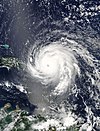
    Satellite image of Hurricane Irma
  • Monsoon flooding kills nearly 1,300 people and affects 45 million others in India, Pakistan, Nepal, and Bangladesh.
  • Hurricane Irma kills at least 46 people across the Caribbean islands and the United States.
  • A magnitude 8.1 earthquake strikes Guatemala and Mexico, killing more than 90 people.

Monday, July 3, 2017

Independence Day: "A Journey into Buddhism"

Elizabeth J. Harris, A Journey into Buddhism (2005) edited by Wisdom Quarterly; Javedan TV
Massive statue of the Buddha-to-come, Maitreya, high up in the Himalayas, dressed as a Central Asian king (like Prince Siddhartha was, having come from Saka Land (Afghanistan and its environs), Diksit Monastery (itissemriaticles.files.wordpress.com)

 
Our flag used to stand for everything good.
In November 1992, David Craig, head of Religious Broadcasting for the World Service of the BBC, and Rev. Martin Forward, interfaith officer for the Methodist Church in Britain, visited Sri Lanka to gather material on Buddhism for a series of programs to be broadcast during a focus on South Asia.
 
I helped plan their program and was also asked to prepare a few talks for the World Service's daily "Words of Faith" spot....

The themes of the talks are rooted in my journey, as a Christian, into Buddhism.

In the mid-1980's I felt the need to "let go" of my own religious-conditioning to enter the world of another spiritual tradition. It grew from a conviction that people with an interest in religion should not remain imprisoned within one framework but should explore others.

Universal rainbow Buddhist flag
The choice of Buddhism and Sri Lanka was a natural one for me. Buddhism's emphasis on meditation and non-violence touched my own interests as a Christian, and a visit to Sri Lanka in 1984 had left me with the feeling that my link with the island was not finished.
 
I originally intended to be in Sri Lanka for one year. One year, however, became seven and a half. My aim throughout was not only to study Buddhism but to practice it. I did not consider myself involved in an "interfaith dialogue" although I'm sure some perceived my actions in this way.

I wanted to enter Buddhism on its own terms, as a human being rather than as a Christian. The subjects of all the talks printed here arise from the personal journey of discovery that resulted.

The Buddha and Jesus (bizarro.com)
They draw on conversations with Buddhist friends, travel to different parts of the country in times of civil war (between insurgent Hindu separatists and a Theravada Buddhist majority), the experience of meditation, and my reading of the ancient Pali language texts.

Most importantly, they reflect the concerns that developed as the interests I brought from Britain encountered Buddhism and Sri Lanka:
  • the relationship between non-attachment and outgoing compassionate action;
  • the practical meaning of anatta (no soul, not self, egolessness) and its implications;
  • the benefit of sati (mindfulness practice) for the individual and society;
  • the resources Buddhism can offer those working for social justice and inter-ethnic or inter-religious harmony;
  • the question of a woman's role in society.
My journey into Buddhism was not always an easy one, and of course I could not let go of my Christian conditioning completely. But it has brought me to a stage when I can say with utter sincerity that I revere the historical Buddha and take guidance (sarana) in his teachings, the Dharma.

I remain a Christian, one who seeks to follow the self-sacrificial path of Jesus of Nazareth, but I also feel quite at home in a Buddhist meditation center.

These talks, I hope, will show that this is possible. I dedicate them to all the Sri Lankan friends who have brought me to a deeper understanding of the heart of Buddhism.
-Elizabeth Harris, June 1994
1. What is Mindfulness?
The Buddha reclines into final nirvana between two sal trees, his skin all golden.
.
FREE Buddhist Dictionary
Once I told an academic in Sri Lanka that I practiced a Buddhist form of meditation. Flippantly, he asked whether I was able to levitate. That's not an uncommon reaction. It confuses meditation with self-induced "trance" or making the mind blank, something that is unrelated to everyday life. But to arrive at such confusion is a mistake. True Buddhist meditation is a vigorous form of mind-training that can transform thought, speech, and action.

In the Theravada Buddhist tradition -- still found in Burma, Sri Lanka, Thailand, Cambodia, and Laos -- the practice of mindfulness or "bare attention" is very important. When sitting in meditation, perhaps aware of the breath as it touches the rim of the nostrils, thoughts inevitably enter the mind.

Usually these thoughts relate to oneself in the past or the future. Recent conversations replay themselves. Decisions yet to be made thrust themselves forward. Reactions of dislike to bodily pains arise. And occasionally, images freed from a deeper level of our being move slowly upwards.

Meditation's an internal process not a pose.
When thoughts and feelings arise in meditation, they are simply observed. They are not repressed or pushed aside, but neither are they to be allowed complete freedom to proliferate. Their arising and passing is noted without censure or praise.
 
When I first began to meditate I discovered that thoughts and feelings are fluid, ever changing, often uncontrollable, frequently illogical and irrational. It was a painful realization, since I had assumed my mind was under my direct control. But it was also the beginning of self-knowledge, the beginning of knowing how my mind worked and the doorway to modifying conditioned and negative patterns of reaction in my own life.
 
At one meditation center in Sri Lanka, high up in the mountains surrounded by tea estates, the first session begins at 5:00 in the morning. I had to get up by candlelight, pull on warm clothes, and cross the grass to the meditation hall, under a sky often brilliantly full of stars. One morning, I was gazing at the dark, silvered beauty of the sky when I heard steps below me. At that moment, I caught my mind saying, "Go on into the meditation hall so that they can see you were up first."

Now I can sit keeping "mind" in perspective.
Normally, I would have hurried into the hall to show my punctuality and zeal, but on that occasion I noted the thought, recognized the element of competition, and consciously refused to act on it. I stayed for several more moments rapt in the pre-dawn stillness, feeling the cool air against my skin, and I was certainly not the first to settle my cushions before the silent, candle-lit image of the Buddha.

And I know it was the practice of sati, of mindfulness, which made that moment of insight into my own competitive egotism possible, insight into a childish wish to impress, to be top of the class.
 
Meditation of this kind is hard work. It has nothing to do with making the mind a blank, though it can lead to peace and calm when the racing mind stills and there is only the present moment. One monk who taught me put it this way: "Meditation is the ultimate practice of non-violence. Suffering, pain, and feelings of anger are not suppressed but faced, confronted, and transformed." TO BE CONTINUED More

Wednesday, August 28, 2013

The March on Washington! (video)


WARNING: Extremely moving! MLK said, "I Have a Dream" (see full speech)
 
The Rev. Dr. Martin Luther King, Jr. planned and participated in the historic 1963 "March on Washington" to promote peace (opposing the US/MIC's widespread secret bombing of Buddhist Cambodia, Laos, and the very public and wanton destruction of Buddhist Vietnam). Dr. King was a great promoter of Vietnamese Zen Buddhist monk and fellow peace activist Ven. Thich Nhat Hanh (Thay). Racism in America and widespread economic disparity, which kept large swaths of the population in "slave" conditions, could be tolerated by the Powers That Be at the time. But the one thing they could not tolerate was a direct assault on the military-industrial complex (the corporate and governmental interests that very profitably promote war and destruction as a means of enriching themselves and maintaining social control). Dr. King saw this and could not be silent on the matter:

"The greatest purveyor of violence: My [US] government, and I cannot be silent." 
- MLK
 
Malcolm X quietly supported the growing peace movement opposing segregation, racism, and economic inequality. He, however, was willing to examine other options -- the Islamification of the black community, direct resistance, black nationalism, and taking what communities were being deprived of due to race. He is often cast as promoting the opposite of Dr. King's peace model based on Gandhi and Jesus Christ (who is said to have come not to bring peace but a sword, Matt. 10:34). The saying, "By any means necessary" is repeatedly quoted like a battle cry -- as if it meant violence were the only way. All means included nonviolent resistance, active dissent, civil disobedience, self-defense, peaceful demonstrations, rallies, marches, finding allies in other oppressed parts of the world and the country (among other groups), and more. He did not believe that the Powers That Be were simply going to hand over equal rights and opportunities out of kindness and generosity. So much was at stake that no option was off the table. So to think that Malcolm X was all angry and violent, whereas Dr. King was all love and peace is a great misreading of history. But this is the simplistic tale we are told.


Peaceful means
Peace Pagoda, Ladakh, Himalayas (creative_pixels)
Malcolm X makes it clear that he has bigger plans for ending racism and oppression than what Rev. King has been heard promoting. Whether promoting pure peace or "all means necessary," the American government assassinated them just the same. But who made a bigger public impression?
 
Whose name is remembered and lauded as a sustainable movement? If we fight violent-power with violent-power, the more violently-powerful win, and we continue to live oppressed by violence. 
 
If we resist with peace, after a time, peace wins out, and we now live blessed by peace. The choice is always ours -- and it is not an easy choice when being prodded by violent police and racist institutions.

"It is time now for you and me to stop running away from the wolf right into the hands of the fox looking for some kind of help."
- Malcolm X
 
MLK, Thay, Browne (digitalunion.osu.edu)
(MalcolmXfiles)  "Recently when I was blessed to make a religious pilgrimage to the holy city of Mecca where I met many people from all over the world, plus spent many weeks in Africa trying to broaden my own scope and get more of an open mind to look at the problem as it actually is, one of the things that I realized -- and I realized this even before going over there -- was that our African brothers have gained their independence faster than you and I here in America have.
 
"They've also gained recognition and respect as human beings much faster than you and I. Just ten years ago on the African continent, our people were colonized.
 
"They were suffering all forms of colonization, oppression, exploitation, degradation, humiliation, discrimination, and every other kind of -ation. And in a short time, they have gained more independence, more recognition, more respect as human beings than you and I have.
  
"And you and I live in a country which is supposed to be the citadel of education, freedom, justice, democracy, and all of those other pretty-sounding words.
 
"So it was our intention to try and find out what it was our African brothers were doing to get results, so that you and I could study what they had done and perhaps gain from that study or benefit from their experiences."


Do police and soldiers fight or defend the corrupt offices of power?

Monday, July 22, 2013

"The Hidden Story of [the Real] Jesus" (BBC)

Wisdom Quarterly; BBC; BBC; (Thank you, St. Issa, Jesus of Nazareth in Kashmir)
"The Buddha loves me, that much I know, because the sutras tell me so," joked Alan Watts, the British Zen teacher. And the same may be said of Saint Issa and other wise and compassionate bodhisattvas (aspirants to supreme enlightenment for the benefit of all).


A king is born -- the Prince of Cambridge enters human plane. Royal baby's name? George. His popularity may overshadow U.S. royalty North West, offspring of rapper and pornstar.

Thursday, July 18, 2013

SUFI version of the Buddha's life

Dhr. Seven, Amber Dorrian, Ashley Wells, Wisdom Quarterly; TheMorgan.org
St. Issa (Jesus), the Buddha, Goddess Oshun, Bodhisattva Kwan Yin, Shiva (tumblr.com)
Sultan "Ibrāhīm Ibn Adham of Balkh Served by Angels" from the Read Mughal Album. Mughal, probably Oudh, third quarter of the 18th century, attributed to Mīr Kalān Khān. Purchased by Pierpont Morgan, 1911; MS M.458.32 (themorgan.org).

  
Rumi, inspired by Buddhism, set forth Seven Pieces of Advice. They are universal, transcending religious boundaries, epitomizing the highest sentiments of humanity, and encompassing the common values of all religions:
  1. In generosity and helping others, be like the river.
  2. In compassion and grace, be like the sun.
  3. In concealing others’ faults, be like the night.
  4. In anger and fury, be like the dead.
  5. In modesty and humility, be like the soil.
  6. In tolerance, be like the ocean.
  7. Either appear as you are, or be as you appear.
Rumi, Founder of Whirling Dervishes
Sufism well knows the story of Siddhartha Gautama, who became the Buddha. But the story is told of an ancient king of Balkh:
 
After a spiritual awakening, Ibrāhīm Ibn Adham (d. 798), an 18th century ruler of Balkh, renounced his kingdom and wealth to become a wandering dervish.
 
Part of his spiritual awakening happened one night when he heard people on the roof of his palace. When he made inquiry, a man told him they were looking for a lost camel.
 
Ibrāhīm then replied it was ridiculous to expect that the camel would be on the roof of his palace. The man then said it was equally crazy to expect to find Allah [oneness with the divine, GOD, the Source, the ultimate, etc.] in the lap of luxury. Ibrāhīm then realized that his hope of finding Allah in his present surroundings was as futile as searching for a camel on his roof.
 
Rumi Museum (newlotus.buddhistdoor.com)
Jalal al-Din Rūmī (1207-1273), a later Sufi mystic, also born in  Balkh (an early center of Buddhism), recounted Ibrāhīm's story in his six-volume poetic work, the Masnavī. (He is depicted showing his love for his young male disciple Hussam al-Din Chelebi, c. 1594, extract from Tardjomev-i-Thevakib, by the Mawlewiyya Dervich Aflaki Baghdad, Pierpoint Morgan Library, New York).
 
Legend has it that Khiżr, the immortal guide of the Sufi, played a role and that Ibrāhīm, regarded as a spiritual ancestor of the Chrishtī Sufi order, was fed by angels. (Siddhartha during his futile period of severe fasting and penitence was going to be fed by the devas through the pores of his skin to keep him alive, but he declined thinking it would be deceptive since everyone assumed him to be fasting).
 
Here the haloed Sufi shaikh (spiritual master) sits at the right, with eyes closed and supported by a staff. Seven "angels" (devas, "shining ones") have already arrived, and an eighth is en route. A pensive man, at the far left, echoes the figure of Ibrāhīm.
 
The subject may have been inspired by engravings of Christ fed by angels in the wilderness -- another echo of the Bodhisattva Siddhartha's quest for spiritual enlightenment. The painting is probably by Mīr Kalān Khān, who was active in Oudh and Delhi during the 1760s.

The Read Mughal Album
Rumi Mausoleum (newlotus.buddhistdoor.com)
Pierpont Morgan purchased the Read Mughal album, along with a Persian album, from Sir Charles Hercules Read, Keeper of British and Medieval Antiquities at the British Museum, in 1911.
 
The Morgan purchase consisted of 30 folios (including both Indian miniatures and the Mughal portraits). But Read owned at least 48 others, now widely dispersed. The leaves were probably once bound in several lacquered bindings. 
 
The identity of their compiler has not been established, but many borders date from the 18th and 19th centuries. The Mughal emperors of India commissioned biographies and were frequently portrayed by artists. Here the paintings are presented in the order of the emperor's reigns rather than the dates of the miniatures, starting with Bābur (r. 1526–30), the Muslim founder of the dynasty, and ending with Shāh Jahān (r. 1628–58), builder of the Taj Mahal. More

Seventeen-year-old Australian high schooler Kim Ho wrote and starred in a short film about a teenage boy who falls in love with his best friend and grapples with coming out. VIDEO: "The Language of Love"

A senior Pakistani Taliban commander has written a personal response to 16-year-old school girl Malala Yousufzai, who survived a shooting attack. The letter offers some sympathy, but it also attempts to justify Taliban attacks on schools. Read the Taliban letter
Alleged NSA whistleblower Edward Snowden, now in Russia seeking asylum from American torture, has dominated international news headline for weeks. It’s spawned a global debate over privacy vs. the laughable pretext of "national security" governments use to deprive citizens of rights and civil liberties.
  

Balochistan is one of the most underdeveloped regions in Pakistan, and has traditionally had a heavily male-dominated patriarchal society. Women have rarely had a role in public life. That’s changing as women are now taking up leading roles in the Baloch nationalist movement.
 
The state law in Florida which gives citizens the option of using deadly force in self-defense may be at the cusp of a global trend, says University of Chicago law professor Tom Ginsburg.
























