Showing posts with label liquor. Show all posts

Monday, July 1, 2024

Drug abuse invented in USA (Family Guy)

In this episode of The American Show, Homes sparks up a medical marijuana cigar in his bathroom.

What did the CIA do to us?
There's drug use and drug abuse. Native Americans were using plants and ordeals (such as the Vision Quest) to alter consciousness for millennia before invasion-migration Europeans decided to drop in for a long visit. Rather than follow custom and do things in a ceremonial fashion with the blessing of the community, rugged individualists decided to throw caution to the wind with predictable results. In the Amazon there was Ayahuasca, but there was no "drug abuse" until someone brought in distilled liquor, or "spiritous drinks" and rotgut, bottled brews for senseless consumption. Real plant helpers from the garden pharmacy heal addiction and other maladies. Drugs of abuse do not. There's medicine, and there are things to abuse called "medicines."


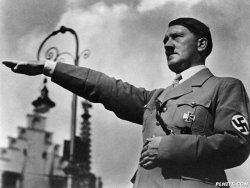
CIA: We rule this culture since Nazis arrived
Who, to alter consciousness, would dream of huffing (inhaling) industrial chemicals? Who for sweetness would swallow the toxic brain chemical aspartame? Why eat white sugar, robbed of all its minerals and nutrients, when brown (whole) is available? Welcome to America, where any agent will do, even Nazi-invented methamphetamine that hijacks the dopamine and limbic system and creates energetic zombies...what could go wrong. The hippies were much more selective and interested in natural highs and health, but mass culture was just looking for cheap thrills, easy slogans, and mass marketed fashions to look the part. Drugs, sex, and rock 'n roll replaced peace, love, and happiness. Now who, in this day and age, thinks the best experience is to be found in the bathroom medicine cabinet? Chase a dragon and it will turn and bite. Hegemony means we spread our habits to the world as the current imperial power. If we can't handle our drug use, how are other places to survive sipping the neural soup? Of course, there was that time the British got China addicted on poppy (opium).

(South Park) Drugs are bad, mkay. Mr. Mackay explains.

Happy 4/20. Family Guy on drugs, the [pen]ultimate compilation!
(InfernošŸ”„) April 20, 2024: There are so many funnier clips that were missed. Tech channel:  @infernology. Content owned by Fox. No copyright infringement intended. WARNINGFamily Guy is NOT family-friendly and is unsuitable for younger audiences. (Viewer discretion is advised.)

(South Park) Recreational use of Semaglutide as Ozempic and Wegovy

#familyguy • #comedy • #cartoons • #entertainment • #sitcoms • #animated • #funny
  • Family Guy; The Simpsons; South Park; Seth Auberon, Pfc. Sandoval, Sheldon S., Ashley Wells (eds.), Wisdom Quarterly

Friday, November 11, 2022

Elephants steal beer, get drunk, kill brewers

I don't have a problem drinking. I drink. No problem. So shut up, kids. Wait till you taste it.
Drunk as a skunk-trunk that likes to dunk into the mahua, elephant alcoholics
.
See, it's good enough for Dumbo, kids.
All-they-can-drink alcohol? Animals crave it. A herd of two dozen elephants was caught sleeping off hangovers after drinking jungle beer brewed by villagers in India.

The elephants came across the brew — also known as “mahua,” which is a traditional liquor made from the sugary flower of the Madhuca longifolia or butter tree — and apparently couldn’t resist catching a buzz, reported The Times UK.

Elephants are known to be [violent] fans of mahua, according to Chief Executive of Wildlife SOS Kartick Satyanarayan: “When they smell it, they can poke their trunks into kitchens or break down walls to get to it.

“Once finished, they stagger back home, toppling the odd tree or house on the way,” he added.

Locals from the village of Salipada, Odisha, India, left the jars of alcohol fermenting in the jungle, allowing these booze-loving elephants to dip their trunks in.

Local wildlife officials reportedly woke up the heavy sleepers by beating on drums, and the hungover animals slowly got up and stumbled back into the forest.

This was not the first occurrence of elephants drinking more than they can handle.

Drunk elephants as a rowdy human
In April, a herd of elephants, who some consider “addicted” to the fermented alcohol [i.e., alcoholics], killed five people brewing liquor in the Jaisingh Nagar Forest range, according to the Daily Mail.

Forest officials warn locals to avoid brewing mahua when elephants are spotted nearby because they can smell the liquor from a distance and move closer to cause drunken havoc. Source

Thursday, June 4, 2020

Alcohol: The Drunk Cats Sutra (Jat. 512)

Kumbha Jataka — The Fifth Precept (Jataka 512) from Jataka Tales of the Buddha, Part III retold by Ken and Visakha Kawasaki edited by Dhr. Seven, Ashley Wells, Xochitl, Wisdom Quarterly
Mom, can we be drunk cats for Halloween? - Honey, it's may we. We talked about this.
.
I like to stick my paw in jars and drink up.
At that time Sabbamitta was the king of Savatthi. He welcomed two merchants, Sura and Varuna, and asked them what they wanted. They asked for large quantities of ingredients to make an alcoholic brew and many huge jars. After they had combined the recipe, they put it into the jars and tied a cat to each to stand guard against rats.

As the brew fermented, it began to seep out. And the guard cats lapped up the potent drink that ran down the sides, became intoxicated, and laid down to sleep.

Rats snuck in and nibbled at their ears, noses, and tails. The king's men were shocked and reported that the cats tied to the jars had died from drinking. "Surely these merchants must be making a poison!" the king concluded. He immediately ordered them to be beheaded.

As Sura and Varuna were being executed, their last words were, "Sire, this is liquor! [It's poisonous but] tastes good!" After putting the alcohol merchants to death, the king ordered the jars to be broken.

By then, however, the effects of the alcohol had worn off the cats, and they were playing merrily with hangovers. The guards reported this to the king. [Oops, said the king, let's throw a party.]

How drinking alcohol began
Kumbha Jataka ("Jug Birth Story") — The Fifth Precept (Jat 512) edited by Wisdom Quarterly
This poison will make me forget for a while, and I will break all Five Precepts at once.
.
Once upon a time, while the Buddha was residing at Jetavana Monastery in Savatthi, Visakha, the wealthy and devout lay Buddhist, was invited by a large number of women she knew to join in celebrating a festival in the city.

"That is a [liquor] drinking festival," Visakha replied. "I do not drink [in keeping with the Five Precepts the Buddha taught]."

"All right," the women said, "go ahead and make your offering to the Buddha. We will enjoy the festival."

The next morning, Visakha served the Buddha and the monastics (monks and nuns) at her house and made great offerings of the Four Requisites to them.
  • [1: Four Requisites: appropriate food, medicine, clothing, shelter.]
That afternoon, after the meal, she proceeded to Jetavana to offer sweet incense and beautiful flowers to the Buddha and to hear him teach the Dharma. Although the other women were quite drunk, they accompanied Visakha.

C'mon, let's party! It's time to dance gaily.
Even at the gate of the monastery itself, they continued drinking. When Visakha entered the hall, she bowed reverently to the Buddha and sat respectfully to one side. Her many drunken companions, however, were oblivious to propriety. They seemed not to notice where they were. Even in front of the Buddha some of them danced, some sang, some stumbled around intoxicated, and some bickered.

In order to inspire a sense of spiritual urgency (samvega) in them, the Buddha emitted a dark blue radiance from his eyebrows, and everything suddenly became dark.

The drunk women were stricken with the fear of death and instantly sobered up. The Buddha then disappeared from his seat and stood atop Mount Meru (Mt. Sumeru). From the auspicious curl of white hair between his eyebrows, he emitted a ray of light as bright as if one thousand moons and suns were rising.

He asked, "If, while carelessly enjoying yourselves and laughing, you are smoldering and surrounded by darkness [enveloped by disorienting smoke], why not seek light?"

The Buddha's words touched their now receptive minds, and all of the women became stream-enterers (the first stage of awakening/enlightenment).

The Buddha then returned and sat down in his chamber. Visakha bowed once more and asked, "Venerable sir, what is the origin of this custom of drinking intoxicating alcohol, which destroys a person's modesty and sense of shame [fear of wrongdoing]?"

In answer to Visakha's question, the Buddha revealed this story of the distant past.

Past life story

Long, long ago, when Brahmadatta was reigning in Baranasi (Varanasi, Bharat, ancient India), a hunter named Sura went up to the Himalayas from his hometown in Kasi to look for game.

In that remote forest there was a unique tree whose trunk grew to the height of a man with his arms held up over his head. At that point three branches spread out, forming a hollow about the size of a big water barrel. Whenever it rained, the hollow filled up with water.

Around the tree grew a bitter plum tree, a sour plum tree, and a pepper vine. The ripe fruit from the plum trees and the pepper vine fell directly into that hollow. Nearby there was a patch of wild rice. Parrots plucked the heads of the rice and sat on the tree to eat. Some of the seeds fell into the water. Under the heat of the sun, the liquid in the hollow fermented and became blood red.

The discovery of alcohol.


In the hot season, flocks of thirsty birds came there to drink. Swiftly they became intoxicated; they wildly spiraled upwards, only to fall drunkenly at the foot of the tree. After sleeping for a short time, they woke up and flew away, chirping merrily. A similar thing happened to monkeys and other tree-climbing animals.

The hunter observed all this and wondered, "What in the world is in the hollow of that tree? It can't be deadly poison, for if it were, the birds and animals would be dead." He drank some of the liquid and became intoxicated the same as they had.

As he drank, he felt a strong craving to eat slaughtered meat. He kindled a small fire, wrung the necks of some of the partridges, fowls, and other creatures lying drunk and unconscious at the foot of the tree, and roasted them over the coals.

He gesticulated drunkenly with one hand as he stuffed his mouth with the other like an ogre.

While he was drinking and eating flesh, he remembered that there was a hermit named Varuna who lived near there. Wishing to share his liquid discovery with the hermit, Sura filled a bamboo tube with the liquor, wrapped up some of the charred meat, and set out for the hermit's leaf hut.

As soon as he arrived, he offered the hermit some of the beverage, and both of them ate and drank with gusto.

The hunter and the hermit suddenly realized that this addictive drink could be a way to make a fortune. They [bottled it in that they] poured it into large bamboo tubes, which they balanced on poles slung across their shoulders and carried it to Kasi.

From the first border outpost, they sent a message to the king that drink-makers had arrived. When they were summoned, they took the alcohol and offered it to the king. The king took two or three drinks and became intoxicated.

After a few days, he had consumed all that the two men had carried and asked if there were any more.
"Yes, sire," they answered.

"Where?" asked the king.

"In the Himalayas."

"Go and fetch it," ordered the king.

Sura and Varuna went back to the forest, but they soon realized how much trouble it was to return to the mountains every time they ran out. They took note of all the ingredients and gathered everything needed. In this way they were able to brew the alcohol in the city.

The citizens began drinking the liquor, forgot about their work, and became impoverished. The city soon looked like a ghost town.

At that point the two drink-makers left and took their business to Baranasi, where they sent a message to the king. There, too, the king summoned them and offered them support. As the habit of drinking spread, ordinary business deteriorated, and prosperous Baranasi declined in the same way as Kasi had.

Sura and Varuna next went to Saketa and, after abandoning Saketa, proceeded to the city-state of Savatthi.

At that time the king of Savatthi was named Sabbamitta. He welcomed the two merchants and asked them what they wanted. They asked for large quantities of the main ingredients and hundreds of huge jars.

After everything had been combined, they put the mixture in the jars and tied a cat to each jar to guard against rats.

As the brew fermented, it began to overflow and seep out. The cats eagerly lapped up the potent drink that ran down the sides, became thoroughly intoxicated, and lay down to sleep. Rats came and nibbled at their ears, noses, and tails.

The king's men were shocked and reported to the king that the cats tied to the jars had died from drinking the escaping potion.

"Surely these men must be brewing a poison!" the king concluded, and he immediately ordered them beheaded. As Sura and Varuna were being executed, their last words were, "Sire, this is liquor! It makes you forget all your problems!"

After putting the drink-merchants to death, the king ordered that the jars be broken. By then, however, the effects of the alcohol had worn off, and the cats were playing merrily. The guards reported this to the king.

"If it were poison," the king said, "the cats would have died. It may make cats forget after all. Let us drink it."

He ordered that the city be decorated and that a pavilion be set up in the courtyard. He took his seat on a royal throne under a white parasol [that seems to symbolize a vimana or flying saucer that gives a ruler the power to rule], surrounded by his ministers, prepared to drink.

At that moment, deva-king Sakka, ruler of the deities [of the Realm of the Thirty-Three and the Four Great Kings of the Sky], was surveying this world and wondering, "Who is dutifully taking care of parents? Who is conducting him/herself well in thought, word, and deed?"

When the celestial King Sakka saw King Sabbamitta of Savatthi seated in his royal pavilion, ready to drink the intoxicating brew, he thought, "If King Sabbamitta drinks that, the whole world will perish. I will make sure that he does not drink it."

King Sakka instantly disguised himself as a Brahmin and, carrying a jar full of liquor in the palm of his hand, appeared standing in the air in front of King Sabbamitta. "Buy this jar! Buy this jar!" he cried.

King Sabbamitta saw him and asked, "Where did you come from, Brahmin? Who are you? What jar is that you have there?"

"Listen!" Sakka replied. "This jar does not contain butter, oil, molasses, or honey. Listen to the innumerable vices this jar holds.

"Whoever drinks this, poor silly fool, will lose control of himself until he stumbles on level ground and falls into a ditch or cesspool. Under its influence, he will eat things he'd never touch in his right mind [like slaughtered charred meat]. Please buy it. It is for sale, this worst of jars!

"The contents of this jar will distract a person's wits until he behaves like a brute, an ogre, giving his enemy the fun of laughing at him. It will enable him to sing and dance stupidly in front of an assembly. Please buy this wonderful liquor for the obscene gaiety it brings.

"Even the most bashful will lose all modesty by drinking from this jar. The shyest person can forget the trouble of being dressed and can shamelessly run about the town nude. When he or she is tired, s/he'll happily lie down anywhere, oblivious to danger or decency. Such is the nature of this drink. Please buy it. It is for sale, this worst of jars!

"When one drinks from this, one loses control of one's body, tottering as if one cannot stand, trembling, jerking, and shaking like a wooden puppet worked by another's hand. Buy my jar. It's full of wine.

"The person who drinks from this is prey to every danger because s/he loses his/her senses. One might burn to death in one's bed, stumble into a pack of jackals, drown in a puddle, become reduced to bondage or penury. — There is no misfortune that drinking this may not lead to.

"Having imbibed this, humans may lie senseless on the road, soiled with their own vomit and blood and licked by dogs. A person may become so intoxicated as to tie one's beloved parents to a tree, revile a spouse, and in blindness even abuse (molest) or abandon an only child. Such is the merchandise contained in this jar.

"When a person drinks from this jar, one can deludedly believe that all the world is his/hers and that s/he owes respect to no one. Buy this jar. It is filled to the brim with the strongest drink.

"Addicted to this drink, whole families of the highest class will squander their wealth and ruin their name. Buy this jar, sire. It is for sale.

"In this jar is a liquid that makes tongue and feet lose control. It creates irrational weeping and laughter. It dulls the eye and impairs the mind. It makes a person contemptible.

"Drinking this will create strife. Friends will quarrel and come to blows. Even the old devas (titans, asuras) were susceptible and lost their heaven because of drink. Buy this jar and taste the wine.
  • [2: The asuras ("titans"), the predecessors of the devas ("shining ones"), lost their heaven because Sakka, when he was reborn there as king, expelled them when they were too drunk on sura (a celestial brew) to fight back.]
"Because of this beverage, falsehoods are uttered with pleasure, and forbidden actions are performed with foolhardy joy. False courage will lead to danger, and friends will be betrayed. The person who drinks this will dare any deed, unaware that one is dooming oneself to hell [niraya, the downward path, the lowest world of which is hell]. Try this drink, sire. Buy my jar.

"The one who drinks this brew will do harm (bad karma) in thought, word, and deed. One will see good as harm and harm as good. Even the most modest person will act indecently when drunk. The wisest person will babble foolishly. Buy this lovely liquid and become addicted. You will grow accustomed to unskillful behavior, to lies, to abuse, to filth, and to disgrace.

"When thoroughly drunk, humans are like dull oxen struck to the ground, collapsing and lying in a heap. No human power can compete with the poisonous power of liquor. Buy my jar.

"In short, drinking this will destroy every virtue (moral). It will banish shame, erode good conduct, and kill good reputation. It will defile and cloud the mind. If you can allow yourself to drink this intoxicating liquor, sire, buy my jar."

When the king heard this, he realized the misery that would be caused by consuming intoxicating alcohol. Overjoyed at being spared the danger, he wished to express his gratitude:

"Brahmin," he cried, "you have outdone even my mother and father in caring for me! In gratitude for your excellent words, let me give you five choice villages, a hundred serving women, seven hundred cows, and ten chariots with pure-bred horses. You have been a great teacher."

"As chief of the Thirty-Three Devas," King Sakka replied, revealing his identity, "I have no need of anything. You may keep your villages, maid servants, and cattle (symbols of wealth). Enjoy your delicious food, and be content with sweet cakes. Take delight in the truths I've taught you. In this way you will be blameless in this world and will attain a glorious heavenly rebirth in the next."

With these words, Sakka returned to his celestial abode.

King Sabbamitta vowed to abstain from alcohol and ordered that the jars be smashed. From that day on, he kept the precepts and generously dispensed alms to the needy. He lived a good life and was indeed reborn in a heaven.

Deva-King Sakka looks over this world.
Later, however, the habit of drinking alcohol spread across Bharat (proto-India), and many people were badly affected.

Back to the Buddha
The Buddha here ended this lesson and identified the details of that ancient past life: "At that time Ananda was King Sabbamitta, and I myself was Sakka."

Tuesday, October 1, 2013

The Intoxication Sutra

Dhr. Seven, Amber Larson, Ashley Wells, CC Liu, Wisdom Quarterly, excerpt "A Brief Code of Buddhist Ethics" from the discourse "Advice to Householders," Sigalovada Sutra (DN 31)
Drug addict Sugarnose Barbie knows how to party on a budget (weheartit.com)
 
Snorting fluoride?
There are four motivations of bad karma (unskillful, unprofitable deeds). The Buddha rhetorically asked, "Due to what four causes is unskillful karma produced?
  1. "Led by desire one perpetrates unwholesome actions.
  2. Provoked by anger one performs unskillful deeds.
  3. Motivated by delusion one engages in demeritorious conduct.
  4. Stirred by fear one produces harmful karma.
"But to the extent that one is not motivated by greed, aversion, wrong views, or fear, a lay follower accumulates no unwholesome karma."
 
Smoking on that gas with a mask (Julia Ferguson/flickr)
Who led by craving, contempt, confusion, or cowardice
Transgresses the self-discipline thus proclaimed,
All of that person’s glory dims and fades away,
Declining like the light of the waning moon.
 
But who in spite of desire, dislike, delusion, or dread
Does not transgress the self-discipline thus proclaimed,
All of that person’s glory gains in strength,
Dazzling like the light of the waxing moon.

"Liquid Ignorance" (npr.org)
"There are six channels for dissipating wealth.
 
The Buddha further asked, "What are the six channels for dissipating wealth that one avoids pursuing?
  1. "Indulging in intoxicants which occasion heedlessness,
  2. roaming the streets at unseemly hours,
  3. frequenting unsavory shows,
  4. being infatuated with gambling,
  5. associating with the foolish,
  6. being addicted to idleness."
[Why?] "There are, young householder, these six miserable consequences to indulging in intoxicants which occasion heedlessness:
  1. "loss of wealth,
  2. increase in quarrels,
  3. susceptibility to disease,
  4. loss of reputation,
  5. indecent exposure,
  6. weakened intellect.
What if I, Barbie, were to get high and get a Snookie makeover? Aarrgh!
 
"There are, young householder, these six harmful consequences to roaming the streets at unseemly hours:
  1. "You are unprotected and unguarded.
  2. Your spouse and children are unprotected and unguarded.
  3. Your property is unprotected and unguarded.
  4. You are suspected of crimes.
  5. You are the subject of false rumors.
  6. You encounter many troubles.
"There are, young householder, these six unskillful things associated with frequenting unsavory shows. One who does so remains restless and agitated, wondering:
  1. "Where is there dancing?
  2. Where is there singing?
  3. Where is there music playing?
  4. Where is there reciting?
  5. Where is there this entertainment?
  6. Where is there that entertainment?
"There are, young householder, these six unwelcome consequences to being infatuated with gambling:
  1. "One is despised due to winning.
  2. One grieves on account of losing.
  3. One dissipates one’s wealth.
  4. One’s word is not relied on.
  5. One comes to be disparaged by friends and associates.
  6. One, unable to properly support another, is not much sought after."
"There are, young householder, these six disagreeable consequences to associating with the foolish:
  1. "Any gambler,
  2. any wastrel,
  3. any drunkard,
  4. any cheater,
  5. any swindler,
  6. any violent person
"is one’s friend and companion.

"There are, young householder, these six unprofitable consequences associated with being addicted to idleness. Nothing is accomplished because one is not inclined to put forth the effort to get any work done, instead thinking:
  1. "It’s too cold!
  2. It’s too hot!
  3. It’s too late in the evening!
  4. It’s too early in the morning!
  5. I’m too hungry!
  6. I’m too full!"
Buddha, Afghanistan (Gandhara)
"Living in this way, one leaves many wholesome and profitable things left undone. New wealth is left unacquired. And savings dwindle away." After the Buddha explained in detail, he summarized in verse:

Some are two-faced friends,
Saying ‘friend, friend’ to your face.
Some are with you through your hour of need
And should be recognized as friends indeed.

Sleeping and cheating,
Quarreling and causing harm,
Unwise association and miserliness --
These six causes ruin a person.

One regarding fools as friends
Is given to disadvantageous ways
On account of which one grieves in two places --
In this world and the next.

Dice-and-promiscuity, drinking, dance-and-song,
In bed by day and regarding night as the time to rise,
Associating with fools, a heart to hardness inclined --
These manifold causes ruin a person.

Who indulges in games of chance, consumes intoxicants,
Consorts with partners as dear to others as their very lives --
Associating with clouded rather than enlightened minds --
Such a person declines just as the waning moon.

Intoxicated, broke, destitute,
Thirsty even when drinking,
One sinks in debt like a stone in water --
And bringing disrepute, one is soon bereft of kin.

Who by habit sleeps the day away,
Looks on night as the time to wake,
Ever intoxicated and indulgent,
Is unfit to lead even the household life. Full sutra

The Buddhist Layperson
Wall Street is one h-ll of a place to be a Buddhist, dealing drugs, laundering profits, owning wage-slaves, and trafficking living beings in a three-piece suit as a banker, broker, or rainmaker (elephantjournal.com)
 
While Buddhism recognizes that bread [sustenance] is essential for life, it also stresses that [humans] do not live by bread alone. 
 
How one earns and why one earns are equally relevant. Gain a living, a livelihood, by methods detrimental to the welfare of living beings harms one, harms others, and harms others (human society at large).

Instead, for the benefit of all, most of all for one's own benefit, one pursues "a peaceful occupation," as the "Discourse on Blessings" (Maha Mangala Sutta) calls it.
 
The Buddha admonished listeners [lay Buddhists] to avoid five kinds of livelihood. Refraining from these five constitutes the minimal definition of right livelihood, the seventh factor along the Noble Eightfold Path to happiness now, a good rebirth later, and eventually enlightenment even in this very life. Those five are:
  1. trade in weapons,
  2. trade in human beings (slavery, etc.),
  3. trade in flesh (which includes pimping, human trafficking, breeding animals for slaughter, transporting beings, etc.),
  4. trade in intoxicants (drug and/or alcohol dealing),
  5. trade in poisons (which would seem to include ignorantly dealing in toxic allopathic pharmaceuticals).
These forms of commerce add to the suffering in this world. We might regard economic activity as a means to an end -- that end being the full development of a person. Work serves us. But if it enslaves us, it should not be regarded as any kind of suitable livelihood.
 
We should not be so preoccupied with business (our "busy-ness" to be more accurate). Are we earning a living that leaves us no time to live? Are we making money now only to be enslaved by the karmic results later? 
  • NOTE: If we go to jail for a misdeed, that is NOT the karmic result. That is simply a mundane consequence. The karmic result will be experienced as mental resultants (vipaka, grievous sensations, remorse, misgivings, regret, misery, psychosomatic troubles) and fruits (phala, unwelcome circumstances, fruitions, ripening of deeds.]
While income and wealth through right (fitting, suitable, harmless) means will bring satisfaction and happiness, the mere accumulation of riches for their own sake will only lead to dissatisfaction, emptiness, disappointment, and may even result in unbridled acquisitiveness and self-indulgence, resulting in subsequent physical pain and mental suffering.
 
The enjoyment of wealth implies not merely its use of it for one's own happiness here and now but also the giving for the benefit of others (and therefore of ourselves later) as well. Will drug dealing lead to such well being? Or will it lead to no advantage at all when the results finally catch up with us?

DRUGS - dealing or consuming
Happy Hotei at the altar (DanieljDyer/flickr.com)
The Buddha's attitude toward intoxicants (alcohol or drugs) that occasion heedlessness is clear. Abstain because the heedlessness that results from their consumption, or worse addiction, leads to suffering for a long time. Why?
 
The immediate aim of Buddhists is happiness, which comes from security here and now in our present existence. The distant objective is the lasting peace and security of nirvana , which is freedom from repeated birth and death with the attendant disappointments, frustrations, agonizing forms of suffering, and the general pain of aging, sickness, heartbreak, and death.

The only tool at our disposal to achieve both of these goals is the heart/mind, which under the wise guidance of a teacher who leads us in the direction of liberation, which we ourselves must do after the Path is pointed out. We gradually learn to use skill, without doing ill to ourselves or others. 

Now one of the best ways of impairing this precious heart/mind -- making it dull and blunt, unfeeling, uncaring, and unenlightened -- is to consume intoxicants.
 
Even when taken in moderation, or socially, they have a pernicious influence. Our minds are dulled and distracted, our hearts hardened and made unduly vulnerable. And our bodies suffer as well -- prematurely aging, increasingly subject to accidents and injury, abuse... Then our character, our habits and dispositions, tendencies and temperament, are disturbed. What becomes of our moral and ethical qualities?
 
Under their effects of intoxicants (toxic substances), the mind becomes confused, the heart confounded. A drinker finds it difficult to distinguish between a right and wrong course of conduct, a suitable decision, the meaning of skillfulness and unskillfullness, true and false.

Such a person then wrongs oneself, wrongs those whom one lives with, and wrongs society and the environment at large.

One who abstains, on the other hand, follows the Buddha's advice and abstains, is sober and bright. One's mind is sharp and luminous. One's heart is open, compassionate, and tolerant.

One is therefore able to exercise physical, mental, and moral control. One enjoys clarity and cogency, can easily understand what is going on in mind and in one's surroundings.
 
Happy as a bodhisattva (Moondoxy/flickr)
What of a Buddhist who, as a rule, refrains from alcohol and drugs, but occasionally finds oneself placed in a delicate situation being offered an intoxicating drink at a social event, say at a party thrown by a superior or at some important function? Accept or refuse? At least two possible courses are open -- politely decline (e.g., on medical grounds, which are justifiable) or request instead a non-alcoholic drink. One need not feel obliged to explain or make excuses.

Mindfully noting what is taking place, we impress on our minds that deviating from the Path the Buddha pointed out is to fall away, even temporarily, and become susceptible to heedlessness, recklessness, and confusion.
 
Alcohol and drugs are funny in that they impair our ability to think clearly, decide wisely, and perform any task competently. If a Buddhist layperson, aiming at perfectionism, occasionally lapses -- that is the very definition of perfectionism. Far from leading to "perfection," it leads to discouragement, a sense of futility, inaction, and lapsing.

Approximating what good we are capable of, we are free. We suddenly have strength. We decline, we choose wisely, we will, we follow enlightened advice, we live in the world, but we do not sink in the mire of it, which would be to our great peril.

Question: DMT?
Anonymous Reader 3,961,953
  • Q: Hey, what about "mind expanding drugs" -- entheogens, natural DMT, pineal gland hormones, magic mushrooms, IBOGA, rye mold extract (LSD), harmine, peyote cactus, ayahuasca, daime, tsentsak, natemƤ -- or Jerri Blank's Glint, Ecstasy, Lando Griffin's Toad, Limitless, and the like?
  • A: Do they lead to heedlessness?
  • I don't know.
  • Q: Why are you trying to live by hard-and-fast rules and absolute axioms when you are an adult capable of making decisions, distinguishing harmless from harmful actions, and living as if this is your life?
  • I don't know.
  • A: Yeah then, our advice, don't take drugs. Grow up instead.
  • But in some articles Wisdom Quarterly seemed to be saying that DMT...
  • Grow up, Arthur Jackson!
 

Friday, August 16, 2013

The Buddha: The Origin of Alcohol


Once upon a time, while the Buddha was residing at Jetavana in Savatthi, the wealthy and devout lay Buddhist Visakha got an invitation.
 
A large number of women she knew asked her to join in celebrating a festival in the city.
 
"But this is a drinking festival," Visakha replied, "and I do not drink."
 
"All right," the women said, "make your offering to the Buddha while we enjoy the festival."
 
The following morning, Visakha served the Buddha and the Sangha of Buddhist monastics at her house and made abundant offerings of the four requisites [food, robes, lodgings, and medicines].
 
That afternoon she proceeded to Jetavana to offer incense and gorgeous flowers to the Buddha and to hear the Dharma he taught. The other women were drunk, but they accompanied her.
 
Liquid ignorance, it might cure anything!
Even at the gate of the temple complex, they continued drinking. When Visakha entered the hall, she bowed and sat respectfully to the side. He female companions, however, were oblivious. They seemed to not notice where they were. In front of the Buddha some danced and stumbled, others sang poorly, yet others swayed drunkenly, and some bickered.
 
To inspire a sense of urgency in them, the Buddha emitted a dark blue radiance from the level of his brows. Everything suddenly became dark. The women were gripped with a fear of death and instantly sobered up. 

The Buddha then vanished from his seat and stood high atop Mount Meru (Sumeru). From the curl of a thin wisp of white hair growing between his eyebrows, he emitted a ray of light as bright as the rising of 1,000 moons and suns.
 
"Why laugh and frolic," the Buddha asked the women, "as you are consumed by smoldering fires and surrounded by darkness? Would it be better to seek light?"
 
His words touched their newly receptive hearts/minds, and all of them became stream winners (as they entered the first of four stages of enlightenment).
 
The Origin of Alcohol
Emanating an aura (Santosh Kumar/flickr)
He returned and again sat down. Visakha bowed once more and asked, "Venerable sir, what is the origin of this custom of drinking alcohol, which destroys a person's modesty and sense of propriety?"
 
In answer, the Buddha revealed this story of the distant past.
 
Long, long ago, when Brahmadatta was reigning in Benares, a hunter named Sura ["beer" or "brew"] went to the Himalayas from his hometown in the country of Kasi to look for game. In that remote forest there was a strange tree whose trunk grew to the height of a person with arms held overhead.
 
At that point three branches spread out to form a hollow about the size of a big water barrel. Whenever it rained the hollow filled with water. Around the tree grew a bitter plum tree, a sour plum tree, and a pepper vine. The ripe fruit from these plants fell into the hollow. Nearby a patch of wild rice grew. Parrots plucked sheafs of rice and sat atop the tree to eat. Some of the grains fell into the water with the fruit. And under the heat of the sun, the liquid in the hollow fermented turning blood red.
  
(NatGeo) "Animals Are Beautiful People" (1974) - drunk on fermenting marula fruit in the jungle as the Buddha describes in this story of the past from his own personal experience. Rather than an ultimate mythological "origin," it is an ancient tale born out of direct experience.

In the hot season, flocks of thirsty birds went there to drink. Soon intoxicated, they spiraled wildly upwards only to face plant at the foot of the tree. After sleeping it off for a short time, they awoke and flew away, chirping merrily.
 
A similar thing happened to monkeys (as seen above) and other tree-climbers.
 
The hunter, observing all of this, wondered: "What could be in the hollow of that tree? It can't be poison. If it were, these birds and animals would die." He drank some of the bloody liquid and was soon intoxicated just like the animals.
 
Drinking, killing, roasting the remains (BBQ)
As he drank, he felt a strong desire to eat meat. He kindled a small fire, wrung the necks of some of the partridges, fowl, and other creatures lying semi-conscious at the foot of the tree. Then he roasted them over the coals. He waved drunkenly with one hand as he stuffed his mouth with the other.
 
While he was drinking and gobbling, he remembered Varuna the hermit who lived nearby. Wishing to share his intoxicating discovery with the hermit, Sura filled a bamboo tube with the liquor, wrapped up some of the roast meat in leaves, and set out for the hermit's leaf hut. Arriving, he offered the hermit some of the beverage, and both of them ate the roasted animal corpses and drank the grog with gusto.
 
The hunter and the hermit soon realized that this drink could make them a fortune. They poured it into large bamboo tubes, which they balanced on poles slung across their shoulders and carried to Kasi. From the first border outpost they sent a message to the king that drink-makers had arrived.

When they were summoned, they took the liquor and offered it to the king. The king took a few sips and was soon intoxicated. After a few days, he had consumed all they had carried and asked if there were more.
 
"Yes, sire," they answered.
 
"Where?" the king asked.
 
"In the Himalayas," they said.
 
"Go and fetch it," ordered the king.
 
Sura and Varuna returned to the forest, but they soon realized how much trouble it was to have to return to the foothills every time they ran out. They took note of all the ingredients and gathered everything they would need. Now they were able to brew their alcohol in the city. Citizens began drinking the liquor, forgot about work, and became impoverished. Before long the city looked like a ghost town.
 
At that point the two drink-makers took their business to the sprawling city of Benares, where they sent a message to the king. There, too, that king summoned them and offered them royal patronage. As the habit of drinking spread, ordinary business deteriorated, and Benares declined the way Kasi had.
 
Sura and Varuna up and moved to the City of Saketa. After abandoning Saketa, they proceeded to Savatthi.
 
At that time Savatthi was ruled by a king named Sabbamitta. He welcomed the two merchants and asked them what they were in search of. They asked for large quantities of the main ingredients and a huge number of jars. After combining the ingredients, they put the mixture in the jars and tied a cat to each to guard against rats.
 
As their brew fermented, it began to ooze and overflow. The cats, happily lapping up the potent drink running down the sides, became thoroughly intoxicated. As they lay down to sleep, rats came and nibbled on their ears, noses, and tails.
 
The king's men were shocked and reported to that the cats tied to the jars had died from drinking the concoction.
 
"Surely these men are making poison!" the king concluded, and he immediately ordered them beheaded. As Sura and Varuna were being executed, their last words were, "Sire, this is liquor! It is delicious!"
 
After putting the drink-merchants to death, the king ordered the jars broken. By then, however, the effects of the alcohol had worn off, and the cats were playing merrily. The guards reported this to the king.
 
"If it had been poison," the king reasoned, "the cats would have died. It may be delicious after all. Let us drink it!"
 
He ordered the city be decorated and a pavilion set up in the royal courtyard. He took his royal seat under a white umbrella and, surrounded by his ministers, prepared to drink.

Sakka, King of the Devas
Sakka, king of the devas, defeating the drunken titan (asura)
At that moment, Sakka, the king of the devas, was surveying the human world and wondering, "Who is dutifully looking after parents? Who is conducting oneself well in thought, word, and deed?"
 
When he saw a king seated in a royal pavilion ready to drink alcohol, he thought: "If King Sabbamitta drinks that, the whole world will perish. I will make sure that he does not drink it."
 
Sakka instantly disguised himself as a Brahmin and, carrying a jar (kumbha) of liquor in the palm of his hand, appeared standing in the air in front of the king. "Buy this jar! Buy this jar!" he cried.
 
King Sabbamitta saw him and asked, "Where do you come from, Brahmin? Who are you? What jar is that you have there?"
 
"Listen!" Sakka replied in disguse. "This jar does not contain ghee, oil, molasses, or syrup. Listen to the countless vices this jar does hold.
 
"Whoever drinks it, silly fool, will lose control and stumble on smooth ground and fall into sewer or cesspool. Under its influence, one will eat things one would never touch in his/her right mind. Please buy it! It is for sale, this the worst of jars.
 
"The contents of this jar will cloud a person's wits until one behaves like a brute, giving enemies delight and scornful laughter. It will cause one to sing and dance fumbling in front of an assembly. Please buy it, this wonderful brew for the obscene gaiety it brings!
 
"Even the most bashful will lose all sense of modesty by drinking from this jar. The shyest person can forget the trouble of staying dressed and instead run about nude. When tired, one will happily rest anywhere, oblivious to concerns of danger or decency. Such is the nature of this drink. Please buy it! It is for sale, this the worst of jars.
 
"When one drinks from it, one loses control of one's body, tottering, unable to stand, trembling, jerking, heaving and shaking like a wooden puppet worked by another's hand. Please buy my jar! It's full of wine.
 
"The person who drinks from it is prey to danger from every direction because one loses one's senses. One might burn to death in one's bed, stumble onto a pack of jackals, drown in a tiny puddle, become reduced to debt-bondage or destitute. There is no misfortune that drinking this might not lead to.
 
"Having imbibed this, people lie senseless along the road, soiled, in a pool of their own vomit, licked by dogs. A woman may become so intoxicated as to tie her beloved parents to a tree, revile her protector, and blindly abuse or utterly abandon her only child. Such is the merchandise contained in this jar.

(Saccharine Trust) "Effort To Waste" from the album "Pagan Icons"

"Drunk on the blood / Stuck to the rug / He vomits nostalgia. / Casualties watch him seethe / With careful curiosity. / With a raw dialogue / An effort to waste / He gives his sermon. / But his words are pointless / To the sober conscience. / They breathe the same air. / All is mind, as mind is all, flesh is stone, as stone is flesh, pain is real, as real is pain / As real is now. / In a sad awakening / He finds a window / God it's morning / All thoughts pierce / Memories are scarce / The cuts have dried out / The terror of / The nights he lost / Still hangs his head low. / Drunk on the rug / Stuck to the blood / He vomits nostalgia! / I waited so long for something to seem real. I had so many questions. I answered all my questions. When I see your face turn / And I knew what was real / And I knew what was lost / And I knew what was real."
 
"When a person imbibes from this jar, one can believe that all the world is one's own and that one owes respect to no one. Please buy this jar! It is filled to the brim with the strongest drink.
 
"Addicted to this drink, entire families of the highest class will squander their wealth and bring their name to ruin. Please buy this jar, sire! It is for sale.
 
"In this jar is a liquid which makes the tongue lose control, the feet too! It provokes irrational laughter and sudden weeping. It dulls the eye and impairs the mind. It makes one contemptible.
 
"Drinking this creates strife. Friends quarrel and come to blows. Even the old gods were susceptible and lost their heavenly world because of this drink.
  • [The asuras, or "titans," predecessors of the devas, "shining ones," lost their heaven because Sakka was able to expel them when they were drunk on sura (a kind of beer) and unable to fight him. They swore off it thus becoming known as the a-suras, the non-drinkers of sura].
"Please buy this jar! Sip the beer, taste the wine, feel the grog. Because of this beverage, false speech is uttered with pleasure, and forbidden actions are performed with delight. False bravado leads to danger, and friends are betrayed. The person who drinks this dares any deed, unaware that one is dooming oneself to hell [when that deed finally ripens opportunistically at the time of passing]. Try this drink, sire. Please buy my jar!

"The one who drinks this brew will transgress in thought, word, and deed. One will see as skillful what is unskillful, what is unwholesome as wholesome. Even the most modest person will act indecently. The wisest person will babble foolishly. Buy this lovely liquid, become addicted, vomit it up and drink again. You will quickly grow accustomed to misconduct, to lying, to abuse, to filth, to ignominy, a disgrace.
 
"When thoroughly drunk, people are like cattle struck to the ground, collapsing and lying in a heap. No human power can compete with the power of alcohol. Please buy my jar, my pretty poison!
 
"All told, this drink destroys virtue. It banishes shame, erodes good conduct, kills one's reputation. It defiles the heart, clouds the mind. If you can give yourself over to imbibing this seductive drink, sire, please buy my jar!"
 
When the king heard all this, he realized the misery caused by drinking alcohol. Overjoyed at being spared the danger, he wished to express his gratitude.
 
"Brahmin," he cried, "you have outdone even my mother and father in caring for me! In gratitude for your excellent words, let me bequeath to you five choice villages, 100 maidservants, 700 cows, and ten chariots hitched to purebred horses. You have been an excellent teacher!"
 
"As chief of the Thirty-Three Devas," Sakka answered thereby revealing his true identity, "I have no need of these things. Keep your villages, maidservants, and cattle. Enjoy your delicious food and be content with sweet cakes. Take delight in the truths I have preached to you. In this way you will be blameless in this world and will attain a glorious celestial rebirth in the next."
 
With these words, Sakka returned to his own abode (the akasha deva loka) in space.
 
King Sabbamitta vowed to abstain from alcohol and ordered that Sura and Varuna's jars be smashed. From that day forward, he kept the precepts and generously dispensed alms to the needy. He lived a good life and was indeed reborn in celestial worlds.
 
Later, however, the habit of drinking alcohol spread across the land, and many people were affected.
 
The Buddha ended the lesson and identified the past life: "At that time Ananda was the king, and I myself was Sakka."