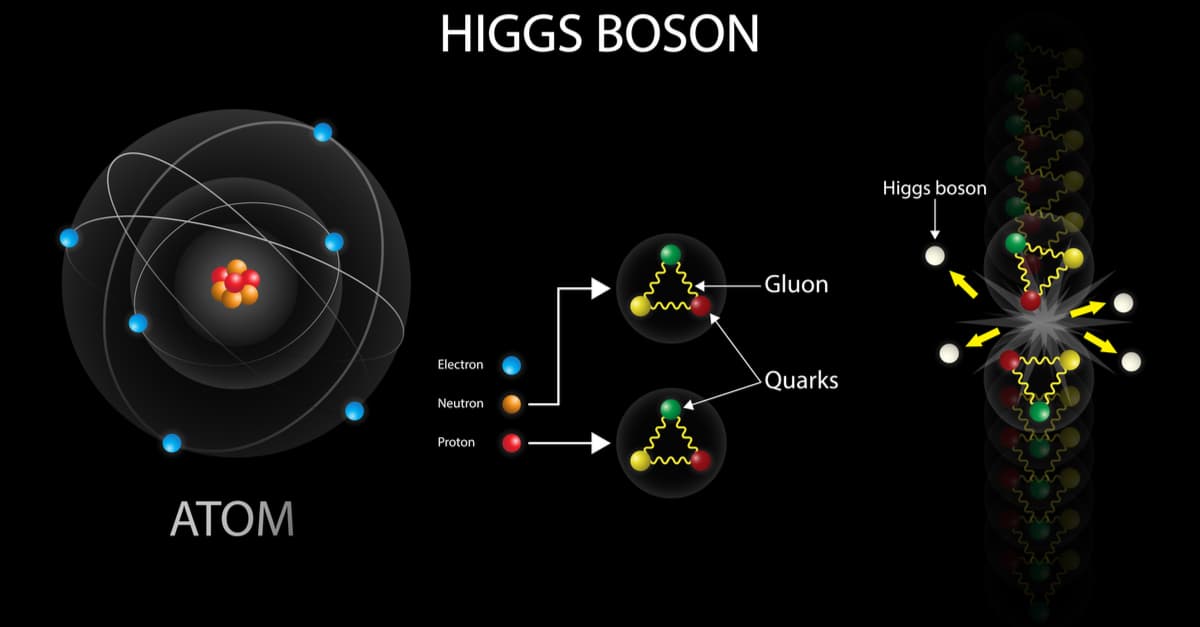
LYRICS: "Incense and Pepermints"
(The Strawberry Alarm Clock)
Good sense, innocence, cripplin' mankind/ Dead kings, many things I can't define/ Occasions, persuasions clutter your mind/ Incense and peppermints, the color of time// CHORUS: Who cares what games we choose?/ Little to win, but nothin' to lose// Incense and peppermints, meaningless nouns/ Turn on, tune in, turn your eyes around/ Look at yourself, look at yourself, yeah, girl/ Look at yourself, look at yourself, yeah, girl, yeah, yeah// To divide the cockeyed world in two/ Throw your pride to one side,/ it's the least you can do/ Beatniks and politics, nothin' is new/ A yardstick for lunatics, one point of view.
One may ask why Wisdom Quarterly is "all over the map, talking about this and talking about that." It's a good question, and the answers rests largely on the Buddhist Publication Society (bps.lk) and in particular this small book written by Francis Story. One picks it up to read about something as direct and easy as the Four Noble Truths, and what one gets instead is all over the map, no topic untouchable. It liberated us to think we could talk about anything. And we can. It all relates. For a pure treatment limited to Buddhism and Buddhism alone, see Wisdom Stringently. 😏
Foundations of Buddhism: Four Noble Truths
Francis Story (Wheel 34/35, Buddhist Publication Society) edited by Wisdom Quarterly 2024
 |
| Are you a wave, Sis? - No, Bro, I'm a particle waving, a wavicle. - Groovy! Hang ten. |
.
Humankind, pondering and disputing, has been
engaged for so long in trying to find an answer to
the enigma of existence, and so many first-class
minds have been devoted to the task, that had the problem
been open to solution by the intellect alone, we should
certainly have been furnished with the definitive blueprint
of our being, beyond all doubt or conjecture, many centuries
ago.
From the time when prehistoric myth became merged
into an attempt to give a rational account of the universe the
questions, "What is life? How did it originate? Has it a
purpose, and if so, what is it?" have haunted the
imagination; yet, still for most people they remain
unanswered.
Reason has offered a wide range of ingenious
possibilities from the speculations of the Eleatics down to
the more sophisticated theories of the modern
epiphenomenalists, but so far reason has failed to provide any
reasonable explanation that is not open to equally
reasonable objections.
While reason has failed, its
alternative, supernatural revelation, has shown itself
equally contradictory and inconclusive, and it has suffered an
even worse defeat. Its historical record has weighed heavily against it because of the disastrous influence it has often
exerted in human affairs.
The private revelations of mystics,
by their exclusively subjective nature, can never offer more
than an insecure foothold for faith in those who have not
directly shared them, and a doubtful faith is the father of
fanaticism.
The record of human speculative thought down the centuries
has come to resemble a maze of tracks in a boundless desert.
The tracks can be identified by their characteristics; they are
the tracks of religion, of philosophy, and obliterating many
of these, the more recent tracks of science.
For the most part
the tracks of religion go round in circles. Beginning as myth
they continue as myth hardened into dogma, and so they go over
the same ground in endless repetition.
Other tracks wander
along aimlessly, drawn in this direction and that by new
theories, new discoveries and new contacts, their path as variable as the wind. These are the tracks of philosophy, the
imprints of humanity's restless and inquiring mind — a mind which,
despite its courage and adventurousness, has only the old
material to work over and so is reduced to combining ideas
in endless permutations, seeking to reconcile the
irreconcilable and always failing to reach an end.
Then,
superimposed on these there are the imprints of scientific
thought, which has invaded philosophy to an ever-increasing extent, but which at the same time discourages
any concern with ultimate issues or with questions of value
and purpose.
Time and again the older tracks of philosophy
and religion are seen to have crossed one another, and where they met there are signs of a scuffle. Too often, there
is blood on the sands of history.
So it has been ever since humans emerged as a kind of animal capable
of abstract thinking.
Now we have entered a phase in which
supernaturalism has given way almost entirely to scientific
knowledge, and the approach to the problem is somewhat
different. Yet, science has not brought us any nearer to the
answers.
The tracks of thought still remain indecisive, their
beginning a mystery, their end a mark of interrogation.
Present-day knowledge with its unprecedented
accumulation of facts concerning the physical universe and
the constitution of living organisms has provided
philosophers with a vast stock of new material to take into
account, but so far the result has only been to give the mind
more than it can handle.
Far from clarifying the general
picture, the effect has been to overcrowd the canvas. To
correlate the various specialized branches of knowledge is a
stupendous task, one that is further complicated by the
areas of uncertainty in each of them.
The non-specialist is
seldom in a position to be able to separate conjecture from
established fact in the scientific disciplines, and this is
particularly so in the case of those which relate to the life processes, such as genetics and biochemistry, and are
therefore the most relevant to the inquiry.
Besides this, the facts that science presents often seem to
point to opposite conclusions. Despite the great advances
that have been made in physics, technology is still working
to a great extent with factors that are not completely understood or even satisfactorily defined.
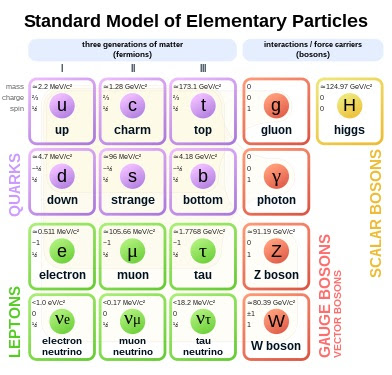
There are, for
example, certain radiations forming the basic structure of
the universe that appear both (depending on the observer) as waves and as particles,
although logically they cannot be both at the same time.
It is
not even certain whether the expression "at the same time"
has any meaning in a universe where events can hardly be
said to be simultaneous at all and where the image of a star
seen from a distance of many thousands of light years may
be nothing more than the ghost of something that ceased to
exist in space before humans appeared on earth.
Expanding
knowledge tends to cut us adrift from the apparent security
of empirical facts, and in many ways the nature of thought
itself has been brought into question.
There are people who entertain the hope that at some time
in the not-too-distant future we may be able to get final
answers to questions that have tormented men for
generations by feeding all the relevant data into an
electronic brain. (An AI robot named Hal?)
But that hope is founded on two very large
assumptions. The first is that all the necessary data will eventually
become available, and secondly that humans (or ETs) can devise a
machine more capable than that machine's creator.
So far, the most
advanced electronic computer has not been able to do more
in the field of mathematics than a human mind can do. It
only does it more quickly. Even there it adds nothing new;
there have been abnormal human brains that could extract
cube roots with the same speed and accuracy.
If a new and
basically different mode of thinking is needed, it must be
sought for elsewhere than in electronic machines. Does this mean that we shall never know any more about
the ultimate things than we do now?
The conclusions to
which science moves at present are, in regard to the older
beliefs, chiefly negative. They tell us what is no longer
believable, but do not suggest alternatives or encourage any
positive inferences. Yet, in the quest for truth science
contributes something of greater value than the facts it
provides.
It offers a method of inquiry, a disciplined use of
the facts at hand, which is more productive than the pursuit
of random theories. It indicates a method by which the data
of experience, no matter how limited they may be, can be
taken as starting points for a journey into unknown
territory and how from a few observed facts a general
principle can be deduced.
Furthermore, it includes as an
important part of its method the readiness to discard
whatever theory is found to be in disagreement with the
observed phenomena. And this iconoclastic function of
science points to a truth of the highest significance, namely,
that in the search for reality what is most essential is not the
gathering and tabulating of facts, but the understanding of
those facts in their true relation to one another.
The
preliminary stripping away of hitherto accepted ideas until
we are left with nothing more than the bare bones of
experience is needed to get at the experience of the most fundamental
and universal kind.
Science works on theories, certainly, but
is prepared to abandon them when they fall flat; it does not
build model cosmologies from selected materials.
This method, which has been responsible for everything we can claim to have derived from our knowledge of the
physical universe, is the only profitable one to follow when
we seek to enlarge our understanding beyond the world of
immediate sensory perception.
And it is towards the
possibility of such an extension that the psychological
sciences are now turning. There is an increasing recognition
of the truth that the world of external phenomena is only a
part — and by no means the most important part — of humanity’s
total experience.
What goes on within us, in our
psychological responses and motivations, and also on the
intuitive levels of the mind, is being given the same
analytical scrutiny as that which is turned on the objective
features of the universe.
For the first time, scientists are
making a serious study of the mental processes, conscious
and unconscious. They are giving equal attention to the
paranormal aspects of the mind, such as the phenomena of
telepathy, clairvoyance, and the recollection of previous
lives.
From this may develop an entirely new approach to
the problem of being -- a new one, that is, so far as the West is concerned. But
nothing in mental science or in philosophy is really new.

More than six centuries before the Christian era, the
tracks of speculative thought had reached a stage of the
utmost complexity in India. There we find the familiar
arguments of mysticism versus rationalism, of empiricism,
pragmatism, logical positivism, the opposing views of
"eternalism" and "annihilationism" [the view that we live forever or live now but are annihilated at death] and of so many
intermediate doctrines that it can be safely said that later philosophers have been able to produce nothing that was
not a duplication or variant of one or the other of them.
When we examine the 62 views (diṭṭhis or theories) regarding
the nature of life and the universe that were current in
the time of the Buddha and described by him in "The Net of All-Embracing Views" (the Brahmajāla Sutta of the Long Discourses), we find there the
seeds of all later thought, the archetype of every idea that
has appeared in philosophy between Plotinus and
Kierkegaard.
That some of them were the doctrines of
established schools which had been in existence long before
the birth of the Buddha is evident from the accounts of the
Buddha’s own search for enlightenment, for on renouncing
the world the prince who became a wandering ascetic, Siddhattha Gotama, first placed himself
under two yogi teachers from among the many sects that were
already laying claim to ultimate knowledge.
 |
| Let's teach Sid the way our teachers taught us |
Those teachers,
Ālāra Kālāma and Uddaka Rāmaputta, were not logicians
but exponents of yoga. As such they had their philosophy,
but its final vindication was to be sought in the subjective
realm through meditation, in an intensified perception outside the scope of
formal reasoning.
By the practice of meditative absorption (jhāna), they had in fact succeeded in raising
consciousness to a higher power.
But great as were the achievements of these two eminent
yogis, the wandering ascetic Gotama did not find the full
enlightenment he sought within their meditative systems. Neither did he
reach it by way of the extreme asceticism to which he later turned when he left them.

He found, on the contrary, that an entirely new mode
of approach was needed if he were to break through the thicket of views and tangle of conceptual thinking on the one hand, and
sublimated consciousness on the other.
By traditional
yogic methods, he had gone beyond the world of forms but
not beyond that of ideas or the mere suspension of ideas. He
found that the degree of illumination these methods gave
was far from that of absolute knowledge and spiritual liberation.
Thrown back on his own resources, with no longer any
guiding principle except what he might find within himself,
he returned in thought to the original impulse of his quest.
Its beginning, significantly, lay in a very early
experience he had known, which was of an intuitive kind.
When he was 7 years old, he had been
sitting watching his father, King Suddhodana, carrying out the ritual
of the spring festival's first ploughing. His attention had been caught and
held by the flocks of birds that followed in the wake of the
plough; they were eagerly scratching in the newly-turned
furrows for worms and insects.
Driven by hunger, the all-demanding craving that is ever present in nature, and
excited by the sight of their living prey, birds of all kinds
were quarrelling and fighting one another, a noisy,
turbulent mass of feathered bodies, mercilessly striking and tearing
with beak and claw.
More




 He found, on the contrary, that an entirely new mode
of approach was needed if he were to break through the thicket of views and tangle of conceptual thinking on the one hand, and
sublimated consciousness on the other.


 Say hello to Venerable Manapo. He’s a Buddhist monk or bhikkhu in Warwickshire, England. TrueTube's cameras followed him around to find out what he does all day. What does any Buddhist nun or monk do all day?


 PBS made a wonderful documentary, by filmmaker David Grubin and narrated by Richard Gere, telling the story of the Buddha’s life, a journey especially relevant to our own bewildering times of violent change and spiritual confusion. It features the work of some of the world’s greatest artists and sculptors who have depicted the Buddha’s life in art rich in beauty and complexity. Insightful with a modern narrative by contemporary Buddhists, including Pulitzer Prize winning poet W.S. Merwin and the 14th Dalai Lama. But this is a different undertaking altogether.

 OAKLAND, California - We must face it. Most marijuana use is neither medicinal nor spiritual. It is engaged in as an addictive activity that is harmful to users. It is less harmful than alcohol and other substances, but it is still harmful. The question is, Must it be that way?

 Julia Butterfly Hill climbed a 1,000+ year old redwood named "Luna" in Northern California and lived in her branches for over 2 years to save it from the chainsaws of a logging company. Her first winter she was nearly killed as a terrible storm raged through her tiny perch. Butterfly describes the fear, the breakthrough, and the life lessons of those early months.