Showing posts with label story. Show all posts

Monday, June 9, 2025

Comedian Atsuko Okatsuka (Fresh Air)


I have a new comedy special called "Father."
The new Margaret Cho? Comedian Atsuko Okatsuka [the u's are silent] is known for finding humor in the dysfunction of her immigrant family.

Born in Taiwan to Japanese and Taiwanese parents, she traveled from Japan to Los Angeles with her grandmother and mother when she was 8 for what she thought was a short vacation.

In fact, they were moving. It would be years before Okatsuka saw her father again. She later described being "kidnapped" by her grandmother on a 2023 episode of This American Life.

"My grandma and I hadn't really talked about it in depth until [then]," she says. "And it helped that I got to do with Ira [Glass, host of This American Life] and the thousands and thousands of thousands of listeners at the same time, then I'm really not alone." More + AUDIO

Can Asians even be funny?
You're never too old to rock 'n roll, Andy Huggins. -  AngelenoAtsuka O. with Seth Meyers

Tuesday, May 20, 2025

Who changed the BIBLE from original?

What? Middle Eastern North Africans? No, we were always white. We're from Heaven.

The Bible's been changed WAY more than most people realize!

(Holy Koolaid) Since the many books of the Bible were first written, just how much has the Bible been changed? After the New Testament was compiled, how much was it edited, tweaked, and altered to fit the agendas of scribes, copyists, and early Church fathers?

Are there other versions of the Bible? Did significant copying mistakes and translations errors (to say nothing of the purposeful changes and "corrections" to improve on God's word] find their way into our modern copies of the Bible?

If the Bible is the word of God and was divinely inspired, shouldn't it also have been divinely preserved? But has it been?

Pick up a copy of the card game Debunked to easily learn how to spot logical fallacies: debunkedcardgame.com.

Enjoyed this video? Please consider supporting this work: Make a per-video pledge: holykoolaid. Make a monthly pledge: subscribestar.com/holykoolaid. Make a one-time donation: paypal.com/donate... Or join the YouTube channel to get access to special members-only perks: @holykoolaid. Join newsletter: holykoolaid.com/newsletter. Get Holy Koolaid merchandise: holykoolaid.creator-spring.com. Connect with me: linktr.ee/holykoolaid. Please subscribe to my channel: goo.gl/ie3EZh. Thanks so much for ongoing support. Science is greater than dogma. Dare to be curious, but don't drink the Koolaid!
  • Holy Koolaid, July 20, 2024; Pfc. Sandoval, Sheldon S., Seth Auberon (eds.), Wisdom Quarterly

Tuesday, May 6, 2025

Free writing workshop: How to story (5/6)


WHAT HAPPENED?
New open mic: SPARC Centre Gallery
It was a full house of participants gathered on a damp and drizzly evening. Next local poetry event is May 15th, 4:00-6:00 pm at the SPARC Centre Gallery. Also in attendance were the current Poets Laureate Sehba Sarwar and Lester Graves Lennon, who announced the upcoming "Poetry & Cookies" on Saturday, May 17, 2025, 4:00-6:00 pm (with a surprise open mic portion, so sign up). A beautiful land acknowledgement to the Native Tongva (Kizh, Gabrieleno) tribe of Los Angeles and region including the Channel Islands was delivered by the head of the library to launch the evening. Handouts were given and introductions were made. Then we got to writing, prompted by the workshop leader, former library Poet Laureate Dr. Lipkin. Grief was expressed about the Eaton Fire four months after the LA Fire devastated the city.


These three submissions, written on site, stood out. A page of writing prompts was handed out with leading phrases meant to trigger the creative process and the start of a poem (prompt shown in green).

THE NIGHT WAS DARK BUT THERE WAS ONE LIGHT.
The tunnel, the train, ah, the 6:40, yes, right on time. And here by its light, the reason for my stumbling, railroad ties -- and this long slick guide, steely, cold in pointing only this way or that. You see, I can't go back. I was fated forward roam, here alone, at night, right on track, in search of some way out. Then came the breeze, a breath, fresh air cool on my face -- with something left to face, over there, one more thing, right there. The night was dark but there was one light.
The two hours raced as we each wrote four pieces -- a fairytale, elegy, persona poem, and a prompted piece. Poets love to "paint" outside the lines, so every work of creativity was its own, each somewhat elegiac for what was lost to the fire. Only a small percentage of the participants were men; one cried as did another woman, who read and read every chance she could get, apparently dying for validation.

Fire Gained a New Power

Eaton Fire burned down to Woodbury...
Who knew, not I, that Fire had the power to fly
from up to down and back again
from crest to Woodbury and even Washington
The Monster of All-Consuming Light

The Mountain Ogre who gorges on the gorge
The Fiend who in fright delights --
with wind and its own weather and lines
that arc to heaven to call down lightning strikes

Bunnies and bears, feral felines, oak-gall-eating
co'yotes, sinuous serpents skewered on spits
of dangling branches -- and
everywhere Embers

The power of flight
     The power of fire
          to take aim and consume
               all it desired as if to say

All that lumber you took with not a sign of respect,
I will fully feast on just the same

Alternate Endings

Would I have it another way, the fire?
Better it had never been?
No, there's something in it, something perfect.
The Akashic Record is a bin -- so to have it
"different" means it's somewhere the same:
IT - IS - WRITTEN.

But I would my part rearrange:
Just as every smart accused person "lawyers up,"
I'd "insurance up" in advance,
take a policy out on myself, homeowner's, full
coverage, renter's, and lots and lots of comprehensive.

You see, in every down market, someone wins.
Every "loss" is to someone's advantage.
Foresight is hindsight turned on its head
by the insertion of time, which spoils the equation.

You'll pay me how much for my cars?
I get to rebuild in the same spot?
If I'd known that, I would have sang,
"Let it burn, let it burn, let it burn."
.
EVENT DETAILS
Into the Woods: Using fairy tales to tell YOUR story with Elline Lipkin
Poet Laureate Elline Lipkin
Fairy tales have been around for centuries because they capture something essential about the human experience.

In this workshop, we will use fairy tales and their tropes as inspiration to write about our own lives.

Thinking about the forest, the animals, the seasons, and the symbolic characters we find in fairy tales, we will explore the persona poem and elegy, among other exercises to spark the imagination, to celebrate and commemorate Altadena, and to process grief.
The workshop is FREE and open to the public -- all ages and backgrounds welcome.

Please bring a notebook and pen if possible; otherwise, the Altadena Library may provide writing utensils.

Anniversary of the LA Fire
The Jan. 7th fire was the worst in its history
Tuesday, May 6, 2025, marks nearly four months since the Eaton Fire devastated the Altadena community. We extend a special invitation to Altadena, Pasadena, and Sierra Madre residents and to those impacted by the Palisades Fire. Please join us to write and process experiences, releasing grief, and showing Los Angeles community resilience.
  • Tuesday, May 6, 2025, 5:30–7:30 pm
  • Altadena Main Library Community Room
  • 600 E. Mariposa Street (west of Lake Ave.)
  • Altadena, California 91001 (626) 798-0833
  • Programs — Altadena Library District
Lipkin, UChicago Graham School
ABOUT
: The presenter of this workshop is former Altadena Library Poet Laureate (2016-2018) Dr. Elline Lipkin, PhD, a poet, nonfiction writer, and academic (Prof. Elline Lipkin, UChicago, Graham School) who until the Eaton Fire had been an Altadena resident for 13 years. She holds an MFA and PhD in literature and creative writing and has been a research scholar with UCLA's Center for the Study of Women. She is the author of two books. Her third, Girl in a Forest (on triohousepress.org), is forthcoming in October 2025. She served her community for two years as Altadena Poet Laureate and editor of the Altadena Poetry Review.
Get it published in Wisdom Quarterly
Those who produce a poem worthy of attention at this workshop are encouraged to submit it to Wisdom Quarterly: American Buddhist Journal for consideration. Editors will consider submissions, and publication may be the result. Yesterday (May the 4th Be With You Day) this website had 53,000 views, and today (Cinco de Mayo) 56,000 and counting (running from 5:00 pm to 5:00 pm). Moreover, the past six months have seen 2.94 million views. So publication may draw considerable attention to your efforts.


Poetry open mic in South Pasadena

Read works of poetry, short fiction, memoir, slam, spoken word, rap, whatever in a circle of area poets at South Pasadena Arts Council SPARC Centre Gallery located at 1000 Fremont Ave., South Pasadena, third Thursdays, from 4:00-6:00 pm. FREE

WEEKLY: Meditate with Amy Rutledge (Tuesdays via Zoom)
Meditate with Amy Rutledge, virtually, on Tuesday, May 13, 2025, 6:30–7:00 pm via Zoom. All-ages are welcome. Join Amy and others for a guided half-hour meditation via Zoom in recognition of Mental Health Month. Be kind to yourself and chill in a group for 30 minutes.
ABOUT: Amy Rutledge came to the study of meditation as a path toward personal healing after struggles with the effects of Lyme disease as well as depression and anxiety. She found that it helped her in unexpected ways when many other approaches failed. More: meditatewithamy.com

Friday, April 25, 2025

Bashar on Moses, ETs, dinos, time travel

Was Moses, living in Northern Africa in Egypt or Kush or Kemet, not then a Black man like J?

Unveiling Moses' Journey: Insights on the Ten 'Commandments' from Bashar channeling - Bashar Darryl [Anka]
Behold, my God in space parts the sea for us!!
(Transcendent Bashar Vibes) Tune into these extraordinary revelations (unveilings) from Bashar about the truth of Moses' ascent on Mt. Sinai. What happened up there? Whom did he meet? What "commandments" was he given? Where are those [advanced extraterrestrial technology] "tablets" now? This is a fascinating exchange, delving into one of the Bible’s most famous accounts. Enjoy this channeling by Mr. Darryl Anka, bringing forth "Bashar."

Jewish God's Prophet Moses?
🔵 Bashar Telegram Channel: ➡▶ t.me/bashar_DarrylAnka

Subscribe for more videos like this. #awakening #bashar #bible #basharchanneling #basharteachings #consciousawakening #consciousnesstransmission #consciousness #channelingabraham #channeling #spirituality #spiritualjourney #spiritualawakening ##lawofattraction #lawofmanifestation #lawofassumption #darrylanka #bashar #basharchanneledbydarrylanka #channeledbydarrylanka #manifestation #lawofattraction #spiritualawakening #spiritualguidance #spiritualchannel

Copyright Disclaimer: Under Section 107 of the Copyright Act 1976, allowance is made for 'Fair Use' for purposes such as criticism, comment, news reporting, teaching, scholarship, and research. Fair use is a permitted by copyright statute that might otherwise be infringing. Non-profit, educational, or personal use tips the balance in favor of fair use. For more information and original content, please visit Bashar's official channels and resources. Official website: bashar.orgInstagram: basharchanneling. YouTube channel: @basharchanneledbydarrylanka

Bashar channeled by Darryl Anka channeling meditation manifesting manifestation formula quotes relationship law of attraction next level soul teachings healing flame
  • Bashar (channeled by Darryl Anka) via Transcendent Bashar Vibes; Sheldon S., Seth Auberon (eds.), Wisdom Quarterly

Thursday, October 24, 2024

Intro to Zen, empty mind, how to (video)


Empty the Mind: A powerful Zen story for life
(The Fictionist) Join Akira on a transformative journey as he learns the power of emptying the mind in this Zen story. Overcome worry, embrace mindfulness, and find inner peace.


Zen: An Introduction
Chill out, be cool, and go with the flow.
(Share Ideas) Zen is a form of Mahayana Buddhism that developed in the 7th and 8th centuries in China, when Buddhism arrived from India and interacted with the indigenous Taoist tradition. The word "Zen" reflects this: It is the Japanese way pronouncing the Chinese chan (from channa), which is derived from the Indian Buddhist term jhana, from the Sanskrit dhyana, which originally meant "meditation." So Chan Buddhism or Zen Buddhism literally means a particular school that emphasizes meditation (which originally meant meditative absorption as the central practice). March 4th, 2018.


Video script written by David Loy. Narration by Luke Mullins. Film by Digifish. Websites: David Loy (http://www.davidloy.org/), Luke Mullins (https://voice123.com/profiles/lukemul...), Digifish (http://www.digifish.tv/).


Hindu monk Dandapani: How to control the mind (brainwash yourself) to achieve anything
(Be Inspired) Aug. 7, 2018: Try this for 21 days, and see a huge difference in your life. ►If you struggle and have a hard time, consider taking an online therapy session with partner BetterHelp. http://tryonlinetherapy.com/beinspired, which receives commissions for referrals to BetterHelp. BeInspired only recommends products it knows and trusts. ►Motivational Alarm Tones

An Irish dojo is an emerald zendo in Ireland.
(The Fictionist) May 15, 2023. #ZenStory #EmptyYourMind #findingpeace💡 Catch the latest videos exploring groundbreaking techniques to master the mind and enhance life: How an Introvert Learned from a Zen Master | A Story of YOU. Instagram: https://www.instagram.com/unfazed_211... TikTok: https://www.tiktok.com/@thefictionist... To read the story: https://thefictionist2116.blogspot.co... Want your videos to look amazing? Use the following video editor: https://www.mvvitrk.com/71fXJa. Image by: https://hannahjanewrites.com/2015/02/... #ZenStory #EmptyYourMind #FindingPeace #OvercomingAnxiety #Mindfulness #SelfDiscovery #InnerPeace #LettingGo #LivinginthePresent #ZenWisdom #FindingClarity #MeditationJourney #TransformYourLife #EmbracingtheMoment #PeacefulExistence

Friday, July 26, 2024

'Deadpool & Wolverine' - inside Hollywood


Deadpool & Wolverine | final trailer | Disney
(Marvel Entertainment) Are you ready? Experience. This Marvel universe movie finally hits US theaters on the weekend of July 26, 2024, expecting to pull in $200 million. It's all inside jokes that make sense in Hollywood, but who knows how they'll play in cineplexes outside Los Angeles. #DeadpoolAndWolverine in theaters everywhere.

Ryan Reynolds' real life wife smiles in her review
It's Blake Lively of Savages fame on her hubby

Chris Stuckmann reviews Deadpool & Wolverine, starring Ryan Reynolds, Hugh Jackman, Emma Corrin, Matthew Macfadyen, Dafne Keen, Morena Baccarin. Directed by Shawn Levy.

Get tickets: Fandango.com/DeadpoolAndWolverine ► Watch Marvel on Disney+: https://bit.ly/2XyBSIW ► Subscribe to Marvel on YouTube: http://bit.ly/WeO3YJ

Saturday, July 6, 2024

Incense, peppermints? The 4 Noble Truths


LYRICS: "Incense and Pepermints"
(The Strawberry Alarm Clock)
Good sense, innocence, cripplin' mankind/ Dead kings, many things I can't define/ Occasions, persuasions clutter your mind/ Incense and peppermints, the color of time// CHORUS: Who cares what games we choose?/ Little to win, but nothin' to lose// Incense and peppermints, meaningless nouns/ Turn on, tune in, turn your eyes around/ Look at yourself, look at yourself, yeah, girl/ Look at yourself, look at yourself, yeah, girl, yeah, yeah// To divide the cockeyed world in two/ Throw your pride to one side,/ it's the least you can do/ Beatniks and politics, nothin' is new/ A yardstick for lunatics, one point of view.

One may ask why Wisdom Quarterly is "all over the map, talking about this and talking about that." It's a good question, and the answers rests largely on the Buddhist Publication Society (bps.lk) and in particular this small book written by Francis Story. One picks it up to read about something as direct and easy as the Four Noble Truths, and what one gets instead is all over the map, no topic untouchable. It liberated us to think we could talk about anything. And we can. It all relates. For a pure treatment limited to Buddhism and Buddhism alone, see Wisdom Stringently. 😏

Foundations of Buddhism: Four Noble Truths
Francis Story (Wheel 34/35, Buddhist Publication Society) edited by Wisdom Quarterly 2024
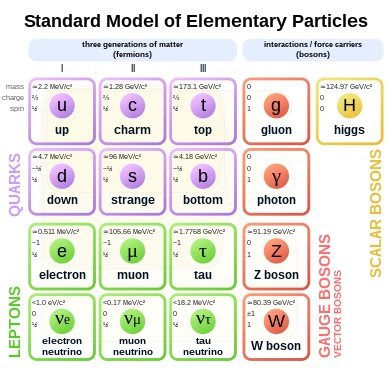
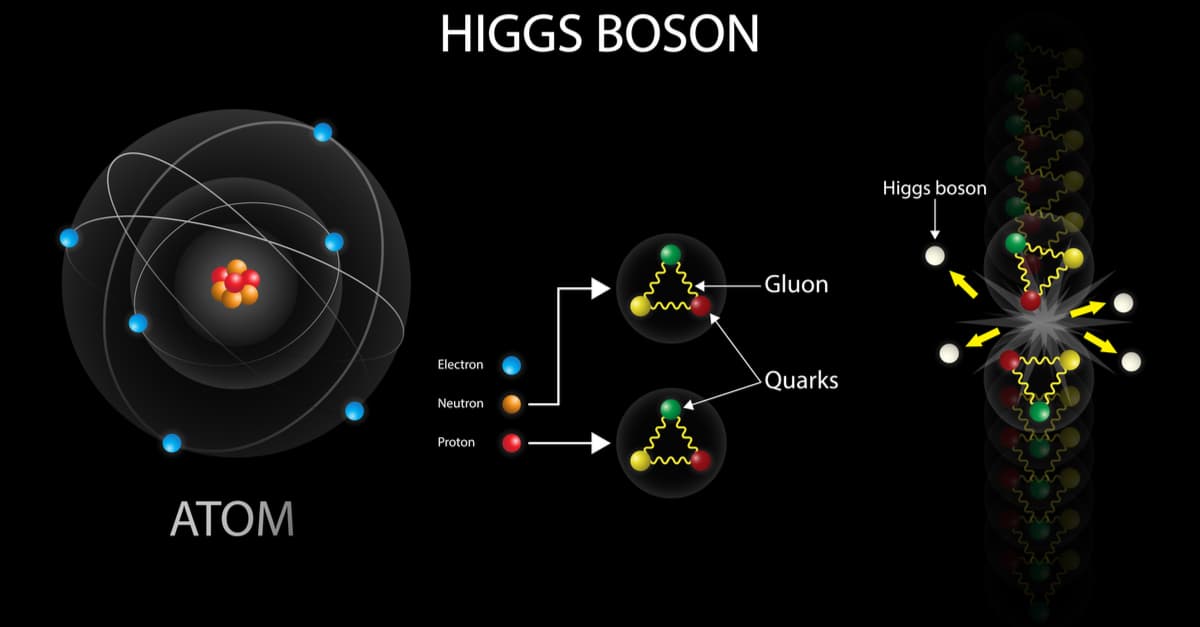
Are you a wave, Sis? - No, Bro, I'm a particle waving, a wavicle. - Groovy! Hang ten.
.
Humankind, pondering and disputing, has been engaged for so long in trying to find an answer to the enigma of existence, and so many first-class minds have been devoted to the task, that had the problem been open to solution by the intellect alone, we should certainly have been furnished with the definitive blueprint of our being, beyond all doubt or conjecture, many centuries ago.

From the time when prehistoric myth became merged into an attempt to give a rational account of the universe the questions, "What is life? How did it originate? Has it a purpose, and if so, what is it?" have haunted the imagination; yet, still for most people they remain unanswered.

Reason has offered a wide range of ingenious possibilities from the speculations of the Eleatics down to the more sophisticated theories of the modern epiphenomenalists, but so far reason has failed to provide any reasonable explanation that is not open to equally reasonable objections.

While reason has failed, its alternative, supernatural revelation, has shown itself equally contradictory and inconclusive, and it has suffered an even worse defeat. Its historical record has weighed heavily against it because of the disastrous influence it has often exerted in human affairs.

The private revelations of mystics, by their exclusively subjective nature, can never offer more than an insecure foothold for faith in those who have not directly shared them, and a doubtful faith is the father of fanaticism.

The record of human speculative thought down the centuries has come to resemble a maze of tracks in a boundless desert. The tracks can be identified by their characteristics; they are the tracks of religion, of philosophy, and obliterating many of these, the more recent tracks of science.

For the most part the tracks of religion go round in circles. Beginning as myth they continue as myth hardened into dogma, and so they go over the same ground in endless repetition.

Other tracks wander along aimlessly, drawn in this direction and that by new theories, new discoveries and new contacts, their path as variable as the wind. These are the tracks of philosophy, the imprints of humanity's restless and inquiring mind — a mind which, despite its courage and adventurousness, has only the old material to work over and so is reduced to combining ideas in endless permutations, seeking to reconcile the irreconcilable and always failing to reach an end.

Then, superimposed on these there are the imprints of scientific thought, which has invaded philosophy to an ever-increasing extent, but which at the same time discourages any concern with ultimate issues or with questions of value and purpose.

Time and again the older tracks of philosophy and religion are seen to have crossed one another, and where they met there are signs of a scuffle. Too often, there is blood on the sands of history. So it has been ever since humans emerged as a kind of animal capable of abstract thinking.

Now we have entered a phase in which supernaturalism has given way almost entirely to scientific knowledge, and the approach to the problem is somewhat different. Yet, science has not brought us any nearer to the answers.

The tracks of thought still remain indecisive, their beginning a mystery, their end a mark of interrogation. Present-day knowledge with its unprecedented accumulation of facts concerning the physical universe and the constitution of living organisms has provided philosophers with a vast stock of new material to take into account, but so far the result has only been to give the mind more than it can handle.

Far from clarifying the general picture, the effect has been to overcrowd the canvas. To correlate the various specialized branches of knowledge is a stupendous task, one that is further complicated by the areas of uncertainty in each of them.

The non-specialist is seldom in a position to be able to separate conjecture from established fact in the scientific disciplines, and this is particularly so in the case of those which relate to the life processes, such as genetics and biochemistry, and are therefore the most relevant to the inquiry.

Besides this, the facts that science presents often seem to point to opposite conclusions. Despite the great advances that have been made in physics, technology is still working to a great extent with factors that are not completely understood or even satisfactorily defined.

There are, for example, certain radiations forming the basic structure of the universe that appear both (depending on the observer) as waves and as particles, although logically they cannot be both at the same time.

It is not even certain whether the expression "at the same time" has any meaning in a universe where events can hardly be said to be simultaneous at all and where the image of a star seen from a distance of many thousands of light years may be nothing more than the ghost of something that ceased to exist in space before humans appeared on earth.

Expanding knowledge tends to cut us adrift from the apparent security of empirical facts, and in many ways the nature of thought itself has been brought into question. There are people who entertain the hope that at some time in the not-too-distant future we may be able to get final answers to questions that have tormented men for generations by feeding all the relevant data into an electronic brain. (An AI robot named Hal?)

But that hope is founded on two very large assumptions. The first is that all the necessary data will eventually become available, and secondly that humans (or ETs) can devise a machine more capable than that machine's creator.

So far, the most advanced electronic computer has not been able to do more in the field of mathematics than a human mind can do. It only does it more quickly. Even there it adds nothing new; there have been abnormal human brains that could extract cube roots with the same speed and accuracy.

If a new and basically different mode of thinking is needed, it must be sought for elsewhere than in electronic machines. Does this mean that we shall never know any more about the ultimate things than we do now?

The conclusions to which science moves at present are, in regard to the older beliefs, chiefly negative. They tell us what is no longer believable, but do not suggest alternatives or encourage any positive inferences. Yet, in the quest for truth science contributes something of greater value than the facts it provides.

It offers a method of inquiry, a disciplined use of the facts at hand, which is more productive than the pursuit of random theories. It indicates a method by which the data of experience, no matter how limited they may be, can be taken as starting points for a journey into unknown territory and how from a few observed facts a general principle can be deduced.

Furthermore, it includes as an important part of its method the readiness to discard whatever theory is found to be in disagreement with the observed phenomena. And this iconoclastic function of science points to a truth of the highest significance, namely, that in the search for reality what is most essential is not the gathering and tabulating of facts, but the understanding of those facts in their true relation to one another.

The preliminary stripping away of hitherto accepted ideas until we are left with nothing more than the bare bones of experience is needed to get at the experience of the most fundamental and universal kind.


Science works on theories, certainly, but is prepared to abandon them when they fall flat; it does not build model cosmologies from selected materials. This method, which has been responsible for everything we can claim to have derived from our knowledge of the physical universe, is the only profitable one to follow when we seek to enlarge our understanding beyond the world of immediate sensory perception.

And it is towards the possibility of such an extension that the psychological sciences are now turning. There is an increasing recognition of the truth that the world of external phenomena is only a part — and by no means the most important part — of humanity’s total experience.

What goes on within us, in our psychological responses and motivations, and also on the intuitive levels of the mind, is being given the same analytical scrutiny as that which is turned on the objective features of the universe.

For the first time, scientists are making a serious study of the mental processes, conscious and unconscious. They are giving equal attention to the paranormal aspects of the mind, such as the phenomena of telepathy, clairvoyance, and the recollection of previous lives.

From this may develop an entirely new approach to the problem of being -- a new one, that is, so far as the West is concerned. But nothing in mental science or in philosophy is really new.

More than six centuries before the Christian era, the tracks of speculative thought had reached a stage of the utmost complexity in India. There we find the familiar arguments of mysticism versus rationalism, of empiricism, pragmatism, logical positivism, the opposing views of "eternalism" and "annihilationism" [the view that we live forever or live now but are annihilated at death] and of so many intermediate doctrines that it can be safely said that later philosophers have been able to produce nothing that was not a duplication or variant of one or the other of them.

When we examine the 62 views (diṭṭhis or theories) regarding the nature of life and the universe that were current in the time of the Buddha and described by him in "The Net of All-Embracing Views" (the Brahmajāla Sutta of the Long Discourses), we find there the seeds of all later thought, the archetype of every idea that has appeared in philosophy between Plotinus and Kierkegaard.

That some of them were the doctrines of established schools which had been in existence long before the birth of the Buddha is evident from the accounts of the Buddha’s own search for enlightenment, for on renouncing the world the prince who became a wandering ascetic, Siddhattha Gotama, first placed himself under two yogi teachers from among the many sects that were already laying claim to ultimate knowledge.

Let's teach Sid the way our teachers taught us

Those teachers, Ālāra Kālāma and Uddaka Rāmaputta, were not logicians but exponents of yoga. As such they had their philosophy, but its final vindication was to be sought in the subjective realm through meditation, in an intensified perception outside the scope of formal reasoning.

By the practice of meditative absorption (jhāna), they had in fact succeeded in raising consciousness to a higher power. But great as were the achievements of these two eminent yogis, the wandering ascetic Gotama did not find the full enlightenment he sought within their meditative systems. Neither did he reach it by way of the extreme asceticism to which he later turned when he left them.

He found, on the contrary, that an entirely new mode of approach was needed if he were to break through the thicket of views and tangle of conceptual thinking on the one hand, and sublimated consciousness on the other.

By traditional yogic methods, he had gone beyond the world of forms but not beyond that of ideas or the mere suspension of ideas. He found that the degree of illumination these methods gave was far from that of absolute knowledge and spiritual liberation.

Thrown back on his own resources, with no longer any guiding principle except what he might find within himself, he returned in thought to the original impulse of his quest.

Its beginning, significantly, lay in a very early experience he had known, which was of an intuitive kind.

When he was 7 years old, he had been sitting watching his father, King Suddhodana, carrying out the ritual of the spring festival's first ploughing. His attention had been caught and held by the flocks of birds that followed in the wake of the plough; they were eagerly scratching in the newly-turned furrows for worms and insects.

Driven by hunger, the all-demanding craving that is ever present in nature, and excited by the sight of their living prey, birds of all kinds were quarrelling and fighting one another, a noisy, turbulent mass of feathered bodies, mercilessly striking and tearing with beak and claw. More