
 |
| Debt: The First 5,000 Years by David Graeber (libcom.org) |
Showing posts with label what is money. Show all posts
Showing posts with label what is money. Show all posts
Monday, June 18, 2018
"Debt: The First 5,000 Years" (FREE)
Prof. David Graeber (libcom.org), London School of Economics; Editors, Wisdom Quarterly


Tuesday, May 17, 2016
Economic Delusion: What is Money? (video)
Ven. Ajahn Punnadhammo (Buddhist Publication Society Newsletter No. 61, BPS.lk, 2009); edited by Ashley Wells, Sheldon S., Dhr. Seven (eds.), Wisdom Quarterly; Thoughty2: Paagle TV


 |
| Thai Theravada monks (HuwPenson/flickr) |
Can Buddhist teachings help us understand what is happening?
It can. Capitalism is like that. The financial markets reflect the cumulative result of millions of individual decisions. Regarding decisions, the Buddha said that it is wise that they not be made on the basis of
- greed (craving)
- anger or fear (aversion)
- delusion (ignorance).
It is obvious how greed and anger/fear (aversion) have poisoned the well. So I would like to focus on something a little deeper, namely, how delusion has worked to create the present financial collapse.
 |
| This paper bill used to be as valuable as gold. |
At some point in the distant past people agreed to believe that one is shiny rock was worth those two cows, even though the real, utilitarian value of a cow is considerably more than the real value of a symbolic shiny rock.
Paper money is an even higher level of abstraction. This piece of paper with this number and the queen’s face, or a spooky eye-in-a-pyramid design or whatever it might be, is said to represent so many shiny rocks, which are worth so many cows.

Having gone off the gold standard, our currency is now “fiat money,” meaning that the value is established purely by government whim or fiat.
- The gold standard is a system that depends on a fixed amount of gold. Each paper unit is redeemable for gold at any time. Fiat money means nothing is backing it except the promise of a government that it has value. This is a lot less stable but a lot cheaper, so now nearly all countries use the fiat or "because I say so" method of printing money. U.S. Pres. Nixon took the U.S. off the gold standard in 1971.
This is not fully accurate. A dollar bill doesn’t have value because the government or central bank says so; it has value because the people believe it does. Ours is a faith-based currency.
It is not surprising that paper money was first used in China, a civilization deeply affected by Buddhism and Taoism, and used to philosophical subtlety (sophistry).
Consider what is happening here: Material goods and hours of labor are freely traded for an agreed convention. Something on the material plane of reality is being surrendered for something on the purely abstract plane of mental formations, which is void and without substance.
Maybe that eye-in-the-pyramid on the dollar bill is telling us something.
Fast forward to the dawn of modern capitalism in post-reformation Europe. The “real” economy of goods and services was becoming complicated, involving more and more kinds of goods, some of which were being shipped all around the planet.

What is “money” really? It is debt, but few know that. This is essential viewing on money and our banking system, a
fast-paced and highly entertaining animated feature by Paul Grignon. It explains the world's money system. How is money created? "When
banks [private corporations] extend loans to their customers, they CREATE money by crediting
their customers' accounts," explains Sir Mervyn King in a speech to the South Wales
Chamber of Commerce at The Millennium Centre, Cardiff, October
23, 2012. Need more evidence? The Bank of England explains in a "Brief History of Banknotes." "Britain
finally left the gold standard in 1931, and the note issue became
entirely fiduciary, that is, wholly backed by securities instead of
gold." Question is, WHAT securities?

 |
| (PaagleTV) |
To facilitate all these transactions on the plane of material reality, various new kinds of mental abstractions were invented, usually represented by fancy bits of paper.
Promissory notes, insurance plans, bonds, and company stocks all came into being, each representing a contract between parties to fulfill certain obligations.
Symbolism
Stock certificates, bonds, notes, and bills were often printed with all kinds of elaborate borders, seals, watermarks, and decorations.
This served a utilitarian purpose, making forgery difficult, but it had a more important symbolic function: Much like ritual in religion, it worked to awe observers. Something special is happening here. It wasn’t long before these pieces of paper were trading for more than their book-value. More
 |
| How a non-profit in India is fighting corruption [bribes] with fake money (pri.org) |
Stock certificates, bonds, notes, and bills were often printed with all kinds of elaborate borders, seals, watermarks, and decorations.
This served a utilitarian purpose, making forgery difficult, but it had a more important symbolic function: Much like ritual in religion, it worked to awe observers. Something special is happening here. It wasn’t long before these pieces of paper were trading for more than their book-value. More

Sunday, April 27, 2014
Buddha in Berkeley: economics revolution
CC Liu, Dhr. Seven, Amber Larson (eds.), Wisdom Quarterly; UC Berkeley; Kathleen Maclay; Leland Wong (californiagoldenblogs.com, 3-19-14) via the Tipitaka Network
 |
| The new U.S. greenbacks with their high tech anti-counterfeiting measures (latimes.com) |
 |
| Advances being made at the world's most prominent public university: Cal Berkeley |
Golden Scholars: UC Berkeley researchers control cell migration, revolutionize economics with Buddha
 |
| Offerings, Thiksey Gompa (Aswin/flickr) |
This is the start of a new series focusing on the academic discoveries at UC Berkeley. Getting things started with the non-magic magic of Berkeley is Prof. Brown teaching economics with the Buddha, and others using Oski to help advance tissue engineering and wound healing.
California Golden Blogs (CGB)'s new series highlights the research and academic work being done at UC Berkeley. One of the things to love best about this place is its ability to succeed in the world of athletics and academics, so spending more time sharing the amazing work being done by UC academicians and athletes makes sense.
 |
| Budai (Hotei) and a wad of Asian bills |
Coincidentally, the university just released a video on Twitter to promote this balance of success (see above).
It features prominent Berkeley researchers -- including Jay Keasling, Homayoon Kazerooni, and Robert Reich -- whose work will be discussed later in the series.
Some stories that capture Berkeley's spirit include economics professor Clair Brown, who's looking to change the way the world views spending money and focus instead on reducing suffering and helping others.
To accomplish this, she's helping spread the word and advocate for Buddhist economics. More

Buddhist Economics: oxymoron or idea whose time has come? Kathleen Maclay (Media Relations, 3-13-14)
 |
| “How would Buddha teach Econ. 1?” |
Nevertheless, she’s teaching a sophomore seminar on the topic this semester -- the campus’s second such offering over the past year.
 |
| What's the future of money, Bits or Buddha? |
Brown said she created the one-unit Buddhist Economics course after students in her Introductory Economics (Econ 1) class expressed frustration with the relentless Madison Avenue message that more is better, economic growth paves the path to a better life, and “retail therapy” is a quick trip to nirvana [ultimate bliss].
 |
| It's sustainable, it's all sustainable! |
Thursday, March 6, 2014
Son of Buddhist priest invented Bitcoin (video)
Editors, Wisdom Quarterly; Leah McGrath Goodman (Newsweek); Daily Mail
 |
| Bitcoin is formless money, dependent on online networks and trading (technolovia.com) |
 |
| Zen ensō (etsy.com) |
According to today's issue of Newsweek, Satoshi Nakamoto is...Satoshi Nakamoto. The anonymous inventor of bitcoin -- an online-only virtual currency independent of any country or government now worth about $600 dollars (US) each -- is a 64-year-old Japanese-American.
 |
| Exposed by Leah McGrath Goodman |
He is a former defense contractor living with his mother in a modest Temple City, California suburban home. He is worth at least 600 million dollars, but he is our neighbor: Temple City, which is largely Asian, is next to Pasadena in the foothills of Los Angeles in the San Gabriel Valley; it is anything but fancy squeezed as it is between Alhambra and Arcadia (of "Joan of Arcadia" fame), next to one of the toniest places in the country to live: San Marino.
 |
| (mag.newsweek.com) |
According to the article, "He is someone with a penchant for collecting model trains and a career shrouded in secrecy, having done classified work for major corporations and the U.S. military."
"Nakamoto's family describe him as extremely intelligent, moody, and obsessively private -- a man of few words who screens his phone calls, anonymizes his emails and, for most of his life, has been preoccupied with the two things for which bitcoin has now become known: money and secrecy."
 |
| Mega corporations serve the US government |
The article quotes him as responding when asked about Bitcoin, "I am no longer involved in that and I cannot discuss it... It's been turned over to other people. They are in charge of it now. I no longer have any connection." He may now have to move and hire round-the-clock security for his own protection [assuming he wasn't working for the CIA, a military ("defense") contractor, or other quasi-government agency when he created the currency, in which case they will probably provide him protection free, we imagine].
 |
| Bitcoin is virtual not actual "coins" |
If he father was Japanese and a "Buddhist priest," that means he was Zen. Like father like eldest son? As a "defense contractor" doing "classified work," we can only assume he is a clandestine operative for the military-industrial complex.
 |
| NSA files decoded (Guardian.co.uk) |
So good luck with trading those ones and zeros; they should go much higher before settling and crashing, like other secret agent projects -- Google, Facebook, Apple -- which have seen major boosts to and stabilizations of their stock prices (read "elimination of any serious competition") due to their profitable affiliation with the CIA, FBI, NSA/DHS and/or other arms of the secret US government.
- Quora: How will China's bitcoin rules impact its value?
- Bitcoin Exchange Mt. Gox goes dark after $350 mil theft
- Two Numbers: Bitcoins from heaven
- Mt. Gox files for bankruptcy, blames hackers for losses
- Virtual currency bitcoin: anonymous Web shopping
- More tough news for bitcoin doesn't deter believers
- First US bitcoin ATMs to open soon in Seattle, Austin
- Police: "apparent suicide" of Bitcoin Exchange CEO
- Newsweek becomes first mag to accept bitcoin...PR
- Warning: Mt. Gox bitcoin customers could be out of luck
Wednesday, January 30, 2013
History of Money, NDAA, Martial Law (video)
Pat Macpherson, Ashley Wells, Pfc. Sandoval, Wisdom Quarterly

Niall Ferguson follows the money to tell the human story behind the
evolution of finance -- from its origins in ancient Mesopotamia to the
latest upheavals on "Planet Finance."
 Bread,
cash, dosh, dough, loot, lucre, moolah, readies, the wherewithal: Call
it what you like, it matters.
Bread,
cash, dosh, dough, loot, lucre, moolah, readies, the wherewithal: Call
it what you like, it matters.
To Christians, love of it is the root of
all evil. To generals, it's the basis of war. To revolutionaries, it's
the bondage of labor. Niall Ferguson shows
that finance is in fact the foundation of human progress and reveals it is the essential backstory behind all
history.
Suddenly, the
civilization of the Renaissance looks very different: a boom in the
market for art and architecture made possible by Italian bankers
adopting Arabic mathematics. The rise of the Dutch republic is
reinterpreted as the triumph of the world's first modern bond market. The origins of the French
Revolution due to a stock market bubble caused by a
convicted Scot murderer.

But what about when the biggest and easiest means of supporting high finance turns out to be war?
What is money? What do banks do? What's the difference between a stock and a bond? What does buying insurance or real estate really do? What exactly is a hedge fund?
Visit post-Katrina New Orleans to see the free market deal with catastrophes. Find the origin of the subprime mortgage crisis. Understand why the world's biggest countries, India and China, are going from poverty to wealth in the space of a single generation -- an economic transformation unprecedented in human history.
What is money? What do banks do? What's the difference between a stock and a bond? What does buying insurance or real estate really do? What exactly is a hedge fund?
Visit post-Katrina New Orleans to see the free market deal with catastrophes. Find the origin of the subprime mortgage crisis. Understand why the world's biggest countries, India and China, are going from poverty to wealth in the space of a single generation -- an economic transformation unprecedented in human history.
The central
lesson is that sooner or later every bubble
bursts -- bearish sellers outnumber bullish buyers, greed flips into fear, and there's nothing the Donkeys or Elephants can think to do about it...except for "fascism," which simply means the marriage of corporations and state power.

 |
| No hard feelings, Barry? No, of course not, Bibi. |
Never again. That's what we used to say. Never again. Never what?
Never lots of things -- loss of civil liberties, state sanctioned discrimination, legal slavery, sexism, racism, mass incarceration, invasion of privacy, illegal searches and seizures, taxation without representation...
 |
| Stop government abuses! (Tyranny of Defense, Inc.) |
How about imprisonment without due process? Now there's something we can all get behind!
Well, not us but our representative in the Senate and Congress. The NDAA and Senate Bill 1867 are "building blocks" for martial law will never come. Dicks Cheney and Bush are no longer in office. But someone's cousin is.
Living in “interesting times” with a president no one would vote for if our one-party system hadn't pre-selected and promoted him. What choice did anyone have, Worse or Worser?
What is on the horizon, what does the Oracle say, what would have been even if the overtly right-wing candidate had triumphed?
 |
| Jew vs. Palestinian: The Cooking Contest! |
Next up, a police state, secret courts (or no courts at all), unrestricted spying for full-spectrum dominance throughout the homeland. The 9/11 event changed everything. And just as planned, the Patriotic Act, CIA spying on America, an entire department of homeland spying (uh, that's security if you don't mind).
Forget “What could happen?” We must be in denial of what is happening? Go back to sleep, America. Everything's okay. The military-industrial complex -- parents and relatives working for corporations and the war makers -- will keep us “safe.” Sleep, wake, history will be made either way. Why? It is because what is happening now was
planned in advance, thought through by Trilateral Commission members, CIA bureaucrats, NSA and NSC heads, and Wall Street movers and shakers.
“War is Peace;
Freedom is Slavery;
and Ignorance is Strength.” -Source
The goal of the agenda? We must lose what we have in order to preserve it. Spying is necessary to protect privacy. War is necessary to preserve peace (and make a little money side, just wetting our beak a bit). Our elder brother perhaps put it best: War is peace...
News
DemocracyNow.org
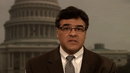 Former CIA agent John Kiriakou speaks out just days after he was sentenced to 30 months in prison, becoming the first CIA official to face jail time for any reason relating to U.S. torture...
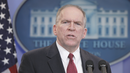 Days after he was sentenced to 30 months in prison, John Kiriakou -- the first CIA official to be jailed for any reason relating to the torture program -- denounces [the military-industrial complex's selection and] President Obama’s choice...
Tuesday, July 10, 2012
Debt, Sin, Guilt, and the Way Out (video)
Sonali Kolhatkar, Martina Steiner, Uprising.com; David Graeber; Wisdom Quarterly
(Uprising Radio) David Graeber is an American
anthropologist, who teaches at Goldsmiths
University of London. He is the author of Debt: The First 5,000 Years and a founding activist in the Occupy Movement.
David Graeber shows how debt (in many languages a word translated into "sin" or "guilt") and debt-forgiveness have been at the center of political debates across the
world.
They have given rise to innumerable uprisings. He explores the
history of money and credit and how societies have been divided into
creditors and debtors.
Debt: The First 5000 Years
 Most Americans know all too well the unjust difference between how
homeowners facing foreclosure are treated versus how massive
indebted banks responsible for the economic crisis have been treated.
Most Americans know all too well the unjust difference between how
homeowners facing foreclosure are treated versus how massive
indebted banks responsible for the economic crisis have been treated.
That
unequal application of justice has angered so many Americans that it
gave rise to Occupy, a worldwide movement under
the banner of disrupting capitalism-as-usual by occupying Wall Street. He is considered one of the
first activists credited with getting #OWS off the ground.
His earlier books include Towards and Anthropological
Theory of Value, Lost People: Magic and the Legacy of Slavery in
Madagascar, Fragments of an Anarchist Anthropology, and more. He also
writes for Harper’s, The Nation, and The New Left Review.
Thought for the Day
“As it turns out, we don’t 'all' have to pay our debts. Only some of
us do. Nothing would be more important than to wipe the slate clean for
everyone, mark a break with our accustomed morality, and start again” -
David Graeber.
- David Dayen on the foreclosure settlement (FireDogLake.com)
- "Men's Rights Movement" Symbolizes Growing Nationwide Misogyny
- Why We Get Fat And What To Do About It
- Among Truthers: Journey Through America's Growing Conspiracist Underground
- Fight Against Genetically Modified Organisms Gains Steam Nationwide
- Why We Get Fat and What To Do About It
- Imagine No Religion: From Central America to the Middle East, the Life Story of a Leader in the Movement for Social Justice and Peace
- "Dirty Thirty" Corporations Spend More On Lobbying Than Taxes
Thursday, May 13, 2010
Vagabonding: Living Well vs. Doing Well
Tim Ferriss (Experiments in Lifestyle Design)
A positive vagabond, the wandering ascetic (h.koppdelaney)

A positive vagabond, the wandering ascetic (h.koppdelaney)
“From all your herds, a cup or two of milk,/From all your granaries, a loaf of bread,/In all your palace, only half a bed:/Can man use more? And do you own the rest?” – Ancient Sanskrit poem.
Living well is quite different from “doing well.” In the quest to get ahead — destination often unknown — it’s easy to have life pass you by while you’re focused on other things. This post is intended as a reminder and a manifesto: keep it simple.
This is written by Rolf Potts, author of my perennial favorite and heavily highlighted Vagabonding. In the below piece, I’ve bolded some particular parts that have had an impact on my life. Enter Rolf.
In March of 1989, the Exxon Valdez struck a reef off the coast of Alaska, resulting in the largest oil spill in U.S. history. Initially viewed as an ecological disaster, this catastrophe did wonders to raise environmental awareness among average Americans. As television images of oil-choked sea otters and dying shore birds were beamed across the country, pop-environmentalism grew into a national craze.
 Instead of conserving more and consuming less, however, many Americans sought to save the earth by purchasing “environmental” products. Energy-efficient home appliances flew off the shelves, health food sales boomed, and reusable canvas shopping bags became vogue in strip malls from Jacksonville to Jackson Hole. Credit card companies began to earmark a small percentage of profits for conservation groups, thus encouraging consumers to “help the environment” by striking off on idealistic shopping binges.
- How rich are you? (compared to the world)
Such shopping sprees and health food purchases did absolutely nothing to improve the state of the planet, of course — but most people managed to feel a little better about the situation without having to make any serious lifestyle changes.
This notion — that material investment is somehow more important to life than personal investment — is exactly what leads so many of us to believe we could never afford to go vagabonding. The more our life options get paraded around as consumer options, the more we forget that there’s a difference between the two. Thus, having convinced ourselves that buying things is the only way to play an active role in the world, we fatalistically conclude that we’ll never be rich enough to purchase a long-term travel experience.
Fortunately, the world need not be a consumer product. As with environmental integrity, long-term travel isn’t something you buy into: it’s something you give to yourself.
Indeed, the freedom to go vagabonding has never been determined by income level, but through simplicity — the conscious decision of how to use what income you have. More>>
Thursday, March 26, 2009
What is Money? Truth will surprise you
An excerpt from "Radical Truth: Knowledge & Revolution," the incredible new four-hour DVD of David Icke's Los Angeles presentation available at sacredmysterieslive.com.
Subscribe to:
Posts (Atom)




























































