Mahayana Buddhist monks and nuns among Hindu parishioners at Sunday's Pran Pratishtha ceremony, during unveiling of 90-foot statue of Lord Hanuman (Sri Ashtalakshmi Temple)
.
Monkeys are fun-loving and inquisitive mammals
Astonishing photographs of a 90-foot statue of the Hindu God Lord Hanuman — the third largest statue in the U.S.A. — have been obtained by Newsweek, following the unveiling ceremony in Texas.
The monument, known as the Statue of Union, stands at the Sri Ashta Lakshmi Temple in Sugar Land, Texas. Lord Hanuman is depicted as human, but with the head and tail of a monkey, as is customary.
The statue is holding both hands palm forward (mudra) and the end of the tail is twisted above the head, creating a halo effect.
Hanuman is a Hindu god known for his power, courage, and selfless service. He is also a symbol of power and celibacy.
The statue's unveiling on Sunday marks rapidly changing religious demographics in the U.S., with surveys showing a decline in the proportion of Americans who identify as Christian and a rise in those who say they are "nothing in particular" (the NONEs) or belong to religions which are followed by a minority in the U.S.
Speaking to Newsweek Ranganath Kandala, joint secretary of the Ashtalakshmi Temple, confirmed the statue is 90-foot-tall and said it was inaugurated in a Pran Pratishtha ceremony on August 18, celebrating it as a living embodiment of the deity. USA's new 'third tallest' statue
The Sanskrit word pratiṣṭhā, which in general usage means "placement" of a murti(embodied solid object), is translated by Apte as "the consecration of a vessel or dwelling" [3].
The adjective pratiṣṭha means "installed" [4]. Prana means "life force, breath, spirit." The phrase Prana Pratishtha is a ritual that means "placing the breath-of-life into the image to establish it" [WQ] or "bringing life to the temple" [2].
It is also referred to as murti sthapana (image placement inside the temple). Traditionally, this was the step when the eye of the murti was sculpted open [2], inside the inner sanctuary (garbhagriha, the Purusha space) of a Hindu temple.
This ritual typically involves a devotional ritual (puja) and the chanting of Sanskrit mantras as the deity is moved from outside into the center place.
It includes inviting the deity to become a resident guest of the temple, bathing and cleansing it, similar to welcoming a revered guest after a long journey.
This is followed by dressing and seating the deity in a place of comfort, with the image's face oriented towards the east (signifying the sunrise), followed by a Nyasa ceremony with hymns (act of touching different parts of the murti, symbolizing the presence of various gods as sensory organs:
The Hindu priest recites specific mantras and performs rituals to infuse the idol with the animating life force or "holy spirit" (prana).
During this process, the deity descends into the idol, making it a living representation [5]. After the infusion of prana, the deity is considered blessed and consecrated.
Devotees often seek the deity's blessings at this point. The ritual also includes the spraying of scented water and flowers, with the Chaksu͡unmilan ceremony (Sanskrit chakshu unmilan, "opening of the divine eye"), marking the high point of the ritual [6]. The image is then considered fully consecrated. More
James Bickerton, Newsweek.com via MSN.com, 8/22/24; CC Liu, Crystal Q. (eds.), Wisdom Quarterly
Crystal Quintero, Pfc. Sandoval, CC Liu (eds.), Wiki edit
Operativos para proteger a las familias por festejos del "Día de Reyes" en CDMX
(adn40Mx) Jan 5, 2024: José Guadalupe Ruiz Méndez, Dir Operativo de la Zona Norte SSC CDMX realiza una llamada telefónica con de adn conmigo para platicar con Daniel Jacobo y Valentina Rodríguez sobre los operativos que se realizaran por día de reyes en CDMX.#adn40#SiempreConmigo
Lin-Manuel Miranda explains the magic of Three Kings Day
(Washington Post) Dec. 15, 2017: Even while growing up in New York, composer, playwright, and actor (Frozen), Lin-Manuel Miranda experienced a quintessentially Puerto Rican holiday, Three Kings Day (Dia de los Reyes o Magos). Here's what makes it special. #linmanuelmiranda#washingtonpost#threekingsday
US manger Nativity scene with true statement
Did Tibetan Vajrayana Buddhist monks from Ladakh or Lhasa go in search of a tulku (incarnation of significant figures like the Dalai Lamas and Panchen Lamas)? In this case, it would have been baby Jesus of Palestine (Issa, Isa, Yshua, Christ), following a UFO or miraculous star or sign in the sky (astrological/zodiacal)? When a significant lama (monk) or rinpoche ("precious one" or "jewel") is to be reborn, he gives indications of where. And a search party is sent out to track him down, bring him back, verify it's him, and remind him of his mission to spread the Dharma (Timeless Truth) to save humanity. Tibetans think it is Avalokiteśvara(sex-changed and popularized as ChineseKwan Yin, called Chenrezig in Tibet, the Goddess of Compassion) being reborn over and over again. This is the basis of the American movie Little Buddha.
Theophany (Ancient Greek ἡ θεοφάνεια, Romanized theophaneia, lit. "appearance of a deity" [1]) is an encounter with a deity (deva, god, goddess), in which it manifests in an observable and tangible form [2, 3, 4].
Where the deity does not take tangible form (an outward manifestation), the broader term used for inward manifestation is divine revelation or divine inspiration [5] as when devas ("shining ones") or gandharvas(heavenly messengers in Buddhism) visit earth.
Not kings, not just three, but tales were added.
Where the god or goddess indwells in a human person, the terms used are divine incarnation, a Hindu avatar or, poetically, the personification of that deity [6].
Theophanies, tangible appearances of a deity, are distinguished from epiphanies, which are powerful internal changes in outlook caused by a theophany or other divine revelation [7].
Traditionally the term "theophany" was used to refer to appearances of the gods in ancient Greek and in Near Eastern religions.
While Homer's Iliad is the earliest source for descriptions of theophanies in classical antiquity (which occur throughout Greek mythology), the earliest description appears in the much older Sumerian Epic of Gilgamesh [8].
While the Baháʼí Faith of India does not refer to any particular events of Theophany, it holds that "God" is manifest in the prophets .
The "Manifestation of God" is a concept that refers to what are commonly called "prophets," including, among others,
The Manifestations of God are a series of personages [Maitreyas, Messiahs] who reflect the attributes of the divine into the human world for the progress and advancement of human morals and civilization [45].
The Manifestations of God are the only channel for humanity to know about God, and they act as perfect Mirrors reflecting the attributes of God into the physical world, says Bahai [46]....
Hamza ibn Ali ibn Ahmad is considered the founder of the Druze and the primary author of the Druze manuscripts [52]. He proclaimed that God had become human and taken the form of man, al-Hakim bi-Amr Allah [53, 54, 51, 55, 56].
Al-Hakim bi-Amr Allah is an important figure in the Druze faith whose eponymous founder ad-Darazi proclaimed him as the incarnation of God in 1018 [53, 54].
Divine appearances to animals
Human religious lore includes ancient literary recordings of deities appearing to animals, usually with the animals able to relate the experience to humans using human speech:
In numerous creation stories, a deity or deities speak with many kinds of animals, often prior to the formation of dry land on earth [57].
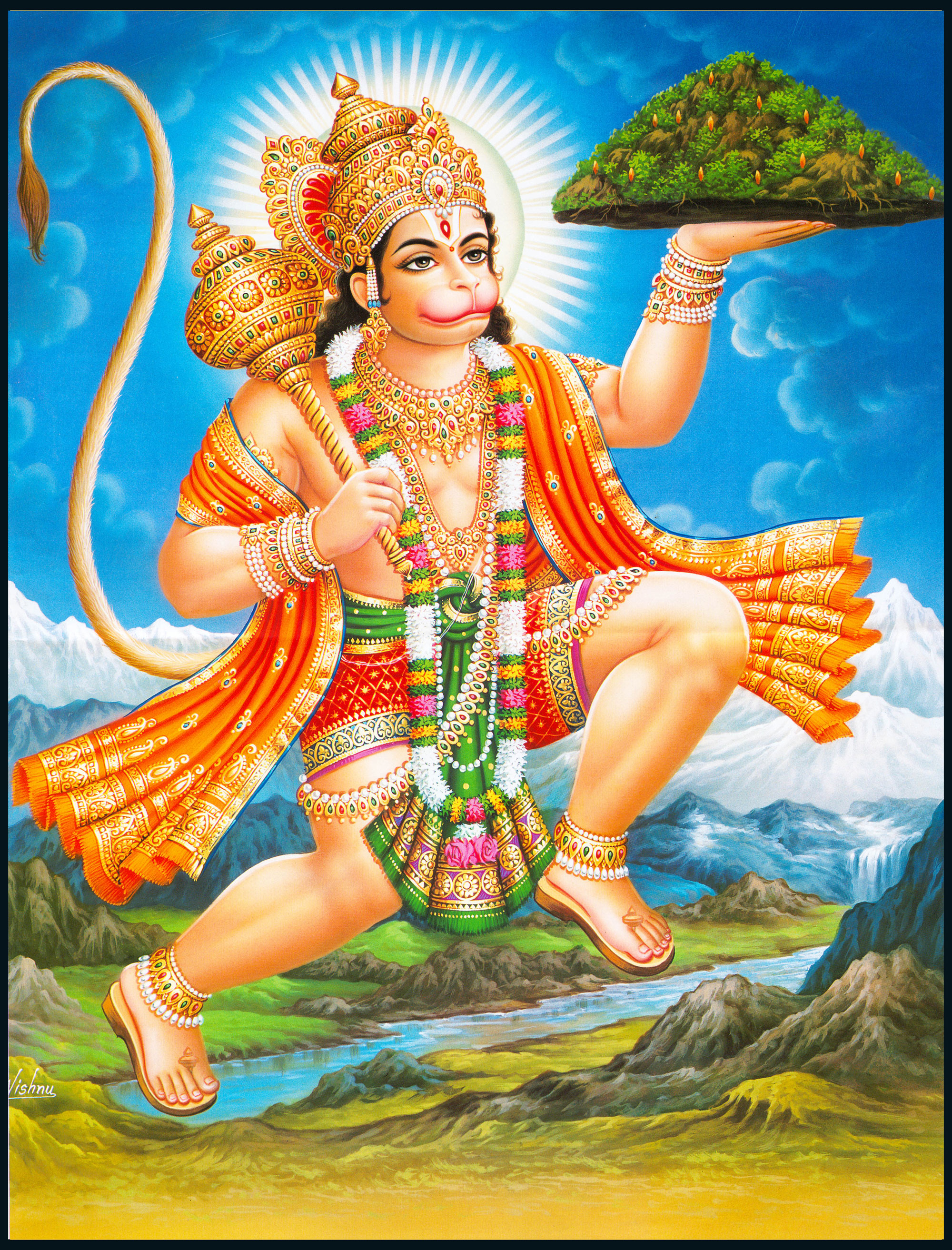
Human Hanuman and the great Monkey King
In the Hindu text the Ramayana, the monkey-headed human leader Hanumanis informed by deities, and usually consciously addressed by them [58].
A stream winds through part of an unexplored valley in Mosquitia in eastern Honduras, a region long rumored to contain a legendary “White City,” Cuidad Blanca, also called the City of the Monkey God (Dave Yoder/natgeo.com).
Holy Hanuman in Honduras, it was true! The fabled lost City of the Monkey God has been located and visited in the virgin rainforests of Honduras. Cuidad Blanca, a "White City" of stone in pristine jungle, was rediscovered by a European explorer hundreds of years ago. The locals spoke of a buried Monkey God statue in the area. But even the indigenous "Indians," the Mosquitia, who are pre-Columbian Native Hondurans, no longer knew its location in the dense, nearly impenetrable forest. The civilization is so new it has no name yet.
Map of Honduras in Mesoamerica/South America (courtesy of the murderers at the CIA/wiki)
Lost City Discovered in Honduran Rain Forest
National Geographic writer Douglas Preston, photographer Dave Yoder (natgeo.com)
A “were-jaguar” effigy, likely representing a combination of a human and spirit animal, is part of a still-buried ceremonial seat, or metate, one of many artifacts discovered in a cache in ruins deep in the Honduran jungle (Dave Yoder/nategeo.com).
In search for legendary “City of the Monkey God,” explorers find the untouched ruins of a vanished culture An [American] expedition to Honduras has emerged from the jungle with dramatic news of the discovery of a mysterious culture’s lost city, never before explored. The team was led to the remote, uninhabited region by long-standing rumors that it was the site of a storied “White City,” also referred to in legend as the “City of the Monkey God.”
[U.S. and Honduran] archaeologists surveyed and mapped extensive plazas, earthworks, [burial] mounds, and an earthen pyramid belonging to a culture that thrived a thousand years ago and then vanished. The team, which returned from the site last Wednesday, also discovered a remarkable cache of stone sculptures that had lain untouched since the city was abandoned.
Honduran troops lead a convoy through a town that served as the base for helicopters ferrying members of the expedition to a location in the Mosquitia rain forest where they examined ruins of an ancient city (Dave Yoder/natgeo.com).
In contrast to the nearby Maya [Mayans], this vanished culture has scarcely been studied and it remains virtually unknown. Archaeologists do not even have a name for it.
Christopher Fisher, a Mesoamerican archaeologist on the team from Colorado State University, said the pristine, unlooted condition of the site was “incredibly rare.” He speculated that the cache, found at the base of the pyramid, may have been an offering.
“The undisturbed context is unique,” Fisher said. “This is a powerful ritual display, to take wealth objects like this out of circulation.”
The tops of 52 artifacts were peeking from the earth. Many more evidently lie below ground, with possible burials. They include stone ceremonial seats (called metates) and finely carved vessels decorated with snakes, zoomorphic figures, and vultures.
Frequent rains turned the expedition camp into a sea of mud (Dave Yoder/natgeo.com).
The most striking object emerging from the ground is the head of what Fisher speculated might be “a were-jaguar,” possibly depicting a shaman in a transformed, spirit state. Alternatively, the artifact might be related to ritualized ball games that were a feature of pre-Columbian life in Mesoamerica.
“The figure seems to be wearing a helmet,” said Fisher. Team member Oscar Neil Cruz, head archaeologist at the Honduran Institute of Anthropology and History (IHAH), believes the artifacts date to A.D. 1000 to 1400.
The objects were documented but left unexcavated. To protect the site from looters, its location is not being revealed.
Stories of “Cuidad Blanca” and a Monkey God
Former British Special Air Service (SAS) soldiers prepare a helicopter pilot for liftoff from a landing zone cleared for a team of scientists surveying a secret location in the Mosquitia jungle. The helicopter ferried people and supplies from its base (Dave Yoder/natgeo.com).
.
The ruins were first identified in May 2012, during an aerial survey of a remote valley in La Mosquitia, a vast region of swamps, rivers, and mountains containing some of the last scientifically unexplored places on earth.
For a hundred years, explorers and prospectors told tales of the white ramparts of a lost city glimpsed above the jungle foliage. Indigenous stories speak of a “white house” or a “place of cacao” [cacao is chocolate's actual and original name, Theobroma cacao, "cocoa, the food of the gods"] where Indians took refuge from Spanish Conquistadores -- a mystical, Eden-like paradise from which no one ever returned. The European "discovery"
Since the 1920s, several expeditions had searched for the White City, or Ciudad Blanca. The eccentric explorer Theodore Morde mounted the most famous of these in 1940, under the aegis of the Museum of the American Indian (now part of the Smithsonian Institution ).
[The "Smithsonian" is not one institution as the name suggests. It is a flexible set of hand-selected institutions that hide away some of the best artifacts and skeletons of giants, extraterrestrials, monsters, and other inexplicable discoveries that call into question the consensus reality "respectable science" feeds us through the mainstream media and academic journals. See the work of Michael Cremo (mcremo.com) called "forbidden archeology."]
Morde returned from Mosquitia with thousands of artifacts, claiming to have entered the City. According to Morde, the indigenous people there said it contained a giant, buried statue of a monkey god. He refused to divulge the location out of fear, he said, that the site would be looted. He later committed suicide and his site -- if it existed at all -- was never identified.
More recently, documentary filmmakers Steve Elkins and Bill Benenson launched a search for the lost city.
They identified a crater-shaped valley, encircled by steep mountains, as a possible location.
To survey it, in 2012 they enlisted the help of the Center for Airborne Laser Mapping at the University of Houston. A Cessna Skymaster, carrying a million-dollar lidar scanner, flew over the valley, probing the jungle canopy with laser light. Lidar -- “Light Detection and Ranging” -- is able to map the ground even through dense rain forest, delineating any archaeological features that might be present.
When the images were processed, they revealed unnatural features stretching for more than a mile through the valley. When Fisher analyzed the images, he found that the terrain along the river had been almost entirely reshaped by human hands.
Archaeologist Oscar Neil Cruz of the Honduran Institute of Anthropology and History examines a building stone discovered during a foray to a location identified by lidar as a place of interest. Several such construction stones, apparently shaped by hand, were found in a row at the top of what appears to be an ancient plaza (Dave Yoder/natgeo.com).
The evidence of public and ceremonial architecture, giant earthworks and house mounds, possible irrigation canals and reservoirs, all led Fisher to conclude that the settlement was, indeed, a pre-Columbian city. Threatened by Deforestation
Anna
Cohen, a University of Washington anthropology grad student, documents a
cache of more than 50 artifacts discovered in the jungle. Following
scientific protocol, no objects were removed from the site. The
scientists hope to mount an expedition soon to further document and
excavate the site before it can be found by looters (Dave
Yoder/natgeo.com).
An archaeological discovery isn’t confirmed until it has been “ground-truthed.” The ground exploration team consisted of American and Honduran archaeologists, a lidar engineer, an anthropologist, an ethnobotanist [expert on plant and human relationship], documentary filmmakers, and support personnel. Sixteen Honduran Special Forces soldiers provided security. The National Geographic Society sent a photographer and a writer.
The expedition confirmed on the ground all the features seen in the lidar images, along with much more. It was indeed an ancient city. Archaeologists, however, no longer believe in the existence of a single “lost city,” or Ciudad Blanca, as described in the legends. They believe Mosquitia harbors many such “lost cities,” which taken together represent something far more important -- a lost civilization.
Former
British SAS commando Steve “Sully” Sullivan (right) waits while the
scientific team puzzles over a construction stone that they believe was
carved by members of a vanished civilization yet to be identified (Dave
Yoder/natgeo.com).
The valley is densely carpeted in a rain forest so primeval that the animals appear never to have seen humans before. An advance team clearing a landing zone for helicopters supplying the expedition noted spider monkeys peering down curiously from the trees above, and guinea hen and a tapir wandering into camp, unafraid of the human visitors.
"This is clearly the most undisturbed rain forest in Central America. The importance of this place can’t be overestimated." - Mark Plotkin, ethnobotanist
“This is clearly the most undisturbed rain forest in Central America,” said the expedition’s ethnobotanist, Mark Plotkin, who spent 30 years in Amazonia. “The importance of this place can’t be overestimated.” The region also is gravely threatened. Deforestation for ranching has checkerboarded the jungle to within a dozen miles of the valley. Huge swaths of virgin rain forest are being cut illegally and burned to make way for cattle.
[Our meat eating, our personal choice to consume the slaughtered flesh of creatures, has profound consequences for the environment, to say nothing of their pain and lives. Shopping a McDonald's and eating cows, pigs, chickens, and fish is paying capitalists to send in killers to round up these creatures, imprison them, and cut them up on an industrial scale so vast that more than million lives are lost a DAY just to feed this filthy karmic habit in the USA alone. Is it "moral"? Probably not, but who cares: It's anti-environment, it destroys ecosystems, it pollutes the air with methane and chemicals, it contaminates ground water, it destroys the seas.]
In addition to looting, another threat to the newly discovered ruins is deforestation for cattle ranching, seen here on a hillside on the way to the site. At its present pace, deforestation could reach the valley within a few years (Dave Yoder/natgeo.com).
.
The region has become one of the biggest beef-producing areas in Central America, supplying meat to fast-food franchises in the United States.
Virgilio Paredes Trapero, the director of the IHAH, under whose auspices the expedition operated, spent several days at the site. He concluded: “If we don’t do something right away, most of this forest and valley will be gone in eight years.” He spread his hands. “The Honduran government is committed to protecting this area, but doesn’t have the money. We urgently need international support.”
The expeditionwas made possible with the permission, partnership, and support of the government of Honduras; Honduran President Juan Orlando Hernández Avarado; Virgilio Paredes Trapero, director of the Honduran Institute for Anthropology and History (IHAH); Oscar Neil Cruz, Chief of the Archaeology Division of IHAH, as well as Minister of Defense Samuel Reyes and the Armed Forces of Honduras under the command of Gen. Fredy Santiago Díaz Zelaya, with Gen. Carlos Roberto Puerto and Lt. Col. Willy Joel Oseguera, and the soldiers of TESON, Honduran Special Forces.
Douglas Preston writes about archaeology for the New Yorker and other publications. His account of Coronado’s search for the Seven Cities of Gold was recently issued as an e-book.
These are deep concepts that go far beyond the mat -- yet very practical, commonsense, and elegant.
Now as we ease into autumn, it seems that some of these concepts resonate more deeply. I have been getting hung up on my attachment to outcomes.
Let's face it. This world is all about outcomes: goals, objectives, focus. I am sucked into these frames. For my mental well being, it seems necessary to step away from being results-oriented and ease into a space where the process itself is my motivation for action.
For instance, when I teach a yoga class, I always want the class to go smoothly, for everyone to enjoy the pace, and delight in the presentation. That is not always the outcome. So it is hard to find motivation in the process.
Take working into a posture (asana), for example. It is common for us as Americans to want to look a certain way in a pose. And if it is not achieved, we are often disappointed and feel like a "yoga failure."
"It was the greatest leap ever taken. The speed of Hanuman's jump pulled blossoms and flowers into the air...they cheered" - Ramayana, retold by William Buck (yogajournal.com).
I have worked for years to achieve full Hanumasana. Yet at the end of the year, at the end of the decade, I am still so far from the floor that it is not what my ego would say is a "good" monkey pose splits.
I joke with my classes that there is no trophy in the back with someone doing the perfect monkey pose or downward dog. But I say this to remind myself. The postures are very intelligent, supporting liver, kidney, and endocrine function, as well as increasing flexibility and strength.
It is important to stay with the process not the aesthetics (or even the asceticism) of it, but rather the health benefits.
There is more to come concerning The Yoga Sutras. A conversation is a series of contemplation and utterances. Find more on my new blog.
Indra Jatra: Nepalese Hindu priest cleans idol of Swet Bharab, uncovered only during the festival in Hanuman Dhoka, Kathmandu, Nepal (AFP/Prakash Mathema).
All materials on this site are submitted by editors and readers. All images, unless otherwise noted, were taken from the Internet and are assumed to be in the public domain.
In the event that there is still a problem, issue, or error with copyrighted material, the break of the copyright is unintentional and noncommercial, and the material will be removed immediately upon presented proof.
Contact us by submitting a comment marked "private."
Do not follow this journal if you are under vinaya or parental restrictions. Secure protection by Sucuri.
Wisdom Quarterly: American Buddhist Journal is licensed under a Creative Commons Attribution-Noncommercial-Share Alike 3.0 United States License. Permissions beyond the scope of this license may be available at creativecommons.org/about/licenses.


 I spent the summer re-reading the Yoga Sutras of Patanjali.
 "It was the greatest leap ever taken. The speed of Hanuman's jump pulled blossoms and flowers into the air...they cheered" - Ramayana, retold by William Buck (yogajournal.com).