Showing posts with label Rolling Exhibition. Show all posts

Sunday, November 2, 2025

Realms of the Dharma: LACMA exhibit


Realms of the Dharma: Buddhist Art Across Asia
Los Angeles County Museum of Art (LACMA) 
LACMA has an excellent permanent collection.
"Realms of the Dharma: Buddhist Art Across Asia" presents an international survey of Buddhism and Buddhist art, beginning with the religion’s origins in India and following its spread through mainland and island Southeast Asia (Burma, Thailand, Cambodia, Vietnam, and Indonesia), the Himalayas (Kashmir, Nepal, and Tibet), and East Asia (China, Korea, and Japan).


Incorporating 180 masterpieces of pan-Asian Buddhist art, the exhibition introduces key concepts of Buddhist thought and practice viewed through the prism of rare and extraordinarily beautiful Buddhist sculptures, paintings, and ritual objects.

Drawn from LACMA’s permanent collection, with several significant loans from private collections, the exhibition explores:
  • the life of the historical Buddha,
  • the role of the bodhisattva or Buddhist savior,
  • Buddhist cosmology,
  • and such key concepts as Dharma, karma, nirvana, mantra, mudra, and mandala.
The show focuses on art associated with such key phases of Buddhism as Theravada (early monastic Buddhism), Mahayana (the “Great Vehicle” populism), Vajrayana (the “Diamond Vehicle”—tantric or esoteric Buddhism), and Chan (Zen).


While closed on the Day of the Dead, the exhibit reopens along with the museum on Nov. 2, 2025, and continues until July 12, 2026. Ticket purchase necessary. Discounted for members.

Monday, May 13, 2024

Portal opens between NY, Ireland: nudes

Don't stereotype us or our natural love of storing up gold and a taste for strong drink, Yanks.
.
American duendes in Ireland?
Could it be a coincidence that this portal opens on National Leprechaun Day, May 13, 2024? It seems unlikely. There are no coincidences. Something is afoot. There may not be leprechauns.

(There probably are, or what would the National Leprechaun Museum in Dublin be for, and why would there be so many regional names for these folk around the country?

Maybe the Luaracan were wild lycanthropes
There are the fae, the wee folk, the Aes Sidhe (Aos Sí), and other supernatural beings all over Ireland, who migrated to the US on boats when the Irish arrived on American shores.

The Irish may have been the first Europeans here if there's any truth to the story of an Irish priest who made the journey and back. When Cristobal Columbus ran into the Caribbean and other Europeans like the Icelanders came, there were redheaded giants with six fingers (Nephilim) among other Native giants, ogres (Buddhist yakkhas), monsters, and all manner of strange, shapeshifting creatures.


'Portal' linking NYC and Irish City of Dublin draws bad behavior from Americans

Portals aren't real, except for transporting ogres.
(FOX 5 New York) May 2024: Is this a magic trick? No, it's an art installation. The "Portal" connects New York City, the largest city in the USA, and the capital (Dublin) of a strange faraway island known as Ireland, via a livestream connection going on 24/7 for six months has already drawn some less-than-savory behavior from visitors. Keep your clothes on, New Yorkers, and don't say anything hateful or hurtful. FOX 5 NY's Stephanie Bertini has the story.
  • FOX 5 NY, 5/13/24; Pat Macpherson and Dhr. Seven (eds.), Wisdom Quarterly
Don't stereotype us, Laddie.
Subscribe to FOX 5 NY. Watch FOX 5 NY Live. FOX 5 NY delivers breaking news, live events, investigations, politics, entertainment, business news, and local stories from New York City and across the nation. Watch more FOX 5 NY on YouTube: Black Entrepreneurs: • Playlist STREET SOLDIERS with LISA EVERS: • Street Soldiers with Lisa Evers A.I. ALL IN: • Playlist Finding Faith: • Finding Faith with Sharon Crowley The Big Idea: • Playlist Download the FOX 5 NY News app: https://www.fox5ny.com/apps Download the FOX 5 NY Weather app: https://www.fox5ny.com/apps Follow FOX 5 NY on Facebook: / fox5ny Follow FOX 5 NY on Twitter: / fox5ny Follow FOX 5 NY on Instagram: / fox5ny Subscribe to the Good Day NY Morning Brief newsletter: https://www.fox5ny.com/email

Thursday, March 14, 2024

RAP: Rolling Loud Cali Festival (livestream)

Rolling Loud (RollingLoudCa.com); Bela, Seth Auberon (eds.), Wisdom Quarterly
Single Day Passes


Performing: Kanye West
It's funny how rock 'n roll, which really isn't that popular but has diehard fans, can manage massive festivals. Pop stars are obliged to perform at well-organized exhibition shows for radio station conglomerate that play their songs by pay-to-plays schemes or tit for tat arrangements. But what about rap and hip-hop? Rolling Loud California  has it covered with the biggest rap festival we have ever heard of, stretching from March 14th opening night to St. Patrick's Day March 17th, 2024. Plenty of Irish will attend fo'shur because there are only so many times one can see Flogging Molly. There probably is no way to sleep on the grounds, but the hotels and Airbnbs are full or charging so much that it would be better and cheaper$299-$799 (plus fees, taxes, charges, nonrefundable processing stipends, associated remuneration add-ons, and of course wharfage). But WAIT! There's an easier way: scroll down and watch it HERE for FREE! We're sure the Devil would be happy, the Devil being the owner of Nicki "Roman" Minaj's soul, one Lil Wayne of Young Money Entertainment record label.  to fly back home and return each night. But there are packages to cover sleeping arrangements. Good luck parking (take a shuttle). Must be at least 16 to attend and no drugs (lol), but there will probably be drugs. Inglewood used to be the ghetto, but now the price of houses has tripled to live next to the freeway and under the airport. The show doesn't really start until Friday. Bottom line, how much is this going to cost? How about all this and less for Rolling Loud 2024

What's the big deal? The lineup:
 Is there any chance Trump will be there? Yes, he needs the Black vote real bad.
WATCH HERE (3 STAGES)
Rolling Loud California 2024 | March 14-17, 2024 | Hollywood Park

Tuesday, February 28, 2023

Extraordinary Ancient Egyptian treasures

loveEXPLORING (MSN, Feb. 28, 2023); Pat Macpherson, CC Liu (eds.), Wisdom Quarterly
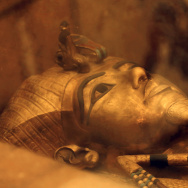
King Psusennes (1039-991 BC) funerary mask from Tanis, N.E. Egypt, Egyptian Museum, Cairo, made from sheet gold ("the flesh of the gods"), blue lapis lazuli, and glass paste string holding false beard curving upward slightly to indicate divine status (msn.com).

Treasures of Ancient Egypt
Few cultures have left behind as many fascinating treasures and monuments as Ancient Egypt: The Great Pyramid and Sphinx, the Valley of the Kings, the gold mask of King Tut (Pharoah Tutankhamun) and the Rosetta Stone are all world renowned, attracting millions of curious visitors per year. Treasures of Ancient Egypt: Artefacts, Tombs & Temples from the Land of the Pharaohs by Nigel Fletcher-Jones explores the spectacular riches of this ancient world through a selection of stunning photographs. Take a peek inside it here, so as to feast on Egypt's familiar sights and lesser-known relics and discover the fascinating stories behind them. More


Treasures of Ancient Egypt (Nigel Fletcher-Jones) See more than 150 stunning photos that celebrate the wonders of ancient Egypt, from its hieroglyph-covered papyrus scrolls to the awe-inspiring pyramids. Few cultures have left behind as many familiar objects and buildings as Ancient Egypt. The Great Pyramid and Sphinx, the Valley of the Kings, the Colossi of Memnon, the plaster bust of Nefertiti, the gold mask of Tutankhamun, the rock-cut temples at Abu Simbel, and the Rosetta Stone all are immediately recognizable. The exceptional beauty of Ancient Egypt's temples, tombs, and objects draw millions of people each year to Egypt and to museums around the world (including Los Angeles' latest installation that rolls into other big cities).


Treasures of Ancient Egypt tells the tale of many of these familiar places and riches alongside some that are less familiar, but just as spectacular, framed by a lively and highly readable account of Egypt's history from around 3000 BCE to the death of Queen Cleopatra in 30 BCE. Over 150 color photographs, including never-before-published images, complete this fascinating exploration of Ancient Egypt's unique culture and its contribution to world history and art. More

Thursday, November 30, 2017

Artifacts: King Tut's tomb coming to L.A.

AP/KPCC FM (scpr.org, Nov. 29, 2017); Pat Macpherson, CC Liu (eds.), Wisdom Quarterly

One of Egypt's famed King Tutankhamun's golden sarcophagi is displayed at his tomb in a glass case in the Valley of the Kings in Luxor, Egypt, April 1, 2016. Artifacts from King Tut's tomb will be on display at the California Science Center in LA for 10 months (Amr Nabil/AP).
.
Artifacts from King Tut's tomb are going on tour next year to mark the upcoming 100th anniversary of the discovery of the Egyptian pharaoh's resting place.
 
The California Science Center says the exhibit, "KING TUT: Treasures of the Golden Pharaoh," will be on view at the Los Angeles museum for 10 months before heading to Europe in January 2019 as part of a 10-city international tour.

In this Thursday Nov. 5, 2015 file photo, tourists look at the tomb of King Tut as it is displayed in a glass case at the Valley of the Kings in Luxor (Amr Nabil/AP).

 
Dr. Diane Perlov, Deputy Director for Exhibits at the California Science Center, told KPCC the exhibit will be "more of an immersive-type experience" as each artifact is paired with multimedia to tell the story of Tutankhamun's afterlife.

The museum says the exhibition represents the largest collection of artifacts and gold from Tutankhamun's tomb ever to go on public display outside of Egypt. It says 40 percent of the items are leaving Egypt for the first and last time before going on permanent display at a new museum being built near the Giza Pyramids in Egypt.

King Tut's tomb was discovered in 1922, more than 3,000 years after his death. More + AUDIO
 
Women in Film announces new help line to combat sexual harassment in Hollywood


Secrets inside the Sphinx:
Proof of Internal Chambers
Ancient Architects, Sept. 25, 2017; Dhr. Seven, Pat Macpherson, Wisdom Quarterly


Proof! There are shafts and chambers inside the great Sphinx of Giza near Cairo ("Mars"), Egypt, accessible via an opening at the top of the Sphinx's head.
 
This video presents evidence from a Harvard University professor of archaeology who describes the interior of the Sphinx's chambers, including the tomb of the first Pharaoh Menes. Could this also be the location of the legendary Hall of Records spoken of by America's "Sleeping Prophet" Edgar Cayce? (Images were taken from Google Images for educational purposes only).

Wednesday, November 29, 2017

King Tut coming back to Los Angeles 2018

KingTutExhibition.com; Dhr. Seven, Pat Macpherson, Wisdom Quarterly; Mystery History
Treasures never seen outside of Egypt come to LA's California Science Center, March 2018

Secret Chamber Behind Sphinx's Ear?
Mystery History/Facebook, Nov. 26, 2017

 
A Russian indigo child, Boriska (video below), we previously reported on has disappeared or been effectively silenced for his claims of recalling a past life as a space pilot who saw the destruction of his planet, Mars, in a nuclear catastrophe that destroyed the red planet's atmosphere. The same could happen to Earth, except that there is a time capsule hidden in Egypt's Spinx, in a chamber that will be opened by a special mechanism behind the Sphinx's ear. However, not if Enemy of the People Zahi Hawass, deposed autocrat head of Egyptian antiquities.

Friday, September 9, 2016

Art, environment, Dunhuang Cave Temples

(Cave Temples of Dunhuang, 8/30); CC Liu, Crystal Quintero, Wisdom Quarterly
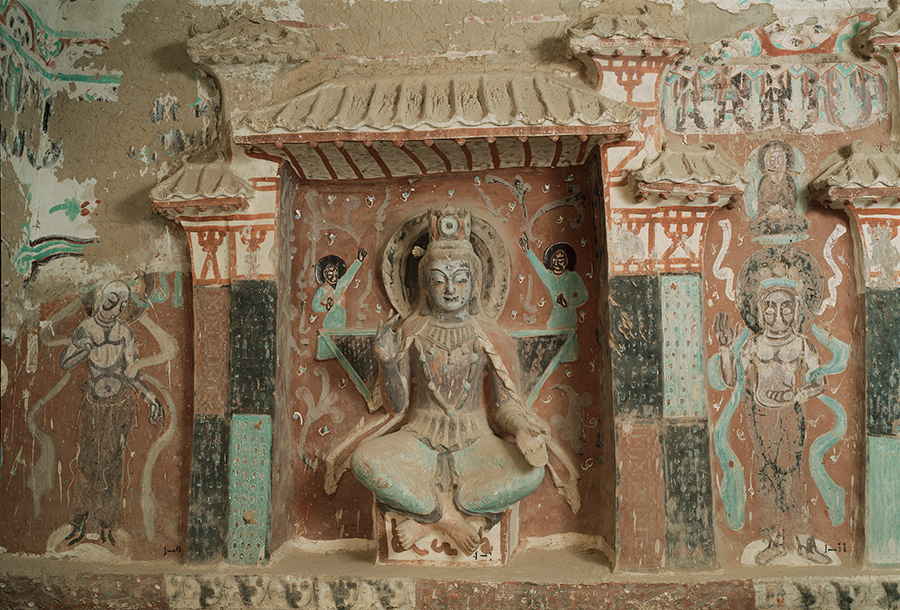
Interior of Cave 275 showing the sand and mud walls covered with pigment
The walls of the cave temples were plastered with sand, hemp fiber, and mud then painted. Interior wall of Cave 275, Northern Liang Dynasty (420-429 CE) (Dunhuang Academy).
Art Meets Environment in the Cave Temples of Dunhuang
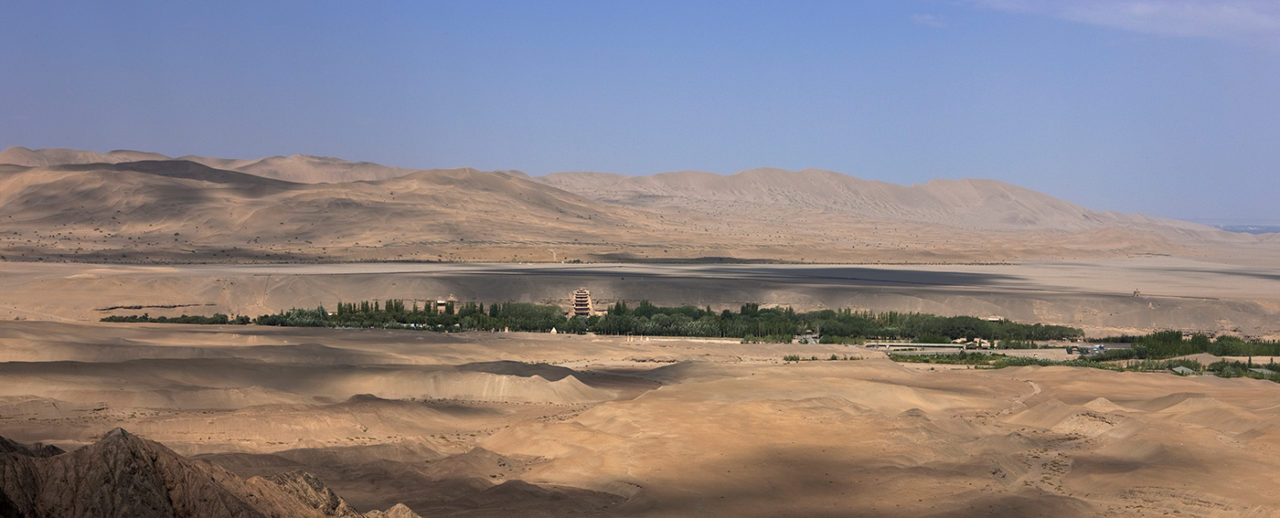
The cave temples of Mogao at Dunhuang, Western China, are carved into the cliff face along the Daquan River and are surrounded by austere desert (Sun Zhijun/Getty Museum).
The Mogao cave temples of Dunhuang have been shaped by more than the Buddhist artists and builders who crafted the site over the course of a thousand years -- the environment itself has played a vital role.

After several decades of research and conservation work carried out by the Dunhuang Academy in collaboration with the Getty Conservation Institute and others, we now have a greater understanding of how the natural setting and local climate -- from the wind and the desert sand to the water sources nearby -- influenced the design of the cave temples and their paintings.
 
Not only is this knowledge critical to developing strategies for preserving and managing the grottoes today, it also prompts art and architectural historians to study the history of the cave temples in connection with their broader ecological environment. What does an earth-centered approach to the art of Dunhuang look like?
 
A Desert Oasis
The overall configuration of the Mogao Grottoes is key to understanding the relationship between its art and environment. Nearly five hundred extant caves are distributed over a half-mile along the same cliff face in the southern tip of the Sanwei Mountains.

The heavy concentration of cave-building activity in this relatively limited area from the fourth to the fourteenth centuries underscores the remarkable allure that the place held for the local community.
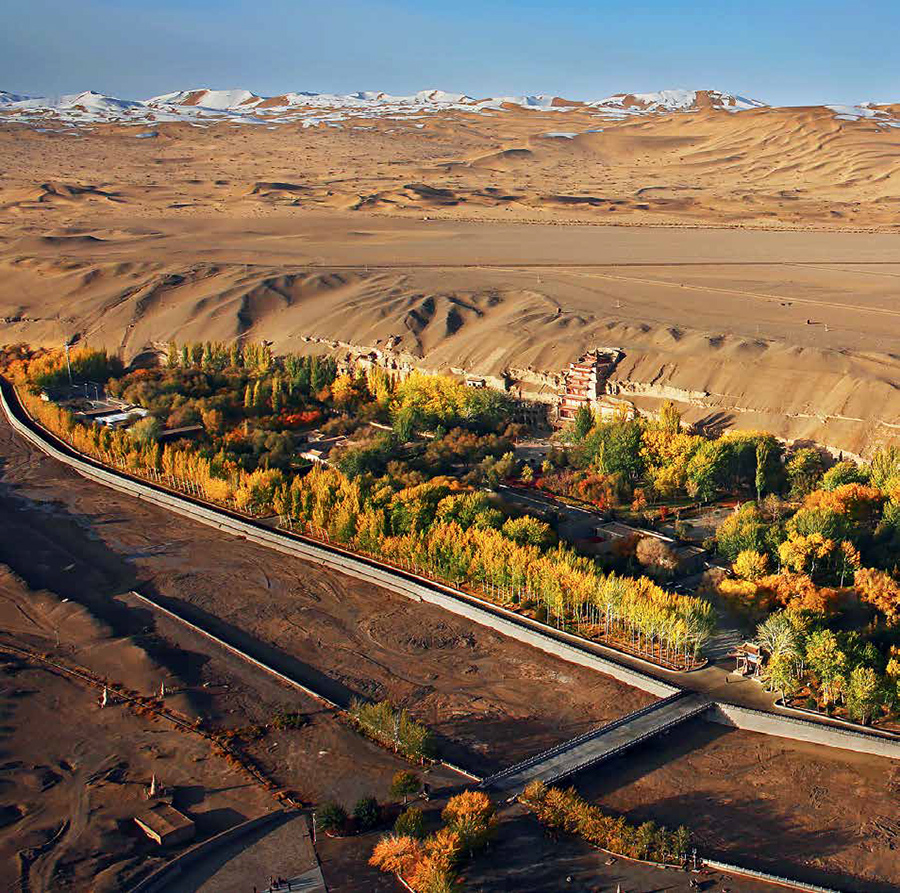
 
Aerial view of the Mogao Grottoes, looking west, showing desert and snow-capped mountains in the far distance
Aerial view of the Mogao Grottoes showing the location of the cave temples in the cliff face. Poplar and conifer trees provide shade for the site. Beyond the sandy expanse above the cliff rise the dunes known as the Mingsha Shan, capped with snow. Courtesy of the Dunhuang Academy (Sun Zhijun).
 
In material terms, the rock structure is the same for most of the temples, and the general climate is consistent throughout the site. Composed of conglomerate, a soft rock, the cliff was easily excavated with hammers and chisels, and the cave temple walls were plastered with sand, hemp fiber, and mud from the nearby Daquan riverbed before being painted.

Despite working in the same location, different generations of builders and painters dealt with these existing environmental conditions in disparate ways.
 
When the site was first established, artisans focused on finding appropriate materials and techniques to create an enduring work of art. Their concerns changed considerably in the ensuing years with the planning of new additions. Largely due to financial and time constraints, these later craftsmen did not reinvent the site but rather adapted new caves to the existing configuration.
 
When all the available cliff surfaces ran out in the tenth century, however, the need to reconfigure the site anew arose. Builders added many monumental cave temples by consolidating older units into one location, and they consulted the work of their predecessors while carrying out this renovation.

Their awareness of Dunhuang’s history of construction and adaptation enabled them to better respond to the immediate environmental pressures.

Flora and Fauna
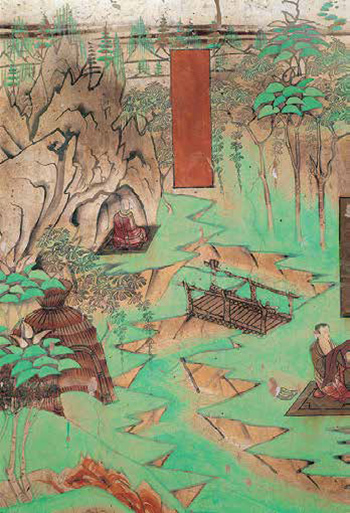
Wall painting from the Mogao caves showing topography and vegetation
Greenery abounds in this landscape illustrating the Maitreya Sutra. Detail, north wall, Yulin Cave 25. Late eighth-early ninth century (Dunhuang Academy).
  
In addition to the physical setting, the mural paintings inside the cave temples at Mogao offer ways to chart the shifting ecology of the area. Take, for example, representations of plants and animals. These paintings could be a source of information regarding environmental changes over time.

Although most of the scenes depicted at Mogao pertain to imaginary realms populated with Buddhist deities of all sorts, local painters often imbued these religious scenes with a touch of reality from their own earthly lives.
 
Indeed, plants and animals were often rendered with such remarkable accuracy that it’s possible to identify the individual species. By tracking when certain flora and fauna became prevalent subjects in Dunhuang paintings or disappeared from the artistic repertoire, researchers can infer whether climate changes contributed to the growth or decline of certain types of ecological life in the region.
 
Over the course of a millennium, environmental factors in this desert oasis shaped the very configuration and appearance of the Dunhuang cave temples, and the discovery and study of these natural influences is now more accessible than ever.

 
This post is part of the series Cave Temples of Dunhuang, featuring stories inspired by the exhibition Cave Temples of Dunhuang: Buddhist Art on China’s Silk Road. See all posts in the series

Saturday, February 6, 2010

Asia's Art in Ancient Vietnam (video)

Asia’s Aesthetic Crossroads
Julie Bloom (New York Times)
A pedestal from Van Trach Hoa village, Phong Dien District, Thua Thein Hue province, in the 8th-9th century (Librado Romero/The New York Times).

The exhibition "Arts of Ancient Viet Nam: From River Plain to Open Sea," now on view at the Asia Society Museum, took over 20 years to produce. According to Holland Cotter, "From the moment you enter the galleries you're seeing things you won't find anywhere else and certainly not in this combination -- a bronze drum as hefty as a hot tub; a wooden Buddha, tall, dark, and Giacometti-thin.

Avid-eyed Hindu deities keep company with contortionist dancers. A tiny serpent of beaten gold basks in a spotlight. Ceramic plates and bowls crowd a room just as they had once filled the hold of a ship that went down in the South China Sea." As a trade hub, Vietnam absorbed cultural influences from China, Cambodia, Laos, Thailand, and more, and these disparate influences are reflected in the show.

"Once you've made your way through the society's suave installation, you've seen treasures from 10 Vietnamese museums. You've time-traveled from the first millennium B.C. to the 17th century A.D. And you've style-traveled through dozens of cultures both inside and outside Vietnam itself." Source

Thursday, December 31, 2009

American Wars: "Generation Kill" (video)


Click to see video, produced by ABC Australia.

(Journeyman Pictures) What happens when Americans who've grown up on Hollywood war films and graphic video games are sent to the frontline? "It's the ultimate rush -- you're going into the fight with a good song playing in the background," states one soldier. This is a war fought by the first Playstation generation. As Rolling Stone journalist Evan Wright explains: "One thing about them is they kill very well in Iraq."
Thursday, December 24, 2009

Towards Personal Transcendence

Sculpture exhibition approaches Buddhist truths
(Bangkok Post/Outlook, Dec. 24, 2009) Buddhism has been the inspiration for many Thai artists, oftentimes with uninspired results. Far from serving as a cornucopia for their creativity, these practitioners frequently reduce the religion's icons to the level of kitsch as they repetitively reproduce its symbology, usually in gaudy gold [such as the sculpture shown here of an enlightened elder monk, not from this exhibit, covered in gold leaf].

On the other hand, there are some artists who incorporate these ancient emblems into their work with a degree of originality. Vichoke Mukdamanee is one such artist and his latest show at The National Gallery titled "The Inspiration from Dharma" effectively breathes new life into the metaphysical representations from antiquity. More>>

Friday, May 22, 2009

What are you looking at?


Rolling Exhibition Life as viewed from a skateboard: Born without legs, Kevin Michael Connolly chose to respond to being stared at by photographing those doing the staring around the world. This has resulted in 32,000 frames from a unique perspective.