Showing posts with label bodhgaya. Show all posts

Sunday, November 24, 2024

Dalai Lama, Buddhist pilgrimage India/Nepal

The 14th Dalai Lama goes on a pilgrimage to the Mahabodhi Temple in Bodhgaya, India, in 2023

On the Path of the Buddha: Buddhist Pilgrimage in North India and Nepal
(Phillip Lucas) This educational video follows the path of Buddhist pilgrims from around the world as they visit Lumbini, Nepal, the traditional site thought to be where Prince Siddhartha (the Buddha-to-be) was born.

Then it is on to "Enlightenment Grove" or Bodh Gaya in Bihar (Vihara), India, the site of Prince Siddhartha's great awakening or enlightenment (maha bodhi).

Then it is on to Sarnath, India, the site of the Buddha's first sutra or sermon, where he made five converts of wandering ascetics who previously accompanied him on his spiritual quest.

Then it is on to the ancient royal city of Rajgir, India, the site of Vulture's Peak, the hill where the Buddha delivered several famous sutras.

Then it is on to Vaishali, India, where the Buddha first accepted females into the Buddhist Order of Nuns (Bhikkhuni Sangha).

Finally, it is on to Kushinagar, India, the site of the Buddha's final nirvana, the culmination of his long journey through samsara (the Wheel of Life and Death).

Tuesday, September 17, 2024

Where the Buddha awakened: Bodh Gaya


Tree was saved from angry monotheistic Muslims
This 360 degree view of "Enlightenment Grove" or Bodh Gaya, India, allows viewers to look around by grabbing the screen to see all the sights of this most sacred place near the Bodhi tree and the Mahabodhi Temple.

Mahabodhi means "Great Enlightenment," a monument next to the tree, where thousands of pilgrims come daily to meditate, prostrate themselves on slippery boards Tibetan-style, or contemplate the enormity of what the wandering ascetic Siddhartha Gautama from Scythia (Shakya Land to the west in Gandhara, modern Afghanistan and Pakistan) accomplished in finally realizing the Truth and letting go.


It went to Sri Lanka and L.A.
It is a kind of wonder of the world with temples from every Buddhist country represented in a relatively small area in the present-day state of Bihar, India. It is named Bihar from the Buddhist word Vihar, a Buddhist monastic temple complex, abbey, monastery, or nunnery, where in the past so many sprouted up to put into practice the Buddha's path to enlightenment and freedom that the name stuck, and Vihar became Bihar (same pronunciation), given the penchant of Hindi to be a lot like Sanskrit but dropping the "a" at the end of so many words. Yoga becomes yog, asana becomes asan, and vihara becomes Vihar (Wihara, Bihara, Bihar). It is an extraordinary place to visit for world travelers.

Is it a real place I can visit? Millions do
  • TEXT: Dhr. Seven and Amber Larson, Wisdom Quarterly

Thursday, June 6, 2024

New oldest tree in the world found in Chile

Why do things grow so big and healthy along the Pacific Ocean high in California?
.
There's prana energy coming up from trees.
There used to be a time when Buddhism had the oldest tree in the world, the Buddha's Bodhi (Enlightenment) tree, a pipal or sacred fig (Ficus religiosa), which is still the oldest documented and attested tree in the historical record.
  • It may seem a coincidence that the historical Buddha had an "enlightenment tree," but in fact all samma-sam-buddhas ("supremely awakened ones") do. The Buddha spoke of buddhas of the distant past, naming their chief disciples and other features, including the type of tree they awakened under.
  • Finding the Mother Tree
    This hints at just how important trees are. Save forests, save earth!
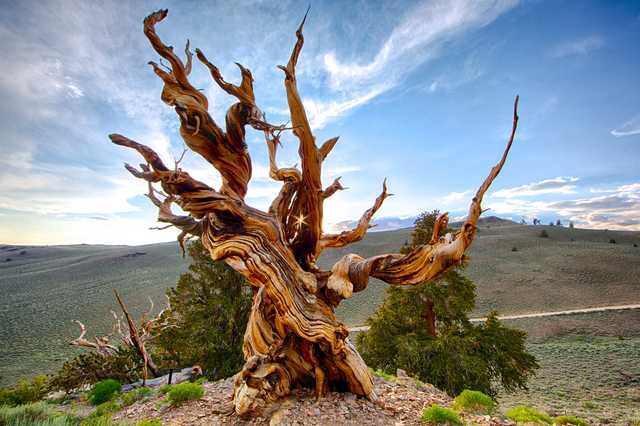
But a California bristlecone pine dubbed Methuselah took the crone for being far old, as proved by rings. Such trees do not even look alive, but are beaten down, shriveled, with gnarled bark and a few green sprouts that show they do yet live.

In a grove of ancients, the oldest among them was recognized.

This may or may not be her, Methuselah Pine.
California has it all -- the world's tallest tree (hidden in Northern California in dense underbrush, kept secret to avoid visitors who might damage it unintentionally, although the secret is out and maps to it exist). And there's the world's largest tree, the photogenic "General Sherman" in the Gove of Giants (or is that the Grove of Titans?), Sequoia National Park on the Pacific Coast near Yosemite National Park, which also has a grove of massive California redwoods.

The giant sequoia is the world's largest tree, and there are many such enormous redwoods.


Thank you, Bodhi Tree
So the oldest completed the trifecta, on the road to Sequoia Nat'l Park and Yosemite from Los Angeles, near the fork in the road -- along the California Alps (Sierra Madre range visible from the 395 Freeway) -- where one can turn right and plunge into Death Valley and Nevada beyond that.

Now the world will focus on Chile (until the next discovery in Tartary, the Tartarian Empire, or the realization that there are no trees left in the world because the ancient trees, made of silica rather than carbon, were cut down and are now mesas, flattened mountains clearly visible from helicopters).

In the distant past, "trees" were gigantic and made of silica
It's not just one giant tree. There are many massive stumps

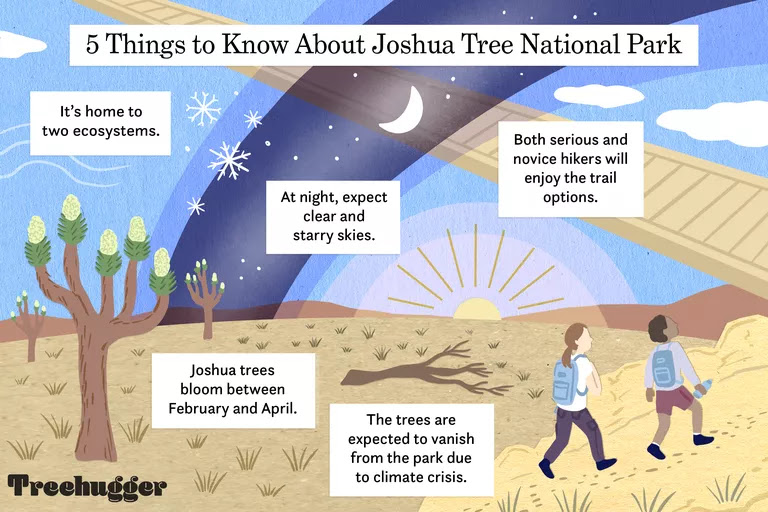
Old California "trees" are cacti? (Joshua trees)
Of course, that's too mind blowing to even mention, so scratch that from memory, and let's go to Jeremiah Budin, who is not a Buddhist so far as we know, in the Latin South American country of Chile.

Though trees across the globe are under threat from the corporate logging and agriculture industries and the chaotic changing climate, one tree in Alerce Costero National Park in Chile (western South America, the real Down Under, the world's southernmost country) is believed to have survived for more than 5,000 years — and experts say it is the oldest living tree in the world.

The tree, known as Gran Abuelo (“Great Grandfather”), is believed to be even older than the currently recognized oldest tree in the world, California’s 4,850-year-old Methuselah Pine.

The newest oldest tree in the world
This is the Gran Abuelo ("Great Grandfather"), the oldest tree in the world known to science.
.
Why did Siddhartha sit under a tree? To meditate
Scientists are in the process of measuring the tree’s age in an effort to get it officially recognized as the world’s oldest. “It’s a survivor; there are no others that have had the opportunity to live so long,” said Antonio Lara, one of the scientists working on determining the tree’s age.

Gran Abuelo, a Patagonian cypress (Fitzroya cupressoides) was discovered by a park ranger in 1972. [And luckily it had its birth certificate stapled to it in protective plastic? How did the ranger know? Was it psychic intuition? Did the tree spirits talk like in that famous Buddhist tree story?]


Buddha Boy, when out of jail, should sit here
Though its exact location was initially kept secret to protect the tree (as is still the case with the Methuselah Pine), tourists are now allowed to trek about an hour through the forest to take pictures alongside it.

Chile’s National Parks Service has increased the number of park rangers on patrol to make sure the tree is kept from harm. More: Scientists make stunning discovery in remote forest: ‘There are no others that have had the opportunity to live so long’

Friday, January 6, 2023

Happy New Year, Full Moon (Beth Upton)

Beth Upton (bethupton.com and Community in Spain); Dhr. Seven (ed.), Wisdom Quarterly

Happy New Year! Today is Beth Upton's first day back after a long break for rest and retreat over the past month. It has been a wonderful time for her -- a time to deepen her own practice, to reconnect with nature, and to spend some much needed time with friends and family.

She spent much of early December meditating at Bodh Gaya ("Enlightenment Grove" in Buddhist India) and the other Buddhist holy sites in India and Nepal. It was an incredible thing to be immersed in a space that is sacred to Buddhist traditions from around the world, each in their own way dedicating their lives to the Dharma.

Something about being there, in India, in the very same places where the historical Buddha lived and taught, made the Buddha's life and work seem all the more real to her and has filled her with inspiration for the year to come. And there is much to look forward to in 2023.

Having spent much of 2022 working hard on the preliminary bureaucracy for the new cave meditation community in Spain, she will be doing her best this year to actually buy the land and start transforming the space into a meditation home for all.

Also this year she looks forward to diving into some deeper aspects of calm and insight (samatha and vipassana) on her YouTube channel, taking part in some great interviews and podcasts, and perhaps even getting started on writing a book...

But above all, this year will be another year dedicated to leading meditation retreats. Having had the pleasure of practicing with many in person through 2022, she is happy to announce that she will be leading six more retreats through the first half of this year.

Indeed, her first retreat of the year starts this week, at Javorie in Slovakia. She looks forward to seeing the participants there. For more information about these retreats, take a look here.

IMG-20230103-WA0005

Full moon gathering
Today, Friday, January 6th, 2023 (8:00-10:00 pm UK), will be kicking off the new year with a full moon gathering. These gatherings are a great opportunity to come together to deepen our connections to the Dharma and to each other.

This month's gathering will be on the timely new year's topic of changing habits. Everyone is welcome! Book a place at the gathering here.

Appointments
Beth Upton will be restarting her one-on-one Zoom appointments next week. As some have noticed, as demand increases it is getting more difficult to book appointments with her. For this reason she encourages all, in the service of the community as a whole, to only book as much time as is really needed.

Also, a quick reminder that there is a two-week booking window on her calendar, meaning that one can book appointments up to two weeks in advance, and also meaning that new appointments are coming up most weekdays, so do check back regularly. Book appointments with her here.

On Tuesday January 10th, she will be holding the first group interview of the year. These weekly online sessions offer the chance not only to ask questions about one's own meditation, but also to listen and learn from the questions of others.

These group sessions are open to everyone and are also a good option if one is having difficulty booking a one-on-one Zoom appointment with her. Book a place at the group interviews up to a month in advance here.

As ever, all of her work is given on a donation basis. Please note, if making a donation via a bank transfer that her bank details have recently changed, and although the old ones do still work, it would be much more convenient to use the new ones posted on her website.

For information about all the ways in which her work can be supported, take a look here.

With much metta and gratitude!

Thursday, October 27, 2022

What is "Buddhism"? (World Atlas)

WorldAtlas.com edited and corrected by Wisdom Quarterly, Fall 2022

The historical Buddha (Gandhara art)
Buddhism is considered the 4th largest religion in the world [because 1,000,000,000 Chinese Buddhists are not counted in officially atheist communist China] that originated in Ancient India between the sixth and fourth centuries BCE.

The practice is based on a series of teachings by Siddhartha Gautama, the historical Buddha. From India [in particular Gandhara, now Afghanistan], Buddhism spread to major parts of Asia [particularly along the Silk Road] and the rest of the world.

The largest Buddha statues are in Bamiyan, Afghanistan (one of three real Kapilavastus)
.
Currently, there are three major groups of Buddhism. These are:
  1. Mahayana Buddhism followed in the countries of China, Japan, Singapore, Taiwan, and Vietnam;
  2. Theravada followed in Burma, Thailand, Sri Lanka, Cambodia, and Laos; 
  3. Vajrayana followed in Tibet, Mongolia, Nepal, Bhutan, parts of Russia, and northern India.
Cosmic Amitabha eclipses the historical Buddha
There are also many subsects of Buddhism like Nichiren Buddhism, Zen Buddhism, Tendai, [secular American Vipassana] Buddhism.

Followers of Buddhism are referred to as Buddhists and at present, there are [at least one billion] more than 535 million Buddhists all over the world.

Buddhist beliefs
Shakyamuni the Sage of the Scythians/Shakyians
Buddhism consists of many spiritual practices, traditions, beliefs, and bodies of literature that are part of the teachings of the historical Buddha as well as later [make believe or apocryphal cosmic] "Buddhas."

The principal goal of Buddhism is to escape the endless cycle of rebirth and all forms of suffering and attain a state of awakening (enlightenment) followed by Nirvana, thereby ending the continuous cycle of death and rebirth.

Buddhists believe that the path to enlightenment is through the practice and development of morality, meditation, and wisdom (virtue, stillness, and direct knowing).

The core doctrines or teachings of Buddhism are known as the “Dharma.” These include the Three Universal Marks of Existence, the Four Enlightening Truths, and the Noble Eightfold Path.

Large Japanese Buddha statue in Bodh Gaya ("Enlightenment Grove"), Bihar, India

The Four Enlightening or Noble Truths are:
  1. There is a problem called suffering (dukkha);
  2. There is a cause of suffering (samudaya);
  3. There is an end to suffering (nirodha);
  4. There is a path to the end of suffering (magga).
The fourth ennobling or enlightening truth -- the Path -- refers to the factors Buddhists call the Noble Eightfold Path, following which one can awaken in this very life and here make an end of all suffering.

The Noble Eightfold Path to awakening that is often represented by an eight-spoked wheel or “The Wheel of Dharma” is comprised of these eight limbs or factors:
  1. right view (samma ditthi),
  2. right intention (samma sankappa),
  3. right speech (samma vaca),
  4. right action (samma kammanta),
  5. right livelihood (samma ajiva),
  6. right effort (samma vayama),
  7. right mindfulness (samma sati),
  8. right stillness (samma samadhi).
Maha Bodhi ("Great Awakening") temple reconstruction, Bodh Gaya, Bihar, India
.
The Future Buddha Maitreya (Messiah), Thikse
Buddhists view the world as swirling in a sea of rebirth over and over again, where death represents a change not an end. Being are reborn again and again onto different planes of existence in countless worlds with different bodies -- of light, dense matter, or even in immaterial states -- which are dependent on the ripening of “deeds” (karma) or moral conduct of thought, speech, and deed in life after life.

Theravada Buddhists believe that every individual takes rebirth within one of 31 Planes of Existence (with countless individual worlds on each plane), which Mahayana has reduced to six realms.

Buddhist numbers by country (World Atlas)
There are many sutras (discourses) and spiritual texts written in Pali (a commonly spoken form of Sanskrit since Sanskrit was the exclusive language of those in the Brahmin priest caste who used it as an exclusive liturgical language).

Texts revered by Buddhists include the threefold collections of texts (Tipitaka), Mahayana sutras (Agamas), Tantric Texts, the Abhidharma ("Doctrine in Ultimate Terms"), and the early Buddhist texts of the Pali canon. More

Monday, April 27, 2020

"The Enlightenment Trap"...Wim Hoff (audio)

Glynn Washington (WNYCstudios.org); Dhr. Seven, Pat Macpherson (eds.) Wisdom Quarterly


The Enlightenment Trap
A student trip to India. A goody two-shoes gal, Emily O'Connor. A delusion that she is a bodhisattva (later developments). A suicide. It's an "Enlightenment Trap"! The existential crisis leads her teacher, Scott Carney, on a search for meaning.

He studies how many Westerners go off the rails in India -- and how many "fake gurus" drive them to it. Like, who the heck is this Wim "The Iceman" Hof?

What Doesn't Kill Us (Scott Carney)
He has to be fake, the fakest of the fakes. A skeptical journalist goes to Poland to take the training then fights freezing temperatures alongside the fitness guru to test the limits of his own mortality.

Read more about Scott’s adventures with Wim Hof and his record-breaking ascent up Mt. Kilimanjaro in the book What Doesn't Kill Us. See what else Carney is up to on his website.

Saturday, November 23, 2019

Bodhi Gaya: "Enlightenment Grove" (video)

Goh Ee Choo: Bodhi Gaia: Sacred Land of Buddhahood; CC Liu, Crystal Q., Wisdom Quarterly
The wandering ascetic Siddhartha Gautama enters a grove, finds a tree to sit under, awakens.

Thursday, January 17, 2019

Bodh Gaya: Seat of Enlightenment (video)

MSN Karthik via Adwhyta, 3/1/17; Ashley Wells, CC Liu, Crystal Q. (eds.), Wisdom Quarterly

Bodh Gaya: The Seat of Enlightenment: A Documentary Film on Buddhism and Awakening
Adwhyta proudly presents Bodh Gaya: The Seat of Enlightenment, a short documentary film that explores one of the most sacred Buddhist sites in the world. In the Dhammapada, the Buddha says, “All tremble at violence; all fear death. Putting oneself in the place of another, one should not harm nor cause another to harm.”

This film revolves around the kind of transformation Buddhism can bring in people’s lives and the role it can play in today’s chaotic world. In the journey through the film, we explore the story of the Buddha, the historical significance of pilgrimage, and personal experiences of Buddhist monastics and lay practitioners.

Filmed, edited, and directed by MSN Karthik. Produced by Adwhyta. Shot on Canon 70D + 18-135 mm. Lens edited on Davinci Resolve 12.5. For film updates on Messenger, click "get started" at m.me/adwhyta. Support on Patreon to help make better films (patreon.com/adwhyta), instagram.com/msnkarthik, for all updates: facebook.com/adwhyta, twitter.com/adwhyta, vimeo.com/adwhyta, youtube...; instagram.com/msnkarthik. Reach out to the filmmaker at msnkarthik.com, medium.com/@msnkarthik, facebook.com/M.S.N.Karthik, twitter.com/MSNKarthik.

Friday, September 21, 2018

"Wandering But Not Lost" (video)

Yongey Mingyur Rinpoche (preview) via Paul MacGowan, 2018; Editors, Wisdom Quarterly


In 2011 Mingyur Rinpoche (tergar.org) left his monastery in Bodh Gaya, India (the place of the Buddha's great enlightenment), late at night to go on a wandering retreat. He didn't tell anyone where he was going. He returned 4 1/2 years later. This film is a reflection of his journey. Go to ajoyfulmind.com to find out more.


Mingyur Rinpoche: "Calming the Mind: The Practice of Awareness Meditation" (Lerab Ling, Dec. 9, 2013) This is a public talk by Yongey Mingyur Rinpoche in Lerab Ling, France, on September 11, 2010. More

Wednesday, May 16, 2018

Bodh Gaya: "Enlightenment Grove" (video)

Goh Ee Choo, June 14, 2015; Amber Larson, Crystal Quintero, Wisdom Quarterly


Bodh Gaya: The Sacred Land of Buddhahood has a great deal of old school wrong information, particularly that popular with Indians from India, who have their reasons for clinging to some of these views. Maverick historian Dr. Ranajit Pal sets those facts straight, but few want to go any deeper than the allegory.

Tuesday, March 20, 2018

How to HUG a Buddhist Tree (sutra)

Ananda M. (Dharma Meditation Initiative), Dhr. Seven, Jen B., CC Liu, Wisdom Quarterly
Imagine a tree so tall we need to invent equipment to climb it and all our friends to hug it.
It's true! The kundalini energy is tingles. Buddhist meditation is better under trees!
California has the best, oldest (bristlecone), and tallest (redwood) trees in the world.
.
1. If you would hug a tree, do it slowly, softly, with friendliness, full of altruistic kindness the Buddha called metta. Trees are very sensitive, remarkably sensitive, more than most humans will ever know.

Roots of trees are best for meditating.
(Ask Maitreyi, who will be at Shakti Fest-Bhakti Fest in Joshua Tree, California, in May of 2018 or consult the scientific research in The Secret Lives of Plants).
 
Why did the ascetic Siddhartha retire to various groves of trees in his quest for enlightenment and even after his great awakening? There was the banyan tree grove where he gave up penances and self-starvation, where the maiden Sujata offered him solid food. 

The bodhi tree still lives in Bodhgaya, India
There was the bodhi tree grove (bodh gaya), where he became enlightened. There was the grove of trees in the Deer Park, where he gave his first discourse.

There was the bamboo grove (Veluvana) where he found cool shade and took up residence. There were the mango groves (like the one the courtesan Ambapali donated to the Buddha) he stayed at on the outskirts when visiting big cities.

Could some energy emerge from the ground to feed the tree and his own spine, or fruit to gather without getting up (like the nutritious figs of the pipal tree, Ficus religiosa, the bodhi tree that are said to contain a chemical quite like an entheogen)?

Veneration of a sacred grove of trees in India
2. Ask permission to warn the tree and/or any "spirit" (dryad, bhumi deva, woodland fairy) residing in or above it. Trees serve as wonderful homes to the fairies or elementals.

This does not mean that trees have "souls" or "spirits" but rather that devas frequently take up residence in some old, special, or tall trees. There is a long history of veneration of such trees and sacred groves of trees.

3. Then slowly approach, embrace, open your heart, clear your head, and hold on out of loving compassion. You may then feel the bounce back of energy. What we put out into the world comes back to us in manifold ways, exponentially grown all out of proportion to our action (karma). It is not "cause and effect" (which states that the effect will be the equal and opposite force of the cause). It will be like one oak seed or acorn giving rise to a giant tree and countless acorns. Thank the tree, and go in peace. The tree will remember you.