(PBS America) From PBS, PRAJNA EARTH explores the lost civilization of Angkor in Cambodia, the magnificent Angkor Wat temple, and Bali, Indonesia’s sacred landscapes.
Narrated by Sharon Stone, the trilogy's second film also shares trance dancers in the jungles of Java and the gigantic seven level mandala mountain of Borobudur (the largest excavated Buddhist temple in the world) and is described as “inducing an inner journey” by Asia Society, New York.
14th Dalai Lama endorsed film
Called “eye-opening and essential if you have an interest in Eastern spirituality” by the Boston Globe and an “illuminating meditation” by Variety, these visually stunning documentaries are cinematic pilgrimages to legendary places in Buddhist Southeast Asia and Tibet, including the spiritual wonders of Buddhist Laos, Thailand, Burma (Myanmar), Bali, Cambodia, Java, and Central Tibet (China).
Welcome to PBS America, a channel curated for an international audience from America's Public Broadcasting Service, PBS. This is a factual focused channel including award-winning American history, current affairs, and science.
Fully enlightened Maha Moggallana asked a devi ("shining one") about the fortunate being's previous skillful karma ripening now in all of these desirable things.
Ven. Moggallana: Devata, you are sitting on a golden throne [vimana, interactive chariot helm, an "immeasurable space vehicle," capable of traveling anywhere]. It flies wherever you want as quickly as you want. You are beautifully dressed, wearing garlands of flowers; you are radiant, like lightning shining through the clouds.
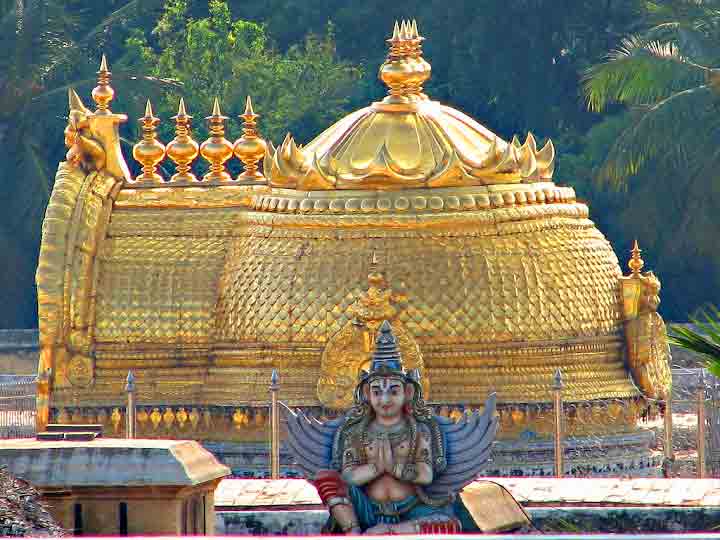
Vimanas can be big, "sky mansions"
What kind of meritorious action (kusala karma) did you do when you were in the human world to have gained this beauty (glory) that shines in all directions, and what deeds earned all of these wonderful things?
The devata, delighted at being questioned by the famous Ven. Moggallana, gladly explained what she had done that resulted in such great good fortune and happiness.
Devata: Venerable, when I was in the human world, a [Buddhist] monk visited our house, and I prepared a seat for him to sit on. Raising my hands (in anjali mudra) and putting my palms and fingers together, I saluted that monk respectfully.
I also offered alms food to him.
Because of these meritorious deeds, I have been reborn as a very beautiful devata and enjoy all of the wonderful things that delight my heart.
Great venerable, these are the meritorious deeds I did to gain such a beautiful body that shines in all directions.
How could vimanas even balance themselves in space? Gyro-physics
UFOs in Jain literature
This famous painting is of Mahavira, so much like the Buddha that most think it is him.
Jain cities in India are very close to Buddhist places of significance, and one sees many statues one immediately assumes are the Buddha. In fact, they are Mahavira, often shown naked.
Jainism, like Buddhism, talks about other spheres, planes of existence, and UFOs (vimanas).
.
Jain "enlightenment" differs from Buddhism.
(WQ) Jainism is the religion most analogous to Buddhism, as both are the only two surviving shramana ("wandering ascetic") traditions from antiquity; both opposed the Brahmanism of temple priests (Brahmins) in favor of direct experience of the truth. The founder Mahavira ("Great Hero," a common epithet also applied to the Buddha, along with other names) is called Nigantha Nattaputta in Buddhist texts. In fact, some believe that Jainism may have been a splinter group of very strict Buddhist ascetics.
Mahavira (aka Nigantha Nattaputta) is a jina, which is where the term "Jainism" comes from (like Buddha in Buddhism or "Awakened One" in "Awakenism"),
vimāna-vāsin ("vimāna-dweller") is a class of "shining ones" or devas("deities") who served the Tīrthaṃkara Mahā-vīra ("Fordmaker Great-Hero") [6].
These Vaimānika deities dwell in the Ūrdhva Loka planes (celestial or space spheres). According to the Kalpa Sūtra of Bhadra-bāhu, the 24th Tīrthaṃkara Mahā-vīra himself emerged from the great vimānaPuṣpa-uttara [7], whereas the 22nd Tīrthaṃkara Ariṣṭa-nemi emerged from the great vimāna Aparijita [8].
Jainism was great to women
The Tīrthaṃkaras Abhinandana (4th) and Sumati-nātha (5th) both [9] traveled through the sky [akasha, unbounded space] in the Jayanta-vimāna, namely the "great vimānaSarva-artha-siddhi, which was owned by [10] the Jayantadevas, whereas the Tīrthaṃkara Dharma-nātha (15th) traveled through the sky in the Vijaya-vimāna [11].
A vimāna (spaceship, heavenly mansion, celestial platform) may be seen in a dream, such as the nalinī-gulma [12, 13]. More
Just as the historical BuddhaSiddhartha Gautama spoke of 23 previous buddhas (even a prehistoric Siddhartha, the 16th), Mahavira simultaneously spoke of 23 previous tirhamkaras or "ford-makers" (to cross the flood of samsara to the further shore, which for Buddhists is nirvana and for Jains is rebirth in a lofty unconscious world that sounds suspiciously like an immaterial sphere described by the Buddha. Coincidence or the same historical figure?
Prof. Jaini had such an enormous ego that he named his poor-quality thesis, which was hardly fit to be published at all, "The Jaina Path of Purification" after the ancient enlightened Ven. Buddhaghosa's (Buddha's Ghost) magnum opus, the Path of Purification of Visuddhimagga. There are many better books on Jainism.
Buddhism is a unique Dharma because it teaches the liberating truth of anatta, that all things are impersonal. Jainism, like the Vedas, Brahmins, Hindus, and every other religion teaches that there is a self, an immortal soul, that is eternal and unchanging. The soul (atta) is changing at every moment, is constantly perishing, and therefore is neither immortal nor -- in the ultimate sense -- existing. Dependent Origination exists and explains why the Five Aggregates get clung to by the aggregates themselves as a momentary "self" or "eternal soul." So Jainism differs from the parallel Buddhist tradition it is otherwise so similar to that it is almost impossible to distinguish them.
Ven. Moggallana: "Devata, your beauty shines in all directions like the bright star named Osadhi.
"When you dance, divine music and sweet fragrance spread from your hands and feet. Also, the ornaments on your head play delightful music. The bouquet of flowers on your head spreads sweet fragrance, like that of a manjusakatree, and plays music when the breeze blows on it. Surely, you must smell that fragrance and see your own divine body?
"Tell me, Devata, what kind of meritorious action [skillful karma] did you do when you were in the human world to have gained this beauty that shines in all directions and to have earned all these wonderful things?"
Devata: "In my previous life, I was in the human world living in the city called Gaya. I was a servant girl working in a high-caste family. I did not have much merit and was very unfortunate. Everybody called me 'Rajjumala.' I was abused, threatened, and beaten. I was tired of living that way.
“One day I took a water pot and, pretending to get some water, I ran away. I ran into the forest beside the road. There I contemplated suicide. I thought that there was no point in living like this. I made a strong noose and tied it to a tree. I looked around to see whether anybody was there. Then I saw the Supreme Buddha, the most compassionate teacher of all beings in the world, sitting at the root of a tree meditating, free from all fears.
(Roxy Music, April 3, 1973) "In Every Dream Home a Heartache." Brian Ferry asks, "Is there a heaven? I'd like to think so." BBC TV: The Old Grey Whistle Test, Brian Eno on keyboards.
“I was shocked and surprised. The hairs on my body stood on end. I thought, 'Who is that being in this forest – is he a human or a deva?' The sight of him was thrilling! He has escaped from the forest of defilements and attained the bliss of calmness. When I saw him, I was delighted. I realized that he was not an ordinary human being. The Blessed One lived with restrained senses, delighting in meditation, with his mind established in nirvana. Truly, he is the Supreme Buddha, the most compassionate teacher in the world.
“Like a lion living in his cave, the Blessed One is afraid of nothing. Seeing a brave buddha is very rare, like seeing a [heavenly] udumbara flower. The Supreme Buddha called to me gently, saying, 'Rajjumala,' and asked me to go for guidance to the Supreme Buddha. When I heard those sweet, gentle, meaningful, soft, and lovely words, all my sorrows went away. My mind was joyful and clean. I was ready to understand the Dharma [Teaching of Liberation]. At that time, the most compassionate teacher in the world taught me the Dharma, saying, 'This is suffering, this is the cause of suffering, this is the end of suffering, and this is the way leading to deathlessness [nirvana].' I followed the advice of the most compassionate and skilled teacher, the Supreme Buddha. I understood the peaceful and deathless state, nirvana. With the realization of the Four Ennobling Truths, my love towards the Buddha became strong, unshakable, well rooted, and well established. I became a daughter born of the heart of the Supreme Buddha.
We're here to entertain you, Shining One!
“Now, I enjoy living in this heaven, playing and dancing. I do not have any fear of falling into the plains of misery again [because she has attained at the very least the first stage of enlightenment called stream entry, which means one can never be reborn anywhere lower than the human plane]. I wear divine flower garlands and drink water from the divine river Madhumaddava. Sixty thousand musical instruments wake me from my sleep. Devas entertain me. Their names are Alamba, Gaggara, Bhima, Sadhuvadin, Samsaya, Pokkhara, and Suphassa. Other devatas, including Vina, Mokkha, Nanda, Sunanda, Sonadinna, Sucimhita, Alambusa, Missakesi, Pundarika, Athicharuni, Eniphassa, Suphassa, Subhadda, and Muduvadini entertain me as well. These and many other devatas entertain me with divine music coming to me whenever I wish. They approach me saying, 'Come now! Let’s dance and sing! We are here to entertain you.'
“Those without merit will not receive mansions [vimanas = UFOs = celestial platforms, mansions, palaces, motherships] like this. Only those with merit receive this happiness in the heavenly Nandana Park in the Heaven of the Thirty-Three (Tavatimsa).
“Those who have not gathered merit will not get any happiness in their current life or their next life. Only those who have gathered merit get happiness in both the present and next life. Those who would like to be reborn in the Heaven of the Thirty-Three must collect much merit. Only people who do good things are able to enjoy heavenly [celestial] pleasures.
“Definitely, supreme buddhas are born into this world for the happiness of all beings. Thus, buddhas are the unique fields of treasure where donors can plant their seeds of merit [with massively abundant results]. Having respected such great beings, these fortunate people enjoy heavenly pleasures. Source: Vv 50: Rajjumālāvimānavatthu—Ven. Kiribathgoda Gnanananda Thera (suttacentral.net)
A celebration that culminates in Los Angeles has begun today. Sydney is already celebrating. Participation is easy -- lights out all over the city. The deva Gaia must certainly notice the recognition of global warming and the willingness to do something about it.
Meanwhile, with an enormous propaganda campaign celebrat-ing "Serf's Emancipation Day," the totalitarian state of the People's Republic of China is marking a minor holocaust.
Models wearing body painted art by John Vargas from the United States, right, and Jinny Houle from Canada during the 2008 World Body Painting Festival in Daegu, South Korea, Friday, Aug. 29, 2008 (AP Photo/Ahn Young-joon).
Devas are "deities, "divinities," or "godlings" -- luminous body entities born as a result of skillful karma. Most of the 31 Planes of Existence are inhabited by different grades of devas. On the human plane, bhumi-devas are "earth angels," "faeries," "sylphs," and "dryads."
They live in, above, or dependent on trees. Judging by artists renditions over many centuries, they are similar to young girls with delicate facial features and waifish (or Rubenesque, pre-Raphaelite) bodies.
They inhabit sylvan locations, ocean depths, mountain ranges, and are often found (or at least worshiped) at the confluence of rivers, waterfalls, places of immense natural beauty, and in "enchanted forests," which is only to say "perceived to be inhabited by supernatural beings."
There are, of course, celestial devas in both the Fine Material World as well as the Immaterial Planes. Like brahmas ("gods"), devas are glorious, radiant, resplendent and marked by signs of beauty. They, however, differ one from the other in terms of radiance, longevity, beauty, influence, powers, wisdom, and fortune. This is because all devas are still bound by karma.
In lower heavenly worlds (deva-lokas), when a being is reborn, it is referred to as a devaputra, literally a "son of god." Of course, it's not necessarily a "son," just a being born among devas, much as one born in this world might be called a "son of man." God (Maha Brahma, or "Great Brahma") has a retinue, and beings reborn into that retinue (i.e., "angels") would be devaputras rather than simple inhabitants of that heavenly realm (devas).
There they inhabit celestial mansions, vimanas (UFO-style platforms that are both home and vehicle) or palaces based on their karma. Female devas (devis) are also known as "celestial nymphs."
Lesser celestial devas have a chief or king known as Sakka. However, it is important to note that none of the named characters in this cosmology are individuals so much as posts or positions occupied (through karma) by individuals. Nor are they unique, but rather features of countless world-systems spreading out in all directions.
It is not difficult to make obvious connections to other world-religions. This view of devas -- living in sport, enjoying powers and beauty but plagued by petty jealousies and exploits -- is in line with Indian, Greek, Roman, Celtic, and Pagan pantheons. (Even monotheistic traditions understand that while there may be one ultimate godhead, God, or source, it has countless expressions).
Finally, since devas are superior to humans in many ways, the Buddha is frequently eferred to as a "teacher of gods and men [i.e., devas and humans]." More devas made spiritual attainments than humans even though only human realms give rise to buddhas.
In light of what is known of devas, and inasmuch as artists have acquainted us with bhumi-devas and lower celestial-devas, the following incarnations may suggest the extraordinary results of karma. (Noting that our bodies are results of our past karma).
All materials on this site are submitted by editors and readers. All images, unless otherwise noted, were taken from the Internet and are assumed to be in the public domain.
In the event that there is still a problem, issue, or error with copyrighted material, the break of the copyright is unintentional and noncommercial, and the material will be removed immediately upon presented proof.
Contact us by submitting a comment marked "private."
Do not follow this journal if you are under vinaya or parental restrictions. Secure protection by Sucuri.
Wisdom Quarterly: American Buddhist Journal is licensed under a Creative Commons Attribution-Noncommercial-Share Alike 3.0 United States License. Permissions beyond the scope of this license may be available at creativecommons.org/about/licenses.




.jpg)
.jpg)
%20devi%20or%20woman,%20WIKI.jpg)


_(2)%20Wat%20Bowonniwet%20WIKI.jpg)

























































