Showing posts with label liberation of mind. Show all posts

Friday, May 1, 2026

Mind cannot be seen, so where is it?


But what is aware that it is aware?
There is a mind-door, greenish in hue, near the heart. This heart-mind seems to be the physical base of consciousness, not the brain in the cranium. When meditating, attention can be adverted to the area around the heart. There there is a mirror reflecting experience, consciousness, awareness. If the "mind" were in the brain or the head, it seems attention would be placed there to find it. But it is very much down closer to what in the West we refer to as the seat of our emotions. The Buddha did not specify a physical base for vijñāna (consciousness) or manas (in Early Buddhism). However, he seems to have been well aware of the practical application of locating this base for the sake of realizing the ultimate nature of mind-and-matter (nama-rupa), ultimate mind (a stream of cittas) and ultimate materiality (a stream of kalapas). But this is for advanced practitioners of Buddhist meditation rather than philosophers and speculators. For those, perhaps Zen no-mind would be better or the compelling mind-only (Yogachara) view.

Wednesday, February 4, 2026

Alan Watts + Eckhart Tolle: beyond mind


Alan Watts+Eckhart Tolle: What lies beyond the mind
(After Skool) Alan Watts (Jan. 6, 1915–Nov. 16, 1973) was a well-known British philosopher, writer, and speaker and California via Japan, best known for his interpretation of Eastern philosophy for Western audiences.

He left us more than 25 books and an audio library of about 400 talks, all of which are still in great demand.

  • Follow the Alan Watts Organization: ● YouTube: @alanwattsorg ● Facebook: alanwattsofficial ● Instagram: alanwattsorg ● Full lectures found at: alanwatts.org and alanwatts.com
  • Visit audible.com/afterskool or text 'afterskool' to 500 500 to get a free trial and for a limited time, save 60% on first 3 months of Audible.

Eckhart Tolle is a Western spiritual teacher and bestselling author. A German-born resident of Canada best known as the author of The Power of Now and A New Earth: Awakening to Your Life's Purpose, in 2008, The New York Times called him, "the most popular spiritual author in the United States." Oprah might have had a little more than something to do with that.

There is only one now. When?
In 2011, Tolle (pronounced /toll-lay/ and never /toll/ or /toll-lee/) was listed by Watkins Review as the most spiritually influential person in the world.

A good friend of the Dalai Lama, Tolle nevertheless does not identify with any specific religion but has been influenced by a wide range of spiritual works. Eckhart Tolle's audio comes from his podcast with Russell Brand.

Thanks for watching. Time and attention are greatly appreciated. Like this video and want to help create more? Consider supporting After Skool on Patreon: afterskool. Visit website: afterskool.net. See newsletter, check out After Skool prints (after-skool.creator-spring.com), or send an email to: afterskool100@gmail.com.

Friday, August 8, 2025

What if we were to really let go?

  • One of the great problems of life is clinging (upādāna). Among all the things we cling to (that clump and cling to themselves as we imagine we are them), we are inadvertently clinging to suffering (disappointment, dukkha). There is temporary release and bliss through the meditations, the jhanas, but really letting go results from "seeing things as they truly are," which is also called "clear seeing" (vipassana).
  • Buddhism Podcast, 8/8/25; Amber Larson, Dhr. Seven (eds.), Wisdom Quarterly

Saturday, March 29, 2025

Paradox: Thinking without thoughts


How wonderful is real silence, inner-peace!
There is such a thing as thoughtless consciousness, bare awareness without commentary, without chatter, inner silence. It can happen. How it happens, what brings it about, that is hard to say. Begin with outer silence. Bring the mind to a single object for long enough, and it may happen. Feel the freedom. There is full knowing, better knowing than when words/thoughts are intervening. But it must be experienced to believe how wonderful the silence and stillness is. (Jhana or "meditative absorption" moves away from the noise toward the sweet silence and sanity of stillness).

The Paradox of Thoughtless Consciousness
(The Mountain) March 28, 2025: The eye sees only what the mind is prepared to comprehend. #quantumconsciousness #paradox #selfawareness

  • 00:00 Thoughtless thinker
  • 00:33 Distance between reality - thought - speech
  • 01:13 Time zone difference
  • 01:53 Retrospective mind
  • 02:31 Meta thinking and language filter
  • 04:38 Raw awareness
  • 5:27 Is there a state of no-thought?
  • 7:16 Surrender of the seeker
  • 9:02 How to arrive at no destination
TAGS: Quantum Consciousness, Observer Effect, Reality Fabrication, Perception Alchemy, Thought Manifestation, Mind Over Matter, Holographic Universe, Wavefunction Collapse, Reality Distortion, Dimensional Awareness, Mental Projection, Non-Dual Awareness, Conscious Creation, Observer Reality Loop, Awareness Constructs Matter, Perceptual Engineering, Cosmic Mind, Simulation Hypothesis, Lucid Manifestation, Ontological Design

Friday, February 28, 2025

Everything feels real, but look closely


Everything feels real…until we look closer
(Solace Fox) Reality feels solid. The past seems fixed. Our thoughts feel like they belong to us. But what if none of it is as real as it seems? Ancient spiritual traditions, philosophers, and scientists have questioned this for centuries. Our mind filters, edits, and reconstructs everything we experience — but why? And what happens when we start noticing the cracks in reality?

 📌 TIMESTAMPS
  • 00:00 – What if reality isn’t real?
  • 02:14 – The invisible forces shaping our mind
  • 05:30 – Why our brain hides the truth from us
  • 09:48 – The illusion of free will
  • 13:10 – What quantum physics reveals about reality
  • 16:00 – If everything is an illusion, what’s left?
I'm at work. This is definitely real. As for my boyfriend at home, I don't know what he feels.
.
Why do we suffer? The power of awareness
What's reality? "F around and find out," they say, so I will dive into this soft pile of snow.


Ego Podcast (Buddhism) Discover the transformative power of awareness to end suffering. This insightful video explores why suffering (dukkha, disappointment) arises and how bare (undistorted, unembellished) awareness — the cornerstone of Buddhist mindfulness practice (sati) — can lead us toward true inner transformation.

Drawing on discourses like the Kalama Sutta, the Buddha reminds us not to simply accept beliefs, but to directly experience reality for ourselves.

This mindful practice of clear, non-judgmental attention is key to understanding the roots of our (emotional, psychological, physical, and existential) pain and breaking free from unskillful reactions and patterns.

(All Time) It's not only a misperception. We live in a simulation
  • Experience trumps belief: the importance of directly experiencing life rather than relying on inherited belief systems
  • How mindful awareness transforms mere knowledge into enlightening insight
  • The role of mindfulness: Why paying bare attention to details — breath, feelings, mind, and objects of mind — is essential for breaking the illusion, gaining inner clarity, and ending delusion
  • How mindfulness helps us observe then let go of unwholesome reactions
  • Practical applications: techniques to observe the mind’s activity without judgment.
  • Ways to replace reactive patterns with skillful responses, paving the path to the end of suffering (nirvana)
  • The bigger picture: how inner awareness not only alleviates personal suffering but also contributes to a more harmonious life.
Join the journey: If ready to explore how bare (unvarnished, unaltered) awareness can end suffering and lead to wisdom, insight, and inner peace, please like, share, and subscribe. Let's walk the Buddha's path of mindfulness together.

#Mindfulness #InnerClarity #BuddhistWisdom #EndingSuffering #Nirvana #BareAwareness

Subscribe now for free ► @SolaceFox #purpose #god #selfhelp #motivational #Consciousness #Oneness #Spirituality #Mysticism #Enlightenment #Awakening #awareness #life #motivation #universe #ego
  • Solace Fox, Ego Podcast (Buddhism), Feb. 27, 2025; Pat Macpherson, Dhr. Seven (eds.), Wisdom Quarterly

Tuesday, February 25, 2025

Beth Upton: The mind, nama, heart


The mind, nāma, and heart
This is not mind, but the mind base is near here.
(Beth Upton) Feb. 24, 2025: Here British Buddhist meditation master Beth Upton, formerly the successful Burmese Theravada Buddhist nun Sayalay Anutara, gives a brief overview of what is meant by the terms "mind," "nāma," and "heart" during a meditation retreat Q&A.
Diving into the Pa Auk Forest to meditate
These educational Dhamma videos are made possible only by the generous donations of viewers. Please consider supporting the extraordinary work of making the historical Buddha's Teachings known in the English-speaking world:
  • Beth Upton (bethupton.com), video shot by Alexis P.N. (alexispn777@gmail.com) and Zsolt Batar @GuavaFunk: YouTube/laffcotchtv; edited by Dhr. Seven, Wisdom Quarterly

Thursday, December 5, 2024

Monkey Mind (thought) can stop?

Tortured by thinking: Monkey Mind anxiety

"I already live this way *lol* it's kool" (Ayr Hed)
The Buddhist term "monkey mind" originates from Chinese xīnyuán and/or Chinese-Japanese shin'en (心猿). It is a Buddhist concept that literally means "heart-mind monkey [business]," for it describes a state of discursive restlessness, capriciousness, and lack of self-control in one's thoughts and emotions.

The "mind monkey" metaphor is found in Buddhist writings in Zen and Chan, Consciousness-only, Pure Land, and Shingon.

It has also been adopted by Taoism, Neo-Confucianism, Chinese poetry, theater, and literature. The expression "monkey mind" commonly appears in two reversible four-character idioms paired with yima or iba (意馬). It translates as "idea horse." 

Chinese xinyuanyima (心猿意馬) and Japanese ibashin'en (意馬心猿) illustrate the interconnectedness of a restless mind and wandering thoughts.

The "Monkey King" Sun Wukong in the classic Buddhist Chinese novel Journey to the West is an iconic personification of feeling indecisive and unsettled. More

We need brains, but do we need thoughts?


Few people waste more time overthinking than we do around here at the office of Wisdom Quarterly. It is no way to be. Thinking might make a person smart. Might. It will definitely make her or him obsessive, neurotic, unhappy, and exhausted. Lev Z lost his brain in the war and lived.
What is there instead of thinking, worrying, anxiously projecting, predicting, prognosticating, forecasting, mental doomscrolling, trying to avoid everything bad that can happen? One time on retreat with a very great Buddhist meditation master who was visiting California from Asia for the first time, I was spending all my sitting time thinking and pondering.

I would ask him solutions to my thoughts, which would put to rest my worries. But I would soon think of something new to ask, an unsolvable mental construct, philosophical question, or paradox.
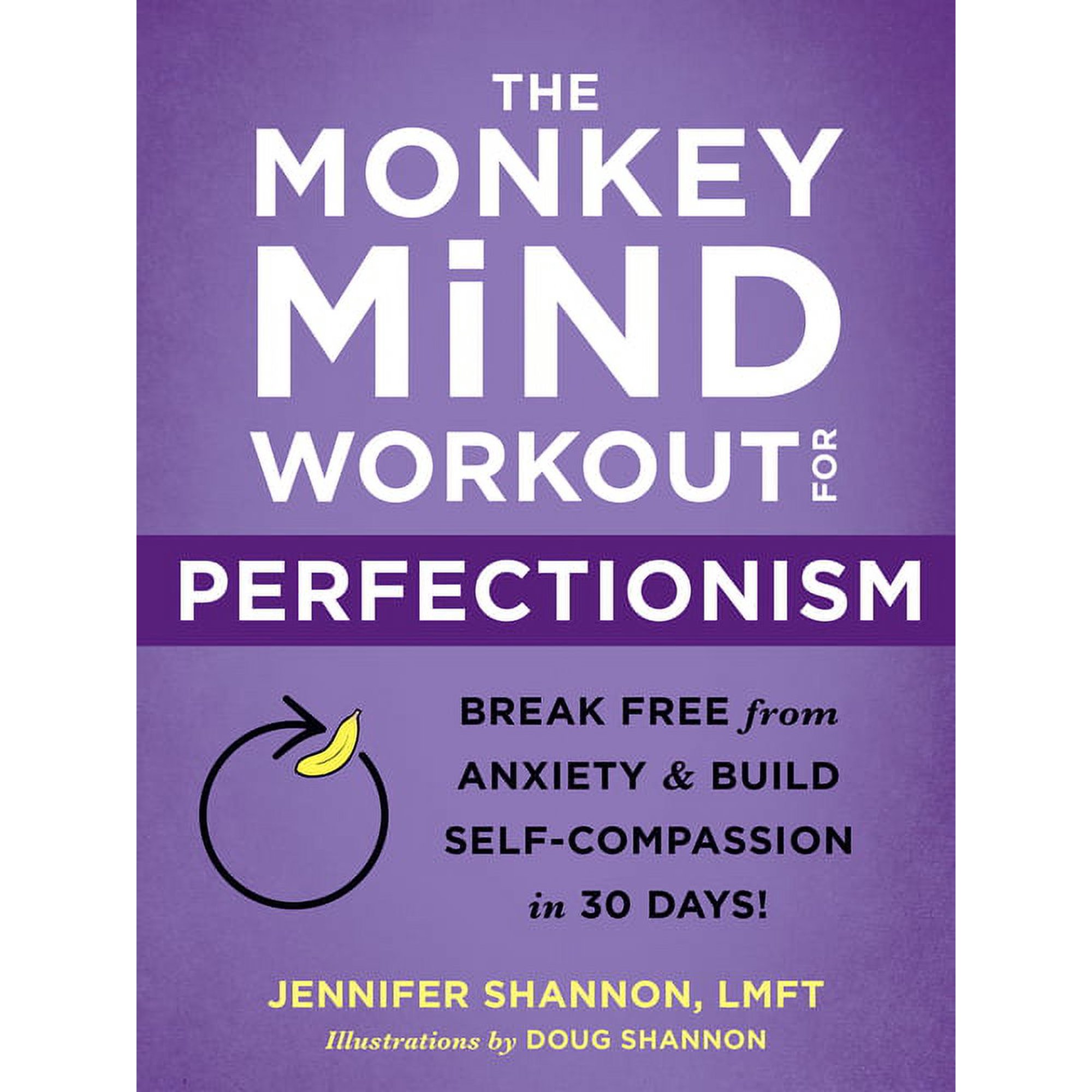
  • Monkey Mind Workout for... (Walmart)
    I remember mainly thinking about karma -- the process by which our intentional (cetana) deeds bring about many wished for and unwished for results even though we do most things in ignorance, not with the "intention" that they should bring about the results they do: How can this be "fair" if we didn't know?
  • I think this sort of questioning brought him to him to the limit of tolerating my nonsense and indulging my endless stream of questions. Thereafter, every time I'd ask anything speculative or philosophical, he'd answer by asking, "How's your meditation going?"
  • I would laugh, realizing that I was spending way more time thinking than "meditating." He asked me how, and I explained my system: Since I only had to be aware of "breathing" (in), I would let my mind wander the rest of the time (when I was breathing out or when the breath was pausing in between, so I was actually able to get a lot of thinking in while still being aware or counting the breath as it happened, only drifting off the rest of the time.
  • He was astonished someone could be so utterly daft (or neurotic and full of too much zeal and too overbearing a sense of urgency when what was desperately needed was contentment), and no wonder I wasn't making any progress. "Who told you to do that?" he asked.
  • I didn't answer, but the answer was obvious: "No one ever told me not to." (I like thinking, why wouldn't I think? I'm thinking all the time, it's my thing, my jam, my delight, and apparently my downfall!) It was true. I was only supposed to be aware of the breath -- so he again defined "breath" for me:
  • "Breath" in BREATH MEDITATION is mindful awareness of anapana (the in-and-out breath and any time in between, which becomes vanishingly brief the slower one breathes for the person paying more and more attention to the whole-body-of-the-breath like the Satipatthana Sutra instructs).
Aah, then everything came to a rest: blissful peace
Then not long after, it happened. It was a miracle. I would not have thought it was possible. And thinking so much, there wasn't much I thought impossible. Nearly everything is possible by some twist with enough creative imagination.

What happened? THINKING STOPPED. (I didn't stop; it stopped). It was the strangest thing. I wasn't expecting it to. I didn't know it could. I don't think I was doing anything different than normal (other than maybe not thinking for once). IT REALLY STOPPED. I kept checking it to be sure. I was fully aware.

Earlier in the day, I had taken a walk in the woods and seen wild turkey and deer, and I had found a giant rusty cistern, a big corrugated water tank, the size of a grain silo, just in the middle of nowhere in the woods. It had no water in it. Imagine dragging a stick across it, the sound it would make, clang-clang-clang: that's what my thinking was like.

What a strange album art idea... or is it?
As a teen in high school, I was in some bands, and one of the hardest things about being in a band was coming up with a satisfying name. (It's very hard, so the best bands, the legends, just take on any nonsense and by their greatness, they make the dumb name great. It's almost the dumber the name the better because their fame will have to eclipse it and raise it to the status of "wow, what a name," whereas the dumb names keep sounding dumb because the music isn't that good to our ears. Lead Zeppelin, what kind of dumb name is that? Lead (leed as in leader). Hey, I know, we'll drop the a so nobody will ever mispronounce it! It was a self-deprecating expectation of how their new group would go over when they launched, like a leaden blimp, dwhoop all the way down to a crash and burn like the Hindenburg, which was used as the cover of their first album. So I thought a great name for my next band would be No Mind Asylum. It didn't go over very well because no one knew what it meant, which I thought was self-evident. People liked the sound of it; only no one thought it had a meaning. My friend heard it, didn't judge, thought about it, and asked, "What does it mean?" I was flabbergasted. "Well, isn't it obvious?" It wasn't. It means how pleasant it would be, if such a thing were possible, to find asylum from so much thinking. After all, too much thinking doesn't pay. "That's what it means, being sent to a mental asylum!?" "Not a mental asylum! A mental asylum is called an asylum as a euphemism, a pleasant place, a safety, a refuge, how nice it would be to go to give the mind a rest." Suddenly the name Led Zep was looking really good by comparison.


But here it was. I found it without looking. I had my asylum. There was compulsive thinking. Here's the amazing thing, thinking was possible, it just wasn't automatic. There was peace, rest, direct knowing. That's the thing: I would have thought, if asked before this, "Why think so much?" My answer would have been "To know." But there's no knowing that way. There's only speculation, pondering, wondering, probabilities, possibilities, imagining ways to test intuitions, inspirations, guesses, or logical suppositions and conclusions.

Now, here, the most amazing thing was happening to me -- like everyone had always said was impossible and NOT the goal of meditation. Not thinking it was the goal, here I was enjoying it. And like said, I could think. It just seemed dumb to. Thinking stands between us and direct experience. It's a buffer, a block, a kind of dirty glass we look through for so long we fail to notice how dirty and distorting it is. A rain comes along, like maybe a good long sleep, and things seem clearer -- clearer for not having thought. Thinking gets in the way, yet it's glorified, particularly in the university system.

Eckhart Tolle: Even the Sun Will Die

It seems even now that no one appreciates any of this except maybe Eckhart Tolle. He sat on a bench in a park perfectly content to keep sitting there. It was such a relief compared to all his previous worries, ego-trips in the highly competitive world of academics and self-promotion university faculty maneuvers. Imagine DescartesSophiaNietzcheSocrates, Plato, or Aristotle getting a day off -- getting some no mind asylum (benevolent respite, safety, exile, expat vacation) time. Remember the paean, the joy the Buddha felt right after his great awakening (maha-bodhi). He KNEW freedom was possible and directly attainable here and now. There was no need to die and hope for a heaven. Here and now he saw things clearly.

As it was happening, because it went on for a long time (until it was about to be ruined by having to get up from my meditation mat to go to the restroom before the long evening Dharma talk started and I would be trapped in the hall holding it in for two hours or so), it occurred to me how I might explain this to anyone who might in the future ask. I had to kind of explain it to myself, too, because I was fully conscious, much more conscious, undistracted, and in the moment than I normally was. In fact, I normally tried to keep myself in abstractions most of the time, finding it fun to pose philosophical questions about reality then tackling them with an explanation that could be verified. The verification would show if the speculation or intuition were true. So these were not just pointless thoughts with no purpose; they were grand thoughts about life, the universe, and everything, musings of which Douglas Adams could be proud.

The explanation that spontaneously came to mind -- in just the same way that once when the Buddha was asked if he planned his answers to questions in advance or just spoke extemporaneously as it now occurred to him, he said there was no need to premeditate any more. He instantly knew the answer as the question was being asked. The analogy came to me what it was like, this "not having a brain"/"not thinking" was like, which as I said should be impossible to our normal way of thinking, speaking, conceiving, or imagining. It was exactly like this:

Normally and usually when we "think," it's like tossing a rock into a giant old empty cistern (corrugated galvanized rippled metal water tank) or big storm runoff corrugated drainage pipe, so big one can stand in it, and around here such underground pipes pour runoff into the LA River. It's not a sewer but a wash, a cemented over arroyo. Throw a rock in it, and it ricochets and echoes after hitting multiple times. One question (thought, stone, disturbance), many ripples (vrittis). The commotion of my mind was that nearly anything could trigger it. Now it was at rest, contented and peaceful. I knew not why.

Whatever desire-to-know arose, there the obvious answer simultaneously arose with it. There was no need to ponder or wrack my brain or stir up a hornets' nest of thoughts and questions. I toss one stone, and the reply is one thud, at which point the stone is done, no echo, no commotion, no ripples in the mind or aftereffects.
Brain can blow up yet awareness remains?
It was blissfully beautiful, and one could imagine living that way for the rest of one's contented life. THIS WAS BETTER THAN THINKING BECAUSE THE ANSWER WAS IMMEDIATE AND UNMEDIATED BY LANGUAGE, GRAMMAR, THOUGHT CONSTRUCTS, AND SO ON. There was just direct knowing.

When external disturbances (my having to get up, impelled by the urge to pee which was uncomfortable to hold and conscientiously not wanting to disturb the Dharma talk later by getting up in the middle of it, being bumped by other meditators trying to signal me that we were switching from silent meditation to Dharma talk as if it were possible that I forgot) forced me to get up, move, and slowly head toward the bathroom, the peace and silence remained. It was not an artifact of perfect stillness; I was not asleep or in anyway unconscious, semi-conscious, or unmindfully out of it. I was bright, mindful, and much more away of what was really happening in the moment than usual.

Anyone who says nonthinking is wrong. Anyone who says it is not the goal of meditation is right. Making it the goal, striving not to think or trying to stifle the brain/mind, which has as its job to think, is no way to peace. Being aware just of this moment without evaluation, judgment, ambition, resistance, nonacceptance, force, efforting, that is far more likely to result in this kind of blissful abiding, this "peace of mind."

Friday, August 23, 2024

SUTRA: Distortions of Mind (vipallasas)

When will the world end? Are these End Times?
Did the Buddha have anything to say about distorted perception, the world we are seeing being unreal, hallucinations, perversions, or wrong views?

The whole of the Teaching or Dharma is to develop right view, which is liberating. The meaning of "awakening" (bodhi, enlightenment) is seeing things as they really are. For in seeing things accurately, we would not cling or engage in such karma as brings about suffering.

We might misunderstand anything, but the Buddha focuses on four distortions, things we are misconstruing to our detriment here and now no matter what else we know or are seeing correctly. Andrew Olendzki translates:

SUTRA: "Distortions"
O meditators, there are four distortions of perception, distortions of thought, distortions of view [distortions of mind]. What are the four?...

Sensing no change in what is changing,
Sensing pleasure in what is disappointing,
Assuming "self" in what is impersonal,
Sensing beauty in what is repulsive —

Gone astray, full of wrong views, beings
Misperceive with distorted minds.

In bondage to Mara's bonds,
Such people are far from safety.
They are beings who go on flowing:
Going again from death to birth.

But when in a world of darkness
Buddhas arise to make things bright
They present a profound Teaching
That brings an end to all suffering.

When those with wisdom have heard this,
They recuperate their right minds:

They see change in what is changing,
Suffering in what is disappointing,
"Not-self" in what is impersonal,
Unloveliness in what is unlovely.

By accepting right view,
They overcome all suffering.
COMMENTARY
Andrew Olendzki (dowling.edu)
TRANSLATOR'S NOTE: These verses from the Numerical Discourses (Anguttara Nikaya) give the traditional list of the "distortions" (vipallasas). This Pali word is sometimes translated as "perversions" of mind, but I find this language too strong and prefer the expression "distortions" of mind.

The term is composed of a prefix (vi-), which carries the sense of division, separation, or removal like the prefix (pari-), which means "around or complete" (as in the English word peri-meter) and a verb (-as), which can be taken to mean "to throw."

Putting it together, we have the image of the mind taking something up, turning it around, and throwing it back down — a perversion or distortion of reality by the perceptual and cognitive apparatus of the thinking process.

These distortions are fundamental to the Buddhist definition of delusion or ignorance.

It is not that we are inherently flawed by nature, but rather that we make some serious errors on many levels as we attempt to make sense of the world (sensory data) around us.

As we come to recognize — through calm and insight meditation practices — some of the ways we misconstrue things about our experience, we become more able to correct these errors and gain clarity.

Distortions of mind work on three levels of scale.
  1. First, distortions of perception (sañña-vipallasa) cause us to misperceive the information coming to us through the sense doors. We might mistake a rope on the ground as a snake, for example. Normally such errors of vision (optical illusions) are corrected by more careful scrutiny, but sometimes these sensory mistakes go unnoticed and remain.
  2. Distortions of thought (citta-vipallasa) have to do with the next higher level of mental processing, when we find ourselves thinking about or pondering over things in mind. The mind tends to elaborate on perception with these thought patterns, and if thoughts are based on distortions of perception, then they too will be distorted.
  3. Eventually such thought patterns can become habitual and devolve into distortions of view (ditthi-vipallasa). We might become so convinced that there is a snake on the ground that no amount of evidence to the contrary (from our own eyes or reason or investigation, nor the advice of others) will shake our wrong beliefs and assumptions. We are stuck in a mistaken view.
Furthermore, these three levels of distortion are cyclical. Our perceptions are formed in the context of our views, which are strengthened by our thoughts, and all three work together to build the cognitive systems that make up our unique personality.

People will no doubt recognize that the particular distortions mentioned in this text correspond to the Three Universal Characteristics of Existence:
  1. Taking what is impermanent (anicca) to be permanent,
  2. taking what is inherently unsatisfactory (dukkha) as a source of fulfillment,
  3. taking what is impersonal (anatta) to constitute a self.
These are the primary ways we distort reality to the profound disadvantage of ourselves and others.

    4. Seeing the unlovely (asubha), the foul and repulsive, as lovely rounds out the traditional list of four vipallasas.

These verses say that when under the influence of these distortions, we have "lost our senses" (vi-saññino) and our mind is "broken" or "thrown" (khitta-citta) [distorted like clay thrown down on an off-kilter clay wheel of suffering].

When the distortions are corrected by right view, clear thinking and accurate perception, then the text says that we have "gotten back" or restored (pacca-latthu) our "true mind" (sa-citta).
This is the Buddhist view of mental disease and mental health. Delusion is a mental illness that causes all sorts of suffering; mental health can be restored by correcting the flaws in how the mind operates.

Fortunately, "Buddhas arise to make things bright" and illustrate in detail how this recovery of our natural health can be accomplished. Source: Vipallasa Sutta: Distortions of the Mind (accesstoinsight.org)

Buddhism and science

  • Freud and the Buddha
    Various modern therapists have written on the relationship between Buddhism and psychotherapy. These include Mark Epstein (Thoughts Without a Thinker, 1995, Psychotherapy Without the Self, 2008), Jeffrey B. Rubin, Andrew Olendzki, and Nina Coltart (1927–1997) [135].
  • Various authors such as William S. Waldron and David Galin have also written about the Buddhist assertion that there is no self (anatta, that all things are impersonal) and how it can provide insights to the development of more dynamic, conditional, and constructivist views of personality, personal identity and self [136]. Daniel Goleman has argued that the Buddhist view of emptiness (not-self) "may turn out to fit the data far better than the notions that have dominated Psychological thinking for the last century" [137].
  • The ego need not "die." It is unreal and unalive
    Robert Wright has argued (in his 2017 Why Buddhism Is True) that the Buddhist analysis of human suffering and delusion is fundamentally correct and that this is backed up by evolutionary psychology, which helps explain how natural selection hardwired humans with powerful but distorted cognitions and emotions which are effective at getting us to survive and pass on our genes in a pre-historic environment. These cognitive modules do not depict reality as it is and do not often lead to well-being [138]. Wright also thinks that the Buddhist view of not-self (anatta) is compatible with modern psychological understandings of the mind. He cites various modern studies... More: Buddhism and science
  • See also Buddhism and psychologyBuddhist personality types
  • Andrew Olendzki (trans.), Vipallasa Sutta: "Distortions of the Mind" (AN 4.49 PTS: A ii 52) edited by Dhr. Seven and Pat Macpherson, Wisdom Quarterly, Summer 2024 plus Wiki edit

Thursday, June 20, 2024

Kendrick Lamar in LA: Juneteenth (watch)

Watch full set live from Kia Forum, Los Angeles (before it's taken down) professionally filmed:
With all this talk of joy (Buddhist piti) around Juneteeth, here's some sincere laughter at wokeness

It's time we bring Bloods and Crips together for a truce, peace, and music. It's a good day to see Kendrick at LA's Kia forum, singing about his bloody beef with Jewish Canadian rapper Drake, on Juneteenth. When he first hit big, singing about trying to quit alcohol in Compton and dreaming of jumping into pools of booze, everybody already knew him and all the lyrics to every song. We were at Staples, and everyone was jumping in the pit area so much that the floor sagged and bounced.

That punkazzbiznatch Drake, he's not like us.
It was scary and seemed like it could collapse. He had Dr. Dre as his special guest. Soon after that he pulled a stunt of coming to a sporting event on a bus for a free post-show concert. It turned into a riot -- a mob of fans and LAPD tactics and helicopters trying to beat down what they viewed as chaos. The Forum is right in the middle of "South Central" near LAX Airport, which is now converted to a gentrified venue and pricey parking. It's going to be madness.


Every shot Kendrick took at Drake at "The Pop Out" concert explained
(Pearl Fountain) June 20, 2024: Kendrick Lamar brought all the West Coast on stage to dance on Drake's grave last night, after sneak dissing him for four hours in a three-act show featuring Ty Dolla Sign, YG, Tyler the Creator, and every other West Coast rapper you can think of. Here's a breakdown of every direct and subtle diss from the show. Instagram.com/omarabdelhmd

White on white golf course bullying, Deep South
Back Off Challenge, Mississippi, USA

Dharma and Emancipation: Reflections on Juneteenth with Dr. Kamilah Majied
Author, former Ohio State University Prof, Alexander wins Heinz Award (WOSU Public Media)
.
The Book of Joy (Dalai Lama)
(Tricycle) June 19th is called "Juneteenth," a holiday celebrating the end of American slavery. Although such slavery continues, at least it's mostly legal and bigger now than ever but transformed.

What ended was chattel slavery or treating people (Native Americans, Black, Caribbeans, and indentured servants from around the world) as "property" or chattel. Well, it didn't end for everybody. In Texas it continued an extra two years because no one bothered to tell the Black slaves that they were now legally free by federal decree under Pres. Abe Lincoln. That post-Civil War freedom is what Juneteenth is commemorating.
Joyfully Just (Dr. Majied)
Juneteenth is an important federal holiday in the United States, a date celebrating the emancipation of enslaved African Americans (and the many Native Blacks who were here before the Atlantic slave trade and not brought over, escaped, and assimilated to an utterly foreign environment. Blacks were in what is now the US 50,000 years ago when Austral-Aboriginals made it here from overseas.
.
But there is so much more to Juneteenth that we can reflect on and unpack within that meaning. What is the significance of Juneteenth from a Dharma perspective?

White on white bullying at the golf course

Joy Degruy discusses PTSS, historical omissions
“Everyone can practice with and reflect on Juneteenth as a part of their liberation from the effects of enslavement, including waking up to the aspects of their lives that are impacted by the power, oppression, and privilege dynamics that are residuals of the enslavement of African heritage people,” writes Dr. Majied in her forthcoming book Joyfully Just, Black Wisdom and Buddhist Insights for Liberated Living.

Man, my struggle is for the ppl, the human ppl
“We can practice with Juneteenth as a portal to reclamation of connection and authentic living in the truths of our shared existence.”

In this hour-long conversation with Tricycle’s Associate Web Editor Amanda Lim Patton, Buddhist mental health therapist, professor of social work, and inclusivity and equity consultant Dr. Majied joins to explore how the residuals of slavery in this country and globally compromise our experience of and insight into interdependence, the connection we all share.

Can we laugh with Black comic's observations?

US Native American Poet Laureate Joy Harjo
Dr. Majied discusses the significance of Juneteenth; what Buddhism says about emancipation, liberation, and freedom; the parallels between Buddhism and Black wisdom traditions; healing the ongoing impacts of intergenerational trauma and finding inner freedom, more.

Tricycle is glad to offer this event free of charge. One can make a donation here: tricycle.org/donate

(Lyrics) What is Kendrick Lamar rapping in "They Not Like Us"?
Pure joy helps us look younger? Think you're falling in love? Medieval monks had worms?
  • Kendrick Lamar via and Mac Esayne, Zechs6437, and ISmokeHipHopLive; Pearl Fountain; Tricycle (YouTube), Juneteenth 2023; Crystal Quintero, CC Liu, Pfc. Sandoval, Seth Auberon, Shauna Schwartz (eds.), Wisdom Quarterly