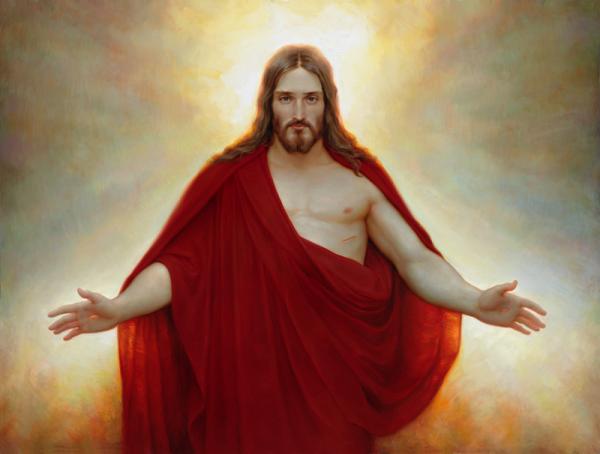
But how could Lord Jesus be in Buddhist India, Tibet, or Ladakh when he was busy trying to save Palestine? Well, you see, children, he wasn't born lord. Young Yeshua had to earn his stripes by ditching the Land of Judea, joining a merchant caravan, and traveling East to India/Tibet, arriving at a Jewish business outpost near Kashmir where others did business and young Jesus was exposed to the Wisdom of the East, meeting Buddhist lamas at Hemis Gompa, a lamasery he would study at for years, meeting Hindu masters and learning about the Vedas and other esoteric knowledge, mastering yoga, the siddhis (supernatural abilities), and realizing his mission was to teach in the Middle East not the Far East. He was already a renowned troublemaker in and around Kashmir, having strong views proclaiming the peace of the Monad (GOD, Brahman, the One True godhead of this universe) and realizing his own divinity as a human, a devaputra among humankind.
Scholar Holger Kersten summarizes the findings of others like Russian Christian Nicolas Notovitch who found definitive documented evidence of where Jesus was for the 18 "lost years" excluded from the official Bible canon and Swami Abhedananda (author of and Why a Hindu Accepts Christ and rejects Churchianity), corroborating Notovitch's claims. This new information aligns with what the Gnostics, Essenes, and Nazarenes taught about a wise teacher who returned from the East a vegan, preaching love and oneness, and the cult mysteries of initiation to realize the death of the ego and the kingdom of GOD here and now, contradicting official church teachings more interested in controlling Romans and other followers than liberating anyone or telling them that they, too, are divine.
This eye-opening AI documentary explores a great mystery in religious history -- the 18 missing years of Jesus Christ's life that remain unaccounted for in traditional biblical texts.
While the canonical gospels are silent about Jesus from ages 12 to 30, which is 60 of his life, ancient Buddhist manuscripts preserved in a Tibetan Buddhist lamasery (Hemisgompa or monastery), now in the Himalayas of India in Ladakh.
Ethiopia's remote monasteries record additional details.
Discover how the world's oldest continuously Christian nation preserved texts that were excluded from the Western church's Bible, including detailed accounts of Jesus's journeys across Asia and the Middle East during his formative years.
The Ethiopian Bible, which contains 88 books rather than the standard 66, provides astonishing details about Jesus's education and spiritual development that were systematically removed from Western Christian traditions during its councils [and the making of "Caesar's Messiah," as reported by Joseph Atwood].
Take this AI-enhanced journey to investigate compelling evidence from ancient Ethiopian manuscripts, alongside corroborating discoveries from the Tibetan/Indian/Chinese Himalayas and Egypt, which reveal Jesus's extensive travels and studies with Eastern spiritual traditions before beginning his short ministry.
What was so revolutionary about these missing years that powerful religious authorities purposely worked to erase them from history?
Watch to decode ancient texts, examine linguistic connections, and analyze archeological evidence that suggests Jesus synthesized wisdom from multiple spiritual traditions (Jainism, Brahmanism/Vedic Hinduism, Buddhism, Egyptian mystery schools, and early Ethiopian spirituality) to create his revolutionary teachings.
This carefully researched presentation challenges conventional understanding while offering a more complete picture of history's most influential (and to some extent make believe) spiritual figure.
00:00 - Intro: The 18 Lost Years of Jesus - History's Greatest Mystery
00:45 - The Mystery Unveiled: The 18 Lost Years of Jesus Christ
02:46 - The Himalayan Connection: Ancient Scrolls Reveal Jesus's Eastern Journey
05:40 - The Ethiopian Revelation: Jesus Found in an Ethiopian Bible
09:03 - The Indian Chronicles: How the Lost Years of Jesus Shaped His Teachings
13:28 - The Egyptian Mystery: Ancient Bible Traditions Jesus Encountered
ABOUT: Whispers of Wisdom Within — Endless inspiration from ancient lessons to transform life. This ancient teaching will bend reality.
WofWW is a dedicated group passionate about sharing knowledge and researching historical documents. Its mission is to distill ancient lessons from history and those who contribute to society. By incorporating AI, it recreates historical events and documents, giving a fresh perspective to timeless stories, driven by a love of learning and creativity.
Its meticulous research will enrich experience, offering fresh perspectives. It produces and creates inspirational videos that benefit people all around the world.
Let this channel inspire and transform life.
IMPORTANT: Like Elon Musk's extensive use of AI across his companies, WofWW also incorporates AI in producing some videos, ensuring that all music, images, and assets are either licensed or used per the rules of Fair Use. This content spans documentary, factual information, rumors, and fiction. Please note, nothing on this channel constitutes medical or financial advice.
Travel to India: Jesus (Issa) and the skull of a giant by Russian artist Nicholas Roerich
Jesus in India, Tibet, and Persia: An account missing from the Bible
(rainbowlightstudio) Almost everything we know about Jesus is from the Bible (New Testament). The four New Testament gospels attributed to Matthew, Mark, Luke, and John tell a great deal about the events surrounding his conception and birth.
I trained in the Wisdom of the East
They also provide a lot of details about his ministry in Palestine and his trial, crucifixion, and resurrection, all of which occurred during the last three years of his life. However, they tell us very little about the years in between.
There’s a short account in the Gospel of Matthew that tells of how the "Holy Family" (Jesus, Joseph, and Mary) travelled into Egypt shortly after the birth of Jesus (Issa, Yeshua).
Although the Bible doesn’t provide a description of that journey, the details have been preserved in the traditions of the (Egyptian) Coptic Christian Church and a video account of that journey can be found via this link:
In 1894, a formerly Jewish Russian explorer named Nicholas Notovich published a controversial book that claimed that during a journey through the Himalayas, he had visited a Buddhist monastery named Hemis Gompa, where he had been shown sacred Buddhist manuscripts in Pali (the exclusively Buddhist language).
They revealed that Jesus (Issa) had travelled and preached in India, Tibet, and Persia before his ministry in Palestine.
This film tells that story of that extraordinary discovery and gives an account of what those manuscripts revealed about Jesus’ journey through those countries.
(Arise Video + Photo Studio) “And Jesus increased in wisdom and stature and in favor with God and man” (Luke 2:52). This single line in the Bible describes the "lost" 18 years of Jesus’ life, spanning from ages 12 to 30. Where was Jesus during those years?
For those curious to know more, let's look to Edward T. Martin. He is an author and researcher whose findings are showcased in the documentary feature film Jesus In India by Paul Davids.
At the Maharishi Dome of the Age of Enlightenment in Austin, Texas, Martin reveals the legends, myths, and historical evidence of Jesus' life in India.
A few of the more provocative discoveries include clarity regarding the physical appearance of Jesus, evidence of Jesus' children, and indications of Jesus' ongoing human life after crucifixion.
The Unknown Life of Jesus: original text with photographs and map by Nicolas Notovitch has 4.6 out of 5 stars with 114 ratings. Notovitch was born into an aristocratic Jewish family but converted to Christianity in his youth.
A prolific Russian journalist, author of 12 books, (and some say a spy), he travelled widely in the East, visiting India, formerly Buddhist Afghanistan (Gandhara), and Buddhist Ladakh (formerly part of Tibet).
After a horse-riding accident that broke his leg, Notovitch recuperated at a Tibetan Buddhist lamasery (monastery) called Hemis Gompa.
There he heard of an ancient written manuscript that revealed astonishing information on the 16 "Lost Years of Jesus" -- the period between Jesus Christ's visit to the Jerusalem Temple at the age of 12 and his baptism in the Jordan River, about which the Bible is strangely silent.
The Tibetan manuscript relates that Jesus (called Saint Issa in the East) spent this time traveling to India and Tibet to study the spiritual disciplines of the East. He then returned via Persia to Israel, where he taught for a few years until his eventual crucifixion (torture by Roman soldiers reserved for political criminals).
This account was published by Notovitch in 1887 as The Unknown Life of Jesus Christ. It caused an immediate sensation, stirring passions on both sides, shaking the foundations of Orthodox Christianity and raising a storm of controversy that, after more than 125 years [after its publication], has not yet abated.
This is an exciting, thought-provoking book, essential reading for anyone interested in the life of the historical Jesus the Nazarene [not a place but a sect designation for vegetarian/vegan, according to Christspiracy]. More
This version includes an introduction from Yogi Ramachakra from his book, Mystic Christianity, giving additional insight into the 18 unknown years of Jesus Christ's life with an afterword by Baird T. Spalding from his book, Life and Teaching of the Masters of the Far East. Nicolas Notovitch journeyed to Ladakh (Tibet) in 1887 and discovered manuscripts in a Buddhist monastery describing some of the unknown years of Jesus Christ. In these manuscripts the Jewish-Christian godman (sadhu) is referred to as Saint Issa.
DISCLAIMER: As an Amazon Associate and affiliate with other companies, we may earn from qualifying purchases. Purchases through Amazon/affiliate links may generate revenue for this channel at NO COST to buyers. Thanks for the support.
Nicolas Notovitch, translated by Connelly and Landsberg, Greatest Audioibook, Feb. 23, 2013; Lost Years of Jesus; Eds., Wisdom Quarterly
(Brian Oblivion) From Minute 38 on comes the interesting part. This British Broadcasting Corporation (BBC 4) documentary examines the question "Did Jesus Die?"
It looks at various ideas around this question until Minute 25, where this examination of ideas takes a very logical and grounded turn with surprising conclusions that demonstrate:
The "Three Wise Men" were Tibetan Buddhist monks who (were in search of a tulku) found Jesus and came back for him about the time of puberty.
After being trained in a Buddhist monastery [Hemis Gompa, Ladakh] he spread the Buddhist philosophy, survived Jewish persecution in Palestine and crucifixion in the Roman Empire (Israel), and escaped to Kashmir, Afghanistan.
This part of Kashmir is near the birthplace of the Buddha, known as ancient Gandhara in Central Asia, with its capital now in Pakistan (after the 1947 Partition of India).
There he died an old man at the age of 80 [and his corpse was entombed in the Jewish-style with its distinct orientation with Buddhist-style footprints marking his burial site.
That grave is now covered by an Islamic grave it of another person, making excavation difficult without stirring up a great deal of trouble.
See the scholarship of Holger Kersten and Nicolas Notovitch for the details and written evidence.
BBC 4 documentary via Brian Oblivion (YouTube, 12/19/11); Pfc. Sandoval, Dhr. Seven, Pat Macpherson (eds.), Wisdom Quarterly
Edgar Goodspeed exposed a fraudulent account of Jesus visiting Tibet.
It generated a little heat from people who weren’t particularly interested in reading the professor’s examination of a forged text, but who were exercised at the suggestion at the beginning of the post that Jesus did not spend time in India or Tibet.
[Are we to ignore the discovery of Nicolas Notovitch, confirmed by Swami Abhedananda, and all the subsequent research by Holger Kersten and others confirming that the "lost years" of Jesus were spent in Tibet, India, Ladakh, some of that time at Hemis Gompa Himalayan Buddhist Lamasery, as the BBC confirmed in its documentary Jesus Was a Buddhist Monk?]
(BBC) Jesus Was a Buddhist Monk
One pointed to Marcus Borg’s delightful Jesus and Buddha: The Parallel Sayings as if it were proof, not necessarily of Jesus studying in Tibet, but certainly of Buddhist influence on Jesus.
Of course, the railway theory of religious thought, the assumption that if the spiritual teachings of two different religions are similar, the later teaching must in fact come from the earlier one is pretty common. But it often turns out that there is no connection. These things are examples of parallel evolution.
While it is possible that some of the gymnosophists [naked Jain asceticphilosophers] who appear to have made their way to the Roman Empire could have been Buddhist monks.
So it is not outside the realm of possibility there was some Buddhist influence on Jesus, or at least early Christianity [as with the Church Father Origen, who talked about rebirth a great deal, having the Buddha Shakyamuni (aka Ammonius Saccas) as his teacher], the rather more important point is that Jesus’ teachings were in fact not radical.
Or rather they may have been radical in the sense that they went against the grain of the day. Then as now they were also very much mainstream Jewish teachings.
Bottom line, there is no need to appeal to influence from elsewhere to come up with Jesus. So why multiply assumptions?
That said, among the things that are fascinating for me are the actual provable contacts between early Christianity and Buddhism. The connections that have documentary evidence that is true and wasn’t made up. More
How to Be a Yogi, including a chapter titled: "Was Christ a Yogi?"
(Swami Abhedananda) The title’s introductory chapter describes the true province of religion in India and the full significance of the word "spirituality" as it is understood there.
Next follows a comprehensive definition of the term "yoga," with short chapters on each of the five paths to which it is applied and their respective practices.
An exhaustive exposition of the Science of Breathing (ecstatic breathwork or pranayama) and its bearing on the highest spiritual development (samadhi) shows the fundamental physiological principles on which the whole training of Yoga is based.
The concluding chapter, under the title "Was Christ a Yogi?" makes plain the direct relation existing between the lofty teachings of Vedanta (the best of the Vedas) and the religious faiths of the West.
(Vatican News English, April 5, 2020) Pope Francis' Palm Sunday Mass in 1 minute: Pope Francis celebrates Mass on Palm Sunday and prays the Angelus in an empty St. Peter's Basilica, focusing his homily on love and service. Watch the Holy Roman Empire's entire pomp and circumstance mass hypnotic induction ceremony as it holds sway over 1/3rd of the planet with its corporate patriarchy.
Sid, it sucks being famous. - I know, Jess.
As we explore the Abrahamic faiths, let's start with Jesus Christ Superstar (Yesu of Nazareth, St. Issa) instead of the Mo's. Today is "Palm Sunday" and the Vatican Propaganda Office, located in the Holy See [built to worship Mithra (Maitri = Maitreya = Messiah) before converting to the composite figure of Jesus Christ (Y'shua, Joshua, Iesous, Issa, Isa) is milking the cow liquid out of it.
Getting with the times, the Vatican PR Department has condensed a 1:42:06 minute ritual to an empty house in a locked down palace down to a manageable (i.e., wordless) one-minute.
It's suitable for Instagram, FB, TikTok, even Twitter. The tiny country called the "Holy See" in the center of sickly Rome is the current city-state-cum-capital of the Church's worldwide Holy Roman Empire. It claims to have 7 coronavirus cases in a total population of about 1,000 mostly gay and bisexual bishops, carnal cardinals, pervey priests, Swiss guards, functionaries, and bankers.
The CEO, Papa Francisco (Pope Francis I), is trying to hold it down as Rome burns with disease along with the rest of the world suffering the new "plague" or "crown of death." But we're all friends in the afterlife, so for Holy Week we ask, Who was Jesus of Nazareth? And where was he for those 18 "lost years"? The years excised from the official imperial version of the Bible, fabricated by the Neo-Flavian dynasty also called theConstantinian dynasty and its power-hungry Roman Emperor Constantine at the Council of Nicaea?
Wisdom Quarterly: What is Divalior as you say, Deepavali?
Swami Adrishananda: It is afive-day Festival of Lights that begins today, a grand celebration in India. As the days wane, cultures around the world celebrate light. The promise that spring will return after winter, that light and the Sun will triumph over dark and the cold. We are ringing in the good and the bright. Pagans and Christians in Europe deck the halls with boughs of holly, tinsel strips, vigil-candles...
WQ: So it is about renewal and holding hope in our hearts?
SA: In practice this pooja (observance) is all about the new, a new heart. Everyone wears new clothes and sings bhajans like on New Year's, "May old acquaintance be forgot..." [Listen: Auld Lang Syne]. Things are forgiven and one looks forward through the darkness in search of new light. Fresh garments, fresh thoughts, it's a new start. This is the meaning.
WQ: Tapas Yogi Nandhi says "higher consciousness" is taking place. He explains that in the past, masters like Maharishi Mahesh Yogi declared that when a tipping point or critical mass of the population meditate, humanity steps into the threshold of higher awareness, intellect, and peace. We gain stillness of mind (samadhi), the first objective of meditation, and that tranquility allows what he calls "the streaming Source energy."
SA: That is quite true. The eight-limbs of yoga, asht-anga or Raja Yoga, is Patanjali's formulation, like the earlier Buddha Gautama's formulation. Lord Buddha was a Hindu...
WQ: Not really, brahmana. There was no "Hinduism" at that time.
SA: His father the king followed the Vedas, India's scriptures, and the customs like Deepavali!
WQ: Those are the customs of the brahmins (temple priests who worship Brahma), not the shramans (spiritual wanderers who seek direct and self-reliant experience of the highest truths). They both aspire to become "noble," not by birth like caste-loving brahmins, but by karma, by their deeds in this life, like caste-rejecting shramans or shamans.
SA: But his father the king...
WQ: ...followed what his brahmin advisers and ministers advised, that's true. But he was a kshatriya (warrior caste noble). Many Indians say the Buddha was a Hindu as if there was no difference between Shankara's systematization of the Vedas, Puranas, Vedanta, and Patanjali's yoga sutras and the Buddha's message. But there are many points of difference. Was Mahavira [the founder of Jainism, who lived at the time of the Buddha, many centuries before Shankara) a Hindu?
SA: He is honored by Hindus as well, like Lord Buddha.
WQ: That's wonderful. But both the Buddha and Mahavira and the other "heretics" as well, rejected the Vedas as ultimate authority. It would be like Jesus...
SA: Who?
WQ: Issa.
SA: O, Christ.
WQ: Yes, it would be like Saint Issa rejecting Jewish scripture and writing a New Testament.
SA: They did! Christ was a Hindu.
WQ: Was Moses a Hindu? Well, then, we're all Hindus because India has such an ancient pre-India spiritual tradition. The Buddha didn't come to certify the Vedas or to say they are nonsense. They are very valuable. But that is not his message. The Buddha had something to say beyond that. And Lord Issa had something new to say. The Buddha and Marhavira became shramanas, like shamans. They taught their disciples, male and female, high caste and low caste, the way to attaining spiritual perfection in this life, not by being reborn as brahmins first.
WQ: Probably, everyone in India does. Not formally, Buddhists do not do it as a "Buddhist thing."But the Jains do do it as a Jain thing.
SA: Christ does, and the Christians call it Christmas. Christ lived in India and took that back to Jerusalem.
WQ: But the ancient Jews had a festival of lights, Channukah.
SA: That's Deepavali! Jews lived in India, in Jammu & Kashmir, and according to Swami Abhedananda came to study with the Buddhists.
In honor of feminine energy Yogi Nandhi honors Narayani, wife of Vishnu
WQ: Why do you call it Deepavali and not Divali? SA: The same. Dipa is light. This is in honor of Maha Laxmi (Great Lakshmi), the goddess and Lord Vishnu's consort. [Hinduism explains the Buddha as simply having been an incarnation of the triune God Vishnu.] WQ: What about Radha, the divine feminine? SA: The same. Laxmi represents Radha also and all the goddesses (devis).
WQ: Tapas Yogi Nandhi quotes Mahatma Gandhi: "The human voice can never reach the distance that is covered by the still small voice of conscience."And he says that still small voice of conscience in unison is very strong, with scientific backing. It enables minds/hearts to meditate, practice Raja or Royal Yoga, Reiki, Tai Chi, karate, labyrinth walking, contemplative practices to help us remember that we are really spiritual having a physical experience.
SA: Yes, he's right. All is one, and all traditions say to practice non-harming, ahimsa.
WQ: So it's everyday in every practice, but do you have a special celebration? SA: Yes, today, in the foothills of the San Gabriel Valley. And I will be chanting Lord Buddha's mantra Gate gate paragate parasamgate bodhi svaha. WQ: Actually that's not... SA: Not what? WQ: ...not a bad idea. We're all ONE on Divali.Avalokiteshvara would be glad to hear it, and there's one personage we can agree on. SA: Namaste.
All materials on this site are submitted by editors and readers. All images, unless otherwise noted, were taken from the Internet and are assumed to be in the public domain.
In the event that there is still a problem, issue, or error with copyrighted material, the break of the copyright is unintentional and noncommercial, and the material will be removed immediately upon presented proof.
Contact us by submitting a comment marked "private."
Do not follow this journal if you are under vinaya or parental restrictions. Secure protection by Sucuri.
Wisdom Quarterly: American Buddhist Journal is licensed under a Creative Commons Attribution-Noncommercial-Share Alike 3.0 United States License. Permissions beyond the scope of this license may be available at creativecommons.org/about/licenses.