(Study Buddhism) Why "meditation" [striving, straining, struggling to get into absorption] feels so hard (and what to do about it) | [Western scientist and Vajrayana Buddhist lama] Ven. Matthieu Ricard [known as "the happiest person in the world"*]. "There is no Samsara 2.0."
Who is he?
Sure, I'm happy, but the happiest?
Matthieu Ricard (French matjø ʁikaʁ, Nepali माथ्यु रिका, born Feb. 15, 1946) is a French Nepalese writer, photographer, translator, and Buddhist monk (lama) who resides at Shechen Tennyi Dargyeling Monastery in Nepal.
Dr. Matthieu Ricard grew up among the personalities and ideas of French intellectual circles. He received a PhD degree in molecular genetics from the Pasteur Institute in 1972.
He then decided to avoid a common scientific career and instead did the daring thing and took up the practice of Tibetan Buddhism (Vajrayana Bon), living mainly in the Himalayas.
Matthieu Ricard is a board member of the Mind and Life Institute. He received the French National Order of Merit for his humanitarian work in the East with Karuna-Shechen, the non-profit organization he co-founded in 2000 with Rabjam Rinpoche.
Since 1989, he has acted as the French interpreter for the 14th Dalai Lama. Since 2010, he has been traveling and giving a series of talks with and assisting in teachings by Dilgo Khyentse Rinpoche, the incarnation of Kyabje Dilgo Khyentse Rinpoche....
*Matthieu Ricard has been called the "happiest person in the world" [4, 5]. Why?
It is because Matthieu Ricard was a volunteer subject in a study performed at the University of Wisconsin–Madison on happiness. He scored significantly above the average of hundreds of volunteers [4].
Matthieu Ricard, however, has called the label "absurd" and untrue [6, 7]. More
[The Pali/Sanskrit word sarana actually means "Going for GUIDANCE," NOT "going for refuge," which is a bad English translation. Early Buddhist reformer Col. Henry Steel Olcott tried to straighten out this misunderstanding more than a century ago in The Buddhist Catechism (sacred-texts.com).
But people still misunderstand and scholar mindlessly repeat the mistake without ever taking a closer look at the word and the potential confusion they are causing.
There is only one real "refuge" in the phenomenal universe, and the historical Buddha called that nirvana. Nirvana is the further shore, the real place of safety beyond rebirth. Everything in samsara is beset by disappointments and dangers on all sides.
Aside from nirvana, the Buddha, the Dharma, and the [Enlightened] Sangha are precious jewels we can resort to for GUIDANCE on the path, for encouragement, inspiration, and clarification.
We ourselves must make the effort. No one saves us but ourselves. No one can, and no one may. Buddha, Dharma, and Sangha merely POINT the way.]
Going for Guidance?
Saranamor "guidance," Col. Olcott explains: "This word has been hitherto very inappropriately and erroneously rendered 'refuge' by European Pali scholars and thoughtlessly so accepted by native Pali scholars," Wijesinha Mudaliyar writes to him to point out.
Neither Pali etymology nor Buddhist philosophy justifies the translation. "Refuge," in the sense of a fleeing back or a place of shelter, is quite foreign to true Buddhism, which insists on every person working out one's own emancipation [liberation, salvation, enlightenment].
The root Sṛ in Sanskrit (sara in Pali) means to move, to go, so that saranam would denote a moving, or one or that which goes before or with another—a Guide or Helper.
I construe the passage thus: Gacchāmi, "I go," Buddham, "to the Buddha," Sâranam, "as my Guide."
The translation of the Ti-saraṇa as the "Three Refuges" has given rise to much misapprehension and has been made by anti-Buddhists a fertile pretext for taunting Buddhists with the absurdity of taking refuge in non-entities and believing in unrealities.
The term "refuge" is more applicable to Nirvaṇa, of which saranam is a synonym.
The [Abbot] Sumangala also calls my attention to the fact that the Pali root sara has the secondary meaning of killing, or that which destroys.
Buddham saranam gacchami [Dhammam saranam gacchami, Sangham saranam gacchami] might thus be rendered "I go to the Buddha, the Doctrine, and the [Noble] Order as the destroyers of my fears—the first by his teaching, the second by its axiomatic truth, the third by their various [enlightened] examples and precepts." Source
(Lama Yeshe Wisdom Archive) A hidden ritual. A sacred promise. A transmission into a buddha's transcendent compassionate wisdom. A corn field transformed.
In 1980, HH the Dalai Lama received a humble request from a revered Tibetan monk in America: Perform the Kalachakra initiation—a powerful tantric ritual never before held outside of India or Tibet—in the heart of rural Wisconsin.
What followed was nothing short of miraculous. In just a few months, the lama's devoted students overcame local resistance, built a temple from the ground up, and transformed a Midwestern cornfield into a site of ancient wisdom and spiritual awakening, attracting over 1,000 spiritual seekers from around the world.
Captured on film then locked away in Smithsonian vaults for over 40 years, this long-lost footage resurfaces to reveal a story of transformation to buddhahood, and a moment when time, space, and a sacred initiation converged in the unlikeliest of places.
This story of the 1981 Kalachakra is told through the voices of distinguished scholars and the initiates who participated in the 1981 Kalachakra and through personal interviews of the Dalai Lama, filmed in 1981, throughout the preparation and the event.
The Dalai Lama’s Gift is a cinematic meditation on faith, legacy, and the power of one sacred encounter to ripple across generations.
2O24 | US | English | 76 minutes. DIRECTOR/PRODUCER Ed Bastian. Co-PRODUCER Sharpa Tulku, Catherine Wyler, Jennifer Beman. EDITOR/WRITER Jennifer Beman. MUSIC: Nawang Khechog, Three Dog Night, Daniel Moore. ART AND ANIMATION: Pema Namdol Thaye.
ABOUT: Lama Yeshe Wisdom Archive. Bringing the teachings of Lama Yeshe and Lama Zopa Rinpoche and the "Kalachakra - Wheel of Time" transmission. Visit at LamaYeshe.com.
(Kino Lorber) Hannah: Buddhism’s Untold Journey tells the story of Hannah Nydahl and her adventure bringing Tibetan Buddhism to the West.
From her wild and idealistic roots as a hippie in Copenhagen, the film follows Hannah and her husband Ole to the hedonistic [Buddhist but officially Hindu] city of Kathmandu, Nepal.
This is where in 1968 they became two of the first Western students of His Holiness the 16th Karmapa (Rangjung Rigpe Dorje) -- the first consciously reincarnated (tulku) lama of Tibet, and the man who would change their lives forever.
At the heart of the film lies the unique and inspiring love story of Hannah and Ole and their unwavering dedication to bring Buddhism to the West.
From Europe and North America, through the fall of communism in Eastern Europe and Russia, to being kidnapped by guerrillas in South America, the film portrays the path of a great woman at the forefront of a turbulent, ever-changing world.
(The Mystery Library) Could a 1,300-year-old Vajrayana Buddhist manuscript from Ladakh (once Tibet, now India) hold the secret to reincarnation (rebirth), the afterlife, and the nature of consciousness?
Let's travel through the Bardo, the intermediate state between lives where consciousness goes after the death of the body, and where it seeks the path to the light or ends up reincarnating.
The Bardo Thodol, or "The Tibetan Book of the Dead," offers great insights into how the ancients viewed consciousness.
Still in use today to guide the deceased through their voyage into the afterlife in remote parts of Tibet and India, notably in the Himalayan region of Ladakh, the teachings in The Bardo Thodol resonate with recent discoveries in the field of quantum physics.
It may be the ultimate piece of the puzzle to the mystery that is consciousness. (Matter, it seems, is derivative, and consciousness is primary, says theoretical physicist and Nobel Laureate Max Planck, and the Buddhist Abhidharmaor "Dharma [Explained] in Ultimate Terms" would seem to agree).
CHAPTERS
00:00 An old man is dying
01:35 The Chikhai Bardo
03:05 The Chonyid Bardo
03:58 The Sidpa Bardo
05:33 Carl Jung
06:15 Max Planck
07:17 Perceptual studies
Embark on this spiritual exploration to together discover the ancient wisdom that has captivated minds for centuries.
Subscribe to The Mystery Library for more insightful content. Remember to leave a like to support this work and click the bell icon to receive notifications on latest uploads. #BardoThodol #Reincarnation #TibetanBookOfTheDead #AfterlifeJourney #BuddhistPhilosophy #CycleOfRebirth #SpiritualEnlightenment #KarmaRebirth #TibetanBuddhism #LifeAfterDeath #SpiritualAwakening #MeditationLife #AncientWisdom #QuantumConsciousness #PastLifeMemories #EnlightenmentPath #ChonyidBardo #SidpaBardo #NearDeathExperience #MysticalExperiences
The Mystery Library, March 8, 2024; Dhr. Seven, Pat Macpherson, CC Liu (eds.), Wisdom Quarterly
The Mystery of Tibetan Monastics' Paranormal Abilities: Unparalleled Skills and Secrets of Practice
(Mr. Y Talks) May 18, 2023: This video goes deep into the extraordinary paranormal abilities of Tibetan nuns and monks and reveals the secrets of their practice. Some are "living buddhas," which is a misleading translation for bodhisattvas ("being bent on supreme enlightenment, buddhas-to-be"). Westerner Alexandra David-Neel traveled to Tibet in the 1930s and wrote about her experiences in Magic and Mystery in Tibet.
COMMENTARY
Are such things really possible, Wisdom Quarterly? Yes, they are. The basis is samadhi (stillness, superconsciousness, states of emerging from single pointed focus or concentration, which temporarily purifies the mind/heart, leading to a breakthrough in recovering our innate ability as a human species). These powers are known in Buddhism as the abhinnas or iddhis (Sanskrit siddhis). They are well known even outside Buddhism, where they are also warned against. Hinduism and the older Vedic religion is well aware of these miraculous powers and calls those who master samadhi "saints."
These are not saints in Buddhism, which reserves the term for those proficient in calm and insight, who are liberated from the mental hindrances and defilements. The Buddha possessed these powers but was very reluctant to use them, seeing great danger in them. It is hard to attain these powers and they are fickle. They may easily drop away. The Buddha spoke of 11 imperfections in their development to be mindful of if one should wish to exercise them.
But a more telling event about the Buddha's attitude towards them is found in a story in the ancient texts. One day the Buddha and his attendant monk, Ananda, were walking down the road and saw some old yogis who possessed these powers. They were renowned and respected.
The Buddha turned to Ananda and said something to the effect of, "How sad these two."
Ananda replied, "But they are well respected and possess supernormal powers."
"Yeah, but had they developed those powers in this Dharma (herein within the Buddha's Doctrine and Discipline), they would not only have those powers, but they would also be liberated (enlightened and free from suffering and rebirth).
"As it is, although they have spent many years of spiritual effort to develop these trifling 'powers,' they have not worked on the much more important skill of release, of making an end of ignorance, of uprooting the defilements of the heart/mind greed, hatred, and delusion. Now they have these powers, but they will eventually lose them. Having gained nothing else because they were so busy to develop them, if they are not destroyed by these very powers, what will they have? They will have wasted all those years and, what's worse, wasted the opportunity to strive for real liberation (moksha) and actually be free."
Who needs Buddhism? Let's do magic instead
This is a shocking thing to say because within their own tradition, they were regarded as "saints" the way a Catholic nun or monk could live cloistered, fasting, praying, purifying their morality, faith, karma, and concentration and, in doing so, may indeed gain mysterious abilities, magic powers. If anyone sees them displaying such powers, they will be hailed as "holy" and "saved" and "destined for heaven," objects of veneration, respect, and petitionary prayers and prayers to intercede on behalf of the faithful.
But they will not be "saints" in the Buddhist sense. They are not free of the defilements (which have only been suppressed by many and various spiritual practices). They will not have made an end of greed, hatred, and delusion only of obvious and overt signs of them while they are still latent in their psyches (layers of their personality bundles within the Five Aggregates clung to as self). They may even be reborn into a heaven, but as that heaven is not the end all be all it is advertised as being, they will neither be "saved," purified, free, attaining to the deathless, nor anything else of note. It will be as if all those side effects were for not nothing but not anything really worthwhile, admirable, or spiritually desirable like nirvana, awakening, the end of rebirth or, there is a remainder of defilements, rebirth in exalted worlds where they are able to complete the training in very conducive circumstances and be freed from there.
We can meditate to purify the mind then practice for insight to be free?
Tibetan Vajrayana Buddhism is very esoteric, partly because it is mixed with the more ancient indigenous Himalayan shamanic practice of Bon and partly because it is a Mahayana school, which itself is very much mixed with Hindu, Vedic, yogic, and Brahmanical ideas. These are ideas and assumptions the historical Buddha rejected and went to great pains to point out for disciples to avoid.
(HISTORY) Aug. 27, 2024: Within esoteric Tibetan Vajrayana Buddhism, one may hold the key to accessing alien realms (lokas, planes, dimensions, worlds) through deep meditation for the development of the "rainbow light body."
Once one is in this "enlightened" state, interdimensional and interstellar travel can take place.
This is a clip about Shambhala from Season 16 of Ancient Aliens, "The Lost Kingdom."
The real meaning of "enlightenment" (bodhi) is awakening (budh), which means escape and liberation. From what?
It is freedom from the round of endless rebirths (samsara) through countless worlds over incalculable aeons. These worlds are categorized into 31 general "planes." Actually, others are mentioned (such as the "interstitial hells" between bubble universes or world-systems, which are lit up when a Supremely Awakened One arises), so 31 should not be thought of as fixed.
There are countless world-systems (galaxies, universes?) in the 10,000 directions of space.
Some only come into existence during the dispensation of a supremely enlightened teacher (a samma-sam-buddha), who brings into being the suddhavatior "Pure Abodes" between this world and final liberation.
Tibetan letter "A" ("ahh") inside a thigle
Stories of these special realms open only to partially enlightened beings seem to have been taken by some Mahayana Buddhists to refer to the "Pure Land" of a Cosmic Buddha named Amitabha. Worship of such beings as these other buddhas, like Maitreya, have left the historical Buddha Siddhartha "Shakyamuni" Gautama on the shelf and in the background. Attention and reverence are turned to other figures, who sound remarkably like Brahmanical/Vedic/Hindu deities recast into Buddhist cosmology. Buddhist terms are used to co-opt the popularity of the Buddha's Teachings (Dharma) to divert attention and prominence to the old Brahmins' sacred Vedas. It's very Mahayana yet not so much in line with what the historical Buddha was trying to accomplish in bringing light to the world.
Scientists are cheating, reading mystic texts from the East, catching up to Buddhist cosmology
.
What is the rainbow body?
The rainbow body manifested
In Dzogchen, "rainbow body" (Tibetan འཇའ་ལུས་, Wylie'ja' lus, Jalü, or Jalus) is a level of realization. This may or may not be accompanied by the "rainbow body phenomenon."
The rainbow body phenomenon is pre-Buddhist in origin [1] and is a topic that has been treated fairly seriously in Tibet for centuries past and into the modern era [likely originating in yogic practices, Brahmanism, and Vedic Hinduism].
Devin, can you give the shortest possible answer?
Other esoteric Vajrayana Buddhist teachings also mention rainbow body phenomena, which occur during or after the dying process.
The rainbow body phenomenon is a third-person perspective of someone else attaining complete knowledge (Tibetan རིག་པ, Wylie rigpa).
Rebirth by karma into planes
"Knowledge" is the absence of delusion regarding the display of the basis. Rigpa has three wisdoms:
kadag,
lhun grub,
thugs rje.
Kadag deals with trekchö [3]. The lhun grub aspect has to do with esoteric practices, such as (but not limited to) tögal, that self-liberate the human body into a Sambhoga-kāya ("rainbow body phenomenon") [3, 4]. More
Let's divide the universe (multiverse) into six realms: demon, animal, human, angelic
Watch all new episodes of Ancient Aliens, Fridays at 9/8c, and stay up to date on all favorite shows on The HISTORY Channel website at history.com/schedule. #AncientAliens
Ancient Aliens; Gaia (video); Dhr. Seven, Pat Macpherson (eds.), Wisdom Quarterly
[Crazy] Milarepa: The mass murderer who became enlightened in Tibetan Buddhism
(Asangoham) July 27, 2024: Milarepa, the Lord of Yogis, is today recognized as one of Tibet’s great masters and an accomplished meditation teacher and practitioner, admired for his tenacity, courage, and discipline. [This is odd given his crimes, which no one disputes, like those of reformed Angulimala.]
He is celebrated as “the most renowned figure in Tibetan culture, the
quintessential Tibetan folk hero.”
However, his life began with considerable hardship. Like this metaphor, his path was a journey of facing and integrating his own demons, transitioning from confusion to awakening.
Initially caught in samsara, the cycle of mundane existence, like we are, he committed to the practice of the Dharma, the way of wisdom.
His story is not that of a saint; on the contrary, it is a deeply human story. It shows us that even a great master has to deal with immense challenges such as loss and revenge.
"Every saint has a past,
every sinner a future."
It narrates the transition from a murderer to one of Tibet’s most famous yogis.
Today's video is about the extraordinary life and teachings of Jetsun Milarepa, Tibet's most revered yogi and poet.
This inspiring story explores the remarkable life of Milarepa, from his tumultuous childhood to his attainment of enlightenment through intense meditation and devotion.
Learn about Milarepa's profound teachings on the nature of reality, the importance of compassion, and the path to achieving spiritual liberation. Delve into his remarkable songs of realization, which have inspired generations of Tibetan Buddhist practitioners.
This video is a must-watch for anyone interested in Tibetan Buddhism, yoga, and Himalayan spirituality. Whether one is a seasoned practitioner or just starting a spiritual journey, Milarepa's life and teachings offer valuable insight and inspiration for living a more meaningful and fulfilling life.
As a young American Buddhist, not knowing that there was more than one Buddhism, I would a converted church building near the Sino-American Center on 6th Street near Chinatown in Downtown LA. It was a Chinese Mahayana church/temple run by nuns, but I didn't know. There were Japanese Soto Zen temples nearby. (This way the state of Buddhism back the Eighties). It was as creepy as a Catholic mass, but nicer things were being said. Eventually, I attended similar services in Maywood (a tiny city in LA County) which bought land and built the massive Hacienda Heights temple (arcgis.com). Through years of struggle, one temple morphed into the other as Maywood realized its dream of building Hsi Lai Temple ("Going West" Monastery and Nunnery). Back in those early days, there was a great master (Ven. Hsing Yun) of which they spoke. He was in Taiwan, touring the world, or at Master Hsuan Hua's City of Ten Thousand Buddhas, which kindly donated some of its rural land for the setting up of a Thai Theravada Buddhist Abbey (wat or vihara) called Abhayagiri Buddhist Monasteryin Redwood Valley, where Americans train to be monks in the Thai Forest Tradition of Ajahn Chah and other Buddhist meditation masters. In one such Buddhist service, I remember a Chinese nun presenting what might have been her thesis or research as a nun. It was a pamphlet all about Milarepa's crimes, showing that he could not have been a Buddhist monk or anyone to look up to given his biography. (This means his misdeeds after ordination disqualified him and meant he was not attained to sainthood/enlightenment, regardless of his popularity among average Tibetans). But that's mainstream Mahayana thinking (which was in line with Theravada monasticism), and Milarepa belongs to Bon-heavy Esoteric Himalayan Buddhism from Tibet, which is a school known as Vajrayana. It aligns itself with the massive Mahayana Buddhist school, but it is distinct in many ways. The indigenous Bon tradition is all about black magic, shamanism, necromancy, and vengeance.
DISCLAIMER 1: All ideas expressed on this channel are for entertainment and general information purposes only. There is no advice on what an individual should or should not do. Any response made by anyone after hearing this communication is their interpretation and is their responsibility. Ideas expressed by this channel should not be treated as a substitute for medical advice or professional help. If expert assistance or counselling is needed, the services of a competent professional should be sought.
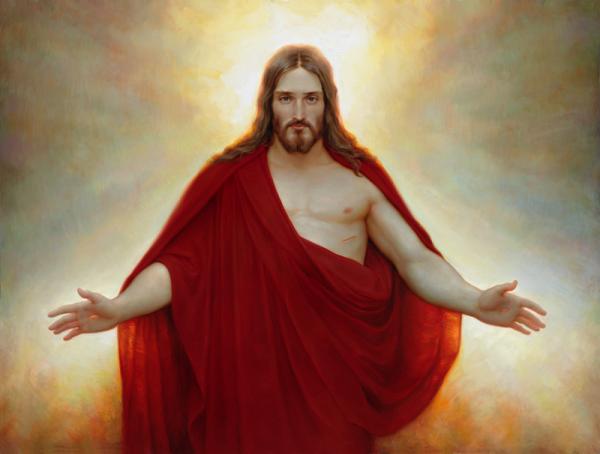
(Brian Oblivion) From Minute 38 on comes the interesting part. This British Broadcasting Corporation (BBC 4) documentary examines the question "Did Jesus Die?"
It looks at various ideas around this question until Minute 25, where this examination of ideas takes a very logical and grounded turn with surprising conclusions that demonstrate:
The "Three Wise Men" were Tibetan Buddhist monks who (were in search of a tulku) found Jesus and came back for him about the time of puberty.
After being trained in a Buddhist monastery [Hemis Gompa, Ladakh] he spread the Buddhist philosophy, survived Jewish persecution in Palestine and crucifixion in the Roman Empire (Israel), and escaped to Kashmir, Afghanistan.
This part of Kashmir is near the birthplace of the Buddha, known as ancient Gandhara in Central Asia, with its capital now in Pakistan (after the 1947 Partition of India).
There he died an old man at the age of 80 [and his corpse was entombed in the Jewish-style with its distinct orientation with Buddhist-style footprints marking his burial site.
That grave is now covered by an Islamic grave it of another person, making excavation difficult without stirring up a great deal of trouble.
See the scholarship of Holger Kersten and Nicolas Notovitch for the details and written evidence.
BBC 4 documentary via Brian Oblivion (YouTube, 12/19/11); Pfc. Sandoval, Dhr. Seven, Pat Macpherson (eds.), Wisdom Quarterly
What does Sounds True One think I can learn for Inner Wisdom? And who would teach me but me?
Life is unpredictable, but our path to fulfillment doesn’t have to be. Sounds True has worked with some of the leading wisdom teachers of our time to craft a journey of transformational programming to stay centered, listen to our inner voice, and awaken our full potential. Activate this inner wisdom with Sounds True this year.
All materials on this site are submitted by editors and readers. All images, unless otherwise noted, were taken from the Internet and are assumed to be in the public domain.
In the event that there is still a problem, issue, or error with copyrighted material, the break of the copyright is unintentional and noncommercial, and the material will be removed immediately upon presented proof.
Contact us by submitting a comment marked "private."
Do not follow this journal if you are under vinaya or parental restrictions. Secure protection by Sucuri.
Wisdom Quarterly: American Buddhist Journal is licensed under a Creative Commons Attribution-Noncommercial-Share Alike 3.0 United States License. Permissions beyond the scope of this license may be available at creativecommons.org/about/licenses.