Japanese Zen Buddhist priest Ikkyū (一休宗純, Ikkyū Sōjun) was an iconoclast with an "enlightenment certificate" (inkajo). He was born in 1394 and died in 1481. He was an eccentric, iconoclastic, "crazy wisdom" Japanese Zen Buddhist monk, poet, musician, alcoholic, and womanizer.
He had an impact on the infusion of Japanese art and literature with Zen attitudes and ideals [1]. He is perhaps best known for his radical approach to Zen, which included breaking Buddhist monastic precepts and his stance against celibacy [2, Note 1].
In 1394, Ikkyū was born in a small suburb of Kyoto, Japan. It is generally held that he was the illegitimate child of Emperor Go-Komatsu and a low-ranking court noblewoman [1]. His mother was forced to flee to Saga, where Ikkyū was raised by servants.
At the age of 5, Ikkyū was separated from his mother and placed in a Rinzai Zen temple in Kyoto, Japan called Ankoku-ji, as an acolyte [1, 5].
The temple masters taught Chinese culture and language as part of the curriculum, a method termed Gozan Zen. He was given the name "Shuken" and learned about Chinese poetry, art, and literature. More
When Everything Falls Apart – Seeing clearly through Buddhist wisdom on suffering
Drone filming off the pier
(Buddhism Podcast)
Sept. 23, 2025: Buddhism Explained.
What do we do when everything falls apart? This Buddhist podcast explores suffering (unsatisfactoriness, not being able to derive fulfillment from anything), radical impermanence, and healing through simple, clear insights from the Buddha's teachings. No fluff, no escape — just honest reflection, grounded wisdom, and gentle English for all listeners.
00:00 - When life breaks in our hands
03:25 - The First Truth: Suffering that arises from within
06:50 - Impermanence: the nature of everything
10:03 - Clear Seeing: a mind that no longer clings
The historical Buddha's goal was clearly seeing nirvana in this very life. Theravada follows this.
.
Buddhism goes beyond mind to mysticism.
Vipassanā (Sanskrit vipaśyanā विपश्यना, Sinhalese විදර්ශනා) literally means "special, super (vi-), seeing (-passanā)" [3] and is generally referred to as "insight."
Samatha means "calm" [1], "serenity" [2], "tranquility of awareness" [Web 1]. They are two qualities of mind cultivated in tandem in Buddhist practice, with profound calm coupled with mindfulness (dispassionate awareness) serving as the basis for insight knowledges.
In the Pāli language canon and the Āgama, these qualities are not specific practices but elements of "a single path." They are "fulfilled" with the development (bhāvanā, "cultivation") of mindfulness (sati) and meditation (jhānas, lit. the meditative "absorptions") and other path-factors [4][5].
While absorption (jhāna) has a central role in the Buddhist path, vipassanā is rarely mentioned separately. It is usually described along with samatha [4][5] because they are steps towards one goal: liberating wisdom (panna, Sanskrit prajna). More: samatha-vipassanā
Buddha's Brain: The Practical Neuroscience of Happiness, Love & Wisdom is an Audible audiobook (unabridged) by Dr. Rick Hanson, PhD. He is the author and narrator and has 4.7 out of 5 stars with 1,984 ratings.
Change your brain, change your life with this essential classic from New York Times bestselling author Dr. Hanson—now celebrating 15 years in print with more than 500,000 copies sold.
Great teachers like the Buddha, Jesus, Moses, Mohammed, and Gandhi were all born with brains built essentially like anyone else’s—and then they changed their brains in ways that changed the world.
Neuroscience now reveals how the flow of thoughts actually sculpts the brain. More and more, we are learning that it’s possible to strengthen positive brain states. By combining breakthroughs in science with insights from thousands of years of mindfulness (sati) practice, we too can shape our own “Buddha’s Brain” for greater happiness, love, and wisdom.
Buddha’s Brain draws on evidence-based neuroscience to show how to stimulate our brain for more fulfilling relationships, a deeper spiritual life, and a greater sense of inner confidence and self-worth.
Using guided meditations and mindfulness exercises, readers learn how to activate the brain states of calm, joy, and compassion instead of worry, sorrow, and anger. Most importantly, they will foster positive psychological growth that will literally change the way we live our day-to-day life.
This book provides an essential intersection of psychology, neurology, and contemplative practice, and is filled with practical tools and skills that anyone can use every day to tap into the unused potential of the brain and rewire it over time for greater well-being.
PLEASE NOTE: Purchase of this title is accompanied by a PDF in the Audible Library along with the audio. More: Buddha's Brain: The Practical Neuroscience of Happiness, Love & Wisdomby Dr. Rick Hanson, PhD, and Daniel J. Siegel, MD, with foreword by Dr. Richard Mendius, MD and contributor Jack Kornfield for preface (Brilliance Audio)
Pope Joan: The first female pope the Vatican tried to erase from history
(PairUp) Pope Joan was a woman believed to have taken over the patriarchal Catholic Church who sat on the papal throne in history.
His story is a predictable thing: Her existence and story have been subjected to many debates for centuries. One of these debates is the claim that the Vatican tried to hide Pope Joan's true existence and gender.
This video provides detailed information about Pope Joan's real story and the alleged efforts by the Vatican to conceal her true existence. Also discussed are evidence and sources regarding Pope Joan's existence.
The story of Pope Joan is an important topic of discussion when it comes to the role of females in history and in the Holy Roman Empire's Catholic ("Universal") Church's history. Let's look at Pope Joan's story and her historical significance.
At Sunday Sangha last week (July 2018) we got into a discussion about the fact that of course we “cling” to our loved ones (spouses, children, parents, friends).
Then Brian mentioned that at a recent retreat, American Theravada monk Bhikkhu Bodhi pointed out that while many of the Buddha’s teachings were given to monastics, many [possibly most] of them were not. They were given to “regular people,” who were married and had children, and so on.
It’s important to know who the Buddha was talking to when we try to understand these teachings. This brought to mind a sutra wherein the Buddha tells Nakula-pita and his wife Nakula-mata how they could remain together and in love with each other as long as they lived and on into future lives as well!
“This discourse also shows that far from demanding that his lay disciples spurn the desires of the world, the Buddha was ready to show those still under the sway of worldly desire how to obtain the objects of their desire. The one requirement he laid down was that the fulfillment of desire be regulated by ethical principles” (Bhikkhu Bodhi’s In the Buddha’s Words). Here’s what it says in the text:
(AN 4:55) One morning the Blessed One (the Buddha) dressed, took his upper robe and bowl, and went to the household of Nakulapita. Having arrived, he sat down on the seat specially prepared for him.
Then the householders, husband and wife Nakulapita and Nakulamata, approached him and, after paying homage, sat respectfully to one side. So seated, the householder Nakulapita said to the Blessed One:
“Venerable sir, ever since the young housewife Nakulamata was brought home to me [for an arranged marriage], when I was young, I am unaware of having wronged her even in my thoughts, still less in my deeds. Our wish is to be in one another’s sight so long as this life lasts and in the future life as well.
“Then Nakulamata the housewife addressed the Blessed One: 'Venerable sir, ever since I was taken to the home of my young husband Nakulapita, when I was a young girl, I am unaware of having wronged him even in my thoughts, still less in my deeds.
Householder stream enterers are well on The Way
“Our wish is to be in one another’s sight so long as this life lasts and in the future as well.
“Then the Blessed One said: 'If, householders, both wife and husband wish to be in one another’s sights so long as this life lasts and in the future as well, they should have:
the same faith (saddha, confidence) [in this case having toether entered the first stage of enlightenment],
the same moral discipline (sila),
the same generosity (dana),
the same wisdom (panna).
“Then they will be in one another’s sight so long as this life lasts and in the future life as well” (AN 4:55).
Leonardo DaVinci was really drawing a brain he saw in secret autopsies? Reason touches Man?
Get out of here, Wisdom Seekers! This garden is a place for dummies who obey! Get lost!
Yahweh (YHWH, Jehovah) and the Three-Dimensional Prison: The DARK Gnostic Connection
(Esoteric Guardian) What if the reality we know is nothing more than a carefully constructed illusion, a three-dimensional (3D) prison designed by unseen, powerful forces?
This video goes deep into ancient Gnostic teachings, revealing how the divine and the dark might be intertwined in a cosmic plot that has remained hidden for centuries.
16:41 - Escaping the Demiurge's dominion in the modern world
18:58 - Conclusion
I've been eagerly awaiting your arrival.
Are seekers ready to challenge everything we thought we understood about the universe and explore a truth that could shatter this past perception of reality?
Researched, written, edited, and produced by the @esotericguardian team.
Music produced by @esotericguardian (copyright control).
The team is truly grateful to have viewers here with us. Their support means a lot to us and helps us continue creating valuable content. If anyone enjoys these videos, we would greatly appreciate it if activation of the notification bell, subscribing, liking, and sharing the content. To subscribe @EsotericGuardian. Thanks very much. 🙏
Codex Gigas, the Devil's Bible, medieval demons, demon summoning, esoteric knowledge, occult history, medieval manuscripts, dark rituals, ancient magic, esoteric traditions, occult secrets, demonic illustrations, mystical texts, ancient wisdom, biblical texts, legendary pact with the devil, mystical practices, ritual magic, dark history, occult studies, ancient manuscripts, medieval occultism, spiritual mysteries, hidden knowledge, esoteric practices, supernatural rituals, Gnosticism, demonology, occult, Archons, Aeons, cabal, Illuminati, one world government, government power, banks, corporations, global control, NASA, manipulation, wars, financial crises, David Icke, reptilian, shapeshifters, disguise
Esoteric Guardian, Aug. 30, 2024; Sheldon S., Pat Macpherson, Dhr. Seven (eds.), Wisdom Quarterly
King of One-Liners | Andy Huggins | Stand Up Comedy
(Don't Tell Comedy) July 31, 2024: Comedian Andy Huggins shares his hilarious take on everything from one-night stands to finding his spirit animal in his Don't Tell Comedy set!
Comedy is at its best when there's a surprise. That's why Don't Tell Comedy puts on events where the performers and location are kept secret until the day of the show. With over 150 cities already in on the joke, no one ever knows where it'll be set up or who might pop in. Want to be let in on the secret? Visit website below to find a nearby upcoming show: donttellcomedy.com. Just don't tell anyone!! 🤫
ABOUT: Andy Huggins has appeared on America's Got Talent and has opened for acts ranging from Ray Charles to Jeff Foxworthy.
Instagram: andyhugginscomedy
TikTok: andyhugginscomedy
Soap is a joke! Major shoutout to Dr. Squatch for making this stand-up series possible. Upgrade personal care with 15% off order of 50+ with code DTC15
Credits:
Written and performed by Andy Huggins. Executive Producers: Kyle Kazanjian-Amory & Brett Kushner. VP of Production: Marissa Gallant. Live Events Manager: Drew Platt
Director: Gordie Earle III
Director of Photography: Mark Davis
Gaffer: Michael Tellup
Swing: Dallas Calkins
Camera Operators:
Amelia Asilis
Lauren Doyle
Tanner Eck
Adrian Gutierrez
Rob Knauf
1st AC: Sophie Donatella
Editor: Jordan Tetewsky
Color Correction: Mark Davis
Sound Recordist: Alex Gilroy
Re-Record Mixer: Ryan Meadows
Production Designer: Andy Aidekman
Set Decorator: Nate Larson
Graphics: Megan Hunter
Production Assistants:
Lukas Day
Jonathan Garcia
Z Gregorio
Aine Hunt
Mary Puglisi
Photographer: Matt Misisco (IG: @mattmisiscostudios)
Special thanks to our generous hosts, FemX Quarters in San Diego, CA
[Crazy] Milarepa: The mass murderer who became enlightened in Tibetan Buddhism
(Asangoham) July 27, 2024: Milarepa, the Lord of Yogis, is today recognized as one of Tibet’s great masters and an accomplished meditation teacher and practitioner, admired for his tenacity, courage, and discipline. [This is odd given his crimes, which no one disputes, like those of reformed Angulimala.]
He is celebrated as “the most renowned figure in Tibetan culture, the
quintessential Tibetan folk hero.”
However, his life began with considerable hardship. Like this metaphor, his path was a journey of facing and integrating his own demons, transitioning from confusion to awakening.
Initially caught in samsara, the cycle of mundane existence, like we are, he committed to the practice of the Dharma, the way of wisdom.
His story is not that of a saint; on the contrary, it is a deeply human story. It shows us that even a great master has to deal with immense challenges such as loss and revenge.
"Every saint has a past,
every sinner a future."
It narrates the transition from a murderer to one of Tibet’s most famous yogis.
Today's video is about the extraordinary life and teachings of Jetsun Milarepa, Tibet's most revered yogi and poet.
This inspiring story explores the remarkable life of Milarepa, from his tumultuous childhood to his attainment of enlightenment through intense meditation and devotion.
Learn about Milarepa's profound teachings on the nature of reality, the importance of compassion, and the path to achieving spiritual liberation. Delve into his remarkable songs of realization, which have inspired generations of Tibetan Buddhist practitioners.
This video is a must-watch for anyone interested in Tibetan Buddhism, yoga, and Himalayan spirituality. Whether one is a seasoned practitioner or just starting a spiritual journey, Milarepa's life and teachings offer valuable insight and inspiration for living a more meaningful and fulfilling life.
As a young American Buddhist, not knowing that there was more than one Buddhism, I would a converted church building near the Sino-American Center on 6th Street near Chinatown in Downtown LA. It was a Chinese Mahayana church/temple run by nuns, but I didn't know. There were Japanese Soto Zen temples nearby. (This way the state of Buddhism back the Eighties). It was as creepy as a Catholic mass, but nicer things were being said. Eventually, I attended similar services in Maywood (a tiny city in LA County) which bought land and built the massive Hacienda Heights temple (arcgis.com). Through years of struggle, one temple morphed into the other as Maywood realized its dream of building Hsi Lai Temple ("Going West" Monastery and Nunnery). Back in those early days, there was a great master (Ven. Hsing Yun) of which they spoke. He was in Taiwan, touring the world, or at Master Hsuan Hua's City of Ten Thousand Buddhas, which kindly donated some of its rural land for the setting up of a Thai Theravada Buddhist Abbey (wat or vihara) called Abhayagiri Buddhist Monasteryin Redwood Valley, where Americans train to be monks in the Thai Forest Tradition of Ajahn Chah and other Buddhist meditation masters. In one such Buddhist service, I remember a Chinese nun presenting what might have been her thesis or research as a nun. It was a pamphlet all about Milarepa's crimes, showing that he could not have been a Buddhist monk or anyone to look up to given his biography. (This means his misdeeds after ordination disqualified him and meant he was not attained to sainthood/enlightenment, regardless of his popularity among average Tibetans). But that's mainstream Mahayana thinking (which was in line with Theravada monasticism), and Milarepa belongs to Bon-heavy Esoteric Himalayan Buddhism from Tibet, which is a school known as Vajrayana. It aligns itself with the massive Mahayana Buddhist school, but it is distinct in many ways. The indigenous Bon tradition is all about black magic, shamanism, necromancy, and vengeance.
DISCLAIMER 1: All ideas expressed on this channel are for entertainment and general information purposes only. There is no advice on what an individual should or should not do. Any response made by anyone after hearing this communication is their interpretation and is their responsibility. Ideas expressed by this channel should not be treated as a substitute for medical advice or professional help. If expert assistance or counselling is needed, the services of a competent professional should be sought.
Before the arrival of Buddhism to the rooftop of the world, the empire (the massive extent of lands that now cover 25% of China) practiced Bon or witchcraft and indigenous shamanism, as so many countries did before the arrival of a missionary religion. Like every other country in history, the missionary religion did not really replace the traditional "pagan" beliefs and practices but merely augmented, blended, or covered for them with a new name. Every place has its own ghosts, demons, gods, and fantastical (shapeshifting) creatures, and they need to be dealt with. This is how early practices form and take root.
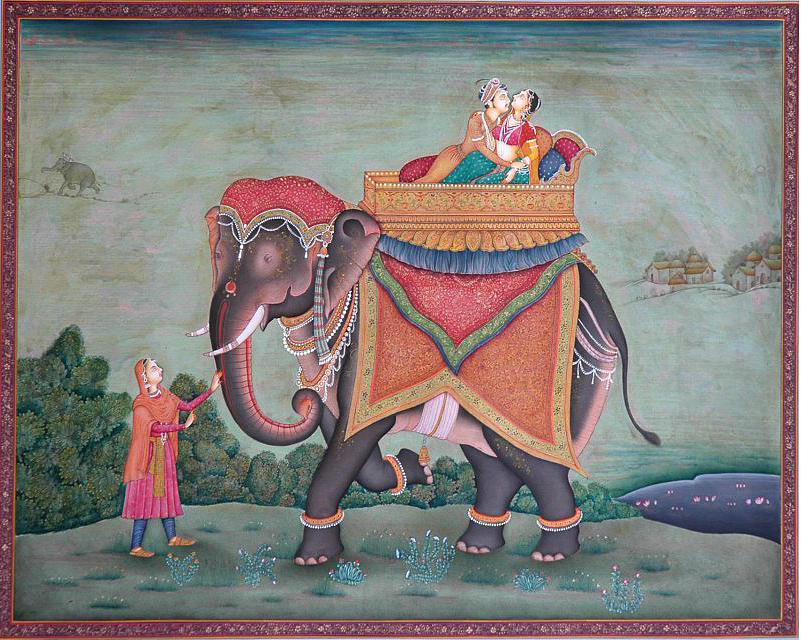
Waiting, making out with boys not OK?
They are not easily brushed aside even by the introduction of a more powerful or systematic set of practices. The hodgepodge of shamanism, magic, black magic, exorcisms, curses, clearings, and more are too appealing to be easily let go of. So we find with Tibetan religion. It is not pure Vajrayana (itself a mishmash of Hinduism, yoga, Brahmanism, and Mahayana Buddhism) but rather a blend of old discarded practices and new practices that serve to reinterpret the old ways. How Tibetans got through the bitter cold winters, the wilderness hauntings, the appearance of ETs or unseen beings and monsters (pretas, rakshasas, asuras, kumbhandas, suparnas, nagas, spirits, etc.) only the shamans know. Therefore, when one hears of odd or aberrant beliefs in modern Tibet, one should not dismiss the ongoing influence of Bon (just as modern Japan, thought to be all Buddhist, is in fact very much influenced by Shinto and the kami they specialize in dealing with).
The Bizarre Life of an [un-]Enlightened Person [who thinks himself enlightened]
You taste so good, Boy. Suck me, my tongue.
(Asangoham) #dalailama #enlightenment. If there were anyone who knew how to cultivate compassion, it was Milarepa.
Milarepa was an "enlightened" Tibetan spiritual master full of "crazy wisdom." He was born in 1452 and is considered one of the greatest Tibetan [Bon and] Buddhist masters who ever lived.
During his lifetime, Milarepa was a murderer who established the lineage of the Kagyu sect; however, he is very highly venerated to this day by all schools of Tibetan Buddhism, a unique form of Himalayan Vajrayana emulated by Nepalese, Bhutanese, Northern Indian, Mongolian, and Russian Esoteric Buddhist schools.
Sorry, but Pope do the same, yes?
Today as we go through this school of life, we shall try to understand how an "enlightened" person lives. In our pursuit of wonder, we shall borrow knowledge from the following traditions: Buddhism (Tibetan and Zen), Advaita Vedanta (non-dualism derived from the ancient Vedas), Taoism (yin-yang rooted in the teachings of Lao Tzu), Confucianism (Chinese etiquette), and other schools of philosophy.
In the West, the intuition of "emptiness" (the impersonal nature of all phenomena, often misunderstood and poorly expressed in Western philosophy as nihilism) is conceived as lack.
This inherent sense of lack, according to the scholar David R. Loy, is seen as needing to be overcome or obsessively filled. This explains the West's hyper-consumerism, narcissism, and obsession with things and status.
We obsessively spend our days in the desperate attempt to fill the "void" with consumer goods to appease the emptiness intuited at the center of our existence.
The East (even though it is becoming more and more Westernized) has traditionally seen "emptiness" (shunyata) not as lack, but as pure potential.
That is to say, emptiness is seen as pure allowing. Out of nothing can spring anything, as everything comes from nothing. Think of a blank or empty canvas.
It is that which allows anything at all to exist.
Emptiness is seen as the generative ground from which anything at all can arise. Consider the vast emptiness that was the universe prior to the imaginary Big Bang of yet another maha-kalpa-long cycle of world expansion and contraction.
#enlightenment #buddhism #confucius #dalailama #zen
Thumbnail: Mark Bryan
Script: Matt Mackane
Voiceover: Surjit Singh
Music: Motion array
DISCLAIMER 01: All ideas expressed on this channel are for entertainment and general information purposes only. There is no advice on what an individual should or should not do. Any response made by anyone after hearing this communication is their interpretation and is their responsibility. Ideas expressed by this channel should not be treated as a substitute for medical advice or professional help. If expert assistance or counselling is needed, the services of a competent professional should be sought.
All materials on this site are submitted by editors and readers. All images, unless otherwise noted, were taken from the Internet and are assumed to be in the public domain.
In the event that there is still a problem, issue, or error with copyrighted material, the break of the copyright is unintentional and noncommercial, and the material will be removed immediately upon presented proof.
Contact us by submitting a comment marked "private."
Do not follow this journal if you are under vinaya or parental restrictions. Secure protection by Sucuri.
Wisdom Quarterly: American Buddhist Journal is licensed under a Creative Commons Attribution-Noncommercial-Share Alike 3.0 United States License. Permissions beyond the scope of this license may be available at creativecommons.org/about/licenses.