Showing posts with label non attachment. Show all posts

Friday, October 18, 2024

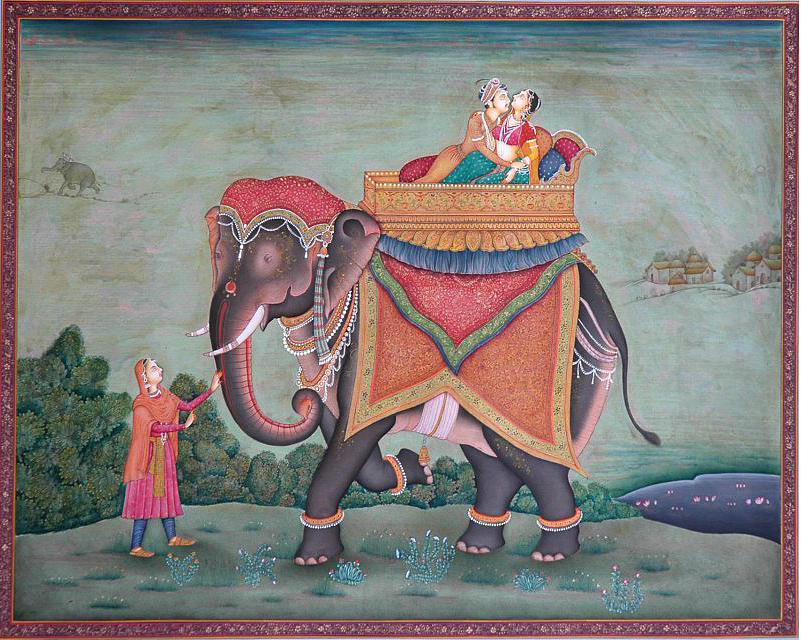
Primordial love/sex drive (Helen Fisher)


There are many kinds of attachment (upadana). The pursuit and clinging to sensual pleasures is very strong (although the strongest is probably attachment to views). It can be as strong as thirst (tanha). It serves a function, not for us who suffer it so much as the species or genes that perpetuate themselves into the future. (See The Selfish Gene on the scientific view of the impersonal nature of biology).

Love (the affection for clinging) is a drive, sex (the affection for pleasure) is a drive, and they are very powerful. What hope is there to overcome or undo them should they start to spread all out of control like fire and ruin our lives, bringing waves of torment and suffering? Things are all well and good when they are working out, but when they are not?

When things sour, then what? These are not conscious processes we have very much insight on. We live on autopilot, and they "happen" to us. Maybe that's okay for most people. But for those who would be free and make an end of all suffering in this very life?

Monday, September 30, 2024

Happily Ever After into the afterlife (sutra)

American scholar-monk Bhikkhu Bodhi

Happily ever after, and even after that!
At Sunday Sangha last week (July 2018) we got into a discussion about the fact that of course we “cling” to our loved ones (spouses, children, parents, friends).

Then Brian mentioned that at a recent retreat, American Theravada monk Bhikkhu Bodhi pointed out that while many of the Buddha’s teachings were given to monastics, many [possibly most] of them were not. They were given to “regular people,” who were married and had children, and so on.

It’s important to know who the Buddha was talking to when we try to understand these teachings. This brought to mind a sutra wherein the Buddha tells Nakula-pita and his wife Nakula-mata how they could remain together and in love with each other as long as they lived and on into future lives as well!

“This discourse also shows that far from demanding that his lay disciples spurn the desires of the world, the Buddha was ready to show those still under the sway of worldly desire how to obtain the objects of their desire. The one requirement he laid down was that the fulfillment of desire be regulated by ethical principles” (Bhikkhu Bodhi’s In the Buddha’s Words). Here’s what it says in the text:

SUTRA: "To Nakula's Father"

(AN 4:55) One morning the Blessed One (the Buddha) dressed, took his upper robe and bowl, and went to the household of Nakulapita. Having arrived, he sat down on the seat specially prepared for him.

Then the householders, husband and wife Nakulapita and Nakulamata, approached him and, after paying homage, sat respectfully to one side. So seated, the householder Nakulapita said to the Blessed One:

“Venerable sir, ever since the young housewife Nakulamata was brought home to me [for an arranged marriage], when I was young, I am unaware of having wronged her even in my thoughts, still less in my deeds. Our wish is to be in one another’s sight so long as this life lasts and in the future life as well.

“Then Nakulamata the housewife addressed the Blessed One: 'Venerable sir, ever since I was taken to the home of my young husband Nakulapita, when I was a young girl, I am unaware of having wronged him even in my thoughts, still less in my deeds.

Householder stream enterers are well on The Way
“Our wish is to be in one another’s sight so long as this life lasts and in the future as well.

“Then the Blessed One said: 'If, householders, both wife and husband wish to be in one another’s sights so long as this life lasts and in the future as well, they should have:
  • the same faith (saddha, confidence) [in this case having toether entered the first stage of enlightenment],
  • the same moral discipline (sila),
  • the same generosity (dana),
  • the same wisdom (panna).
“Then they will be in one another’s sight so long as this life lasts and in the future life as well” (AN 4:55).


Saturday, November 5, 2022

Purification by celery juice (video)


Not all good leads to the greatest good.
The Buddha was very clear on this point. There's a defect in our unenlightened mind, numerous defects to straighten out, but one in particular is attachment to rites and rituals as if they could awaken us. For example, we may think bowing in front of a particular statue, or fasting, or eating a particular food, or abstaining from a particular thing will do the trick. It won't (as it won't get to the root of why we're swimming in passion, aversion, fear, and delusion). What does get at the root? This Ennobling Eightfold Path, because "noble" (arya) means enlightened.

It's the Way, the Path, and in particular there are 37 Requisites of Enlightenment and Seven Factors of Enlightenment to focus on. But that not to say that we can't purify our bodies by pure diet and fasting, exercise (like yoga or breathwork), and mellowing the mind and emotions by thinking differently or relaxing. It's just that these mundane things should never be confused with what is path and not-path.

I'd like a clean liver, a clean conscience, a clean colon, clear skin, and a flexible back. Is it possible? Yes. Let's start with the liver.

Drinking celery juice in the morning for one year changed my life
(Mary Allyson) As someone who's been drinking celery juice for the long-term (not just 7-30 days like everyone else), I want to share my celery juice experience. I drank celery juice in the morning for an entire year, and I actually still drink it! I don't drink it as often as I used to, but it's definitely still part of my routine because it helped me with my acid reflux problems, which is just one of the amazing celery juice benefits I found. All in all, I've had a very positive experience with celery juice and would recommend trying it.

Thursday, September 8, 2022

Sex and spirituality with Eckhart Tolle (video)


The Role of Sex in Consciousness | Eckhart Tolle
(Eckhart Tolle) April 19, 2022. Eckhart Tolle provides guidance in meeting impulses in awareness, whether they are related to sexual activities or any other things that we can identify as addictions.

Tuesday, August 2, 2022

Woman dies and sees past lives (NDE)


Woman crosses over, sees her past lives during NDE (near-death experience)
(The Other Side NDE, May 16, 2022) As a medium and channeler, Ginette Biro thought she understood the spirit world. But her NDE showed her the pure joy, love, and family that exists on the other side.

Avalon to Aurora: Lessons from the Other Side
She shares her work through her website (Avalon Spirit at avalonspirit.com) and her YouTube channel where she helps people grow their intuitive skills and expand their consciousness.


Ginette Biro was given the choice to stay on the other side or return to this world. She changed her life blueprint to return and share both the wonder of the other side and the incredible opportunity we have as human beings to learn and grow on earth.

⭐ Ginette Biro shares her work through Avalon Spirit ▶️ avalonspirit.com 🔴 Check out her YouTube Channel: youtube.com/channel/UC0W...

For more NDE (Near Death Experience) accounts be sure to watch more of these videos. ► bit.ly/theothersideYT #nde #neardeathexperience #neardeathexperiences
▬▬▬▬▬▬▬▬▬▬
🎵 BACKGROUND MUSIC licensed through AudioJungle and Epidemic Sound 🎥FOOTAGE licensed through VideoBlocks and Filmpac, except parts about the topic that have been used under fair use.
▬▬▬▬▬▬▬▬▬▬
DISCLAIMER: This video is taken from an interview by this channel and not taken from another channel. It is all original content.

Thursday, February 20, 2020

Lust to love, it was the last thing... (video)

GoGosUnsealed; Ashley Well, CC Liu, Seth Auberon, Ellie Askew, Wisdom Quarterly
C'mon, let's just do it, Baby. - You don't even love me! You don't even care. - Not this again.

(GoGosUnsealed) The Go-Go's "Lust to Love" (from Beauty & the Beat, by C. Caffey/J. Wiedlin).

It hurt my heart in this area around here.
I used to believe in romantic love. Then came you. Are you happy? Of course you're not! Am I? No, me neither. That's the way it is with selfish love. Ask Nazareth. But just as there is metta (altruistic loving-friendliness), there must be love tainted with craving (sensual desire).

It's nobody's fault. Things are just the way they are.
On account of persistent craving, there's grasping, and repeatedly grasping is clinging. Because things are impermanent, always fickle and changeable, what we cling to will result in our suffering. When?

When we meet with alteration. And that's very soon. Why? It's because we want for things to be otherwise. We will not see what is, accept what is, or deal with what is. If we did we'd move toward the end of suffering or what Buddhism calls the cool bliss of nirvana.

But who cares? I'm hot right now. I love you, and I want you! And more than anything I want for you, and me, and this emotion, and this situation never to change. Will I get my wish? Not a chance.

Why? Why does it have to be this way? Why!
LYRICS: "It used to be fun was in, the catch and release capture and kill. In another place and time, I did it all for thrills. Love me, and I'll leave you. I told you at the start. I had no idea that you would tear my world apart. And you're the one to blame. I used to know my name. But I've lost control of the game because, even though I set the rules, you've got me acting like a fool. When I see you I lose my cool. Lust to love was the last thing I was dreaming of. And now all I want is just to love. Lust turned to love. That was when the fun was in, the capture and the..." Ouch.
  • Get a job. Work for the census (2020census.gov)
  • Are you a HENRY ("High Earner Not Rich Yet")?

Monday, February 3, 2020

Burma's Good Deed Movement in LA (audio)

Thabarwa Sayadaw (Ashin Ottamathara), Joah McGee, Zach Hessler (insightmyanmar.captivate.fm, Episode 2, player.captivate.fm, 1/31/20); TEXT: Sayalay Aloka, Dhr. Seven (eds.), Wisdom Quarterly
This first Insight Myanmar interview is an autobiography of a famous living monk, a Burmese-Chinese Sayadaw. The text is a sample of his teaching, a transcript of a live Q&A session from L.A.
Wait, was is he saying? Is he speaking?
QUESTION: So nothing exists?

ANSWER (Thabarwa Sayadaw): No, no, no, not nothing. We can use the eyes, the ears, the nose, the tongue, the body, the mind. We can use the scene, the sound, the smell, the taste of the food. We can touch hardness, softness, cold, hot. We can also use politics, economics, education.
.
Insight Myanmar (podcasts starting 2020)
The real problem is concerned with the mind not with this or that life, this or that person, black or white, male or female, young or old, educated or uneducated, rich or poor, Christian, Buddhist, or Muslim. All of these are unreal problems.

All of these are not real, not true. Accepting this is the practice of detachment. If we cannot accept this, we are using [impersonal things] with attachment.

Jason: What Sayadaw means is just like he said.
As a human being, I was taught that human beings are more intelligent than other animals, that the knowledge of human beings is right, and that we should rely on the knowledge or intelligence of human beings over the other animals.

This is what I was taught since I was young. This theory is incomplete.

Most human beings are using this theory. Humans are intelligent. That’s why we rely on scientists or doctors or politicians. This theory and practice is incomplete. The intelligence of the living beings is just a creation, not real. We all are using created intelligence, created life, created mind. We are living in the created world.

But what's he saying? Is it Maha-Thera-yana?
That’s why people in society are busy creating new products, new technology, and preserving the old products, buildings, and technology. That’s why we are all tired.

We are feeling stress and disappointment (dukkha), doubt and confusion and not knowing what is right or what is wrong (avijja).

We can be rich, we can be educated, we can be well-known throughout the world, we can have a long life, but the mind will still remain unstable and impure [and therefore unhappy].

The mind will not be healthy or wealthy even if we are rich, educated, or well-known, because we are using ignorance and attachment [clinging] in the mind.

Ignorance is wrong view, misunderstanding. Attachment is when we don’t want to let go of the idea of something or someone [given that things are empty, shunyata, and therefore impersonal, anatta], mine or yours. That is attachment. Do you agree with this theory?
Tharbarwa Centre is nothing and everything.
THABARWA SAYADAW has had a meteoric rise in Burma (Myanmar). After weathering a series of crises that threatened the very existence of his urban meditation center, Rangoon, the Burmese monastic’s mission is now expanding at an unprecedented rate across the country and the world. Then there is his monastic center itself, which is redefining the role of monasticism and the shape of Burmese Buddhism in the 21st century. In this inaugural interview, Thabarwa Sayadaw (a title meaning "Teacher at the Nature Center") shares autobiographical details of his journey from layperson to monastic, as well as the early start of his first meditation centers. He began the same sort of center in Baldwin Park, L.A.

Wednesday, February 27, 2019

How to release spirit attachments (audio)

Brett Farrell (coasttocoast); Pat Macpherson, Dhr. Seven, Wisdom Quarterly

Weighed down by spirit attachments
Nonreligious therapist and "spirit release worker" Brett Farrell appeared on Coast to Coast on Monday, Feb. 25, 2019. He has been working shamanically with the possessed in Australia for over ten years to help them overcome mental illnesses, traumas, addictions, and many other problems.

Behind the world we know through our five senses, there exists a spirit world peopled with non-physical entities. Maybe we can't see them, feel them, or hear them, but sometimes non-physical entities can negatively influence our mental equilibrium and eventually we might start to think that's just the sort of person we are.

Here's a short list of possible symptoms of spiritual attachment:
  • Do you feel as if something is holding you back, sapping your confidence?
  • Is your child's behavior suddenly so bad or bizarre that you feel you have lost your child, that your child is no longer there, that something else has taken over?
  • Is there a part of you that talks you out of doing the things you really want to do?
  • Is there a voice in your head telling you that you are a no good failure?
  • Have you not been the same since an accident, hospitalization, or emotional upset so that you are unable to get going and enjoy life like you used to?
  • Do you suddenly and uncharacteristically feel drawn to alcohol or drugs?
  • Do you get angry in a way you never used to?
  • Do you feel something comes to you at night in bed?
  • Do you have recurring dreams about a dark entity?
  • Has one of your children become uncontrollable or terrified of going to bed or going to school?
  • Dark spirit attachment can be responsible for all of the above symptoms and many more.
The Road Home (Brett Farrell)
Sometimes we know what the problem is. For instance, if we move into a new house and our 5-year-old is suddenly terrified to sleep alone, says there is someone in her/his room, or starts behaving badly.

In that case it's almost certain there is an entity in the house. Children can often see spirits that adults cannot.

He identified "spirit attachments" as powerful forces dominating people's lives and has developed techniques for clearing and removing these harmful entities.

There are a number of entity types, including:
  • spirits of the deceased
  • dark-demonic beings
  • thought-forms conjured up by the negative focus of the living.
Farrell says he can even track these invisible spirit attachments back to their sources. The dark-demonic entities, he explains, are generally part of a hierarchy, and the oldest ones tend to be at the top and can be enormous.

In the case of one lesser dark attachment, he followed its trail back to a huge mountain-sized being. "I actually stood on his chest to talk to him," Farrell said of his encounter with it in the astral realm.

He details how he disposed of that entity by spreading his energy form -- a net of light -- around him then squeezed him down to a ball. He encased it in a steel container then dropped it into the deep "sea of forgetfulness."

Entities are around us all of the time. People need to be aware of them, he cautions. Children are particularly sensitive to their presence. More + AUDIO

Monday, December 3, 2018

What is "Happiness"? (Dukkha Girl, Pt. 1)

Ellie Askew, Aloka (Thabarwa Center), Dhr Seven, Ashley Wells (eds.), Wisdom Quarterly
Perplexity used to be but now it's Ellie Askew, Wisdom Quarterly's very own Dukkha Girl

Someone asked me about my vision of happiness. Here is what I explained from the perspective of a Buddhist nun:

Real happiness exists in minds free of liking, disliking, and delusion. This special kind of mind appears when one is able to do what is good and beneficial and when one’s life is useful to others. 

This is not the happiness we normally pursue. Usually we seek our happiness from sense pleasure coming through our senses -- eye, ear, nose, tongue, and body. When sense organs come into contact with pleasant sights, sounds, fragrances, flavors, or touch sensations, this contact brings pleasant feelings to mind.

We are left with the impression that life is for getting pleasant feelings and the pleasure derived from them. It is a "reasonable" conclusion given that the nature of pleasure is that it feels "good."

We are left to conclude that if our senses are pleasing us, we are being successful. The more continuous our experience of pleasant sensations, the more we think we have been successful in our endeavor at "acquiring" happiness.

I can "meditate" it all away.
Actually our mind wants something more. We don’t know exactly what or where to find it, so we travel to see beautiful sights, eat to find pleasing flavors, and so on. This is all for sense pleasure, which only lasts as long as the contact does, so we have to search for and seize it again and again.

We end up spending our lives in this exhausting pursuit, usually fighting others for limited resources. We have to find a way to earn an income to buy activities and pleasures. We must often endure much hardship for this, and we are led to think it’s what we should do.

Even the happiness we get using time with our family and friends is pleasure by way of the senses. These things seem to be what life is for, because they feel good and bring us some satisfaction if only for a short while.

Things are not bad. But are they not distracting us from pursuing the highest happiness that has nothing to do with sense pleasures?

Wonderful as sense pleasures are for a time, if we make them our sole aim, our minds/hearts will remain dependent on things and people for happiness.
 

To find real and lasting happiness, we have to aim at it. Not needing to be happy is a form of real happiness, a form of contentment.

If instead we just do what is really good and really beneficial, good and beneficial results will come.

In this way, without pursuing (out of craving, grasping, and clinging) happiness on purpose, it arises naturally. We do not need to hanker or seek after anything. We need only to do actions (karma, merit) that are good and beneficial.

When this happiness comes, it comes by itself
Our actions of thought, word, and deed are causing the results of our lives -- life after life -- actions that start in the mind with intention, our will or motivation. By doing beneficial actions and avoiding harmful ones, the mind becomes very powerful. This is a natural result. It happens without our willing it to happen, as a consequence of causes and conditions, intentions and actions.
CONTINUED IN PART II

Thursday, May 4, 2017

Was the Buddha serious about "not-self"?


Anatta (Sanskrit an-atman) literally means "not-self," no-soul, egolessness, impersonality, selflessness.

It is the last -- and in some sense the most subtle and difficult to grasp -- of the Three Marks or Characteristics of Existence.

This teaching or doctrine of an-attā (not-self) states that neither within nor outside of the physical-and-mental phenomena of existence can there be found anything that -- in the ultimate sense -- can be regarded as a self, soul, self-existing ego-entity, or any other abiding essence.
 
This is the central doctrine of Buddhism. Without understanding it -- at least intellectually if not by penetrative insight [which destroys the delusion of compactness of self into its constituent parts, i.e., the Five Aggregates of Clinging], which would lead to enlightenment -- a real knowledge of Buddhism is altogether impossible.
It is the only really specific Buddhist doctrine, the unique teaching of all buddhas in history, with which the entire structure of Buddhist Teaching stands or falls.

This body, this breath being here now
All the remaining Buddhist doctrines might, more or less, be found in other philosophical systems or religions.

But the anattā-doctrine is clearly and unreservedly taught only by buddhas, which is why the historical Buddha (Prince Siddhartha Gautama or Shakyamuni) was known as the Anattā-vādi, or "Teacher of Impersonality."
 
Whoever has not penetrated the impersonal nature of all existence, and does not comprehend that in reality there exists only this process of continual arising and passing of physical-and-mental phenomena, and that there is no independent ego-entity (separate from the impersonal parts or aggregates of existence that constitute it) within or without the process, that person will be unable to understand Buddhism, namely, the profound depth of the Buddhist teaching of the Four Noble (Ennobling/Enlightening) Truths... More

Tuesday, December 23, 2014

The Practice of Giving (selected essays)

Dhr. Seven, Ashley Wells, Crystal Quintero (eds.), Wisdom Quarterly; Bhikkhu Bodhi (BPS/ATI)
Yeah, come over! Bring a wrapped gift; we're having a party with a gift exchange game. (Mary's Christmas Museum for an all-inclusive holiday season (Kevin Dooley/flickr.com).


Dana is the foundation of all Buddhist practices; it is a gift of the heart (Tathaloka Theri).
.
Our teacher Bhikkhu Bodhi
The practice of giving is universally recognized as one of the most basic human virtues, a quality that testifies to the depth of one's humanity and one's capacity for self-transcendence.
 
In the teaching of the Buddha, the practice of giving claims a place of special eminence, one which singles it out as being in a sense the foundation and seed of spiritual development.

In the exclusively Buddhist language (Pali) sutras, we read time and again that "talk on giving" (dana-katha) was invariably the first topic to be discussed by the Buddha in his "gradual exposition" of the Dharma.
Royals make offerings to the Buddha and Sangha
Whenever the Buddha delivered a discourse to an audience of people who were not yet following the Dharma, he would start by emphasizing the value of giving. Only after his audience had come to appreciate this virtue would he introduce other aspects of the path to enlightenment -- such as virtue, the law of karma, and the benefits of letting go.

Only after all of these principles had made their impact on the hearts/minds of his listeners would he expound to them that unique teaching of the Enlightened Ones, the Four Noble Truths:
  • the problem with rebirth,
  • the cause,
  • the solution, and
  • the path leading to the end of all suffering and rebirth.
Would Grumpy Cat give?
Strictly speaking, giving does not appear in its own right among the factors of the Noble Eightfold Path, nor does it enter among the other 37 Requisites of Enlightenment (bodhipakkhiya dharma).

Most probably it has been excluded from these groupings because the practice of giving does not by its own nature lead directly and immediately to the arising of insight and the realization/penetration of the liberating Four Noble Truths.
 
Giving functions in the Buddhist discipline in a different capacity. It does not come at the apex of the path, as a constituent factor of the process of awakening (enlightenment), but rather it serves as a basis, a foundation, a preparation that underlies and quietly supports the entire endeavor to free the mind/heart from the defilements (and fetters).
 
Nevertheless, though giving is not counted directly among the various factors of the Path, its contribution to progress along the road to liberation cannot be overestimated and should not be overlooked.
  • [All suffering has only three root causes: greed, aversion, ignorance/delusion.]
The prominence of this contribution is underscored by the place the Buddha assigns to giving in various sets of practices laid down for followers of the path to freedom. Besides appearing as the first topic in the gradual exposition of the Dharma, the practice-of-giving is also:
  • the first of the Three Bases of Meritorious Deeds (punna-kiriya-vatthu),
  • the first of the four means of benefiting others (sangaha-vatthu) [four "ways of showing favor" or Four Bases of Popularity -- giving, kindly speech, beneficial actions, and impartiality (A.IV.32; A.VIII.24)],
  • the first of the Ten Perfections (paramis), which are the sublime virtues cultivated by all aspirants to perfect enlightenment, taken to the most exalted degree by those who wish to follow the path of the bodhisattva that aims at supreme enlightenment of perfect teaching buddhahood.
Feeding novices in Asia (Prayudi Hartono)
Regarded from another angle, giving can also be identified with the personal quality of generosity (caga). This angle highlights the practice of giving, not as the outwardly manifest act by which an object is transferred from oneself to others, but as the inward disposition to give, a disposition which is strengthened by outward acts of giving and which in turn makes possible still more demanding acts of self-sacrifice.
 
Generosity is included among the essential attributes of the sappurisa, the "good or superior person," along with such other qualities as confidence (faith), virtue, learning (knowledge based on learning), and wisdom.

Viewed as the quality of generosity, giving has a particularly intimate connection to the entire direction of the Buddha's path to enlightenment (bodhi, awakening) and nirvana (liberation, freedom from all suffering).

For the goal of the path is the uprooting of greed, hatred, and delusion. The cultivation of generosity directly debilitates greed and hate (aversion, anger, annoyance), while facilitating that pliancy of mind that allows for the eradication of delusion.

This Buddhist Publication Society Wheel issue has been compiled to explore in greater depth this foundational Buddhist virtue -- the practice of giving -- which in writings on applied Buddhism is so often taken for granted that it is usually passed over without comment.
  • [Why is giving usually overlooked without comment in studies of Buddhism? A wit once wrote: "I don't know who discovered water, but you can bet it wasn't a fish." Giving runs through the Dharma so much that of course it's taken for granted.
In this issue four of today's practicing Buddhists, all of whom combine sacred textual knowledge of the Buddha's teachings with a personal commitment to the path, set forth their understanding of the various aspects of giving and examine it in relation to the wider body of Dharma practice.
 
Dana: The Practice of Giving (Whl. 367-9)
This collection concludes with a translation of an older document -- the description of the bodhisattva's practice of giving by the medieval commentator, Acariya Dhammapala. This has been extracted from his Treatise on the Perfections, found in his commentary to the Cariyapitaka.

CONTENTS
The Practice of Giving
Susan Elbaum Jootla (Wheel 367-9, BPS.lk) edited by Wisdom Quarterly
An offering to all "hearers" (savakas): Giving the Dharma (dhamma-dana) is the highest form of giving because it encourages all other kinds of giving as well as leading those who practice what they hear to liberation from all forms of suffering (outsidecontext.com).
The inspiration and basic material for this essay come from The Perfection of Generosity (Dana Parami) by Saya U Chit Tin, published as No. 3 in the Dhamma Series of the Sayagyi U Ba Khin Memorial Trust, U.K., Splatts House, Heddington near Calne, Wiltshire, England. I am deeply grateful to Saya U Chit Tin and to all the other teachers associated with the International Meditation Centres at Heddington, U.K. and Rangoon, Burma.
 
You're like Ven. Sivali, foremost in giving!
Giving (dana) is one of the essential preliminary steps of Buddhist practice. When practiced in itself, it is a basis of merit or wholesome karma. When coupled with virtue, concentration, and insight, it leads ultimately to liberation from samsara, the painful cycle of repeated existence beset by delusion.

Even those who are well-established on the path to emancipation continue to practice giving because it is conducive to wealth, beauty, and pleasure in their remaining lifetimes/rebirths. Bodhisattvas, for instance, complete the dana-parami or "perfection of giving" to the ultimate degree by happily donating even their limbs and their lives to save other beings.
 
Like all good deeds, an act of giving will bring us happiness in the future (whether in this life, the next life, or future lives) in accordance with the karmic law of causes and effects taught by the Buddha. [Nothing has only one cause or, likewise, only one effect.]
 
Giving benefits the needy AND the givers!
Giving yields benefits in the present life and in lives to come whether or not we are aware of this fact, but when the volition is accompanied by understanding (right view, particularly an understanding of karma), we can greatly increase the merits earned by our gifts.
 
The amount of merit (very beneficial good karma) gained varies according to three factors:
  1. the quality of the donor's motive,
  2. the spiritual purity of the recipient, and
  3. the kind and size of the gift.
Since we have to experience the results of our actions, and skillful deeds lead to welcome results and unskillful deeds to unwelcome results, it is sensible to try to create as much good karma as possible. [It benefits us in all of our endeavors, whether material or spiritual, worldly or in terms of aspiring to reach enlightenment and nirvana.]
In the practice of giving, this would mean keeping one's mind [heart] pure in the act of giving, selecting the worthiest recipients available, and choosing the most appropriate and generous gifts one can afford.

The Factor of Volition
Intention and thinking matter before, during, and after.

The volition [intention, underlying motive for action, urge] of the donor before, during, and after the act of generosity is the most important of the three factors involved in the practice of giving:
 
"If we have no control over our minds [hearts] we will not choose proper gifts, the best recipient...we will be unable to prepare them properly. And we may be foolish enough to regret having made them afterwards" (U Chit Tin, introduction to The Perfection of Generosity).
 
Buddhist teaching devotes special attention to the psychological basis of giving, distinguishing among the different states of mind with which one may give. A fundamental distinction is made between acts of giving that lack wisdom and those that are accompanied by wisdom, the latter being superior to the former.
 
No really, what are you thinking as you give?
An example of a very elementary kind of giving would be the case of a young girl who places a flower on the household shrine simply because her mother tells her to do so, without having any idea of the significance of her act.

Generosity associated with wisdom before, during, and after the act is the highest type of giving. Three examples of wise giving are:
  1. giving with the clear understanding that according to the karmic law of cause and effect, the generous act will bring beneficial results in the future;
  2. giving while aware that the gift, the recipient, and the giver are all impermanent; and
  3. giving with the aim of enhancing one's efforts to realize enlightenment.
As the giving of a gift takes a certain amount of time, a single act of giving may be accompanied by each of these three types of understanding at a different stage in the process.
 
Charity (BuddhistGlobalRelief.org)
The most excellent motive for giving is the intention that it strengthens ones efforts to attain nirvana. Liberation is achieved by eliminating all the mental defilements (kilesas), which are rooted in the delusion of a controlling and lasting "I." Once this illusion is eradicated [once this delusion is replaced by liberating wisdom], selfish thoughts can no longer arise.
 
If we aspire to ultimate peace and purity by practicing generosity, we will be developing the dana parami, the "perfection of giving," building up a store of merit that will bear its full fruit with our attainment [realization] of enlightenment.
 
As we progress towards that goal, the volition involved in acts of giving will assist us by contributing towards a tractable mind [heart], an essential asset in developing concentration [absorption] and insight-wisdom, the prime requisites of liberation.
 
Ariyas -- "noble ones," that is, those who have attained one or more of the four stages of enlightenment -- always give with pure volition because their minds [hearts] function on the basis of wisdom.
 
Those below this level sometimes give carelessly or disrespectfully, with unwholesome states of mind. The Buddha teaches that in the practice of giving, as in all bodily and verbal conduct, it is the volition (cetana) accompanying the act that determines its virtue or moral quality. More

Bhikkhu Bodhi helped in the founding of Buddhist Global Relief to benefit all.