Showing posts with label Kazakhstan. Show all posts

Monday, September 29, 2025

One man WALKS across the world


The planned route for The Goliath Expedition
Karl Bushby (born March 30, 1969), 55, is a walking adventurer, former British paratrooper, and author, currently attempting to be the first and only person in the history of the world to completely WALK an unbroken path around the world [which seems to be a circular flat earth]. Bushby's trek is known as The Goliath Expedition.

[Has he become a Buddhist with all this walking meditation?]
Group kinhin in Zen practice
Walking meditation
(Chinese 經行, Pinyin jīngxíng, Romaji kinhin or kyōgyō, Korean gyeonghyaeng, Vietnamese kinh hành) is a Buddhist meditative practice done while walking. It can be done as a standalone practice or as a break between long periods of static sitting meditation [1]. In different forms, the practice is common in various Buddhist traditions of both Theravada and in Mahayana Buddhism. The Zen term kinhin consists of the Chinese words 經, meaning "to go through (like the thread in a loom)," with "sutra" as a secondary meaning, and 行, meaning "walk." Taken literally, the phrase means "to walk straight back and forth." More
Early life of Bushby
Bushby was born in Hull, England. He attended a local comprehensive school and joined the British Army at the age of 16. Bushby served with the 3rd Battalion Parachute Regiment for 11 years.


Goliath Expedition
The Goliath Expedition is Bushby's attempt to walk around the world "with unbroken footsteps," from Punta Arenas, Chile, to his home in Hull, England.

He began his journey on November 1, 1998, and originally expected to finish the trek of 36,000-mile (58,000 km) in eight years; however, due to numerous delays, it is still in progress as of September 8, 2025 [1], having made it through the impossible Darién Gap, the barrier between South and North America. More

Thursday, September 25, 2025

Kazakhstan metal fest: Marilyn Manson


Kazakhstan is a massive country in Central Asia made infamous by Borat (Sascha Baron Cohen). It was once a Silk Route Buddhist country along Silk Road transmission of Buddhism. Islam conquered it, and Western hegemony followed. Now it has metal and modern music festivals, hiring self-proclaimed "drug addict" Marilyn Manson, one the smartest man in alt rock before being destroyed by drugs or bad judgment in general. He has faced criminal sexual allegations and still doesn't seem to reign it in.

Friday, March 14, 2025

Buddhist pyramid found in Central Asia


Pyramids in Peru: CARAL Supe
Deep in the vast steppes of [formerly Buddhist] Central Asia, archeologists have uncovered a remarkable ancient structure — a (stupa) pyramid over 3,000 years old.

Hidden along the Taldy River in Central Kazakhstan’s Karaganda region, this monument, known as the Pyramid of Karazhartas (Begazy Dandybai Mausolea) sheds light on a civilization that once thrived in the Late Bronze Age.
The Begazy-Dandibay People
The vast Eurasian Steppe separates Asia from Europe in frigid Central Asia (wiki)
.
Buddhist stupa, burial mound reliquary = Śarīra
The Begazy-Dandibay culture, which built this structure, flourished in central Kazakhstan during this period.

These semi-sedentary people mastered metallurgy and relied on animal husbandry. Their ability to trade metals across Eurasia fueled economic prosperity and gave rise to a powerful aristocratic class.

Historians and archeologists leading the excavation believe the pyramid was a mausoleum for one of these elite figures.

"This is one of the most remarkable monuments of the Begazy-Dandibay culture," said historian Serhan Cinar, who co-leads the project with archaeologist Aybar Kasenali. Archeologists discover 3,000-year-old pyramid from the Late Bronze Age

Stupas might be built by hand but not Egypt's pyramids - Machining marks all over Eyptian site

Thursday, October 24, 2024

Kazakhstan: Tomb of Scythian Prince


Kazakhstan: The Tomb of the Scythian Prince
(imineo Documentaries) KAZAKHSTAN, Central Asia. Walk in the footsteps of the Scythian princes who lived in the 1st millennium AD.
  • The Buddha was born a Scythian (Shakyian, Saka) prince in the Indo-Scythian region of Sakastan (Gandhara, modern Afghanistan). See the work of maverick Indian historian Dr. Ranajit Pal, particularly his breakthrough work Alexander. In Proto-India (Magadha and other kingdoms), the Buddha was considered a "foreigner" because he was a Saka (Scythian, Shakya, Sakai) and treated as such, particularly much later by Sri Shankara who created a systematic "Hinduism" (Indus-ism) out of the ancient indigenously Indian Vedic (Indus Valley Civilization "knowledge books") and Brahminical (Brahmanism) traditions of the Brahmin priests.
These mysterious people, intrepid horsemen and women, have left a real desire for archeological discovery. From the 1st millennium BC onwards, the Scythians constituted a moving and formidable empire established in the vast Eurasian steppes.

The only traces they left us of their existence and significance are their graves: the kurgans (barrows, tumuli, cairns, tells, stupas like the unimaginable Takht-e Rostam, Afghanistan).

In April 1999, a Franco-Italian and Kazakh scientific team announced the exceptional discovery in Kazakhstan of a 2,400-year-old Scythian tomb.

A true archeological treasure, the contents of the tomb reveal, among other things, 12 horses entirely harnessed in gold, whose precious adornment testifies to the social rank of the deceased, whom they accompany to their final resting place.

All the objects discovered are unique and shed new light on the life of the mysterious people of intrepid horsewomen and men. More

AWARDS: Youth Jury Prize, Researchers' Film Festival 2001, Nancy (France) Special Jury Mention, Filmobidos Festival, Obidos, Portugal - May 2001 Best Archaeological Film Award, Human Adventure Festival 2001, Castellana Grotte (Italy) Grand Jury Award, Nyon Archaeological Film Festival 2001 (Switzerland) Audience Award, Nyon Festival, Switzerland - March 2001 Bronze Medal, New York Film Festival 2001, (USA) Scientific Adventure Grand Prize, Scoop Festival 2000, Angers (France)
  • imineo Documentaries, YouTube, Sept. 27, 2024; Amber Larson and Dhr. Seven (eds.), Wisdom Quarterly

Friday, September 20, 2024

The Buddha was Central Asian, not Indian


The largest ethnic groups in Central Asia
The Buddha-to-be Prince Siddhartha Gautama lived in seasonal capital palaces like Mes Aynak.

Central Asia/Gandhara is NW of pre-1948 India
(Eurasia) Despite having the same size as Mexico, Central Asia is one of the most diverse and unique areas on Earth. Yet, most people know nothing about it or its peoples. This video shows the amazing diversity of the region, a blend of East and West, possibly the "Middle Country" (Majjhimadesa) of Buddhist lore where buddhas originate, and the interesting cultures, music, food, and customs that come with them.

Leave video suggestions in the comments, which are checked often. Follow on social media on Instagram (theeurasiia) and Twitter (eurasiia1).
  • Buddhism in Central Asia
  • The Buddhas of Bamiyan, Afghanistan
  • The Indo-Scythians (Sakastan)
  • Buddhist Wonders of Mes Aynak
  • Stan simply means "land," so we call this territory Shakya Land (Sakastan), where the Buddha's family, the Scythians, ruled along the Silk Route.
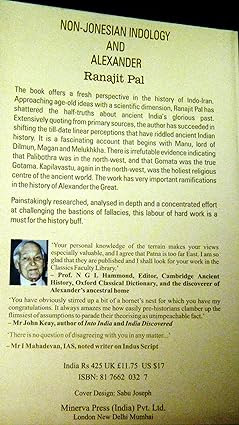
  • Indian historian Dr. Ranajit Pal, Ph.D. explains in Non-Jonesian Indology and Alexander
  • Eurasia, Oct. 12, 2019; Amber Larson and Dhr. Seven (eds.), Wisdom Quarterly

Tuesday, July 16, 2024

Fun with Ingrid Andress, National Anthem


This one's for DJ and JD and the wave of "patriotism" that is about to sweep over the nation, according to psychic who predicted Trump's assassination attempt four months in advance.

Why Ingrid Andress’ National Anthem is going viral
JD indicts the CIA and FBI in Trump cover up
(Access Hollywood) July 16, 2024: The 2024 Home Run Derby might be the most memorable one yet – thanks to singer Ingrid Andress’ viral performance of the National Anthem before the game. On Monday, July 15th, the four-time Grammy-nominated artist sang her rendition of the anthem live at Globe Life Field in Arlington, Texas, which sparked a major stir on social media. “My ears are bleeding. One of the worst national anthem renditions ever,” one user on Twitter (X) wrote, while another said, “I'm so sorry, I'm sure Ingrid Andress is a wonderful person, but that was one of the worst national anthems I think I've ever heard in my whole life.” #AccessHollywood #HomeRunDerby #NationalAnthem

Thursday, June 6, 2024

Treasure: Silk Road Buddhist burial mound

Buddhist monks sit, admiring a great Buddhist stupa in Sanchi, India (robertharding.com)
A discovery of artifacts, recovered from a 2,000-year-old burial mound, shows off a little-known society’s sophistication and deep connections to the Silk Road (Jordi Salas/Getty Images)
.
Afghan burial mound carved from solid rock
A discovery of artifacts [reported today, June 6, 2024, on MSN from Popular Mechanics based on Live Science, May 30, 2024], recovered from a 2,000-year-old burial mound (Buddhist stupa), shows off a little-known society’s sophistication and deep connections to the Silk Road (extending into Kucha and onward to China).

The Kangju people lived in Central Asia (southern Kazakhstan) for nearly a millennium, but experts know very little about them.

World famous Buddhist stupa, Sanchi, India
A new discovery of artifacts, recovered from a 2,000-year-old [Buddhist] burial mound (stupa), shows off this little-known society’s sophistication and its deep connections to the ancient Silk Road (not "road" but trade route between East and West).

Featuring a brass mirror from China and a Roman-style brooch, this treasure trove reveals the intimate evidence of the world’s first major attempt at globalization.
  • [This was by no means the first attempt at globalization because many times in the past, the world was united, connected, and following a global culture, religion, leader known as a world monarch or chakravartin, according to the ancient Vedas and other sources].
Buddhist stupas (burial mounds) are based on ancient North and Central Asian custom.
.
Tummulus of Bougon, neolithic kurgan, barrow
For around 800 years (from the 4th century BCE to the 4th century CE), a people group known as the Kangju flourished in what is now southern Kazakhstan.

Despite this relatively long reign in Central Asia, the unknowns of this ancient society far outweigh the knowns.
  • The Buddha was from this general area, ancient Indo-Scythia, Gandhara, Central Asia, now the Stans (Sakastan), which includes the massive area known as Kazakhstan, made infamous by Borat (Sascha Cohen).
Buddhist stupa, Kyrgyzstan, Central Asia
Experts know, for example, that the people had Indo-European origins, spoke an Eastern Iranian [Aryan] language, and likely practiced a semi-nomadic [Scythian] way of life — a common choice among people groups in Central Asian and the Eurasian steppe.

Everything else has been slowly pieced together from pottery and other artifacts left behind for someone to eventually find.

Now, a new treasure trove of artifacts (livescience.com) has been discovered in 2,000-year-old burial mounds in the ancient Kangju region.
Kyrgyzstan (The Great Patron of Buddhism)
These items include jewelry, arrowheads, and a large bronze mirror — all of which speak to the Kangju’s sophistication.

Kazakhstan lies at the heart of what would’ve been the ancient Silk Road, and the items reflect the impact of this ancient-world globalization. The mirror, for example, has been traced to the craftsmen of China’s Han Dynasty, which reigned from 206 BCE to 220 CE. Similar mirrors have been found among the discarded detritus of other civilizations along the ancient Silk Road, likely meaning that the woman buried with the mirror was someone of considerable wealth or importance.

Afghan Takht-e Rostam (Gandhara)
However, China wasn’t the Kangju’s only trading partner. The ancient people likely also traded with the Roman Empire and the Kushan Empire, another Central Asian power to the south.

To uncover these items, a team of experts from Ozbekali Zhanibekov University — located in the city of Shymkent along the border with [formerly Buddhist] Uzbekistan — and local government archaeologists traveled to three burial mounds in the oblast (administrative region) of Turkistan.

As is often the case when exploring ancient [Buddhist] ruins, two of the mounds had already been plundered, likely during medieval times. But the third mound still had ancient wonders lying in wait.

An ancient stupa in formerly Buddhist now Islamic Swat Valley of Pakistan (NW India)
Central Asian Buddhist pyramid (yantra, mandala, square stupa, Gandhara (Newsweek, AA1jFN5l)
.
  • [See Bones of the Buddha, a documentary that shows the many Buddhist treasures discovered under a burial mound and removed to England, where they sit under a bed of a young man who inherited them from his relative, who discovered them. They were not placed in a museum as priceless treasures because the site they were found did not agree with the popular conception of which current country the Buddha's relics were buried. In fact, according to the ancient texts, the relics were partitioned and buried in eight places, one of them off-planet in a world of devas (ETs). The Buddha was not from Nepal, but that is what we are taught, so sometimes India and Nepal debate where he was raised and where his remains must have been placed. He was raised in ancient Gandhara (modern Bamiyan, Afghanistan, according to Indian historian Dr. Ranajit Pal, but it is known that he was raised in three seasonal capitals, all simply called "Kapilavastu," which Wisdom Quarterly proposes included modern Kabul (the strategic modern capital of Afghanistan) and Mes Aynak (the world's largest unexcavated Buddhist monastic complex and rare earth goldmine).]
Stupas may be ancient features in the Southwest
According to a press release translated from the Kazakh language, experts also found other items — including ornate earrings, a belt buckle, and a Roman brooch — that once again emphasized the mound’s advantageous position along the Silk Road.

The leader of this archeological expedition, Ozbekali Zhanibekov University’s Prof. Aleksandr Podushkin, said that the Yangju were actually comprised of many different people, including the Asian Sarmatians, the Xiongnu, the Kangyu, and the subsequent Saki [Sakai, Saka, Shakya, Shakyian, the Buddha's group] (who were, possibly, the famous Scythians).

Prof. Podushkin has published some 90 articles related the peoples of southern Kazakhstan, and some of his previous work (silkroadfoundation.org) involved analyzing the religious beliefs of the Kangju from artifacts gathered from Ugam Valley, which is also located in the Turkistan region.

Now, these relics will travel to the capital city of Astana and be housed in the National Museum of the Republic of Kazakhstan. As experts like Prof. Podushkin continue to find these hidden treasures, over time, the largely blurry image of this people group of Central Asia should slowly begin to come into focus. More: Archaeologists found stunning treasure buried by a mysterious forgotten tribe
  • Related video: 10 Ancient Technological Discoveries that Changed the World | Unveiled (Dailymotion)

Sunday, November 12, 2023

Ancient pyramid found in Buddhist Central Asia

Aristos Georgios, Newsweek; Dhr. Seven, Amber Larson (eds.), Wisdom Quarterly Wiki
Buddhist pyramid built recently at the Fo Guang Shan headquarters in Taiwan (pinterest.es)
This pyramid would be older than the historical Buddha, but Buddhism is older due to the 27 previous buddhas the Buddha talked about in this fortunate kalpa, and would have been from Central Asia (Majjhimedesa) like the cultural features (stupas, kurgans, tumuli) the Buddha was drawing on as a cultural legacy of previous buddhas.
Yantra: a mandala disc with sacred geometrical patterns depicting world as a mind map
Borobudur, Java: When fully fleshed out, this is a Buddhist pyramid capped by a stupa
.
Archaeologists discover pyramid built more than 3,000 years ago
Archeologists have discovered a pyramid structure in the steppes of Central Asia that is thought to be more than 3,000 years old.

The monument, known as the Pyramid of Karazhartas, was uncovered during excavations conducted along the Taldy River in the Karaganda region of Central Kazakhstan.

The pyramid was constructed by the Begazy-Dandibai culture, which emerged in Central Kazakhstan during the Late Bronze Age.

This is the largest excavated Buddhist temple in the world, second to Mes Aynak, Afghanistan
Inside the sarcophagus, researchers found a skull belonging to a local ruler who was buried there. This is an aerial view of the step pyramid found on the steppes of Central Asia (© Aibar Kassenali).
Borobudur pyramid temple is aligned with Pawon and Mendut Monastery, Central Java
Stupa or kurgan of the Sakas (Trizna 1899)
This culture consisted of semi-sedentary communities primarily based on metallurgy [Scythians/Shakyians created Mes Aynak by the mines and were goldsmiths] and animal husbandry.

These communities achieved a relatively high level of economic prosperity thanks to the metal trade that extended to various parts of Eurasia.


Dr. Pal linked the Buddha
The high profits from metal exports created a new aristocratic class among the Begazy-Dandibay communities.

The Pyramid of Karazhartas was constructed as a mausoleum for a representative of this aristocratic class, historian Serhan Cinar and archeologist Aybar Kasenali — one of the coordinators of the excavations with the Kazakh National Museum — told Newsweek.

Unexcavated Mes Aynak ("Copper Hill" Mine) overview East hill, Afghanistan

This is a massive and incredible stupa hewn directly into the rock, Mes Aynak
.
Buddhist gold coin from Tillya Tepe site
The pyramidal tomb is one of the most "striking monuments" of the Begazy-Dandibai culture, the researchers said.

During the excavations, which were conducted by the Sary Arka Archaeological Expedition of Karaganda University, researchers found that the structure was a square pyramidal mausoleum consisting of step-like layers.
The Sakas/Scythians were semi-settled nomadic warriors on horseback, experts goldsmiths.
Scythian is broad term, East=Sakas
The mausoleum, which contains a burial chamber, measures around 65 feet by 98 feet across and stands about 5 feet high at its peak. The excavation of monumental stone mausoleums from the Begazy-Dandibai culture began in 1933.

Researchers have since discovered several pyramidal step tombs in the region of the Taldy River valley, in which great leaders were buried.

"The newly discovered Karazhartas stepped pyramidal mausoleum is the largest burial structure of the Begazy-Dandibay elite," Cinar said.

Pyramid base for stupa, Taiwan
"Considering the cut stones found in the Karazhartas pyramid and the monumental size of the mausoleum, the construction of such a gigantic structure in the Bronze Age — in a very arid region such as the steppe — is indicative of the high artistic understanding and rich spiritual beliefs reached by the Begazy-Dandibay communities."

Investigations at the Karazhartas Pyramid have identified a sarcophagus structure surrounded by granite stones, which was found in the burial chamber.

Sojiwan Buddhist Temple, SW of Prambanan Hindu Temple, near Borobudur, Indonesia (wiki)

Inside, researchers found a sarcophagus structure surrounded containing a skull.

In one area in the upper part of the burial chamber, archeologists uncovered a bronze arrowhead and a mysterious pottery fragment. Finally, animal bones, which were frequently used in the traditional ceremonies of steppe tribes, were found in various parts of the burial chamber and the step sections of the pyramid.

The features of the tomb, as well as the accompanying items, highlight the high status of the buried individual, according to Kasenali.

Analysis of organic materials found at the pyramid, carried out by Queen's University in the United Kingdom, has enabled researchers to date the pyramid structure to the 15th-14th centuries B.C.

Archeologists also uncovered evidence of a proto-city settlement named Kent in the same region as the mausoleum, which they attributed to the Begazy-Dandibai culture.

Spread over an area of 15 hectares, Kent was characterized by labyrinthine gates, ditches, and walls, according to the researchers.

Greek culture in Bactria
The settlement featured a regular, planned street network and water collection systems. And next to the settlement, archeologists found special sacrificial altars where ceremonial offerings to the gods were made.

"In the rituals of the Bronze Age inhabitants of Kazakhstan, offerings were made to the sun, fire, moon, and protective 'ongun' spirits," Cinar said.

The findings at Karazhartas provide detailed information about the historical identity, cultural connections and socioeconomic structure of the Begazy-Dandibay culture, according to Kasenali. More
The word kurgan [Buddhist stupa] is of Turkic origin and derives from Proto-Turkic kur- ["to erect (a building), to establish"]. In Ukraine and Russia, there are royal kurgans of Varangian chieftains [the Buddha being raised to be a Shakyian chieftain], such as the Black Grave in Ukrainian Chernihiv (excavated in the 19th century), Oleg's Grave in Russian Staraya Ladoga, and vast, intricate Rurik's Hill near Russian Novgorod. Other important kurgans are found in Ukraine and South Russia and are associated with much more ancient steppe peoples, notably the Scythians (e.g., Chortomlyk, Pazyryk) and early Indo-Europeans (e.g., Ipatovo kurgan) The steppe cultures found in Ukraine and South Russia naturally continue into Central Asia, in particular Kazakhstan. More

Newest Buddhist pyramid, Fo Guang Shan
Pyramid under Buddha: Fo Guang Shan Buddha Museum 佛光山佛陀紀念館, Taiwan
.
What does it have to do with the Buddha Shakyamuni (Saka-Muni)?
The Buddha was a royal Saka
The Sakas [Buddhist Shakas or Shakyas] were closely related to the Scythians, and both groups formed part of the wider Scythian cultures [9], through which they ultimately derived from the earlier Andronovo culture, BMAC, while also carrying East Asian genetic ancestry [10], with the Saka language forming part of the Scythian languages.

However, the Sakas of the Asian steppes are to be distinguished from the Scythians of the Pontic Steppe [8, 11]; and although the ancient Persians, ancient Greeks, and ancient Babylonians respectively used the names "Saka," "Scythian," and "Cimmerian" for all the steppe nomads, the name "Saka" is used specifically for the ancient nomads of the eastern steppe, while "Scythian" is used for the related group of nomads living in the western steppe [8, 12, 13].


While the Cimmerians were often described by contemporaries as culturally Scythian, they may have differed ethnically from the Scythians proper, to whom the Cimmerians were related, and who also displaced and replaced the Cimmerians [14].

Gandhara Greco-Buddhist art
Prominent archeological remains of the Sakas include Arzhan [15], Tunnug [16], the Pazyryk burials [17], the Issyk kurgan, Saka Kurgan tombs [18], the Barrows of Tasmola [19], and possibly Tillya Tepe.

In the 2nd century BC, many Sakas were driven by the Yuezhi from the steppe into Sogdia and Bactria and then to the northwest of the Indian subcontinent, where they were known as the Indo-Scythians [20, 21, 22].

Other Sakas invaded the Parthian Empire, eventually settling in Sistan, while others may have migrated to the Dian Kingdom in Yunnan, China.

In the Tarim Basin and Taklamakan Desert of today's Xinjiang Uyghur Autonomous Region, they settled in Khotan, Yarkand, Kashgar, and other places [23]. More

PHOTOS: Buddhist pyramids are ancient feature and modern feature of temples
Four surrounding towers, like minurets, seem to replicate famous Bodhgaya Temple, India