
Showing posts with label avoid processed foods. Show all posts
Showing posts with label avoid processed foods. Show all posts
Saturday, December 13, 2025


Thursday, February 27, 2025
Fat Thursday: preparing for Lent
 |
| The Polish way of praise with fat and flour, fried and coated with sugar to not lose weight |
Fat Thursday in Poland is a Catholic celebration of Lent-fasting by fattening up first to be closer to G
 |
| Catholics get a Hindu tika for Ash Wednesday |
And yes, it’s exactly what readers may be thinking — a time to indulge. Clear the kitchen and pantry in preparation for FASTING. That’s what Lent is all about, abnegation, austerity, asceticism as watered down as can be and still called a sacrifice and abstention.
Mardi Gras ("Fat Tuesday") is coming, the time of year all Catholics become ducks and stuff themselves (Foie Gras) until, loving the Lamb of God, they demand Veal (made of baby Cow) and then go back to eating baby Lambs, chopped
I'm going to kill this Lamb (of God) and eat him

As the lean season of Lent draws near, food becomes central to many peoples’ thoughts. There’s nothing like a fast (intentional cleansing starvation) to get us thinking about food, particularly those forbidden treats loaded with calorific ickiness.
If donuts were the first thing that came to mind, then that mind is on the right track because this holiday, originating in Catholic Poland, is about stuffing our faces with Polish donuts, known as pączki, and a few other exotically named sweet treats. Pancakes come to mind.
Every Fatso knows calories don't count today.
History of Fat Thursday
Though the exact origin of how this holiday came to be founded is unknown [though the eating up of all the forbidden foodstuffs of the next forty days seems like a pretty convincing explanation], the Polish tradition of consuming donuts is very much known. It dates as far back as the 1500s.
On the religious side of things, Fat Thursday is the last hurrah before the fasting period of Lent, wherein devout Catholics give up many indulgences in the 40 days leading up to Easter, the pagan Day of Rebirth (Resurrection and fertility), when the world springs back to green life after winter.
Roman Catholicism is as far from Christ's message as Protestantism
Traditionally, Catholics abstain from meat and alcohol during this period, as the idea is to give up things one is addicted to, loves, abuses, can’t give up even though one knows one should, in order to focus on the meaning of Easter.
Fat Thursday is known as Tłusty Czwartek in Poland. For those who doubt, the "fat" part of the name refers to the fried sugar crust of different types of pączki (pronounced \poonch-key\ or \pots-ski\) consumed by Poles all over the European country.
.jpg) |
| The Pope is dying, and all we're worried about is will he get his Angel Wings? We'll get ours. |
.
 |
| Is that where the US jelly doughnut comes from? |
However, there are many variations now when it comes to fillings. Essentially, this day serves a dual purpose, as it allows Poles to indulge guilt-free in their favorite confectionery, while also carrying a religious meaning.
- Rio Carnaval: Fat Tuesday in Brazil: Carnival in Rio (Portuguese Carnaval do Rio de Janeiro) is a festival held every year before Lent that is considered the biggest (and probably the sexiest and most decadent) celebration of Carnival in the world, with two million people per day on the streets, first celebrated in 1723 (wiki).
 |
| Guilty sexy Catholics party for Rio Carnival |
If the thought of consuming donuts scares an eater (because of the gluten, fried oil, toxic white sugar, strange fillings, rancidity and carcinogenic acrylamides from heat exposure), the recommendation is to eat just one gluten-free one with a better sweetener (agave, coconut blossom powder, erythritol, monk fruit, birch xylitol, or herbal stevia, because not eating a donut on this day means bad luck for the rest of the year, according to fat Polish tradition.
Another traditional Polish dessert that is extremely popular on this day is faworki, in some places, also known as Angel Wings. Faworki are thin gluten dough ribbons, fried until crispy and sprinkled with powdered white sugar. More
- National Day Today, 2/27/25; Recovering Catholic Madison, Ashley Wells, Crystal Quintero (eds.), Wisdom Quarterly
Thursday, November 21, 2024
Wednesday, October 30, 2024
McDonald's E. coli outbreak worsens
 |
| What must a taint burger, I mean a tainted burger, at McDonald's even look like, Kimmy? |

 |
| When do we start eating the aborted? |
The joyful vegans over at Conservative TV Central (Fox News) have a more right-wing department called Fox Business, which is reporting on Mickey D's expanding E. coli outbreak as they keep selling contaminated meat foods. What could be more disgusting than a dead slab of many churned up cows combined into a fried patty full of embalming preservatives, dyes, salts, tissue-stored pesticides? Dirty unwashed hands after using the restroom to produce feces and then grabbing raw onions to throw on top? One can suppose that there are worse things, like the funny Hollywood saying, "Don't s**t in my mouth and call it a milkshake."
E. coli outbreak linked to McDonald's expands [like buns before emitting gases]
 |
| PR campaign: Free McDonald's t-shirts proudly owning the problem: Feces between our buns |
.
 |
| Pasty meat? Maybe it's the onion? |
(Fox Business from FOX News) The number of E. coli cases linked to McDonald's Quarter Pounders has climbed again.
Health officials are focusing on onions, hoping the blame can be laid on them rather than the blood-soaked flesh of countless animal placed in a single grinder and formed into patties, which are then sold to the fast-food chain as the likely source of the outbreak, the FDA (U.S. Food and Drug Administration) said Wednesday.
 |
| Soon they'll blame the bugs and worms. |
Two victims have developed hemolytic uremic syndrome, a serious condition that can cause kidney failure. One death was linked to the outbreak early on.
A Quarter Pounder hamburger is served at a McDonald's restaurant March 30, 2017, in Effingham, Ill. (© Scott Olson/Getty Images)
- VIDEO: McDonald's beating earnings and revenue estimates are a "good indicator" for economy, expert says
- How does McD's plan to bring back customers?
How McDonald's plans to bring back fearful customers: greed

 |
| Price: 3 taints for price of 2 when you buy 3. |
The FDA believes raw onions served as a topping on Quarter Pounders might be the most likely source of the fecal infection outbreak after beef (slaughtered cow meat and allowable rat parts) was ruled out as a likely source.
The agency said it has launched inspections at the Colorado processing plant of Taylor Farms, which supplied recalled onions to McDonald's, and an unnamed onion farm in Washington state.
- The one meat you should never feed your dog [McDonald's leftovers and 3 other toxic foods?] (Dr. Marty)
 |
| Don't think of them as "Butt Burgers." |
 |
| There's a hair in my veiny tendons! |
The areas affected by the E. coli outbreak are in Colorado, Kansas, and Wyoming, as well as portions of Idaho, Iowa, Missouri, Montana, Nebraska, Nevada, New Mexico, Oklahoma, and Utah. More
- Maybe it's time to order that Free Veggie Starter Kit from PETA
- Fox Business (Fox News, 10/30/24); Eds., Wisdom Quarterly
Monday, October 28, 2024
National Wild Foods Day (10/28)


 |
| Let's go forage in the forest and make lunch |
Wild Foods Day is celebrated in America every year on Oct. 28th. It is a holiday dedicated to wildflowers, fruits, and veggies.
Humans have foraged, gathered, and consumed plants food from the wild for thousands of years. However, these wild foods are now increasingly appearing on menus in gourmet and raw food restaurants due to them being nutritious, delicious, and trendy.
Moreover, wild foods are free of farming, tilling, preserving, and pesticides. Consuming them contributes to an environmentally conscious lifestyle.
History of Wild Foods Day
 |
| What kind of space cadets would eat wild foods? |
.
 Wild foods are believed to have been in existence for over 40 million years. "Wild food" can generally be any edible plant that grows naturally without human intervention or any animal taken from its native environment for human use.
It is easy to observe that this Earth is brimming with wild foods. Some animals are considered native and wild in the United States. In addition, some fruits, herbs, and vegetables grow wild in many parts of the nation.
.jpg) |
| Dipa Ma, do they gather wild food in India? |
Berry bushes of many sorts offer tasty fruits, and mushrooms (which are not plants but their own mycological kingdom) cover the woodland floor cleaning and revitalizing the land. According to experts, there are approximately 2,000 edible and medicinal mushroom types worldwide.
Nuts, seeds, herbs, tree fruits, and cactus apples ("prickly pears") and pads are among the native foods that grow independently, even in concrete cities.

 |
| Ashkenazi Jews created 60s? |
These substances are known as phytochemicals, and research reveals that they can offer humans health benefits if consumed regularly. Think of the "chocolate tree" with its delicious fruit and giant seeds (Theobroma cacao) from which rich chocolate is made.
 |
| Pema Chodron, were you ever a hippie? |
Wild Foods Day started being mentioned regularly in the print media around 1974. Euell "Grape Nuts" Gibbons, a wild food enthusiast who became a minor media celebrity, most likely inspired the popularity of this day. He is best known for his debut book, Stalking the Wild Asparagus.
Wild Foods Day is a celebration of all things wild and delicious that the planet has to offer. More: nationaltoday.com/wild-foods-day
- Search for a wild food date at eharmony.com
Sunday, October 27, 2024
Solution to US sugar, starch diet, cancer
Stripped sugar robs us of nutrients, weakens the system, feeds cancer.
Friday, September 27, 2024
What do Euros think of Ameros? (TDS)
Leslie Jones can’t believe what Europeans think of Americans | The Daily Show
 |
| Young Buddhists at first European Buddhists' Convention, Berlin, Germany (Hannah Prinzler) |
.
 |
| Artificially-flavored fecal contamination patties |

- [all "natural flavors" are artificial mimics of things occurring in nature and only have to be labelled accurately as "artificial flavors" if the flavor they are mimicking does not exist in nature, in either case all added "flavors" are synthetic and many of them are very dangerous neurotoxins]
 |
| I'm a sa lang now with herbal ingredients + stuff |
- Leslie Jones, The Daily Show - YouTube, 9/27/24; Ashley Wells, CC Liu (eds.), Wisdom Quarterly
Monday, September 2, 2024
Ultra-processed foods: Joe Rogan on Time
Joe Rogan UNLOADS on Time Magazine for pushing ultra processed foods

Joe Rogan learned to be a stand up comic?
Jimmy Dore and Americans’ Comedian Kurt Metzger discuss a recent segment on Joe Rogan’s podcast ripping into Time Magazine for running an apologist's report for advertisers who are knowingly poisoning the American public for profit with no concern for the health consequences.
Co-host Kurt Metzger on Twitter (kurtmetzger) and website (KurtMetzgerComedy.com) #TheJimmyDoreShow
- Joe Rogan, RFK Jr., Jimmy Dore, Kurt Metzger (TJDS, jimmydore.com), Sept. 1, 2024: Pfc. Sandoval, Seth Auberon, CC Liu (eds.), Wisdom Quarterly
Monday, August 19, 2024
Microbes vs. Phages: America’s Gut Issues
 |
| Amber Dance and knowablemagazine.org introduce us to the phageome |
 |
| The lining of the gut should look like a shag rug, but as most colonoscopies find, it's a smooth tube like a water hose due to eating gluten that kills the cilia that allows us to absorb nutrients (Oleksand Troian/Moment/Getty Images). |
.
 |
| America is too fat, like this obese specimen. |
Most have probably heard of the microbiome — the collection of probiotics, hordes of harmful bacteria, and other tiny life forms that live in our guts. Well, it turns out those bacteria have viruses that exist in and around them — with important consequences for both them and us.
Hey, microbiome, meet the phagosome.
There are billions, perhaps even trillions, of these viruses, known as bacteriophages (Greek for “bacteria eaters” in Greek) or just “phages” to their friends, inside the human digestive system.

Phageome science has skyrocketed recently, says Breck Duerkop, a bacteriologist at the University of Colorado Anschutz School of Medicine, and researchers are struggling to come to grips with their enormous diversity.
 |
| Don't try to shame my obesity. I'm just big bellied. |
“There will turn out to be good and bad phages,” says Paul Bollyky, an infectious disease physician and researcher at Stanford Medicine. But for now, it’s still unclear how many phages occupy the gut — perhaps one for each bacterial cell or even fewer.
There are also bacteria that contain phage genes but aren’t actively producing viruses; the bacteria are just living their lives with phage DNA tagging along in their genomes.
And there are lots of phages still unidentified; scientists call them the “dark matter” of the phagosome.
A big part of current phage research is to identify these viruses and their host bacteria. The Gut Phage Database contains more than 140,000 phages, but that’s surely an underestimate.
 |
| How do these gut bugs impact behavior? |
That’s where researchers found the most common gut phage group, called crAssphage. (Get your mind out of the gutter — they were named for the “cross-assembly” technique that plucked their genes out of the genetic mishmash.)
In a recent study, Hill and colleagues detailed a light-bulb shape for crAssphages, with a 20-sided body and a stalk to inject DNA into host bacteria.
- How can we get all the nutrients we need for health if farm soil is depleted? Supplements from criticalhealthnews.com
- Related video: Researchers discover tough bacteria that can survive in microwaves
 |
| How to counter an infestation of invaders? |
Other common groups that also infect Bacteroides include the Gubaphage (gut Bacteroides phage) and the LoVEphage (lots of viral genetic elements).
Phageomes vary widely from person to person.
They also change depending on age, sex, diet and lifestyle, as Hill and colleagues described in the 2023 Annual Review of Microbiology.
Though phages infect bacteria and sometimes kill them, the relationship is more complicated than that. “We used to think that phage and bacteria are fighting,” says Hill, “but now we know that they’re actually dancing; they’re partners.”
- Amber Dance and Knowable Magazine, Inverse via MSN, 8/18/24, The microbiome’s forgotten cousin could be key to solving America’s gut issues (MSN); Eds., Wisdom Quarterly
Wednesday, July 31, 2024
Alkaline diet is the way to good health
 |
| The word vegetarian does not come from vegetable but from vegetus (life, growth). |
.

All non-starchy vegetables and fruits have an alkaline-forming effect on our body's fluids. Potatoes and bananas are slightly more acidic than most other vegetables and fruits.
For this reason, to be alkaline and healthy, non-starchy fruits, berries, and vegetables form the main bulk of our diet.
 |
| Food Combining Myths, Science (nutriplanet.org) |
Most legumes are semi-alkaline, while whole grains are more acidic. Refined grains (like white rice or milled flour) have an acidic effect on the body.
All animal products -- slaughtered flesh, eggs, fish, dairy -- in addition to extracted, process, simplified sugars have an acidifying effect. Therefore, these foods should be eliminated from the diet or greatly reduced.
Go nonviolent and vegan? Not necessarily. For example, a vegan living mainly on protein bars would end up with an acidic and unhealthy bloodstream due to the sugar and grain, while an omnivore eating lots of fruits and vegetables and a small amount of meat and dairy might stay alkaline and healthy.

 |
| Food combining for digestion (True Activist) |
There is no need for paleo folks and vegans to go to war in a battle of words regarding what is right or wrong with an alkaline diet. The facts speak for themselves.
In essence, we can become acidic on any diet if we eat too many acid-forming foods: too much animal protein and fats, too much sugar and refined carbs, as well as too many deep-fried foods.
Whether to be a vegan, vegetarian, or omnivore is, in the end, more a question of ethics. We can be healthy with any label, provided we eat alkaline foods.

So if, on the one hand, one dislikes killing animals, impregnating, imprisoning, and otherwise making animals miserable and instead wants to be kinder to them and the planet, then a vegan diet is the healthiest and most environmentally-friendly.
If, on the other hand, one just wants to stay healthy, then junk (processed) foods and animal foods need to be minimized or eliminated altogether. Whatever one eats, the main bulk of our intake needs to be mainly vegetables and fruits.
- “Come Heal @ Prama” (prama.org)
- My Journey Toward Sowa Rigpa – The Science of Healing (Buddhistdoor Global)
- A Vegan Diet for an alkaline body (prama.org); Dhr. Seven, Pat Macpherson (eds.), Wisdom Quarterly
Thursday, December 21, 2023
Foods Mexico's Aztecs gave us: chocolate
Still Standing (Business Insider); Unsung History; Vanessa Romo (LAist.com and SCPR.org/NPR.org 10/13/21); Crystal Quintero, Pfc. Sandoval, Dhr. Seven, CC Liu (eds.), Wisdom Quarterly


Meet the "shaman" using ancient chocolate rituals to revive Mayan traditions

(Still Standing | Business Insider) Oct. 15, 2021: Cacao has been a spiritual symbol for Indigenous people in Mesoamerica and Central America (Olmecs, Maya, and Aztecs) for thousands of years. When the modern European chocolate industry took over, many of the plant's sacred uses were lost. Today, people in Guatemala (the country just south of Mexico) are bringing back the ritual of drinking pure cacao (coffee-like tropical-spice "bitter water"). #StillStanding #Guatemala #Cacao. Both Izaias and Keith sell their cacao online: lavalovecacao.com, keithscacao.com.


 |
| Mexican moms make it better, from warm corn tortilla wraps to spicy centers to sweet cocoa. |
 |
| You're taking our hot xocolatl for your cold European climate? Add chile to make it spicy. |

Love potatoes, tomatoes, or chocolates? Thank Indigenous Latin American cultures

 |
| West addicted to sugar + caffeine |
We thought it was time to set the record straight. Mmm...chocolate! It was invented in Mexico, like most other popular American foods.
Television commercials and magazine ads make it seem that the Swiss or Belgians must somehow be connected to the very origins of chocolate, but the caffeine laced treat's history stretches back millennia to what is now southeastern Mexico.
 |
| Whites like Wonka invented chocolate, right? |
In fact, Smithsonian Magazine reports that the very word stems from the Aztec xocolatl, which referred to the bitter drink brewed from cacao tree seeds that was often mixed with chilis, special herbs, honey, and flowers.
The liquid (now called "hot cocoa") was beaten into a foam and both inhaled and drunk as part of sacred rituals called cacao ceremonies.

(Unsung History) We take the present-day word "chocolate" from the Mayan word xocolatl, which translates to as "bitter water," and that is an accurate description of the traditional and highly popular everyday Mayan cocoa drink. Aztecs added amendments to the theobromine.
 |
| Our pyramids and massive cities are still being found by LiDAR under the jungle canopy. |
.
 |
| "Chocolate" comes from these fruit seeds. |
Ancient pottery discovered in present day Latin American country Honduras indicates that cultures there made a fermented, alcoholic beverage from the sweet pulp of the cacao fruit.
 |
| Add spices and sweetness |
It makes sense then that the cacao seed or bean made its first appearance in Spain during the mid-1500s. A century later, sweetened chocolate had become a fashionable and expensive commodity across Europe.
- Potatoes make fries and mash and pancakes and can be baked and stuffed and added to everything!
So many ways to enjoy potatoes with ketchup
 |
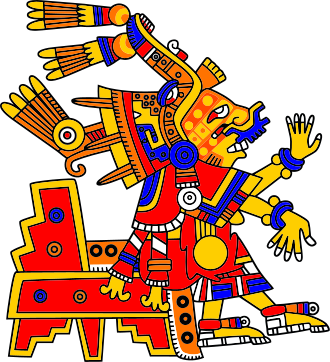
| We'll be taking the gold, silver, chocolate, tomatoes, and potatoes. Here's a cross for you. |
.
 |
| The all-American French fry in raw form |
While the humble and hearty potato is inextricably linked to Ireland in many people's minds, the American tubers were first domesticated in present day Peru and Northern Bolivia nearly 8,000 years ago, according to the BBC.
The Inca and other indigenous people consumed potatoes in many of the same ways we do today. But they also commonly made something called chuño, which is made by repeatedly freezing potatoes in the cold Andes night air then thawing them the next day.
 |
| Who wants bland chuño when we have tasty xocolatl? |
People would squeeze out all of the moisture, which made them light, soft, and juicy and added years to their shelf life.
The preservation process made them perfect for long expeditions and provided security against future bad harvests — both qualities that appealed to the Spanish upon their invasion in the region in 1532.
 |
| Chocolate fruit is better than the fatty seeds. |
"The invaders took tubers [the underground parts of the plant we call potatoes] across the Atlantic, as they did with other crops such as tomatoes, avocados, and corn, in what historians call the Great Columbian Exchange. For the first time in history, the potato ventured beyond the Americas," the BBC reports.
Since then, the BBC says, the potato has become the world's fourth-most important crop after [the grains or grass seeds] rice, wheat, and [American] maize, starchy potatoes being the first among non-grains.
On the subject of tomatoes...
 |
| Euro-Americans find profitable use for tomatoes |
Similarly, the Aztecs would argue that it is neither pronounced \toe-may-toe\ nor \toe-mah-toe\ but rather tomatl.
The Spanish European invaders later translated [taking the -tl at the end of many Aztec words and turning them into -te for the Spanish version or pronunciation of the same words) as tomate as they began exporting the tasty round fruit ball to Europe during the mid-1500s. More
Wait, what about hot chili peppers?
 |
| Our space brothers, the "gods" or Star People, helped us find most of these delicacies like Theobroma cacao or cocoa beans to make chocolate. |
.
 |
| They also gave us this cosmic calendar. |
 |
| Decolonize Your Diet: Plant-Based Mexican- American Recipes for Health and Healing |
These are irritants to the body, as the plant uses them to protect itself from consumption. The worst plant lectin is gluten found in wheat, barley, rye, oats, and buckwheat (which contain avenin, gliadin, and fagopyrins that are even more detrimental than wheat gluten, a gluey protein that wipes out the cilia in the intestinal tract and leads to malabsorption of food, skin irritation, and uncomfortable problems. (See criticalhealthnews.com and the work of Dr. Joel Wallach). One need not have celiac disease to be harmed by gluten. In fact, the gluten problem is much worse for everybody now due to Big Agra (industrial agriculture) breeding plants with more and more gluten, which is a squishy and binding in ways our mouths have been made to crave.
Even corn is not what it used to be. It was regarded as a famine food and, back then, was much smaller and much more natural. It is now a Frankenfood due to the meddling of American corporations like Monsanto and Bayer Pharmaceuticals. Many of these foods are high in starch, which is quickly converted into sugar leading to diabetic problems. It is far better to decolonize the diet to pre-Columbian days, when the Indigenous people were largely vegetarian and vegan and living in mythical Fusang, having come from the hollow earth world of Aztlan. This is a good book for popular California pre-Spanish foods. Eat in moderation, move your body regularly (yoga, walking, swimming), and find the real plants the Native Americans ate: amaranth, raw agave, medicinal and culinary herbs, quinoa, purslane (verdolagas), the Three Sisters using various corn plants of other colors, and so on. More than anything, enjoy it.
Subscribe to:
Posts (Atom)




























































