Kevin O’Connor dives into the NBA's largest integrity crisis in decades, breaking down the complex details of the federal criminal indictments against NBA Head Coach Chauncey Billups, Guard Terry Rozier, and 34 other defendants.
This is the definitive explainer needed to understand the full scope of this sports corruption multi-million dollar criminal conspiracy.
Charges: Money laundering and wire fraud conspiracy.
The Truth: Billups' role in a separate, high-stakes, rigged poker operation backed by La Cosa Nostra [Italian for "Our Thing"] (Mafia) organized crime families.
The Cheating: Revealing the sophisticated methods used to defraud victims, including "Face Cards" (prominent athletes) and cheating technology (rigged shuffling machines).
Crucial Note: Clarification on why Billups' charges are unrelated to his coaching games with the Portland Trail Blazers.
The Fallout: Discussion of the severe consequences—including indefinite NBA suspensions and federal felony charges that carry a maximum sentence of up to 20 years—and the damage to the entire league's reputation.
Is it true as they say that there are two kinds of Swifties, Gaylors vs. Hetlors, some sure Taylor is a secret lesbian on the LGBTQIA+ spectrum and others insisting she's 100% straight and Christian and not a hypocrite
Taylor ‘Nazi Barbie’Swift drops clues for new Tortured Poets Department album
Who's T-Swift? She's a U.S. royal like Meghan
(TODAY) April 18, 2024: Travis Kelce's lucky charm Taylor Swift’s new album, The Tortured Poets Department, is set to be released Friday (right at midnight on Thursday night) and speculation continues to grow over music industry public relations and marketing department clues for lyrics, song titles, and the album’s first music video. An alleged leak of the new project prompted many Swifties to ask fellow fans not to disrespect her work by being greedy but to instead wait for the official release so Taylor can make the most money and control her own narrative and corporate branding. NBC’s Emilie Ikeda reports for TODAY. #TaylorSwift#Music
Are you serious, Mom? I prefer Olivia's music.
For lesbians, mother-daughter incest survivors, and women with dogs who hump their leg, the Swift Corporation is putting out a new album in vinyl to make a killing at Target or Walmart or some big box retailer with a lucrative exclusive contract.
Buy the store version and get extra tracks of "Nazi Barbie" passing wind, burping, struggling like only tortured poets struggle (to come up with AI-quality songs for the masses) with just a touch of narcissism, juvenile pettiness, self-aggrandizing "Ah shucks, I'm just a country girl and pro-LGBTQIA+ Biden-voting, Christian on the right side of history," and a je ne sais quoi, or maybe an"oh 🙄 brother" factor.
Seacrest's so excited he sent Sisanie to promote it
But for dyed in the polyester fans, tune in to Los Angeles' "Swift FM" (KISS 102.7 FM) right at midnight tonight to hear cuts from the album curated by Miss TrayLor herself, Taylor Swift. It will be replayed tomorrow and then for the rest of our lives like a bad Madonna or Milquetoast release. Never has so much been done by so many for so little.
I'm still a child at head. I never grew up.
Song 1, "Fortnight," features Post Malone to help her sell the Lana Del Rey sound-rip off. As the first track, it should be the first single on the record. Is that how it works? Or will it be Post Malone's fans wanting to see what he did (which ain't much) that'll drive sales? "It's very fatalistic," Taylor claims, because it's about fatalism (the anti-karma idea that everything that happens is fixed in advance by fate).
Song 2, "Tortured Poet's Department," is the same gaar-bahge, complaining, talking about things a highschooler would be getting over by graduation at the latest. Are any college coeds aware of her? They like Miley Cyrus, but Swift seems like it's composed by AI for children, nothing much catchy about it like that "sick fat beat" song.
Song 3 is a metaphor, whining about relationships. She's a one trick pony going on about denial and toxicity: "My Boy Only Breaks His Toys." This song is more promising, with a "whoa whoa whoa" refrain and a new drum machine setting, some inflection in the singing, lacking emotional depth or a hook but good confection, instantly forgettable. Eight-year-olds are bound to like it.
Song 4, "Down Bad," is another metaphor, about alien abduction from the time she was "love bombed" by a narcissist then dumped. She's crying, talking about being a suicidal teen too depressed to get out of bed if the ETs won't come back for her. She sure must've gotten her heart broken a lot to whine about it song after song. Female country music singers must hate her. "What if I was in love?" she asks and has no one to tell her to use the subjunctive: "What if I were in love?" She dumbs it down for the kids and the Heartland maybe?
Song 5, "So Long London," is a dreamy kind of Lana Del Rey tremolo talker. Who taught her rhyme? Teach her more. Rhyming couplets of pining, longing, yearning, and being pathetic and clingy but indignant and hot and I will survive, it's a tragedy. Are Lana's attorney's tuned in? This song seems actionable. Big artists have gotten in trouble for less. How hard can it be to write one catchy tune?
Song 6, "But Daddy I Love Him," a string of facile rhymes, end of the world love lost with some emotion but "precocious" "tendrils"? It's like how Shakira had her thesaurus out to help her translate from Spanish to English for Laundry Service. What's Tay Tay's excuse? There are ten more of these junk heap discards pulled out, dusted off, and assembled into "sanctimonious" "soliloquies"? This is the least bad one so far.
Song 7, "Fresh Out the Slammer," is a metaphor of being in jail or prison and getting out to run to a sweetheart with more lameitude in rhyme, as if she finds herself clever and listening to so much Lana that she's drenched in the talent of a single-minded vision and not getting it in any dimension but one, superficial.
Song 8, "Florida," featuring Florence and the Machine, about reinventing herself after heartbreak (again). Where would anyone go to blend in and reinvent oneself? America's dangling participle peeing in the Gulf, right, T-Swift? Florence adds some verve at least and so meta. "Is that a bad thing to say in a song?" "Florida is one hell of a drug," and we drink -- and here the rhyming problem comes up again (yet again), just taking a bunch of rhyming words and say them close to each other like a rapper in the flow just pulling anything in to fill space. Short and sweet. If Lana doesn't sue, this is a good one. Taylor has found the secret, feature Ice Spice, Florence, Post Malone, or anyone to extend her range.
The craze behind tall blonde beauty | Harvard lecture, $64 bil in concert revenue | All About Taylor Swift
(LASSI Studio) March 1, 2024: A lecture called "Taylor Swift and Her World" opened at Harvard. Taylor's concerts generated a $63.5 billion economic impact, also known as "Swiftonomics." She has won the Grammy for Album of the Year three times. This is a video on the ultimate [AI] songstress.
Song 9, "Guilty As Sin," is about crying, whining about a boy, using big words ("paradox"), and having no success in relationships. Is this causing all the bad relationships in the country, or are there so many bad relationships that Taylor is "the voice of an unhappy generation"?
Song 10, "Just Hold Me" (?), a sad song asking, "Who's afraid of little old me? You should be!" The way she makes everything so obvious an pat, the name of this song must be "Who's Afraid of Little Old Me?" because she repeats, so emo and slightly goth with imagery of death, drugs, and depression. There's something here; I can see how this one could be included in 1980s flashbacks or retro emo song lists with what sounds like a live drummer.
Song 11, "I Can Fix Him, No Really I Can," more complaining about a man she loves ("He's my man... I can fix him, no, really, I can.") This is Lana gone West, a real song, a rip off. Does no one else listen to enough Lana to see it? How could the Eras Tour stand having three hours of this pissant urine?
Song 12, "LMNL" (?), more complaining about a bad man she loves against her will, and she adores him, and she criticizes him, and oy vey, does she never stop complaining? This is cr*p, but kids love cr*p, so it will be interesting which of her masterpieces the focus groups will tell the corporate stations to put on rotation and overplay.
Song 13, "I Can Do It With a Broken Heart," almost danceable at the crying party, when we go to comfort Patty who got dumped by Brad. "You're better than him, Patty! Get out of bed and shake him off. C'mon let's go dance and celebrate our broken hearts. It's all a test. You're a tough kid." Wow, it's Sweet Valley High for every song, the weak sauce, celebrating the miserable. At least it's almost over.
Song 14, "The Smallest Man Who Ever Lived," about a Jehovah Witness suit wearing guy who tries to buy some pills from her drug dealing friends, complaining and complaining, calling a man small, with venom and anger become more depression and resentment. This song is dangerous because it's really a crying complaint...
Song 15, "The Alchemy," is about a boy she is not happy with and is telling him she'll get over him and recover and be better than ever for the bad experience. Whew, what a slog. Were there 100 songs like this, and these are the winners? One has to feel what one sings for the singing to sound good. So does she feel this way all the time, year after year, track after track, or is it an act and what the fans want? It's odd to see someone with such a fixation. When Lana does it, singing about dark love all the time, she finds a way to make it interesting. Hooray, it's over, just one more to go:
Song 16, "Clara Beau," is about a girl she's comparing herself to, a remarkable Clara Beau, bringing back themes of dazzling, sparking, rusting as a kind of theme, shining, eclipsing, dying, exaggerating, New York and a small town girl. Taylor in the big city. "You look like Taylor Swift in this life," she says. Could that be right? She's so full of herself that Clara Beau is Tailor Slow? It's SO deep. What was the two theme all the buildup hinted at? We'll leave that to the kiddies on TikTok to figure that out. Is this the world we've come to, violent Kelce with fainting waif Taylor, American royalty? Bleh. 🤢🤮
The first song to be played following all of the others is "Florida" (feat. Florence) and some interesting kind of drumming or bass tapping. Yes, this is one of the better ones with its big bang drumming and Lana theme.
Seth Auberon, Ashley Wells, Crystal Q., Wisdom Quarterly; Sisanie (from the Ryan Seacrest Morning Show on KISS 102.7 FM) with fellow iheart.com DJ from the Tim Conway Show, 4/18/24
Unicorns were real flesh and bone creatures like narwhals on land, a kind of goat or sheep.
I love the sound of bristles and sticking metal into soft wood, oooh. *Tingle Tingle* 😵💗
.
National Unicorn Day
What mythological creature has been more beloved over the centuries than the unicorn?
As an incredible symbol of purity and enchantment, the unicorn is loved by children and adults alike. They are integral parts of fairytales and legends.
For all the roles they have played in art, literature, and cinematography, unicorns deserve their own day.
How to celebrate National Unicorn Day
If one is a misfit seeker, one is a unicorn.
The best way to celebrate is to find a fun, fanciful activity to enjoy with family and/or friends. Get creative with art, music, or other projects that promote free-thinking and fantasy. Or try out some of these other ideas: daysoftheyear.com/days/unicorn-day.
It's International ASMR Day, too
ASMR can help a meditator
There’s a day dedicated to the odd and delightful sensations of ASMR (Autonomous Sensory Meridian Response). What in the world is that? Fans of This American Life already know. It is a phenomenon that tickles the senses of some sensitive types in the most unexpected ways.
Every year, on April 9th, the world celebrates International ASMR Day. This special day is about whispers and tingles and global recognition of an intriguing sensory experience that has captivated millions worldwide.
Wisdom is Bliss (Thurman)
The story of ASMR Day began in 2012, sparked by the curiosity and creativity of ASMR artists like KellyMsAutumnRed and Ilse Blansert of Waterwhisperers.
Their goal was simple yet profound: to spread awareness and appreciation of ASMR.
It’s a sensation that many describe as a delightful tingling in the scalp and neck, often triggered by specific sounds or sights [somewhat like synesthesia].
I can't feel anything from just sound, Hun. - Shush, then enjoy the tactile sensations of massage.
,
The forest is alive with subtle sensations
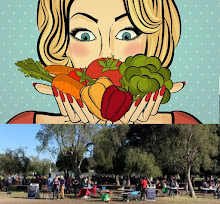
Bring to mind the gentle rustling of leaves or the pleasant whisper of a kind voice. These are the kinds of stimuli that frequently lead to ASMR bliss. Think of a cat or dog companion getting a backrub. Now imagine a human feeling the same way because of auditory or visual stimulation.
Why does the world celebrate ASMR Day? It’s more than just enjoying tingling sensations, which only some feel. There’s more to it. This day highlights the therapeutic potential of ASMR.
I feel it, I feel it - the sound of rustling paper!
For some, it’s a gateway to relaxation, a means to alleviate stress, or even a helpful tool to drift off into a peaceful sleep.
It’s a day for ASMR enthusiasts to share their favorite experiences, for YouTube content creators to showcase their innovative works, and for newbies to dip their toes into a mesmerizing world.
Whether one is a long-time fan or just curious about what all the fuss is about, International ASMR Day is the perfect time to explore this fascinating sensory journey. More
Protesters hurl soup at Da Vinci’s Mona Lisa in Paris museum
(New York Post) A pair of female climate change activists hurled bright orange pumpkin soup at the Mona Lisa on Sunday at the Louvre (pronounced \lew'vrhh/) Museum in Paris as onlookers gasped, shocking new video shows.
Due to the Mandella Effect, she's different now.
“What is more important,” the crazed activists shouted in French, “art or the right to have a healthy and sustainable food system?”
The two caring females (young and old, of two very different generations) are members of the activist group called Riposte Alimetaire, or “Food Response,” which issued a statement saying the stunt was meant to highlight the need to protect the environment.
Activists throw soup at Leonardo Da Vinci's Mona Lisa in Paris | DW News
(DW News) Jan. 28, 2024: Leonardo Da Vinci's world-famous painting "The Mona Lisa" has been attacked. Two climate change protesters threw soup at the priceless artwork, which is protected by thick bulletproof glass in Paris' Louvre Museum. The attackers then called for the reforms to the French agricultural system. #Paris #MonaLisa #Louvre
We want the original back!
“Two activists from the environmental movement ‘Riposte Alimentaire’ sprayed pumpkin soup on the armored glass protecting the Mona Lisa, this Sunday, January 28, 2024, around 10:00 am,” the museum said in a statement, according to CNN.
“The Louvre’s security staff immediately intervened.” [The world famous painting was not hurt in the slightest nor, apparently, was it meant to be. It's safe and well protected.]
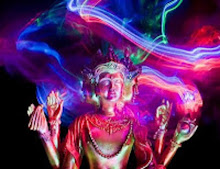
All in the family: the Buddha's son Rahula, the Buddha, and son or cousin Ananda (Thai art)
The Root of Feelings w/ Ayya Khemavamsi
(Buddhist Insights @ Empty Cloud) What is the ROOT of "feeling" -- pleasant, painful, and neutral sensations -- be they emotional, psychological, or physical? Thai Theravada Buddhist nun Ayya Khemavamsi shares some Dhamma (Dharma, Buddhist Teaching) reflections from Thailand.
“Pleasant feeling arises dependent on a CONTACT to be experienced as pleasant. With the cessation of that contact to be experienced as pleasant, the corresponding pleasant feeling ceases and stops.
“Painful feeling arises dependent on a contact to be experienced as painful. With the cessation of that contact to be experienced as painful, the corresponding painful feeling ceases and stops.
“Neutral feeling arises dependent on a contact to be experienced as neutral. With the cessation of that contact to be experienced as neutral, the corresponding neutral feeling ceases and stops.
“When one rubs two sticks together, heat is generated and fire is produced. But when one parts the sticks and lays them aside, any corresponding heat ceases and stops.
“In the same way, these three [categories of] feelings are born, rooted, sourced, and conditioned by contact.
“The appropriate feeling arises dependent on the corresponding contact. When the corresponding contact ceases, the appropriate feeling ceases.” Source
(Shawn Taylor) Escher covered a variety of subjects throughout his life. His early love of portraits, Roman and Italian landscapes, and of nature eventually gave way to regular division of the plane. Over 150 colorful and recognizable works testify to Escher's ingenuity and vision. He managed to capture the notion of hyperbolic space on a fixed two-dimensional plane as well as translating the principles of regular division onto a number of three-dimensional objects such as spheres, columns, and cubes. A number of his prints combine both two and three-dimensional images with startling effect. His art continues to spark wonder and amaze millions of people all over the world. In his work we recognize his keen observation of the world around us and the expressions of his own fantasies. M.C. Escher shows us that reality is wondrous, comprehensible, and fascinating.
MUSIC: The Four Seasons, Concerto in G Minor, Op. 8 No. 2, RV 315, "Summer": I. Allegro non moto
Song 1 of 2; "Nocturne" in C sharp minor Op. posth.
Song 2 of 2
ARTIST: Béla Bánfalvi, Budapesti Vonósok, Károly Botvay
The odd thing about our great America (and "the world" we generally call samsara) is that there's pain, you know, painful feeling, bodily and mental.
Aversion to that kind of disappointment, wanting it to be other than it is, gives us "suffering."
The woe and the ill come from not seeing things as they really are, which could and would liberate us.
But most of us stop at pain and immediately want to turn away from it, run away, escape, commit suicide, without having any idea of how to actually get away to overcome rebirth and the future misery that entails through countless births.
The Buddhist term for it, dukkha, is not limited to painful experience. It refers to the disappointing, unsatisfactory, unfulfilling nature of all things -- the general insecurity that accompanies all conditional phenomena.
On account of their instability, unreliability, impermanence, all things are liable to suffering. This includes also pleasurable experiences!
So "unsatisfactoriness" or "liability to disappointment" would be better ways of translating dukkha. There is plenty of pleasure. The first truth does not exclude that. (Why else would anybody hang around?) People often wrongly assume that Buddhism thinks there's no pleasure.
There's pleasure, there's wrong understanding, there's attaching, and with the loss of things we're attached to and unable to let go of, there's pain, crying, disappointment, and the entire mass of suffering.
SUTRA
Pleasure, misery, escape? Escape is best!
This is illustrated by the following words of the Buddha: "Seeking satisfaction in the world, meditators, I pursued my way. Satisfaction in the world I found. Insofar as satisfaction exists in the world, I well perceived it by wisdom.
"Seeking misery in the world, meditators, I pursued my way. Misery in the world I found. Insofar as misery exists in the world, I well perceived it by wisdom.
"Seeking escape from the world, meditators, I pursued my way. Escape from the world I found. Insofar as an escape from the world exists, I well perceived it by wisdom" (A.iii.105).
"If there were no satisfaction [pleasure, joy, happiness] to be found in the world, living beings would not be attached to the world....
"If there were no misery to be found in the world, living beings would not be repelled by the world....
"If there were no escape from the world, living beings could not escape from it" (A.iii.106). But there is, and they can. Nirvana is that escape, that freedom, that perfect bliss.
For texts on the noble truth of suffering, see The Word of the Buddha by Ven. Nyanatiloka (BPS.lk) and Path to Deliverance by Ven. Nyanatiloka (BPS.lk)
See The Three Basic Facts of Existence II. Suffering (Wheel #191/193, BPS.lk)
Alan Watts (alanwatts.org); Ashley Wells, CC Liu, Seth Auberon (eds.), Wisdom Quarterly
Alan Watts: Humans' addiction to Sexual Pleasure
TheSpiritualLibrary, Jan. 23, 2019
This is a sample from the lecture Myth and Religion: Sex in the Church. It can be found by following either of these links, alanwatts.org or alanwatts.com.
Vipassana Meditation and Body Sensation: Eilona Ariel
Eilona Ariel is a documentary filmmaker whose work was deeply inspired by her life in Asia and her practice of the ancient meditation technique called vipassana or "insight meditation." She moved to New York City in 1978 and spent nine years studying and working as a musician and a photographer. In 1980, she received a diploma from the Germain School of Photography. She left the USA in 1987 to spend several years living in Asia. In 1995 she returned to Israel and established the Karuna Films Production Company together with Ayelet Menahemi.
In the spirit of ideas worth spreading, TEDx is a program of local, self-organized events that bring people together to share a TED-like experience. At a TEDx event, TEDTalks video and live speakers combine to spark deep discussion and connection in a small group. These local, self-organized events are branded TEDx, where x = independently organized TED event. The TED Conference provides general guidance for the TEDx program, but individual TEDx events are self-organized.* (*Subject to certain rules and regulations) For more information on Vipassana, see dhamma.org See more on Doing Time, Doing Vipassana & Karuna Films at karunafilms.com For more talks from this event, go to tedxjaffa.com
An "emotion" occurs generally when an object of perception is considered as attractive or repulsive.
There is a felt tendency impelling people towards suitable/pleasant objects and impelling them to move away from unsuitable/unpleasant or harmful objects.
The individual also perceives and judges the situation in relation to oneself as attractive or repulsive. While a person feels attraction (sarajjati) for agreeable material forms, one feels repugnance (byapajjati) for disagreeable material ones.
An individual thus possessed of like (anurodha) and dislike (virodha) approaches pleasure-giving objects and avoids painful ones (M i 226, MN 38).
Pleasant feelings (sukha vedana) and painful feelings (dukkha vedana) are affective reactions to sensations.
When we make a judgment in terms of hedonic tone of these affective reactions, there are excited in us certain dispositions to possess the object (greed), to destroy it (hatred) or flee from it (fear), to get perplexed over it (delusion), and so on.
Sometimes it's easy to feel sad: too much pondering.
Our attitudes towards things, which have been formed in the past, influence our present reactions to oncoming stimuli, and these attitudes are often rooted in dynamic personality traits.
These attitudes, according to the historical Buddha, are not always the result of deliberations at a conscious level, but emerge on deep-rooted tendencies referred to as proclivities (anusaya*).
Pleasant feelings induce an attachment to pleasant objects, as they rouse latent sensual greed (raga-anusaya), painful feelings rouse latent anger and hatred/fear/aversion (patigha-anusaya).
States like pride, jealousy, elation, and so on can also be explained in terms of similar proclivities.
[*There are seven such proclivities: 1. sensual lust (kama-raga), 2. resentment (patigha), 3. views (ditthi), 4. skeptical doubt (vicikiccha), 5. mind (mana), 6.craving for eternal existence (bhava-raga), 7.ignorance (avijja)].
It is even said that such proclivities as leaning towards pleasurable experience (kama raga-anusaya) and malevolence (byapada-anusaya) are found latent even in "an innocent baby lying on its back" (M i 433; MN 64).
Hmm, I wonder what Spock would think.
The motivational side of the emotions can be grasped by a study of the six roots of motivation (mula). They fall into two groups, wholesome (kusala) and unwholesome (akusala).
The unwholesome roots are greed (lobha), hatred (dosa), and delusion (moha), while the wholesome roots are non-greed (alobha), non-hatred (adosa), and non-delusion (amoha).
Greed (lust, attraction, preference) generates the approach desires in the form of the drive for self-preservation (bhava-tanha) and the drive for sensual pursuits (kama tanha).
Hatred generates the avoidance desires in the form of the drive for annihilation and aggressive tendencies (vibhava-tanha).
[For an analysis of vibhava-tanha, see Padmasiri de Silva, Buddhist and Freudian Psychology, (Sri Lanka, 1973).]
In keeping with our initial observations, non-greed, non-hatred, and non-delusion should be considered as the springs of wholesome, beneficial, ethically profitable/desirable emotions.
In fact, in a study on the impact of the wholesome roots on the forms of wholesome consciousness, the following significant observations has been made by Ven. Nyanaponika Maha Thera:
"Non-greed and non-hate may, according to the particular case, have either a mainly negative meaning signifying absence of greed and hate.
"Or they may posses a distinctly positive character, for example: non-greed as renunciation [letting go], generosity, and non-hate as amity, kindness, or forbearance.
"Non-delusion always has a positive meaning, for it represents the knowledge that motivates the respective state of consciousness.
"In their positive aspects, non-greed and non-hate are likewise strong motives of wholesome, skillful actions. They supply the non-rational, volitional, or emotional motives, while non-delusion represents the rational motive of a wholesome thought or action." More
All materials on this site are submitted by editors and readers. All images, unless otherwise noted, were taken from the Internet and are assumed to be in the public domain.
In the event that there is still a problem, issue, or error with copyrighted material, the break of the copyright is unintentional and noncommercial, and the material will be removed immediately upon presented proof.
Contact us by submitting a comment marked "private."
Do not follow this journal if you are under vinaya or parental restrictions. Secure protection by Sucuri.
Wisdom Quarterly: American Buddhist Journal is licensed under a Creative Commons Attribution-Noncommercial-Share Alike 3.0 United States License. Permissions beyond the scope of this license may be available at creativecommons.org/about/licenses.