Tuesday, August 27, 2013

Indian celebrations at BAPS, California

Dhr. Seven, Amber Larson, Radha Dev, Wisdom Quarterly; BAPSchinohills.org (donate)
Enchanting Krishna, Radha, sacred cow and other beings (enlightened-spirituality.org)

The final touches are still being put on the massive complex to promote the "eternal truth" or sanatan dharma of the Indus River Valley Civilization and modern India (BAPS).
 
CHINO HILLS - The most splendid and massive Hindu mandir (temple shrine) is being completed in California. In faraway San Bernardino county, just east of Los Angeles, a marvlous Indian shrine is having the final touches put on it.
 
Bringing India to America (BAPS)
BAPS Chino Hills, a religious complex dedicated to Sri Swami Narayan, is expansive. Its main shrine is a marvel along the 71 freeway with its automated-fountain lotus flower reflecting pool. But the interior is nevertheless wholly unexpected -- carved marble (or white soapstone) full of figurines in the Hindu pantheon form an overwhelming cathedral (pictured below). The entire circular ceiling is covered in devas (light beings) and gods, avatars and demigods, heroes and goddesses. There is a second lesser ceiling (pictured above bathed in blue light) rising above intricately carved pillars. If one arrives midweek, one can see imported artisans from India laboring in the sun to carve out each image on the exterior. There is even a rare image of Great Brahma, the supremo, and incarnations of Vishnu and Shiva, and more goddesses than one ever sees nowadays.

The stunning figures in the main shrine
Krishna (Kṛṣṇa) and Radha (Shakti), the all-attractive Christ-figure in modern Hinduism and his beloved consort, are the center of upcoming celebrations known as Krishna Janmashtami (कृष्ण जन्माष्टमी) this weekend.
 
Incarnations in US: Govindas and Radha
It is an annual commemoration of the birth of the Hindu deity Krishna, the eighth avatar (earthly incarnation) of Vishnu. The Buddha is also said to be an avatar of Vishnu, the part of the Vedic trinity responsible for preserving the world, where Brahma is perceived as its creator and Shiva its destroyer.
 
The festival is celebrated on the eighth day (Ashtami) of the Krishna Paksha (dark fortnight, inasmuch as krish denotes dark or black, giving rise to his depiction as a blue visitor from space/heaven) of the month of Bhadrapada (August-September) on the Hindu calendar.
 
Kirtan: Govindas and Radha return to mother India (BYS)
 
Rasa lila, dramatic plays or enactments of the life of Krishna, are a special feature in various regions of India, re-creating the flirtatious aspects of Krishna's youthful days as a cowherd or gopi alongside the cow maids.

If one never visits India, a trip to Chino Hills is well advised (BAPS)
 
The Dahi Handi celebrate this god's playful and mischievous side, as teams of young men form human towers to reach a high-hanging pot of butter and break it. This tradition is a major event in Tamil Nadu, southernmost India. This god, by extension, is conceived as part and parcel of God, who takes on many manifestations. Hinduism is not really polytheistic -- in spite of all evidence to the contrary -- because it is really only this one "God" playing a game (lila) of ignorant and illusion in an eternity of safety and security. The ultimate divinity, however, is impersonal Brahman (GOD or godhead), the endless play of energy behind all illusory manifestations.

The unbelievably beautiful mandir ceiling-pantheon (BAPS)

Is all well? Is there no need for actual liberation (nirvana) because we are, as Hindus and Mahayanists insist, already free and clear of disappointment/suffering (dukkha)? The historical Buddha would certainly not say so, but he does not get much say. He was long ago replaced by an infinite number of other more cooperative buddhas, gods, bodhisattvas, avatars, and mahasattvas. Like Issa (Jesus Christ) who came much later, the Buddha was a rebel. And Brahminical Indian culture and its priestly caste could no more tolerate him than the Jews, Philistines, and Pharisees could the upstart from Nazareth returning from India to begin his ministry.
  • Janmashtami Festival, Sunday, Sept. 1, 2013
  • 15100 Fairfield Ranch, Chino Hills, CA 91709
  • FREE all day (909) 614-5000

Cartoon and Cow Dharma (video)

Ashley Wells, Wisdom Quarterly; K.R. Norman (Sutta Nipata); Dan Piraro (Bizarro.com)
"Perhaps this will refresh your memory!!" the cow-lawyer shouted at the MacDonald's employee on the stand. The employee shrank back from his crimes before the bull-judge and all-cow jury (Dan Piraro/Bizarro.com/ComicBelief).

Page 38, Sutta Nipata "Grouped Discourses" (BuddhistAcademyofpuc.org)

"Comic Belief" - a Rob Garver doc about Dan Piraro's "Bizarro"

The zany comedy and funny comics of Piraro's "Bizarro"

Am I a vegan or a natural-born carnivore who has to have others killed to live?

Rhinoceros Sutra

Wisdom Quarterly; E.M. Hare (trans.) selected verses of the Rhinoceros Sutra from "Woven Cadences" (Sutta Nipata), Sacred Books of the Buddhists series, Pali Text Society
Massive Buddha Shakyamuni, Thimphu, Bhutan (SoulTravelers3.com/WQ)
  
Put by the rod for all that lives,
Nor harm thou anyone thereof;
Long not for son -- how then for friend?
Fare lonely as [sword horn] rhinoceros.
Love cometh from companionship;
In wake of love upsurges ill;
Seeing the bane that comes of love,
Fare lonely as rhinoceros.
In ruth for all his bosom friends,
A man, heart-chained, neglects the goal;
Seeing this fear in fellowship,
Fare lonely as rhinoceros.
Tangled as crowding bamboo boughs
Is fond regard for sons and wife:
As the tall tops are tangle-free,
Fare lonely as rhinoceros.
The deer untethered roams the wild
Whithersoe'er it lists for food:
Seeing the liberty, wise man,
Fare lonely as rhinoceros.
Casting aside the household gear,
As sheds the coral-tree its leaves,
With home-ties cut, and vigorous,
Fare lonely as rhinoceros.
Seek for thy [noble] friend the deeply learned,
Dharma-endued, lucid and great;
Knowing the needs, expelling doubt,
Fare lonely as rhinoceros.
The heat and cold, and hunger, thirst,
Wind, sun-beat, sting of gadfly, snake:
Surmounting one and all of these,
Fare lonely as rhinoceros.
Crave not for tastes, but free of greed,
Moving with measured step from house
To house, support of none, none's thrall,
Fare lonely as rhinoceros.
Free everywhere, at odds with none,
And well content with this and that:
Enduring dangers undismayed,
Fare lonely as rhinoceros.
Snap thou the fetters as the snare
By river denizen is broke:
As fire to waste comes back no more,
Fare lonely as rhinoceros.
And turn thy back on joys and pains,
Delights and sorrows known of old;
And gaining poise and calm, and cleansed,
Fare lonely as rhinoceros.
Neglect thou not to muse apart,
'Mid things by Dharma-faring aye;
Alive to all becomings' bane,
Fare lonely as rhinoceros.
As lion, mighty-jawed and king
Of beasts, fares conquering, so thou,
Taking thy bed and seat remote,
Fare lonely as rhinoceros.
Poise, amity, ruth and release
Pursue, and timely sympathy;
At odds with none in all the world,
Fare lonely as rhinoceros.
Leaving the vanities of view,
Right method won, the Way obtained:
"I know! No other is my guide!"
Fare lonely as rhinoceros.
Mom, when I grow up, can I fare lonely as rhinoceros? - Watch for poachers! (Hugh Paxton)

Russell Brand and the Dalai Lama (comedy)


The 14th Dalai Lama with actor-comedian-former Mr. Katy Perry, Russell Brand, at Manchester Arena, in June 2012. He could be talking about quantum physics, but he would rather joke about drugs. Who are The 10 Most Hated Comedians, and is Brand one of them?


Brand is a professional comedian, but does he have a sense of humor? Recently he criticized and humiliated his ex-wife in public, stating how utterly deplorable it had been for him to engage in relations with her during their much discussed relationship. Is she so vapid or did her fundamentalist Christian background ruin her for men? The best and most self-exploiting divas were raised by those two super-corporations, Disney and the Church (Britney Spears, Christina Aguilera, Miley Cyrus, Justina Timberlake, Selena Gomez, etc.)

Monday, August 26, 2013

"Relishing the Relics" (Los Angeles Times)

Editors, Wisdom Quarterly; Devin Kelly (latimes.com, 8-25-13); MahaStupa.com
Visitors gaze at relics at Lu Mountain Temple, Aug. 18, 2013 (Christina House/latimes.com)

Master YongHua gives visitors a close up look (Christina House/latimes.com)
 
First public showing of what's touted as the largest collection of Buddhist relics in the U.S. attracts hundreds of visitors.
 
Crystal tray of relics (mahastupa.org)
For hours, the meditation hall at Lu Mountain Temple in the south San Gabriel Valley hummed with muted chatter and camera shutter-clicks.
 
Around the room, glass display cases held translucent urns and miniature versions of dome-shaped Buddhist shrines, or stupas, delicately arranged on burgundy-colored cloth. 
 
The urns and stupas held thousands of bright pearl-like crystals believed to be relics of the Buddha, his relatives, and his [enlightened] disciples [the arhats].
 
Amazing and colorful (mahastupa.org)
A wide-eyed Julie Nguyen of Orange County stepped sideways in front of one of the display cases. She steadied her iPad over the glass, leaned close, and snapped a photo. "I've seen [the Tibetan] Buddha relics, but these -- I feel energy," said Nguyen, 36.
 
She and hundreds of others made pilgrimages to this small Rosemead temple last week for the first public showing of what is being touted as the largest collection of Buddhist relics in the United States.

Massive crystal container of relics (left) on altar with the Great Strength Bodhisattva, Amitabha Buddha, and Kwan Yin, Aug. 25, 2013 (Wisdom Quarterly)
 
Beverly Hills Buddhist admires fragrant tooth
Relic [veneration], better known among Roman Catholics, is much less commonly associated with Buddhism. According to some branches of Buddhist belief [particularly Pure Land Buddhism, as practiced on Lu Mountain], the relics, known in Sanskrit as shariras, offer a source of delight, blessings, enlightenment, and concrete, physical evidence of [the] Buddha [and his extraordinary attainments].
 
The religious artifacts are displayed in temples in Vietnam, [Burma], and Sri Lanka, among other places. Since 2001, the Maitreya Project Heart Shrine Relic Tour [which is completely unrelated to this collection] has visited cities across the United States, sharing a collection of nearly 1,000 relics with the public.
 
At Lu Mountain Temple, however, the collection is far larger; it is said to number more than 10,000, including two rare tooth relics. More
 
Multiplying Relics
Dr. Rei Rei, Dhr. Seven, Ashley Wells, CC Liu, Wisdom Quarterly, Aug. 25, 2013
Golden tray of crystal containers with colorful relics under glass (Wisdom Quarterly)


In addition to interviewing the monastics at Lu Mountain Buddhist Monastery, one a Westerner, we again enjoyed their presence with the volunteer docents who had worked to make the first public showing a success. They had been unable to enjoy the discussions, the moving photographs, the comments by visitors the previous Sunday. When we arrived yesterday, as LA Times journalist Devin Kelly was going to press with her article (above) from week-old interviews, we had a long talk with the venerable monastic, who teaches meditation and Pure Land Buddhist principles on Saturday mornings (open to all). He explained his experienced and the goals and aspirations of the temple and its abbot, Master YongHua. The relics keep multiplying, which will be documented for all to see. Will this make believers? we ask. Not even this will make believers out of those beset by skeptical-doubt and pernicious-uncertainty. It will take more for these to overcome this hindrance. There is no reason to "believe," after all. This is Buddhism, and its historical founder invited all to come and investigate the Dharma. It is not for believing but for seeing directly, for knowing with complete certainty.

COMMENTS
MUSLIMS (Lwanzo Msinjili, Aug. 26, 2013): The same Buddhist folks in Burma/Myanmar are killing the Rohingya Muslims of Bangladesh origin who are also Burmese. They burn their villages and kill them for no reason. [NOTE: It is likely for racist, economic, xenophobic, scapegoat reasons]. The Burmese [dictatorship of Gen. Than Shwe] government is said to be involved. Read Telegraph.co.uk for details.
CATHOLICS (Unclesmrgol, Aug. 25, 2013): I have no idea how Buddhists view relics of their faith, but I can speak for us Roman Catholics -- and for Catholics in general:  We do not worship relics.  Relics are a symbol of the person from which they derive, not something to be worshipped.  We view the Saints as intercessors -- for, when you have everlasting life, you still have the ability to pray -- and the Saints are just as valid an intercessor (Holy Mary, Mother of God, pray for us sinners...) as the person next to you whom you also have asked to pray.  That's where the Catholic phrase, "The Communion of Saints" comes from. (It's all very simple to get right, especially if your reporter is also a devout Catholic.  If they aren't, they are prone to minor mistakes like this one.) Now, I would expect that for the Buddhist, it is the same -- that spiritual comfort derives from the sight or the knowledge of a nearby relic of your faith. In a world of things, some things represent something greater, and there you are.

Adventures in Mahayana: Ling Yen

Dhr. Seven and CC Liu, Wisdom Quarterly; Ling Yen Mountain Temple, California
Amitabha Buddha (center) with his female assistants Mahasthamaprapta Bodhisattva and Kwan Yin Bodhisattva, Hangzhou, Zhejiang province, China (Tengu800/wiki).
Ling Yen temples worldwide are in the Taiwanese Pure Land tradition and branches of Ling Yen Shan monastery near Puli, Nantou, Taiwan, founded by Master Miao Lien (wiki).

 
Ksitigarbha vowed to save beings from the hells
ETIWANDA, California - Far from the city, up a dirt road on the face of a small mountain, on 400 acres of rural, nearly barren sagebrush exists Ling Yen, a Mahayana nunnery dedicated to monasticism and spreading the blessings of Master Miao Lien.
 
He made 49 vows to save suffering beings in the manner reserved in Western thought to St. Issa (Jesus Christ Bodhisattva). This is well within Pureland tradition.

There are, of course, other great bodhisattvas (beings who have vowed to become full buddhas and delay their own liberation to save all others from suffering). The greatest vows were made by an amazing savior-figure named Ksitigarbha Bodhisattva.

He is said to have declared, "I shall attain buddhahood only when every last sentient being has been saved; furthermore, unless hell itself is completely emptied of suffering beings, I vow never to enter buddhahood."

Goddess Kwan Yin is the Bodhisattva of Wise-Compassion for all (AmitabhaBuddha)
 
His birthday will be celebrated from September 2-8, 2013 in upper Rancho Cucamonga, in the former Tongva settlement known as Etiwanda. (The Tongva were the indigenous First Nation people of Los Angeles).

To celebrate the birth of this great being, Ling Yen Temple will hold a special Ksitigarbha Service.

Amitabha Pureland (dawaarts)
The Great Vow Bodhisattva, as Ksitigarbha is known, is one of the four major bodhisattvas. His compassionate vow affects the living as well as the dearly departed. All of the merits accrued from reciting the sutras and chanting the Buddha's name (usually the favored buddha of Mahayana devotion, Amitabha or Amitofo, rather than the historical Shakyamuni Buddha) will be transferred.

The transfer of merit benefits living relatives, eradicating karmic obstructions and increasing virtuous roots, and departed relatives extending back for seven generations, freeing them from suffering and helping them attain bliss by promoting their rebirth in the Western Pure Land (a heaven conducive to cultivating the perfections and pursuing liberation from death and rebirth).
  • Ksitigarbha Dharma Service
  • Sept. 2-8, 2013, 8:00 am-9:40 pm (daily)
  • 13938 Decliff Dr., Etiwanda CA 91739
  • Telephone: (909) 463-0189
Gratitude
"Family" goes back seven generations.
One of the most important teachings in Buddhism is gratitude. All sentient (feeling) beings are our past parents and future buddhas. In Mahayana Buddhism July is the month of "filial piety." This means repaying our countless previous parents' kindness and help. One reveres present parents and strives to benefit those of the beginningless past. The Sutra of the Bodhisattva Ksitigarbha Fundamental Vows" refers to a Mahayana discourse on filial piety. It is said that by reciting this sutra, one achieves an understanding of cause and effect. We obtain 28 kinds of excellent benefits and in time achieve buddhahood. Moreover, we deliver our foes and relatives. Ksitigarbha's vow benefits those still living and the departed. This service is very special and an opportunity not to be missed. Come, join in, and benefit countless beings.

Namu Amida Butsu (Shane James Kramer)
THE MASTER'S 49TH VOW: Master Miao Lien, founder of Ling Yen Mountain Monastery in Taiwan and a worldwide movement to benefit others, vowed to help ALL beings who ask him, who call for him, who have seen him, or who have so much as heard his name.
  1. Sunday (9-1-13): Sanctuary Purification Ceremony where participants who desire to sleep over in the monastic compound, both males and females, register in advance.
  2. Monday: The Eight Precepts and Fasting Ceremony 8:00 am, morning service at 8:30 am.


  3. Daily recitation of Sutra of Bodhisattva Ksitigarbha and recitation of his name.
  4. Wednesday: "Universal Worship of the Buddha and Bodhisattva" in the morning service to celebrate the birthday.
  5. Thursday: The first day of the eight month of the Chinese lunar calendar with recitation of the Jeweled Censer Praise (Incense Anthem Pao Ting) and prostrate to the Mahayana Buddhist Patriarchs.
  6. Saturday: Three Steps One Prostration Pilgrimage at 7:00 pm.
  7. Sunday (9-8-13): Taking Guidance Ceremony will be held in the afternoon (with advance registration).
  • MERIT: The temple welcomes practitioners to sow fields of blessings by donating toward the vegetarian meals offered to the public, which helps establish positive affinity.
  • During this Dharma Service, plaques for the living and departed will be available, with large plaque accommodating up to eight people.
  • Remember: Participants requesting to stay in the temple overnight must register in advance.

The Monk's Mother in Hell (sutra)

Maha Moggallana rescues his ghost mother
Abbess Shiou Ping (Ling Yen Mountain Temple), Dhr. Seven, Wisdom Quarterly
Maha Moggallana rescues his mother from the Hungry Ghost Realm (Wisdom Quarterly)


The Ullambana Sutra (佛說報恩奉盆經) is a Mahayana work which consists of a brief discourse given by the historical Buddha to one of his chief disciples "foremost in psychic powers," Maha Moggallana (Sanskrit, Maha Maudgalyāyana, Japanese, Mokuren), on the practice of filial piety.
 
In this discourse the Buddha provides instructions for the liberation of his mother, who had been reborn onto an unfortunate plane in the realm of hungry ghosts. The solution offered by the Buddha was to make food offerings to the accomplished monastic Sangha on the 15th day of the seventh month.
 
The Ullambana story in Chinese (WQ)
This practice is the basis of the Japanese Obon ceremony in honor of one's ancestors (relatives extending seven generations back). This Halloween/All Souls Day-like event is still observed widely throughout Japan and in the US among Japanese Buddhists. The sutra, however, like most Mahayana discourses, was probably written several centuries after the Buddha's final nirvana.

Sunday, August 25, 2013

Police State cracks down in US, Egypt, Syria

Pyramid and Sphinx, remnants of once great super-culture (geekword.net)
Burning down one of the cradles of civilization to save it from military tyranny
 
Egyptian security forces killed dozens of people when they moved in to clear a camp of Cairo protesters demanding the reinstatement of the successful Muslim Brotherhood candidate, now the deposed democratically-elected president. The military coup, armed and funded by the US/MIC, silenced and arrested Morsi for threatening to benefit Egyptians over the comfortable military ruling class.

Torturing US prisoners in the US
DemocracyNow.org, Aug. 23. 2013
Hungerstrike5
Prisoners suffer torture, inhumane conditions
Days after a federal judge approved the force-feeding of hunger-striking California prisoners protesting unjustified long-term solitary confinement, an exclusive audio recording of a prisoner who has not eaten since the protest began on July 8 is made public. Todd Ashker, one of the authors of the call to hunger strike, has been held for years in supermax solitary in the "Secure" Housing Unit (SHU) at Pelican Bay Prison after he received a life sentence for killing an inmate in 1987. California Correctional Health Care Services spokesperson Joyce Hayhoe is questioned by Democracy Now!'s Renée Feltz. Azadeh Zohrabi, a member of both the Prisoners Mediation Team, the Prisoner Hunger Strike Solidarity Coalition, and a Soros Justice Fellow at Legal Services for Prisoners with Children, joins the discussion. 

Syrianchemical3
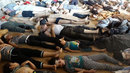
War crimes: dead bodies everywhere
The Syrian government is facing growing pressure to allow an international probe of a chemical weapons (WMD) poison gas attack on the outskirts of Damascus. The Syrian opposition says government forces fired it into rebel-held neighborhoods of Ghouta, killing hundreds of people. Video posted on YouTube this week shows frantic scenes of overwhelmed hospitals, dead children, and countless bodies. If confirmed, it would stand to be the most violent incident in Syria since the police state began cracking down on a citizen's uprising two years ago and one of the worst toxic attacks in decades. It occurred days after U.N. inspectors arrived in the country to investigate previous attacks. From Syria Razan Zaitouneh, a lawyer and human rights activist who works with the Human Rights Violation Documentation Center, joins in. "We couldn’t believe our eyes," Zaitouneh says of witnessing the attack’s aftermath. "I haven’t seen such death in my whole life." Patrick Cockburn, a longtime Middle East correspondent for the London Independent who recently returned from reporting in Syria, also joins. His latest article is "The evidence of chemical attack seems compelling — but remember — there’s a propaganda war on." 

Chelseamanning1
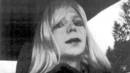
The former Pfc. Bradley Manning
One day after a military judge handed down a 35-year sentence to make an example of Bradley (now Chelsea) Manning for leaking classified U.S. files to Julian Assange's WikiLeaks, she announced a gender transition to female under the name Chelsea. "As I transition into this next phase of my life, I want everyone to know the real me," Manning said. "I am Chelsea Manning. I am a female. Given the way that I feel, and have felt since childhood, I want to begin hormone therapy as soon as possible. I hope that you will support me in this transition." The announcement has raised many issues about how Manning will be treated in military prison, whether she will have access to hormone therapy and broader issues about transgender rights. Guests: Lauren McNamara, a transgender activist in Florida who became an online confidant of Manning in 2009 and later testified at the military trial; Chase Strangio, a staff attorney with the American Civil Liberties Union or ACLU’s Lesbian Gay Bisexual and Transgender Project.

Enlightenment Mystery: Relics (video)

Ashley Wells, CC Liu, Dhr. Seven, Amber Larson, Wisdom Quarterly with Dr. Rei Rei, Ven. Chandananda (labuddhistvihara.org), Roshi Albrizze (pasadharma.org); MahaStupa.org
These exquisite crystalline formations are relics of various body parts (mahastupa.org)
   
Ancient stupa (reliquary), Thailand (Andyzart)
We filed in early in the afternoon, returning from a Dharma meeting at the doctor's house where we were looking at the Dalai Lama's book Beyond Religion. Whoever is ghostwriting is doing a great job, or Tibet's spiritual leader is making great progress in his English. Who needs religious labels? All we need are... ethics? We're still on the part where India is being exalted for its religious diversity and tolerance.

Relics (shariras) resemble pearls and glass beads with new growths (mahastupa.org)
 
Multiplying cluster of relics (photo gallery)
Last Sunday was the August full-moon observance day (uposatha). All of the white-clad Sinhalese devotees observing the Eight Precepts at the Los Angeles Buddhist Vihara filed in behind us. The Sri Lankan Theravada abbot, Ven. Dhammarama Mahathera, was at their head. And the abbot of Lu Mountain Monastery, author and sacred relic custodian Ven. Master YongHua (author of The Chan Handbook: The Learner's Guide to Meditation), was overjoyed to explain the evidence.

Joyful child plays with monk in Ladakhi temple, Buddhist India (Vincenzo Rossi/flickr)
 
Fragrant tooth relic (BLI)
When the fragrant (and still growing) sacred tooth relic was placed under the nose of American Zen teacher Jeff Albrizze, he fell into a reverie re-experiencing past lives, seeing himself back as a monk stirring a great pot. It seemed to be the heat, but he later explained he was powerfully shaken. Dr. Rei, with psychic abilities, felt a purifying presence and joyful light beings. The rest of us were convinced by the Abbot Master YongHua's impromptu presentation. Wrongly harboring doubt and vening pessimistic views that lead others to wrongly doubt is serious demerit (unwholesome karma) with the potential of leading one to worlds of misery.
 
Crystal tray of colorful shariras
A healthy skepticism leads one to investigate rather than doubt. The abbot went on to say how fortunate we all were: With the relics at hand, they will be videotaped multiplying to help us overcome our skeptical doubt, one of the most serious and harmful hindrances on the path to enlightenment.
Why I beleeb in Justin Beiber!

Value of Psychedelic Experience (Alan Watts)

Wisdom Quarterly; Alan Watts, "The World as Emptiness" (The Vaults of Erowid, erowid.org)

Unsaintly Zen teacher Alan Watts (ianmack.com)
This particular weekend seminar is devoted to Buddhism, and it should be said first that there is a sense in which Buddhism is Hinduism, stripped for export. 
 
Last week, when I discussed Hinduism, I discussed many things to do with the organization of Hindu society, because Hinduism is not merely what we call a "religion." It's a whole culture. It's a legal system, it's a social [caste] system, it's a system of etiquette, and it includes everything. It includes housing, it includes food, it includes art. 
 
This is because the Hindus and many other ancient peoples do not make, as we do, a division between religion and everything else. Religion is not a department of life; it is something that enters into the whole of it. But you see, when a religion and a culture are inseparable, it's very difficult to export a culture, because it comes into conflict with the established traditions, manners, and customs of other people.

Nature's sacred helpers: entheogens
So the question arises, what are the essentials of Hinduism that could be exported? And when you answer that, approximately you'll get Buddhism. [This is because the Buddha was the most revivifying force in the thought, teachings, and understanding of the very ancient dharma of the Vedas, known as Brahmanism in his day and later as Hinduism. As a great sage, Shakyamuni took the old staid teachings that had been recited for millennia and breathed new life into them.]
 
As I explained, the essential of Hinduism, the real, deep root, isn't any kind of doctrine, it isn't really any special kind of discipline, although of course disciplines are involved. The center of Hinduism is an experience called moksha, liberation, in which, through the dissipation of the illusion that each person is a separate thing in a world consisting of nothing but a collection of separate things, you discover that you are, in a way, on one level an illusion, but on another level, you are what they call "the self," the one self, which is all that there is. 
 
(psychologyandtheother.com)
The universe [in Hindu and Mahayana Buddhist thought] is the game of the self, which plays hide and seek forever and ever. When it plays "hide," it plays it so well, hides so cleverly, that it pretends to be all of us, and all things whatsoever, and we don't know it because it's playing "hide."
 
But when it plays "seek," it enters onto a path of yoga ["union" with Brahman, the ultimate reality behind the illusion], and through following this path it wakes up, and the scales fall from one's eyes.

Now, in just the same way, the center of Buddhism [is] the really important thing about Buddhism -- the experience which they call "awakening."
 
Buddha is a title, and not a proper name. It comes from a Sanskrit root bhudh, and that means "to know," but better, "waking [up]." And so you get from this root "bodhi." That is the state of being awakened. And so "buddha" is "the awakened one," "the awakened person." And so there can, of course, in Buddhist ideas be very many buddhas.

The person called THE Buddha is only one of myriads [the historical one, the Shakyan Prince Siddhartha Gautama]. Because Buddhists, like the Hindus, are quite sure that our world is only one among billions, and buddhas come and go in the worlds.
 
But sometimes, you see, there comes into the world what you might call a "'big buddha," a very important one. And such a one is said to have been Guatama, the son of a king living in ancient northern India, in a part of the world we now call Nepal [or modern research is actually pointing to the northwest of the country to present-day Afghanistan], living shortly after 600 BCE.
 
All dates in Indian history are vague, and so I never try to get you to remember any precise date, like 564, which some people think it was, but I give you a vague date -- just after 600 BCE is probably right.
 
The Psychedelic Explorer's Guide (Fadiman)
Most of you, I'm sure, know the story of his life. Is there anyone who doesn't, I mean roughly? Okay. So I won't bother too much with that. But the point is that when, in India, a man was called a buddha, or THE Buddha, this is a title of a very exalted nature. It is first of all necessary for a buddha to be human. He can't be any other kind of being, whether in the Hindu scale of beings he's above the human state or below it.
 
He is superior to all gods [devas and brahmas], because according to Indian ideas, gods (brahmas) or angels (devas) -- "angels" are probably a better name for them than gods -- all those exalted beings are still in the Wheel of  Becoming (samsara), still in the chains of karma -- that is action that requires more action to complete it, and goes on requiring the need for more action. They're still, according to popular ideas, going 'round the Wheel of Life after life after life after life, because they still have the thirst for existence, or to put it in a Hindu way: In them the self is still playing the game of not being itself.

But the Buddha's doctrine, based on his own experience of awakening, which occurred after seven years of attempts to study with the various yogis of the time, all of whom used the method of extreme asceticism [and absorption-meditation or samadhi], fasting, doing all sort of exercises, lying on beds of nails, sleeping on broken rocks, any kind of thing to break down egocentricity, to become unselfish, to become detached, to exterminate greed for life [and sensuous delights].
But the Buddha found that all that was futile; that was not The Way. And one day [at death's doorstep from self-starvation] he broke his ascetic discipline and accepted a bowl of some kind of rice-milk soup from a girl who was looking after cattle. And suddenly in this tremendous relaxation, he went and sat down under a tree, and the burden lifted.
  
He saw, completely, that what he had been doing was on the wrong track. You can't make a silk purse out of a sow's ear. And no amount of effort will make a person who believes himself to be an ego be really unselfish. 
 
So long as you think, and feel, that you are a someone contained in your bag of skin, and that's all, there is no way whatsoever of your behaving unselfishly. Oh yes, you can imitate unselfishness. You can go through all sorts of the highly refined forms of unselfishness, but you're still tied to the Wheel of Becoming by the golden chains of your good deeds, as the obviously bad people are tied to it by the lead chains of their misbehavior....

So the bodhisattva (or being who vows to) saves all beings, not by preaching sermons to them, but by showing them that they are delivered, they are liberated, by the act of not being able to stop changing [yet being unable or unwilling to give up clinging].

You can't hang on to yourself. You don't have to try to not hang on to your "self." It can't be done, and that is salvation. That's why you may think it a grisly habit, but certain monsatics keep skulls on their desks, momento mori, to "be mindful of death."
 
Gurdjieff says in one of his books that the most important thing for anyone to realize is that you, and every person you see, will soon be dead. It sounds so gloomy to us, because we have devised a culture fundamentally resisting death. 
 
There is a wonderful saying that Anandakuri Swami used to quote: "I pray that death will not come and find me still unannihilated." In other words, that one dies happy if there is no one to die. 
 
In other words, if the ego's disappeared before death caught up to one [then there's no problem].  But you see, the knowledge of death helps the ego to disappear, because it tells you you can't hang on. So what we need, if we're going to have a good religion around, this is one of the places where it can start -- by having, I suppose they'd call it, The Institution For Creative Dying, or something like that.

You can have one department where you can have champagne and cocktail parties to die with, another department where you can have glorious religious rituals with priests and things like that, another department where you can have psychedelic substances, another department where you can have special kinds of music, anything, you know. 
 
All these arrangements will be provided for in a hospital for delightful dying. But that's the thing, to go out with a bang instead of a whimper. More