Showing posts with label Native Amercians. Show all posts

Thursday, March 20, 2025

Spring Begins: Vernal Equinox (3/20)

Tibetan Buddhist Goddess White Tara (among other Taras), whose name means "star"
(NBC News) Deadly storms expected across USA as millions brace for tornadoes before spring

Now it's called March equinox in the U.S.
No one seems to have told the rest of the country, but where the sun sets (West Coast), the sun rose this morning to a new spring. Everything is green and sunny, cool and moist, and a person's thoughts lilt towards thoughts of 

The Spring Equinox, also known as the vernal equinox, is one of the four solar festivals of the year. The equinox — which translates roughly in Latin to “equal night” — is when the sun sits vertically above the equator, making day and night equal across the planet.


Persephone, Goddess of Spring (animalia-life)
The Spring Equinox officially marks the beginning of spring in the Northern Hemisphere, and there are celebrations around the world to usher in longer days and springtime. [This is the real traditional New Year's Day, when the Earth (Tierra, Gaia, Bhumi) renews herself in preparation for another cycle.]

In some cultures, this day also marks the beginning of the new year, which in Iranian (original Aryan) culture is called Nowruz. The Spring Equinox is a brilliant time for new beginnings [like maybe a nice spring cleaning], no matter how one celebrates on March 20th.

Here are some Spring Equinox Activities...  More
  • This is the best time to begin a regular meditation practice, graduating to walking meditation, mindfulness in nature, and deep stillness to see things as they really are.
An outfit just for practice helps.
Do the basics: Put on all white. Find a quiet spot apart from distractions. Use this spot over and over again. It becomes powerful. Set down a mat and cushion (a bundle of leaves or grass is enough to get the tailbone higher than the knees). Sit. Inhale deeply. Release. Do it again a few times, without forcing the air out. It's just about letting go completely, so completely that the body hangs as if held up by a clothing hanger, not stiff, not slack.

You're a baby in white, so go easy.
Straighter is more comfortable, even though it doesn't seem like it at first. Posture is important to attention. Bring (advert) the attention to the present moment, this moment, and to stay in just this moment, remain aware of the breath. Which breath? This breath, just the one happening now all by itself. Become the watcher (not the commenter, fixer, improver, slowdowner, or anything else), just the watcher. This is mindfulness -- clear awareness of the present without evaluation.

Whoa, what a trip! What was that? I want that again!
Set a time limit in advance and keep it. Even if it would be nice to go longer because it is going so well, know the time of rising. Even if it is going horribly with raving lunatic thoughts of a psychopath with lurid fantasies and wrath, lust and revenge, delusion and a lightshow, know the time of rising. The mind will thank you later.

Ten minutes is a good start time, slowly working up to an hourlong sit. That seems impossible now, but in time, whaddyaknow, it suddenly is possible. What changed? I'dunno. This practice is about persistence. It does itself and then there is no effort. The enemies of that are expectations, unsettled greed or desire for achieving something, and the Five Hindrances. They will come to hinder. They are already present. They can be overcome. But whether or not they have been overcome, persist. This is spring. This is the beginning. Have "beginner's mind" in place of the "monkey mind" that usually rules the cage. Smile. It helps.

Instructions are confusing because it's so simple.
It is easy to say that "meditation is NOT about thinking." That's clear. That's easy to see. Don't indulge thought; just let them be by turning your attention to this subtle breath that keeps changing. What is difficult to grasp is that "meditation is NOT about not-thinking." Not-thinking may happen. It doesn't matter. As that is not the goal, if it doesn't happen, it's okay. Giving attention to one object and bringing attention back and back again and again ("Begin again" as Sharon Salzberg says) is what is important.

Feed me, Phone-Momma! Feed me more!!
The mind like a petulant and insolent child will resist. Let it. Bring it back. Do not scold it or become upset. Let it be. Surrender completely to this moment, whatever is in this moment, not being moved to do anything no matter what the mind says it must do. See what happens. Could the mind be wrong no matter what it feels or demands or insists is true?

How did Siddhartha Gautama do it?
We'll never see things as they really are so long as we keep believing that we already are seeing them that way. We have never been seeing them that way. If we had, we'd awaken. We'd be enlightened, which is to say, Dependent Origination would make sense. And it doesn't, does it? (Hint: It's a practice, not a theory). That's a whole different kind of meditation called insight (vipassana) after getting good at this kind, which is called serenity (samatha). Don't jump ahead. Let it go. (If all else fails, sign up for a free 10-day Goenka retreat. Everyone should do at least one in life).

TODAY IS ALSO
POEM: "Locksley Hall"
By Alfred, Lord Tennyson

Greco-Roman Cora
Comrades, leave me here a little, while as yet 't is early morn:
Leave me here, and when you want me, sound upon the bugle-horn.

'T is the place, and all around it, as of old, the curlews call,
Dreary gleams about the moorland flying over Locksley Hall;

Locksley Hall, that in the distance overlooks the sandy tracts,
And the hollow ocean-ridges roaring into cataracts.

Many a night from yonder ivied casement, ere I went to rest,
Did I look on great Orion sloping slowly to the West.

Many a night I saw the Pleiads, rising thro' the mellow shade,
Glitter like a swarm of fire-flies tangled in a silver braid.

Here about the beach I wander'd, nourishing a youth sublime
With the fairy tales of science, and the long result of Time;

When the centuries behind me like a fruitful land reposed;
When I clung to all the present for the promise that it closed:

When I dipt into the future far as human eye could see;
Saw the Vision of the world and all the wonder that would be.—

In the Spring a fuller crimson comes upon the robin's breast;
In the Spring the wanton lapwing gets himself another crest;

In the Spring a livelier iris changes on the burnish'd dove;
In the Spring a young man's fancy lightly turns to thoughts of love. More

Sunday, November 9, 2014

An Indigenous Peoples’ History of the U.S.

Xochitl, Ashley Wells, Wisdom Quarterly; Roxanne Dunbar-Ortiz (beacon.org)
One day a relative will recount what was done to the federations and tribes by the colonial imperialist settlers who used Christianity against us, like Catholics had used the mission system to enslave us. And what was their motive? Capitalism without limits (WQ).
.
The first history of the United States told from the perspective of indigenous peoples.

Today in the United States there are more than 500 federally recognized Indigenous Nations comprising nearly 3,000,000 people, descendants of the 15,000,000 Native [or First Nations] people who once inhabited this land.

The centuries-long genocidal program of the U.S. settler-colonial regimen has largely been omitted from history. Now, for the first time, acclaimed historian and activist Roxanne Dunbar-Ortiz offers a history of the United States told from the perspective of Indigenous peoples and reveals how Native Americans, for centuries, actively resisted expansion of the U.S. empire.

In An Indigenous Peoples’ History of the United States, Dunbar-Ortiz adroitly challenges the founding myth of the U.S. and shows how policy against the Indigenous peoples was colonialist and designed to seize the territories of the original inhabitants, displacing or eliminating them. And as Dunbar-Ortiz reveals, this policy was praised in popular culture, through writers like James Fenimore Cooper and Walt Whitman, and in the highest offices of government and the military.

Shockingly, as the genocidal policy reached its zenith under President Andrew Jackson, its ruthlessness was best articulated by U.S. Army General Thomas S. Jesup, who, in 1836, wrote of the Seminoles: “The country can be rid of them only by exterminating them.”

Spanning more than 400 years, this classic bottom-up peoples’ history radically reframes U.S. history and explodes the silences that have haunted our national narrative. More

Sunday, October 12, 2014

Native Los Angeles: Kuruvungna Springs

On the University High School Campus in West Los Angeles
Freshwaters of LA trickle down toward the sea at Santa Monica Bay from the foothills.
.
Kuruvungna Springs Cultural Center Museum
Visit the new native plant nursery and newly-uncovered Native American artifacts that have been put on display. A special event was recently hosted on "Life Before Columbus." Contact the center for more events.
  • Kuruvungna Springs Cultural Center & Museum
  • University High School
    1439 South Barrington Ave., West L.A., CA 90025
  • gabrielinosprings.com 
  • Facebook: “Kuruvungna Springs”
The University High School Campus in West LA hosts ancient freshwater springs on the site of a Tongva Indian Village called Kuruvungna -- “a place where we are all in the Sun.”

Enjoy the four year old Native plant garden -- oaks, cottonwoods, wild rose, and sage. Rain or shine. 

Where? The Springs at Kuruvungna are located at 1439 South Barrington Ave. on the campus of University High School, one mile west of the 405 Freeway, on Barrington, one block north of Santa Monica Blvd., the second driveway on the west side of Barrington, Los Angeles, CA 90025.

Children Welcome. Free Parking. No smoking, dogs, or alcohol. Inquiries: program@gabrielinosprings.com

Wednesday, June 18, 2014

Climate Change is Killing the Desert (audio)

Xochitl, Amber Larson, CC Liu, Wisdom Quarterly; A Martinez, Alex Cohen (Take Two/SCPR)
Sunset, Joshua Tree Nat'l Park, Boy Scout Trail head, 5-29-14 (Richard Lui/The Desert Sun)
The future of California and the American Southwest unless we stop corporate radiers
    
It's not getting hotter just less cool, more chaotic
Nearly all of the Joshua trees in Joshua Tree National Forest could disappear in a few decades because of climate change.
 
It's hard to imagine that in the deserts of the American Southwest, a few degrees hotter can drastically affect a place that's already very dry.

Many predictions of rising worldwide temperatures [most of them conservative underestimates] often conjure up images of swelling shorelines flooding beachfront homes and towns like Manhattan and Malibu because of shrinking polar ice caps.

The high Buddhist desert of Ladakh, India in the Himalayas, behind Mt. Everest, here overlooking the lamasery of Tsemo Gompa in the capital of Leh (SylvainBrajeul/flickr.com)
 
(Geoengineeringwatch.org) "Climate engineering" is weather modifcation/warfare that means the collapse of civilization. Look up. Those lines and ugly haze come from "chemtrails."
 
Himalayan desert behind Everest, Zanskar river
But Ian James, environment reporter for The Desert Sun, wrote a three-part investigation on how climate change could drastically affect the flora (plants), fauna (animals), and people (humans and other humanoids like the earthbound-devas or nature spirits and the dreaded djinn) of this arid wilderness.
 
Desert mesa, American Southwest drying up
"Basically in the desert there's very little humidity in the air," said James on Take Two.

"That lack of humidity in the air, in the soil, in the whole region makes it so the hotter temperatures don't have that one other element to bump up against that would make it a little less intense." LISTEN: AUDIO (9:20)
  
Berkeley may consider gas pump warnings about global warming
[Increase] awareness. "Chances are a consumer dismissive of climate change won’t notice the label," Brooks said. "The person concerned about climate change will read the label...It acts as a reinforcement...
 
How the insurance industry sees climate change
How the insurance industry sees climate change ...America, on the threat climate change posed to the $2-trillion... Climate change: A June 17 Op-Ed... steps to prevent losses related to climate change. Farmers has withdrawn the lawsuits...
 
Tale of passenger pigeon extinction may have had natural twist
Tale of passenger pigeon extinction may have had natural twist(Geoffrey Mohan) The authors wondered how climate and food might have affected the passenger pigeon... it also revealed sharp year-to-year changes in acorn production that could have affected... over the last million years, based on climate, food, and other factors, the authors...

Monday, May 12, 2014

I'm a Mexican Buddhist...in LA/LA Land (video)

Crystal Quintero, Ashley Wells, CC Liu, Pfc. Sandoval, Wisdom Quarterly (Part 2)
"LA/LA"? Welcome to LA LA Land: Los Angeles, Latin America (sweetnrawme.com)

If I were Frieda Kahlo
LOS ANGELES, Latin America - The Getty is preparing to launch an art exhibit that accentuates the embarrassment of artistic riches we have in Los Angeles, which not everyone realizes is in Latin America.

It is for a lot of reasons. Not only did it used to be Mexico until European Invaders during U.S. War on the Spanish annexed it like Ukraine, it is again predominantly Latin American.

Buddhists discovered America before Columbus
Although Asians are the fastest growing ethnicity in the U.S., more Latinas and Latinos live in California than any other group.

Most are not Mexican Buddhists anymore, but a lot are. And it's amazing to find out that there is a connection between the Native Americans, First Nations people, and Mexicans (Aztecs, Maya or Mayans, Toltecs, Olmecs, Incas, and many others) from neighboring Mexico, Mesoamerica, and Central America.
 
The famous "Mayan Calendar" is Aztec
It will be a long time before that information goes mainstream.

But it takes awhile for the truth to surface. In 1885 Edward P. Vining published the facts about inglorious Columbus and the Afghan Buddhist missionaries, led by the Chinese Buddhist monk Hwui Shan (Hui Shen), who arrived in America in the 5th century. America is the Fusang they discovered. So everyone will have to settle for the Getty's Pacific Standard Time 2017.
Getty Foundation (getty.edu)
TheGetty and the Getty Foundation: Art and Art History in Los Angeles (getty.edu)
If I were a leftist Aztec warrior marching through the streets of Los Angeles (latimes.com)
 
In the fall of 2011 Los Angeles celebrated the launch of Pacific Standard Time: Art in L.A. 1945-1980, an unprecedented collaboration of arts institutions across Southern California joining together to tell the story of the birth of the L.A. art scene.
 
If I were Irish-Mexican like Peter (as Che)*
Yet it was 230 years earlier, in 1781, that the city of Los Angeles itself was born when El Pueblo de Nuestra Señora la Reina de los Ángeles [de Porciúncula] was founded as part of New Spain. [A pueblo like that of the Puebloan Buddhists!]

Thus, while Los Angeles [the "City of Angels"] often represents the vanguard of contemporary culture in the United States, it is at the same time a Latin American city of long duration.
 
If I went to BofA or KA
Today, nearly half of the population of Los Angeles has roots in Latin America, contributing to Southern California as a lively center of artistic production and a natural nexus of cultural creativity between North and South. 
 
In recent years a number of exhibitions in the Americas and Europe have offered an introduction to the original and varied heritage of Latin America and the Latin American diaspora.

Now there is an opportunity for a broader and deeper examination of this art through a renewed collaboration by the Pacific Standard Time partners. In the process, Southern California will play a significant role in the research and presentation of Latin American art. More

Buddhism was in Mexico before Christianity (PRI video)

Tuesday, April 8, 2014

Losing Zen Buddhist activist Matthiessen (NPR)

Pat Macpherson, CC Liu, Wisdom Quarterly; Weekend Edition Sunday (NPR, April 6, 2014)
Bhumi/Gaia is a precious thing, nurturing and full of intelligence (NASA/colourbox.com)

 
Zen (counterpointpress.com)
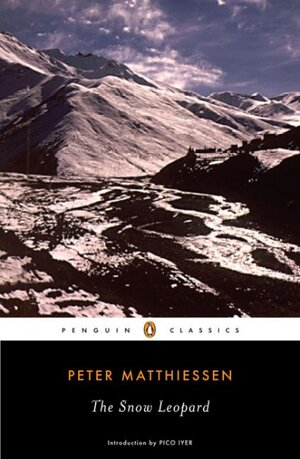
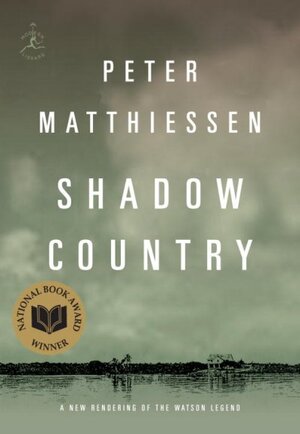
Author Peter Muryo Matthiessen has died in New York at the age of 86 from acute myeloid leukemia. He was a novelist and naturalist, who wrote 33 books, among his best-known being The Snow Leopard and the novels Far Tortuga and At Play in the Fields of the Lord, which was made into a Hollywood film.

He is the only writer to ever win the National Book Award in the categories of Fiction (for Shadow Country) and General Nonfiction (for The Snow Leopard, which also won for Contemporary Thought). 
 
The Snow LeopardHe was also a political activist, a Buddhist teacher, co-founder of The Paris Review and, briefly, a spy.
 
In his first nonfiction book, Matthiessen staked out the territory he would revisit the rest of his life -- the destruction of nature and natural peoples at the hands of humankind. Wilderness in America, published in 1959, is a history of the extinction of animal and bird species in North America:
Species appear, and left behind by a changing earth, they disappear forever, and there is a certain solace in the inexorable. But until man, the highest predator, evolved, the process of extinction was a slow one. No species but man, so far as is known, unaided by circumstance or climactic change, has ever extinguished another.
Wilderness in America led to a series of assignments from The New Yorker that in turn led to a series of books....
 
Matthiessen traveled to New Guinea in 1961 with Michael Rockefeller, who disappeared and may have been the victim of headhunters (or so the legend goes). He wrote about trips to Africa, the Himalayas, South America, and Antarctica. 
But he said he never intended to write nonfiction. "Fiction is my first love, and that's the way I began," he said. "And frankly, when I began nonfiction, I did it for money."
 
Shadow CountryMcKay Jenkins, the author of The Peter Matthiessen Reader and several nature books, says that's astonishing. "That's kind of like Babe Ruth wanting to be remembered as a pitcher," Jenkins says. "Matthiessen is held in such high regard as a nonfiction writer by nonfiction writers that they sometimes say, 'How is it possible that this guy can be such a virtuoso fiction writer, and give his equally substantial body of nonfiction work such short shrift?' Because all the rest of us are trying to do what we can to mimic his nonfiction work."
 
Matthiessen was remarkable in a lot of ways. He was born in Manhattan in 1927 to a wealthy family. After a stint in the Navy, he attended Yale, where he began writing short stories -- and where one of his professors recruited him into the CIA [like someone somewhere did Barry Obama, Johnny Kerry, Bush Sr., Karl(yle) Rove, Dick Cheney...and the even the fleeing Dalai Lama. The Company gets around.]

In 1953, Matthiessen co-founded what would become one of the most important literary magazines of the 20th Century, The Paris Review. But he did it as a cover for his CIA activities -- the only adventure in his long life that he said he ever regretted.
 
"I was a spy," he said. "When I went in there, it was the end of the Cold War -- Russia was a great menace out there in the distance. It was considered very patriotic to join the CIA. I didn't know my politics were going to veer leftward, and that I would really come to despise the CIA."
 
Matthiessen's politics led to a lifelong career as an activist. He wrote books about union [American farmworker] organizer Cesar Chavez, the American Indian Movement...
 
After Matthiessen's second wife, Deborah, died of cancer in 1972, he embraced Zen Buddhism and eventually became a priest and teacher. In his 1978 book, The Snow Leopard, Matthiessen wrote about a spiritual journey in the remote mountains of Nepal, and the impossibility of capturing experience in words:
The sun is round. I ring with life, and the mountains ring, and when I can hear it, there is a ringing that we share. I understand all this, not in my mind, but in my heart, knowing how meaningless it is to try to capture what cannot be expressed, knowing that mere words will remain when I read it all again, another day. LISTEN
Peter Muryo Matthiessen [was] a two-time winner of the National Book Award, a longtime Zen practitioner, and Bernie Glassman’s first Dharma successor. He [was] an active Zen teacher in Sagaponack, New York.