Showing posts with label Buddhism In America. Show all posts

Friday, June 30, 2023

Native-American-Chinese in California, Mexico

Ancient Geographic, May 12, 2023; Xochitl, Dhr. Seven, CC Liu (eds.), Wisdom Quarterly
Yes, your facial features show you are not Siberian so much as Northern Chinese.

According to American scholars Hendon Harris (chinesediscoveramerica.com) and Ken Campbell (lastwilderness.com), the Americas are "Fu Sang," the mythical land to the east of China, not the nearby islands of Japan.
Fu Sang (also called Fusang) was a wondrous place of exotic people, foods, and customs. American historian Edward Vining (An inglorious Columbus; or, Evidence that Hwui Shan and a party of Buddhist monks from Afghanistan discovered America in the fifth century, AD, 1885) knew this by 1885 and we had never heard?

Mysterious genetic origins of Native Americans tracked to China
(Ancient Geographic) According to recent genetic and DNA research, some of the first Native Americas [Fusang] came from the north coast of China.

Where did we come from? Aztlán
According to a new genomics research, some of the initial arrivals occurred during the last Ice Age and shortly thereafter, in two different migrations.

People from the north coast of China [an easy trip along the coasts all along the way as Edward Payson Vining (1885) and Rick Fields (2022) showed] were among the earliest humans to arrive in the Americas, arriving in two independent migrations during and after the last Ice Age, according to a new genomics research.

We're related by blood!
Explorers might have arrived in the New World by a terrestrial route through an ice-free corridor [Bering Straits land bridge], although this was most likely not the initial migration.

The kelp highway theory is the polar opposite of the old "ice-free corridor" route.

The findings suggest that, in addition to the previously identified ancestral sources of Native Americans in Siberia, northern coastal China acted as a genetic reservoir that contributed to the gene pool.

CONCLUSION
So I'm Mexican-Chinese?
(WQ) In addition to the early American scholarship of Edward P. Vining (An inglorious Columbus, 1885), Hendon Harris points to an article in American Heritage (April 1966, p. 9) by Robert Larson entitled "Was America the Wonderful Land of Fusang?"

The last paragraph of it reads: "Who will now revive the Hwui Shan controversy and gainsay the conclusion of Dr. Charles E. Chapman, the last American historian to write on the subject? ...Fusang was in America, presumably in Mexico... The evidence that it was...is almost overwhelming."

Friday, October 7, 2022

American Buddhism? Spiritual revolution (doc)

BTN, "American Buddhism!" (documentary) 12/9/21; CC Liu, Crystal Q. (eds.), Wisdom Quarterly

Spiritual Revolution! American Buddhism (BTN)
North American lay Buddhists meditating at the Pacific Zen Institute (PZI), California
.
(Korea Buddhist Television Network Official channel) Buddhism, once primarily practiced in Asia, is now also practiced in the United States.

American Saint Jack Kornfield (spiritrock.org)
As Buddhism does not require any formal "conversion," American Buddhists can easily incorporate Dharma practice into their normal routines and traditions. The result is that American Buddhists come from every ethnicity, nationality, and religious tradition.

The Beat Poets were early American Buddhists
In 2012, The San Diego Union-Tribune estimated there were 1.2 million U.S. practitioners, of whom 40% are living in Southern California.

In terms of percentage, with its large Asian and particularly Japanese American community, Hawaii has the most Buddhists at 8% of the population.

The term "American Buddhism" can be used to describe all Buddhist groups within the United States, including Asian American Buddhists born into the tradition, who comprise the largest percentage of Buddhists in the country.

#american_buddhism #buddhism #mindfulness Music: Etoll_New Dawn-Robert Etoll Song 1 of 2 Feels Song 2 of 2 ARTIST Q-Factory ALBUM MUSIC FOR FILM and TELEVISION - Vol.2 - CD2.

Saturday, July 16, 2022

Buddhism for city people

Jen B. (Dharma Buddhist Meditation), Fae a Dodo (photo), Dhr. Seven (ed.), Wisdom Quarterly
Electric vehicle scooter motorbike by Greenbee EV Tech Inc. for only $1,250 (Groupon)
.
It's happening. I'm becoming Fae.
It's nice to hear about the Thai Theravada Forest Tradition, imagining sitting under a canopy of green jungle light in meditation, no mosquitoes making it into my crot or parasol netting.

But I live in the city, tool around in an EV, and can hardly see myself ever moving into the forest. Don't go in there! That's where the Fae (Irish sidhe) reside, fairy woodland tricksters wanting little if anything to do with mere mortals. How the Buddha got along with these devas and devis makes little sense, unless he spent a lot of time sending them metta or loving-kindness to soothe them that he was no threat.

It used to common, now rare.
Wandering ascetics, monks and nuns, dealing with ogres (yakkhas) and gnomes (kumbandhas), shapeshifters (maras, nagas, asuras) and other oddities (narakas) and ghosts (pretas), it makes no sense to city folk, the Cosmopolitans used to temples and officiants.

It's true, Fae. Buddhism began as a forest tradition, but it came out of the woods long ago, into the village and big city centers. Now monastics are temple-priests. Everything but weddings are arranged, even though monastics will gladly come by after the nuptials to offer blessings (suttas) and protective chants (parittas).

 Latin American Bhante in NoHo
In the city, for example Bangkok, Thailand, Los Angeles' twin city (both sharing essentially the same long name) we find magnificent temples with royal patrols, gold edifices, statues, pagoda reliquaries.

Now throughout the US there are meditation centers, monastic complexes with an emphasis on lay practitioners. Come see.

Can I drive there?

Of course.

Thursday, July 20, 2017

Of course Columbus didn't discover America

(TheGuardian.com, 2006); Pat Macpherson, Dhr. Seven (eds.), Wisdom Quarterly

Of course Columbus didn't discover America. But then nor did China
A map [shown below] supporting claims that Chinese Admiral Zheng He reached the New World in the early 15th century is [I say] a hoax.
We all know that a lie goes halfway round the world while truth is putting on its boots. But what if the lie goes the whole way? What if it claims to circumnavigate the globe?

Does map prove China discovered America 70 years before Columbus? (io9.gizmodo.com)
 
This is a Eurocentric map of our world.
[On Jan. 19, 2006 Simon Jenkins wrote:] Last week came purported evidence that the Chinese Admiral Zheng He (Cheng Ho) sailed his great fleet of junks around the world a century before Columbus, Da Gama, and Magellan.

An 18th-century copy of a map dated 1418 has emerged from a Shanghai, China bookshop, depicting North and South America, Australia and Antarctica.

The map was bought by Chinese lawyer Liu Gang and was reportedly to go on display on Tuesday in London's Maritime Museum. (The museum denies all knowledge of it.)

The map challenges the customary Euro-centric version of global discovery and can thus rely on a weight of political correctness in support. It appears to stake China's claim to have "discovered" America first.
 
This comes as a surprise to those of us who know for a fact that America was discovered by Prince Madoc ab Owain Gwynedd in 1170. He landed at Mobile, Alabama, on the orders of the family druid and asserted Wales's claim to King Arthur's North Atlantic empire.

Making his way across country [USA], he settled west of the Mississippi river, where the Mandan tribe were encountered in the 18th century, fair-skinned and speaking a dialect of Welsh.
 
Unfortunately Madoc's arrival had been forestalled by St. Brendan in the seventh century. He sailed to America in a leather-bound coracle, as Tim Severin proved in 1977.

1421: The Year China Discovered America
The survivors of this trip remain pickled in a downtown Boston saloon to this day. Brendan and Madoc were followed by a Scottish knight Templar, Henry Sinclair, seeking refuge from the suppression of his order in 1398.

He and his Freemasons escaped with assorted treasures and holy grails to settle in Nova Scotia with the Micmac Indians (clearly a tribe of Hiberno-Scots [Irish] ancestry).

Sinclair's Masonic star, or "la merika," duly gave its name to the continent and merits a Da Vinci saga all of its own.

The only blot on this glory is that everyone knows America got its name from Glamorgan's Richard ap Meurig (Amerik), a wealthy sponsor of John Cabot's search for the north-west passage in the 1490s. More
Article preview thumbnail
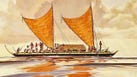
Pacific Islanders reached America before Columbus
Chinese inscriptions on rocks in U.S. prove Asians lived here 3,300 years ago (Mail Online).

Friday, April 14, 2017

Buddhism in America (Columbia U. Press)

Ashley Wells, Seth Auberon (eds.), Wisdom Quarterly; CUP.columbia.edu


I love the Buddha and immigrants rights (AP)
Over the past half century in America, Buddhism has grown from a transplanted philosophy to a full-fledged religious movement, rich in its own practices, leaders, adherents, and institutions.

Long favored as an essential guide to this history, Buddhism in America covers the three major groups that shape the tradition -- an emerging Asian immigrant population, native-born converts, and old-line Asian American Buddhists -- and their distinct yet spiritually connected efforts to remake Buddhism in a Western context.

This edition updates existing text and adds three new essays on contemporary developments in American Buddhism, particularly the aging of the baby boom population and its effect on American Buddhism's modern character.
 
New material includes revised information on the full range of communities profiled in the first edition; an added study of a second generation of young, Euro-American leaders and teachers; an accessible look at the increasing importance of meditation and neurobiological research; and a provocative consideration of the mindfulness movement in American culture.
 
Peace and social justice start within. So I sit.
The volume maintains its detailed account of South and East Asian influences on American Buddhist practices, as well as instances of interreligious dialogue, social activism in Buddhism, and complex gender roles within the community.

Introductory chapters describe Buddhism's arrival in America with the 19th-century Transcendentalists and rapid spread with the Beat Poets of the 1950s. The volume now concludes with a frank assessment of the challenges and prospects of American Buddhism in the 21st century. More
 
ABOUT THE AUTHOR 
Richard Hughes Seager is professor of religious studies at Hamilton College, author of Encountering the Dharma; The World's Parliament of Religions: The East-West Encounter, Chicago, 1893; Dawn of Religious Pluralism: Voices from the World's Parliament of Religions.

Thursday, July 9, 2015

Latino Buddhism in Los Angeles

Wisdom Quarterly* and  Eddie Escalante (University of the West, 626.571.8811, ext. 375)
Statue of Kwan Yin on a lotus pedestal on a turbulent sea (pedronogueriaphotography.com)
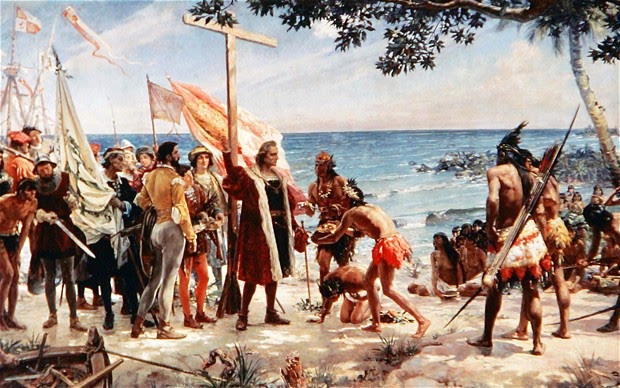
Pope Francis apologizes for Holy Roman Empire's Catholic crimes against the indigenous (First Nation) populations of the "New" World on his first tour through the Americas (AP).
.
Native Americans linked to Buddhists (BP)
LOS ANGELES, California - Saludos amigos! Buddhism is on the increase in the Latino/a community. Students at the Buddhist University of the West, editors at Wisdom Quarterly, and Latin youth at Against the Stream Buddhist Meditation Society are part of the reason.

As a native Angeleno and psychology major with a concentration in multicultural counseling at UWest, I exist in a world between cultures, languages and, until recently, between religions.

L.A. meditates for direct experience (LAT).
Many Latinos in the USA -- hailing from Mexico, Spain, the Caribbean, and Central and South America -- suffer a mild form of cognitive dissonance: conflicting ideas about spiritual truth.

There is a conditioned fear of abandoning Catholic traditions, fear of becoming outcasts in our families, and outsiders in our own very traditional communities.

Goddess of Compassion takes many forms (udayton).

But I now know that I am not alone. There is comfort in my sangha (our supportive "Buddhist community") and in Los Angeles. We share with one another and with every person of every world-religion values that unite us: generosity, unselfish compassion, virtue, acceptance, kindness, mindfulness (as opposed to absentmindedness), and mystic wisdom (mysticism).

With these seven values I go forth into the world as an American of Mexican descent culturally aware and spiritually free.

Who are we?
Rick Fields: Buddhism arrived MX and CA.
Quienes somos? Sometimes proud, sometimes uncertain, sometimes lonely, we are sometimes so full of life that we can hardly contain ourselves with happiness. We laugh and cry and suffer disappointment (dukkha) just like everyone else. And like many in more progressive parts of the USA, we try to make sense of the world, looking for meaning in our lives and a reason for our unsatisfactoriness.

Traveling down town to work, we see that we share our plight with everyone here. Yo soy como tu, soy como mis padres, soy Mexicano, Salvadoreño, Colombiano…Argentino, soy tu hermano, tu hijo, y soy libre, yo soy Budista. (I am like you, like my parents, I am Mexican, Salvadorean, Colombian...Argentinian, I am your brother, your child, I am free, I am Buddhist).

Who aren't we?
Virg Yin Mary and Guan Yin
Quienes no somos? Although we walk hand in hand with our Chinese sisters and brothers, we are not Chinese. Although we live our lives in accordance to the Buddha's teachings, we are not Tibetans. And while we sit still and meditate to strengthen our minds and resolve, we are not (east) Indians. We do not speak Vietnamese, don’t know the Korean word for chile salsa [kim chee].

And while we love exploring the many cultures and spiritual traditions that make up the Los Angeles County quilt, we have our own very good one. Latinas have a storied past, full of flavor, color, and beauty. It defines and permeates our essence.
Be Catholic, we own you! says Church
We are not trying to adopt or misappropriate another culture. We are sharing in the universal appeal of the Buddha's teachings, which are for the benefit of all living beings regardless or era or area, past or status, wealth or wakefulness.

We are only wise enough to know that truth stands like a mountain in any country in any age among any group aligned with any culture. Like Lisa Simpson learned one Christmas, you don't have to give up your culture or deeply held beliefs to practice in line with the wise and kind Buddha-Dharma.

Where are we going?
Guan Yin is a lot like the famous Virg Yin of Guadalupe (Tammy Wetzel/Aloha2you/flickr); she also appears to modern Aztec dancers in El Pueblo de Los Angeles as the Lady Queen of Angels.
 
A donde vamos? We are not going anywhere. We are here to stay. The German Jewish Theravada Buddhist nun from Sri Lanka Ayya Khema wrote a book Being No One Going Nowhere.

Like her we do not demand that anyone believe anything. We embrace our human family with open arms even as Asian Buddhists in America assimilate to the Judeo-Christian culture and Americans absorb the Dharma that was once called the "Light of Asia."

For the curious we open our hearts and minds with acceptance and patience. Spiritual liberation is not spiritual emptiness; it is opening the doors to experiences that fill one with wonder that searches for truth.

The truth is not easily attained. It takes the eightfold practice, it takes discipline, it takes confidence (saddha), concentration (samadhi), and above all loving-kindness (metta).

Diverse student body at the University of the West, lay and monastic (uwest.edu)
 
That is where we are going as Latinos embracing Buddhism -- a spiritual journey to find the truth and live it wherever and in whatever form we find it.

The truth is like the sun on a rainy day: It is always there obscured by clouds. So how does one clear them away and hold a mind/heart as vast as the sky?

That is what we want to know and show. That is our goal -- a collective effort with readers of this series. Come back soon and together we will get our hands deep in the masa (dough) of nuestro Budismo (our very own Buddhism).

The University of the West (uwest.edu) -- located in the San Gabriel Valley east of the city center at 1409 Walnut Grove Ave., Rosemead, CA 91770 -- is affiliated with the massive Going West (Hsi Lai) Buddhist Temple complex in the eastern end of the valley in Hacienda Heights. Here all Buddhist traditions are at home, and there is a large business school as well as a religious studies program.
  • *Written with the help and encouragement of the editors of Wisdom Quarterly and Andrea, Morgan A.C. Blackledge, Glenn Dunki-Jacobs, Jacob Sky Lindsey, CC Liu, Oscar Martinez, Raymond McDonald, Alma Ramon, Sandy Uzcategui, and Xochitl on 4-20-12.

Monday, May 12, 2014

I'm a Mexican Buddhist...in LA/LA Land (video)

Crystal Quintero, Ashley Wells, CC Liu, Pfc. Sandoval, Wisdom Quarterly (Part 2)
"LA/LA"? Welcome to LA LA Land: Los Angeles, Latin America (sweetnrawme.com)

If I were Frieda Kahlo
LOS ANGELES, Latin America - The Getty is preparing to launch an art exhibit that accentuates the embarrassment of artistic riches we have in Los Angeles, which not everyone realizes is in Latin America.

It is for a lot of reasons. Not only did it used to be Mexico until European Invaders during U.S. War on the Spanish annexed it like Ukraine, it is again predominantly Latin American.

Buddhists discovered America before Columbus
Although Asians are the fastest growing ethnicity in the U.S., more Latinas and Latinos live in California than any other group.

Most are not Mexican Buddhists anymore, but a lot are. And it's amazing to find out that there is a connection between the Native Americans, First Nations people, and Mexicans (Aztecs, Maya or Mayans, Toltecs, Olmecs, Incas, and many others) from neighboring Mexico, Mesoamerica, and Central America.
 
The famous "Mayan Calendar" is Aztec
It will be a long time before that information goes mainstream.

But it takes awhile for the truth to surface. In 1885 Edward P. Vining published the facts about inglorious Columbus and the Afghan Buddhist missionaries, led by the Chinese Buddhist monk Hwui Shan (Hui Shen), who arrived in America in the 5th century. America is the Fusang they discovered. So everyone will have to settle for the Getty's Pacific Standard Time 2017.
Getty Foundation (getty.edu)
TheGetty and the Getty Foundation: Art and Art History in Los Angeles (getty.edu)
If I were a leftist Aztec warrior marching through the streets of Los Angeles (latimes.com)
 
In the fall of 2011 Los Angeles celebrated the launch of Pacific Standard Time: Art in L.A. 1945-1980, an unprecedented collaboration of arts institutions across Southern California joining together to tell the story of the birth of the L.A. art scene.
 
If I were Irish-Mexican like Peter (as Che)*
Yet it was 230 years earlier, in 1781, that the city of Los Angeles itself was born when El Pueblo de Nuestra Señora la Reina de los Ángeles [de Porciúncula] was founded as part of New Spain. [A pueblo like that of the Puebloan Buddhists!]

Thus, while Los Angeles [the "City of Angels"] often represents the vanguard of contemporary culture in the United States, it is at the same time a Latin American city of long duration.
 
If I went to BofA or KA
Today, nearly half of the population of Los Angeles has roots in Latin America, contributing to Southern California as a lively center of artistic production and a natural nexus of cultural creativity between North and South. 
 
In recent years a number of exhibitions in the Americas and Europe have offered an introduction to the original and varied heritage of Latin America and the Latin American diaspora.

Now there is an opportunity for a broader and deeper examination of this art through a renewed collaboration by the Pacific Standard Time partners. In the process, Southern California will play a significant role in the research and presentation of Latin American art. More

Buddhism was in Mexico before Christianity (PRI video)

Monday, April 7, 2014

Buddhism in America before Columbus (video)

Amber Larson, Dhr. Seven, CC Liu, Wisdom Quarterly; All History Buff (History Channel)
Polish Jew Christopher Columbus came to infect, rape, and enslave for Europe (AMN)
   
Long before Christians and Conquistadors
The Chinese made a map of the world
It's 455 and the Aztecs live in America as the Chinese begin to make their way to the "New World."

This was long before Chris(to) Columbus' merchant mission. In fact, no less than a dozen cultures have tales of these adventures woven into their histories, but they are noticeably absent in American history books. This documentary explores the possibility that Chinese Buddhists, Japanese, Polynesians, Norse, Welsh, Irish, Ancient Hebrews, and Solutreans [DNA evidence of Africans arriving 50,000 years ago not included] all made it to the Americas much earlier than the mass murderer Columbus. 

Afghan Buddhist monks discovered America shows American historian in 1885 (archive.org)
 
Tibetans (China) brought pueblos to Natives
In 455 AD Buddhist missionaries -- Chinese Hwui Shen and Afghan Buddhist monks -- brought the world-religion of Buddhism to the Native Americans 1,037 years before Columbus, the Conquistadors and Cortes, and European Christian-Catholic missionaries in general.
 
Buddhist missionaries made it to Mexico via California (when California was part of Mexico) according to surviving records (see Minute 8:20). The Chumash (Native Americans from Los Angeles, the Channel islands, and Santa Barbara along the coast of Southern California) were even visited by the Polynesians (Min. 34:20). What hard evidence, apart from written histories, is there for all this?
 
Avoiding European invasion and genocid
Some maritime archaeological artifacts were found in our very own Los Angeles (Min. 11:20). By the time the Welsh set off for the New World, the magnificent Buddhist Khmer Empire of Cambodia was completing Angkor Wat (Min. 20:00), the greatest urban city of the time with a million suburban inhabitants made of stone in the jungle just like those in Mexico and Mesoamerica/Central America built by the Maya, Olmec, Toltec, Inca, and Aztec empires. 
 
But let's rebuild the ships, trace the routes, test the artifacts, and analyze blood evidence to finally learn the answer to one of the greatest mysteries of all time -- Who really discovered America?
Convert them like this, Columbus (Daily Mail)
Scholars now believe that Italian mass murderer Columbus was actually a Marrano, a "secret Jew," who feigned conversion to Catholicism. Historians say five clues to the explorer's faith can be found in his will. His famous voyage was funded not by the Queen of Spain, but by three prominent Jews -- and he first updated them on the progress of his quest. One new theory even suggests he may have been looking for a safe haven for Jews persecuted and driven out of Spain...

No, comments Lorenzo Damas: Search "Christopher Columbus History Turned Upside-Down by New Polish Biography." Historian Manuel Rosa has these links in his book “Kolumb: Historia Nieznana” (published May 8, 2012 in Poland), translated from the Spanish book “Colon: La Historia Nunca Contada. Jews weren't persecuted in Spain until later, and that will is a forgery.