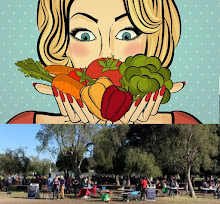
What is Griffith Park? - It is a giant wilderness area with free roaming lions like P-22's cubs.
Danza Azteca, Indigenous Los Angeles
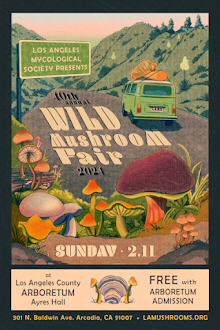
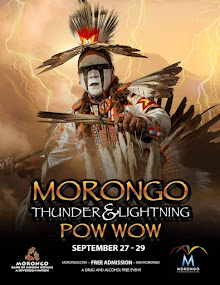
Sacred Path at The Autry Museum. The big Los Angeles Pow Wow 2026 is scheduled for Saturday, November 7th, 10:00 am to 8:00 pm. (Grand Entry begins at 1:00 pm).
The Autry Museum is in Griffith Park, Los Angeles (between Hollywood and Glendale). It is appropriate for ages 13+, families, seniors, and admission is FREE and open to the public. More info
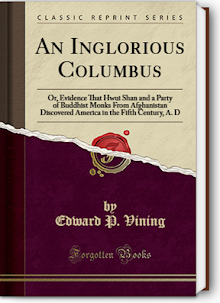
Godozo said..."I have a theory about Columbus Day: Columbus wasn't the one who discovered the Americas but [was] part of the LAST wave of people to discover the Americas. There have been plenty of discoveries -- Japanese, Chinese, Africans, Polynesians, Carthaginians, Irish, Vikings, etc., but it was Columbus, Amerigo Verspucci, and the wave that came along with them that has (so far) kept the American continent known (from a Eurasian perspective)."
ABOUT: Join The Autry (next to the LA Zoo by the Shakespeare Festival) for a full-day celebration of Indigenous/Native culture with traditional
powwow dancing, food, and vendors.
The event features:
Shaman medicine man healers?
Traditional dancing and songs led by Northern- and Southern-style drummers and singers
SACRED PATH:
The Autry is pleased to announce a new partnership with Sacred Path Indigenous Wellness Center. Sacred Path is a nonprofit organization dedicated to serving urban Native communities, offering a variety of programs and services designed to promote cultural connection, community engagement, and overall well-being. For more info, please visit sacredpath.org.
What is a "powwow"?
What must the extraterrestrial visitors the tribes remember have looked like? (wiki)
A powwow is a Native American gathering that brings together Indigenous communities to celebrate their culture, heritage, and spirituality. It includes traditional regalia, intertribal dancing, singing, and Indigenous foods and crafts.
The Autry Museum acknowledges the Tongva/Gabrielino (Kizh) peoples as the traditional land caretakers of Tovaangar (the Los Angeles Basin and Southern Channel Islands). We recognize that the Autry Museum and its campuses are located on the traditional lands of Tongva/Gabrielino peoples and we pay our respects to the Honuukvetam ("Ancestors"), ‘Ahiihirom ("Elders"), and ‘Eyoohiinkem ("our relatives/relations") past, present, and emerging.
Indigenous/Native communities across the USA celebrate diverse traditions with art, food, and recovered language programs [because the USA made speaking Native languages a punishable offense until 1978 in an overt act of ethnic cleansing, slow genocide, and permanenterasure] during November’s heritage month.
Origin story debates: Historian Ned Blackhawk calls for integrating Indigenous histories into U.S. founding narratives, highlighting exclusion and sovereignty issues.
Science reshapes timeline: New archeological and genetic evidence pushes back the arrival of the first Americans [beyond 10,000 years before present], challenging the Clovis‑first model and supporting coastal migration [Ancient Paleo-Siberian, Beringian] theories.
November’s Native American Heritage Month is being marked by community events ranging from salmonberry harvests in Alaska to traditional tattoo revival in Oklahoma.
In parallel, historian Ned Blackhawk uses the occasion to challenge dominant U.S. origin narratives, arguing that Indigenous histories and the anti‑Native ideologies embedded in foundational documents like the Declaration of Independence must be confronted.
His work links these historical perspectives to ongoing questions about tribal sovereignty and democratic inclusion (The Nation).
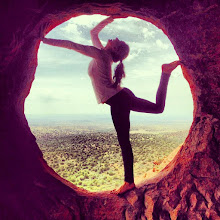
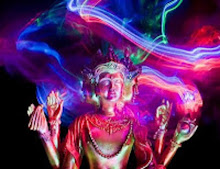
The shamanic impulse and dance
Native communities celebrate heritage through diverse activities
Families in Kipnuk, Alaska gather salmonberries, maintaining subsistence traditions after typhoon disruptions
Students at Wicoie Nandagikendan learn Ojibwe and Dakota language, syrup-making at sugarbush camp
Indigenous girls secured legal rights for a river through council resolution and advocacy
Artists like Fawn Douglas revive traditional basketmaking using modern materials in Las Vegas, Nevada
Muscogee tattoo artist Hodokii Johnson preserves ancestral markings, emphasizing cultural and spiritual significance
Blackhawk’s call for a revised origin story coincides with the U.S. approaching its 250th anniversary, a moment he describes as a crisis in national self‑definition.
He emphasizes that the framing of the nation’s beginnings shapes perceptions of belonging, legitimacy of claims, and visions for the future. By centering Native America in Revolutionary‑era history, he connects past patterns of racialization and dispossession to present‑day democratic institutions and public trust. More
Authors Roxanne Dunbar-Ortiz and Dina Gilio-Whitaker has 4.7 out of 5 stars (with 393 reviews). It is part of Myths Made in America (a nine book series). It unpacks the 21 of the most common myths and misconceptions about Native Americans in the USA.
In this enlightening book, scholars and activists Roxanne Dunbar-Ortiz and Dina Gilio-Whitaker tackle a wide range of myths about Native American culture and history that have misinformed generations.
Tracing how these ideas evolved, and drawing from history, the authors disrupt long-held and enduring myths such as:
We used to dance in peace
“Columbus discovered America”
“Thanksgiving proves the Indians welcomed Pilgrims”
“Indians were savage and warlike”
“Europeans brought civilization to backward Indians”
“The United States did not have a policy of genocide”
Each chapter deftly shows how these myths are rooted in the fears and prejudices of European migrants, using euphemisms like “pilgrims” and “settlers” to remove the sting of violent invaders and polluting occupiers.
The larger political agendas of these “settlers” aimed at acquiring (defrauding, misappropriating, stealing) Indigenous lands, tying American history to narratives of intentional erasure and disappearance.
Accessibly written and revelatory, All the Real Indians Died Off challenges readers to rethink what they have been taught about Native Americans and white revisionist history. More
Discover America (video); Roxanne Dunbar-Ortiz, Dina Gilio-Whittaker; Xochitl, Ashley Wells (eds.), Wisdom Quarterly
Marx had an idea from the confusion of his head/ Then there were a thousand more waiting to be led/ The books are sold, the quotes are bought/ You learn them well and then you're caught/ Another's left, another's right/ Another's peace, another's fight/
Mussolini had an idea from the confusion of his heart/ Then there were a thousand more waiting to play their part/ The stage was set, the costumes worn/ And another empire of destruction born/ Another's name, another's aim/ Another's fall, another's fame/
Jung had an idea from the confusion of his dream/ Then there were a thousand more waiting to be seen/ You're not yourself the theory says/ But I can help, your complex pays/ Another's hope, another's game/ Another's loss, another's gain/
Sartre had an idea from the confusion of his brain/ Then there were a thousand more indulging in his pain/ Reveling in isolation and existential choice;/ Can you truly be alone when you use another's voice?/ Another's lies, another's truth/ Another's doubt, another's proof/ The idea born in someone's mind/ Is nurtured by a thousand blind/ Anonymous beings, vacuous souls/ Do you fear the confusion, your lack of control?/ You lift your arm to write a name/ So caught up in the identity game/ Who do you see? Who do you watch?/ Who's your leader? Which is your flock?/ Who do you watch? Who do you watch?/ (REPEAT)/ Who's your leader? Which is your flock?/ (REPEAT)/
Einstein had an idea from the confusion of his knowledge/ Then there were a thousand more turning to advantage/ They realized that their God was dead/ So they reclaimed power through The Bomb instead/ Another's code, another's brain/ They'll shower us all in deadly rain/
Jesus had an idea from the confusion of his soul/ Then there were a thousand more waiting to take control/ The guilt is sold, forgiveness bought/ The Cross is there as your reward/ Another's love, another's pain/ Another's pride, another's shame/ Do you watch at a distance from the side you have chosen?/ Whose answers serve you best? Who'll save you from confusion?/ Who will leave you an exit and a comfortable cover?/ Who will take you oh so near their edge but never drop you over?/ Who do you watch?/ (REPEAT)
She traces the devastating impact of Canada's "residential school" [which many whites try to deny today in the face of mounting forensic evidence and countless testimonies by victims and their families] system through her own family — her mother having been taken at 3.5-years-old and. She spent nearly a decade at Fort Alexander, enduring severe sexual, physical, and psychological abuse and witnessing atrocities such the murder and secret burial of Native children.
00:00 - Opening: Sharon Ward describes crawling through a light and feeling overwhelming love on the other side
01:36 - Introduction: Who is Sharon Ward? Ojibway Nation, Manitoba, raised on the trap line
02:42 - Residential Schools: What they were and how Indigenous children were forcibly taken from their families
03:39 - Sharon Ward's Mother: Taken to Fort Alexander at age 3½, siblings separated across Manitoba
04:00 - Horrors Inside the Schools: Mother witnesses murders, experiences sexual abuse by homosexual child molesting priests and nuns
04:49 - A Community Destroyed: 1966 law finally allows Indigenous women to drink; alcoholism spirals out of control
06:00 - Survival Childhood: Family becomes self-sufficient, then alcohol tears everything apart
07:31 - Sharon Ward as a Teenager: Abusing marijuana (cannabis) as maladaptive coping, beatings by her mother, thrown out of the house during a snowstorm
09:53 - Mother's Death: Cancer, drinking through toxic chemo, a peaceful passing — then Sharon Ward's grief unravels her
13:23 - The Overdose [Su*cide]: Took 270+ pills and chased it with firewater whiskey, hoping never to wake up
14:26 - The NDE Begins: Dying, Sharon Ward hears her siblings' voices and feels the pain she would have caused
15:57 - The Voice and the Light: Told to "turn around," walks toward a distant speck of light, crawls through
17:05 - Meeting the Messenger: A being whose face cycles through all races tells her "Creator" has a job only she can do
19:46 - Sent Back: She begs to stay on the other side, is returned anyway — wakes up on the couch as her sister is calling the coroner after having confirmed her physical death
22:32 - Processing the Experience: Realizes over days that this NDE was real; decides to begin healing
23:21 - Return to Time-Honored Indigenous Ways: smudging, sweat lodges, traditional medicines as the path back
28:51 - The Philosophy of [Self-] Forgiveness: Healing begins with self-kindness; forgiveness is for us, not them
30:11 - Closing: Life is sacred; Creator loves everybody
Sharon Ward describes how intergenerational trauma rippled forward, turning her once-gentle mother into a raging alcoholic as soon as Westerners told Indigenous women they could legally drink alcohol in 1966, pulling her family into desperate poverty and more and more abuse by the system.
Despite Sharon Ward's own struggles — including navigating cultural identity and language barriers — she found her way through a 40-year healing journey rooted in Ojibwe spiritual tradition, self-forgiveness (particularly trying to overcome shame), and the belief that every person has a sacred purpose.
She culminates with a message of resilience: that some Creator or Great Spirit only allows people to face only what they are strong enough to bear, sharing her story serving as part of the work she was put on Earth to do.
⇨ Connect with Sharon Ward: Her email is ogitchita.ikwe@gmail.com.
⇨ Support this channel and become a member of Coming Home: @cominghomechannel. Watch all of Coming Home's Near-Death Experience stories: • Near-Death Experiences.
The Coming Home channel explores the meaning and purpose of near-death experiences (NDEs) in the modern age. The channel writes about the intersection of spirituality, life after death, comparative religion, philosophy, depth psychology, modern culture, and most of all how we can stay connected to the Truth that life doesn't end when we die.
⇨ CONNECT: Facebook: cominghomechannel. Instagram: cominghomechannel. Video and music licensed through iStock/Artlist/Adobe Stock/PremiumBeat
Sorry about r*ping your culture
Oct. 11, 2026 | Indigenous People's Day at St. John's Cathedral, Los Angeles
(St. John's Cathedral) Streamed live on Oct. 11, 2026: Indigenous Peoples' Day at St. John's Cathedral, Los Angeles. Follow along with the leaflet: bit.ly/47KEtnf #churchservice #livestream #losangeles #episcopalian #cathedral #episcopal #churchservice #protestant #catholic #anglicanism #fathersonholyspirit #jesus #jesuschrist #episcopalchurch #mercy #pentecost #meditation #holyspirit #christos #creationtide #creation #indigenous #nativeamerican #centralamerica Learn more about St. John's Cathedral, by going to website stjohnsla.org
LA THIS WEEK, 2022; Crass with Eve Libertine; Coming Home, May 28, 2026 (✪ Members first on May 27, 2026); St. John's Cathedral, 2026; Xochitl, Ashley Wells, Crystal Quintero, Dhr. Seven (eds.), Wisdom Quarterly
All materials on this site are submitted by editors and readers. All images, unless otherwise noted, were taken from the Internet and are assumed to be in the public domain.
In the event that there is still a problem, issue, or error with copyrighted material, the break of the copyright is unintentional and noncommercial, and the material will be removed immediately upon presented proof.
Contact us by submitting a comment marked "private."
Do not follow this journal if you are under vinaya or parental restrictions. Secure protection by Sucuri.
Wisdom Quarterly: American Buddhist Journal is licensed under a Creative Commons Attribution-Noncommercial-Share Alike 3.0 United States License. Permissions beyond the scope of this license may be available at creativecommons.org/about/licenses.