Over 25,000 visitors joined the 2017 annual celebration of Nowruz on March 12, 2017 at the celebration's new home at UCLA. This turnout made it the largest celebration of Nowruz in the United States and perhaps the world.
.
(Nauruz is the ancient spring/New Year's Day of formerly-Buddhist Afghanistan (which became Greco-Buddhism in and around Bactria), formerly Zoroastrian Persia/Iran, and other Central Asian and geo-politically "Middle Eastern" countries).
Prince Siddhartha Gautama, who became "the Buddha" (the Awakened One) as an adult -- his mother being from Iran (Balochistan), according to historian Dr. Ranajit Pal -- grew up in Shakya Land (Scythia) with three seasonal capitals in accord with the weather, one of which was Kapilavastu (in or around Kabul), another in Bamiyan, and a third in or around Mes Aynak, all in modern Afghanistan, next to formerly-Buddhist Pakistan, which until Partition in 1948 was NW India.
Thanks to all the artists who helped make this celebration so special, including Mohsen Namjoo, Sussan Deyhim, Arash Sobhani, Parisa Daneshvar, Ziba Shirazi, Mehrdad Arabi, Negar Estakhr, Anna Djanbazian, Robyn Friend, the FIRUZE Dance Company, and DJ Arin. Special thanks to Events By Shideh and Shideh Shahraies for her amazing Haft Sin and continued collaboration on this and every Nowruz celebration! Future celebrations return to UCLA.
For several years, Pakistan has been facing a separatist insurgency by ethno-nationalist rebels belonging to the Baloch ethnic group.
The guerrillas in the southwest province of Balochistan have become increasingly daring with their attacks. Two weeks ago, they shocked the rest of Pakistan by destroying the historic residence of Pakistan’s founding father Mohammed Ali Jinnah in the town of Ziarat.
Balochistan is one of the most underdeveloped regions in Pakistan and has traditionally had a heavily male-dominated patriarchal society.
Women have rarely had a role in public life. But things have been changing recently, as increasing numbers of women are taking up active and leading roles in the Baloch nationalist movement. One such women is Zarina Baloch. When her cousin was found murdered... More
Mes Aynak, "Copper Well," located 25 miles (40 km) east of Kabul, is a yet to be excavated town with a Buddhist monastic complex (Jerome Starkey/livescience.com)
Panoramic view of the ancient ruins of Persepolis, modern Iran (wiki)
New stele from Mes Aynak, Afghanistan, depicts Prince Siddharthaand a wandering asceticpossibly one of the four signs that
inspired him to renounce (Jaroslav Poncar/livescience.com)
Baluchistan was until 1948 (when Pakistan was created) on the western frontier of Gandhara, India. The province is surrounded by Afghanistan to the north and Iran to the west.
Locating
the Buddha Gautama's real hometown is now possible. But first one must
realize that greater India (Maha Bharat) was wider than colonial British
India. Alexander the Great fought the empire or great clan territories (maha jana padas) sharing cultural ties in Balochistan, Seistan, Gandhara, Zabulistan, and Kerman. Sir Aurel Stein found an ancient Buddhist monastic complex (vihara)
in Kuh-i Khwaja, Seistan, approximately (150 km) from Baluchistan
covered in proto-Gandharan art, attesting to the antiquity of the form.
Zabol near Ghazni echoes Kapil (vastu).
The name
Dahan-e Gholaman of another adjacent 6th century B.C. site echoes
Gautama's name. Kapil (vastu), or Babil, was the holiest religious
center of the world. The name Babil is echoed in the name Pavurlakonda.
The statement in The Birth of the Buddha (Lalitavistara biography) that all of the buddhas are born in Kapilavastu is echoed in the name Prophthasia (modern Farah, Afghanistan).
Later,
Babylon (Babil) gained ascendancy. The fantastic find of more than
ancient Buddhist fragments at Bamiyan (site of the destruction of the
world's tallest Buddha statue) shows that Bamiyan was near Kapilavastu,
birthplace of the Buddha. A portion of those fragments are now part of
the Schøyen Collection. This is where Buddhism was born.
The names Tissa (Moggaliputta-Tissa), Siddhartha (the Buddha), and Suddhodana (the Buddha's father) mentioned in the Persepolis Fortification Tablets (administrative archives) show conclusively that Siddhartha Gautama, who became the historical Buddha, was from Seistan-Baluchistan.
Regarding the iconography of a stone statue (stele) recently uncovered in Mes Aynak ("Copper Well,"
possibly the largest Buddhist monastic complex yet discovered, which is
set to be demolished by the Chinese before it can be excavated unless protests
succeed), Prof. Gerard Fussman from the College de France in Paris
writes that the prince shown sitting under foliage of bodhi (pipal) tree
leaves is Siddhartha before his enlightenment, after which he became
the Buddha (the "Enlightened or Awakened One").
But neither he nor Fussman recognizes the need to integrate the Mes Aynak findings with the priceless inscriptions in the Persepolis Fortification Tablets (PDF)
which mention Tissa, Sedda Saramana (Siddhartha), Sudda Yauda Saramana
(Suddodhana), and Saman. Prof. Schopen's article and video enlitled "Buddha as a Businessman" is largely based on faulty Nepalese data.
Revisionist Wikipedia keeps placing the Buddha Gautama in Nepal rather than in Central Asia where he grew up before traveling east on a quest for enlightenment and teaching in India.
The
legacy of the Buddha Gautama is clear in Persian literature. The
resounding humanism of Rumi, Hafeez, Attar, Omar Khayyam, and Amir
Khosrow cannot be grasped without Gautama as echoed by Alexander and Ashoka/Diodotus.
Sufism derives from a universal form of wisdom with roots more ancient than Islam. The fana ("extinction of self") spoken of by Sufi mystics is nearly identical to what the Buddha described as nirvāņa in Buddhism.
The common "ultimate goal" of moksha ("liberation") within India's dharma traditions (Buddhism, Brahmanism, Hinduism, Jainism) and traditions in adjacent countries -- the goal of the Manichaeans, the kaivalya of Hindus, the nirvana of Jains -- is due to their common origin in Indo-Iran.
A very large number of Sufi "saints" were from Khorasan and Kerman-Baluchistan where Buddhism once flourished.
The poignant story of Ibrahim ibn Adham of Balkh, one of the earliest Sufis, closely parallels the life life story of the Buddha, which was immortalized in the legend of Baarlam and Josaphat (the Buddha as Catholic saint). It is a great religious theme highlighting piety, marking in many cultures the beginning of literature.
Dharmacharis Seven and Ashley Wells, Amber Dorian, Wisdom Quarterly (netglimse.com)
The editors of Wisdom Quarterly have come to believe that the Buddha's mother, Maha Maya Devi, was from the vicinity of modern Iran long before there was either an Iran or even a Persia, and that his father, Suddhodana, and the Shakyas were from the vicinity of modern Bamiyan, Afghanistan -- much to the chagrin of our Nepalese friends and readers.
These lands were at that time the frontiers of Greater India. And there was neither Islam nor Hinduism. There was, however, their forbears asuran Zoroastrianism and the remnants of Vedic (Indus River Valley Civilization) Brahmanism. Today these countries are classified as Eurasian Central Asia and the geopolitical Middle East. And then as now the akasha devas seem to have provided a calendar that made today New Year's Day (Nowrūz, نوروز, meaning "[The] New Day").
In coming installments we hope to establish that the reason the world does not know this is in no way an accident of history. Instead, vested interests keep the world in the dark. The asuras (titans) linger on and have some sway against the devas (shining ones). The Buddha was neither, but it was the devas and Sakka who sided with the Buddha.
And what is it the world does not know? The world does not generally know that Buddhism existed in Afghanistan 2,600+ years ago -- as the discovery of the great Afghan Buddhist monastic complex of Mes Aynak indicates -- at the very onset of the historical Buddha's dispensation (sasana).
It hardly seems reasonable that the Dharma made it to ancient Gandhara on the frontiers of India just as soon as it was being established in the major centers of Magadha, India, where the Buddha began delivering discourses or sutras.
It is not only the maverick historian, anthropologist, and archeologist Dr. Ranajit Pal who has brought this to our attention. And the historical fraud of a Jonesian history of India and Nepal was not only a British and German invention. The imperial Russians, Arab Muslims, and now military-industrial complex American forces have been participating in the cover up.
The Buddha-Dharma came West long ago. It traveled the Silk Route from or at least through modern Afghanistan to reach Europe and Israel. Jesus (St. Issa) came into contact with Buddhism and apparently was taught that he was a tulku (reincarnated lama) and a bodhisattva (one unselfishly striving to save others over many lives on one's way to perfection), possibly even Maitreya (a perfect Messiah). Jews were living in Kashmir even before Jesus came to live and study in India as Holger Kersten and others (Notovitch, Gruber, Abedananda, Clare-Prophet, etc.) aptly demonstrate.
It is interesting that one of the Four Imponderables is the extent of a Buddha's influence. He not only achieved in his life the influence of a Universal Monarch (chakravartin) from seashore to seashore of what the kings of Indian "clan footholds" (janapadas) or "countries" thought of as "the known world." That was not Madras to Bombay but Vietnam to Palestine. The truth is muddled because imperfectly translated words are taken literally and for granted. For instance, a chakravartin is usually translated as a "world ruler" as if the "world" meant to them what it means to us. They did not consider India a "continent," as we do, but an island (dvipa) bounded by great seas. This "island" is so vast that it is even possible that it refers to Earth and the surrounding "sea" to interplanetary space. The Buddha was from the "Middle Country" and the "Roseapple Land" (Jambudvipa), which can refer to northern India, the subcontinent, the continent, the planet, or this portion of the galactic world-system. Similarly, where was India's "frontier"? No doubt what is today Afghanistan and old "Persia" was part of it. When Alexander the Great and the ancient Greeks established Indo-Greco arms of the Greek empire (called Bactria and other names), Buddhism was well known to the Greeks. But it traveled northwest toward Europe long before that -- and it made it to Europe, to the only indigenously Buddhist part of Europe, the topic of a coming installment on Kalmykia.
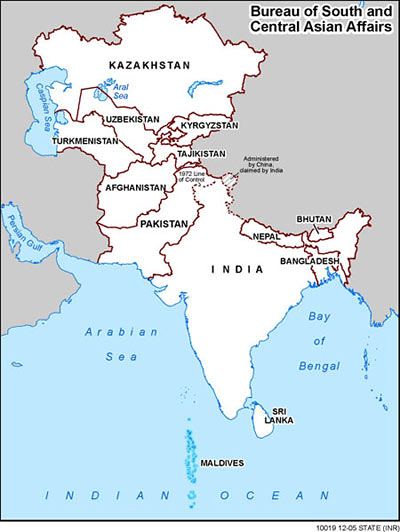
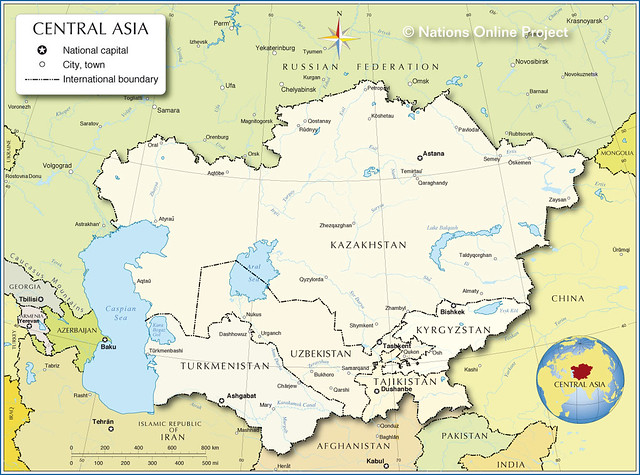
That northwest route of the Dharma is now called Central Asia -- loosely lumped together as "the Stans" all the way to what is left of the USSR or once mighty Russian empire and its ancient Russian Buddhism. The many ethnic tribes west of China and Tibet (Pashtuns, Uzbeks, Tajiks, Kalmyks, etc.) of and beyond the Hindu Kush mountain range met the Dharma, and they celebrate Nowruz. So we find it significant enough to observe it as well. Interestingly, the Caucuses (source of the word Caucasian) are technically part of the Himalayan range separating Asia and Europe. The New Day 2012 NOWRUZ is celebrated and observed by Iranian peoples and the related cultural continent and has spread in many other parts of the world, including parts of Central Asia, Caucasus, South Asia, Northwestern China, the Crimea, and some groups in the Balkans.
Nowruz marks the first day of spring and the beginning of the year in Iranian calendar. It is celebrated on the day of the astronomical vernal equinox, which usually occurs on March 21 or the previous/following day depending on where it is observed.
As well as being a Zoroastrian holiday and having significance amongst the Zoroastrian ancestors of modern Iranians, the same time is celebrated in parts of the South Asian sub-continent as the new year. The moment the Sun crosses the celestial equator and equalizes night and day is calculated exactly every year and Iranian families gather together to observe the rituals.
Originally being a Zoroastrian festival, and the holiest of them all, Nowruz is believed to have been invented by [the titan] Zoroaster himself, although there is no clear date of origin. Since the Achaemenid era the official year has begun with the New Day when the Sun leaves the zodiac of Pisces and enters the zodiacal sign of Aries, signifying the Spring Equinox.
The Jewish festival of Purim is probably adopted from the Persian New Year (The Judaic tradition...Encyclopædia Britannica). It is also a holy day for Sufis, Ismailis, Alawites, Alevis, and adherents of the Bahá'í Faith. More
The birth of the Buddha, Peshawar, Gandhara, an ancient part of greater India, which seceded and became modern Pakistan and Afghanistan (en.wikipedia.org)
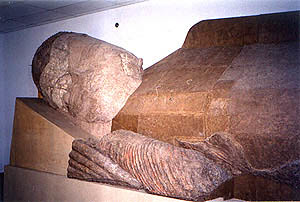
Tajikistan Discovers New Giant Buddha A 1600 year old statue of a reclining Buddha attaining final nirvana -- uncovered by archeologists from the former Soviet Union 35 years ago yet never seen by the outside world -- will soon be on display in Dushanbe, the capital of the Central Asian Republic of Tajikistan.
After Afghanistan’s CIA-created "Taliban" was prompted to destroy the largest Buddhas in Central Asia, the newly unveiled Tajikistan Buddha, which dates back to the 5th century ACE, will finally be recognized as the largest Buddha statue in Central Asia.
The 46 feet (14 meter) long Tajik Buddha was first excavated by archeologists from the former Soviet Union in 1966, from a vast Buddhist monastery complex in Ajina Tepa in southern Tajikistan. Ajina Tepa was on the ancient Silk Route connecting China, Europe, and Central Asia with Indian seaports.
Instead of publicizing their enormous find, the Soviets excavated the Buddha only to hide it.
Qurghonteppa (Kurgan Tepa)is, along with the capital Dushanbe, demographically much more diverse than other major cities such as Khujand, Kulob, or Istaravshan. Ethnicities include Tajiks, Uzbeks, Russians, Tatars, Ukrainians, Kazakhs, Greeks, and many others.
Bringing the Buddha to light has been the lifetime task of Dr. Babamulloev Saidmurad, the newly appointed Director of Tajikistan’s Museum of National Antiquities which will officially open in August.
"The Soviets tried to tell the Tajiks that they had no history before the 1917 Russian Revolution even though the Tajiks are the most ancient race in Central Asia," says Saidmurad. He says smaller Buddhist statues and murals were shipped to the Hermitage Museum in St. Petersburg and hidden away in its vaults.
But the Tajikistan Buddha was too big to move and was buried in the basement of a Dushanbe museum.
Ajina Tepe Buddha, Tajikistan (cais-soas.com)
"The Soviets never allowed Tajikistan to show its pre-Islamic and Islamic archeological collections," says Frederick Roussel of Acted, a leading French non-governmental organization in Central Asia, which funded the restoration of the Buddha.
Nine months ago Acted paid for a Russian archeological expert to come from the Hermitage Museum to spend three months putting together the puzzle of the Buddha.
"The Buddha was in 100 pieces stored in boxes in the basement of the museum and it had to be put together like a huge jigsaw," says Saidmurad. "We worked like [asuras] around the clock for six months."
The Buddha lies on his side, his face showing absolute serenity reflecting the nearness of nirvana in the last moments before his passing out of samsara (the Wheel of Rebirth). Around the base of the sleeping Buddha and on the walls of the monastery were more than one thousand paintings in bright colors depicting the life of Buddha, many of which were sent to the Hermitage.
Br. Chan Khoon San visited Tajikistan's National Museum of Antiquities in Dushanbe to view the famous terracotta Buddha statue, discovered in the 1960s among the ruins of a temple called Ajina Tepa at Kurgan Tuibe, about 100 km south of Dushanbe. Called "The Buddha in Nirvana,'" it dates to the 6th or 7th century ACE, measuring 41.7 feet (12.8 m) long and 9 feet (2.7 m) high. Because of its huge size and fragile condition, it was cut into 92 pieces before being transported to Dushanbe. The restoration of the sculpture had been a long and difficult process completed for the opening in September 2001 during the course of Tajikistan's 10th anniversary of independence celebrations.
Some 186.4 miles (300 km) north of Bamiyan, Afghanistan -- the site of what were once reckoned the largest Buddha statues in Central Asia if not the world, which is probably the great Leshan Buddha in Sichuan, China -- Ajina Tepe was part of the widespread Buddhist renaissance and culture in Central Asia and Xinjiang under the Kushan kings.
The Kushans were descended from a branch of the now Chinese Yueh-chih tribes that first invaded Central Asia around 140 BCE. The Kushans created their empire in the first century ACE uniting a vast land area stretching from southern Pakistan and western Iran to Afghanistan, Central Asia, and Xinjiang.
In the second century ACE, the great Kushan king Kanishka, who extended their empire to India, was a major patron of the Mahayana school of Buddhism, the first to humanize the figure of Buddha.
[Editor's note: In fact the Theravada school was the first to humanize the historical Buddha, while Brahmanism and Mahayana deified him, exalting him and other buddhas and bodhisattvas to the status of "gods" or akasha devas, space deities. The Buddha was not a creator god (brahma), shining one (deva), fierce entity (yakkha), fairy or angelic messenger (gandharva), he explained; when asked he instead answered that he was "awake." Buddha, a title, means supremely "Awakened One." Hinduism inherited the mantle of Vedic Brahmanism and co-opted the massively popular Buddhism, reintegrating it into the establish religion of the brahmin priests and giving birth to the Mahayana or "Greater Vehicle" school of Buddhism. By making buddhas divine, and emphasizing veneration of Maitreya the Buddha-to-come rather than the historical Shakyamuni Buddha, Siddhartha Gautama, Hinduism and Mahayana did a disservice to the Buddha-Dharma, the liberating truth the very human Buddha had rediscovered and made known to the world.]
Previously, out of reverence and respect, the historical Buddha (and previous buddhas whom the Buddha had spoken of) had only been DEPICTED with symbols such as the Dharma wheel. Although the Kushans later broke up into smaller kingdoms, they continued their dominance of the region until the 6th century ACE.
In March, 2001 the CIA created, backed, and prompted Taliban dynamited two soaring Buddha statues cut into limestone cliffs of the Hindu Kush mountains in Bamiyan, central Afghanistan, in the Hazarajat region.
The larger Buddha, which stood at 187 feet (57 meters), was the largest standing Buddha in the world and was carved between 300-400 ACE.
[In fact, according to the Russian mystic Madame Blavatsky one of the founders of Theosophy, the statues are far, far older: They did not originally represent the historical Buddha, she claimed, but Man in previous epochs, possibly former buddhas such as Kassapa Buddha or Konagamana Buddha, from a prehistoric time when human beings were much bigger by nature. Ancient Buddhist monks re-purposed the ancient figures using plaster and bright colors to represent, it seems, the historical Buddha and Maitreya the Buddha-to-come. Other figures may have represented other buddhas, which are today depicted in Theravada Buddhist temples as identical cross-legged figures in spite of their massive size differences according to sacred Theravada texts].
The Taliban rejected numerous international appeals including strong protests by the Buddhist countries of south east Asia to refrain from this religious violence and fanatical vandalism. But prompted by the CIA, which felt it necessary to rain ignominy on the nascent Taliban as a pretext for officially invading Afghanistan and producing the USA's longest war in history.
A trip through Tajikistan as Asia becomes Eurasian Muslim then Caucasian Russian
The Taliban, and later Al Qaeda, were creations, bogeymen. The former was composed of released criminals from neighboring Arab countries armed to be insurgents successfully fending off Russian troops in the USSR's own "Vietnam." They were fed a philosophy of reinterpreted jihad and Wahabism, a very narrow and fundamentalist interpretation of beautiful Islam, to Arab criminals who were told that "infidel" Russians were invading and desecrating holy Muslim land.
But the Pashtuns and other Afghan ethnic tribes held no such animosity toward Buddhism, the tradition of their ancestors. The same extended tribes (such as Uzbeks), but dominated by Tajiks, formed the peaceful peoples of Central Asia overtaken by the Russian empire that was then undermined by the USA/CIA and remnants of the British imperial forces in what is now Afghanistan. It was of vital importance to the powers that be, now generally referred to as the multinational "military-industrial complex," that Zero line not be crossed. This, after all, is a land of ancient disputes and strategic importance.
What is "Zero line"? In its long history, the region today delineated as both Afghanistan and Pakistan has known many borders, yet none have been more important to American security than the one today separating Pakistan from Afghanistan known as the Durand line but referred to by the military and intelligence community as Zero line. The US has fought on both sides of the Durand line: In the 1980s on the side of extremist-political Islam from Pakistan and since September 11, 2001, against it from the Afghan side. A funny thing happened to the US when the Obama administration decided to cross Zero line...
"I did not sleep the whole night when I heard that the Taliban had destroyed the Bamiyan Buddhas, but it only moved us to work harder to restore our Buddha, which is now the largest in Central Asia,’’ says Saidmurad.
"The Taliban have destroyed not just Afghanistan’s history but also the pre-Islamic cultural heritage of all Central Asia [Iran, ancient post-Alexander Greece, Bactria, Pakistan, greater Kashmir, Afghanistan, Sistan Baluchistan, Turkmenistan, Uzbekistan, and Tajikistan], because the Bamiyan Buddhist civilization [from the historical Buddha's possible birthplace] was the center for the spread of Buddhism in Central Asia and China, says Parveen Abdullova, an assistant to Saidmurad and a prominent Tajik restorer and artist. The Buddhist Gandhara civilization in Pakistan, Bamiyan in Afghanistan, and Kurgan Tepe (Tyube) in Tajikistan were all interlinked," she added.
The first Tajiks heard of their rediscovered Buddha was in mid-March when a local newspaper ran a story headlined "Tajikistan’s Buddha is sleeping safely [correction: passing blissfully into final nirvana] despite Taliban actions."
When Tajik President Imamali Rakhmanov opens the new Museum in August, remarkable artifacts of Zoroastrianism and Hinduism will also be on display. The Kushans allowed all three religions to flourish side by side in their empire. A 5th century statue shows the Hindu god Shiva and his wife Parvetti sitting on a cow. The statue is the largest artifact to date showing the spread of Hinduism so far north into Central Asia, where it was able to co-exist with Zoroastrianism and Buddhism.
Sufism, a mystical form of Islam made famous by the poet Rumi, was influenced in this area by its indigenous Buddhism and the conquering, sometimes marauding Arabs (perhaps prommpted by the anti-deva asuras) touting Islam as the new fundamentalism.
The Zoroastrian finds are remarkable in their own right: the Museum will have the best collection of the 3,400-year-old Zoroastrian civilization outside Iran.
The Zoroastrians, or Parsees [founded by the asura or titan Zoraster aka Zarathustra], who still survive in small numbers in Iran, Bombay, and South and Central Asia, developed a major center in Pendzhkent in the western corner of southern Tajikistan close to the border with Uzbekistan.
Here, the ancient city of Zoras included a vast temple complex and a developed urban infrastructure, which the Soviets had excavated in the 1960s but also refused to display.
A few Zoroastrians still live in Turkmenistan, Azerbaijan, and Bukhara in Uzbekistan. Bukhara became the capital of Islamic Central Asia, demonstrating the tolerance shown by all Muslim rulers to other faiths in Central Asia.
A remarkable 5th Century carved wooden gate once displayed at the entrance to a Zoroastrian temple near Khodjent in northern Tajikistan, excavated in 1957, gives incredible detail of Zoroastrian history and mythology. According to Saidmurad, the Persian poet Firdausi used the detail on this gate to write his epic poem of Persian history, the Shahnama.
The panel, which is charred with fire, shows the legendary giant [titan], Shah or King Zorak -- a figure who abounds in ancient carvings and paintings in Central Asia, Iran, and Afghanistan and is also the name of an abandoned mountain and town close to Bamiyan. The town was destroyed by the Mongols in 1220. There are also paintings of Zohrak depicted as a frightening demon [asura]. Another figure shows a bird-angel with two heads [a garuda or gandharva in Buddhist cosmology].
Greek and Roman civilizations will also be represented when the Museum opens. Early Kushan culture was heavily influenced by the Greeks who invaded Central Asia under Alexander the Great in 329 BCE. Central Asia was then ruled by the Sogdians, whom the Tajiks consider ancestors. After defeating the Sogdians, Alexander married a Sogdian princess, Roxana, from the city of Oratoba, which is close to modern day Khodjent.
The discovery and restoration of Tajikistan’s giant Buddha gives hope to those who were distraught by the destruction of the Bamiyan Buddhas. "This Buddha is a most remarkable discovery for the Buddhist world and the cultural heritage of mankind," says Hiroshi Takahashi, a former Japanese and now UN diplomat in Dushanbe, who saw the Buddha recently.
"There will be many people in Japan and other countries who will be enormously interested in coming to see this Buddha," he added. Beset by years of civil war, drought, and economic misery, landlocked Tajikistan badly needs a boost to attract foreign investment and tourism.
The opening of the new Museum in August 2001 will clearly put Tajikistan on the map for devotees of three major religions as well as lovers of ancient art and history.
Extraterrestrial Aryan empires and invasions, and the origin of the swastika 卐, are much older than the very ancient pre-Indian Indus Valley Civilization, who spoke Sanskrit and composed the Vedas (Books of Knowledge), sacred texts still revered in Hinduism.
AR means sun, fire, flame, or light. The ancient ARyans, however, did not originate in ancient India nor did their solar cross symbol the swastika. These aliens pre-date the Sanskrit language, the root of the Indo-European (Indo-Aryan) language tree.
The Indo-Europeans are believed to have originated on or near the Armenian Plateau in post-flood Mount Ararat in the Caucasus Mountains, which are technically part of the Himalayan range.
Those ancient people, hybrid-humans with extraterrestrial rulers from space (the sky, the heavens) migrated throughout Western and Central Asia then onto Europe. These giant humanoid aliens figure in many origin myths -- from China, who say they were pyramid-building, Caucasoid space brothers referred to in legend as the Sun Gods, to Mesoamerica, where the Maya spoke of Kukulcan (Aztec, Quetzalcoatl) and the expectation that Nordic Alien titans would return from space to guide them).
These beings should not be confused with racist white humans claiming a divine rite of rule or neo-Nazi white supremacy. That lives on in America, which like a handful of other nations imported many scientists from Nazi Germany to carry on their military research and imperial agenda.
What the aliens have told all rulers was that by breeding with them, they were being endowed with the right to conquer and rule, leading to the creation of empire after empire in the world's history.
Ankit Adhikari (The Kathmandu Post); edited by Wisdom Quarterly (whirledapart.com)
Nepal's Department of Archaeology (DoA) and Lumbini Development Trust (LDT) are trying to ascertain whether Lumbini-based town of Devdaha (map) was the maternal home of the historical Buddha Gautama.
Although there are a number of folklores and old travelogues pontificating that Devdaha was the place where Buddha himself and his father King Sudhdhodhan got married, no inscriptions or coins have ever been found in the area to establish this claim.
Maya Devi's conception dream of a white elephant entering her side
The matter has been shrouded in mystery since the 5th century after an archaeologist named Fasyan first mentioned in his travelogue that the maternal kingdom of Buddha and Sudhdhodan was the Kwaliyar state (now called Devdaha).
According to Prakash Darnal, chief of National Archives under the DoA, archaeologists and travellers including Fasyan (5th century), Wehn Sang (7th century), and Hoey (1962) have mentioned this in their writings.
As cross-cousin marriage was popular then [among royals, kshatriya-caste nobles, worried about keeping their bloodlines pure just like European nobility], some archaeologists have hinted that the Buddha’s mother Mayadevi and his cousin/wife Yasodhara came from the same family in Kwaliyar.
According to ancient scriptures, Kwaliyar was a neighboring state of Kapilavastu between Lumbini’s Rohini river in the east and Narayani river in the west -- an area that matches the location of present-day Devdaha.
In their efforts to find the remains of the palace of the Buddha’s in-laws and maternal relatives, DoA and LDT initiated an excavation on March 14, 2010.
However, as the excavation started late and just ahead of the monsoon season, the process was halted on April 14. It was postponed for the next year. The winter season is considered the best time to carry out excavations. It resumed on October 13, 2011.
The "unverified ruins" of old bricks and foundations can be found in four locations in Devdaha: Kanyamai, Bairimai, Bhawanipur, and Khayar Danda. They are all worshipped as religious shrines by Buddhists nowadays.
According to Himal Upreti, an archaeologist with the Lumbini Trust who is involved in the ongoing excavation, all four locations have an equal chance of turning out to be the palace of the Buddha’s maternal uncles.
Out of the four locations, excavations are being carried out only in Kanyamai. The DoA and LDT will excavate the three other sites after completing Kanyamai excavations this year.
"We have unveiled some horizontally erected wall structures and old bricks so far," said Upreti, adding that the evidence gathered so far is not enough to establish that Kanyamai was where the Kwaliyar palace was located.
Darnal, who is also involved in the excavation from DoA’s side, said the exact palace of the Buddha’s maternal uncles can be found with evidence only after the successful excavation of all four locations.
The abuses do not begin and end with cracking down on Occupy Movement free speech. The goal is far greater -- even more war and Perkins-style economic assassinations. Apathy means the war machine goes forward. The goal of occupiers is to call attention to the corporate greed and military madness behind our US policy of endless war as Orwell described in Nineteen Eighty-Four.
(RT ) Iran war drumbeat on CrossTalk with Mark Levine and guests
Nov. 14, 2011 - Is the latest IAEA report a case for a war with Iran? Why does the US get to read it first? Is there enough evidence to conclude that Iran's nuclear program goes far beyond peaceful purposes? And why is no-one questioning the credibility of the IAEA?
("Invisible Empire") The military-industrial complex
Wisdom Quarterly (ANALYSIS) (RT) The US will not back down creating a pretext to attack Iran, raising fears IAEA findings will be misused. Israel threatens to attack even without proof. Meanwhile, the mainstream media "reports" that Iran implicitly admits it is pursuing a nuclear bomb program. This is just like the excuses used to invade Iraq. John Glaser, an assistant editor atantiwar.com, says US is constantly pushing Iran to create a nuclear bomb.
By "we" is meant the US military-industrial complex. That is the 1% (one percent) -- Wall Street bankers and Pentagon neocons in charge of the US government since at least the time of Cheney/Bush and their ideal heir Obama.
By "war" is meant endless, corporate-profiteering, Nineteen Eighty-Four style military conflict. (In Orwell's novel, Big Brother was always at war with one of the other blocs, a useful enemy to stir up the population, keep them fearful, and keep them impoverished).
By "total" is meant "full spectrum dominance" of the region -- and that includes invading Iran. Iran is already being softened in the north as Turkey is destabilized by our HAARP weaponry.
Since the people of Iran cannot hope to occupy Tehran -- due to our imposition of military dictators backed by a draconian clandestine force on the people after pulling down (illegally subverting, deposing, and replacing) the Shah in 1979 -- the US military-industrial complex is likely to do it for them.
The fast and furious plot to occupy Iran (AJ) Washington is looking to increase sanctions on Iran as a result of the plot to kill a Saudi ambassador. Iran's supposed "threat" could simply be the US government's way of distracting Americans from problems at home. No one ever lost money betting on the dull predictability of the US government. Just as Occupy Wall Street is firing imaginations all across the spectrum -- piercing the noxious revolving door between government and casino capitalism -- Washington brought us all down to Earth, sensationally advertising an Iranian cum Mexican cartel terror plot straight out of The Fast and the Furious movie franchise. The potential victim: Adel al-Jubeir, the ambassador in the US of that lovely counter-revolutionary Mecca, Saudi Arabia. More Iraq: No Immunity for US War Crimes (b12partners.net)
BAGHDAD, Iraq (ABC) - The prospects of the U.S. keeping a modest [just 40,000 or 50,000 "trainers"] military force in Iraq after the Dec. 31 deadline to withdraw nearly all troops was thrown into question Tuesday when leaders in Baghdad suggested that American soldiers would NO longer have immunity from prosecution [for US war crimes] as of 2012.
Washington has long been working under the assumption that immunity from prosecution was a crucial component of the pact that was signed with Iraq three years ago involving any U.S. soldiers who stay behind to train [the way we "advised" during our war on Vietnam] national forces.
Need to borrow more money on credit for the imperial war machine? Xie-xie!
However, Iraqi leaders, after a meeting with President Jalal Talabani, said that while they would welcome training and military equipment, "there is no need to give immunity for trainers." [So I guess it's on to Iran, an indefinite occupation, and further immunity from our war crimes there.] More
The US War on Iraq was created by Rove, Cheney, Rumsfeld, Powell, Rice, Rumsfeld, Ashcroft, and Presidents Barry/W/Herbert Bush (dear kitty)
(ICB) Sundance Audience Award winner "Circumstance" -- a wealthy Iranian family struggles to contain a teenager's growing sexual rebellion and her brother's dangerous obsession.
Homosexual acting out is common in religions/cultures that strictly segregate boys and girls. The very desire for purity leads to guilt, shame, and makes one wonder if that is not the point. Christianity (Catholicism), so vehemently opposed to gays, seems most famous for this. And Pres. Ahmadinejad seems as in denial about what is going on as an American mom.
(sff) Meet the Artists: Maryam Keshavarz on her [Iranian lesbian] film "Circumstance" premiering at the 2011 Sundance Film Festival.
But Buddhism where monasticism is prodded or where monastics deny and prevent the natural affinity of young people to commingle is not immune to this phenomenon. Macho Iran, Afghanistan, and enclaves like the US military and American prisons and seminaries and Republican caucuses (and other segregated environments) are havens for homosexual acting out.
Do Iranians make funny clips of American leaders' hypocrisy?
Hypocrisy comes with high morals.
And we are all in denial, hoodwinked by the hyper-masculinity and poorly veiled misogyny. Maybe eroticizing the issue focusing on Muslim lesbians (surely an oxymoron in Islam as it would be in fundamentalist Christianity) will bring the issue to light. Let gays be gay, but it might be nice to spare non-gays the guilt and shame of youthful indiscretions because they are given precious few alternatives just when their hormones are raging.
American Bacha Bazi (NAMBLA-style B4U-ACT) [Bacha bazi is the Middle Eastern custom of what in the West is regarded as child molestation and pederasty.] Along with venerable child advocate Dr. Judith Reisman, I attended a conference hosted by the American pro-pedophile groupB4U-ACT. Conference highlights: Pedophiles are “unfairly... demonized,” “Children are not inherently unable to consent” to sex with an adult, “in Western culture sex is taken too seriously,” “Anglo-American standard on age of consent is new [and ‘Puritanical’]. In Europe it was always set at 10 or 12. Ages of consent beyond that are relatively new and very strange, especially for boys. They’ve always been able to have sex at any age.” And an adult’s desire to have sex with children is “normative.”
(Military-trained) police go into action stripping, falsely imprisoning, humiliating, (raping?) under color of authority against anyone for any reason, even those who call for help. Stark County Ohio Sheriffs (male and female) attack and forcibly strip an innocent woman [a military and CIA prison technique] then charge her with resisting. (330) 430-3800, 4500 Atlantic Blvd., N.E., Canton, Ohio 44705, strkshrf@raex.com
American Bucha Bazi: Warden David Wise (6:35) would not want to work in a prison without vices that keep the prisoners busy and make control easier for authorities.
All materials on this site are submitted by editors and readers. All images, unless otherwise noted, were taken from the Internet and are assumed to be in the public domain.
In the event that there is still a problem, issue, or error with copyrighted material, the break of the copyright is unintentional and noncommercial, and the material will be removed immediately upon presented proof.
Contact us by submitting a comment marked "private."
Do not follow this journal if you are under vinaya or parental restrictions. Secure protection by Sucuri.
Wisdom Quarterly: American Buddhist Journal is licensed under a Creative Commons Attribution-Noncommercial-Share Alike 3.0 United States License. Permissions beyond the scope of this license may be available at creativecommons.org/about/licenses.


 Over 25,000 visitors joined the 2017 annual celebration of Nowruz on March 12, 2017 at the celebration's new home at UCLA. This turnout made it the largest celebration of Nowruz in the United States and perhaps the world.
 .
.