[SPECULATION: We need to steal your biometric facial data to sell it on the open market to the government, intel agencies, Israel, China, and non-state actors and scammers, so we've come up with these tricks. Pick one. How about we predict what your soulmate is going to look like or age progress your face? It's fun. Tell all your friends so we can build a network and connect the dots between all of your contacts. Do it for national security before China takes TikTok back from the nice Zionist Jewish American capitalist billionaire Larry Ellison and his network of operatives like his son David Ellison and his installed CBS News Boss Zionist Bari Weiss, who captures media assets with Trump's help.]
(Buddha's Wisdom) GOENKA: The man who removed Buddhism from Buddhism?
Do it yourself at home the U Ba Khin way
The Goenka Method (of U Ba Khin) provides some practical advice for practicing systematic mindfulness (sati) of the body, one of the four crucial elements in the setting up of the Four Foundations of Mindfulness (Satipatthana), a practice necessary for "insight" (vipassana). Is it the only method? No. Is it the most effective method? Who can say, as it varies from individual to individual. Is it an effective method? Without sufficient stillness, calm, samadhi, absorption (jhana), it seems to Wisdom Quarterly that it is not. The claim is that practicing vipassana can produce its own mild forms of "access concentration" without needed full absorption. This will at best be a very weak and sketchy foundation of sila and samma-samadhi, virtue and "right samadhi." Samadhi is crucial and cannot be skipped over with the ideal of "dry insight" being enough for this decadent age.
S. N. Goenka (Satya Narayana, Satyanārāyaṇa Gōyaṅkā, Burmese ဦးဂိုအင်ကာ) lived from Jan. 30, 1924–Sept. 29, 2013. He was an Indian Burmese businessman and teacher of Buddhist insight (vipassanā) meditation.
Goenka-jii (an honorific added out of great respect) retired from business in 1962, during a period of business nationalization by the military junta in Burma, then moved to India in 1969 to start teaching vipassana meditation.
His teachings are secular and therefore stay away from anything that might appear to be rites or rituals and instead emphasize that Buddha's path to liberation, which was non-sectarian, universal, and scientific (rational) in character.
This led to vipassana meditation appealing to people of all religions as well as no religion, theists, nontheists, atheists, and agnostics, from all parts of the world, East and West.
Vipassana, in the Burmese Theravada Buddhist tradition, is derived from the Abhidhamma(as taught by the Buddha to the monk he declared "foremost in wisdom" Ven. Śāriputra [27, 28]).
Although some Burmese teachers hold that vipassana and Abhidhamma study are inseparable [29], Goenka invited students to consider the theoretical aspects of these Teachings (pariyatti), advising them that the most important aspect of the technique is its practice (paṭipatti), contrasting mere book learning from experiential learning.
Students are free to accept the theoretical background or reject any part they find objectionable.
Goenka reported the words of the Buddha as follows [30]: "Filled with these compassionate and loving thoughts, [the Buddha] proclaimed: Apārutā tesaṃ amatassa dvārā Ye sotavanto pamuñcantu saddhaṃ "Open are the gates of the deathless state to those with ears [to hear] who renounce their lack of [confidence]," that is to say:
"Open are the gates of Nirvana so that people who hear and practice will be able to overcome all doubt," which is one of the Five Mental Hindrances.
Free 10-day course
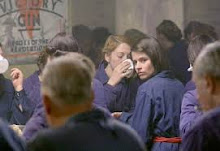
I thought I'd join a 10-day course, get enlightened, then go get my nails done. Boy, was I wrong.
Mr. Goenka became an influential teacher and played an important role in establishing non-commercial vipassana meditation centers globally where vipassana meditation is taught as a free 10-day residential program with no charges for food, lodging, or meditation instruction, with centers funded by voluntary donations from "old" (past and present) meditators.
How could it possibly be free? It is non-commercial. The rule is that only "old" students (who have completed at least one course) are allowed to donate. "New" students (who have not yet completed at least one course) are not allowed to donate. Donations are accepted after the completion of a course, which everyone qualifies to donate to at the end of each course, so there's never really a time when centers are open to donations and not accepting them. As soon as they are open to accepting dana (donations, gifts, charity), everyone present who just completed the course can give. Give what? Dāna
Goenka was awarded the Padma Bhushan by the government of India in 2012, an award bestowed for distinguished service of a high order.
Sign up for free 10-day courses worldwide at dhamma.org
(Wisdom Quarterly was fortunate enough to meet S. N. Goenka, 88, and his lovely wife when they were invited to the Dhammakaya Meditation Center in Azusa, Los Angeles, for a lunch in his honor and to receive an award for service to humanity, circa 2012. This was just as the Aztec Calendar was wrapping a cycle and the world was about to end, with few people noticing that a new cycle and new world would immediately be continuing. He seemed very kind, and not nearly as Dracula-like as one might think from hearing his droning, baritone Transylvanian/Indian accent on the standardized tapes played during all free 10-day courses). More
Buddha's Wisdom (video); Dhr. Seven, Amber Larson, CC Liu, Ananda (Dharma Buddhist Meditation), Wisdom Quarterly Wiki edit
Is vipassana really Buddhist? The truth about the world's most popular meditation
(Buddha's Wisdom) 🔍 IS VIPASSANA REALLY BUDDHIST? THE HIDDEN STORY BEHIND THE WORLD'S MOST PRACTICED KIND OF INSIGHT MEDITATION
Millions of people have practiced Buddhist vipassana meditation, but very few know what the word vipassanā originally meant, or how the modern movement transformed one of Buddhism's oldest insights into a global meditation phenomenon.
What is insight (vipassana) meditation actually for? This word doesn't mean "meditation" at all. And the practice millions know from Goenka's free 10-day silent retreats was born not in the Buddha's proto-India, but in [George Orwell's] colonial Burma, the day an empire stopped protecting the Theravada Dhamma.
This is the true story of insight meditation: what vipassanā really means, how it nearly vanished, and how a monk, a farmer, an accountant, and a businessman carried it to the modern world.
📿 DISCOVER:
The original meaning of vipassanā and why it never simply meant "meditation"
How the fall of the Burmese kingdom sparked the modern Vipassana Movement
Why meditation was rare even among Buddhist monastics for nearly 1,000 years
Why many Buddhist teachers say today's vipassana is both ancient and surprisingly modern
The unlikely relay that saved insight practice: from Buddhist monk Ledi Sayadaw to a rice farmer to S.N. Goenka's flight home in 1969
What today's vipassana retreats, the mindfulness movement, and scientific research gained... and what may have been left behind.
🙏 If this changed what viewers thought meditation was, subscribe. The next episode uncovers the other half the world forgot: the deep stillness of jhana ("meditative absorption" as samma-samadhior "right stillness," "coherent unification of mind") the Buddha paired with insight.
All materials on this site are submitted by editors and readers. All images, unless otherwise noted, were taken from the Internet and are assumed to be in the public domain.
In the event that there is still a problem, issue, or error with copyrighted material, the break of the copyright is unintentional and noncommercial, and the material will be removed immediately upon presented proof.
Contact us by submitting a comment marked "private."
Do not follow this journal if you are under vinaya or parental restrictions. Secure protection by Sucuri.
Wisdom Quarterly: American Buddhist Journal is licensed under a Creative Commons Attribution-Noncommercial-Share Alike 3.0 United States License. Permissions beyond the scope of this license may be available at creativecommons.org/about/licenses.