Showing posts with label Henry Steel Olcott. Show all posts

Monday, June 3, 2024

Buddhist meditation, 3 Guides, InsightLA


Why should I sit with a sangha on a Sunday?
On Sunday evenings in West Los Angeles, we now have a reopened InsightLA meditation center.

It's on Olympic near 14th Street in Santa Monica with free street parking. After a guided sit in a spacious, sparkling clean room of wooden floors in good company, there are introductions, a Dharma talk, and then open discussion. It's well attended in person and online via Zoom (by donation).

Who needs a guide to spiritual awakening?
Tonight, the Dharma topic with Eileen Ybarra was Ti-Sarana or the "Three Refuges."

Now, "refuge" is a terrible translation of sarana, which really means "guide" or "guidance." When Early Buddhists and Theravada tradition practitioners today repeat the lines
  1. Buddham saranam gacchami. "I go for guidance to the Buddha."
  2. Dhamman saranam gacchami. "I go for guidance to the Dharma."
  3. Sanghan saranam gacchami. "I go for guidance to the Sangha."
American Col. Henry Steel Olcott stamp
Colonel Henry Olcott, one of the first Americans to formally become a Buddhist more than a century ago, repeated this formula. But he understood that the 19th century translation was very faulty. Monks confirmed that but were not too concerned with what people wanted to call it in English.

Olcott emphasized how misleading it was to use "refuge" when language, linguistic, and Buddhist philosophy all clearly pointed toward "guidance."
I thought the Buddha would do magic? - No.
Just as the Buddha, Dharma, and Sangha are the Three Jewels or Gems, they are also the Three Guides. They point the way to enlightenment and the real refuge from all suffering, which is nirvana.

Who is the Buddha? It for us at this time is the historical figure of Siddhartha Gautama, who became the Buddha Gautama, the "Awakened One," more than 26 centuries ago. He awakened under the bodhi tree in Bodh Gaya, Bihar (Enlightenment Grove, Vihara, names based on what happened to him there).

No one saves us but ourselves,
No one can and no one may;
We ourselves must walk the Path;
Buddhas only point the Way.

Does Gisele Bundchen have insight? Probably not because her biggest fan did not see fit to teach the world and help us. But Gisele does have an app.

Thursday, August 31, 2023

Visiting the Masters of Wisdom in Shambhala

Madame Blavatsky (amazon.com); Amber Larson and Dhr. Seven (eds.), Wisdom Quarterly

The Land of the Gods: The Long-Hidden Story of Visiting the Masters of Wisdom in Shambhala
(Sacred Wisdom Revived Book 1) This book by the co-founder of Theosophy, Madame Helena P. Blavatsky (with 4.5 stars out of 5 with 574 ratings), is Book 1 of 7: Sacred Wisdom Revived. It was a #1 best seller among New Age books.

Question: Elvis Presley and Oprah Winfrey, Mahatma Gandhi and the 14th Dalai Lama, Albert Einstein and Nikola Tesla, Harry Potter and Star Wars, what do they have in common?

Answer: They have all been directly or indirectly influenced by psychic Madame Blavatsky — the trailblazing woman who indelibly shaped our world and changed the course of history, “being as much talked about as an emperor” (The Sun).

Now, Ukrainian-born Russian mystic Madame Helena Blavatsky returns with a long-hidden book. She took a vow of silence not to reveal during her lifetime the name of the place she had visited.
She cleverly hid her secret in plain sight by giving the story to another writer to claim as his own.

American Col. Olcott vowed to uphold Buddhism's Five Precepts and wrote A Buddhist Catechism, as he revived Theravada Buddhist practices in Sri Lanka in the late 1800s.
.
What long-lost, timeless wisdom did she conceal in her wonderful narrative? Immersive and engaging, this profound book provides readers with a unique outlook on the deeper side of life, exposing our true nature, interior powers, and ultimate destiny.

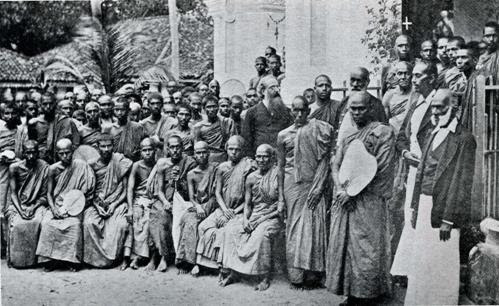
American Buddhist revivalist in Sri Lanka (Ceylon) with Theravada Buddhist monks, 1883
American Buddhist Col. Olcott, Madame Blavatsky, co-founders of Theosophy, Bombay, 1881
.
It explains grand, spiritual ideas more thoroughly and swiftly than any book previously read.

REVIEW: Blavatsky's sacred wisdom
“Whatever critics may say against Madame Blavatsky, [her] contribution to humanity will always rank high.” — Mahatma Gandhi

“I am happy to have this long association with the Theosophists.” — The 14th Dalai Lama

Get it now to find out what secrets this most mysterious woman — hailed as an icon — couldn’t reveal during her lifetime!

Monday, April 13, 2020

American Buddhist Col. Olcott, Theosophist

Pat Macpherson and Dhr. Seven (eds.), Wisdom Quarterly Wikipedia edit

Theosophy is not Buddhism. It is a newer Western religion based on ancient Eastern philosophies that include Buddhism, a belief system given to Russian writer, clairvoyant, and mystic Madame Blavatsky (1831-1891) by a consortium of unseen beings.

American Buddhist Col. Henry Steel Olcott (1832-1907) was an officer, lawyer, journalist, and co-founder of the Theosophical Society and its first president. He was the first well-known American of European ancestry to make a formal conversion to Buddhism.

Col. Olcott drawn by Blavatsky
His subsequent actions helped create a renaissance in the study of Buddhism. He is considered a Buddhist modernist for his efforts at interpreting Buddhism through a Western lens and was a major revivalist of Buddhism in Sri Lanka, where he is still honored for his efforts.

He was important to the new movement; he is famous for reviving indigenous Theravada Buddhism in Sri Lanka. Moreover, Theosophy helped revitalize the West's interest in spirituality. One interesting aspect of Theosophical study we now take for granted is "color mysticism" in the aura or astral body of a person.

Wednesday, April 3, 2019

Buddhists go for GUIDANCE not "refuge"

Col. Henry Steel Olcott, Wijesinha Mudaliyar; Dhr. Seven, Ashley Wells, Wisdom Quarterly


Going for "Refuge"?
QUESTION: What are the "Three Guides" a Buddhist goes to?

ANSWER: They are disclosed in a formula called Ti-saraṇa* (the "Three Guides"), which is, in fact, "Buddhism" (the Buddha's Dharma):
  1. I follow the Buddha as my Guide (Buddham saranam gacchami).
  2. I follow the Dharma as my Guide (Dhammam saranam gacchami).
  3. I follow the Sangha as my Guide (Sangham saranam gacchami).
Guidance not "refuge"
Sâranam: Mr. Wijesinha Mudaliyar writes Col. Olcott: This word [sarana] has hitherto been very inappropriately and erroneously rendered "refuge" by European Pali language scholars, and thoughtlessly so accepted by native Asian Pali scholars.

Neither Pali etymology nor Buddhistic philosophy justifies this translation. 'Refuge,' in the sense of a fleeing back or a place of shelter, is quite foreign to true [original] Buddhism, which insists on all people working out their own emancipation.

The root sṛ in Sanskrit (sara in Pali) means to move, to go, so that saranam would denote a moving, or one or that which goes, before or with another — a Guide or Helper.

I construe the passage thus:
  • Gacchāmi: I go
  • Buddham: to the Buddha
  • Sâranam: as my guide.
The Awakened One (Buddha), the Path to Awakening (Dharma), the Awakened (Sangha)
.
The translation of the Ti-saraṇa as the "Three Refuges" has given rise to much misapprehension, and has been made by anti-Buddhists a fertile pretext for taunting Buddhists with the absurdity of taking "refuge" in non-entities and believing in un-realities.

The term refuge is more applicable to nirvaṇa, of which sâranam is a synonym.
 
Ven. Sumangala [a senior Buddhist monk of long standing] also calls my attention to the fact that the Pali root sara has the secondary meaning of killing, or that which destroys. 

Buddham sâranam gacchâmi might thus be rendered:
 
"I go to the Buddha, the Dharma, and the Sangha, as the destroyers [allayers] of my fears —
  1. the first by his teaching
  2. the second by its universal truth
  3. the third [the monastic order and, more importantly the noble community of enlightened individuals, many of whom are not monastics] by their various examples and precepts."

Q: What does [a Buddhist] mean when repeating this formula?

A: Buddhists mean that they regard the Buddha as an all-wise teacher, spiritual friend, and exemplar.

The Dharma, or "Doctrine," is the Teaching that contains the essential and immutable principles of justice and truth and the Path that leads to the realization of perfect peace of mind in this very life.

The Sangha, or Community, are living examples and teachers of the excellent Dharma taught by Buddha.

Q: But are not some of the members of this "Monastic Order" intellectually and morally inferior men?

A: Yes. But we are taught by the Buddha that only those who diligently attend to the precepts, discipline their hearts/minds, and strive to attain or have attained one of the eight stages of enlightenment and perfection constitute the Buddhist "community."
  • [The Four Stages of Enlightenment are divided into four paths and four fruits. This is explained in The Path of Purification commentarial system as only a thought-moment apart from one another. Alternatively, there is sutra evidence that the eight stages refer to those on the path (to stream-entry, once-returning, non-returning, and arhatship) and those who have consummated each of these paths.]
It is expressly stated that the Order [Sangha] referred to in the "Tisaraṇa" refers to the "Attha Ariya Puggala" — the Eight Noble Ones who have attained one of the eight stages of enlightenment.

The mere wearing of yellow robes, or even monastic ordination, does not of itself make a person pure, wise, or entitled to reverence.
 

Q: Then it is not such unworthy [Buddhist monastics, ascetics, recluses] as they, whom the true Buddhist, would take as their guides?
 
A: Certainly not.

Saturday, September 10, 2011

Going for Guidance to the Three Gems

Wisdom Quarterly edit of "Three Jewels" (en.wikipedia.org)
Buddhist nuns, monks, and lay followers all go for guidance to the Three Jewels.

The Three Jewels, also the Triple Gem, is the center of one of the major practices of mindfulness, recollection, contemplation, and reflection in Buddhism. The qualities of the three are frequently repeated in the ancient texts, where they are called the "Mirror of the Dhamma" (Dhamma Adassa). I go for guidance to the Buddha, the Greatest in the world, the Guru of devas and human beings, who gained enlightenment to teach freedom from suffering to beings. The Cambodian (Khmer) formulation, in Theravada Buddhist tradition, runs as follows.

ចង្អុលឲ្យដើរផ្លូវកណ្តាល មាគ៌ាត្រកាលអាចកំចាត់​ ទុក្ខភ័យចង្រៃអោយខ្ចាយបាត់ អាចកាត់សង្សារទុក្ខបាន។​
Guiding the right Middle Path, the way that can eliminate all suffering.
២.សាសនាព្រះអង្គនៅសព្វថ្ងៃ សត្វមាននិស្ស័យពីបុរាណ​ ប្រឹងរៀនប្រឹងស្តាប់ចេះចាំបាន កាន់តាមលំអានបានក្តីសុខ។
Such teachings now beings have through karmic-destiny accrued in the past by trying to listen, learn, and practice for happiness.
ឥតមានសុខណាស្មើក្តីស្ងប់ បញ្ចប់ត្រឹមសុខឃ្លាតចាកទុក្ខ​ តាំងពីលោកនេះតទៅមុខ ក្តីសុខនឹងមានព្រោះធម៌ស្ងប់។​
There is no happiness as genuine as one free of all suffering from this world and beyond, where happiness prevails because of Dharma.
៣.ខ្ញុំសូមបង្គំឆ្ពោះព្រះធម៌ ព្រះសង្ឃបវរទាំងសព្វគ្រប់ រួមជាត្រៃរ័ត្នគួរគោរព ជាម្លប់ត្រជាក់នៃលោកា
I go for guidance to the Dharma and the Sangha, all combined as the Three Jewels, the cool shade of the world.
ព្រះរូបព្រះធាតុនៃព្រះពុទ្ធ វិសុទ្ធតាងអង្គព្រះសាស្តា​ សូមគុណត្រៃរត័្នជួយខេមរា ឲ្យបានសុខាតរៀងទៅ ៕
May the Triple Gem guide [this country and its people] to happiness forever.

The Mirror of the Dharma
This contemplative practice (anussati) -- often replacing formal sitting meditation -- refers to reflecting on the true qualities of the teacher, teaching, and the taught -- the Buddha, Dharma and Sangha.

These qualities are called the "Mirror of the Dharma" in the Discourse on the Buddha's Last Days. They help practitioners attain a "mind like a mirror" -- a possible reference to the "mind-door" (mind-door cognitive processes) near the physical heart that reflect the contents of consciousness.

In the commentary on the Crossing the Wilderness Rebirth-Tale, the Buddha declares:

Disciples, nowhere between the lowest of the hells below or the highest heavens above, nowhere in all the countless worlds that stretch to the right and left is there the equal, much less one superior, to a buddha. Incalculable is the excellence that springs from keeping the precepts and from other virtuous conduct.
By taking refuge in the Triple Gem, one escapes from rebirth in unfortunate states of suffering. By forsaking such guidance as this, one hase certainly erred. In the past, too, humans who foolishly mistook what was no guide for a true guide met with disaster.

Amaravati Three Gems (triratna) symbols

The Buddha
"The Blessed One is an arhat, perfectly enlightened, accomplished in true knowledge and conduct, fortunate, knower of the world, unsurpassed leader of persons to be tamed, teacher of devas and humans, the Enlightened One, the Blessed One."

In early traditions the Buddha as a worthy guide is taken to refer to the historical Buddha. Later traditions expanded this to include buddhahood or "the full development of mind." In other words, the full development of one's highest potential came to mean our intrinsic buddha nature or ability to reach buddhahood, full enlightenment.

This later interpretation recognizes the possibility of completion, perfection, full development of one's own inherent qualities. Mind in Buddhism does not mean the head; it means the heart. They are one and the same, both involved in consciousness. So the metaphorical head/heart allows for the full development of wisdom and compassion in equal measure.

The Dharma
"The Dharma is well expounded by the Blessed One, directly visible, immediate [timeless], inviting one to come and see, applicable, to be personally experienced by the wise."

Going for guidance to the Dharma, in the Vajrayana tradition, includes reference not only to the words of the Buddha, but to the living experience of realization and the teachings of fully realized practitioners.

In Tibetan Buddhism, it includes both the Kangyur (the teaching of the Buddha) and the Tengyur (the commentaries written by realized practitioners). In an intangible way, it may also include the living "transmission" of those masters, which can be very inspiring.

The Sangha
"The Sangha of the Blessed One's disciples is practicing the good way, practicing the straight way, practicing the true way, practicing the proper way; that is, the four pairs of persons, the eight types of individuals: This Sangha of the Blessed One's disciples is worthy of gifts [a statement which makes it certain that we are not talking about just anyone with a shaved head wearing a saffron robe but instead those ], worthy of hospitality, worthy of offerings, worthy of reverential salutation, the unsurpassed field of merit for the world." (Bhikkhu Bodhi, 2000, The Collected Discourses of the Buddha: A New Translation of the Samyutta Nikaya, Somerville: Wisdom Publications, p. 319–321).

A more liberal definition of "Sangha" may include all practitioners actively following the Buddha's teachings to benefit themselves and others. But it is more strictly defined as the "Realized Sangha" (Arya-Sangha). In other words, it really means those practitioners and historical students of the Buddha who realized the true nature of mind.

The ordinary Sangha means practitioners and students of the Buddha who are using the same methods and working towards the goal of enlightenment and benefiting others by making the Dharma known that brings about the end of suffering (here and now and in the ultimate sense of their own attainment).

Tibetan Buddhism

Threejewels.svg

In Tibetan Buddhism there are three guidance formulations: the Outer, Inner, and Secret forms of the Three Jewels.

The outer form is the "Triple Gem" (Sanskrit, Triratna). The inner is the Three Roots. And the secret form is the "Three Bodies" (trikaya of a buddha). These alternative guide formulations are employed by those undertaking Deity Yoga and other tantric practices in the Vajrayana tradition as a means of recognizing Buddha Nature.

History

The Three Gems are so called because of their treasured value to Buddhists, as well as their indestructible and unchanging nature.

The Three Gems when used in the process of going for guidance become the Three Guides. In this form, metaphors occur very frequently in ancient Pali texts (of Theravada Buddhism). Sangha always really means those persons (ordained or not) who have reached at least the first stage of enlightenment, which is very hard to know about others. So for practical purposes most use the term to refer to the Sangha of Buddhist monks and Buddhist nuns.

I go to the Buddha for guidance and to the Dharma and to the Sangha.

Sunday, May 23, 2010

First Generation Buddhism in America


“Theravada Buddhism has never gotten proper attention in the literature devoted to Buddhism in the West. Wendy Cadge here observes two Theravada communities in the U.S. to reveal how American Buddhists actually live out their religions. She also offers new and important input into how we think about the role of religion in American society during times of globalization. Heartwood [by Wendy Cadge] will add tremendously to our understanding of the Buddhist tradition in America” — Charles Prebish, Penn State University.

The origin of Theravada Buddhism in America can be traced to a speech made by Anagarika Dharmapala at the World Parliament of Religions meeting in 1893. Born in 1864 in Sri Lanka (then called Ceylon), Don David Hewavitharne became a celibate layman and adopted the title Anagarika Dharmapala, meaning “homeless one,” “guardian of the Dharma.”

Heavily influenced by [Colonel] Olcott (1832–1907) and [Madame] Blavatsky (1831–1891), Theosophists who first visited India and Ceylon from America in 1878 and 1880, Dharmapala spent his life spreading Buddhism around the world. At the Parliament, Dharmapala spoke about how Buddhism, Christianity, and scientific approaches to the world overlap, saying that the “Buddha inculcated the necessity of self-reliance and independent thought,” and “accepted the doctrine of evolution as the only true one.”

Theosophists and others in the United States were influenced by elements of Theravada Buddhism in the late nineteenth and early twentieth centuries. Groups of Burmese and Sri Lankan monks visited the United States before the first Theravada Buddhist organization was formed in Washington, D.C., in 1966. The Washington Buddhist Vihara and the Buddhist Study Center in New York, the first two Theravada Buddhist organizations in the United States, were... More>>

Wednesday, August 26, 2009

Going for Refuge? (Sarana)


The Awakened One (Buddha), Path to Awakening (Dharma), the Awakened (Sangha)

"Going for Refuge?"
Henry Steel Olcott

QUESTION: What are the "Three Guides" (Note) a Buddhist goes to?

ANSWER: They are disclosed in a formula called Ti-saraṇa* (the "Three Guides"), which is, in fact, "Buddhism" (the Buddha-Dharma):
  1. I follow the Buddha as my Guide (Buddham saranam gacchami).
  2. I follow the Dharma as my Guide (Dhammam saranam gacchami).
  3. I follow the Sangha as my Guide (Sangham saranam gacchami).

*Sâranam. Wijesinha Mudaliyar writes me: "This word [sarana] has been hitherto very inappropriately and erroneously rendered Refuge, by European Pâlî scholars, and thoughtlessly so accepted by native Pâlî scholars.

Neither Pâlî etymology nor Buddhistic philosophy justifies the translation. Refuge, in the sense of a fleeing back or a place of shelter, is quite foreign to true Buddhism, which insists on every man working out his own emancipation. The root Sṛ in Sanskrit (Sara in Pâlî) means to move, to go; so that Saranam would denote a moving, or he or that which goes, before or with another — a Guide or Helper.

I construe the passage thus:

  • Gacchāmi, I go,
  • Buddham, to Buddha,
  • Sâranam, as my Guide.

The translation of the Tisaraṇa as the "Three Refuges," has given rise to much misapprehension, and has been made by anti-Buddhists a fertile pretext for taunting Buddhists with the absurdity of taking refuge in nonentities and believing in unrealities.

The term Refuge is more applicable to Nirvâṇa, of which Sâranam is a synonym.

The [Elder] Sumangala also calls my attention to the fact that the Pâlî root Sara has the secondary meaning of killing, or that which destroys. Buddham sâranam gacchâmi might thus be rendered:

"I go to Buddha, the [Dharma], and the Order, as the destroyers of my fears —
  1. the first by his preaching
  2. the second by its axiomatic truth
  3. the third by their various examples and precepts."

Q: What does [a Buddhist] mean when repeating this formula?

A: He means that he regards the Buddha as his all-wise Teacher, Friend, and Exemplar; the [Dharma], or Doctrine, as containing the essential and immutable principles of Justice and Truth and the path that leads to the realization of perfect peace of mind on earth; and the Order [Sangha] as the teachers and exemplars of that excellent [Dharma] taught by Buddha.

Q: But are not some of the members of this "Order" men intellectually and morally inferior?

A: Yes; but we are taught by the Buddha that only those who diligently attend to the Precepts, discipline their minds, and strive to attain or have attained one of the eight stages of holiness and perfection [Four Stages of Enlightenment divided into paths and fruits, which is explained in the Path of Purification commentarial system as only a thought-moment apart from one another; alternatively, there is sutra evidence that the eight refers to those on the path (to stream-entry, once-returning, non-returning, and arhatship) and those who have consummated their meditative attainment)], constitute his "Order."

It is expressly stated that the Order [Sangha] referred to in the "Tisaraṇa" refers to the "Attha Ariya Puggala" — the Noble Ones who have attained one of the eight stages of perfection. The mere wearing of yellow robes, or even ordination, does not of itself make a man pure, wise, or entitled to reverence.


Q: Then it is not such unworthy bhikkhus (Buddhist monks, ascetics, recluses) as they, whom the true Buddhist would take as his guides?

A: Certainly not.

Friday, July 24, 2009

Buddhism in Mexico


The World’s Lorne Matalon visits a touring display of ancient Tibetan relics in Mexico City and tells us how Buddhism is gaining popularity in mostly-Catholic Mexico.

Buddhism in Ancient Mexico

Book Reviewer Brian Bruya (Gaia.com)

"If there is a lake, the swans would go there." So said the 16th Karmapa when asked why he visited America in 1976. Of course, the Karmapa wasn't the first swan to go to the lake. In a BOOK of immense scope, Rick Fields surveys the history of Buddhism in America.

From the quasi-legendary Fu-sang in the 6th Century, to Asian immigrant communities, to the latest trends in American Buddhism, Fields goes in depth. Writing as a storyteller as much as a historian, he takes us back to the earliest European contacts with Buddhism.

Most notably, he covers Sir William Jones, who was about to go to America on the recommendation of Ben Franklin when at the last minute he fortunately chose to visit India instead. His work would influence the American Transcendentalists and eventually the great Theosophist and first American convert to Buddhism, Henry Steel Olcott.

A sympathetic writer, Fields is also meticulously inclusive. Besides the obvious transmitters, like Zen pioneers D.T. Suzuki and Roshi Philip Kapleau, Fields traces the forgotten influences of Paul Carus, Ernest Fenollosa, and Dharmapala. One memorable story is of the ex-Navy submarine mechanic Heng Ju, who walked (three steps then a kowtow) from San Francisco all the way to Seattle for a berry pie. Fields has countless stories that make How the Swans Came to the Lake a priceless contribution not only to Buddhism in America but to Buddhism itself. Source