Showing posts with label asian bigfoot. Show all posts

Friday, October 17, 2025

Shaolin master fights real Korean GIANT

Awesome trick move pulled off by Shaolin Kung Fu Yi Long in Muay Thai match: r/gifs
(SportEye) Chinese Shaolin Kung Fu Master Yi Long versus the Korean Giant Hong-man Choi
Special Korean secret to power? - Sober martial arts vs. drunk Western bar bully
Western style brutality and homosexuality repaid. - Crips vs. Bloods in Los Angeles, 1979

Friday, July 1, 2022

Yeti: Bear Man of Buddhist Lore (PBS)


The Crazed Hunt for the Himalayan Yeti
(Monstrum, 3/11/20) The yeti is one of the world’s most notorious cryptids, one searched for in earnest and with great enthusiasm.

The huge, hairy bear-man monster is said to roam the valleys of the Himalayas, and some people out there are convinced the “abominable snowman” (actually man bear snow man) is real.

Does this snow monster really exist? Is it a type of bear or Bigfoot? An unidentified humanoid species (Almas, Gigantopithecus)? Himalayan Buddhist lore? Complete fiction?

Let’s find out in this episode of Monstrum. Host Dr. Emily Zarka examines the yeti’s origins, from the ancient Tibetan Buddhist folklore to the modern Westernized "abominable snowman" version.

These ogres are filthy, stink and live in the snow
She explains how Buddhist beliefs, a series of intrepid 20th-century explorers, and a creatively translated word make the yeti the creature we recognize today — and how it led to some pretty incredible scientific discoveries.
  • Written and hosted by Dr. Emily Zarka. Director: David Schulte. Executive Producer: Amanda Fox. Producer: Stephanie Noone. Illustrator: Samuel Allen. Editor: Derek Borsheim. Produced by Spotzen for PBS Digital Studios.
Follow Monstrum on Instagram: instagram.com/monstrumpbs
 
BIBLIOGRAPHY
Gigantopithecus looks just like a yeti that goes on all fours (Concavenator/wiki)
  • Bellezza, John Vincent. Spirit-mediums, Sacred Mountains and Related Bon Textual Traditions in Upper Tibet: Calling Down the Gods. BRILL, 2005.
  • Capper, D. S. (2012). The Friendly Yeti. Journal for the Study of Religion, Nature, and Culture, 6(1), 71-87. Available at: aquila.usm.edu/fac_pubs/14855.
  • Choi, Charles Q. “‘Yeti Hair? Nothing so Abominable, Scientists Find.” Live Science, Nov. 29, 2017. livescience.com/61048-yeti....
  • Hodgson, B. H. "Summary Description of Four New Species of Otter. By B. H. Hodgson, Esq., Resident at Catmandu, Nepal." Annals of Natural History, vol. 5, no. 28, 1840, p. 27+
  • Hodgson, B. H. “On the Mammalia of Nepal.” Journal of the Asiatic Society of Bengal, Vol. 1 (1832): pp. 335-349.
  • Howard-Bury, Lieut.-Col. C.K and Other Members of the Mount Everest Expedition. Mount Everest: The Reconnaissance, 1921. Longmans, Green and Co., 1922.
  • Kets de Vries, Manfred F. R. "Abominable Snowman or Bigfoot: A Psychoanalytic Search for the Origin of Yeti and Sasquatch Tales" Fabula, 23.1 (2009): 246-261.
  • Lan, Tianying, et. al. “Evolutionary history of enigmatic bears in the Tibetan Plateau‑Himalaya region and the identity of the yeti.” Proceedings Royal Society, 284: 20171804.
  • Loxton, Daniel, and Donald R. Prothero. Abominable Science!: Origins of the Yeti, Nessie, and Other Famous Cryptids. Columbia University Press, 2013.
  • Regal, Brian. Searching for Sasquatch: Crackpots, Eggheads, and Cryptozoology, Palgrave Macmillan, 2011.
  • Ward, Michael. “Everest 1951: the footprints attributed to the Yeti—myth and reality.” Wilderness and Environmental Medicine, 8 (1997): pp. 29–32.
  • Waddell, Laurence Austine. Among the Himalayas. 2nd edition. Westminster: Archibald Constable and Co., 1900. "Yeti." Chambers Dictionary of the Unexplained, edited by Una McGovern, Chambers Harrap, 1st edition, 2007.
PBS Member Stations rely on viewers. To support a local station, go to: to.pbs.org/DonateStoried

Wednesday, June 29, 2022

The Woman Who Married a Bear

Lisa M. (Friends of Jung); Ananda (Dharma Buddhist Meditation), CC Liu, Wisdom Quarterly
The History and Meaning of the Iconic Grateful Dead Bears - Extra Chill

Tonight, we’ll explore The Woman Who Married a Bear [i.e., who had sexual relations with an ogre, yaksha, rakshasa, wild-bear-man or Yeti, Sasquatch, Bigfoot], an ancient tale told in cultures around the world, about a young woman who lives with her family near snow-capped mountains [the home of yetis and yeren "wildmen" in Chinese] at the edge of the known world [such as Nepal/Bhutan/Tibet].


Yeren: China's "Wildman" [Bear-Man]
(South China Morning Post, 8/25/18) Tales of the Shennongjia Forest yeren, or "wildman" [sometimes Bearman], have been spread widely in China over the last four decades. Records of it can be found in ancient poetry books, dating back thousands of years. This "Bigfoot" has been described as a hairy, ape-like creature, with facial features that resemble a human. This mysterious figure is covered from head to toe with long brownish hair and has been sighted over 400 times during the last four decades in Shennongjia Forest and surrounding areas. SCMP interviewed witnesses, explorers, experts, and even opponents trying to unveil the mystery of the legendary monster.

Sex with stinkin subhuman ogres?
Myths, dreams, and visions visit all of us on the edges of the known world. It is the edges where our instinctive, collective, animal "souls" [or archetypal memories] hold the grail of renewal.

We are not separate. The Archetype of the Animal-Human-Divine [tiracchana-manusya-deva] is often symbolized as world creator in creation mythologies.

This ever-present wisdom of our shapeshifting creative animal [base or instinctive] selves seeks integration and expression.

Carl Jung discovered that living on the edge of his known world brought Big Dreams and visions, which led in time to the discovery of his life’s work.

Let’s bring our bear dreams to share and hold sacred. What heals and guides the individual self or soul can also heal and guide our world. Dream, Myth, and the World of Inter-being, Thursday, June 30, 2022, 7:00 PM | Meetup

Wednesday, February 7, 2018

Expedition Sasquatch 2018 (search for Bigfoot)

Rob (SasquatchAlberta.com) MountainBeastMysteries (youtube.com, Jan. 12, 2018); Seth Auberon, Dhr. Seven, Pat Macpherson, Wisdom Quarterly Wiki edit


Who dares enter these woods that I protect?
This is the feature-length Expedition Sasquatch, a new documentary about searching for Sasquatch. (These beasts are a class of very intelligent, if sometimes cannibalistic, creatures Buddhist cosmology and mythology call rakshasas, yakshis, and Yetis). The search is conducted in Nordegg, Alberta, Canada just above the northern American border. This area has become increasingly popular among researchers and enthusiasts due to the baffling tree structures found here.

The search is on for more definitive evidence like Dr. Melba Ketchum published.
 
What are these creatures?


We're humanoid ogres is what we are.
Rākṣasas (Sanskrit राक्षस) are a type of being found in Buddhism and Hinduism relegated to mythology (see also Hindu mythology). They are called "maneaters" (nri-chakshas, kravyads).

Ancient Vedic lore influenced many later Indian religions, like Buddhism, which incorporated these and other nonhuman creatures into its view of life on this planet.
 
Females are known as rakshasis, which in human form are called raksheshas. Like the yakshi (Yeti), they are often said to be fiercer than the males. The terms asura ("Titan") and rakshasa are often used interchangeably. Mara, for example, is called a yakkha ("ogre") or rakshasa, which is explained as a "corrupted asura."

"Bigfoot" in Buddhism
In Buddhism's Alavaka Sutra (Pali canon, SN 10.12) tells the story of the Buddha being harassed by a rakshasa named Alavaka. The creature orders the Buddha to leave this spot then to return, over and over.

When the Buddha finally refuses to leave, the ogre -- which possesses psychic powers, as they often do -- threatens the Buddha telling him he will do unspeakable things to him unless he is able to answer some questions.

The rest of the sutra concerns the dialogue of questions and answers. In the end, the rakshasa is convinced of the Buddha's enlightenment and becomes a follower.

Sri Lankan (Sinhalese) ancestral legends refer to them as Yakshas and the females as Yakshis. In Nepal they are Yetis, "Abominable Snow Creatures."
 
"Bigfoot"?! That's stupid! Everybody knows he's not real. I don't care what the evidence is!

    Friday, June 17, 2016

    BBC: Is Asian Bigfoot human?

    Monster Quest (Asia Documentaries); Seth Auberon, Pat Macpherson, CC Liu, Wisdom Quarterly
    Artist's conception of what Orang Pendek may look like if it is an ape (Tim Bertelink).
    The Hobbit like Humanoids of South East Asia BBC documentary 2015.

    Asia DocumentariesThe Hobbit-like humanoids of Southeast Asia known as Homo floresiensis ("Flores Island Man," nicknamed Hobbit and Flo) are an extinct human species, yet people still see them in the forest. 

    What are they seeing? There are miniature "Bigfoot" creatures, a Wild Man or warm weather Yeti, living in Asia. Others like Bigfoot, the Skunk Ape of Florida, Yeren of China, Yowie of Australia, Mande Barung, Yeti of the Himalayas, Almas of Georgia and Russia, and Barmanou.

    Native Americans call them Sasquatches but varieties are distributed throughout the world.

    Buddhism describes many fellow creatures, which are humanoids but living remotely in forests and jungles, mountains and waterways, as well as underground and in the sky (space, out there in the akasha).

    Orang Pendek
     
    Orang Pendek (Indonesian for "short person") is the most common name given to a cryptid, or cryptozoological creature, that reports say  inhabits remote, mountainous forests on the island of formerly Buddhist Sumatra, Indonesia.

    It has allegedly been seen and documented for at least 100 years by forest tribes, local villagers, Dutch colonists, and Western scientists and travellers. Consensus among witnesses is that the creature is a ground-dwelling, bipedal primate that is covered in short fur and stands between 30 and 60 inches (80 and 150 cm) tall... More
     
    Hobbits
    I'm human.
    Hobbits are kumbandhas, dwarfs, gnomes, duendes, tiny humanoids (aboriginals), possibly a kind of yakkha, a creature with more attuned powers than humans and higher than animals.

    Science has now confirmed that they were around 13,000 years ago with evidence of them going back 700,000 years ago. Archeological remains show that they hunted komodo dragons, the largest lizards in the world today. They have been around, of course, much longer as have "modern" humans, according to Michael Cremo.

    There are many, many kinds of "human" on this planet and others

    Buddhism
    Kumbhandā: a class of beings (gnomes, pixies, fairies) grouped with yetis, demons, titans, dragons, and others (Yakkhas, Rakkhasas, Asuras, Nāgas). The live in the southern quarter, and Virūlha (D.ii.257) is the great sky king in charge of them. In the Vidhurapandita Jātaka (J.vi.272), Kumbhīra is mentioned as one of their chiefs. They have characteristically large bellies (kumbhanda = gourd), and their genitals are as big as pots (kumbho viya), which gives them their name (D.iii.198; DA.iii.964). 

    Monday, June 13, 2016

    "Hatred does not end by hatred" (Dhammapada)

    Ashley Wells, Amber Larson, Wisdom Quarterly; Tipitaka.net Dhp. V. 5, Kalayakkhini Vatthu
    The record of the Buddha's sayings or aphorisms is the Dhammapada, the Path of Dharma.

    .
    Na hi verena verani
    sammantidha kudacanam
    averena ca sammanti
    esa dhammo sanantano.
    1

    Verse 5: Indeed, hatred is never appeased by hatred in this world. It is appeased only by loving-kindness. This is an eternal law.

    1. esa dhammo sanantano: the same as "poranako dhammo," the Dharma (doctrine, teaching, truth not changed by time) followed by the Buddha and those following the path to enlightenment includes the exhortation not to return hatred for hatred but allay it with its antidote, loving-kindness (the absence of hatred).

    Back Story of Kala-yakkhini
    I'll kill you, b-tch. You won't take my husband and the baby I should be having!
    .
    While residing at the Jetavana Grove monastery in Savatthi, the Buddha uttered Verse 5 of this book, with reference to a certain woman who was barren and her rival.
     
    I'll kill you, b-tch. You won't have a baby.
    There once lived a householder, a man whose wife was barren. He later took a co-wife, which not uncommon. A feud started between them when the elder wife caused an abortion in the newer one, who eventually died in childbirth. In later lives the two were reborn as a hen and a cat, a doe and a leopardess, and finally as the daughter of a nobleman in Savatthi and an ogress named Kali.

    I remember my precious infant baby.
    The ogress (Kala-yakkhini) was in hot pursuit of the lady with the baby, when the latter learned that the Buddha was nearby, delivering a sutra (discourse) at Jetavana. She ran to him and placed her son at his feet for protection. The ogress was stopped at the door by the guardian spirit of the monastery and was refused entry. She was later called in, and both the lady and the ogress were reprimanded by the Buddha.

    The Buddha told them about their past life feud as rival wives of a common husband, then as a cat and a hen and a doe and a leopardess. They were made to see that hatred can only cause more hatred, and it can only cease through friendship (metta means loving-kindness and friendliness), understanding, and goodwill.

    The Buddha then uttered Verse 5: "Indeed, hatred is never appeased by hatred in this world. It is appeased only by loving-kindness. This is an eternal law.
     
    At the end of the discourse, the ogress was established in stream entry (sotapatti fruition, an attainment the tradition would normally limit to humans and Sense Sphere devas), and their long-standing feud came to an end. 

    Wednesday, January 28, 2015

    Speaking with Sasquatch (video)

    Dev, Crystal Quintero, Amber Larson, Dhr. Seven, Wisdom Quarterly; FirAndCedar
    Intuitive artist and Sasquatch communicator Andrew Robson, exhibiting the characteristics of a "fairy," explains how Sasquatch communicates from the realm of devas (Min. 15, Ep. 1).


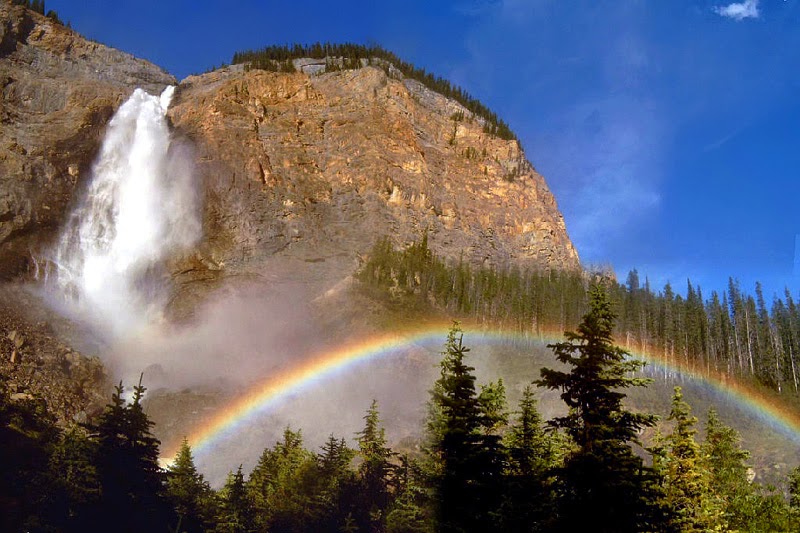
    Natural wonders of British Columbia, Yoho National Park, Pacific Northwest (wiki)
    .
    Who are the devas like Danu?
    In a previous post we posed the shocking question, "What can the dead teach us about Bigfoot?" There are two ways to find Sasquatch ("Wild Man," Yeti, Bigfoot, Buddhist Yakkha or Yakshi).

    One is through the heart of wisdom (the sixth sense), the other through the empirical five senses. Many will stumble upon the devas (fairies, "shining ones," light beings, woodland elemental spirits) by the opening of their third or divine eye, the dibba cakkhu, the DMT-rich pineal gland between the eyes within the brain.

    31 Planes of Existence
    WARNING: Wait! Don't publish! You guys should not talk about this. Mystic mumbo-jumbo sounds crazy. Bhikkhu Bodhi, in addressing the ancient Buddhist cosmological scheme of unseen beings, suggests a very rational alternative:

    We can think of Buddhism's 31 Planes of Existence as mental states humans fall into -- asuras when we are angry, animals when we are dumb or brutish, devas when we feel angelic or overcome with joy and a sense of invincibility or immortality, hungry ghosts when we are caught by addiction or insatiable greed and clinging, humans when we can follow the Five Precepts, hellions when we are depressed or feeling hopeless. There is no need to believe in these as literal realms or as anything but metaphorical spheres.

    Do fairies really exist? (Jah Ho JayDMR/flickr)
    And if we will not know  in this life if they are or are not objectively real, why talk about them? That is a good question except that meditative attainments make it possible to directly verify that these planes are real existing places with literal inhabitants, not simply metaphors. Buddhism is very practical, very much concerned with liberation and what can be attained in this life.

    Mediums who communicate with these hidden human tribes, or hybrid human species, receive messages and live in peace with them. There are, however, inimical tribes, unfriendly humanoid creatures (like the rakshasa) who might devour one. The forest is like that.

    Grey ET iconography at rave (Die Antwoord)
    Has no one ever thought to wonder why drug users and abusers use and are drawn to the same archetypes and images -- mushrooms, pot leaves, Grey ETs, Bear Men (yakkhas, ogres), dragons (nagas), flowers, psychedelic color swirls, infantilizing plush dolls, fairies (bhumi-devas), gnomes (kumbhandas), unicorns, mermaids, snakes, trees, castles, geometric patterns?

    Deva DNA in humans may help us see.
    Why are people, particularly females, drawn to them in hippie and rave subcultures? We suggest it is the type of drugs being consumed, namely, entheogens.

    How else is one to explain the wild popularity of bears, Bigfoot, Bear Men, or furry creatures in general?

    Why do fans love the marching "bear"?
    This would also feed into our King Kong and Fay Wray fascination. They just seem to go together, to be linked in our minds in some archetypal way, like Beauty and the Beast.

    What could be wild speculation is directly discussed by a deva-like man from British Columbia, Andrew Robson, a woodland hippie psychic artist/intuitive on Episode 1 of "Speaking of Sasquatch" (see video above, Minute 15:00).

    Shapeshifting Bear Men into this dimension
    While we are only trying to make sense of the testimony of psychics, trance mediums, interspecies communicators, mystics, and shamans, it would certainly explain a great deal. But trying to rationally interpret and explain the realm of devas, mysticism, mythology, and spiritual lore as well as the direct experience of countless Americans at massive rave festivals, Phish shows, and old time Grateful Dead concerts is fraught with dangers.

    Ha ha, "Sasquatch," what a joke, you nuts!
    The number one danger is ridicule. We can weather that. The second danger is trying to apply rational, linear logic with all of its unquestioned underlying assumptions to something holistic, interconnected, and more a web with countless and expanding nexus points than a line that begins here and ends there, that has a simple first cause and a point or end goal.

    Reality is not that way. There is no seeing it "objectively" if we ourselves are in it, part of it, constantly affecting it, emerging from it, not really different from it. Is the universe, as mystics of old have always said, looking back at itself? We are not in the universe looking at it. We are the universe. We are not in an environment. We are part of the environment. How then will we know it independent of it?

    The "Wild Men" are out there. And those who live in the woods for generations have no doubt about it from Buddhists in Nepal, Bhutan, and Tibet in the Himalayas to Native Americans in California, Oregon, and Washington in the U.S.
    .
    The one thing many cannot understand about Buddhism is that it is neither an intellectual philosophy (ñāṇa) nor an emotional-devotional (bhakti) exercise, although these elements are present. Buddhism first and foremost is a practice which seeks to purify the heart/mind so that "objective" (impersonal, impermanent, unsatisfactory) reality can be seen directly and penetrated. The goal is liberation (nirvana) and it is only possible by direct knowing-and-seeing (enlightenment).

    Speaking of Sasquatch
    This monthly webcast provides a forum for the Sasquatch (Sasquac, a Pacific Northwest Native American word that means "Wild Man") people to address humans directly by way of trance mediums and sensitives.

    (SOS, Ep. 2) Sasquatch on humankind's relationship to our environment. Trance medium Kathleen Odom facilitates a dialogue, marking the debut of The Chandler Chronicles, a series reported by Molly Hart Lebherz about Lori and Dustin Chandler's interaction with Sasquatches living near them in Georgia, USA. Bashar (channeled by Darryl Anka) explains prehistory.

    Speaking of Sasquatch offers a counterpoint to the mainstream media's frequently sensational and inaccurate portrayals of Sasquatch and "Bigfoot." For more than 20 years, principal contributor Kathleen Odom (sasquatchspeaks@gmail.com) has been an interspecies communicator and shamanic practitioner whose spirit medicine practice is currently based in southern Oregon.

    Host Christopher Munch is an award-winning writer-director whose "Letters From the Big Man" (lettersfromthebigman.com) was a New York Times critics' pick. Guest contributors include educator-author Thom Powell (thomsquatch.com) and artist-intuitive Andrew Robson (sasquatchrevelations.com). © 2013 Antarctic Pictures LLC • All Rights Reserved.

    Scr-w the airy-fairy talk, we demand science!
    Pat Macpherson, Pfc. Sandoval, Wisdom Quarterly
    Lloyd Pye explains the science we are lied to about to feed us a consensus reality misunderstanding about Darwinism, the Theory of Evolution, and human origins on Earth.
      
    Himalayan Yeti (Snow Walker video still)
    Fortunately for those of us who are more empirically minded -- who want to see, touch, and test the hard evidence -- it exists in the form of DNA evidence, genetic profiling, a peer-reviewed publication (Dr. Melba Ketchum, David Paulides, et al.)

    There is also the more widely published and compromised work of Oxford scientist Brian Sykes, who has determined that the Himalayan Yeti of lore is very real but simply a kind of prehistoric (more humanoid) "polar bear."

    (TPK) Former police officer David Paulides discusses the systematic, scientific investigation of Sasquatch and collection of data and affidavits particularly in and around U.S. national parks.

    Homo floresiensis (taringa.net)
    The problem is next to no one will actually examine the evidence because of what they imagine is implied: Why if this is true, what else have I been wrong about, what else is real, what can be said of the cover up aided by the mainstream media for years on end even as centuries old Native American lore told us otherwise?

    And what does it say about the theory of evolution when clearly someone or something meddled with our earthling DNA to genetically alter and "create" the various lines of human beings that have existed from the fossil evidence, like the extinct tiny kumbhandas (gnomes, dwarfs) or "Hobbits" (Homo floresiensis) of formerly Buddhist Indonesia and surviving Neanderthals (Almas or "Wild Men") of Russia and Central Asia. New species of human beings discovered? I'll believe it when I see it. Show me the evidence!

    (BBC) Scientists discover new race of human beings in Asia, the Denisovans, Dec. 2010

    Tibetan Folklore
    Some ogres (yakshis) are cannibals.
    (WIKI) Almases appear in the legends of local people, who tell stories of sightings and human-Almas interactions dating back several hundred years. Drawings interpreted as Almas also appear in a Tibetan medicinal book. British anthropologist Myra Shackley noted that "The book contains thousands of illustrations of various classes of animals (reptiles, mammals and amphibia), but not one single mythological [or make believe] animal such as are known from similar medieval European books. All the creatures [contained in the medicinal text] are living and observable today" (1983, p. 98). 

    Famous Western sightings
    Sightings recorded in writing go as far back as the 15th century. In 1430, Hans Schiltberger recorded his personal observation of these creatures in the journal of his trip to Mongolia as a prisoner of the Mongol Khan. Schiltberger also recorded one of the first European sightings of Przewalski horses. (Manuscript in the Munich Municipal Library, Sign. 1603, Bl. 210)(Shackley, 94). He noted that Almasty are part of the Mongolian and Tibetan apothecary's materia medica, along with thousands of other animals and plants that live today.
     
    Hair, blood, DNA evidence are hard science.
    British anthropologist Myra Shackley in Still Living? describes Ivan Ivlov's 1963 observation of a family group of Almas. Ivlov, a pediatrician, decided to interview some of the Mongolian children who were his patients and discovered that many of them had also said that they had seen Almases and that neither the Mongol children nor the young Almas were afraid of each other. Ivlov's driver also claimed to have seen them (Shackley, 91). 

    Captive Almas
    A wildwoman named Zana or Zanya (Brian Sykes claims he solved her mystery by DNA analysis) is said to have lived in the isolated mountain village of T'khina 50 miles from Sukhumi in Abkhazia in the Caucasus; some have speculated she may have been an Almas (Neanderthal-modern human hybrid), but this alleged evidence indicates that she was a human.

    Most sharks are harmless
    A scary Bigfoot meets hunter in the woods.
    Most sharks are harmless, but Great White maneaters get all of the attention. The same is true of the many varieties (tribes) of Sasquatches, "Wild Men." Some are quite docile, wise, protecting the forest and nature. But a few are cannibals, brutish, perhaps experiencing transient hormonal changes, like good elephants gone wild during the rut or protective mothers perceiving a danger to their offspring. This past weekend Dave Schrader (host of Darkness Radio) guest-hosted Coast to Coast with just such stories:

    Forest Predator
    Dave Schrader welcomed paranormal researcher Stephen Young, who discussed a strange and highly unusual predator that is living in the woods and forests all across the world and is able to overpower someone in an instant.

    Young said she was led into the topic after uncovering stories of people disappearing in the Carpathian Mountains of Romania, Mt. Kailash in Tibet, and the Markawasi Stone Forest of Peru. She described Markawasi as a dimensional portal and suggested the strange energy visitors have described feeling there is possibly caused by a confluence of ley lines or the piezoelectric properties of granite.

    Young reported on a missing middle-aged man in good health found dead in a forest in Ireland, as well as a boy from the Isle of Man who allegedly disappeared for four years into another dimension.

    She suggested an invisible entity could be involved in the disappearances, pointing to records of explorer James Alan Rennie who claimed to have seen tracks with no source moving toward him, make impact, then continue past. A cloaked mantis-type creature, such as proposed by Michael Ian Black, may be lifting these people and leaving no trace behind, Young suggested.

    She also spoke about locations around the planet, including Assonet Ledge in Freetown State Forest, Massachusetts, and the Overtoun Bridge in Scotland, where people (and dogs) feel compelled to commit suicide. AUDIO