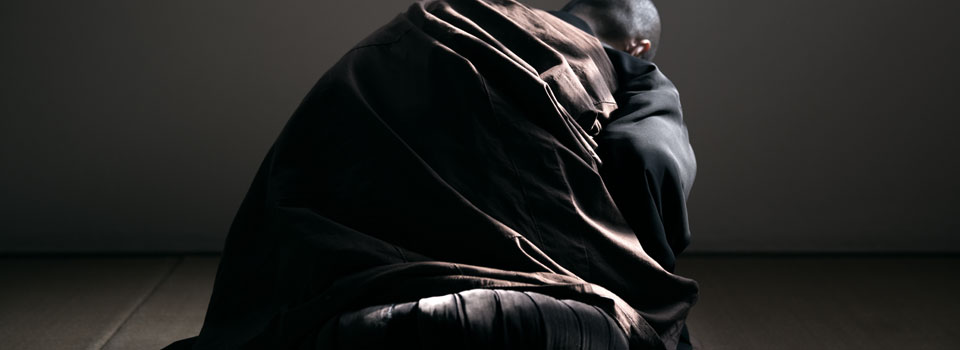
I asked 89-year-old Dalai Lama for life advice and learned...
(Sprouht) March 2, 2025: I flew over 10,000 kilometers from Canada to Northern India and asked the 89-year-old 14th Dalai Lama for "life advice." He shared with me one of the most valuable pieces of advice I've ever heard. This was one of the most incredible journeys I've ever taken to date. Please enjoy one of the most incredible stories we've ever told.
(Tibetan doon boy) An American asks, "Is the Dolly Llama the Pope of Buddhism?" It comes as no surprise that there should be confusion. As Americans, we are bombarded with attention to a little-known sect of (Vajrayana) Buddhists on the Rooftop of the World. Lhasa, the capital of Tibet, was once the seat of a Himalayan empire that reached from Mongolia to Bangladesh, from Bangladesh to Kashmir. With the help of Hitler looking for the original Aryans and magical artifacts and the CIA fighting China and the expansion of communism, the West is bombarded with messages about how important this lama is or is supposed to be. China hates him. And due to the Dorje Shugden controversy, there's in-fighting among Tibetan Buddhists. Some New Kadampa Tradition practitioners hate him. But Americans, we are told we love him without understanding what his is or is supposed to be. The Simpsons jokes about it with Lenny, Carl, and Richard Gere. And the Jewish community loves and supports him. Last Week Tonight with John Oliver solved it with an exploratory episode, interviewing Americans then traveling to Tibet and meeting with "His Holiness" himself.
Drop delusion of self to help everyone. - Psychology highly developed in India: Abhidhamma
Dalai Lama on rebirth and his planned reincarnation: Death isn't end of everything; samsara goes on
(Dechen wangdi 🇨🇦) June 3, 2025: "H.H. the 14th Dalai Lama on his Reincarnation" [Is the 14th Dalai Lama, the former pope-king of a school of Tibetan Vajrayana Buddhism and a world renown personality, a Buddhist celebrity, planning a trip to Shangri-La or Shambhala, and is this way of hinting he's going? The world will have to wait and see. For many, a better question than his future tulku status might be, "Who is the Dalai Lama?" We all think we know him, or know about him, but as John Oliver showed, few know anything once they are actually asked. Last Week Tonight sought to remedy that with a few good laughs:]
Wolfgang Amadeus Mozart (January 27, 1756–December 5, 1791) was a prolific and influential composer of the Classical period. Despite his short life, his rapid pace of composition and proficiency from an early age resulted in more than 800 works representing virtually every Western classical genre of his time. Many of these compositions are acknowledged as pinnacles of the symphonic, concertante, chamber, operatic, and choral repertoire. Mozart is widely regarded as one of the greatest composers in the history of Western music, with his music admired for its "melodic beauty, its formal elegance and its richness of harmony and texture." More
Pat Macpherson, Ashley Wells (eds.), Wisdom Quarterly Wiki edit
The Buddha taught not sudden enlightenment (satori) but gradual development of the Noble (Ennobling) Eightfold Path to bodhi:
In many discourses or sutras there occurs an identical passage that outlines the gradual course of development in the progress of the disciple. There it is shown how this development takes place gradually, in conformity with natural laws or fixed regularities of the universe, from the very first hearing of the Dharma (the Enlightened One's Doctrine), to germinating confidence/faith (saddha) and dim comprehension, up to the final realization (bodhi) of liberation (nirvana) from all suffering.
"After hearing the Dharma, one is filled with confidence, and one thinks: 'Full of hindrances is household life, a refuse heap. But the left-home life (of a Buddhist monastic) is like the open air. It is not easy, when one lives at home, to fulfill in all points the rules of the supreme life. How now if I were to cut off hair, put on saffron robes, and go forth from home to the left-home life?'
"And after a short time, having let go of one's possessions, whether they be great or small, having forsaken a circle of relations, small or large, one cuts off hair, puts on saffron robes, and goes forth from home to the left-home life.
Having thus left the world, one fulfills the monastic rules:
One abstains and avoids killing living beings, having abandoned cudgel and knife, conscientious, full of sympathy, desiring the welfare of all living beings.
One avoids stealing (taking what is not given)...
One avoids unchastity...
One avoids lying...
One avoids tale-bearing...
One avoids harsh speech...
One avoids idle chitchat.
One abstains from destroying vegetal seeds and plants.
One eats only at one time of day [after dawn but before noon].
One keeps aloof from dance, song, music, and visiting unseemly shows.
One rejects floral adornments, perfumes, ointments, as well as any other kind of embellishments.
One avoids using high and luxurious beds and seats.
One avoids accepting gold and silver...
One keeps aloof from buying and selling....
One contents oneself with the robe that protects one's body and with the alms bowl with which one keeps oneself alive: Wherever one goes, one is provided with these two things, just as a winged bird in flying carries along its two wings.
"By fulfilling this noble domain of virtue (sīla) one feels in one's heart an irreproachable happiness."
In what follows thereafter it is shown how the disciple watches over the five senses and the mind and by this noble restraint of the senses (indriya-samvara) feels at heart an unblemished happiness.
It is shown how in all one's actions one is ever mindful and clearly conscious and how, being equipped with this lofty virtue and with this noble restraint of the senses, and with mindfulness and clear comprehension (sati-sampajañña), one chooses a secluded dwelling.
Freeing the mind from the Five Hindrances (nīvarana), one reaches full absorption (samādhi).
Thereafter, by developing insight (vipassanā, lit. "clear seeing") with regard to the radical
impermanence (anicca),
disappointment (dukkha), and
impersonal (anattā) nature of all phenomena of existence [summarized as the Five Aggregates clung to as self],
one finally realizes liberation from all cankers and defilements, and this certainty and assurance arises:
"Forever is liberation achieved,
This is the last time I am reborn,
No new rebirth awaits me."
Cf. D.1, 2f; M. 27, 38, 51, 60, 76; A. IV, 198; X, 99: Pug. 239, etc.
Young American Sharon Salzberg went to India and met the enlightened teacher Dipa Ma.
The new book makes a great inspirational gift
Today is the last chance to pre-order Sharon Salzberg's new book, Finding Your Way. This beautiful little gift book comes out into the world on Tuesday, Oct. 10th! All pre-orders in the US are eligible for a free poster inspired by the book.
The book pairs full-color illustrations with short essays about different topics. Everything is distilled into bite-sized pieces for contemplation.
Salzberg's publisher is offering a 20% discount with code "SHARON" on pre-sales made directly through their website, so get the book at a reduced price from them before Oct. 10th, 2023.
Details are on the SharonSalzberg.com website. Celebrate the launch of Finding Your Way with Sharon and the Insight Meditation Society (IMS) Book Club.
A virtual class is happening on Oct. 10th. Register RIGHT HERE for this FREE event.
ABOUT: Wim Hof (wimhofmethod.com), also known as “The Iceman,” holds multiple world records for his feats of endurance and exposure to cold — such as climbing Mount Kilimanjaro, Africa, wearing only shorts and shoes, running a barefoot half-marathon in the Arctic Circle, and standing in an ice-filled container for more than 112 minutes. Having been taught by the majestic natural power of the cold, Hof is on a mission to share his discoveries with the world.
The benefits of his method, now practiced by millions, have been validated by eight university research studies. He has been featured on the BBC, VICE Media, Discovery Channel, and The Joe Rogan Experience, The Tim Ferriss Show, and The School of Greatness podcasts.
More
Part II: Three-day meditation retreat with British Theravada monk trained in the Thai Forest Tradition Ajahn Brahm (Ven. Brahmavamso Maha Thera) at the West End Buddhist Temple and Meditation Center, Mississauga, Toronto, Ontario (westendbuddhist.org). These are the instructions on how to meditate given at the second day of the retreat.
This is the first day of a three-day meditation retreat with the Western Theravada monk Ajahn Brahm at the West End Buddhist Temple and Meditation Center in Mississauga, Toronto, Ontario. These are the instructions given on the first day of the retreat.
The answer is simple: Zazenisn’t good for anything.
We are always looking for something. Some chase after money, others want love or sex. We study to get a good job, make a career, and become a “success.” But in the end -- what do we really want?
I think what we are really looking for is “happiness.” We miss that feeling of being truly happy and satisfied. The crazy thing is that the more we chase after happiness, the farther away it seems to escape us. Did we not only lose sight of happiness, but also of ourselves long ago?
Zen in the city (mwaltonphoto/flickr)
The harder we try to be happy, the less we understand what happiness actually means. Have we forgotten that we actually have all we need in this moment? Maybe happiness isn’t waiting for us somewhere “on the other side” but is right here and now?
Let’s just stop for a moment. Stop chasing, stop running away. When we practice zazen... More
How to sit
Yokoji ZMC (zmc.org), situated in the mountains of California, has affiliates in Long Beach, Pasadena, and Redlands; Chattanooga, Tennessee; Austin, Texas; Scottsdale, Arizona. The video above contains instructions on seated meditation (zazen)
in various positions like full-lotus, half-lotus, Burmese, kneeling,
and using a chair with tips on breathing and how to go in to and out of
meditation periods.
Zen instructions
Practicing Zen means zazen. A quiet place is most suitable for doing zazen. Place a thick mat on the floor.
Ancient sages sat on the diamond seat or on a large rock. They all laid grass thickly and sat on it.
Do not allow drafts or mist to enter the room. Do not allow rain or dew to leak in. Protect the place where you sit; keep it in good condition.
Enso (pinteres.com)
Keep the place where you sit well-lit. It should not be dark either during the day or at night. It is essential that it be warm in winter and cool in summer.
Let go of all relations, and set all affairs at rest. Do not think of good; do not think of evil.
Zazen has nothing to do with the function of [discursive thinking] intellect, volition, or consciousness, nor with memory, imagination, or contemplation. Do not seek to become a buddha.More
"It is not the strongest of the species that survives, nor the most intelligent, but the one most responsive to change"
- Charles Darwin
Introduction to actual practice (Ptyica) Zen: Introduction to Zen Practice (full version) with Taigen Shodo Harada Roshi with subtitles available in English, Spanish, French, German, Danish, Italian, and Hungarian (by turning on caption option on lower left of player).
(OneDropZen.org) This is a short film for beginners about Zen Buddhist meditation by Taigen Shodo Harada Roshi, who is the abbot of Sogen-ji Zen monastery in Okayama, Japan.
Antaiji is a Zen Buddhist monastery located deep in the mountains, close to the Japanese sea. The monastery commits itself to the practice of seated meditation and the study of the Buddha's teachings in the tradition of Dogen Zenji and Sawaki Kodo Roshi. The monastic community also cultivates the fields around the monastery, cuts grass and trees, and does construction work to stay self-sufficient [which runs counter to the historical Buddha's teachings but is in line with North Asian custom.] In the interview, Abbot Muho explains zazen(seated meditation), community life, and the relation between teacher and student, guru and chela or disciple. Another controversial topic is their precept of not-killing living beings or eating meat.
Voter suppression is real. It's a crime. And it's happening to YOU today. You'll see when you try to vote. It's like being black for a day, with hardships you never imagined. There IS something you can do to prevent it. Start with page 19: "7 Easy Steps to Steal Back Your Vote." (Comics by Ted Rall, Lloyd Dangle, and Lukas Ketner). Download comics for FREE
.
(Greg Palast)Rosario Dawson, Greg Palast, and Tim Robbins on Bernie, Trump, and Vote Theft: When someone hijacks a car, it’s not "car suppression." It's theft. When someone hijacks votes, it's also a form of theft. Vote suppression and news suppression go together — because when they’re stealing votes, they want to keep it quiet. Mainstream media outlets like CNN and NPR support Clinton. They are against Sanders. Before today's vote they are calling the election. What's their motivation? Money. Money trumps all other considerations.
Individuals endorsing Sen. Sanders at BernieCrats.net are active candidates for public office. They support and promote Bernie's progressive plans. As Bernie says, He can't do it alone! If we want real change we need to make sure there are enough progressive leaders in office to actually pass the legislation to make change happen. This is about issues. Together we'll get this country headed back in the right direction!
We wear our candidates with pride, opposites though they are. #Anybody but Hillary!
.
Greg Palast, Jimmy Dore (TYT), and Wisdom Quarterly know the Hillary Clinton Camp is going to do everything it can to steal the election -- backed by the powers of the corrupt establishment Democratic Party.
Establishment Democrats, like Republicans, are really just two wings of the same Money Party that serves donors by selling out voters.
We may vote, but we are not electors (electorate): We don't get our choice. Money gets its way by bribing donating, which puts our politicians in their pockets and makes them beholden if they want to hold on to power.
If you're not careful, this is where your vote will end up. Let's reform the system.
.
Senator Bernie Sanders or Dr. Jill Stein?
There are only three choices outside of the Money Party system: Vote Independent: Senator Bernie Sanders. Vote Green: Dr. Jill Stein. Or vote orange supremacist Donald Trump (or Basiago or a third party) -- anyone but Hillary, the Ballot Bandit.
LISTEN in while Dennis J. Bernstein and Greg Palast take listeners through the ugly sausage factory called the American voting system: Palast and Bernstein have begun a weekly radio broadcast, The Best Democracy Money Can Buy: The Election Crimes Bulletin, on his Pacifica broadcast, “Flashpoints.” Don’t get Flashpoints in your area? Then simply subscribe to the weekly podcast.
The California Democratic Primary takes place today, Tuesday, June 7, 2016. Voters must have pre-registered as a Democrat or No Party Preference (NPP = independent) voter by May 23, 2016 in order to participate. There's still time to vote in the general election on November 2nd.
If you are an independent, make sure you're registered as "No Party Preference." There is an “American Independent” party in California which is not eligible to vote for Bernie — only Democrats and No Party Preference voters can.
If you are registered No Party Preference, ask for demand a Democratic ballot when you go to vote and you’re all set! If they offer a "provisional ballot," that's worthless. Do not accept it. Ask to speak to the poll judge. They may say they are out of NPP ballots. Wait until they get more OR ask to vote as a handicapped person who can VERBALLY DECLARE his or her choice. Greg Palast explains how.
Election Day Voting
After finding your polling location above, you can vote for any Democrat on primary election day, June 7th, 2016, any time from 7:00 am to 8:00 pm.
If you are a Democrat and have received a vote by mail ballot, bring your ballot and the envelop it came in to any polling location in your county to drop it off by saying "I surrender this ballot" (in the case of NPP) for a Democrat ballot.
If you are a No Party Preference voter and have received a nonpartisan vote by mail ballot, bring your blank ballot to your polling location and exchange it (surrender it) for a Democratic crossover ballot. WARNING: Do not accept a "provisional" ballot, which some pollsters were trained to give you. Provisional ballots are worthless and are the same as not voting. They get thrown out. You have a right to a real ballot.
Are you going to let us buy our elections?
If you have lost your ballot or have not received one, you can go to any polling location and vote by provisional ballot [to participate without being counted].
In meditation one lets go of the complex world outside in order to reach the serene world inside. In all types of mysticism and in many traditions, this is known as the path to the pure and powerful mind. The experience of this pure mind, released from the world, is very wonderful and blissful.
Often with meditation there will be some hard work at the beginning, but be willing to bear that hard work knowing that it will lead to the experience of some very beautiful and meaningful states.
They will be well worth the effort! It is a law of nature that without effort one does not make progress. Whether one is a layperson or a monastic, without effort one gets nowhere in meditation or in anything.
But effort alone is not sufficient. The effort needs to be skillful. This means directing energy just at the right places and sustaining it there until its task is completed. Skillful effort neither hinders nor disturbs us; instead, it produces the beautiful peace of deep meditation.
In order to know where our effort should be directed, we must have a clear understanding of the goal of meditation. The goal of this meditation is the beautiful silence, stillness, and clarity of mind. If we can understand that goal then the place to apply our effort and the means to achieve the goal becomes very clear.
The effort is directed to letting go, to developing a mind that inclines to abandoning. One of the many simple but profound statements of the Buddha is that "a meditator whose mind inclines to abandoning, easily achieves samadhi [collectedness, composure, coherence, concentration]."
Such a meditator gains these states of inner bliss almost automatically [almost effortlessly]. What the Buddha is saying is that the major cause for attaining deep meditation and reaching these powerful states is the willingness to abandon, to let go, and to renounce [nonclinging, inner letting go].
During meditation, we do not develop a mind that accumulates and holds on to things. Instead, we develop a mind that is willing to let go of things, to let go of burdens. Outside of meditation we have to carry the burden of our many duties like many heavy suitcases, but within the period of meditation baggage is unnecessary.
So in meditation we see how much baggage we can unload. Think of these things as burdens, as heavy weights pressing on us. Then we have the right attitude for letting go of these things, abandoning them freely without looking back. This effort, this attitude, this movement of mind that inclines toward giving things up is what leads to deep meditation.
Even during the beginning stages of this meditation, we see if we can generate the energy of renunciation, the willingness to give things away and, little by little, letting go will occur. As we give things away in mind we feel much lighter, unburdened, and free. In the way of meditation, this abandoning of things occurs in stages, step by step.
We may go through these initial stages quickly if we wish, but we must be very careful if we do. Sometimes when we pass through the initial steps too quickly, we find the preparatory work has not been completed. It is like trying to build a house on a very weak and rushed foundation. The structure goes up very quickly, but it comes down very quickly as well!
So it is wise to spend a lot of time on the foundation and the first stories as well, building the groundwork well, strong and firm. Then when we proceed to the higher storey, the blissful states of meditation are stable and firm.
How I do it
A Tribute to Venerable Ajahn Brahmavamso
In the way I teach meditation, I like to begin at the very simple stage of giving up the baggage of past and future.
Sometimes we may think that this is such an easy thing to do that it is too basic. However, if we give it our full effort, not running ahead to the higher stages of meditation until we have properly reached the first goal of sustained attention on the present moment, then we find later on that we have established a very strong foundation on which to build the higher stages.
Abandoning the past means not even thinking about work, family, commitments, responsibilities, or history, the good or bad times we had as a child... We abandon all past experiences by showing no interest in them at all. We become someone who has no history during the time we meditate.
We do not think about where we are from, where we were born, who our parents were, or what our upbringing was like. All of that history is renounced in meditation. In this way, everyone here on retreat becomes equal, just meditators.
It becomes unimportant how many years we have been meditating, whether we are an old hand or a beginner. If we abandon all that history then we are equal and free. We are freeing ourselves of concerns, perceptions, and thoughts that limit us and stop us from developing the peace born of letting go.
So we finally let go of every part of our history, even the history of what has happened to us so far on this retreat, even the memory of what happened to us just a moment ago! In this way, we carry no burden from the past into the present.
Whatever has just happened, we are no longer interested in it, so we let it go. We do not allow the past to reverberate in our mind. More
Breath meditation is a useful technique for everyone. It is the kind of meditation the wandering ascetic Siddhartha Gautama was practicing just before he became "the Buddha" during his great enlightenment under the bodhi tree.
It is probably the most beneficial to the body, because the breath (prana, chi, energy) is more than the air coming in and out of the lungs and into the blood. It is what makes movement possible (see Buddhist physics about kalapas and cittas or practice Four Elements Meditation as taught by Burmese Theravada Meditation Master Ven. Pa Auk Sayadaw in particular to personally verify this curious statement).
This energy is what makes the body function well so that it can be healthy, which gives our intention or mind a way to handle dealing with pain that arises in the body from time to time.
The Buddha atop Borobudur temple, Indonesia, in a bell or stupa (Ryanchanatry/flickr).
Sit comfortably erect balancing the bodies weight so that it's comfortable. Straight does not mean stiff like a soldier. It means soft like a martial arts master, calm, smiling, completely relaxed and alert. Lean forward and back and side to side to find balance.
Close the eyes and take a deep, cleansing breath. Then completely let it go. Exhale and relax on each exhalation so as to calm down and sink into comfort and ease.
Doom: resentment, anger...
Silently say, "May I be well and happy, free from suffering." Just as one wishes this for others, it is best to wish it for oneself first. This may sound strange or selfish, but if we cannot wish ourselves happiness, how will we wish others to be as happy as we are? "Love yourself like you love your neighbor" one very famous rabbi said but stated it, "Love others as you love yourself." How much do we love ourselves?
Some people (ourselves included) need to constantly remind themselves that they deserve happiness: we all deserve it, yes even the "bad" people. May everyone be happy. Or be miserable and wish misery on everyone, but then there is no sense in meditating. There is no way to happiness; happiness is the way! If we fail to believe this, we will be unhappy and constantly find ways to punish ourselves.
Why's the Buddha so happy? (Khorsani/flickr)
And what will we do to others? That's right, the same thing. We will end up punishing others in subtle and even blatant ways. If we insist on doing so, it is better to choose to practice one of the punishing Abrahamic faiths and sexist-racist religions like Judaism, Islam, Christianity, or Scientology so popular in the West, child molestation thrown in four free. Go on. You'll have plenty of company. Join a angry cult:
(Documentary) "Life Inside a [Christian] Religious Cult" A "cult" is a spiritual or social team with deviant or novel beliefs and techniques. What is "novel" or "deviant" depends on the society one lives in. Religions are cults until and if they can become religions.
.
Happiness
I meditate.
What is "true happiness," and where it can be found? Reflect. Can it be found in the past or future? The past is gone, the future has never been. Right here right now is the only place we can be happy (whether we're remembering the past or projecting into the future, happiness is only to be found wherever we are in the present moment).
But we have to know where to look. If we try to base our happiness on things that constantly change -- sights, sounds, physical sensations, people, things outside ourselves -- we're setting ourselves up for disappointment.
It's as if we are building ourselves a beautiful house on a cliff where there have repeatedly been landslides in the past. True happiness has to be looked for within. Meditation is like a treasure hunt -- a quest to find what is solid and unchanging. What is worthy of our efforts, something that even death cannot touch?
I found treasure (Moondoxy/flickr)
To get to our treasures, we might need a few tools. The first tool is doing what we just did: develop goodwill for and toward ourselves and extend that out to others second. It doesn't work to do it the other way around. Be happy and then being happy, help make others happy.
We can remind ourselves, "All living beings -- no matter who they are, no matter what they've done to me in the past -- may they also find true happiness." If we do not cultivate this thought and practice with loving-kindness, but instead carry grudges into our meditation, that is all we will be able to see when we look inside.
Only when we have cleared our minds of resentment, harming, wrath, vengeance, and negativity, and set all outside matters aside, are we actually ready to focus on the breath, the subtle breath beyond breathing, at the tip of the nose.
Begin
Do protectorshover around?
Bring attention to the sensation of breathing right at the nostril. Breathe in long and let go relaxing, which means a long exhalation.
Stay with the spot just under the nose, the doorway where air comes in and out. There is no need bear down on it or press too heavily focusing and trying. This is the opposite of meditation. Meditation means allowing, accepting, being with. Let's be with what is but not involved with it. We can just watch it dispassionately. Let it go.
Let the breath be, and let's stay with it. The breath is allowed to flow naturally. All we do is simply keep track of it from beginning to end no matter how subtle it gets. If we are calm, it will get so subtle that we may think we are not breathing. We are. We need more attention (less distraction) to notice it.
Persist
Siddhartha had to endure boredom, anger, rage, lust, craving, delusion, confusion...
Sitting in this way with this practice means effortlessly building attention, patience, noticing, staying with it even if persistence and perseverance seem like the last things we feel capable of doing. We are doing it. The breath is. That is what is happening right here right now, so let's be with it.
If we experience an exquisite sensation, we naturally want to prolong it. What meditation will yield is a blissful enthusiasm (piti) and happiness (sukha, good feeling, soothing ease, the opposite of dukkha). So if the mind (attention) wanders off, simply bring it back. And bring it back again. And again. Rather than allowing discouragement, we develop persistence. Get up if need be.
Then sit down again. The mind may wander 60 times (in a minute), so we bring it back 61 times. It's not important that it wandered; it is important that we bring it back and keep it here. Show it that we mean business, and eventually it will listen to us. This is the tough part, the getting started, the reason we would be better off starting sooner. But now is when we do it, now is what we have, and now is when we will start feeling the benefits. Be here now. It's all there is.
When we sit without having to try, zen begins.
Once we ease and comfort with attending to the breath at the chosen spot, we can get used to keeping it there. It will stay right here under the nose, at the center of the nostril opening.
There is the sensation of motion created by the breath, which may get so subtle that it seems like a mere squiggle. The breath reflects the state of mind like a mirror. When the mind moves, the breath will immediately move, so quickly that our attention only notices a moment later. The mind is very swift.
Stay with the breath without deviating to distractions -- thoughts, noises, worries. If something arises, the mind is there to attend to that, too, then bring it back.
What will happen? Meditation will unfold. Be like a person full of confidence that just doing this, just attending to the breath will allow meditation to unfold -- access concentration, absorption, stillness, happiness.
Happiness will eventually engulf the body due to the Factors of Absorption and the falling away of defilements. The basis of successful meditation is virtue (sila) and having tried to meditate and develop oneself (paramis) before, so practicing the Five Precepts in life greatly helps meditation success. Residing in a quiet place with calm companions also helps. Not all locations and companions are suitable for success in meditation, but we will never know that until we meditate.
Meditating in a quiet group is often very helpful in the beginning (redlotusjourney.com).
.
When we focus or rest our attention on the breath just below the nose, our attention settles there comfortably. We let awareness spread from there to fill the entire body so that -- like a spider sitting in the middle of a web while sensitive to the entire web yet remaining at one spot -- we are present.
Keep awareness of the breath, and awareness will expand. Our tendency is to want to shrink attention to a single spot and think of the breath as coming in and out of the body, but this is gross breath. Our real object of meditation, which will reveal itself, is the subtle breath when the mind and body are calm and attention has grown so powerful that we are able to stick with it in conjunction with its subtlety.
Sound waves can help still the mind.
Let awareness simply stay right under the nose where the breath travels from the outside world into the inside-body. There is nowhere else we have to go, nothing else we have to "do," nothing to think about... Gently allow meditation (jhana, zen, ch'an, seon, dhyana) to happen.
Come out when the bell rings or after an hour. Getting to an hour may take some time, but it is doable and gets easier with time. The benefits are astounding, eventually leading (with the addition of insight-practices founded on a foundation of absorption) to enlightenment and the end-of-all-suffering the Buddha called nirvana.
All materials on this site are submitted by editors and readers. All images, unless otherwise noted, were taken from the Internet and are assumed to be in the public domain.
In the event that there is still a problem, issue, or error with copyrighted material, the break of the copyright is unintentional and noncommercial, and the material will be removed immediately upon presented proof.
Contact us by submitting a comment marked "private."
Do not follow this journal if you are under vinaya or parental restrictions. Secure protection by Sucuri.
Wisdom Quarterly: American Buddhist Journal is licensed under a Creative Commons Attribution-Noncommercial-Share Alike 3.0 United States License. Permissions beyond the scope of this license may be available at creativecommons.org/about/licenses.


.jpg)


 Practicing Zen means zazen. A quiet place is most suitable for doing zazen. Place a thick mat on the floor.


 (Greg Palast) Rosario Dawson, Greg Palast, and Tim Robbins on Bernie, Trump, and Vote Theft: When someone hijacks a car, it’s not "car suppression." It's theft. When someone hijacks votes, it's also a form of theft. Vote suppression and news suppression go together — because when they’re stealing votes, they want to keep it quiet. Mainstream media outlets like CNN and NPR support Clinton. They are against Sanders. Before today's vote they are calling the election. What's their motivation? Money. Money trumps all other considerations.


 Such a meditator gains these states of inner bliss almost automatically [almost effortlessly]. What the Buddha is saying is that the major cause for attaining deep meditation and reaching these powerful states is the willingness to abandon, to let go, and to renounce [nonclinging, inner letting go].