(Adele Journeys) Premiered Jan. 22, 2026: The Gem Story | Turquoise of Iran. Explore the legendary turquoise mines of Nishapur, Iran, where some of the world’s most prized Persian turquoise has been mined for thousands of years.
See how the stones are extracted, shaped, and polished in local workshops, and learn why turquoise is called a "living stone."
Support via Crypto (BTC): bc1qxjlp8l2k27x5zqgx35wcv3v7yu430yhvec5hg7
Support, big or small, makes a real difference. It helps her create more videos, improve the content, and share even more exciting journeys with viewers. Thanks so much for being here and for generosity.
(Robert Sepehr) Premiered 12/12/24: The Buddha, when he was alive in the world, said that he did not want to be worshiped. Instead, he left a practical philosophy (the path, specific instructions, guidance leading to the enlightenment he experienced) from which anyone can spiritually benefit.
Theravada Buddhism has been a significant part of Thai culture and society for over 2,000 years, with an esoteric history that is being forgotten and replaced.
It is very curious and almost inexplicable how Sepehr makes glaring errors. We can only conclude that he has an agenda, a preconceived notion of the truth, to push. For instance:
Theravada (Thera = "elder" + vada "teaching" = "Teaching of the Elders") Buddhism does not come from the Sanskrit word Theraveda, if there even is such a word in Sanskrit.
And more shockingly the "Pali canon" means the official canon (body of literature) in the Pali language (aka Magadhi, the regional dialect of the Kingdom of Magadha). Pali was the common parlance of the day, the language of the common (non-Brahmin elite) people, the language (one of the languages) the Buddha spoke. It by definition was not written in Sanskrit. (One can also speak of related Indo-European languages, dialects, and mutually understandable tongues like Prakrit and Gandhari).
There is a Sanskrit canon, presumably, because there are many Buddhist-Sanskrit texts of the Mahayana/Hindu tradition.
Sanskrit was the exclusive language of the Brahmins, a liturgical language (much like Latin compared to Spanish).
There are at least three Sanskrits, Old, Middle, and Late just as there are phases of English: Olde, Middle, and Modern.
The Brahmin priests controlled spirituality in those day. Their takeover and attempt to absorb or subsume the Buddha's unique Doctrine, the Buddha-Dharma, into the folds of their general Vedic framework, as was done to Jainism but not to other dharmas being bandied about by other shramana teachers (of which there were at least six), was successful in what much later came to be called "Hinduism" (the isms being practiced along and around the Indus River and as far back as the great Indus Valley Civilization).
The Old Vedic Religion, which may be referred to as Brahmanism, the mostly secret teachings of the Brahmin priests, communicated to them from heaven through space-visitors, the "gods" (devas and brahmas), was recorded in a heavenly (unearthly) language, Sanskrit, or languages, those as yet undeciphered IVC languages of Mohenjo-daro and Harappa.
Sanskrit is the sacred, elitist, and exclusive language of Brahmins, which they use to distinguish and protect their caste distinctions and elite status.
Brahmins taught others that "God" (Brahma, Maha Brahma, and/or Brahman) made the caste system and put them on top as the highest, His representative.
The Buddha rejected the caste system. It is likely his family and people did, too, either never adopting it from the Brahmins or modifying it to suit themselves by subordinating eggheads and chaplains, seers and yogi-prophets.
The Buddha was a Scythian, which the Brahmins considered "barbarians" and "nomads." They would have liked to subordinate them into their religious system and way of thinking, but they could not do so very easily.
The Sakas/Shakyas/Scythians came from a neighboring land, the northwest frontier, that recognized social distinctions but held that their nobles/warriors were superior to Brahmins.
They employed as counselors, royal advisors, chaplains, and such. It is not really correct to say that all the Sakas/Shakyas/Scythians were kshatriyas ("warrior caste") because the vast majority were regular people carrying out all the functions of a society.
The Buddha's father, the "king" was more a chieftain in the Afghan sense, a family clan leader for a great territory (foothold) controlled by an extended family clan (mahajanapada), getting rich because of its location on the Silk Road (which was never an actual single road but a series of trade routes through the region).
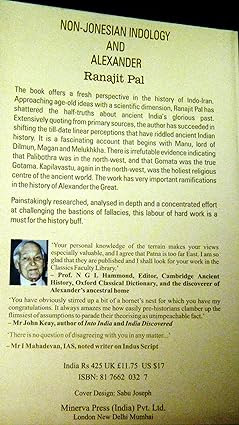
WARNING: This video and information seem to suggest that the Buddha or his extended family clan (the Sakas, Scythians, Shakyians) were "white," which is a modern social construct. Aryan (noble = enlightened) has nothing to do with race. German Nazis, particularly Goebbels, gave it that racist meaning, appropriating the mythology/reality of an advanced race of beings who live in our Hollow Earth (called Agartha), which is all part of ancient Indian (Buddhist, Vedic, Hindu, Jain, Theosophical, etc.) lore. The Buddha was Central Asian, not what we could today classify as Caucasian. According to maverick Indian historian Dr. Ranajit Pal, the Buddha's mother (Maha Maya Devi and the Buddha's foster mother, her sister, Maha Pajapati Gotami) were from Sistan and Baluchestan, which today is considered part of Greater Iranian/Ariyan territories, so he would have looked to us to have those features claimed by whites as exclusively "white" when it is not. The Buddhist peoples of what is today Bamiyan, Afghanistan, in the Buddha's time called Kapilavastu, Gandhara, are not the Pashtuns there today. (The Yazidis should not be confused with those original Sakas/Scythians, a displaced Buddhist tribe known as the Hazara, as casually watching the video might lead one to assume. There are many light-eyed, light-skinned people from around Asia, throughout Central Asia, North Asia, Turkey, the geopolitical Middle East, as it is not rare in the Eurasian region and Siberia/Russia). Bamiyan was one of three seasonal capitals where the Buddha grew up, which is not named other than Kapilavastu (for the country or mahajanapada name as well as the names of those three seasonal capitals, as if they were all occupying the same spot, when they were spread out over the land we would now call Afghanistan and Pakistan, site of today Gandhara and the very important ancient city of Taxila.
How eerily similar where the Hazara once lived (Bamiyan) and now live (Quetta)
.
Hazara culture refers to the culture of the Hazara people, who live primarily in and around the city of Quetta, which is located in Southwest Baluchistan, Pakistan. The culture of the Hazara people is rich in heritage, with many unique customs and traditions.
It shares influences with Persian [Iranian = Ariyan], Mongol and various Central Asian cultures. The Hazara people make up to 900,000 of the population of Pakistan.
Origin
The origins of the Hazara are disputed, though there are three primary theories. The Hazara could be of Turko-Mongol ancestry, descendants of an occupying army left in Afghanistan by Genghis Khan. A second theory goes back two millennia to the Kushan Dynasty, when Bamiyan in Afghanistan – home to the large Buddha statues blown up by the Taliban – was an ancient center of Buddhist civilization.
Subscribers to this idea point to the similar facial structure of the Hazaras with those of Buddhist murals and statues in the region.
The most widely accepted theory is something of a compromise: The Hazara are mixed-race. Certain Mongol tribes did travel to Eastern Persia and what is modern-day Afghanistan, putting down roots and integrating with the indigenous community.
This group then formed their own community that became the Hazara, with their distinctive facial features, sometimes termed Mongoloid, which bear the origins of their Central Asian ancestry.
Either way the Hazara settled in Central Afghanistan, though in the mid-19th century their brutal history of persecution began when more than half their population was killed or forced into exile.
The Pashtun Amir Abdul Rehman, whom the British termed Afghanistan’s Iron Amir during the Raj, invaded the Hazara homeland in the country’s central highlands, forcing them to give up land, and pushing many into exile in Balochistan. More
Zawia: Zaman Buddhas of Bamiyan Shamama | زمان بت شمامه بامیان
(ZAWIA) Renegade Indian historian Dr. Ranajit Pal, Ph.D., has determined that Bamiyan town is one of the three seasonal capitals that comprise "Kapilavastu," the hometown of the historical Buddha Gautama, formerly Prince Siddhartha the Sage of the Scythians/Shakyians (Shakyamuni). He grew up here in the foothills of the Himalayas, in a part of the Himalayan range known as the Hindu Kush, far from Nepal and India but linked geographically. The prince renounced his life of luxury, here in wealthy but far off place along the Silk Road. He traveled East on a spiritual quest and arrived in the Kingdom of Magadha. (There was no "India" yet, which would come centuries later under the rule of Buddhist Emperor Ashoka, who united many kingdoms and republics to form or re-form Great "Bharat," India, as a nation that included Pakistan and part of Afghanistan (ancient Gandhara), which may have been a country previously at the time of the Indus Valley Civilization, 5-10,000 years before the present, when Brahmin priests treasured the Vedas, the ancient Knowledge Books, and shaped a society to their advantage. The Buddha, Mahavira (founder of Jainism) and other separatists were part of the "wandering ascetic" or shramana (shaman) movement, seeking direct experience of the Truth and teaching a Doctrine and Discipline (Dhamma-Vinaya) open to all regardless of caste or sex. So Mahavira accepted female wandering ascetics (sadhvis, sramaneris, and bhikkhunis) and then the Buddha did, and there were other dharmas that did not survive to the present, like the teachings of Makkhali Gosala. But the Old Vedic Religion was eventually claimed by Hinduism, which came centuries later as it was organized and systematized by Sri Shankara and others trying to make a fully "Indian" religion apart from outsiders and foreigners like the Buddha, who was a Scythian (as the Greeks called them) or Saka, as they are still known from the Northwestern frontier, which includes the strange and rare out of the way land now known as Afghanistan.
Evidence of Afghanistan's ancient Buddhist past (not some later territory conquered by the Silk Road spread of Buddhism) rests on such strange facts that Afghanistan is home to the largest unexcavated Buddhist temple complex (Mes Aynak), larger than Borobudur, Java, Indonesia and its pyramid temple topped by bell stupas (possible mimics of time machine technology rediscovered by the Germans and their WWII Die GlockeET technology), the most ancient Buddhist writings (Gandhāran Buddhist texts), stupa (Buddhist burial mound) treasures found in Tillya Tepe and in neighboring Tajikistan's Ajina Tepe, and the most extensive rock hewn structures and art (like the world's oldest oil painting in Bamiyan), which spread throughout the Stans and into what is now India at its famous cave monastery complexes like Barabar and others, which seem to be miracles of advanced technology built by celestial devas ("shining ones") or works of magical feats (siddhis) wielded by powerful adepts and meditators. The Buddhist marvels at Sanchi are hard to explain as ordinary architecture planned by humans alone.
It can also boast the largest Buddha statues in the world, with the largest still untouched, a reclining Buddha buried somewhere in Bamiyan not too far from the massive standing Buddhas that were destroyed by the CIA and ISI and their creation the "Taliban," whose ranks were filled in by released Islamist prisoners from neighboring countries fomented into a war against the West and Western imperialism, taught an extreme brand of Islam known as Wahhabism, which seems like the creation of CIA cubicle workers in Virginia or elsewhere rather than any kind of grassroots movement. The Buddhas of Bamiyan were detonated in public to create outrage and raise support for an American invasion of "Russia's Vietnam." Afghanistan was and remains "a land where empires go to die," England, Russia (USSR), and China's next. The CIA, Pentagon, and American forces (NSA, NSC, and other alphabet agencies we never hear about in the mainstream press) wanted to invade -- to create an oil pipeline, to secure the DNA of redhaired Nephilim cannibal giants for transhuman super soldiers, to recover time well vimana technology, to control a geopolitical Middle East from the best vantage point, to frustrate the Russian Empire's ambitions, to slow China down (with the CIA recruiting Tibet in its fight, compromising the Dalai Lama to become an asset, training and arming his close relatives in Colorado in exchange for favors and publicity), to help India and intervene by playing up both sides of a long-simmering conflict between archrivals Pakistan and India (a single country that was only divided at Partition in 1947, when the British ensured the ruination of the world as they exited by their "divide and conquer" tactics, much as they ruined and ensured misery for Palestine/Israel); in fact, so much of the world's troubles today can be laid squarely at the feet of the British and their Anglo-Afghan wars and the "Great Game" intrigue against other superpowers, with the USA just being the latest, greatest spear tip for those old United Kingdom/British ambitions to rule the world, which seem rooted in their Germanic and ancient Roman mentality to conduct endless war and banking and imperial religion to rule the world one way or another.
Zawia - Zaman Buddhas of Bamiyan Shamama | زمان بت شمامه بامیان
Welcome, everyone, to Zawia’s channel. Hope everyone enjoys these videos. Please make sure to like, subscribe, and share this channel with others. Much love, and thank you, all. #Bamiyan #Buddha #ZAWIA
As WQ has covered, based on Dr. Pal's realization, Shakyamuni was a Scythian/Saka.
What kind of Scythia was the Buddha? Gandharan, Indo-Scythian, a Saka from Indo-Sakastan
Siddhartha Gautama the Buddha was from Gandhara/Afghanistan
Scythian females were warrior princesses, the basis of the Greeks' Amazonian legends
The frozen sarcophagus of a Scythian warrior discovered in Mongol Steppes | SLICE | full documentary
The Scythians (Shakyians) were fierce and proud
(SLICE) June 28, 2024: In the icy steppes of the Mongolian Altai, an archaeological expedition explores the 2,500+year-old tomb of an Eastern Scythian warrior.
The ancient Scythian practice of deep burial of the dead, combined with extreme climatic conditions, could uncover the last frozen tombs on the planet and shed light on this little-known branch of Scythian civilization.
Dr. Pal made the connections
But time is running out. Global warming is threatening the remains of these [Central Asian and] European pioneers who conquered the Asian side of the Altai.
The tombs are full of surprises. Attracted by the unusual hustle and bustle, Kazakh nomads set up their summer camp near the excavations. These people are among the last to be cut off from the modern world.
The Scythians (Barry Cunliffe)
Archaeology collaborates with ethnology to reveal disturbing similarities between these two peoples separated by 2,000 years.
Documentary: Le Sarcophage Glacé de Mongolie.
Directed by Cédric Robion. Production: AGAT Films & Cie.
SLICE fully owns the rights to the use of the published content.
Any illegal reproduction of this content will result in immediate legal action.
SLICE wants to fill up viewers' curiosity!
Accessible to anyone from anywhere at any time, this channel is a weekly dose of short docs about curious facts, discoveries, astounding info, unusual stories, weird, fun, and instructive. Be smart, have a slice!
Tattoos reveal hidden wonders of 2,300-year-old Scythian grave in Mongolia | Secrets in the Ice
Read Dr. Ranajit Pal, Ph.D.
(Science Channel) Join us on a remarkable journey as we delve deep into the ancient mysteries surrounding a 2300-year-old Scythian [pronounced \sih-thee-en\] grave in Mongolia. Prepare to be amazed as we unveil the hidden wonders hidden within the icy confines of this archeological marvel discovered in the heart of Mongolia's vast wilderness. Unearthed with care and expertise, this Scythian grave (kurgan, tumulus, Buddhist stupa) holds invaluable secrets waiting to be revealed.
ABOUT: Explore the most remote, cold, and inhospitable places on the planet and discover great mysteries that were once frozen in time on Secrets in the Ice. #sciencechannel #secretsintheice. Stream Secrets in the Ice: discoveryplus.com/show/se...
Dhr. Seven and Amber Larson (eds.), Wisdom Quarterly; SLICE, 6/28/24; Science Channel, 7/14/23; Dr. Ranajit Pal, Ph.D. (Non-Jonesian Indology and Alexander
Borobudur, Java: When fully fleshed out, this is a Buddhist pyramid capped by a stupa
.
Archaeologists discover pyramid built more than 3,000 years ago
Archeologists have discovered a pyramid structure in the steppes of Central Asia that is thought to be more than 3,000 years old.
The monument, known as the Pyramid of Karazhartas, was uncovered during excavations conducted along the Taldy River in the Karaganda region of Central Kazakhstan.
The pyramid was constructed by the Begazy-Dandibai culture, which emerged in Central Kazakhstan during the Late Bronze Age.
This culture consisted of semi-sedentary communities primarily based on metallurgy [Scythians/Shakyians created Mes Aynak by the mines and were goldsmiths] and animal husbandry.
These communities achieved a relatively high level of economic prosperity thanks to the metal trade that extended to various parts of Eurasia.
Dr. Pal linked the Buddha
The high profits from metal exports created a new aristocratic class among the Begazy-Dandibay communities.
The Pyramid of Karazhartas was constructed as a mausoleum for a representative of this aristocratic class, historian Serhan Cinar and archeologist Aybar Kasenali — one of the coordinators of the excavations with the Kazakh National Museum — told Newsweek.
The pyramidal tomb is one of the most "striking monuments" of the Begazy-Dandibai culture, the researchers said.
During the excavations, which were conducted by the Sary Arka Archaeological Expedition of Karaganda University, researchers found that the structure was a square pyramidal mausoleum consisting of step-like layers.
The Sakas/Scythians were semi-settled nomadic warriors on horseback, experts goldsmiths.
Scythian is broad term, East=Sakas
The mausoleum, which contains a burial chamber, measures around 65 feet by 98 feet across and stands about 5 feet high at its peak. The excavation of monumental stone mausoleums from the Begazy-Dandibai culture began in 1933.
Researchers have since discovered several pyramidal step tombs in the region of the Taldy River valley, in which great leaders were buried.
"The newly discovered Karazhartas stepped pyramidal mausoleum is the largest burial structure of the Begazy-Dandibay elite," Cinar said.
Pyramid base for stupa, Taiwan
"Considering the cut stones found in the Karazhartas pyramid and the monumental size of the mausoleum, the construction of such a gigantic structure in the Bronze Age — in a very arid region such as the steppe — is indicative of the high artistic understanding and rich spiritual beliefs reached by the Begazy-Dandibay communities."
Investigations at the Karazhartas Pyramid have identified a sarcophagus structure surrounded by granite stones, which was found in the burial chamber.
Inside, researchers found a sarcophagus structure surrounded containing a skull.
In one area in the upper part of the burial chamber, archeologists uncovered a bronze arrowhead and a mysterious pottery fragment. Finally, animal bones, which were frequently used in the traditional ceremonies of steppe tribes, were found in various parts of the burial chamber and the step sections of the pyramid.
The features of the tomb, as well as the accompanying items, highlight the high status of the buried individual, according to Kasenali.
Analysis of organic materials found at the pyramid, carried out by Queen's University in the United Kingdom, has enabled researchers to date the pyramid structure to the 15th-14th centuries B.C.
Archeologists also uncovered evidence of a proto-city settlement named Kent in the same region as the mausoleum, which they attributed to the Begazy-Dandibai culture.
Spread over an area of 15 hectares, Kent was characterized by labyrinthine gates, ditches, and walls, according to the researchers.
Greek culture in Bactria
The settlement featured a regular, planned street network and water collection systems. And next to the settlement, archeologists found special sacrificial altars where ceremonial offerings to the gods were made.
"In the rituals of the Bronze Age inhabitants of Kazakhstan, offerings were made to the sun, fire, moon, and protective 'ongun' spirits," Cinar said.
The findings at Karazhartas provide detailed information about the historical identity, cultural connections and socioeconomic structure of the Begazy-Dandibay culture, according to Kasenali. More
The word kurgan [Buddhist stupa] is of Turkic origin and derives from Proto-Turkic kur- ["to erect (a building), to establish"]. In Ukraine and Russia, there are royal kurgans of Varangian chieftains [the Buddha being raised to be a Shakyian chieftain], such as the Black Grave in Ukrainian Chernihiv (excavated in the 19th century), Oleg's Grave in Russian Staraya Ladoga, and vast, intricate Rurik's Hill near Russian Novgorod. Other important kurgans are found in Ukraine and South Russia and are associated with much more ancient steppe peoples, notably the Scythians (e.g., Chortomlyk, Pazyryk) and early Indo-Europeans (e.g., Ipatovo kurgan) The steppe cultures found in Ukraine and South Russia naturally continue into Central Asia, in particular Kazakhstan. More
What does it have to do with the Buddha Shakyamuni (Saka-Muni)?
The Buddha was a royal Saka
The Sakas [Buddhist Shakas or Shakyas] were closely related to the Scythians, and both groups formed part of the wider Scythian cultures [9], through which they ultimately derived from the earlier Andronovo culture, BMAC, while also carrying East Asian genetic ancestry [10], with the Saka language forming part of the Scythian languages.
However, the Sakas of the Asian steppes are to be distinguished from the Scythians of the Pontic Steppe [8, 11]; and although the ancient Persians, ancient Greeks, and ancient Babylonians respectively used the names "Saka," "Scythian," and "Cimmerian" for all the steppe nomads, the name "Saka" is used specifically for the ancient nomads of the eastern steppe, while "Scythian" is used for the related group of nomads living in the western steppe [8, 12, 13].
While the Cimmerians were often described by contemporaries as culturally Scythian, they may have differed ethnically from the Scythians proper, to whom the Cimmerians were related, and who also displaced and replaced the Cimmerians [14].
Gandhara Greco-Buddhist art
Prominent archeological remains of the Sakas include Arzhan [15], Tunnug [16], the Pazyryk burials [17], the Issyk kurgan, Saka Kurgan tombs [18], the Barrows of Tasmola [19], and possiblyTillya Tepe.
In the 2nd century BC, many Sakas were driven by the Yuezhi from the steppe into Sogdia and Bactria and then to the northwest of the Indian subcontinent, where they were known as the Indo-Scythians [20, 21, 22].
Other Sakas invaded the Parthian Empire, eventually settling in Sistan, while others may have migrated to the Dian Kingdom in Yunnan, China.
In the Tarim Basin and Taklamakan Desert of today's Xinjiang Uyghur Autonomous Region, they settled in Khotan, Yarkand, Kashgar, and other places [23]. More
All materials on this site are submitted by editors and readers. All images, unless otherwise noted, were taken from the Internet and are assumed to be in the public domain.
In the event that there is still a problem, issue, or error with copyrighted material, the break of the copyright is unintentional and noncommercial, and the material will be removed immediately upon presented proof.
Contact us by submitting a comment marked "private."
Do not follow this journal if you are under vinaya or parental restrictions. Secure protection by Sucuri.
Wisdom Quarterly: American Buddhist Journal is licensed under a Creative Commons Attribution-Noncommercial-Share Alike 3.0 United States License. Permissions beyond the scope of this license may be available at creativecommons.org/about/licenses.


.jpg)




%20wiki,%20cropped,%20head%20only,%20Wisdom%20Quarterly.jpg)

.jpg)





















































