Truth hurts: (Earth to Rosita) The former Shah of Iran on Jews (1976)
Who were the Sakas (Scythians, Shakyians)? The Scythians or Scyths, also known as the Pontic Scythians [1, 2] were an ancient Eastern Iranic (Aryan) equestrian nomadic people (the Indo-Sakas, the Indo-Scythian Kingdom, near Maha Bharata, the future Empire of Greater India, being the Buddha's extended family) who migrated east to Bihar and later, during the 9th to 8th centuries BC from, Central Asia to the Pontic Steppe in modern-day Ukraine and Southern Russia, where they remained until the 3rd century BC....
For the first time in over 40 years, formerly Buddhist Afghanistan is at peace (particularly in holy Bamiyan). However, under Taliban rule, it remains highly controversial, with human rights, especially of women, being eroded every day.
We decided to solo travel to Taliban-controlled Afghanistan in 2025 to try understand what life is really like inside a country we all hear so much about on the news but often understand so little of. #Afghanistan
(Matt and Julia) An American and other Westerners in Central Asia
Afghanistan is a nation with a rich culture, history, and heritage. It is a proud country that has defeated every empire that passed through its land, from the Brits (English) to the Soviets (Russians), to the Yanks (Americans) [and soon the Chinese]. But what is life really like right now?
Join us as we travel solo overland from Pakistan, towards Kabul, the capital of Afghanistan, and try to understand more about this flawed and often misunderstood sovereign state.
Welcome to Afghanistan and daily life under Taliban control.
Contact:
► For sponsorship opportunities: sponsorships@mattandjulia.co.uk
► For any other business enquires: business@mattandjulia.co.uk #kabul #travelvlog #travel #middleeast #life. How this content was made: Auto-dubbed audio tracks for some languages were automatically generated. Learn more.
Matt and Julia, June 20, 2025; Amber Larson, Dhr. Seven, Pfc. Sandoval (eds.), Wisdom Quarterly
(Religion for Breakfast) Greece is very far away from the heartland of Early Buddhism in proto-India and parts of Afghanistan and Pakistan (ancient Gandhara). But thanks to Alexander the Great, Hellenistic and Buddhist cultures came into contact (and fusion) in the 4th century BCE, creating a cultural synthesis known as Greco-Buddhism.
00:00 A Greco-Bactrian Buddhist Inscription
1:41 The Hellenistic "Far East"
4:10 Pyrrho: A Buddhist for Greece?
7:42 Ashoka and his Dharma Conquest
10:23 King Menander [King Milinda]: The Most Famous Greek Buddhist
13:26 Greco-Buddhist Art of Gandhara
15:23 Syncretism?
16:44 [Sponsor:] Nebula!
Indie creators being awesome
Thumbnail art by @hotcyder
Select imagery/video supplied by Getty Images and Reuters
The LOST Greek Buddhists: The Untold Story of Alexander's Monks
(Buddha's Wisdom) 🗡️ When Greek Warriors Became Buddhist Monks: History's Greatest Plot Twist. In 326 BCE, Alexander's unstoppable army met something their swords couldn't conquer -- the wisdom of naked monks (Gymnosophists). Greek warriors laid down their weapons to follow the Buddha's path, sparking one of history's most fascinating cultural fusions.
Discover how fierce Greek soldiers became peaceful Buddhist monks, why they created the world's first Buddha statues, and what happened when Greek philosophy met Buddhist enlightenment.
From lost kingdoms to hidden [Central Asian] monasteries, uncover the epic story that changed both East and West forever.
🗡️MAJOR REVEALS
The warrior who dropped his sword and changed history
The Greek king who chose enlightenment over empire
Recently discovered scrolls that reveal ancient secrets
The stunning truth about the Buddha's familiar face
New evidence of undiscovered monasteries
🎯 KEY MOMENTS
0:00 Introduction
2:03 Warriors Meet Wisdom
6:38 The Naked Truth
9:18 Kingdom of Two World
13:08 The Face of Buddha
17:10 The Lost Scrolls
23:05 Legacy of the Lost Monks
17:59 Conclusion
Support this channel:
Buy us a coffee ☕: buymeacoffee.com/buddhaswisdom.
Join in as archaeology meets adventure in this untold tale of warriors, wisdom, and one of history's greatest transformations.
#Buddhism #History #AncientGreece #Philosophy #Archaeology
The award-winning film Saving Mes Aynak follows Afghan archeologist Qadir Temori as he races against time to save this 5,000-year-old Buddhist archeological site in Afghanistan from imminent demolition [by Chinese industrialists who want to extract gold and rare earth minerals].
Saving Mes Aynak, from the producers of Life Itself and The Interrupters, examines the conflict between ancient cultural preservation and new economic opportunity, through the lens of the Afghan archeologists and local villagers who live and work near Mes Aynak.
They face a nearly impossible battle against the communist Chinese, the Islamic Taliban, and local politics to save their Buddhist culture and heritage from permanent erasure.
But we can help.
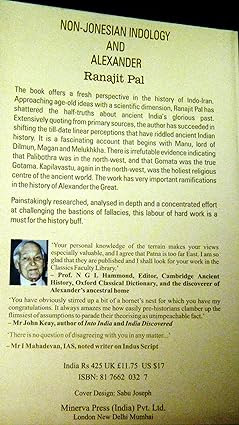
The Buddha was born in Afghanistan, according to Dr. Ranajit Pal, which at that time was a part of ancient Gandhara, and the oldest Buddhist texts are from there: Gandhāran Buddhist texts. This is why the largest unexcavated Buddhist temple is in Afghanistan, why the oldest Buddhist texts are from here, and why the largest Buddha statues were built here (including the most massive one in the world, a buried reclining Buddha in the lion's pose under Bamiyan). The Shakyians, from which we derive the name Shakyamuni, are the ancient Indo-Sakas.
[UPDATE: Sakka,Kwan Yin, MahaBrahma, and/or Prajnaparamita Devi seem to have intervened and raised the human supply of rare earth minerals, which means the price was brought down, which stopped the Chinese government in its tracks. It already built train tracks to the site to begin extracting the country's mineral resources, but it does not seem feasible (profitable) now to do so. Other sources of these formerly rare minerals were found on the seabed by Russian and other prospectors. That seems to have made things safe...until everyone needs a second cellphone and more electronics, which are dependent on these elements. So take care of your devices and use them longer, extending their usefulness and lifespan even though Apple Corporation and others want planned obsolescence.]
For the past few years, the effort of American Director (and Northwestern University Professor) Brent E. Huffman, through Saving Mes Aynak, has played a vital role in delaying the demolition of this historical treasure.
Mes Aynak: 1 sq. mile Buddhist temple complex
But again time may be quickly running out. A state-owned Chinese mining company still has immediate plans to destroy Mes Aynak and mine it for precious minerals, and it could happen AT ANY MOMENT.
Now, the only way for Mes Aynak to be saved is if the Afghan government (that sold off the mineral rights in a desperate attempt to earn foreign currency) intervenes, halts mining, and officially petitions to UNESCO to make Mes Aynak a World Heritage Site.
Only the Afghan government can approach UNESCO.
Through the film Saving Mes Aynak, the major goal is to raise mass awareness of the impending demolition, creating an international movement to put pressure on the mining company, the Afghanistan government, and UNESCO to make Mes Aynak a World Heritage Site.
This is the ONLY WAY to #SAVEMESAYNAK.
The more funds raised, the more people will see the film and know the beauty and importance of Mes Aynak, and the greater the chance of Mes Aynak being saved.
To do this, the focal point of the campaign is #SaveMesAynak Day, July 1st, a global event when supporters everywhere stream the film and stand in unity together to save Mes Aynak.
Through social media, plans are to use this day to spark worldwide conversation, action, and protest. After that, an ambitious outreach effort will be mounted through the film to reach as many people as can be reached.
The more awareness that can be raised, the larger the pressure that can be put on the Afghan government to stop the demolition and to formally petition UNESCO instead. This way, we can all ensure Mes Aynak's safety for future generations. #savemesaynak
Hey, UNESCO, declare it a World Heritage Site
Afghan Buddhist treasures are priceless.
[Look, we're working on it:] ...a number of achievements, especially related to the enhancement of the joint Ministry of Information and Culture (MoIC)-Ministry of Mines and Petroleum (MoMP) discussions about the Mes Aynak case. During a round of renegotiation between the MoMP and the Mining Company, it was suggested to implement an underground mining method, at least for the Central Aynak Deposit, to allow for in-situ conservation. This exploration of an integrated approach from the side of the MoMP, a tremendous step forward, led to the organization of the Mes Aynak Symposium (July 2019). The aim was to provide the government with a complete understanding of the relationship between mining and cultural resources in Mes Aynak and to examining the available options to reconcile them before approving a mining plan... unesco.org/en...afghanistan-heritage
Borobudur, Java: When fully fleshed out, this is a Buddhist pyramid capped by a stupa
.
Archaeologists discover pyramid built more than 3,000 years ago
Archeologists have discovered a pyramid structure in the steppes of Central Asia that is thought to be more than 3,000 years old.
The monument, known as the Pyramid of Karazhartas, was uncovered during excavations conducted along the Taldy River in the Karaganda region of Central Kazakhstan.
The pyramid was constructed by the Begazy-Dandibai culture, which emerged in Central Kazakhstan during the Late Bronze Age.
This culture consisted of semi-sedentary communities primarily based on metallurgy [Scythians/Shakyians created Mes Aynak by the mines and were goldsmiths] and animal husbandry.
These communities achieved a relatively high level of economic prosperity thanks to the metal trade that extended to various parts of Eurasia.
Dr. Pal linked the Buddha
The high profits from metal exports created a new aristocratic class among the Begazy-Dandibay communities.
The Pyramid of Karazhartas was constructed as a mausoleum for a representative of this aristocratic class, historian Serhan Cinar and archeologist Aybar Kasenali — one of the coordinators of the excavations with the Kazakh National Museum — told Newsweek.
The pyramidal tomb is one of the most "striking monuments" of the Begazy-Dandibai culture, the researchers said.
During the excavations, which were conducted by the Sary Arka Archaeological Expedition of Karaganda University, researchers found that the structure was a square pyramidal mausoleum consisting of step-like layers.
The Sakas/Scythians were semi-settled nomadic warriors on horseback, experts goldsmiths.
Scythian is broad term, East=Sakas
The mausoleum, which contains a burial chamber, measures around 65 feet by 98 feet across and stands about 5 feet high at its peak. The excavation of monumental stone mausoleums from the Begazy-Dandibai culture began in 1933.
Researchers have since discovered several pyramidal step tombs in the region of the Taldy River valley, in which great leaders were buried.
"The newly discovered Karazhartas stepped pyramidal mausoleum is the largest burial structure of the Begazy-Dandibay elite," Cinar said.
Pyramid base for stupa, Taiwan
"Considering the cut stones found in the Karazhartas pyramid and the monumental size of the mausoleum, the construction of such a gigantic structure in the Bronze Age — in a very arid region such as the steppe — is indicative of the high artistic understanding and rich spiritual beliefs reached by the Begazy-Dandibay communities."
Investigations at the Karazhartas Pyramid have identified a sarcophagus structure surrounded by granite stones, which was found in the burial chamber.
Inside, researchers found a sarcophagus structure surrounded containing a skull.
In one area in the upper part of the burial chamber, archeologists uncovered a bronze arrowhead and a mysterious pottery fragment. Finally, animal bones, which were frequently used in the traditional ceremonies of steppe tribes, were found in various parts of the burial chamber and the step sections of the pyramid.
The features of the tomb, as well as the accompanying items, highlight the high status of the buried individual, according to Kasenali.
Analysis of organic materials found at the pyramid, carried out by Queen's University in the United Kingdom, has enabled researchers to date the pyramid structure to the 15th-14th centuries B.C.
Archeologists also uncovered evidence of a proto-city settlement named Kent in the same region as the mausoleum, which they attributed to the Begazy-Dandibai culture.
Spread over an area of 15 hectares, Kent was characterized by labyrinthine gates, ditches, and walls, according to the researchers.
Greek culture in Bactria
The settlement featured a regular, planned street network and water collection systems. And next to the settlement, archeologists found special sacrificial altars where ceremonial offerings to the gods were made.
"In the rituals of the Bronze Age inhabitants of Kazakhstan, offerings were made to the sun, fire, moon, and protective 'ongun' spirits," Cinar said.
The findings at Karazhartas provide detailed information about the historical identity, cultural connections and socioeconomic structure of the Begazy-Dandibay culture, according to Kasenali. More
The word kurgan [Buddhist stupa] is of Turkic origin and derives from Proto-Turkic kur- ["to erect (a building), to establish"]. In Ukraine and Russia, there are royal kurgans of Varangian chieftains [the Buddha being raised to be a Shakyian chieftain], such as the Black Grave in Ukrainian Chernihiv (excavated in the 19th century), Oleg's Grave in Russian Staraya Ladoga, and vast, intricate Rurik's Hill near Russian Novgorod. Other important kurgans are found in Ukraine and South Russia and are associated with much more ancient steppe peoples, notably the Scythians (e.g., Chortomlyk, Pazyryk) and early Indo-Europeans (e.g., Ipatovo kurgan) The steppe cultures found in Ukraine and South Russia naturally continue into Central Asia, in particular Kazakhstan. More
What does it have to do with the Buddha Shakyamuni (Saka-Muni)?
The Buddha was a royal Saka
The Sakas [Buddhist Shakas or Shakyas] were closely related to the Scythians, and both groups formed part of the wider Scythian cultures [9], through which they ultimately derived from the earlier Andronovo culture, BMAC, while also carrying East Asian genetic ancestry [10], with the Saka language forming part of the Scythian languages.
However, the Sakas of the Asian steppes are to be distinguished from the Scythians of the Pontic Steppe [8, 11]; and although the ancient Persians, ancient Greeks, and ancient Babylonians respectively used the names "Saka," "Scythian," and "Cimmerian" for all the steppe nomads, the name "Saka" is used specifically for the ancient nomads of the eastern steppe, while "Scythian" is used for the related group of nomads living in the western steppe [8, 12, 13].
While the Cimmerians were often described by contemporaries as culturally Scythian, they may have differed ethnically from the Scythians proper, to whom the Cimmerians were related, and who also displaced and replaced the Cimmerians [14].
Gandhara Greco-Buddhist art
Prominent archeological remains of the Sakas include Arzhan [15], Tunnug [16], the Pazyryk burials [17], the Issyk kurgan, Saka Kurgan tombs [18], the Barrows of Tasmola [19], and possiblyTillya Tepe.
In the 2nd century BC, many Sakas were driven by the Yuezhi from the steppe into Sogdia and Bactria and then to the northwest of the Indian subcontinent, where they were known as the Indo-Scythians [20, 21, 22].
Other Sakas invaded the Parthian Empire, eventually settling in Sistan, while others may have migrated to the Dian Kingdom in Yunnan, China.
In the Tarim Basin and Taklamakan Desert of today's Xinjiang Uyghur Autonomous Region, they settled in Khotan, Yarkand, Kashgar, and other places [23]. More
All materials on this site are submitted by editors and readers. All images, unless otherwise noted, were taken from the Internet and are assumed to be in the public domain.
In the event that there is still a problem, issue, or error with copyrighted material, the break of the copyright is unintentional and noncommercial, and the material will be removed immediately upon presented proof.
Contact us by submitting a comment marked "private."
Do not follow this journal if you are under vinaya or parental restrictions. Secure protection by Sucuri.
Wisdom Quarterly: American Buddhist Journal is licensed under a Creative Commons Attribution-Noncommercial-Share Alike 3.0 United States License. Permissions beyond the scope of this license may be available at creativecommons.org/about/licenses.


%20wiki.jpeg)




%20wiki,%20cropped,%20head%20only,%20Wisdom%20Quarterly.jpg)

.jpg)

























































