Showing posts with label buddhist kingdom. Show all posts

Saturday, November 1, 2025

Journey into the Heart (Thich Nhat Hanh)


Thich Nhat Hanh – A Journey into the Heart of Buddhism | SLICE WHO
(SLICE Who?) Oct. 27, 2025: In this rare and intimate interview, Zen Master Thich Nhat Hanh (Thai) shares his vision of Buddhism as a living practice of freedom. Speaking softly yet profoundly, he explains how meditation, awareness, and compassion can transform suffering into peace.

Documentary: Interview Thich Nhat Hanh. Production: Productions Campagne Premiere. ABOUT:  Curious about everything, an expert in nothing? Accessible anytime, anywhere, SLICE is a weekly dose of short documentaries. A slice of history, science, ecology, or architecture, to discover amusing anecdotes, inventions, unusual stories, bizarre, entertaining, and instructive. Be smart, have a SLICE! Follow 👇 Facebook: slicedocsfr. Instagram: slicedocs. #documentary #freedocumentary #world #travel #doc #celebrities #history #figures #biography #news #buddhism #zenmaster #liberty #peace

Friday, August 19, 2022

Shambhala, the spiritual Buddhist kingdom

Holly Gary, grunge.com, Aug. 2, 2022; Pat Macpherson (ed.), Wisdom Quarterly
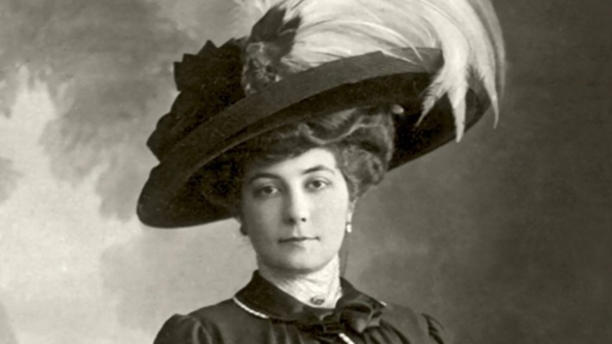
Helena Roerich translated The Secret Doctrine by Madame Blavatsky (Atlas Obscura).
.
Inside the story behind Shambhala, the spiritual Buddhist kingdom that was never discovered
Madame Blavatsky and Theosophists in Asia
It may be part of human nature to imagine there's a place out there free from strife and full of knowledge. Certainly, more than one culture has this concept.

One such place is the Buddhist Kingdom of Shambhala in Buddhist, Hindu, and Jain mythology.

Shambhala is Sanskrit and means "place of peace" or "place of silence" (IndiaDivine.org). This myth dates back more than a thousand years and varies depending on the source.

However, Buddhists, Hindus, and Jains agree that Shambhala is both a physical and a spiritual place (Atlas Obscura). While there is debate on where the physical Shambhala is located, according to ThoughtCo., it is between the Himalayan mountains and the Gobi Desert.

All the citizens of Shambhala have achieved enlightenment, so it represents a Buddhist ideal. The tantalizing myth of Shambhala has led quite a few people into the Himalayas to try to find it. It has attracted the attention of everyone from hippies and spiritualists to Christian missionaries to the NAZIs and Soviets.

In the 1920s, a Russian couple named Nicholas and Helena Roerich made one such expedition. They had escaped Russia just before the revolution of 1917 and were living in the United States.

Helena Roerich (pictured above) had translated The Secret Doctrine by Madame Helena Blavatsky, a Russian spiritualist (Atlas Obscura).

The book mentioned Shambhala, claiming that finding it was a shortcut to enlightenment. The Roerichs began to seriously believe in Shambhala, and Helena Roerich claimed to have received a message from an otherworldly being telling her to go there. More

Saturday, August 22, 2020

Thai protests against king and PM (video)

DW News, August 11, 2020; CC Liu, Pfc. Sandoval (eds.), Wisdom Quarterly


Thai students protest gov't and monarchy
Thousands of college student protesters in Thailand have rallied in anti-government protests, demanding political change. The rally on August 10 was the biggest in recent months. Protesters are calling for the resignation of military Prime Minister Prayuth Chan-ocha, who seized power in 2014 in a violent coup and who last year came out ahead in rigged and controversial elections. Protesters are also calling for reform of the untouchable monarchy, a call that's been taboo in Thailand due to strict laws preventing anyone from so much as "insulting" the new king, Maha Vajiralongkorn, or any other royal.

Sunday, August 9, 2020

God, SEX, and Zen (audio)

Alan Watts, "Democracy in the Kingdom, Part II," Roy of Hollywood Tuckman (Something's Happening Sunday mornings, 8:00 am, 8/9/20, KPFK Archive; Dhr. Seven, Seth Auberon, Wisdom Quarterly


What's the Infinite, the Ultimate? Ask Dionysus
What is Nirvana? The closest thing in Christianity and Judaism and Islam, the Abrahamic faiths (rooted in Sumerian religion), might be GOD.

Not God (Maha Brahma the Supreme), the personal divinity, but what in Hinduism is called Brahman (godhead, godhood) -- divine awareness, omniscience, omnipotence, omnipresence, touching and merging with Source -- the supreme reality behind all illusion.

Sex is like that, a sampling of that, as Usama bin Laughin was hinting at yesterday when he lost his religion and became a bad Muslim.

For many of us, it is only during sex that we merge with something bigger than ourselves and are relieved of our small sense of self, selfishness, and limits. It's as if we touch the Buddhist teaching of selflessness or emptiness or pure freedom (anatta), the insight that all things are actually impersonal and therefore not worth clinging to or getting angry or confused about (manifestations of the Three Poisons greed, hatred, and delusion).

Friday, August 16, 2019

Thai king honors Western monks (Tricycle)

Cara Dibdin (tricycle.org/trikedaily); Ellie Askew, Dhr. Seven (ed.), Wisdom Quarterly

Ajahn Chah feeds a wild forest deer.
Thailand’s King Vajiralongkorn (Rama X) recently invited four senior Western monks in the Thai Forest Tradition of Theravada Buddhism to receive royal titles in honor of their contribution to Buddhism in Thailand and around the world.

While the event was part of a long-standing tradition, it also marked a new development for Buddhism in the country.

Thai Forest monks historically have disregarded social status and authority systems, preferring to focus on meditation practices in remote forests and caves, as the Buddha and his first disciples once did.

Yet, despite its often-secluded practices, the Thai Forest Tradition [made famous by Ajahn Chah] has had a tremendous impact since its beginnings at the turn of the 20th century.

The school’s dedication to meditation, commitment to renunciation, and de-emphasis of ritual and ceremony held great appeal for Buddhists in the West, where disciples have established hundreds of Thai Forest Tradition monasteries.

In honor of the Western teachers’ contributions to the proliferation of Thai culture, the king invited the monks to receive the royal titles on July 28 as part of his birthday celebration. The invitees were:
  1. Ajahn Sumedho, the retired abbot of Amaravati Buddhist Monastery in southeastern England (Ven. Sumedho was unable to attend);
  2. Ajahn Amaro, the current abbot of Amaravati;
  3. Ajahn Jayasaro, an author and teacher who lives in a hermitage near Khao Yai Mountain, about two hours outside Bangkok; and
  4. Ajahn Pasanno, former abbot and guiding elder of Abhayagiri Buddhist Monastery in Redwood Valley, California.
To better understand the significance of this event, Tricycle spoke with Ajahn Pasanno about the title he received, Chao Khun, its history, and what it means for his tradition in Thailand and the West. More

Friday, October 14, 2016

Thailand as we know it ends with king (video)

Editors, Wisdom Quarterly; CCTV (video); BBC.com; Al Jazeera English


I'm not ready yet: Prince Vajiralongkorn
Thailand's Crown Prince Vajiralongkorn, the questionable son of beloved King Bhumibol, has asked to be allowed to delay ascending to the throne to, he says, observe a period of mourning following the death of his father, modern Thailand's great Buddhist leader, King Bhumibol Adulyadej.

It was expected that the interim parliament would announce Prince Vajiralongkorn's elevation imminently, but Prime Minister Prayut Chan-o-cha said the crown prince will occupy the throne when he is ready to do so. From the Grand Palace in Bangkok, CCTV's Tony Cheng has this report.

(CCTV News) Late King of Thailand oversaw widespread development during 70-year reign: King Bhumibol has died at age 88. His reign was marked by great change in Thailand, where the devotion of this Theravada Buddhist land remains a testament to his success.
.
What should tourists do in Thailand?
(BBC/YouTube) Extended coverage of the death of revered Thai King Bhumibol [poo-me-POM]
Was the king a demigod, a half-human/half-deva (semi-divine) hybrid ruler? (AFP/BBC)
Roi-et Buddhist Temple, Thailand (Sasin Tipchai/Bugphai/flickr.com)
.
Enjoy Thailand's beauty and avoid politics.
(BBC) As Thailand is plunged into official mourning by the death of their much-loved King Bhumibol Adulyadej, here's what tourists visiting the popular holiday destination need to know.
 
Our correspondents say that while Thailand is unlikely to face any immediate disruption or political upheaval, along with the sun cream and guidebooks it is more important than ever to pack a little cultural sensitivity.
 
The Thai government in the capital Bangkok has announced a one year period of mourning for the whole country. Flags are to fly at half-mast for 30 days and people are asked to avoid "joyful events."

What to wear?
Western tourists are advised to behave respectfully to Thai customs and abide by local laws [in particular the anti-criticism of royals law: Friendly Thailand will imprison anyone who disrespects, criticizes, mocks, or questions the royal family or system]. More

(AJ) Thailand's venerated King Bhumibol Adulyadej, the world's longest-reigning monarch, has died at the age of 88, the palace has announced, 10-13-16.

Wednesday, June 15, 2016

Trip to Nepal: Living on $1 a day (video)

Ashley Wells (ed.), Wisdom Quarterly; The Ticket to Travel; Adept Photography (Otuathail)


Noble friendship -- two Buddhist novices (trainee monks) live by the Ten Precepts.

(Gabriel Traveler) How much do things cost traveling around the capital of Kathmandu, Nepal?
OK, a friendly sadhu signals to Westerner that all is well (Adept Photography)
Hi...gh. Sadhu waves. Too much ganja saps the vital life force (Adept Photography).
All trips begin with the Backpacker's Bible: Lonely Planet Travel Guides

Friday, November 4, 2011

Bangkok is drowning

Irwin Loy (TheWorld.org, Nov. 2, 2011)
Climate chaos affects all Earthlings like rescued pets in Bangkok (Irwin Loy/Theworld.org)

Some of those stranded in Thailand’s calamitous floods are family pets. A group of volunteers has been heading into flooded Bangkok neighborhoods, rescuing frantic cats and dogs. Irwin Loy went along with one pet rescue team. Comment

Friday, October 14, 2011

The Buddha's Peaceful Protest

Seven, Amber Dorrian, CC Liu (Wisdom Quarterly)
(serenescentsations.com)

Peaceful demonstrations, anti-war protests, sit ins, teach ins, and the like have a long history in Buddhism. The Buddha's own life holds one great example that may have been the model for Burma's Saffron Revolution as Buddhist monks rose up to defy the totalitarian Burmese regime. He repeatedly and peacefully came between two neighboring kingdoms to prevent war. He occupied a spot by the river to bring peace. Eventually, however, he realized that their karma was such that he could only put it off. He had the penetrating insight to eventually realize that. We do not. So we are wise to continue our demonstrations indefinitely.

What peace looks like, which is what NYC's Z Park can look like if the peace is won.
  • Thus have I heard. At one time petty squabbles arose between the farmers on both sides of the Rohini river. The river served as the boundary between the Shakyan [where Siddhartha grew up before setting off on a spiritual quest] and the Koliyan kingdoms. Each side was trying to divert as much water as possible to their fields. Finally, these conflicts led to a major confrontation between two armies. The Buddha becoming aware of this arrived on the scene. At first just his presence forced the sides eager for war to rethink their actions. But their selfishness, anger/fear at one another, and ignorance about what was to be lost as a result of war brought them again to the verge of war.
The Buddha's "sit in" on the Rohini river to prevent war became a "teach in."
  • The Buddha exhorted them on the calamitous results of war and the many advantages of arriving at a peaceful resolution and just settlement. In this way, war was averted and peace restored. It is said that the Buddha has so far been the only religious teacher to visit a battlefront in person to act as a mediator that averts war which, once triggered, never really plays itself out. People, groups, and ideologies want to retaliate even centuries later. Why? It is because the roots (greed, hate/fear, delusion) that led to war have not been addressed at all.
"The people united will never be defeated," Zuccoiti Park patriots chanted as they continued to occupy a corporate creation for peace and economic justice.


War is exhausting itself. Peace is a rest. Peace is easy. Peace is natural. War opposes peace. Peace does NOT really oppose war: It just is. Peace that "opposes" war is not peace, just more war.

Peace is a state in the absence of conflicts. Nonconflict is just a base, not a goal in itself. Beyond peace we want harmony, happiness, growth, development, opposition, cultural evolution.

Conflict is neither good or bad except that what we do with it (how we respond) makes it so. What is the cause of war and peace? Each is due to the various motives in our heart/mind.

The happy resolution (repose) of thoughts that fall under the categories of greed, hate, and/or delusion certainly lead to peace. Permanent peace will only come when one has completely eradicated these mental defilements. Wars will cease and peaceful dialogue between individuals will lead to a world of peaceful and harmonious living.
Why Occupy, why Rebel?

Thursday, March 24, 2011

The Buddha and King Pasenadi of India

Buddhanet.net (edited by Wisdom Quarterly)

King Pasenadi learns the pain of attachment
King Pasenadi ruled in Kosala, which was a province north of Magadha -- where the Buddha lived -- ruled by King Bimbisara. The capital of the kingdom of Kosala was Savatthi), where the Buddha frequently visited as a wandering teacher in northern India.

One of King Pasenadi's sisters was the chief queen of King Bimbisara, which made him the brother-in-law of King Bimbisara.

King Pasenadi became a follower of the Buddha very early on and remained a loyal supporter. His chief queen was Mallika, a wise and spiritual queen who was well versed in the Dharma and acted as the king's guide on several occasions.

Although raised far to the west (ancient Gandhara, modern Afghanistan), the Buddha mainly taught in northern India around Magadha.

The first time the king met the Buddha, he asked, "How is it that Master Gautama claims he has gained full enlightenment? Master Gautama is both young in years and young as a renunciate."

The Buddha replied, "Great King, there are four things that should not be looked down on or despised because they are young:

  1. noble warrior (kshstriya)
  2. serpent (naga, a simple snake or a reptilian shape-shifter)
  3. fire, and a
  4. monastic (bhikkhu).

An enraged young warrior may ruthlessly cause harm to others. The bite of even a small snake may kill. A little fire may become a huge inferno that destroys building and forests. Even a young monastic may be a saint [fully enlightened]."

Hearing this, King Pasenadi understood that the Buddha was indeed a wise teacher and decided to become his follower.

Ancient India extended west to modern Iran. Evidence shows the Buddha's hometown, Kapilavastu, was near modern Bamiyan and Kabul, whereas Lumbini was in the province of Baluchestan (S.E. Iran, S.W. Afghanistan, W. Pakistan). See ranajitpal.com

The king liked going to the Buddha to seek advice. During his official duties, he often found time to visit and speak to the Buddha.

When discoursing with the Buddha one day, he received news that Queen Mallika had given birth to a daughter. The king was not pleased with the news because he had been longing for a son.

The Buddha spoke in praise of women. He reminded the king: "Some women are better than men, O king. There are women who are wise and good, who regard their mothers-in-law as goddesses and are pure in thought, word, and deed. They may one day give birth to brave sons who would rule a country."

The king remembered then once hearing the Buddha say, "It is the dear ones whom we love [with deluded attachment] that bring us [through whom we bring ourselves] sorrow and lamentation, pain, grief, and despair."

The king asked Queen Mallika whether she agreed with the Buddha. She said that if the Buddha had said so, it must be true. But the king was not satisfied. "How can a loved one bring sorrow?" he wondered.

Queen Mallika approached a brahmin to ask the Buddha to explain this. Having heard many stories to explain the problem, the brahmin related them to the queen. She then quizzed the king: "Sire, what is your opinion, is your daughter Princess Vajira dear to you?"

"Yes, Mallika, she is very dear to me," answered the king.

"If some misfortune were to befall Princess Vajira, would that bring sorrow and lamentation, pain, grief, and despair?"

"Yes," answered the king.

"Sire, it was because of this that the Buddha said that it is dear ones whom we love that bring sorrow and lamentation, pain, grief, and despair."

"Mallika," exclaimed the king, "It is wonderful! It is marvelous! How far the Enlightened One sees with understanding."


When the king later lost a battle to his nephew (King Bimbisara's patricidal son) and had to retreat to his capital of Savatthi, the Buddha commented to his disciples that neither the victor nor the defeated experience peace:

"Victory breeds hatred.
The defeated live in pain.
Happily the peaceful live,
Giving up victory and defeat."

Later there was another battle. The two kings fought again and King Pasenadi won. Moreover, he captured King Ajatasattu, his nephew, alive with all his war elephants, chariots, horses, and soldiers.

The king thought that he might release the young king but keep his elephants, horses, and men. He wanted the satisfaction of keeping these material possessions as the prizes of victory.

On hearing his, the Buddha told his disciples that it would have been wiser for King Pasenadi not to have kept anything for himself. The truth of this statement applies even to our modern war-weary world:

"A man may plunder, as he will.
When others plunder in return,
He who is plundered will plunder in return.
The Wheel of Karma turns round
and makes the ones who are plundered plunderers."

King Pasenadi of Kosala passed away at 80 when his son, Prince Vidudabha [as in the tragic case of King Bimbisara, a stream enterer, when he was overthrown by his treacherous patricidal son Prince Ajatasattu], revolted against him.

Then as now, wandering yogis are regarded as "saints" in India (Vitor E. Santos/Flickr).

The King Learns to Assess Character
One evening, when King Pasenadi was having a discussion with the Buddha, there passed on the road a wandering band of yogis with long knotted hair, hairy bodies, and long fingernails.

They walked by slowly, with heads bowed. At once the king got up, approached them, and knelt down in homage, uttering his own name three times.

The king came back to the Buddha and said, "Venerable sir, there were saints among those ascetics. Just see how calmly they walked with heads bent low."With his divine eye faculty the Buddha saw that those men were not saints, not even yogis, but spies who were sent out to gather information.

"Your majesty," explained the Buddha, "by mere appearances alone it is not possible for one who leads a life of comfort and sensual pleasure to know the real nature of another.

If we want to understand a people's real nature, their good and bad qualities, we must associate with them for some time. We must be wise and develop sharpness of mind."

"We can know people's purity by conversing with them, observing their courage in the face of misfortune, and even understand their level of wisdom during discussions with them. Bad people, O king, sometimes pretend to be good, and it is difficult for you to judge their moral character."

There is ample evidence of ETs (devas, asuras, nagas, kinnaras), UFOs (vimanas), and even nuclear weapons in the long history of ancient India, including ancient Buddhist texts that frequently mention cosmology.

Thursday, March 4, 2010

The Origins of Thai Theravada Buddhism


Sukhothai is 400km north of Bangkok. The Sukhothai Kingdom, founded in 1238, was Thailand's first unified state and was strictly Buddhist. The royal temple of Wat Mahathat is the largest in Thailand. Ten meter high pillars are lined up around an image of Buddha. Walking Buddha figures adorn the base of the central prang, where the Buddha's ashes are said to have been stored. The carvings depict the Buddha descending from the heavens (i.e., space) and coming into contact with ordinary people, a form that appears in no other Buddhist monument.

(wwwalcur) "Notes from Thailand" is a two-part documentary on Thai culture.

Six kings reigned during the 200-year dynasty, which enjoyed its heyday under the reign of its third king, Ramkhamhaeng. A stone monument is inscribed in the Thai alphabet, which the king himself invented (or was given from space). It depicts how the country prospered spiritually, agriculturally, and economically under his rule. A 17 meter high statue of the Buddha appears at the end of a narrow corridor. The meditation area is surrounded by stone walls at Wat Sri Chum.

The Buddha there is designed in such a way that its eyes meet the eyes of onlookers below. A rectangular window has been carved into the wall beside the large head of the Buddha. The walls are three meters thick. As visitors proceed through the narrow passage, they can see the statue's face in profile. Legend has it that the king spoke to his people from here. Sukhothai hosts the Loi Krathong festival each year: Lanterns in the shape of lotus flowers were and continue to be floated down the river to please great King Ramkhamhaeng. They float slowly across the water, just as they did 700 years ago.

Friday, February 12, 2010

"Travellers & Magicians" (Himalayan film)


Part II: Travellers & Magicians

(Tangpa) Monk and filmmaker Dzongsar Jamyang Khyentse Rinpoche's second visual reminder to the world to appreciate the present. Be aware rather than distracted, detached rather than placing too much importance on illusory hopes.

Locally, this film illuminates the situation most of the younger generation in Bhutan faces. It is confronted by newer, more exciting, seemingly more open Western culture. Such promises make traditional culture and a Buddhist way of life seem quaint to the youth of Bhutan.

Connecting the way previous generations have is becoming rarer. In this film Khyentse Rinpoche explores more intellectually satisfying media for modern Bhutanese viewers (and others facing a similar situation).

Saturday, August 29, 2009

Himalayan nations to hold 1st climate talks


Mt. Everest, glaciers receding and environmental degradation; Himalayan range
Text: Claire Cozens

KATHMANDU (AFP) — South Asian ministers will gather in Nepal next week for talks on the threat that climate change poses to the Himalayas and to the 1.3 billion people dependent on water flowing from the mountains.

Experts say the Himalayan glaciers are melting at an alarming rate and with months to go before a key summit in Copenhagen, mountain nations are hoping to highlight the myriad of problems facing the region. Climate change campaigners refer to the Himalayas as the "third pole" and say the melting glaciers are the biggest potential contributors to rising sea levels after the north and south poles.

But until now Himalayan governments have not come together to lobby for ambitious emission reduction targets at December's Copenhagen summit, which aims to seal a new international climate change accord. "Nepal's message needs to be heard, and the message of the mountains needs to be heard," said World Bank water and climate expert Claudia Sadoff, who is helping Nepal's government organise the August 31-September 1 conference.

"The Himalayas have their own very real set of challenges, but there are also a lot of adaptation and mitigation opportunities in the mountains." Glaciers in the Himalayas, a 1,500-mile (2,400-kilometer) range that sweeps through Pakistan, India, China, Nepal, and Bhutan, provide headwaters for Asia's nine largest rivers, a lifeline for the 1.3 billion people who live downstream.

But temperatures in the region have increased by between 0.15 and 0.6 degrees Celsius (0.27 and 1.08 degrees Fahrenheit) per decade for the last 30 years, and the effects are already being felt.

In Nepal and Bhutan, the melting glaciers have formed vast lakes that threaten to burst, devastating communities downstream. Low-lying Bangladesh has always been prone to flooding, but leading environment scientist Atiq Rahman said the speed at which the Himalayan glaciers were melting meant floods were now "more frequent and more vigorous." Last year Nepal suffered its driest winter in 40 years, bringing the first widespread forest fires the country has experienced and destroying crops that depend on the winter rains.

Campaigners say that while the effects of climate change on low-lying South Asian countries such as Bangladesh and the Maldives are now well known, there is little international awareness of the vulnerability of the Himalayan region. "The general impression is that the Himalayas are huge, impregnable, pristine spaces no one can hurt. But the fact is that they are melting," said Tariq Aziz, leader of the WWF's Living Himalayas initiative.

"The Himalayas are not just mountains. They are a source of sustenance for millions and their most valuable commodity is water." Nepal's government, which has invited environment ministers from across South Asia to attend the talks, said it hoped to "take a regional voice on climate change to Copenhagen." "The glaciers are melting and the temperatures are rising in the Himalayas," said environment secretary Uday Raj Sharma. "This will ultimately affect people's livelihoods not only in Nepal but also downstream."

Some observers have expressed concern that India, which opposes binding carbon emission cuts, will drown out the voices of smaller countries such as Nepal, Bhutan and Bangladesh at the Copenhagen talks. More>>

Friday, June 26, 2009

Nepal fails to erase Dalai Lama


The Dalai Lama holds poster of jailed Burmese leader Aung San Suu Kyi (AP).

Nepal fails to erase Dalai Lama from Tibetan hearts
Sudeshna Sarkar (TNN, June 26, 2009)

KATHMANDU – At one time, the name plate outside the walled house proudly said "Gaden Kangsar" – the residence of the Dalai Lama. But when Nepal’s Maoist government began a fresh crackdown on supporters of the exiled Tibetan leader last year, the house in Kathmandu’s embassy enclave, once known as the office of the Dalai Lama’s representative in Nepal, chose discretion over confrontation and the sign, written both in English and the elegant Tibetan script, was tarred over.

But it is not so easy to erase the loyalty to the Dalai Lama and dreams of a free Tibet from Tibetan hearts. A group of 35 Tibetan exiles proved so on Friday when they courted arrest by trying to stage a peace march in Tibet.

As the world observed the International Day Against Torture, the exiles left Kathmandu at 4:00 am on a bus heading north. Their plan was to take the Araniko Highway, which connects Nepal with China’s Tibetan Autonomous Region, cross the Nepal-Tibet border and stage a public protest in Tibet asking for the restoration of rights and democracy in the annexed Buddhist kingdom.

However, they were prevented by the Nepal police contingent patrolling the border, who stopped the bus and took the group under control. The protesters lay down on the highway, raising slogans for a free Tibet until they were dragged away. Police said the bus had been sent back to Kathmandu where the group, including eight women, will be handed over to the immigration authorities for appropriate action.

This is the first major Tibetan protest since the formation of a coalition government led by communist Prime Minister Madhav Kumar Nepal. The protests, which had continued for almost a year mortifying China last year on the eve of the Olympic games, were stifled after a Maoist government came to power in August 2008 and ordered stronger measures, including patrolling by its cadres.

Nepal, having received an invitation to visit Beijing but is yet to set any dates, will come under fresh pressure from his northern neighbor after Friday’s resumption of protests. Though the new government adheres to the earlier administration’s foreign policy of not allowing anti-Chinese activities on Nepali soil, Beijing is bound to seek more effective measures to control the protests. It has stepped up its vigil along the border with Nepal to prevent Tibetan fugitives from heading towards Dharamshala in India via Nepal and is now asking for the regulation of the open Indo-Nepal border to cut off the entry of protesters from India. Source

Anti-Dalai Lama protesters in Germany advocating for the right to practice without politically motivated condemnation indicate the shocking fact that the beloved political leader does not in fact enjoy universal religious renown (Xinhua/Shugden).