Showing posts with label Blavatsky. Show all posts

Saturday, February 7, 2026

Why do good things happen to bad people?


Karma is so complex a topic that trying to fathom the "working out of karma" is something on a scale so staggering that it is considered one of the Four Imponderables in Buddhism. Only a buddha can begin to navigate the intricacies, probabilities, and intrepidities of how any deed (action) will meet its many results.

Therefore, the comic above is very funny. Of course, we do not see things working out! We are, for one thing, looking on too infinitesimally small a timescale. For another, imagine just the balls on a billiard table. They are all more or less equal, except for positioning.

One ball bangs into them, and no one can predict where they will go -- not even the one with the stick banging one into the others in a very controlled setting. Now take the countless variables associated with any single deed -- the intention behind it, the thoughts after it, the unknowable impacts on others... It's just too much.

Even the Buddha, when he looked into the future, did not give an exact date when things would happen. But he did know that when this or that sign appear, the results are coming, and that was on a grand scale of collective karma.

More importantly he knew that it was not possible for bad karma (such as the breaking of the Five Precepts) to produce a welcome result. This seems like nonsense to us because we get pleasant results from breaking them all the time.

What we don't know is that that result is not the karmic result, the vipaka. When that resultant ripens, woe. If we knew that, what we shrink back from the unskillful, the unwholesome, and the unwise courses of action, of which there are ten, the Ten Courses of Unwholesome Action.

The Four Imponderables
The acinteyya are identified in the Acintita Sutta (AN 4.77), as follows [8]. There is the:
  1. buddha-range of buddhas [i.e., the range of powers a Buddha develops as a result of becoming a buddha];
  2. jhana-range of one absorbed in jhanas (the meditation absorptions) [i.e., the range of powers that one may obtain while absorbed in the jhanas];
  3. [precise working out of the] results of karma;
  4. speculation about [the origin, etc., of] the cosmos.
These four are imponderables that ought not to be speculated about [as doing so may lead one to become unhinged and nevertheless not understand them, when the path-of-practice that is the purification of the mind/heart is here and yields insight into all these things and why they are imponderable in the first place].
  • NOTE: (SN 56.41 develops this speculation as the ten indeterminate).
Acinteyya literally means "that which cannot or should not be pondered or thought about, the unthinkable, the incomprehensible, the impenetrable, that which goes beyond the limits of thinking and over which therefore one should not ponder.

These Four Imponderables (unthinkables) are:
  1. the sphere of a buddha (buddha-visaya),
  2. the sphere of the meditative absorptions (jhāna-visaya),
  3. the sphere of karmic-results (kamma-vipāka),
  4. brooding over the world (loka-cintā), particularly over an absolute first beginning of it. (See A.IV.77).
SUTRA
"Therefore, O meditators, do not brood [fret, preoccupy, waste time, become distressed] over the world as to whether it is eternal or not eternal, finite or infinite (limited or endless)...

"Such brooding, O meditators, is senseless, has nothing to do with genuine good conduct (see ādibrahmacariyaka-sīla, "supreme or higher morality"), does not lead to turning away, letting go, extinction [of delusion and suffering], nor to peace, full comprehension, awakening (enlightenment), and nirvana, and so on" (S.56.41).
  • Buddha's Wisdom (video); Ven. Nyanatiloka, Buddhist Dictionary; commentary and editing by Dhr. Seven and Amber Larson, Wisdom Quarterly Wiki edit

Saturday, January 4, 2025

Sex: Forbidden Fruit? (Robert Sepehr)


The Forbidden Fruit: Robert Sepehr
(Robert Sepehr) In the Bible, the forbidden fruit is a name given to the fruit growing in the Garden of Eden, which God commands humankind not to eat. Historians have speculated that it may have been a pomegranate, fig, grape, apple, or [entheogenic] mushroom. This presentation addresses the esoteric interpretation, and its occult significance passed down by various mystery schools and secret societies.

[A "mystery school," according to Dr. Ammon Hillman, is essentially a drug cult teaching the "mysteries" of ecstatic union with the substance or with a divinity through practices and the substance. The dedication of adepts is around a goddess or deity, in which initiates are introduced to reality through plant helpers and divine beings.

Yin yang at the center of the bagua
Taoism, founded by a divinity named Lao Tzu, is perhaps the oldest of China's three main religions, rounded out by Buddhism and Confucianism.

Celibacy is an excellent way of conservation of energy for spiritual purposes. But Taoism and Tibetan yoga might also suggest tantric sex with semen retention to cultivate the forbidden "fruit" of internal energy.

It is a powerful practice with the power to awaken our divinity if undertaken properly and with guidance. It is a significant component of esoteric Tibetan Vajrayana Buddhist practice by its yogis and yoginis.]

Tibetan sexual yoga?
Vajradhara and consort union
[Female deities like Vajrayogini, sexually suggestive and streaming with blood, overturn traditional separation between intercourse and menstruation [19].

In some forms of Buddhism, tantric sex is strongly associated with the practice of semen retention, as sexual fluids are considered an energetic substance that must be reserved for higher purposes.

Many Buddhist tantric texts direct the focus away from sexual emission towards retention and intentionally prolonged bliss. More]
  • Robert Sepehr, Jan. 2024; Pat Macpherson, Dhr. Seven (eds.), Wisdom Quarterly

Wednesday, August 14, 2024

Madame Blavatsky on Bamiyan Buddhas

Buddhist Tillya Tepe ("Golden Hill") gold crown from formerly Buddhist Afghanistan
Tillya Tepe gold coin, Dharma wheel, Kabul Museum (Gerard Fussman/Anna Maria Quagliotti)

Massive Buddha of Bamiyan
The Buddhas of Bamiyan (Persian بت های باميان – Bothā-ye Bāmiyān) are or were monumental statues of the Buddha standing.

They were carved into the side of a cliff in ancient Gandhara, in Bamiyan Valley in the Hazaras' Hazaristan region of central Afghanistan, 140 miles (230 kms) northwest of Kabul [another seasonal capital of ancient Kapilavastu (Kapil, Kapila, Kapila-pura, Kapila-vatthu), where Prince Siddhartha Gautama, the future Buddha, grew up] at an elevation of 8,200 feet (2,500 meters).
Modern archeologists believe they were built around 550 CE, although Madame H. P. Blavatsky claims they are remnants of "the Initiates of the Fourth Race" [1].

They were dynamited and destroyed in March 2001 by the Taliban [which was created and inspired by the CIA and ISI, intelligence agencies for the USA and Pakistan, respectively] after they declared that they were idols, carrying out an extreme Islamic religious iconoclasm.

According to Madame Helena Petrovna Blavatsky, these statues are witnesses to earlier civilizations. She rejected the fact that the statues [previously] represented the Buddha, claiming they come from the ancestors of the Miao people, and were "the work of the Cyclopes, the true and actual Giants of old" [2].
  • [This would make sense. There are still redheaded, six-fingered giants in the area, Nephilim, Asuras, Nagas, Yakkhas, dwelling in caves and reported by US servicemen at war in the area for 20 years. They were likely repurposed to represent the historical Buddha, the scion of the region who became a great religious figure in neighboring proto-India then returned to the region to save everyone with his teachings on bringing about the end of all suffering. The Indo-Scythians or Shakyas/Sakas of the area then expanded and took over what is now Bihar/Vihar, India, the site of the Buddha's Great Awakening or Mahabodhi. This was before India came into being, 200 years after the life of the Buddha, what the Buddhist Emperor Ashoka conquered and unified many independent states or mahajanapadas into one empire, leaving behind many Ashokan pillars.]
Psychic Madame Blavatsky
Being built long before the birth of Prince Siddhartha Gautama (2,600 years before the present), they were made to look like him in modern times, in other words repurposed.

As archeologists discovered, the main bodies were hewn directly into the sandstone cliffs, but details were modeled in mud mixed with straw, coated with stucco. They are the site of the world's oldest oil paintings, as the entire cliffside is riddled with caves used by Buddhist monastics in the past and modern Hazari and/or Pashtun people today.
  • Madame Blavatsky explains:
The Buddhist Arhats [enlightened ones] and Ascetics [monastics] found the five statues, and many more, now crumbled down to dust, and as the three were found by them in colossal niches at the entrance of their future abode, they covered the figures with plaster, and, over the old, modelled new statues made to represent Lord Tathagata [the Buddha]. The interior walls of the niches are covered to this day with bright paintings of human figures, and the sacred image of Buddha is repeated in every group. These frescoes and ornaments—which remind one of the Byzantine style of painting—are all due to the piety of the monk-ascetics, like some other minor figures and rock-cut ornamentations. But the five statues belong to the handiwork of the Initiates of the Fourth Race, who sought refuge, after the submersion of their continent [Atlantis], in the fastnesses and on the summits of the Central Asian mountain chains [3].


Trifecta: Mes Aynak, Kabul, Bamiyan
Blavatsky states that the sizes of the statues had an esoteric meaning:

Moreover, the five statues are an imperishable record of the esoteric teaching about the gradual evolution of the races.

What is left of Kabul after the US War?
The largest is made to represent the First Race of mankind, its ethereal body being commemorated in hard, everlasting stone, for the instruction of future generations, as its remembrance would otherwise never have survived the Atlantean Deluge.

The second—120 feet high—represents the sweat-born; and the third—measuring 60 feet—immortalizes the race that fell, and thereby inaugurated the first physical race, born of father and mother, the last descendants of which are represented in the Statues found on Easter Isle; but they were only from 20 to 25 feet in stature at the epoch when Lemuria was submerged, after it had been nearly destroyed by volcanic fires.

The Fourth Race was still smaller, though gigantic in comparison with our present Fifth Race, and the series culminated finally in the latter [4].


Online resources
Articles
Notes
  1. Helena Petrovna Blavatsky, The Secret Doctrine Vol. II (Wheaton, IL: Theosophical Publishing House, 1993), p. 339.
  2. Helena Petrovna Blavatsky, The Secret Doctrine Vol. II (Wheaton, IL: Theosophical Publishing House, 1993), p. 337.
  3. Helena Petrovna Blavatsky, The Secret Doctrine Vol. II (Wheaton, IL: Theosophical Publishing House, 1993), p. 339.
  4. Helena Petrovna Blavatsky, The Secret Doctrine Vol. II (Wheaton, IL: Theosophical Publishing House, 1993), pp. 339-340.
Intrigue
The Aryan Buddha in the Kabul Museum
On Dec. 24, 1979, the Soviet Union invaded Afghanistan, and Kabul [Kapil] was heavily occupied by Soviet Armed Forces.

In Pakistan, Director-General of the ISI [Pakistan's CIA] Akhtar Abdur Rahman advocated for the idea of a covert operation in Afghanistan by arming Islamic extremists who formed the Mujahideen [85]. Gen. Rahman was heard loudly saying, "Kabul must burn! Kabul must burn!" [86] and masterminded the idea of a proxy war in Afghanistan [85].

Pakistani Pres. Zia-ul-Haq authorized this operation under Gen. Rahman, which was later merged with Operation Cyclone, a program funded by the United States and carried out by the CIA (Central Intelligence Agency). More
  • Theosophy Wiki edited and expanded by Amber Larson, Dhr. Seven, Pat Macpherson (eds.), Wisdom Quarterly

Thursday, August 31, 2023

Visiting the Masters of Wisdom in Shambhala

Madame Blavatsky (amazon.com); Amber Larson and Dhr. Seven (eds.), Wisdom Quarterly

The Land of the Gods: The Long-Hidden Story of Visiting the Masters of Wisdom in Shambhala
(Sacred Wisdom Revived Book 1) This book by the co-founder of Theosophy, Madame Helena P. Blavatsky (with 4.5 stars out of 5 with 574 ratings), is Book 1 of 7: Sacred Wisdom Revived. It was a #1 best seller among New Age books.

Question: Elvis Presley and Oprah Winfrey, Mahatma Gandhi and the 14th Dalai Lama, Albert Einstein and Nikola Tesla, Harry Potter and Star Wars, what do they have in common?

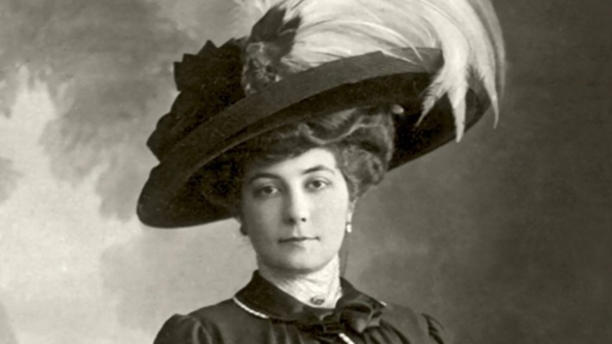
Answer: They have all been directly or indirectly influenced by psychic Madame Blavatsky — the trailblazing woman who indelibly shaped our world and changed the course of history, “being as much talked about as an emperor” (The Sun).

Now, Ukrainian-born Russian mystic Madame Helena Blavatsky returns with a long-hidden book. She took a vow of silence not to reveal during her lifetime the name of the place she had visited.
She cleverly hid her secret in plain sight by giving the story to another writer to claim as his own.

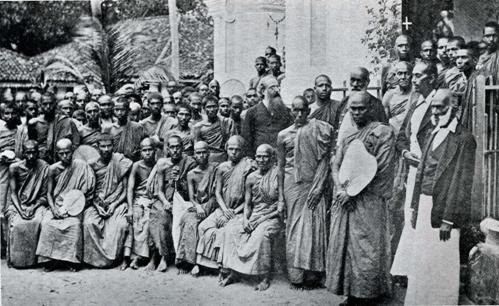
American Col. Olcott vowed to uphold Buddhism's Five Precepts and wrote A Buddhist Catechism, as he revived Theravada Buddhist practices in Sri Lanka in the late 1800s.
.
What long-lost, timeless wisdom did she conceal in her wonderful narrative? Immersive and engaging, this profound book provides readers with a unique outlook on the deeper side of life, exposing our true nature, interior powers, and ultimate destiny.

American Buddhist revivalist in Sri Lanka (Ceylon) with Theravada Buddhist monks, 1883
American Buddhist Col. Olcott, Madame Blavatsky, co-founders of Theosophy, Bombay, 1881
.
It explains grand, spiritual ideas more thoroughly and swiftly than any book previously read.

REVIEW: Blavatsky's sacred wisdom
“Whatever critics may say against Madame Blavatsky, [her] contribution to humanity will always rank high.” — Mahatma Gandhi

“I am happy to have this long association with the Theosophists.” — The 14th Dalai Lama

Get it now to find out what secrets this most mysterious woman — hailed as an icon — couldn’t reveal during her lifetime!

Saturday, August 26, 2023

The Why Files: Atlantis-Lemuria at War

The Why Files, Aug. 24, 2023; Pat Macpherson, Dhr. Seven (eds.), Wisdom Quarterly

Atlantis rises, Lemuria falls: The war that sank a continent
(The Why Files) Premiered Aug. 24, 2023: The Why Files: Operation Podcast  Atlantis and the Fall of the Lemuria: The War that Sank a Continent For thousands of years, the world has been captivated by the mystery of Atlantis. The concept of an ancient city hidden beneath the ocean is fascinating. But what if there was not just a city, but an entire continent buried beneath the waves? The continent of Lemuria is a massive landmass believed to have sunk in the Indian Ocean after some ancient, catastrophic event. Atlantis and Lemuria are similar in that they’ve sparked numerous theories, legends and interpretations. But Atlantis and Lemuria are very different in one way. There’s no proof of Atlantis.
  • Thanks to PDS Debt for sponsoring this episode. Get back financial freedom today by visiting pdsdebt.com/files
#Atlantis #LostCity #Lemuria

EXECUTIVE PRODUCERS: Gino Gentile Jennifer Gentile AJ Gentile. Patreon members THANKS TO MODS: jengen13 (Mrs. Why Files) Victoria Young Loolykins JohnnyBGood Cricket Hybrid Paul Rohrbaugh Mischief Guilty Kiam Timothy Weal Messor Synful Original Jim - Reddit

🙏 SUPPORT THE WHY FILES 🙏 patreon.com/thewhyfiles (fun, free rerks) 👽 BUY WHY FILES MERCH 👽 👽 shop.thewhyfiles.com (Code: LIZZIDPEEPLE for 10% off first order) 👽 💬 CHAT ON DISCORD 💬 thewhyfiles.com/discord 💬 

🌐 OFFICIAL WEBSITE: thewhyfiles.com 🕵️ Submit a topic, suggestionm or just say hi: 🕵️ thewhyfiles.com/tips 🎨 Have a product suggestion or want to design artwork for TWF? 🎨 thewhyfiles.com/merch 📸 BE A WHY FILES MODEL (and get free stuff!) 📸 Send a photo of model/family/friends watching TWF, 📸 wearing TWF gear, using TWF merchandise: 📸 thewhyfiles.com/wild

🎧 THE PODCAST VERSION 🎧 🎧 thewhyfiles.com/podcast 🎧

Friday, August 19, 2022

Shambhala, the spiritual Buddhist kingdom

Holly Gary, grunge.com, Aug. 2, 2022; Pat Macpherson (ed.), Wisdom Quarterly
Helena Roerich translated The Secret Doctrine by Madame Blavatsky (Atlas Obscura).
.
Inside the story behind Shambhala, the spiritual Buddhist kingdom that was never discovered
Madame Blavatsky and Theosophists in Asia
It may be part of human nature to imagine there's a place out there free from strife and full of knowledge. Certainly, more than one culture has this concept.

One such place is the Buddhist Kingdom of Shambhala in Buddhist, Hindu, and Jain mythology.

Shambhala is Sanskrit and means "place of peace" or "place of silence" (IndiaDivine.org). This myth dates back more than a thousand years and varies depending on the source.

However, Buddhists, Hindus, and Jains agree that Shambhala is both a physical and a spiritual place (Atlas Obscura). While there is debate on where the physical Shambhala is located, according to ThoughtCo., it is between the Himalayan mountains and the Gobi Desert.

All the citizens of Shambhala have achieved enlightenment, so it represents a Buddhist ideal. The tantalizing myth of Shambhala has led quite a few people into the Himalayas to try to find it. It has attracted the attention of everyone from hippies and spiritualists to Christian missionaries to the NAZIs and Soviets.

In the 1920s, a Russian couple named Nicholas and Helena Roerich made one such expedition. They had escaped Russia just before the revolution of 1917 and were living in the United States.

Helena Roerich (pictured above) had translated The Secret Doctrine by Madame Helena Blavatsky, a Russian spiritualist (Atlas Obscura).

The book mentioned Shambhala, claiming that finding it was a shortcut to enlightenment. The Roerichs began to seriously believe in Shambhala, and Helena Roerich claimed to have received a message from an otherworldly being telling her to go there. More

Monday, April 13, 2020

American Buddhist Col. Olcott, Theosophist

Pat Macpherson and Dhr. Seven (eds.), Wisdom Quarterly Wikipedia edit

Theosophy is not Buddhism. It is a newer Western religion based on ancient Eastern philosophies that include Buddhism, a belief system given to Russian writer, clairvoyant, and mystic Madame Blavatsky (1831-1891) by a consortium of unseen beings.

American Buddhist Col. Henry Steel Olcott (1832-1907) was an officer, lawyer, journalist, and co-founder of the Theosophical Society and its first president. He was the first well-known American of European ancestry to make a formal conversion to Buddhism.

Col. Olcott drawn by Blavatsky
His subsequent actions helped create a renaissance in the study of Buddhism. He is considered a Buddhist modernist for his efforts at interpreting Buddhism through a Western lens and was a major revivalist of Buddhism in Sri Lanka, where he is still honored for his efforts.

He was important to the new movement; he is famous for reviving indigenous Theravada Buddhism in Sri Lanka. Moreover, Theosophy helped revitalize the West's interest in spirituality. One interesting aspect of Theosophical study we now take for granted is "color mysticism" in the aura or astral body of a person.

Aura, astral body, and color mysticism

Pat Macpherson and Dhr. Seven (eds.), Wisdom Quarterly Wikipedia edit
The Buddha as envisioned and presented by Theosophist Florence Fuller (wiki).
Theosophical art is profound. This is "The Path" in Machell's influential style, 1895.
.
Theosophical color mysticism [15][16]
"Vision of the New Day" by Machell
The Theosophical teaching on the human aura was elaborated by Charles W. Leadbeater and Rudolf Steiner in early 1900s [20][Note 4].

Both Leadbeater and Steiner stated that clairvoyants (clear-seers) are gifted with the ability to see so-called "thought-forms" [23] and "human auras."

They wrote the "impressions" received by such people from the "higher worlds" are similar to the "color phenomena observed in the physical world" [24][25][Note 5].

Theosophist Charles W. Leadbeater
.
Frontispiece of Thought-Forms
Nicholas Goodrick-Clarke pointed out that Leadbeater (in collaboration with Irish-English Annie Besant) published an "influential book" entitled Thought-Forms [28], a record of clairvoyant investigation [29].

The frontispieces of both Thought-Forms and Man Visible and Invisible [30] contain a table for "the meanings of colors" of thought-forms and human aura associated with feelings and emotions.

The meaning of aura colors
It begins with "high spirituality" (light blue, in the upper left corner) and ends with "malice" (black, in the lower right corner), with 25 colors in all [31][Note 6].

According to Besant and Leadbeater, feelings and thoughts shape specific forms. For example, "lightning-like shapes" emerge in connection with "anger" [33] and "malice" [34], zig-zag lines show fear, and so on [35].

The average human astral body aura
Thanks to Leadbeater and Steiner, "Theosophical color mysticism," as Finnish Professor of Art Sixten Ringbom has formulated [36], became a subject in which modern artists have been particularly interested [Note 7].

In addition, they were attracted by the Theosophical concept of a "universal harmony underlying the apparent chaos" of the physical world [3]. More

Wednesday, October 23, 2019

The Hidden History of Humanity (video)

Monadic Media, Aug. 18, 2017; Pat Macpherson, Dhr. Seven (eds.), Wisdom Quarterly
The Leshan Giant Buddha (Chinese Da Fo, 乐山大佛) is a 233 feet (71 meter) tall stone statue cut out of a mountain next to the river, built between 713 and 803 (Tang Dynasty), depicting Maitreya.


The Hidden History of Humanity is a full-length feature documentary. Based on the Buddhistic Theosophy (the Secret Doctrine of Russian psychic Madame Helena Blavatsky, American Col. Henry Steel Olcott, Annie Besant, and others) this documentary focuses on the evolution of consciousness over millions of years while revealing the secret chronology of human history from ancient Lemuria and Atlantis to our current root race, while following the natural cyclic deluges between races.

Monday, October 21, 2019

Out of Place Artifacts revise history (video)

DTTV Studios, Aug. 31, 2019; Pat Macpherson, Crystal Quintero (eds.), Wisdom Quarterly

Out-of-place-artifact discoveries that make no sense
Blavatsky said Bamiyan statues were ooparts.
How do we explain these astonishing finds? Let's take a look at some of the most extraordinary "out of place artifacts" or ooparts discovered worldwide. “Ooparts” are defined as objects found in a place or strata that is impossible to account for. In the world of science, all theories are speculations until they can be proven. However, some theories deserve more attention than others. And often when faced with discoveries thought to be improbable, it’s hard to deny we are missing entire episodes in history.

Saturday, October 5, 2019

Buddhism in Ancient America (video)

Vladimir K. (thezensite.com); Native drum; Dhr. Seven, Amber Larson (eds.), Wisdom Quarterly
The international "Buddhist flag" created by American Colonel Henry Steel Olcott


The first of two sections in How the Swans Came to the Lake: A Narrative History of Buddhism in America, in nine chapters, deals with the early history of Buddhism when Native Americans in the Southwest and Mexico* made contact with Buddhist missionaries from Afghanistan and China. This section continues up to the beginning of the 20th century.
  • *The American Southwest, including all of Alta and Baja California, were part of Mexico before the USA occupied and stole these lands to expand and form an empire -- which immediately continued overseas to engulf the Philippines, Hawaii, and many smaller lands and islands in the Gulf of Mexico and Pacific -- using the pretext-doctrine of "Manifest Destiny."
Buddhism before Columbus
The second section of the book picks up the story in the 20th century and introduces the more familiar characters of early Buddhism in the West like Alan Watts and the 14th Dalai Lama, the "Beat Zen" movement of Allen Ginsberg, Jack Kerouac, and Gary Snyder.

This is certainly a “narrative history” of Buddhism. This is almost exclusively about Buddhism in America rather than the West in general, although the earlier chapters cover the work of the Europeans in India, Tibet, and Sri Lanka rather than China.

.
The early years of the transmission of Buddhism from East to West is marked by the work of well-meaning scholars, civil servants, and religious ideologues. These 19th century translators and interpreters often had a great misunderstanding about Buddhist doctrines because much of their information came from India's Brahmin class, who really didn't have much sympathy for Buddhism.

However, gradually the exclusively-Buddhist language Pali (the language of Magadha, where the Buddha lived and taught because there was no "India" yet) was learned over the Brahiminical language Sanskrit, and original canonical Buddhist texts were translated.

These very early works became known in America and Europe, among elites and the well-educated, over later, apocryphal Chinese Mahayana works based on Brahminical Indian teachings.

American Colonel Henry Steel Olcott
What is surprising in these early modern days was the role of the Theosophical Society in the late 19th century. The society, created in 1875 by Madame Blavatsky, a mysterious Russian psychic and American Colonel Henry Steel Olcott.

This was the era of Spiritualism, a time when mysterious rappings, knockings, and levitations were the rage in séance groups meeting in parlors around in America and England, under the guidance of mediums.

The Theosophical Society was set up to “collect and diffuse knowledge of the laws which govern the universe” (p.89) but, as Blavatsky later claimed, “The society was founded at the direct suggestion of Indian and Tibetan adepts” (p.90). These so-called adepts were referred to as The Masters, mysterious spiritual entities who were guiding humankind to a better and brighter future.

Only Blavatsky spoke regularly to The Masters, and Col. Olcott had but one  from a Master, who left his turban behind on Olcott's desk. One could call these people the first New Agers.

Their search for spiritual sustenance and knowledge drove the two of them to India in 1875 and then to Ceylon (Sri Lanka) where they took Buddhist vows in front of a huge crowd. The American Olcott set about reviving Buddhism among the Sri Lankans, writing The Buddhist Catechism, designing a colorful Buddhist flag, as well as raising money for Buddhist schools and petitioning the British government to ease the restrictions on Buddhists in Sri Lanka.

Fields' book gives the impression that Col. Olcott singlehandedly revived Buddhism in Sri Lanka. In 1888 he was invited to lecture on Buddhism in Japan and spoke to an estimated 187,000 people over three months (p.108). 

Col. Olcott went on to Burma, and in 1890 called a meeting of Asian Buddhists in Adyar in an attempt to unite all the various Buddhist schools. History has shown that he largely failed in this noble attempt.

Olcott was undoubtedly sincere in his Buddhist beliefs and did much to proselytize Buddhism in the East and West, but there were many others in the late 19th century who took it upon themselves to promote Buddhism.

One of the most significant turning points was the World Parliament of Religions, held on the shores of Lake Michigan in Chicago in 1873 as part of the Columbian Exposition. Although the majority of delegates were Christian, it was here that for many Americans and Europeans the exotic East met with the staid West for the first time.

Hindu Swami Vivekananda was one of the most memorable Indians at the conference, which led to an interest in yoga among Westerners. Chinese and Japanese delegates “arrayed in costly silk vestments of all the colors of the rainbow” (p. 121) impressed everyone. Buddhist Anagarika Dharmapala (1864-1933) gave the concluding speech at the opening ceremony, which for many was the first time they had heard the preaching of Buddhism.

Dharmapala was instrumental in promoting Buddhism and reviving Bodh Gaya, India ("Enlightenment Grove," where Siddhartha awakened and became the Buddha, the "Awakened One"), as a center of Buddhist learning. A large bust of him was installed at the Maha Bodhi Rest House in 1991 to celebrate the 100th anniversary of the Maha Bodhi Society founded by Dharmapala (Singh, 2003:90).

On the third day of the World Parliament of Religions, Zen Master Soyen Shaku (Rinzai), one of D. T. Suzuki's teachers, was introduced to the audience as the first Zen master to come to America.

Zen in the USA after WW II
Twelve years after the conference, Soyen Shaku returned to America as a Buddhist missionary, intent on bringing Zen to America. A year later, in 1906, Sokatsu Shaku, one of Soyen Shaku's disciples arrived. Included in this group was the young artist and Zen student Sokei-an, who went on to become the first Zen master to settle permanently in America, going on to found the Buddhist Society of America in New York (which later became the First Zen Institute of America) and marrying Alan Watts' mother-in-law, Ruth Fuller Everett, in 1944.

Ruth Fuller Sasaki went to Japan after Sokei-an's death in 1945 and established a branch of the institute on the grounds of Daitoku-ji, where much translation work was done and many Westerners passed through, including Gary Snyder in 1956.

And so the flow of Westerners to Japan turned from a trickle to flood, and these Westerners -- along with the Japanese teachers -- brought the swans to the lake.

Rick Fields' book remains the first attempt to document the Buddhist movement in America. By my very rough count, there are approximately 800 people and places named in the book, from Shakyamuni (Prince Siddhartha, the historical Buddha), who started it all, through to the Tibetans, the Koreans, the Vietnamese, the Japanese, the Sri Lankans/Sinhalese, the Chinese, and a plethora of Westerners.

It's a fascinating story full of eccentric characters, good intentions, and great effort. Although Fields' book is well written, with a light touch that makes it easy, entertaining reading, it is only a beginning.

We now have an opportunity to leave an accurate legacy for the future about Buddhism's migration to new lands, and it would be a shame if this too was left for decades or centuries after the event. A new Rick Fields is needed (even though this is the new third edition with a little more about Thich Nhat Hanh and the post-Vietnam War Vietnamese-American contribution to Buddhism in the USA).

Modern technology and a highly literate public means that much is already recorded, and baring any cataclysmic event it should be available to future generations of scholars to sift through. One danger, however, is an overabundance of Dharma materials.

Fields has covered a vast amount of material in a single volume, beginning with Shakyamuni 2,500 years ago. Left for a relatively brief mention in the final chapter is a discussion of scandals that have hit American centers in the latter part of the century. These, too, are part of the history of Buddhism in the West and should be included, if only to prevent the history from slipping into myth and hagiography.

How the Swans Came to the Lake is not the last word on the early years of Buddhism in the West, but it is the first comprehensive history of it. As such it deserves a place on the bookshelves of Buddhists throughout the English-speaking world.