Showing posts with label Tang Dynasty. Show all posts

Thursday, August 15, 2024

Young female leader, 37, rules Thailand

Thai Prime Minister Paetongtarn Shinawatra
Pheu Thai Party's leader and Prime Minister candidate Paetongtarn Shinawatra reacts during a press conference on the announcement of prime ministerial candidate ahead of a pivotal parliamentary vote on a new prime minister, in Bangkok, Thailand, Aug. 15, 2024 (Reuters/Chalinee Thirasupa)
.
Maybe ladies are not bad? - They are for us.
(Reuters) BANGKOK, Thailand - Political neophyte Paetongtarn Shinawatra won the backing of parliament to become Thailand's youngest prime minister on Friday, only a day after she was thrust into the spotlight amid an unrelenting power struggle between the warring elites.

The 37-year-old daughter of divisive political heavyweight Thaksin Shinawatra passed the required threshold of 51% of votes and now faces a baptism of fire, just two days after ally Srettha Thavisin was dismissed as premier by a judiciary central to Thailand's two decades of intermittent turmoil.

Pheu Thai Party's leader and Prime Minister candidate Paetongtarn Shinawatra reacts during a press conference on the announcement of prime ministerial candidate ahead of a pivotal parliamentary vote on a new prime minister, in Bangkok, Thailand, Aug. 15, 2024 (REUTERS/Chalinee Thirasupa).

At stake for Paetongtarn could be the legacy and political future of the billionaire Shinawatra family, whose once unstoppable populist juggernaut suffered its first election defeat in over two decades last year and had to do a deal with its bitter enemies in the military to form a government.

Pheu Thai Party's leader and Prime Minister candidate Paetongtarn Shinawatra, Thailand's caretaker Deputy Prime Minister Anutin Charnvirakul and coalition party representatives react after a press conference on the announcement of prime ministerial candidate ahead of a pivotal parliamentary vote on a new prime minister, in Bangkok, Thailand, Aug. 15, 2024 (REUTERS/Chalinee Thirasupa)

Paetongtarn will immediately face challenges on multiple fronts, with the economy floundering and the popularity of her Pheu Thai Party dwindling, having yet to deliver on its flagship cash handout programme worth 500 billion baht ($14.25 billion).

Paetongtarn has never served in government and will become Thailand's second female prime minister and the third Shinawatra to take the top job after aunt Yingluck Shinawatra, and 75-year-old father Thaksin, the country's most influential and polarizing politician.
  • Related video: Thailand: Thai PM Srettha Thavisin's removal from office raises fears of political uncertainty (StringersHub)
The fall of Srettha after less than a year in office will be a stark reminder of the kind of hostility Paetongtarn could face, with Thailand trapped in a tumultuous cycle of coups and court rulings that have disbanded political parties and toppled multiple governments and prime ministers. More: Thailand's Paetongtarn Shinawatra wins parliamentary backing to become new PM
  • Panu Wongcha-um and Chayut Setboonsarng, Reuters via MSN, 8/15/24; Eds., Wisdom Quarterly

Thursday, January 11, 2024

Boy Buddha found on Australian beach

EssaNews.com, Jan. 11, 2024; CC Liu, Dhr. Seven (eds.), Wisdom Quarterly
Shark Bay’s natural wonders that turn one snap happy | So Perth
The baby boy Buddha (actually Bodhisattva) being ceremonially bathed on Vesak

Boy Buddha on Bimaran
What is a baby boy Buddha? It should not be confused with the Buddha Boy (
Ram Bahadur Bomjon) now steeped in the quagmire of controversy. It is a figurine, usually ceramic and golden, of Prince Siddhartha Gautama just after he was born, raising his finger, speaking a declaration of his impending great enlightenment and final rebirth, and taking seven steps as the earth quakes, surrounded by devas and his mother's female attendants. It is used in a popular bathing ceremony usually performed during Mahayana Buddha Day and Theravada Vesak celebrations.

Buddha from the beach, two friends find $100K Ming Dynasty artifact in Australia
The statuette is worth a fortune. Images source: © YouTube ABA 10:47 AM EST, Jan. 11, 2024
.
Shark Bay’s Monkey Mia Reserve dolphins
[Buy a metal detector, and hit the beach. There's no telling what treasures abound.] In 2018, Leon Dechamps and Shayne Thomson visited Shark Bay's coast in Australia.

Equipped with a metal detector, they serendipitously discovered a small Buddha figure, oblivious to the fact that they had unearthed a genuine treasure.
Vesak (Buddha Jayanti) is Buddhist Xmas
Beachside fortune
The red and white sand beaches of the coast Shark Bay, Western Australia | Roadtrippers
.
Following five years and numerous expert analyses, it was determined that the Buddha figure hailing from the beach of the Indian Ocean has its origins in China from the Ming Dynasty period.

The petite Buddha statue made from bronze dates most likely back to the 15th century. A specialist in Asian art validated that the item could fetch a price of up to $100,000.

"I was astounded when I discovered it was from the Ming Dynasty. This makes it the oldest Chinese artifact in Australian history," Dechamps stated on the Antiques Roadshow program.
Baby Buddha (Bodhisattva) being bathed
  • Around the Buddhist world (such as Maui, Hawaii, USA) the community celebrates Vesak Day. Vesak celebrates the birthday, enlightenment day, and final nirvana day of the Buddha (Shakyamuni), all three events having happened on the full moon of the ancient Indian month of Vaisakha. In addition to guided sitting meditation and Dharma talks, there is usually a bathing ceremony of the baby Buddha and a joyful vegetarian meal. In the Chinese Mahayana Buddhist tradition, April 8 of each year is "Buddha Day," which celebrates the birth of Gautama Buddha.
Western Australia Marine Park is full of sharks
Upon discovering the figure, the friends endeavored to uncover how it ended up on the beach. Various services and institutions were consulted, including the Maritime Museum of Western Australia, the ambassador in China, antique dealers, art historians, various Chinese associations, and independent archaeologists.

The statue likely arrived in Australia in the 15th century during Admiral Zheng He's global voyages, which included the Indian Ocean basin.


Another theory posits that it was brought to Australia by Chinese traders in the 19th century. Similar statues were fairly popular and were crafted to commemorate the Buddha's birthdays [Vesak].

Great white sharks of Australia love the Bay
According to Australian law, the statue belongs to the finders. The figure is flawed, missing several elements, which were possibly deliberately removed and replaced with a more prestigious material such as ivory.

No other Chinese or Ming Dynasty-related items were discovered on the beach. However, Dechamps and Thompson are hopeful that they will find the missing portions of the Buddha statue in the future [and will likely spend $100,001 or die doing so because something else must be on that beach after six centuries]. More

Wednesday, August 23, 2023

Chinese didn't build Wall: Graham Hancock

DB Business, July 4, 2023; CC Liu, Sheldon S. (eds.), Wisdom Quarterly

Who's Graham Hancock, and what does he know?

Graham Hancock: How was the Great Wall of China built? | Blowing-Up History: Seven Wonders
(DB Business) Graham Hancock proposes that the Great Wall of China, as well as other ancient megalithic structures found around the world (like the pyramids of Egypt, Mexico, and the Americas) were not solely the result of human construction but were influenced or guided by an advanced ancient civilization [of extraterrestrial visitors, rulers, occupiers] that predates known history.

He suggests that this advanced civilization possessed sophisticated knowledge and advanced technology that allowed them to build these monumental structures.


aConnect on social media: twitter.com/DBBusinessPage, instagram.com/dbbusinesso..., facebook.com/DBBusiness. Business inquiries: dbbusinessytdep@gmail.com

Wednesday, October 23, 2019

The Hidden History of Humanity (video)

Monadic Media, Aug. 18, 2017; Pat Macpherson, Dhr. Seven (eds.), Wisdom Quarterly
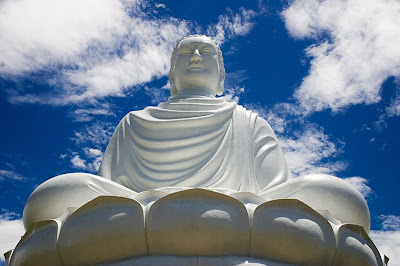
The Leshan Giant Buddha (Chinese Da Fo, 乐山大佛) is a 233 feet (71 meter) tall stone statue cut out of a mountain next to the river, built between 713 and 803 (Tang Dynasty), depicting Maitreya.


The Hidden History of Humanity is a full-length feature documentary. Based on the Buddhistic Theosophy (the Secret Doctrine of Russian psychic Madame Helena Blavatsky, American Col. Henry Steel Olcott, Annie Besant, and others) this documentary focuses on the evolution of consciousness over millions of years while revealing the secret chronology of human history from ancient Lemuria and Atlantis to our current root race, while following the natural cyclic deluges between races.

Wednesday, January 18, 2017

Buddha statue discovered in lake (video)

CCTV; CNN; SOE; Rebecca Shapiro, The Huffington Post; CC Liu (ed.), Wisdom Quarterly


Chinese locals spotted the head of the 12-foot statue poking out of the lake. What is it?

600-year-old Buddha statue discovered in China as reservoir water level drops
Magao cave Buddhist temples, China (GB)
Archeologists believe that an ancient Buddha statue discovered by villagers in China’s Jiangxi Province is about 600 years old, dating back to the Ming Dynasty, state news agency Xinhua reported last week.
 
The top of the statue was spotted last month when villagers noticed a Buddha’s head sticking out of the Hongmen Reservoir. According to Xinhua, water levels in the reservoir had fallen due to a recent construction project, revealing a sculpture.
 
Buddhism in ancient Greek art (answers.com)
After an underwater expedition, researchers confirmed that the statue was about 12 feet long and carved into the cliffside. They also found the base of a hall beneath the statue and a 30-character inscription, which archeologists believe indicate that a temple had previously been there.
 
The reservoir was built in 1958 on the ruins of the ancient Xiaoshi Township, according to county records obtained by Xinhua. The Buddha statue was erected at the intersection of two rivers.
 
Xu Changqing, director of the Research Institute of Archaeology of Jiangxi province, told CNN that the statue may have been protected by being underwater for so many years... More

Tuesday, December 16, 2014

Jeb Bush is coming! More rightwing than W.

(Bloomberg Business) Dec. 16, 2014 - Former Florida Governor Jeb Bush said today that he's taking another step toward running for the Republican presidential nomination in 2016. Bloomberg Politics’ Mark Halperin reports on “Market Makers.”
 
The Republican Brain (Chris Mooney)
A right wing maniac, part of the royal Bush Dynasty, former governor of distorted and perverse Florida -- who speaks Spanish and is married to a Latina -- wants to be selected as the next president of the U.S., Inc. Are the capitalists biting, and will the rest of us go along with it without too many protests? Who would be vice president? Let's bring back Dick Cheney for another eight years.

Give me another chance, motherf*thers!
We have had many long years of disappointment attributed to liberalism, socialism, Islam, and Nazism but which are actually a continuation of Bush-Cheney policies. Obama has done everything within his power to promote the Bush agenda in the name of an "alternative," "change," and a "Yes we can" attitude. Why not swing even further to the right, going from George W. to Jeb (Johnny Ellis) Bush? If Germans had a choice, would they have voted Dolfie Hitler or Joey Goebbels?

(Giant Corporation Puppet Theater) Tonight's Show: "The Republican Debate" (TB).
    Jeb Bush announces he will "explore" presidential run
    (NPR) Jeb Bush, the former Republican governor of Florida and the brother and son of two former U.S. presidents, has essentially kicked off the 2016 presidential campaign with a pre-announcement announcement on Facebook. Saying he had conversations with his family [and their deep pocket corporate connections] about the future of the country, Bush said he had decided to "actively explore" a presidential run. He went on:...
    The G.O.P. pickup artist's guide (TMW)
    Will we take Karl Rove or keep watching MSNBC and pretending we are levelheaded moderates when all of our policies are to the right of former Republican presidents Reagan and Nixon? We have moved to the right of those icons because the who board is being moved to the right. There is no actual left wing representation, just nominal (by name only) "liberals" and "progressives." It's all relative.
     
    Republican extremists are ruthless, sensible, intolerant who will say anything to win.

    Monday, April 5, 2010

    Chinese Buddhism at the Longmen Grottoes

    Along with the Mogao Caves and Yungang Grottoes, the Longmen Grottoes are one of the three most famous ancient sculptural sites in China. They are 12 km south of present-day Luoyang City in Henan, China. There are 2,345 caves and niches, 2,800 inscriptions, 43 pagodas, and over 100,000 Buddhist images at the site. Thirty percent of the caves date from the Northern Wei Dynasty, 60 percent from the Tang Dynasty, and 10 percent of the caves are from other periods. Fengxian Temple (Fengxiansi), 672-675 AD, is the largest and most extravagant cave in Longmen, featuring the impressive Vairocana Buddha and various other bodhisattvas. It was built during the golden age of the Tang Dynasty and is often considered the pinnacle of Chinese Buddhist art.

    PHOTO: Middle Binyang Cave constructed by order of Emperor Xuanwu of the Northern Wei in honor of his parents Emperor Xiaowen and Empress Wenzhao, the cave was supposed to imitate Lingyansi Cave at the Yungang Caves. Work began in 500 AD and was completed in 523 AD. The main buddha (shown here) and bodhisattvas are representative of the Northern Wei sculptural style. A lotus-flower pool decorates the floor. The ceiling is engraved with a blossoming lotus flower, 8 musical apsarases, 2 attending apsarases, and tassel and drapery patterns. The front wall is covered with a large Vimalakirti relief, the Prince Sattva Jataka, the Prince Sudatta Jataka, an emperor/empress worshipping scene, and ten deity kings.

    Wednesday, June 17, 2009

    Buddhism's Evolution during Tang Dynasty

    Text: excerpts from the second in a series of six articles on religions in Life Magazine, reprinted in Doctrines of Buddhism (Vol. 1); edited, expanded, and updated by WQ.

    A model presents a creation inspired by the court dress of ancient China's Tang Dynasty (618-907 A.C.E.), during a show at the 2009 Qingdao Fashion Week in Qingdao, a coastal city in east China's Shandong province, 6/15/09 (Xinhua/Li Ziheng).
    From the islands of Sri Lanka to Japan and throughout large sections of the Asian mainland, hundreds of millions of people -- perhaps as many as half a billion (in the 1950's) -- believe in a gentle and peaceable religion called Buddhism.

    Many Western thinkers, who have come to know its yellow-robed monastics and have investigated the vast libraries of their quiet nunneries and monasteries, consider it one of the noblest edifices of thought ever erected by the human spirit. It is, as a whole, one of the most rational of the world's great religions [along with Christianity, which has striking parallels to Mahayana Buddhism, and Islam], for the system of human conduct that it preaches relies very little on the supernatural.

    In its history, which stretches back for 2,500 years, Buddhism has bee one of the greatest civilizing forces the Far East has ever known, stimulating art and contributing profound ideas to the great Tang Dynasty culture of China in the 7th to 10th Centuries, A.C.E., and bringing civilization to Japan.

    Today it is the state religion of Thailand, Tibet, Burma, Cambodia, and Laos, the dominant religion of China, Taiwan, and Sri Lanka, and a faith to which vast numbers of non-religious Chinese and Japanese turn for spiritual purpose....

    Stripped of the accretions of poetic Oriental legend with which centuries of Asian imagination have surrounded it, the life of Siddhartha Gautama, or the Buddha as he was later called, is one of the great and elegant biographies of religious literature.

    Mahayana Buddhism

    For a while Buddhism was dominant over Hinduism. In time travelers from northern Asia, following the mountain trade routes across the Himalayas, learned something about the new religion of enlightenment and brought back reports to the cities of China.

    About 65 A.C.E. a Chinese emperor, according to a legend, dreamed that a golden image of the Buddha appeared from out of the west and dispatched messengers beyond the Himalayas to find out about the mysterious source of this dream.

    Indian Buddhist wandering-monks gradually made their way northward across the mountain passes as missionaries, and Chinese pilgrims traveled in the opposite direction seeking information and opportunities to worship at the shrines where Gautama had lived and taught. Two of these pilgrims became as spectacular figures in the annals of travel as Marco Polo. One of them, Fa-Hsien, left China in 399 A.C.E. and after incredible hardships in central Asia spent 15 years in India compiling an eyewitness account of that country, which is still studied by historians.

    The other traveling monk, Hsuan-Tsang, left China in 629 A.C.E., crossed the Gobi desert, Sinkiang and what is now Afghanistan, spent 16 years in India and returned laden with books and manuscripts. Hsuan-Tsang subsequently translated Buddhist literature so extensively that what is ascribed to him and his pupils in Chinese amounts to more than a thousand volumes.

    The court of the great Tang Dynasty, during which he lived, became filled with converts to Buddhism. Some of the greatest artists in Chinese history were devoting themselves to Buddhist subjects, and in the streets of the old Tang capital of Changan (modern Sian), Buddhist scholars could be found discussing their doctrines with Confucianists, Taoists, Zoroastrians, Manichaeans, and even Nestorian Christian missionaries from the Near East. Buddhism itself proved to be one of the hardiest of them all, and its teaching ramified into many different sects, some of which exist down to the present day.

    Tang in Japan

    Meanwhile, in the 7th Century, A.C.E. the great Japanese Prince Shotoku Taishi became converted to Buddhism, which had reached Japan through the sea routes from Korea, and established it as a national religion. The Japanese, who had heretofore been largely a nation of illiterate and primitive fishermen and farmers, accepted the new doctrines along with the whole culture of Tang Dynasty China.

    Tantrism in Tibet

    Shortly afterward, about 750 A.C.E., an Indian Buddhism monk named Padma-Sambhava crossed the mountains into Tibet, where Buddhism had already existed in scattered monasteries, and preached there a different and peculiar form of the doctrine known as Tantrism. Tantrism was a mixture of Mahayana Buddhism and certain magical and mystical doctrines derived from Hinduism. This together with the age-old sorcery and demonolatry practiced in Tibet made up Tibetan Lamaism. In its popular aspects it involved prayers, ritual dances, and the exorcism of devils. Out of it, in Tibet, grew a theocratic state dominated by the Dalai and Panchen Lamas, who are believed to be the living incarnations of Buddhist holy beings of the past.


    Buddhist Art

    Wherever it penetrated, Buddhism brought with it high ethical concepts such as:
    • tolerance
    • nonviolence
    • respect for the individual
    • love of animals and nature
    • a fundamental belief in spiritual equality.

    It also stimulated most of the great art Asia has known. The superlative art of India (Gupta period) was predominantly Buddhist in inspiration. So was the art of the Tang Dynasty, the golden age of Chinese civilization, and much of the tradition of literature and art that Japan learned front he Chinese and finally made part of its own culture. In the south of Asia, helped by vigorous Indian trade, these concepts of ethics and art spread to Indonesia and to what are now Burma and Thailand. In the two latter countries Buddhism became so firmly rooted that these can be described today as, along with Sri Lanka, Tibet, and Cambodia, probably the most devout of all the Buddhist nations of the world.

    Then after having helped spread its high culture to eastern Asia, Buddhism was displaced in India, the country of its origin. The brahmins, proprietors of the ancient and orthodox Vedic religions now collectively and loosely called "Hinduism," which Gautama had broken away from, succeeded in absorbing it. Then Muslim conquest wiped out its last vestiges in successive crusades in the north of India down to Buddhist [present-day] Bangladesh, leaving the Himalayan Buddhist kingdoms of Nepal, Tibet, Bhutan, and Sikkim largely Buddhist and isolated. Curiously, India, which gave Buddhism to the world, has contained relatively few Buddhists since the 12th Century A.C.E.

    From early times the type of Buddhism practiced in China, Japan, and Tibet differed from that o f the south Asian Buddhists. This difference was due to some extent to variations in national temperament, but it can be traced back to about 100 years after Gautama's passing, when a group of disciples disagreed on the interpretation of his teaching and preached a doctrine which was less rigours and more easily adapted to the needs of the ordinary person.























