Why do things grow so big and healthy along the Pacific Ocean high in California?
.
There's prana energy coming up from trees.
There used to be a time when Buddhism had the oldest tree in the world, the Buddha's Bodhi (Enlightenment) tree, a pipal or sacred fig (Ficus religiosa), which is still the oldest documented and attested tree in the historical record.
It may seem a coincidence that the historical Buddha had an "enlightenment tree," but in fact all samma-sam-buddhas ("supremely awakened ones") do. The Buddha spoke of buddhas of the distant past, naming their chief disciples and other features, including the type of tree they awakened under.
This hints at just how important trees are. Save forests, save earth!
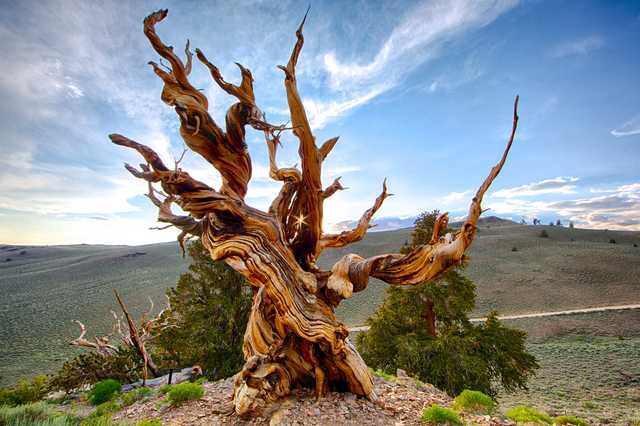
But a California bristlecone pine dubbed Methuselah took the crone for being far old, as proved by rings. Such trees do not even look alive, but are beaten down, shriveled, with gnarled bark and a few green sprouts that show they do yet live.
In a grove of ancients, the oldest among them was recognized.
California has it all -- the world's tallest tree (hidden in Northern California in dense underbrush, kept secret to avoid visitors who might damage it unintentionally, although the secret is out and maps to it exist). And there's the world's largest tree, the photogenic "General Sherman" in the Gove of Giants (or is that the Grove of Titans?), Sequoia National Park on the Pacific Coast near Yosemite National Park, which also has a grove of massive California redwoods.
The giant sequoia is the world's largest tree, and there are many such enormous redwoods.
Thank you, Bodhi Tree
So the oldest completed the trifecta, on the road to Sequoia Nat'l Park and Yosemite from Los Angeles, near the fork in the road -- along the California Alps (Sierra Madre range visible from the 395 Freeway) -- where one can turn right and plunge into Death Valley and Nevada beyond that.
Now the world will focus on Chile (until the next discovery in Tartary, the Tartarian Empire, or the realization that there are no trees left in the world because the ancient trees, made of silica rather than carbon, were cut down and are now mesas, flattened mountains clearly visible from helicopters).
In the distant past, "trees" were gigantic and made of silica
It's not just one giant tree. There are many massive stumps
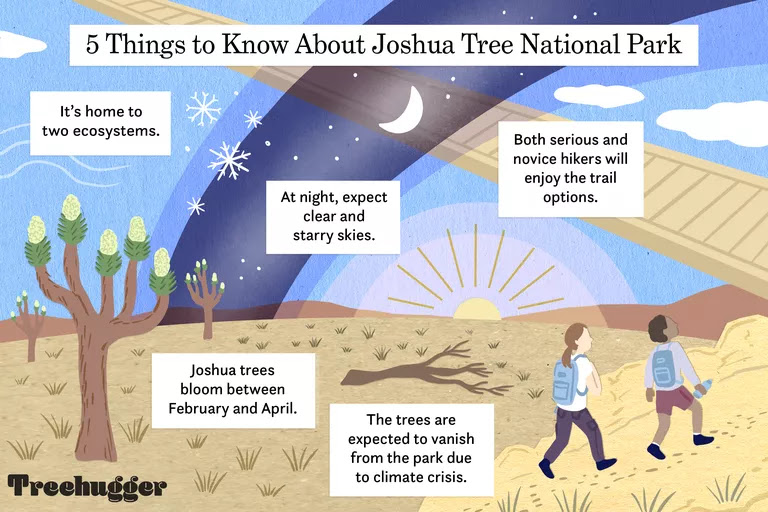
Old California "trees" are cacti? (Joshua trees)
Of course, that's too mind blowing to even mention, so scratch that from memory, and let's go to Jeremiah Budin, who is not a Buddhist so far as we know, in the Latin South American country of Chile.
Though trees across the globe are under threat from the corporate logging and agriculture industries and the chaotic changing climate, one tree in Alerce Costero National Park in Chile (western South America, the real Down Under, the world's southernmost country) is believed to have survived for more than 5,000 years — and experts say it is the oldest living tree in the world.
The tree, known as Gran Abuelo (“Great Grandfather”), is believed to be even older than the currently recognized oldest tree in the world, California’s 4,850-year-old Methuselah Pine.
The newest oldest tree in the world
This is the Gran Abuelo ("Great Grandfather"), the oldest tree in the world known to science.
.
Why did Siddhartha sit under a tree? To meditate
Scientists are in the process of measuring the tree’s age in an effort to get it officially recognized as the world’s oldest. “It’s a survivor; there are no others that have had the opportunity to live so long,” said Antonio Lara, one of the scientists working on determining the tree’s age.
Gran Abuelo, a Patagonian cypress (Fitzroya cupressoides) was discovered by a park ranger in 1972. [And luckily it had its birth certificate stapled to it in protective plastic? How did the ranger know? Was it psychic intuition? Did the tree spirits talk like inthat famous Buddhist tree story?]
Buddha Boy, when out of jail, should sit here
Though its exact location was initially kept secret to protect the tree (as is still the case with the Methuselah Pine), tourists are now allowed to trek about an hour through the forest to take pictures alongside it.
Buddha Boy (BSDS); Dhr. Seven, Amber Larson, A. Wells (eds.), Wisdom Quarterly Wiki edit
"Buddha Boy" or Ram Bahadur Bomjon (Sanskrit राम बहादुर बम्जन, also spelled Bomjan, Banjan, and Bamjan) was born in 1990.
Previously known as Palden Dorje (his Vajrayana Buddhist monastic name), he is a controversial wandering ascetic (shramana) from Ratanapuri, Bara District, Nepal.
Who is that dusty, napping boy?
At 15 years of age, he gained widespread media attention and popularity because of perceived semblances to the historical Buddha Gautama, leading to claims that he had to be the reincarnation of the Buddha himself.
(This of course is nonsense, but in the popular imagination, it was the only explanation for Bomjon's miraculous power to sit months on end without eating, drinking, or moving, only meditating).
Details
How it all began, a dusty 15-y.o. meditating well
In May, 2005, the 15-year-old Bomjon left his home near the Indian border after a dream in which a deva appeared to him and told him to do so.
He found a good spot and sat in the massive roots of a pipal tree [sacred fig, Ficus religiosa, Bodhi tree, more likely a local banyan tree] to meditate [1].
Looking refreshed and showered
Eyewitness claims suggest that for 10 months he rarely spoke, drank, ate, or even moved. He simply sat under that tree, striving for some attainment or other, possibly even supreme awakening.
Thousands, then tens of thousands, then hundreds of thousands of people made pilgrimages to visit the site in the forest (Terai jungle) to sit with or see (darshan) the miraculous boy motionless for hours, days, and months as rumored.
Tummo generates a lot of fiery heat.
Others came not so much to practice themselves (as would have been very good to do) but out of devotion (puja) and the very real possibility of an important spiritual event occurring. There might be a miracle (siddhi), a public marvel (Buddhist iddhi) like that time he spontaneously burst into flames possibly from practicing tummo meditation.
As a result of some of these widespread claims, Bomjon's followers believed he had to be an incarnation of the historical Buddha Gautama [2] (who Hinduism says was an incarnation (avatar) of the God Vishnu, which is also said of Jesus Christ, possibly for the purposes of conversion, and other peaceful spiritual figures interested in the maintaining of humanity).
Dharmasangha (aka Buddha Boy) inside fire
(Bodhi Shrawan Dharma Sangha) Nov. 24, 2009: On January 19, 2006, Mahasambodhi Dharmasangha (Ram Bahadur Bomjon or Buddha Boy) spontaneously combusted, burning off the cloth robes he had worn for nine months but leaving no burn scars on his body (bsds.org).
Bomjon is not the Buddha
Why do people keep bothering my meditation?
Bomjon has rejected any such comparisons to a buddha or to the historical Buddha, saying: "Tell the people not to call me a Buddha. I don't have the Buddha's energy currently. I am at the level of a rinpoche [a jewel or precious one]" [3].
Mahiswor Raj Bajracharya, the president of the Nepal Buddhist Council, has stated likewise: "We do not believe he is [a] Buddha. He does not have [the] Buddha's qualities" [4].
Then, on March 11, 2006, he disappeared and went missing for months [5]. On March 19, 2006, Bed Bahadur Lama of the Om Namo Buddha Tapaswi Sewa Samiti (ONBTSS) told reporters that he had been seen in Bara District and that [ONBTSS] had spoken to him for half-an-hour, during which Bomjon reportedly assured them that he would return in six years (at the age of 21) [6].
He was again seen on August 2007, preaching to crowds in Nepal’s Hallori jungle, about 100 miles south of the capital of Kathmandu [7].
Arrest
Budanilkantha looks nice from a distance.
A team of CIB (Central Investigation Bureau) police from Nepal arrested Bomjon on January 9, 2024, nabbing him at his "hideout" [ashram or house] at Budanilkantha [8].
An arrest warrant had been issued in 2020 [9]. The CIB also confiscated Nepalese rupees (NPR 33 million = US $225,000.00) and foreign currencies from over 17 different nations equivalent to about $245,000 [8].
CIB: We got him, we finally got him.
DIG Kuber Kadayat said Bomjon tried to evade arrest, making a run for it by jumping off the roof of the house he was staying in.
Issuing a press release after the day of his arrest, police stated that a key to an SUV, bluebooks of three two-wheelers, two laptops, 14 mobile phones, and multiple electronic devices were also confiscated during the search.
Controversies
Keep moving, dacoit. Your days of criminality are at an end due to the big hand of the CIB.
We want the world to see you now, Bomjon.
Eyewitnesses, Bomjon's followers, and skeptics claimed that Bomjon meditated for months without eating or sleeping [7]. (A scientific team from India tried to debunk these claims but could not, only saying that for the time they were there and watching him, he did indeed seem to be meditating nearly motionless).
In 2010, Bomjon was investigated for accusations that he attacked a group of 17 villagers. He claimed that they were intentionally disturbing his meditation.
However, the villagers said they were just foraging for vegetables [10, 11, 12, 13]. Bomjon explained that he had taken "minor action" against them with just his hands [10, 11, 12, 13] after they had "tried to manhandle" him [11, 13] and stopped as soon as they apologized.
However, the alleged victims claim that for three hours he struck them on their head and back with an axe handle [10, 13], resulting in serious injury of one of them [12, 13].
Bomjon refused to attend any potential trial, stating: "Do you think a meditating sage will go to the court to hear a case? I took action against them as per the divine law [universal justice]" [10, 13].
In 2012, Nepali police announced that they had rescued a Slovak [Central European] woman from Bomjon's followers, but other reports claim that she had been released voluntarily after media coverage of the kidnapping.
Newsweek reported she had been taken from a hotel by two of Bomjon's men on motorcycle, kept tied to a tree for three months, and accused of practicing witchcraft in order to disturb the Buddha Boy’s meditation [14].
However, another report claims she had been kidnapped from a monastery. When she was released, she had a broken arm [15, 16]. A week after her release, Bomjon's siblings accused him of holding his brothers captive overnight and beating his brothers and his sister [17].
Followers of Bomjon assaulted five journalists and destroyed their cameras after they had recorded one of Bomjon's sermons [15].
Oh my! Is it possible he would?
In September of 2018, Bomjon was accused of raping an 18-year-old nun repeatedly for nearly two years.
During a press conference organized by women's rights groups, the nun also accused his wife of trying to keep the abuse hidden so as not to "attract attacks" on their [new] religion.
Bomjon is married? He is no longer referred to as Tapaswi (austerities-practicing) Palden Dorje, so perhaps he disrobed to become a Vajrayana Buddhist lay practitioner.
Supporters of Bomjon claim that nun was in fact involved in theft and had been ejected from the monastery [18].
If I had it to do over again, it'd be different.
An investigation was opened in January of 2019 after complaints from family members that four devotees had gone missing from several of Bomjon's ashrams [19].
In the same month, police raided one of Bomjon's ashrams in Nepal, but he was not found [20].
Prison self-immolation? Not without absorption
On February 6, 2020, the Sarlahi District Court issued an arrest warrant against Bomjon. The following day, police raided another one of his ashrams in Kamalamai, Sindhuli, but Bomjon was not found there either.
However, police did arrest one of his disciples, Gyan Bahadur Bomjon [21]. More
1. Following the Great Maitri Marga Guru [Path of Loving-Kindness Teacher], the GuruMarga [Teacher's Path] and the Bhagvan Marga [Lord's Path], absorbed in forgotten feelings, making Maitri Mangal (lovingly fulfilled) all Sangha [Spiritual Community] friends, Dharma-lovers and followers that come and go; and, remembering this present Guru’s moment together, may all tormented souls on the Marga of the Maitri Dharma [Teaching of Loving-Kindness] have refreshing realization. Dharma is the only element that can support a platform built to be directly with the Paramatma [Supreme Self].
3. Just as the value of water corresponds to the degree of thirst; the value of the Dharma [Timeless Teaching] is assessed by kindness, compassion, nonviolence, trust, belief, devotion, faith, and an unwavering human life regarding the Marga [Path].
4. To enter into the Dharma [Truth] means to be absorbed in the path of mukti (freedomafter death) and moksha (liberation from the cycle of rebirth [= nirvana]).
5. That marga [path] which does not have the element forming mukti [freedom] and moksha [spiritual liberation] can never even be accepted in the true Dharma [ultimate Truth] as being called a marga [path], and the Dharma [Teaching] not being in divided civilisations, is obtained in the perfection of the Maitri [agape] knowledge, the bridge between the soul and the Paramatma [ego and the Higher Self].
6. It is impossible for humans remaining far from the knowledge of Maitri [agape love] to attain true enlightenment [awakening to the oneness of all] no matter what one is practicing.
7. In the end, all that may have appeared to be beneficial in this transient world will prove futile.
9. The Dharma is the rising and setting sun, the sky in which the stars shine, and the flowers blossoming in nature.
10. In the end, the Dharma is to understand the transience of the moment of this passing world as though waking up from a nightmare [saṃsāra] to find that in reality [nirvana] one is safe.
11. Rather than asking such questions as to what attributes a contemplative and intelligent person skillful in the Dharma has, and what the role of religion is in the Dharma; why doesn’t a person make the inquiry as to what one has given oneself through passion and attachments to worldly things?
12. Whether or not the way a person is following possesses the Tatva [Elements of Reality] forming mukti [freedom] and moksha [spiritual liberation] is the person’s own very personal internal quest.
13. Guru [Teacher] is fulfilling the Dharma: He is giving the Marga [Noble Eightfold Path] to the world, but the person [each] must make the journey on the Marga by oneself.
14. Whether or not one is enlightened and what one has to bear is justly determined according to the accumulated merit and other karma of the souls traveling on the Marga being shown by Guru.
15. Even though it is natural for various pains and sorrows to occur on the Path, the crucial matter is the reverence and faith towards the Guru Marga [Path of the Guru or Path Made Known by the Guru].
17. However people store empty words used in their past life, otherwise the Path of Enlightenment would be realised very quickly by following the Guru Marga [Teacher's Path].
18. To stand on the Earth while resting in the sky remaining in human form together with the realisation of the Maitri Tatva [Elements of Love] of the pure appearance of the Paramatma’s [Higher Self’s] own form – realizing including self all the mysteries of the universe – is to be freed from the mind’s countless oceans [floods, ogha] of illusion having evaporated like water into the open sky.
19. That which leads to the highest qualities of tatvas [suchness] among all religions and Guru knowledge, having the ability to extinguish former confusion throughout the world, is called the Maitri Dharma. In this way, the primordial existence of all religions would all be on the Marga of Maitri Dharma [Path of Highest Love as Truth] itself.
20. On the Maitri Marga [Path of Love], only by doing true practice [sadhana] of the Dharma until the last moment of life does a person benefit the Dharma.
21. And with this Maitri message, I am giving (you) the 11 precepts to be free from allthe defilements within the whole human world.
1) Never break oneness and equality on account of name, appearance, ethnicity, tribe, religion, colour, class, gender, belief, community, nation, power, position, ability and so forth; this means, give up all discord, be it worldly or spiritual.
3) Never cause rifts or doubts with untruths, accusations and counter-accusations, belittling or meaningless talk.
4) Resist all teachings and paths that lead to separation, rifts or boundaries; stay steadfast in the true marga-practice.
5) Resist doing even the least harmful karma-actions throughout life in true Gurumarga [Teacher-path] practice, melt totally into Guru’s truth-nature, becoming part of it.
6) Before being truly merged in the essential realities and practices of Gurunature and Dharmanature, refrain from expounding it with clever words; while still mired in hearsay, rumour, and propaganda, do not draw others into delusion.
7) Avoid any and all demonic behaviour: violence, killing, harming or hurting living beings; choose only pure wholesome nourishment.
8) Do not think less of people or countries on account of national identity.
9) Rooted in true Gurumarga practices, dedicate all karma-actions, thought and speech to the uplift of the whole world, including ourselves.
10) When searching for Truth, the Gurumarga path begins to take form within the heart and merges with Gurunature for the wellbeing of all life in the universe.
11) Remain always in the highest and deepest awareness, realising the various precepts in the soul, gaining freedom from all bygone bondage and constraints.
22. Together with these 11 precepts being internalized by all the Sanghas, liberate all living beings including self, and; may all realize this Satya Marga Gyan – the Wisdom of the True Path.
23. Never lingering in the ego, running after worldly name and fame; humans should stay resolute in the remembrance of the Paramatma always keeping the feeling of Maitri in the heart (atma).
24. The GuruMarga has descended to re-establish the true Dharma on the Earth after an interval of ages.
25. As this golden moment has been realized by beings and plant-life (the eco-system); may humans also be without defilements and take virtuous benefit from this Maha Maitri Marga at the earliest!
May all beings be lovingly fulfilled.
So be it!
What is a baby boy Buddha? It should not be confused with the Buddha Boy (Ram Bahadur Bomjon) now steeped in the quagmire of controversy. It is a figurine, usually ceramic and golden, of Prince Siddhartha Gautama just after he was born, raising his finger, speaking a declaration of his impending great enlightenment and final rebirth, and taking seven steps as the earth quakes, surrounded by devas and his mother's female attendants. It is used in a popular bathing ceremony usually performed during Mahayana Buddha Day and Theravada Vesak celebrations.
Buddha from the beach, two friends find $100K Ming Dynasty artifact in Australia
[Buy a metal detector, and hit the beach. There's no telling what treasures abound.] In 2018, Leon Dechamps and Shayne Thomson visited Shark Bay's coast in Australia.
Equipped with a metal detector, they serendipitously discovered a small Buddha figure, oblivious to the fact that they had unearthed a genuine treasure.
[WHAT IS IT? The figurine represents the baby Bodhisattva, Prince Siddhartha before he became the Buddha Gautama, celebrating his birth in Lumbini garden as his mother, Maya Devi (iconically represented as a salabhanjika), gave birth standing up holding the branch of a sal tree, and it was twin sal trees the Buddha chose to lie down between when he passed into final nirvana, a statue commonly used in bathing ceremonies, commemorating how when he was born, the sky devas rained down to rinse him off, a ritual that is performed every Vesak, the thrice blessed day of his birth, great awakening, and reclining into final nirvana. Although it might be tempting to think Theravada Buddhism is just trying to be efficient by lumping all three events into one celebration day, the ancient texts say these three occurrences took place on the same month (Vaisakha) under the full moon.]
Mahayana Buddhism does not recognize Buddhism, instead dividing the three events of the Buddha's life into three events (birth, awakening, passing): Buddha Day, Bodhi Day, and Parinirvana Day.
Following five years and numerous expert analyses, it was determined that the Buddha figure hailing from the beach of the Indian Ocean has its origins in China from the Ming Dynasty period.
The petite Buddha statue made from bronze dates most likely back to the 15th century. A specialist in Asian art validated that the item could fetch a price of up to $100,000.
"I was astounded when I discovered it was from the Ming Dynasty. This makes it the oldest Chinese artifact in Australian history," Dechamps stated on the Antiques Roadshow program.
Around the Buddhist world (such as Maui, Hawaii, USA) the community celebrates Vesak Day. Vesak celebrates the birthday, enlightenment day, and final nirvana day of the Buddha (Shakyamuni), all three events having happened on the full moon of the ancient Indian month of Vaisakha. In addition to guided sitting meditation and Dharma talks, there is usually a bathing ceremony of the baby Buddha and a joyful vegetarian meal. In the Chinese Mahayana Buddhist tradition, April 8 of each year is "Buddha Day," which celebrates the birth of Gautama Buddha.
Western Australia Marine Park is full of sharks
Upon discovering the figure, the friends endeavored to uncover how it ended up on the beach. Various services and institutions were consulted, including the Maritime Museum of Western Australia, the ambassador in China, antique dealers, art historians, various Chinese associations, and independent archaeologists.
The statue likely arrived in Australia in the 15th century during Admiral Zheng He's global voyages, which included the Indian Ocean basin.
Another theory posits that it was brought to Australia by Chinese traders in the 19th century. Similar statues were fairly popular and were crafted to commemorate the Buddha's birthdays [Vesak].
Great white sharks of Australia love the Bay
According to Australian law, the statue belongs to the finders. The figure is flawed, missing several elements, which were possibly deliberately removed and replaced with a more prestigious material such as ivory.
No other Chinese or Ming Dynasty-related items were discovered on the beach. However, Dechamps and Thompson are hopeful that they will find the missing portions of the Buddha statue in the future [and will likely spend $100,001 or die doing so because something else must be on that beach after six centuries]. More
All materials on this site are submitted by editors and readers. All images, unless otherwise noted, were taken from the Internet and are assumed to be in the public domain.
In the event that there is still a problem, issue, or error with copyrighted material, the break of the copyright is unintentional and noncommercial, and the material will be removed immediately upon presented proof.
Contact us by submitting a comment marked "private."
Do not follow this journal if you are under vinaya or parental restrictions. Secure protection by Sucuri.
Wisdom Quarterly: American Buddhist Journal is licensed under a Creative Commons Attribution-Noncommercial-Share Alike 3.0 United States License. Permissions beyond the scope of this license may be available at creativecommons.org/about/licenses.