Showing posts with label Milindapanha. Show all posts

Sunday, July 6, 2025

Ancient Greeks converted to Buddhism

(Religion for Breakfast) Greece is very far away from the heartland of Early Buddhism in proto-India and parts of Afghanistan and Pakistan (ancient Gandhara). But thanks to Alexander the Great, Hellenistic and Buddhist cultures came into contact (and fusion) in the 4th century BCE, creating a cultural synthesis known as Greco-Buddhism.
  • 00:00 A Greco-Bactrian Buddhist Inscription
  • 1:41 The Hellenistic "Far East"
  • 4:10 Pyrrho: A Buddhist for Greece?
  • 7:42 Ashoka and his Dharma Conquest
  • 10:23 King Menander [King Milinda]: The Most Famous Greek Buddhist
  • 13:26 Greco-Buddhist Art of Gandhara
  • 15:23 Syncretism?
  • 16:44 [Sponsor:] Nebula!
Indie creators being awesome Thumbnail art by @hotcyder Select imagery/video supplied by Getty Images and Reuters

Monday, November 6, 2023

Incredible ancient Buddhist architecture

MSN.com; Dhr. Seven, Amber Larson, Ashley Wells (eds.), Wisdom Quarterly
Sanchi Buddhist stupa or reliquary dome temple complex, detailed below at Number 20.
Inside a hollow stupa, with its domed roof and various meditation chambers

Interior view of rock-hewn Buddhist temple
Sometimes a mainstream media story catches the eye, something like Stonehenge and more incredible ancient Buddhist feats of engineering (msn.com). A few clicks later, one realizes it's bait. There's little weight to it. It's fancy clickbait Bill Gates needs to build his fortune, maybe make his own island now that Melinda is gone. What the title clicked on didn't say was "Buddhist" feats but it was a Buddhist temple that lured the eye. Then clicking through one can't help but notice that most of the wonders are Buddhist creations. Even the things Buddhists didn't build (by lots of chiseling or by some advanced technology provided by devas from space) they seem to have influenced.
These stylized Buddhist burial mound reliquaries (stupas) are found all over Asia.
  1. Sanchi, India (sanchi.org)
  2. Moai, Easter Island
  3. Sacsayhuaman, Peru
  4. Machu Picchu, Peru
  5. Mesa Verde (Native American), Arizona, USA
  6. How did ancient Afghan Buddhist create this?
  7. Underground churches of Lalibela, Ethiopia [reminiscent of a famous rock-hewn Afghan Buddhist stupa or sacred reliquary]
  8. Tikal, Guatemala [from an advanced jungle empire, reminiscent of the massive Buddhist cities in Cambodia like Angkor and Seim Reap, said to have been named after Gautama Buddha, as detailed in the amazing How the Swans Came to the Lake: A Narrative History of Buddhism in America by American Rick Fields (shambhala.com), the mala being a reference to meditation beads]
  9. Volcanoes in the distance, Buddhas in bells
    Borobudur, Java, Indonesia [a pyramidal Buddhist temple, the largest excavated Buddhist temple in the world (with larger one yet to be excavated in Afghanistan or ancient Gandhara, where the Buddha was born and raised) once hidden under mud and layers of volcanic ash and jungle vegetation until 1835, because the local Muslims could not figure out how it was built and could not match it so they buried it in mud and forgot about it until a British surveyor realized no hill should be standing where it was; he dug and found Borobudur, yet we still do not know much about its construction or original purpose, with historians left to compare the thousands of carved bas reliefs depicting Buddhist and Hindu scenes for clues, coming to the conclusion that it must have taken 75 years to build with andesite (grey volcanic rocks) taken from adjacent quarries which were cut, transported, and laid without mortar.
  10. Leshan Giant Buddha, China [built into the side of a mountain alongside a massive river with steps and means to enter like the Statue of Liberty]
  11. What tools, lasers, and skill could build this?
    Ellora Buddhist Caves, India [a sacred site home to Buddhist, Hindu, and Jain temples carved from volcanic basalt stone, the archeological site is comprised of decorated caves like the grand Kailasa Temple which, at 104 feet (32m) high, the largest rock-cut monument in the world, built into the sloping basalt hill and featuring a three-story town with an octagonal stupa dome of mindboggling architectural detail: beams, bases, capitals, brackets, pilasters and carved bas reliefs in Aurangabad, India]
  12. Shibam, Yemen [the first skyscraper multistory buildings -- resulting in Manhattan or Chicago-style skyline in the desert -- in the modern world, reminiscent of Tibetan Buddhism's Potala Palace in Lhasa, Tibet/China, a pueblo building built up with mud bricks into a massive mansion, cubicle by cubicle]
  13. Mexico also has world's largest pyramid: Cholula
    Teotihuacan, Mexico City, Mexico [a civilization that came into contact with Buddhism through Afghan and Chinese Buddhist missionaries as detailed in the American Edward P. Vining's Inglorious Columbus: Evidence that Hwui Shan and a party of Buddhist monks from Afghanistan Discovered America in the Fifth Century, A.D., revolutionizing Mexican and Mesoamerican culture, which included California, New Mexico, and the West Coast of what is now the U.S. and Mexico, which in ancient times was called Fu Sang], resting northeast of Mexico City, the archeological site of Teotihuacan, with some of the largest pyramid-like structures outside of Egypt that once formed a 22 mile-wide (35km) metropolis with a grid-like structure that aligned with key geographic, geodetic, and celestial points, including the Pyramids of the Sun and Moon
  14. Al-Khazneh, Petra, Jordan [carved right into the side of a soft sandstone cliff, "The Treasury" is a rock-hewn stone monument as impressive as the characteristically Buddhist rock-hewn structures of Asia, which are carved into much more durable stone, particularly in Western China and Afghanistan]
  15. Colosseum, Rome, Italy
  16. It rises up out of the jungle, a carved fortress
    Sigiriya, Buddhist Sri Lanka ["Lion Rock," an ancient fortress carved into a 656-feet (200m) vertical rock face near Dambulla, Ceylon, during the island's long history, when it served as a royal palace and Buddhist monastery, made up of a citadel, upper palace, lake (reservoir), gardens, fresco mirror wall, and carved lion-shaped gateway, with remarkable engineering at play at the base with canals, lakes, and water pumps providing year round water, demonstrating skill in urban planning and advanced technology for the time]
  17. Aqueduct of Segovia, Spain
  18. The Great Wall of Tartaria to keep China out
    Great Wall of China, China [while this Buddhist country, officially atheist communists, now has over 1 billion uncounted Buddhists, making Buddhism the world's third largest religion, the Great Wall was built long before the Han Chinese claimed it, by some civilization with far superior skills, some suggesting the work of mythical Tartaria (Tartary) before the reset, with evidence for this being that it was built to keep the Chinese out not in, given that the parapets for deploying ammunition (arrows, molten metal, spears, hot water, and other dangerous projectiles) are pointed toward China, as protection for neighboring Tartaria, restored to include parapets on both sides to hide this fact]
  19. Terracotta Army, Xi’an, China [one of the most exciting archaeological discoveries in history, Xi’an’s Terracotta Army is awe-inspiring and huge, comprised of around 8,000 pottery soldiers and archers, 130 chariots, and 520 horses, unearthed in three pits in an area spanning 215,278 square feet (20,000sqm), believed to be symbolic spirit guards to protect the body of Emperor Qin Shi Huang, who died in 210 BC and whose tomb lies around a mile (1.6km) away, estimated to have taken 700,000 workers 40 years to build by hand with basic tools]
  20. La Danta, El Mirador, Guatemala [in a land named after Gautama Buddha, as documented in How the Swans Came to the Lake: A Narrative History of Buddhism in America (see above), El Mirador, like Egypt, has a similar (yet somehow more impressive) story because it is located in the Americas inside the Mirador-Rio Azul National Park, a pre-classic Mayan city completed at some point between 600 BC to AD 100, with its largest pyramid at La Danta]
  21. Buddhist Sanchi, India
    Sanchi Buddhist Stupa, India [(shown above) is one of the oldest stone structures in India, first built around 300 BC to house relics of the Buddha, once standing 54 feet (16m) high, reconstructed around 185 BC to double its original size with stone slabs re-used to create a flattened dome, atop which stand three structures symbolizing the Dharma (the Wheel of Universal Truth), currently standing at 71 feet (21.6m) high and among the carved gateways, staircases, and top-level platform there are intricate carvings and bas reliefs]
  22. Parthenon, Athens, Greece [which as part of the ancient Greco (Hellenistic) culture was in contact with Buddhism through Bactria, a Greco-Buddhist culture in modern-day Central Asia, with Buddhist monastics traveling to ancient Greece, giving us the ancient Buddhist classic the Milinda Panha or "Questions of the Greek King Menander I" (100-200 BC), and influencing the original Buddhist architectural art and the first human depictions of the Buddha (a practice that ran contrary to the historical Buddha's instructions, where Indian Buddhists were meant not to depict him, but no such rule restrained his extended family in ancient Gandhara/Afghanistan and the Bactrian kingdom, which by syncretism gave us gorgeous Greco-Buddhist or Gandharan art.]
  23. The miracle of Persepolis, Persia/Iran
    Persepolis Gate of All Nations, Iran [the original Aryan Land, which according to British Buddhist translator Rhys Davids' Buddhist Birth-Stories; Jataka Tales with the Commentarial Intro Entitled Nidanakatha; The Story of the Lineage, has the Buddha claiming to be descended from the "solar race," Aryan or Iranian (Persian) on his mother's side, according to maverick Indian historian Dr. Ranajit Pal, Ph.D., with a shared history from this special part of the world, the Near East that gave rise to an inordinate number of seminal spiritual figures like the Buddha, Mithras (a pre-Christian messiah figure, possibly derived from the name Maitreya or "Friend," which comes from maitri), Zarathustra, and others (see Non-Jonesian Indology and Alexander)]
  24. Van Fortress, Turkey [Turkiye being Anatolia, part of the Near East, now most famous for Gobekli Tepe and similar but older nearby archeological sites now uncovered]
  25. Chand Baori
    , Rajasthan, India [made famous in The Fall (2006 film) awe-inspiring for both in its appearance and construction, built by Islamic mathematicians and engineers in the 10th century to supply water to the Abhaneri village in eastern Rajasthan, with 3,500 steps descending some 64 feet (19.5m) into the earth and is one of the world’s largest and deepest step wells in the world, with symmetrical geometry that is incredible – especially when one considers it was built with simple tools, an ancient site that also features an enclosed rectangular courtyard with windows, a three-storied pavilion, pillar-supported galleries, and sculpture-clad balconies]
  26. Stonehenge, Wiltshire, England, UK [which may seem impressive until one finds out it was assembled 50 years ago with modern equipment, though some might say restored from fallen stones, which can attribute their precise alignment to constant recalibration over the centuries, very suspect]
  27. Pyramids of Giza, Egypt [which, while not as big as the Pyramid of Cholula in Mexico, is the most famous, or close to it; it seems the pyramid with the capstone always gets called the Great Pyramid while a picture of another nearby pyramid is shown]
  28. The Great Bath is one example of IVC
    Great Bath, Pakistan [Mohenjo-daro, Indus Valley Civilization (8000 BC-2000 BC) was a time of great design and remarkable engineering, and this is showcased in modern-day Pakistan’s Great Bath (though Pakistan is only a 50-year-old country, formerly a part of NW India, home of the ancient university of Taxila (Takkashila), where the Buddha and Ananda attended in a previous life, with famous stupas and bas relief carvings (archeological sites), plus this rectangular-shaped bath, likely used for special occasions and ceremonies with two wide staircases leading down to it, measuring 38 feet (11.8m) long, 22 feet (7m) wide and up to eight feet (2.43m) deep, built with baked bricks and natural tar material to keep it watertight, with an adjacent well providing water and an established drainage outlet, along with adjoining rooms likely used for changing]
  29. Göbekli Tepe, Turkey [Anatolia]. More
North Asia although it has few trees and is often inundated in snow still manages to have stupas
Buddhas and devas have been on planet so long that, according to Hendon Harris (chinesediscoveramerica.com) this monolith is super-ancient crumbling stupa found in USA.

Wednesday, August 5, 2020

Did the Buddha exist? (City of Dhamma)

Isaline B. Horner (trans.), Milindapanha or "Questions of King Milinda" from The Blessed One’s City of Dhamma (Buddhist Publication Society); Dhr. Seven, Ven. Aloka (eds.), Wisdom Quarterly
In the Greek king's court, Bactria (NW India)
King Milinda [ancient Greek King Menander I] approached Venerable Nagasena, greeted him, and sat down at a respectful distance.

King Milinda, anxious to know, hear, remember, see the light of knowledge, break down the lack of knowledge, to find the light of knowledge, to expel the darkness of ignorance, aroused extreme steadfastness and zeal and mindfulness and clear comprehension, and spoke to Ven. Nagasena:

“Revered Nagasena, have you ever seen the Buddha?”

“No, sire.”

“But have your teachers ever seen the Buddha?”

“No, sire.”

“Revered Nagasena, if you have never seen the Buddha, and if your teachers have never seen the Buddha, well then, revered Nagasena, there is no Buddha; the Buddha is not manifested here.”

“But, sire, did those former noble warriors exist who were the forerunners of your noble warrior dynasty?”

“Yes, revered sir; what doubt is there?”

“Have you, sire, ever seen the former noble warriors?”

“No, revered sir.”

“But have those who have instructed you, sire — priests, generals, judges, chief councilors — have these ever seen the former noble warriors?”

Translator Isaline B. Horner
“No, revered sir.”

“But if you, sire, have not seen the former noble warriors and if your instructors have not seen the former noble warriors, where are the former noble warriors?”

“Revered Nagasena, articles of use enjoyed by the former noble warriors are to be seen, that is to say, the white sunshade, the turban, the shoes, the yak-tail fan, the treasure of the sword of state, and the couches of great price. By these we can know and can believe that the former noble warriors existed.”

“Even so, sire, we may also know and believe in this Blessed One. There is this reason according to which we may know and believe that there was this Blessed One. What is the reason? There are, sire, articles of use enjoyed by that Blessed One who knows and sees, the Arhat, the Perfectly Enlightened One, that is to say, the [37 Requisites of Enlightenment]:
  1. Four Foundations of Mindfulness
  2. Four Right Efforts
  3. Four Bases of Psychic Power
  4. Five Spiritual Faculties
  5. Five Powers
  6. Seven Factors of Enlightenment
  7. Noble Eightfold Path [1].
By these the world with its devas knows and believes that there was this Blessed One. For this reason, sire, for this cause, because of this methodical reasoning, because of this inference it should be known that there was this Blessed One.”

“Revered Nagasena, make a simile.”

The Blessed One, Gandhara, Central Asia
“As sire, a city-architect, when he wants to build a city, first looks about for a district that is level, not elevated, not low-lying, free from gravel and stone, secure, irreproachable and delightful, and then when he has made level there what was not level and has had it cleared of stumps of trees and thorns, he might build a city there. It would be fine and regular, well planned, the moats and encircling walls dug deep, the city gates, the watch-towers and the ramparts strong, the crossroads, squares, junctions and the places where three or four roads meet numerous, the main-roads clean, level and even, the bazaar shops well laid out, the city full of parks, pleasances, lakes, lotus pools and wells, adorned with a wide variety of shrines to devas, the whole free from defects. When that city was fully developed, he might go away to another district. Then after a time that city might become rich and prosperous, well stocked with food, secure, successful, happy, without adversity, without accident, crowded with all kinds of people. When these people had seen the city, new, well laid out, without a defect, irreproachable, delightful, they would know by inference: ‘Clever indeed is that city-architect who was the builder of the city.’

“Even so, sire, that Blessed One is without an equal, equal to the unequaled, equal to the matchless ones, unique, incomparable, boundless, immeasurable, of unmeasured special qualities, attained to perfection in special qualities, of infinite steadfastness, infinite incandescence, infinite energy, infinite power, gone to perfection in the powers of a Buddha; having overthrown Mara and his army, burst asunder the net of false views, made ignorance to be cast out and knowledge arise, borne aloft the torch of Dharma; and having attained omniscience, unvanquished and victorious in the battle, he built the City of Dharma.

“In the Blessed One’s City of Dharma the encircling walls are virtue, the moats are conscience, the ramparts over the city gates are knowledge, the watch-towers are energy, the pillars are confidence (conviction), the doorkeepers are mindfulness, the cross roads are the sutras, the places where three or four roads meet is the Higher Doctrine (Abhidhamma), the law-court is the Monastic Discipline (Vinaya), the streetway is the foundations of mindfulness. And in that streetway of the foundations of mindfulness such shops as these are offering goods for sale, that is to say, a flower shop, a perfume shop, a fruit shop, an antidote shop, a medicine shop, a nectar shop, a jewel shop, and a general shop.”

“Revered Nagasena, what is the flower shop of the Buddha, the Blessed One?”

Ancient Buddhist Scrolls from Gandhara (Salomon)
“There are, sire, certain kinds of objective supports for meditation that have been pointed out by that Blessed One who knows and sees, the Arhat, the Perfectly Enlightened One, that is to say, the perception of impermanence, the perception of non-self [the impersonal nature of all things], the perception of the foul, the perception of peril, the perception of abandonment, the perception of dispassion, the perception of cessation, the perception of not delighting in anything in the world, the perception of the impermanence of all formations, mindfulness of breathing; the [sobering] perception of a swollen corpse, the perception of a discolored corpse, the perception of a decomposing corpse, the perception of an oozing corpse, the perception of a corpse gnawed by animals, the perception of a corpse with bones scattered, the perception of a corpse hacked up and scattered, the perception of a corpse still bleeding, the perception of a worm-infested corpse, the perception of a skeleton; the perception of loving-kindness, the perception of compassion, the perception of sympathetic joy, the perception of equanimity; mindfulness of death; mindfulness occupied with the body [2].

“Whoever is anxious to get free from old age and death chooses one of these objective supports for meditation and, with this objective support for meditation, one is freed from lust, freed from hatred, freed from delusion, freed from pride, freed from wrong views; one crosses over samsara [the endless round of rebirth], stems the stream of craving, cleanses away the threefold stain; and when one has abandoned all the defilements and has entered the City of Nirvana that is stainless, dustless, pure, fair, birthless, ageless, deathless, blissful, cooled, and without fear, one sets free one's mind in arhatship [full enlightenment]. This sire, is called the Blessed One’s flower shop.”

“Revered Nagasena, what is the perfume shop of the Buddha, the Blessed One?”

“There are, sire, certain kinds of virtue that have been pointed out by that Blessed One. Anointed with the perfume of this virtue, the Blessed One’s offspring make fragrant and pervade the world with the devas with the perfume of virtue, and they breathe it forth and fill the quarters and the intermediate points and the following winds and the head-winds with it, and when they have suffused the world, they stand firm. And what, sire, are these various kinds of virtue? The morality of going for guidance (sarana), the Five Precepts, the Eight Precepts, and the Ten Precepts, the morality of restraint by the Path to Freedom (Patimokkha) as included in the Five Recitations [3]. This, sire, is called the Blessed One’s perfume shop.”

“Revered Nagasena, what is the fruit shop of the Buddha, the Blessed One?”

“Fruits, sire, have been pointed out by the Blessed One, that is to say, the fruit of stream-entry, the fruit of once-returning, the fruit of nonreturning, the fruit of arhatship, the attainment of the fruit of emptiness, the attainment of the fruit of the signless, the attainment of the fruit of the undirected [4]. Whatever fruit anyone wishes for, one, giving the price of the transaction, buys the fruit one prefers.”

“Revered Nagasena, what is the antidote shop of the Buddha, the Blessed One?”

“Antidotes, sire, have been pointed out by the Blessed One. By means of these antidotes the Blessed One sets free the world with the devas from the poison of the defilements. And what are these antidotes? These Four Noble Truths have been pointed out by the Blessed One, sire, that is to say, the
  1. noble truth of suffering [disappointment, unsatisfactoriness],
  2. the noble truth of the arising of suffering,
  3. the noble truth of the cessation of suffering,
  4. the noble truth of the way leading to the cessation of suffering.
Those who therein are longing for profound knowledge and hear the Dharma of the Four [Ennobling] Truths, they are set free from rebirth, aging, and death, from sorrow, lamentation, pain, grief, and despair. This sire, is called the Blessed One’s antidote shop.”

“Revered Nagasena, what is the medicine shop of the Buddha, the Blessed One?”

“Medicines, sire, have been pointed out by the Blessed One. By means of these medicines the Blessed One cures devas and humans, that is to say, the
  • Four Foundations of Mindfulness
  • Four Right Efforts
  • Four Bases of Psychic Power
  • Five Spiritual Faculties
  • Five Powers
  • Seven Factors of Enlightenment
  • Noble Eightfold Path.
By means of these medicines the Blessed One purges people of wrong views, of wrong aspiration, of wrong speech, of wrong action, of wrong mode of livelihood, of wrong endeavor, of wrong mindfulness, and of wrong concentration; he has an emetic given for the vomiting up of lust, hatred, delusion, pride, false view, doubt, agitation, lethargy and drowsiness, shamelessness and lack of fear of wrongdoing; he has an emetic for the vomiting up of all the defilements. This, sire, is called the Blessed One’s medicine shop.”

“Revered Nagasena, what is the nectar shop of the Buddha, the Blessed One?” More

Wednesday, December 11, 2019

Prince Siddhartha (the Buddha) in Persia

Harvey Kraft (The Buddha from Babylon), Ancient-Origins.net, 5/4/15; Wisdom Quarterly
"Buddha offers fruit to the devil [Mara?]" from 14th century Persian manuscript The Jāmiʿ al-tawārīkh ("Compendium of Chronicles"). (Image source)
.
Ancient Persian inscriptions link Babylonian King Darius the Great to Siddhartha Gautama, the man who became the Buddha
The Buddha from Babylon
Dramatic evidence has revealed the presence of Siddhartha Gautama, the man who became Buddha, as far west as Persia.

Family seals and records found at Persepolis, the ancient capital of the fourth Persian Emperor, Darius the Great, have been identified and associated with the names of Siddhartha Gautama and his father, Suddhodana Gautama.

The Persepolis Seals identified royals and other important personages within the Persian ruling sphere. Gautama was the name of the royal family of the Saka [Shakya, Sakka, or Scythian Clan] kingdom.

Analysis of Seals PFS 79, PFS 796 and PF 250 found among the collection of important seals in Persepolis, the Persian capital of Emperor Darius I, are purported to be the Gautama family according to an interpretation by Dr. Ranajit Pal (The Dawn of Religions in Afghanistan-Seistan-Gandhara and the Personal Seals of Gotama Buddha and Zoroaster, published in Mithras Reader: An Academic and Religious Journal of Greek, Roman, and Persian Studies. Vol. III, London, 2010, pg. 62).

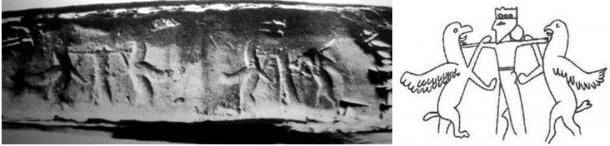
The family crest bore the etching of a crown-headed king flanked by two totems, each a standing bird-headed winged lion. The Seal of Sedda depiction of a Sramana (Persepolis Seal PFS 79), a Lion-Sun shaman, is based on information gathered from a number of other seals: the name refers to Sedda Arta (Siddhartha), i.e., Siddha (Liberator of) and Arta (Universal Truth).

Persepolis Seal PFS 79 and outline. Seal of Seddha, standing ruler flanked by bird-headed Arya-Sramana priests of Indus-Vedic tradition, linked to Saka tribe (Scythians) royal family of King Suddhodana Gautama, and his son-prince Siddhartha. Seal art courtesy of Oriental Institute, Chicago.

Persepolis Seal PFS 79 and outline. Seal of Seddha, standing ruler flanked by bird-headed Arya-Sramana priests of Indus-Vedic tradition, linked to Saka tribe (Scythians) royal family of King Suddhodana Gautama, and his son Prince Siddhartha. Seal art courtesy of Oriental Institute, Chicago.

The twin guardians each had the body of lion and the head and wings of a mythic sunbird (i.e., Egyptian sun-bearing falcon). The lion and falcon-gryphon motifs represented a pair of shramana [wandering ascetic] shamans. Therefore, the family seal associated with Gautama, described a royal person of the Arya-Vedic tradition.

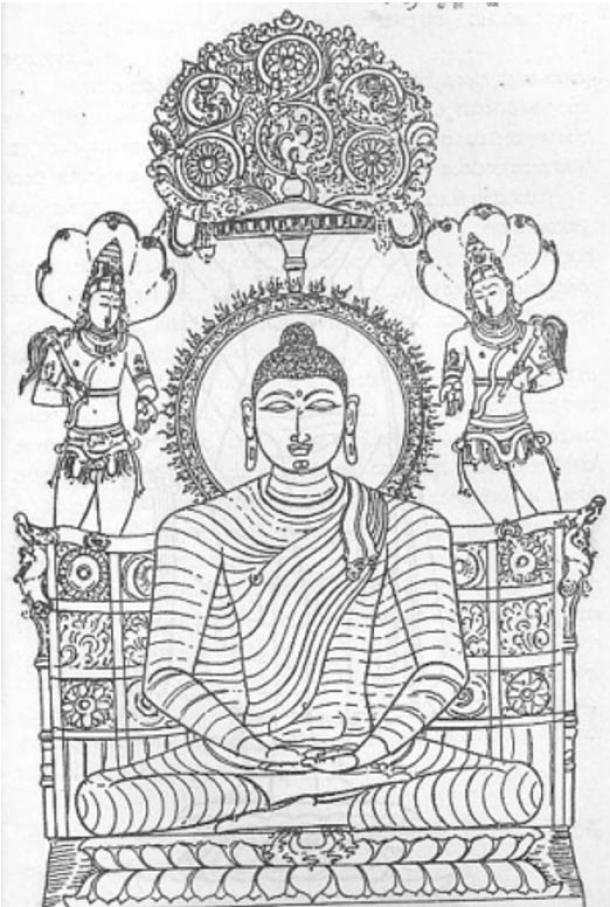
A similar image of Buddhist iconography shows a Buddha seated on a “lion-throne” under a bejeweled tree with cosmic aides at his side. The Buddhist montage declares his enlightenment under the cosmic Sacred Tree of Illumination.

Possibly a modification of his family seal designed to reflect his new teachings, once Siddhartha Gautama achieves enlightenment this Buddhist emblem comes to represent him seated on the lion-throne under the sacred cosmic tree flanked by two celestial Bodhisattva.


Possibly a modification of his family seal designed to reflect his new teachings, once Siddhartha Gautama achieves enlightenment this Buddhist emblem comes to represent him seated on the lion-throne under the sacred cosmic tree flanked by two celestial bodhisattvas.

What would the family crest of the Gautama family be doing in Persia? Was Siddhartha Gautama connected to the Persian Empire?

The inscriptions of Darius the Great (Persian Darayavaush), Persian emperor for 35 years, boast that the Zoroastrian God Assura Mazda (Persian Ahura Mazda) chose him to take the throne (in 522 BCE) from an usurper named “Gaumâta.”

{NOTE: This is interesting because in the East, three Dharmic religions -- Buddhism, Hinduism, and Jainism -- are on the side of the Devas ("Shining Ones," "angels") and a god named Maha Brahma. Devas are opposed by Asuras (Assura), "fallen devas" or "Titans," expelled from a celestial world by Sakka, King of the Devas, in the World of the Thirty-Three (Tavatimsa), in a story that echoes the Christian story of Archangel Michael expelling Lucifer (who then gets equated with Satan by everyone except maybe the tiny Yazidi religion) and casting him not into hell actually but down to earth. It has been suggested that the name "Asura" derives from Zoroaster's God the Zoroastrian deity "Ahura [Mazda]," more than its naïve origin-story of "non-beer" (anti-sura) or sworn off drinking alcohol because of the tale that Sakka got them drunk on a kind of brew in that world before he peacefully cast them out onto the base of Mt. Sumeru, this world.}

Darius shrouds the short-lived reign of his predecessor in a power struggle involving deceit, conspiracy, murder, and the prize of the Persian throne. He characterizes “Gaumâta” as an opportunist who illegally grabbed the throne in Babylon while the sitting Persian Emperor Kambujiya was away in Egypt.

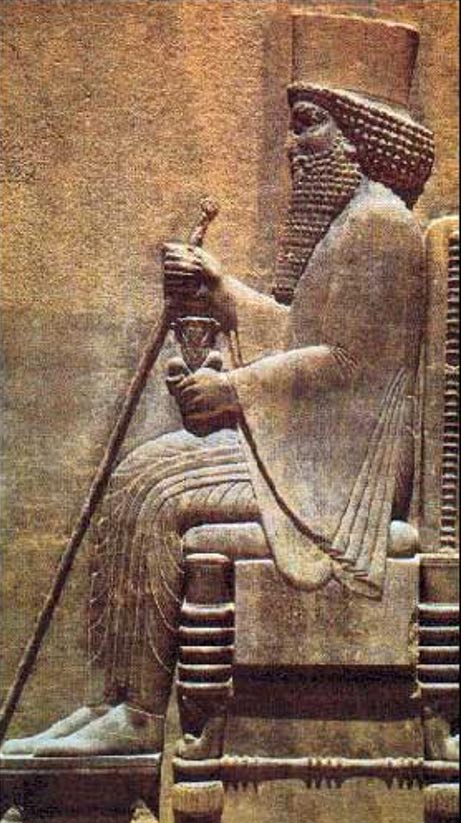
Relief carving of Darius the Great
Relief carving of Darius the Great (Iran Chamber)

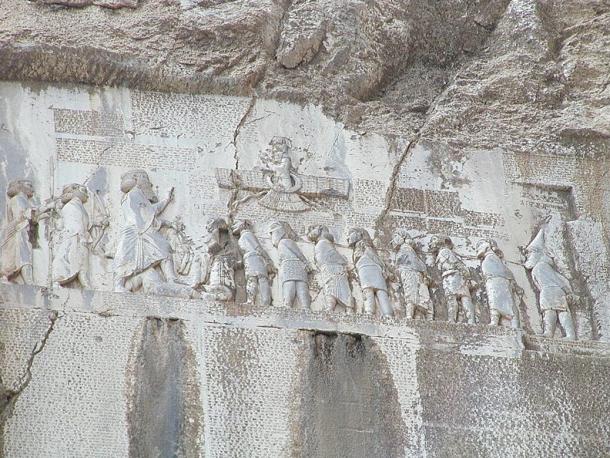
Written in the Cuneiform script on tablets at Mount Bisutun (aka Behistun) in three different languages: Old Persian, Elamite, and Babylonian (a form of Akkadian), the Bisutun Inscriptions may have echoed the name of Prince Siddhartha Gautama, the man who became the Buddha [the "Enlightened One" or the "Awakened One"], in the name of a little known King of Babylon.

The inscriptions refer to a religious figure named “Gaumâta,” from whom the Achaemenid Persian Emperor Darius the Great seized the throne in Babylon. Darius painted “Gaumâta” an imposter and illegal ruler, although the description does not seem to fit the highly educated and beloved leader [the Buddha].

Darius identified him as a Magi (practitioner of esoteric knowledge), and sardonically labeled him as a “stargazer.” If the name “Gaumâta” referred to Siddhartha Gautama, this reference would mean that he held a key leadership position in the Magi Order. Moreover, as the headquarters of the Magi was in the temple complex of Esagila ["temple whose top is lofty"], home of the ziggurat tower dubbed “House of the Raised Head,” the designation of “stargazer” suggests that Gautama was involved with Babylon’s star observatory.

Could it be that Siddhartha Gautama was the mysterious King “Gaumâta”? [Dr. Ranajit Pal (ranajitpal.com) would say yes.]

During lifetime of Buddha (b. 563 - d. 483 BCE) when the Persian Empire stretched from Egypt to the Indus, Darius the Great comes to power by overthrowing the stargazer-Magus "Gaumata" in Babylon about whom his Bisutun Inscriptions claim: "he seized the kingdom on July 1, 522 BCE. Then I prayed to Ahuramazda and slew him." Image of Darius reasserting Persian domination stomps on "rebels" with inscriptions etched below.During lifetime of the Buddha (563-483 BCE), when the Persian Empire stretched from Egypt to the Indus, Darius the Great comes to power by overthrowing the stargazer-Magus "Gaumata" in Babylon about whom his Bisutun Inscriptions claim: "he seized the kingdom on July 1, 522 BCE. Then I prayed to Ahura-Mazda and slew him." Image of Darius, reasserting Persian domination, stomps on "rebels" with inscriptions etched below.

The name “Gaumâta” appears to be a variant of Gautama, the Buddha’s family name. In the ancient multilingual land of Babylonia, multiple names and titles with spelling variations referring to the same person were common.

Does evidence of the Babylonian Magi Order’s influences appear in Buddhist literature? Could we discover Mesopotamian references in the Buddhist scriptures?

The earliest mathematical systems, astronomical measurements, and mythological literature were initiated in the ziggurat tower-temples of the Fertile Crescent by the cultures of Sumer/Akkad and Amorite Babylonia. Both Magi and Vedic seers furthered knowledge of a cosmic infrastructure, well known in the Buddha’s time from the Tigris to the Ganges.

Discovering this connection in the Buddhist sutras would challenge the prevailing view that Buddhism was born and developed in isolation exclusively in India [actually simultaneously in Gandhara/Afghanistan, right next to Iran/Persia]. Although the oral legacy of the sutras were assembled and recorded later in India, a Babylonian finding would have major implications regarding the origin, influences, and intentions of the Buddha.

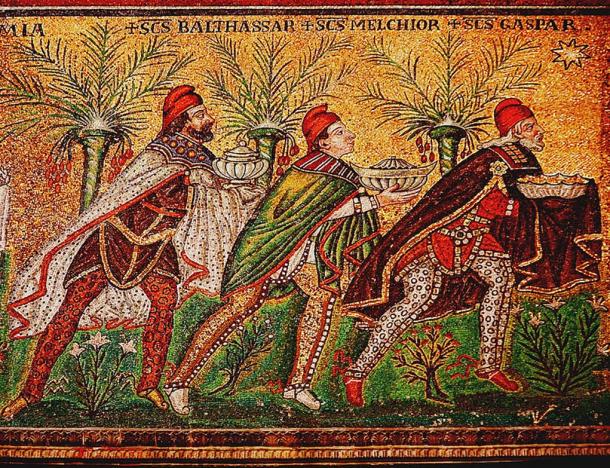
Byzantine depiction of the Three Magi in a 7th-century mosaic at Basilica of Sant'Apollinare Nuovo. Byzantine depiction of the Three Magi in a 7th-century mosaic at Basilica of Sant'Apollinare Nuovo. (Wikimedia Commons)

[It sounds like the Buddha]
Described as a compassionate philosopher-cosmologist, “Gaumâta” decreed freedom for slaves, lowered oppressive taxes across the board, and inspired neighbors to respect one another in a city known for its diverse ethnic groups and many languages. His espousal of liberty, human rights, and generosity supports the thesis that “Gaumâta” and Gautama were one and the same person.

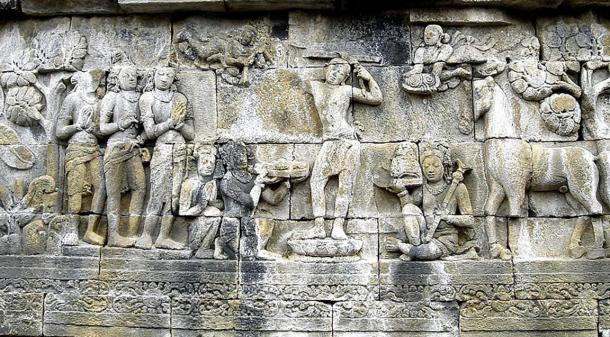
Prince Siddharta Gautama shaves the hair off his head as the sign to decline his status as ksatriya (warrior class) and becomes an ascetic hermit, his servants hold his sword, crown, and princely jewelry while his horse Kanthaka stands on right. Bas-relief panel at Borobudur, Java, Indonesia.Prince Siddhartha Gautama shaves the hair off his head as a sign declining his status as a ksatriya (warrior class) royal and becomes an ascetic hermit. His servants hold his sword, crown, and princely jewelry while his horse, Kanthaka, stands on right. Bas-relief panel at Borobudur, Java, Indonesia. (Wikimedia Commons)

Darius, a military strongman, and a member of the Achaemenid family, prepared for his coup with a propaganda campaign designed to legitimize his overthrow of “Gaumâta.” In his public inscription he referred to his cohorts as witnesses who would confirm the killing of the usurper.

While his story appears to be full of cunning deceptions, the real behind the scenes story of this episode has remained elusive to history. Certainly as Darius had good reason to write history in his own self-interest, what happened has gone undetected for thousands of years because historians know little to nothing about “Gaumâta.”

Of course, if “Gaumâta” was really Siddhartha Gautama, this assassination had to be a lie, because he did go on to become the Buddha. Either someone else was murdered in the name of “Gaumâta,” or Darius shrewdly produced a disinformation campaign designed to cover up what really happened.


With the “death of the imposter,” the new emperor wanted to send a message to supporters of “Gaumâta” that he would not tolerate rebellions and suppressed any hope for the return of this popular leader. But in the wake of the coup 19 rebellions arose throughout the empire. It would take Darius more than a year of brutal military action to crush the liberation-minded communities inspired by “Gaumâta.” Source

Wednesday, July 27, 2016

The Path to Enlightenment (sutra)

Isaline B. Horner (trans. and see also Olendzki), "A Question (Solved by) Inference" (excerpt) (Milinda Panha 5) edited by Dhr. Seven, Amber Larson, Crystal Quintero, Wisdom Quarterly
Two Buddhist novices revere the Buddha with candles, Burma (Notjustnut/flickr).
.
King Milinda on ancient Greek coin
Then [the ancient Greek] King Milinda [the Pali name of history's King Menander I] approached the Buddhist sage Venerable Nagasena [from Kashmir], greeted him, and sat down at a respectful distance.

King Milinda, anxious to know, anxious to hear, anxious to remember, anxious to see the light of knowledge, anxious to break down the lack of knowledge, anxious to find the light of knowledge, anxious to expel the darkness of ignorance, aroused extreme steadfastness and zeal and mindfulness and clear comprehension, then spoke thus to Ven. Nagasena:

"Revered Nagasena, have you ever seen the Buddha?"

"No, sire."

"But have your teachers ever seen the Buddha?"

"No, sire."

"Revered Nagasena, if you have never seen the Buddha, and if your teachers have never seen the Buddha then, revered Nagasena, there is no Buddha; the Buddha is not manifested here."

"But, sire, did those former noble warriors [members of the kshatriya caste] exist who were the forerunners of your noble warrior dynasty?"
 
"Yes, revered sir. What doubt is there?"
 
"Have you, sire, ever seen the former noble warriors?"

"No, revered sir."

"But have those who have instructed you, sire -- chaplains [Brahmin priests], generals, judges, chief counselors -- have these ever seen the former noble warriors?"

"No, revered sir."

"But if you, sire, have not seen the former noble warriors and if your instructors have not seen the former noble warriors, where are the former noble warriors?"
 
"Revered Nagasena, articles of use enjoyed by the former noble warriors are to be seen, such as the white sunshade, the turban, the shoes, the yak-tail fan, the treasure of the sword of state, and the couches of great price. By these we can know and can believe that the former noble warriors existed."
 
"Even so, sire, we may also know and believe in this Blessed One. There is this reason according to which we may know and believe that there was this Blessed One. What is the reason?

"There are, sire, articles of use enjoyed by that Blessed One who knows and sees, the Arhat, the Supremely Enlightened One, which is to say [the 37 Requisites of Enlightenment]:
  1. the Four Foundations of Mindfulness
  2. the Four Right Efforts
  3. the Four Bases of Psychic Power
  4. the Five Spiritual Faculties
  5. the Five Powers
  6. the Seven Factors of Enlightenment
  7. the Noble Eightfold Path.
"By these the world with its devas knows and believes that there was this Blessed One. For this reason, sire, for this cause, because of this method, because of this inference it should be known that there was this Blessed One."

"Revered Nagasena, make a simile."

Greek King Milinda (Menander I) meets with Buddhist monks to ask questions (W)
.
"As sire, a city-architect, when he wants to build a city, first looks about for a district that is level, not elevated, not low-lying, free from gravel and stone, secure, irreproachable and delightful, and then when he has made level there what was not level and has had it cleared of stumps of trees and thorns, he might build a city there.

"It would be fine and regular, well planned, the moats and encircling walls dug deep, the city gates, the watch-towers and the ramparts strong, the crossroads, squares, junctions and the places where three or four roads meet numerous, the main-roads clean, level and even, the bazaar shops well laid out, the city full of parks, gardens, lakes, lotus pools and wells, adorned with a wide variety of shrines to devas, the whole free from defects.

"When that city was fully developed, he might go away to another district. Then after a time that city might become rich and prosperous, well stocked with food, secure, successful, happy, without adversity, without accident, crowded with all kinds of people. When these people had seen the city, new, well laid out, without a defect, irreproachable, delightful, they would know by inference: 'Clever indeed is that city-architect who was the builder of the city.'
 
"Even so, sire, that Blessed One is without equal, equal to the unequaled, equal to the matchless ones, unique, incomparable, boundless, immeasurable, of unmeasured special qualities, attained to perfection in special qualities, of infinite steadfastness, infinite incandescence, infinite energy, infinite power, gone to perfection in the powers of a buddha; having overthrown Mara and his army, burst asunder the net of false views, made ignorance to be cast out and knowledge arise, borne aloft the torch of Dharma; and having attained omniscience, unvanquished and victorious in the battle, he built the City of Dharma.
 
The Buddha's teachings are very interesting and deep (Anek Suwannaphoom/flickr).
.
"In the Blessed One's City of Dharma the encircling walls are morality, the moats are conscience, the ramparts over the city gates are knowledge, the watch-towers are energy, the pillars are confidence (faith), the door-keepers are mindfulness, the crossroads are the sutras, the places where three or four roads meet is the 'Higher Doctrine' (Abhidharma), the law court is the "Code of Monastic Discipline" (Vinaya), the streetway is the foundation of mindfulness.

"And in that streetway of the [Four] Foundations of Mindfulness such shops as these are offering goods for sale:
  • a flower shop
  • a perfume shop
  • a fruit shop
  • an antidote shop
  • a medicine shop
  • a nectar shop
  • a jewel shop
  • a general shop."
"Revered Nagasena, what is the flower shop of the Buddha, the Blessed One?"
 
"There are, sire, certain kinds of objective supports for meditation that have been pointed out by that Blessed One who knows and sees, the Arhat, the Supremely Enlightened One:

"[There is] the perception of impermanence, the perception of non-self, the perception of the foul, the perception of peril, the perception of abandonment, the perception of dispassion, the perception of cessation, the perception of not delighting in anything in the world, the perception of the impermanence of all formations, mindfulness of breathing;

"[Furthermore, for the sake of liberating one from conceit and clinging to the body] the perception of a swollen corpse, the perception of a discolored corpse, the perception of a decomposing corpse, the perception of a fissured corpse, the perception of a corpse gnawed by animals, the perception of a corpse with bones scattered, the perception of a corpse hacked up and scattered, the perception of a corpse still bleeding, the perception of a worm-infested corpse, the perception of a skeleton;

"[Furthermore, for the sake of emancipating one from all limits] the perception of loving-kindness, the perception of compassion, the perception of sympathetic joy, the perception of equanimity;

"Furthermore, for the sake of freeing one from attachment to this illusion of safety and security in our present state] mindfulness of death; mindfulness regarding the body.
  • It is interesting to note that no attempt is made here to drag in the systematized Theravada schema of the 40 meditation subjects (used in the Path of Purification or Visuddhi-Magga and the Commentaries).
Intro to Buddhism (Shalu Sharma)
"Whoever is anxious to gain freedom from old age and death chooses one of these objective supports for meditation and, with this objective support for meditation, one is freed from lust, freed from hatred, freed from delusion, freed from pride, freed from false views.

"One crosses over the Wheel of Life and Death (samsara, which is often compared to a perilous sea or flood), stems the stream of craving, cleanses away the threefold stain; and when one has abandoned all defilements and has entered the City of Nirvana that is stainless, dustless, pure, fair, birthless, ageless, deathless, blissful, cooled, and without fear, one sets free one's mind in enlightenment (arhatship). This sire, is called the Blessed One's flower shop."
 
"Revered Nagasena, what is the perfume shop of the Buddha, the Blessed One?" More

The author, a student and practitioner of Buddhism for 19 years, shares how he changed his eating habits, improved his health, and lost weight by using various meditation practices. These meditation techniques, in conjunction with research, helped him to curb cravings and attachment to SAD, the “standard American diet.” What's it was like going from a heavy intake of animal products to a vegan diet? This book explores the role of eating meat, dairy, fish, and eggs in relation to the Five Precepts on ethical behavior as well as myths and stories non-vegan and non-vegetarian Buddhists tell themselves sanctioning them to eat as they always have.