
Showing posts with label hall of records. Show all posts
Showing posts with label hall of records. Show all posts
Thursday, August 27, 2026


Monday, June 22, 2026
What if I'm missing my life purpose, failing?
(The Awakening to Reality) Edgar Cayce: What happens to souls who fail their earth mission?
Pastor Rick Warren has 4.8 out of 5 stars (with 17,746 reviews) for this New York Times #1 bestselling book by that claims to help readers understand and live out the "purpose" of their life.
Been reborn on planet Earth? Don't know if you're "failing" to fulfill the purpose you set out before coming here? Living with purpose, passion, and profits?
- EdgarCayce.org
- A day at A.R.E. (Cayce's Association for Research on Enlightenment) Relax, Rejuvenate, and Rediscover: Meditation, spa, cafe, yoga, bookstore, lectures, and more Day at A.R.E.
Who was this Edgar Cayce guy?
(Brian Garrett) Edgar Cayce 2012 biography (documentary)
The Purpose Driven Life: What on Earth Am I Here For?
 |
| Pastor preaches purpose |
See, according to the pastor, before we were born, God [Karma?] already planned our life. God longs for us to discover the life he uniquely created us to live -- here on Earth and forever in the hereafter of eternity [the anionic or timeless reality behind time].
Let The Purpose Driven Life show the way. As one of the bestselling nonfiction books in history, with more than 35 million copies sold, it is far more than just a book; it's the road map for a spiritual journey, a journey that will transform life.
Designed to be read in 42 days, each chapter provides a daily meditation and practical steps to help discover and live out a unique purpose, starting with exploring three of life's most pressing questions:
- The Question of Existence: Why am I alive?
- The Question of Significance: Does my life matter?
- The Question of Purpose: What on earth am I here for?
Monday, April 13, 2026
Iran/Persia at the time of the Buddha
- Non-Jonesian Indology and Alexander (by Dr. Ranajit Pal) brings out the real history of India, the real location of Kapilavastu (the Buddha's hometown in ancient Gandhara/modern Afghanistan, not Nepal), shedding light on the real motives of Alexander the Great, Darius the Great, and Cyrus the Great's Gedrosian campaign, an enlightening historical study.
Truth hurts: (Earth to Rosita) The former Shah of Iran on Jews (1976)
- Who were the Sakas (Scythians, Shakyians)? The Scythians or Scyths, also known as the Pontic Scythians [1, 2] were an ancient Eastern Iranic (Aryan) equestrian nomadic people (the Indo-Sakas, the Indo-Scythian Kingdom, near Maha Bharata, the future Empire of Greater India, being the Buddha's extended family) who migrated east to Bihar and later, during the 9th to 8th centuries BC from, Central Asia to the Pontic Steppe in modern-day Ukraine and Southern Russia, where they remained until the 3rd century BC....
- Massagetae (Saka)
- Nanda Empire
- Iran's Zoroastrian Nowruz dedicated to Ahura Mazda
Iran at the time of Trump-Epstein
Jewish Lex Wexner (Jeffrey Epstein's main funder) buying up Ohio
(The Jimmy Dore Show) Whitney Webb (Unlimited Hangout)
Monday, February 2, 2026
Thursday, September 4, 2025
Trump, Epstein, Maxwell's victims speak out


(CNN) Jeffrey Epstein-Ghislaine Maxwell victims speak out about horrifying child sexual abuse (molestation, rape, exploitation) and sex trafficking on the steps of Capitol in Washington, D.C. (Forbes Breaking News) Where is British royal Prince Andrew after Virginia Thomas-Giuffre was [cancelled out]? Who is funding this massive cover up?

Queen of England: Israelis were terrorists
Will MTG denounce sex criminal Trump?
(KUTV 2 Salt Lake City) Marjorie Taylor Green will out Trump?
Thursday, August 7, 2025
We choose our suffering (Edgar Cayce)

 |
| The struggle to meditate sucks. Being there, ah! |
Our suffering is not necessarily accidental. While bad, offensive, and sometimes insufferable, there is something that could be learned if we would view it that way.
 |
| The Aggregates that experience are dukkha. |
 |
| An Exploration of Anicca, Anatta, and Dukkha in Buddhism – Indo-Buddhist Heritage Forum |
.
 |
| Suffering is much more than one thing. |
"Rebirth is suffering, aging is suffering, death is suffering; sorrow, lamentation, pain, grief, and despair are suffering; contact with what is disliked is suffering; separation from what is liked is suffering; not getting what one wants is suffering. In short, the Five Aggregates clung to as self are suffering [unsatisfactory, disappointing, unable to fulfill, associated with pain]" (SN 56.11).
- Hey, why talk about it? Why doesn't the B shut up already? Yeah, yeah, yeah, we suffer. Got it. That's clear enough. We're doing everything we can to AVOID it. So the less we talk about it, the better we'll feel. Duh! Become a hedonist. And shut yer yapper, O Great One.
Sadly, this view has been prevalent since before the time of the Buddha, so when the Buddha, the Awakened One, bothered to mention this ugly word, dukkha ("suffering"), were people or devas happy to hear it? No way. That's the last thing they wanted to hear about.
 |
| Pain is inevitable, but suffering's optional. |
 |
| Hacking of the American Mind |
"Suffering"?
 |
| I can take it because I'm a bodhisattva. Ouch!!! |
 |
| The Number 1 misconception tech founders have – that it has to hurt (Renita Kalhorn) |
- Beth Upton on sustained attention; Edgar Cayce (video); TEXT: Dhr. Seven, Amber Larson, Ananda (Dharma Buddhist Meditation), Wisdom Quarterly
Monday, February 24, 2025
JFK assassination finally solved?

On November 22, 1963, Pres. Kennedy was set up and ambushed, fatally shot through the head by multiple shooters, while riding in an open-top [four-seat] limousine through Dallas, Texas [that has now become a six-seater].
The nation was left in shock as news of the tragic event spread quickly, and questions about the circumstances surrounding Kennedy's death began to emerge immediately. The official inquiry, led by the corrupt Warren Commission, concluded that [CIA asset] Lee Harvey Oswald acted alone, yet doubts about this narrative have persisted over time.
▬CONTENTS OF THIS VIDEO▬
- 00:00 - Intro
- 00:51 - The Legacy of an Unsolved Tragedy
- 02:03 - The Contribution of Paul Landis
- 03:46 - Controversial Claims: Gary Fannin and the LBJ Theory
- 06:32 - A Multifaceted Debate with No Final Answer
- 08:19 - Outro
Product: Facts Verse earns commission on tagged products. Learn more about the JFK assassination from a paperback by author James DiEugenio ($18.99) from barnesandnoble.com
- Details We Only Learned Years After JFK's Assassination; Facts Verse, Feb. 18, 2025; Director Rob Reiner, NewsNation Prime; Woody Allen and Carol Kane (Annie Hall); Pfc. Sandoval, Seth Auberon (eds.), Wisdom Quarterly
Tuesday, February 11, 2025
Los Angeles Fires: Ways to Help

 |
| Jane Velez Mitchell UnchainedTV (vegan activists were deeply impacted by LA fires) |
Wildfire Information and Resources
 |
| They've been reduced to living like cavepeople |
Tuesday, January 28, 2025
Peace is a choice for evolution (1/29)

 |
| PEACE CLASS with Mandy Kahn |
- Zoom: us02web.zoom.us/j/84439689810?pwd=SVo2a3hsRVA1RWY5UW42YW1SaGJhdz09
- Passcode: 495948
- Meeting ID: 844 3968 9810
THE LAW OF PEACE-BY-CHOICE
 |
| Mindfulness Yoga at PRS: Meditating w/ Chaos & Uncertainty, multiple dates (Eventbrite) |
.
 |
| Peace, Love, and Happiness versus? Your choice. |
A peaceful way of being is always ultimately chosen.
There is no expected timeline for choosing to live in a peaceful and loving way. There is simply a natural law that all will choose to live this way eventually.
Notice that it was not said that all must choose to live this way. No one ever has to choose it.
 |
| What's so great about sustainable practices? |
There is no external expectation regarding how quickly peace is chosen, and there is no time limit. Some may spend many lifetimes exploring other choices before choosing a peaceful way of being. And others may choose a peaceful expression right away. It is up to every being to choose how quickly that being wants to evolve.
Peace-by-choice is always the forward direction of evolution.
Here's an analogy that helps explain how this law functions:
Imagine a person lives in a hotel and that, at every meal, she may choose to eat whatever she likes from a large and varied buffet. Among the many options available is a cookie that we'll call the Peace Cookie. This person has complete free will to eat or not eat that cookie. There are many other desserts to choose from — war cakes and cruelty pies, massacre meringues and mass bombing mousses, and of course smart-Alec tarts.
 |
| The great clock in the sky says time's passing. |
If that person does not choose the cookie of peace during her first lifetime, she will be reborn again and will again have absolute free will to choose whatever she'd like from the buffet. And if she doesn't choose peace during her second lifetime, there will be a third and so on ad nauseum.
This process can go on as long as the chooser likes [that is, until she does something about it to bring all suffering to an end and gain nirvana].
Eventually, that cookie will be chosen. It might take thousands of lifetimes to choose it, or it might be chosen quickly.
It's not that it must be chosen but rather that, eventually, it always is chosen. Why? Eventually, everything else is unsustainable. Eventually, that person becomes curious about that cookie. At some point, all other options will have been tried. At some point, that cookie will become the most appealing option. Then it will be chosen.
And only when the cookie of peace has been eaten will the person realize that it is unlike every other food available at the buffet. It's not just a food — but a doorway to a new kind of experience. It's a doorway out of this dingy hotel for good.
There is never any external pressure to try that cookie. It is simply always made available. There may even be obstacles to it. It is the free will of every person to choose it or not to choose it at any given moment. Free will is always honored by the universe.
And the law of peace-by-choice functions everywhere in the universe.
All beings, wherever they reappear and whenever they are reborn, are subject to this law.
This law is how we evolve.
There is a gravity-like pull that draws us towards choosing peace, but there is also a spirit around us that respects our timing and honors our free will.
This law applies to us, and it applies to our neighbors.
No matter how our neighbors might act, they are evolving towards their own peacefulness.
They might be evolving by not choosing peace yet. They might be evolving by eating a massacre meringue, or by shoveling slices of war cake right down others' throats. They might be evolving by appearing to do whatever seems to be the furthest thing from expressing peacefulness that they can find to do.
Our neighbors might choose to furiously sample everything at that buffet, life after life, until they tire themselves out, until they discover for themselves how it feels to choose what isn't peace.
We might look at our neighbors and think, "No people could be further from peacefulness." However, there isn't anyone who isn't evolving towards choosing peacefulness at their own pace at all times.
We do not need to regulate our neighbor's peace-choosing process because it is already regulated by natural law.
All-that-is has already determined that our neighbors will choose peace eventually.
Knowing that, we can feel free to focus on our own evolution.
Our neighbor's pace is our neighbors' choice to make.
The opportunity we were reborn to have is the opportunity of the self.
The question we came here to consider is this one:
How quickly do I choose to evolve?
- PEACE CLASS with Mandy Kahn (Eventbrite)
- Mandy Kahn, Philosophical Research Society (prs.org), Hollywood, Jan. 29, 2025; edited by Dhr. Seven, Wisdom Quarterly Lunar New Year's Day
Tuesday, January 21, 2025
Scariest thing about Los Angeles Fire
 |
| LOS ANGELES FIRES TOWN HALL - Featured - UnchainedTV |
- News from Altadena: Vegan activists affected by fires with Jane Velez-Mitchell on Unchained:
- Home - UnchainedTV
- Jane Velez Mitchell - UnchainedTV
- Jane Velez-Mitchell (TV program)
Thursday, October 3, 2024
Hiding India/Egypt Grand Canyon artifacts
Hindus [and Buddhists] in ancient America? Shocking discoveries in Grand Canyon


 |
| The Canyon's Egyptian names are just for fun |
Episode 6, the "Lost Cities of the Ancient World," uncovers the incredible story of the Smithsonian's G.E. Kincaid and his mysterious find in the Grand Canyon, Arizona.
In 1909, G.E. Kincaid, an explorer working for the Smithsonian Museum, set out on a final expedition to explore the Grand Canyon.
After arriving and speaking with locals, he learned of hidden mysteries, treasures, and an underground city said to be full of Egyptian hieroglyphs and East Indian statues (the Buddha).

%20wiki.jpeg)
 |
| Steve Quayle (gensix.com) |
While navigating the Colorado River, Kincaid discovered strange sedimentary rocks and a hidden cave entrance high up from the shore. Entering, he found carved markings on the walls, indicating previous human habitation.
As he ventured deeper, he encountered passageways leading in various directions, with walls adorned with what seemed to be ancient language symbols.

Realizing the enormity of his find, Kincaid sent artifacts and a letter to the Smithsonian Museum. The museum quickly dispatched Professor S.A. Jordan and a team of experts.
Jordan's team found evidence of a sophisticated society, including kitchen areas, large granaries, and dining rooms. They estimated that around 500 people once lived there.
As they delved more deeply, they found a cavernous hall full mummies, all male, possibly warriors. The resemblance of some artifacts to those of ancient Indian and Egyptian civilizations baffled the team.
Despite their efforts, their research remained incomplete due to dangerous areas within the cave.

 |
| Written records not good enough |
Kincaid and Jordan were mysteriously disappeared, and the Smithsonian Museum denied any records of their existence or expeditions. This contradicted the local newspaper reports and local claims about the Smithsonian confiscating giant's skeleton found at the site.

In 2009, the Smithsonian dismissed the Arizona Gazette's article as make believe, but many believe the government is hiding something.

What do you think about this story? Is it a fabrication, or is there something the U.S. government is hiding? Share comments.
Keywords: Grand Canyon, G.E. Kincaid, Smithsonian Museum, hidden cave, ancient civilization, Egyptian hieroglyphs, Indian statues, underground city, American government, Arizona Gazette, Professor S.A. Jordan, ancient mysteries, Lost Cities of the Ancient World, ancient history, conspiracy theories, ancient artifacts, mummies, restricted area, archaeological discovery, ancient languages, hidden treasures.
Sunday, April 14, 2024
Ancient Alien Library under Sphinx (video)
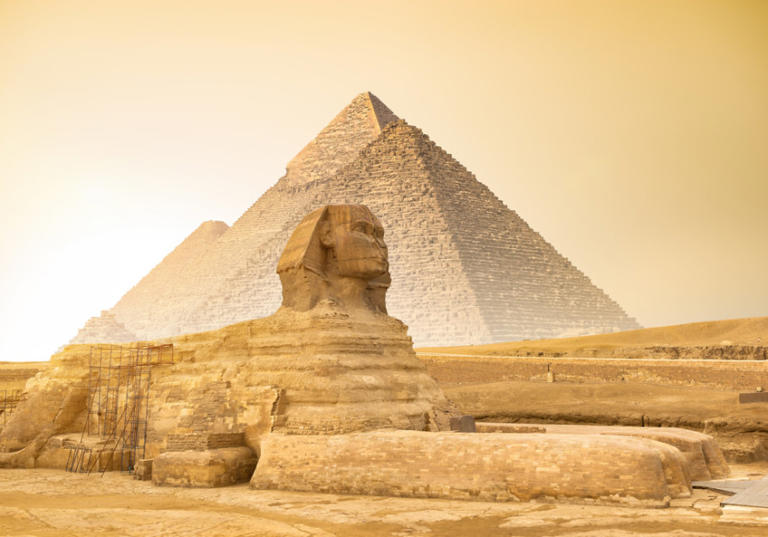 |
| Edgar Cayce long ago said a Hall of Akashic Records from Atlantis is under the right paw |
The enigmatic 'Ancient Alien Library' concealed beneath the Great Sphinx

 |
| Edgar Cayce (now reborn as David Wilcock) in his study where the readings were given |
.

While the Great Sphinx has long fascinated tourists to Egypt (Kemet/North Africa) worldwide, it may harbor a vast hidden library deep underground. Tombs are said to be located there, although they may have been destroyed by floods over the centuries.
True secrets beneath the Great Sphinx
 |
| Edgar Cayce left two legacies, tens of thousands of written readings and the A.R.E. in VA |
.

This raises questions about the existence of an advanced society or the involvement of extraterrestrials in the creation of this enigmatic library.
Nub TV's Mark Christopher Lee suggests that further exploration and research into UFO phenomena may shed light on the true secrets hidden beneath the Great Sphinx.
The existence of the controversial "Hall of Knowledge Treasures" remains a topic of ongoing debate.
 Nevertheless, there is a significant number of believers who argue that this supposed hall served as a repository for the history of the survivors of Atlantis.
Approximately a century ago, researcher and clairvoyant Edgar Cayce first proposed the notion of Atlantis' involvement in the construction of the Sphinx. More
Wednesday, March 27, 2024
Deep Dive Poetry (What Happened?)

WHAT HAPPENED?
 |
| The consummate wisdom teacher of the ages |
 |
| Candidate Dr. Cornel West |
There was another event in the auditorium, and the gift shop was open for buying books and other items. The main court is a lovely place to think under moonlit skies just yards from Griffith Park. PRS has a prime location on Los Feliz ("The Contented") Boulevard. The library was filled and opened to the public because its founder, Hall, wanted the people of the world to have a place for their "intuitive perusal" of its volumes on all the wisdom traditions of the world. The world may not use it, but Angelenos can. (I used to drive by ever since I learned to drive and wonder what the place could be, a giant think tank where a society of philosophers gathered to research ideas and occult secrets, mysteries, and paths to enlightenment. No one ever said it was open to the public before Mandy Kahn began her residency there. Even Lisa Garr (The Aware Show KPFK, Coast to Coast AM iheart.com, Gaia TV, Hey House Publishers), when she invited me to learn animal communication with a gifted psychic and author, didn't say, "Oh, yeah, come back for the library and to hang around philosophizing. I had probably outgrown that phase by then.
Mandy Kahn took to the podium, thanked the capacity crowd (after having thanked Wisdom Quarterly: American Buddhist Journal and the various Dharma Buddhist Meditation Meetups around the county for helping fill the seats).
 |
| Kate Bonnici | Pepperdine | Seaver College |
Another introduction, another professor. He was meditative reading a book-length piece that talked about Reno as was quickly off the stage, a marvelous albeit staid voice that surprisingly used the f-word a bit much. Everyone else kept it clean (until for the headliner's closing piece, phallic cucumbers and honeymoon activities were underscored with subtle intimations of salad eating. No children were harmed in the declaiming of this verse as none were present).
Some words from a bio and a man with perhaps a tiny Oedipal complex and large glasses started to read from a book. His contribution to the night's poetry seemed like an impromptu letter to an ex, who one would think was not happy to receive it. But all literary appreciation is subjective, and one cup of tea does not sate all sippers. I am also no fan of Stephen King. But, go figure, most people are. Next.
Co-host Jane McCarthy stood to read, but now every reader was standing too much to the right, perhaps to look to the left into the warm, inviting pools of Kahn's eyes in the front row as she sat at her mother's side. The upshot of this shift is that the light behind them acted as a floodlight in our faces and cameras were of no use countering the glare. McCarthy gave an ode to Hall and his text Wisdom of the Ages then read, not from a book, but a flat viscose sheet of pulp. It was not a phone but some oldfangled invention in two dimensions.
 |
| With practice, achieve lucidity in dreaming. Astral travel and merge with others. |
.
 |
| Poet, peace activist, lucid dreamer Mandy Kahn |

She introduced Iranian born exile Annahita Mahdavi West, whom one could not be blamed in thinking was named Anahata Mahadevi East, were she originally from India. Future U.S. President Cornel West began to roll on his phone-camera duties.
She confessed to being a lot like Charles Ives when she began writing. After all, she explained, everyone in Iran is a poet. Her father was, her mother was, her sister...so what was the sense in showing everyone? Now with Dusty Relics in hand, she was ready to shake them off and show them to the world, personal poems of exile, war, grief, sweetness in the mundane and familiar. Just as Kahn remembered suckling honeysuckle flowers for half a drop of "golden sweetness," West recalled the sweet moments amid the bitter then welcomed her friend and fellow Iranian/Persian poet Sholeh Wolpé:

Wolpe was the surprise of the night, laying down an example that, if retro-causality could be accessed at will, would have made for a much more moving show. She talked, she read, she waved her arm. She produced laughs from the crowd and oohs and ahhs. She translates the greats as well, but there was no time to read that kind of work tonight. Still, the audience was assured, go home and read The Conference of the Birds by Sufi mystic Attar and be guaranteed a life altering experience.
She read from her book, Abacus of Loss, a memoir partially in Farsi that is in no way chronological because neither is memory, reading from the "This Coffin" section of the book. She left us with one lasting impression, a line she uttered as she was handed the mic by West: "Home," she said, "is a missing tooth. The tongue reaches for hardness, finds only absence." That was the impression but, in fact, she left us with a story of discovering sex with a fellow virgin and the advice she received, the remembrance of it, and its similarity to eating a durian, which is the fruit with the most extraordinary taste. But, being shamed for not knowing what she was doing ahead of time, which would have been good to know, she had to purge.
Mandy Kahn closed the show with final comments, alerting us that this poetry series is ongoing, the last Thursday of every month at PRS in Hollywood. The next show is April 25, 2024.
Original event details
 |
| Mandy Kahn hosts and performs |
- Philosophical Research Society
- 3910 Los Feliz Blvd., Hollywood
- RSVP on Meetup.com:
- Disclosure: Deep Dive Poetry, PRS
- Nature Center: Deep Dive Poetry, PRS
- PasaDharma: Deep Dive Poetry, PRS
 |
| Peace Class teacher every Wednesday |
- Sholeh Wolpé (headliner shown above)
- Aaron Kunin
- Jared Stanley
- Kate Bonnici
- Annahita Mahdavi West (Dr. Cornell West's wife)
- Plus poetry by hosts:
- Mandy Kahn (Peace Class teacher every Wednesday)
- Ross J. Farrar (away on business)
- Jane McCarthy
 |
| The PRS has a history of artsy events. |
Ticketing for all PRS events are offered through the PRS Eventbrite page. Tickets may also be purchased in person at the PRS Bookstore. More
- Weekly "Peace Class" with Mandy Kahn
- Wed., March 27, 2024, 6:00 pm
- Zoom: https://us02web.zooom.us/j/84439689810?pwd=SVo2a3hsRVA1RWY5UW42YW1SaGJhdz09
- Meeting ID: 844 3968 9810
 |
| What does PRS know about books and poetry? |
Subscribe to:
Posts (Atom)

























































