Irish American Charles Francis Feeney (April 23, 1931–October 9, 2023) was a businessman and philanthropist who made a massive fortune [from the U.S. military] as the co-founder of DFS Group (Duty Free Shoppers Group), the travel retailer of luxury products based in Hong Kong.
He was the founder of the Atlantic Philanthropies, one of the largest private charitable foundations in the world. Feeney gave away his fortune in secret for many years, wisely choosing to remain anonymous while doing it, donating more than $8 billion in his lifetime....
PERSONAL LIFE: Wise Saint Feeney was known for his frugality. According to a New York Times article in 2017, "Until he was 75, he traveled only in coach [the lowest class, discount seats], and [he] carried reading materials in a plastic bag."
He did not own a car or a house and wore a $10 Casio F-91W watch [41, 16]. As of 2016, he lived in a rented apartment in pricey San Francisco, California, with remaining assets of $2 million [1]. More
Dāna (sharing, generosity, liberality, giving, supporting, helping) as an internally-motivated spiritual act or a formal, externally-influenced religious act is directed by Buddhist laypersons first at monastics and spiritually-developed persons [37].
In the Buddhist understanding, it has the effect of purifying and transforming the heart/mind of the giver [38], the one who lets go.
Generosity developed through unselfish sharing and generous giving leads to the experience of material wealth and the possibility of being reborn in happy states (defined as rebirth in the human world or the many superior planes of existence above it).
In the Pāli canon's Dighajanu Sutta, "generosity" (denoted there by the Pāli word cāga, which can be deemed synonymous with dāna) is identified as one of the four traits conditioning happiness and wealth in future lives (after this karma comes to fruition and ripens. Just as a seed sown does not immediately burst into a sprout or blossom into a flower or fruit, it is foolish to expect immediately obvious karmic resultants. And it is exactly for this same reason that unskillful misdeeds do not show the harm that comes from them immediately in what John Lennon foolishly popularized as "instant karma." There is nothing instant about most karma, and even to the extent that karma can produce immediate mental benefits, these are not always obvious).
Conversely, lack of letting go, sharing, providing for others, liberality, giving leads to woeful (unhappy) states in the future, after the ripening, as well as poverty.
Dāna (having done acts sharing and generosity) leads to one of the development of one of the "perfections" (paramis, pāramitās, known as dānapāramitā, the perfection of letting go, detachment, giving up, benefiting others).
This can be characterized by unattached and unconditional generosity, giving and letting go [39].
The Buddhist belief that actual letting go, actual giving, the kind without seeking anything in return, rather the transactional variety of this-for-that, leads to great spiritual wealth and immediate mental satisfaction and calm. Otherwise, we are subject to great disappointment.
Moreover, letting go reduces the acquisitive (greedy) impulses that ultimately lead to continued suffering [40] from egotism. More
Could good Saint Feeney (as we call him, when Chuck sought no such title in his life and the Catholic Church has yet to recognize him) have benefitted by living in liberal California, in the Bay Area of all places, surrounded by Asian and Buddhist influences, like so many of the Golden State's remaining inhabitants?
I was traveling as a vegan through India which, while mostly Hindu, at that time had about 100 million Muslims. (It now has 200 million or more).
I came to a strangely barren outdoor marketplace made of stone and clay. I watched from a distance as a bad smell of BBQ wafted through the air like an accident. Imagine the smell of burning plastic, upholstery, oil, textiles, and diesel fumes.
Men began to congregate, each at their own stall with animals, mainly sheep, lambs, or goats in tow. I blended in, holding still, just observing. And I began to realize these were butchers, killing animals by slicing their throats, beheading them, draining their blood, separating their corpses into portions, and piling bloody flesh on the stall tops for sale.
Shoppers, Muslims following their religion to eat the dead and Hindus violating theirs by buying carcasses (and therefore paying butchers to kill) for consumption, which is at odds with ahimsa ("nonharming"), were gathering.
The Dharmic religions enjoin humans to abstain from killing and from encouraging anyone else to kill. Butchers are encouraged to slaughter when people pay them to do it. Am I blameless for eating meat? It would be as if the Mafia godfather were to say, "I've never killed anybody" when he has hired and directed men to kill by paying them to do so. Is he blameless or as blameworthy as those Mafia men for all those killings? Butchers, paid for yesterday's killing, kill for tomorrow in full expectation that there is money to be made by those not doing the dirty work.
The flies. The dirty hands. The dust and pollution of uncovered stalls. The floors of stalls were a sheen of blood. There was some baying of the young sheep.
The men all seemed very nice, not yelling or argumentative, all in their workaday mode, thinking nothing wrong with slaughtering and selling in unhygienic conditions.
A modern human family walking on all fours?
Then, thinking of karma, I saw it. No one seemed to pay any mind, but I could not wrap my head around what people must be thinking they were seeing and why it was so. People probably go along to get along by not thinking.
An Ulas family member or distant relative, walking on all fours through the blood slats, was going from stall-to-stall begging. He had a Muslim cap like the others and clogs (rope and wood sandals) on his feet, which gave the appearance and sound of cloven hooves, as he ambled from butcher to butcher, who pitied him (or wanted him to move on).
They have him a few coins (backsheesh) or slivers of red flesh. To explain it to myself, I imagined that this man -- in a past life or earlier in this one -- was a butcher like them but then went crazy and decided to go on all four like a dog-duty ascetic.
But he was no ascetic, not one to do penance or tapas (fiery austerities), not Hindu or a member of one of the Dharmic religions. Yet, by his concurrent good deeds, possibly giving to beggars, he managed to gain rebirth in this world (on the human plane) rather than The Downfall (niraya), the worlds of woe that result from killing living beings and other cruelties.
Karma is such that the way it works out is not only strange but incomprehensible, one of the Four Imponderables. It is possible, particularly in this world of mixed karma (skillful and unskillful deeds), that one form of karma interferes with the other. Killers are not always immediately reborn in perdition.
It is possible by good karma (keeping the Five or Eight Precepts) that merit is made that counters unskillful actions for a time. The result of killing animals is not that one will one time be killed or reborn in hell but that it will happen again and again and those mental impulsions (javanas) formed in the doing come to fruition by conditioning a rebirth. One act (good or bad) has exponential karmic-results (vipaka, phala), ripening like fruit.
The man walked like a tall, skinny cow from booth to booth. The butchers gave charity. And he moved on to work the whole marketplace. I turned in disbelief, gobsmacked, and saw a girl selling piles of colorful powder dyes. It is not clear in what, ubiquitous plastic bags or wrapped in yesterday's newspaper. The piles were perfect and very likely synthetic and she seemed miserable to be there.
Then the smell hit me again and I saw smoke. It was a kind of hibachi, and an old Muslim man was placing something on the sooty grill. The smoke did not seem to bother the miserable salesgirl, but from a farther distance, it sure bothered me.
The man smiled at me, seeing my camera. I approached slowly and got close enough to discern what was burning. It was a pile of small heads of recently living lambs. It is the strangest thing to see a beheaded face separated from its torso, disconnected from its neck. The eyes were gently closed and I felt sure they might open at any moment. Was he cooking their brains in the skulls?
Surely, this was butcher offal (trash). What was he doing? I came to understand that he was singing the hair off to sell the heads for buyers to eat the face. Like a dog gnawing on a bone for marrow and gristle, scraps of remaining tendon, the smear of blood or scent of flesh, someone would buy this.
Price? 5 cents (It's hard to do the arithmetic conversion with moving exchange rates, and this was a long time ago when the US greenback fetched about 40 rupees). The man kindly smiled at me. All the men were nice, seemed nice, seemed well adjusted to their task, with wives and families at home, well-fed with lots of dead meat. India is a kaleidoscope. I thought that man an anomaly. But here is a whole family:
Family that walks on all fours have 'undone the last three million years of evolution'
Story by Harriet Brewis, Indy 100, 8/27/24
The skin on the palms of their hands is as thick as it is on their feet (60 Minutes AUS/Indy 100).
.
All families have their own quirks and habits, but one group of relatives has such a distinct trait that scientists have branded them a total anomaly of the human species.
I told you, Darwin. - No, Wallace, I already knew.
The Ulas family has been the subject of evolutionary fascination for years after they were discovered in a remote village in Turkey walking on all fours. Back in the early 2000s, a scientific paper was published on five of the Ulas siblings and their strange bear crawl-style of movement, with experts divided over the cause of the anomaly.
In the years following the paper’s publication, evolutionary psychologist Prof. Nicholas Humphrey of the London School of Economics (LSE) travelled to Turkey to meet with the extraordinary family.
Alfred Wallace, the unfamous father of evolution
The Ulas mother and father had a staggering 18 children. However, of these, only six were born with quadrupedalism (walking on all fours), which has never been seen before in modern adult humans.
“I never expected that even under the most extraordinary scientific fantasy that modern human beings could return to an animal state,” Prof. Humphrey told 60 Minutes Australia, which made a documentary about the family back in 2018.
“The thing which marks us off from the rest of the animal world is the fact that we’re the species which walks on two legs and holds our heads high in the air,” he added. More
We convened, got raffle tickets, placed potluck items on a table, reviewed the silent auction objects on offer, and settled in for the hailing of the Four Directions by Araceli in Native American tradition, with a conch shell trumpet and palo santo incense. Then we journaled a letter to ourselves to be opened in six months, the summer to come, sharing a small part of it with the whole group as we got in touch with a vision of nature and a sacred animal. Very New Age. Then the Sanskrit chanting began, accompanied by bongos, a spaceship like percussive instrument, and harmonium, in call-and-response kirtan. This was followed by the raffle, with a free ticket going to anyone who brought a potluck item. The prizes were in the $50 to $180 range, donated by local merchants supporting Yoga Gives Back and Ambassador Stella. Everyone got two hugs and we met eyes with another person, all designed to get people out of their shells and into the social community. Many females pranced about in skimpy yoga gear, laughing, making new friends. Then we feasted and had mocktails, hot chocolate, fresh persimmon juice, exotic teas from the Tea Bar, as well as soft drinks. This was followed by effusive sharing by anyone who wanted to say something, as we moved to the gift exchange blanket. Participants were encouraged to donate a gift for it, which everyone could see. Then items were chosen, infused with good mojo as the items got handed to the left and arrived at the designated chooser.
(This means everyone ended up with a gift, and some with more than one. The owner, Ryan and his young daughter, Louisa (the youngest teacher the studio has ever produced), were on hand. It was all handshakes, hugs, and even some yoga jokes. (Yoga jokes? A hippie is standing in front of a yoga studio and the owner says, "Man, you gotta leave." The hippie replies, "Nah, Man, 'amastay," you know, which sounds like "Namaste." Dumb as it might sound, it got a great laugh because up until tonight, no one knew there were such things as "yoga jokes." Not to be outdone, Ryan the owner said the place wasn't always going to be called "Kinship." He toyed with the idea of naming "Om Depot." That also got a great laugh). Hugs, kisses, number exchanged, and some people lingered to chat after four straight hours of spiritual fun and frolicking. It was a great time. And we were all reminded that in three short days, it's the 108 Sun Salutations Yoga Challenge in the same room at noon.
9th annual New Year Sacred Ceremony, Yoga Gives Back fundraiser, Potluck w/ Stella, Araceli, Veronica
Date: Saturday, 12/28/24, 6:00 pm-10:00 pm. Welcome to the 9th annual New Year Sacred Ceremony (fundraiser and Veggie Potluck) the final Saturday of the year.
We begin with a sacred ceremony to honor the interconnectedness of all life. This space will be infused with culturally-inspired observances, reverence for ancient wisdom teachings, and intentions for peace and healing in the coming year.
After the ceremony, we continue with a fundraiser, delicious veggie potluck, and the beloved Gift- Giving Blanket tradition. This portion of the evening includes opportunities for music, poetry (open mic), and community connection.
Sacred Ceremony creates a sacred space to honor life’s journey and our relationships with all beings. Through culturally respectful rituals and shared intentions, we cultivate a collective vision of peace for the New Year. Our gathering includes a series of meaningful activities to inspire growth, healing, and connection:
Smudging with white sage
Purify and cleanse personal energy through the sacred practice of smudging. Using the smoke of white sage (Salvia apiana), we clear away negative energies and create an open space for healing, renewal, and positive transformation.
Journaling activity
We take a moment to reflect on our journey and set powerful intentions for the year ahead. Answer a few curated questions to guide reflection, focusing on what we wish to release and what we want to invite into our life.
Sacred chanting
Together, we chant sacred Sanskrit mantras, uniting our voices and hearts in harmony. This collective vibration invokes peace, healing, and strength, setting a powerful intention for the New Year ahead.
Inspired by Native American traditions, the Gift-Giving Blanket invites us to bring a gift to share with the community. After laying a gift down on the blanket, everyone will have the opportunity to choose a gift brought by someone else. (No need to purchase any gifts; we encourage to recycle from our own possessions to lighten our load). Gifts can be new or gently used items. All are welcome — whether or not bringing a gift to share.
Yoga Gives Backis a non-profit organization that supports women and children in India, providing educational opportunities and micro-loans to help them build sustainable lives. Stella Han is an ambassador for YGB and will lead this fundraiser. Contribute directly to the cause via Stella’s fundraising portal:
Alternatively, donations can be made via Venmo: @stella_han_yoga. Please include “YGB” in the comment section along with an email and phone number. (All personal contact information is only visible to Stella Han). Cash or checks are accepted as well.
Veggie potluck
What is there to eat? Compassionate veggie food
Bringing food is optional, but to contribute, please email Stella (the coordinator and organizer) at stellaheartyoga@gmail.com with details of the dish you plan to bring. All dishes must be vegan or vegetarian. Please also include an ingredient card next to the dish for transparency so diners can avoid allergens like gluten (wheat, barley, rye, oats, buckwheat, all of which contain their own form of this popular toxin that destroys the cilia of the gut lining and results in malabsorption and eventual malnutrition). All contributors to the potluck will receive 3 raffle tickets. Please mention to host about contribution to ensure receiving the raffle tickets.
Dress warmly and comfortably. If feeling inspired, festive or spiritual white attire is optional as we gather to celebrate and set intentions for the New Year with a clean slate. We look forward to coming together in community, celebration, and giving.
For more information or questions, please contact Stella Han:
Are you ready for #Stolen Amazon Package Wednesday? How about Apple is Overrated Thursday? Today is Giving Tuesday, following Cyber Monday...
NATIONAL DAY OF GIVING
If I could teach them to let go of low to get high
The National Day of Giving encourages giving back. It takes place on the first Tuesday after Thanksgiving. The nation has just been fleeced by Cyber Monday and Black Friday, having spent the extended weekend shopping in brick-and-mortar outlets as well as online, searching for the best (greediest) possible deals.
The Buddha on reasons to give
Mahavira agreed: It is good to give
[Why the Hades should I give? I should receive!] Reasons for Giving: "There are eight reasons for giving. What are these eight? One may give out of affection; or in an angry mood;[5] out of foolishness [6]; out of fear; or because of thinking: 'Such gifts have been given before by my relatives, and as it was done by them before, it would be unworthy of me to let lapse this family tradition'; or because of thinking: 'By giving this gift, I shall — after the body's break-up, after death — be reborn in a happy realm of existence, even in a heavenly world'; or because of thinking, 'When giving this gift, my heart will be glad, and happiness and joy will arise in me'; or one gives because it ennobles and adorns the mind (heart)." (Giving, Numerical Discourses, AN 8.33)
The National Day of Giving reminds us to give to those in need -- like the victims of American imperialism in Palestine, Gaza, and the West Bank. Whether we look to our favorite causes or charities, it is a great reminder to lift others up during a generous time of year.
On the Tuesday after Thanksgiving, charities, families, businesses, community centers, and students around the world will come together for one common purpose: to celebrate generosity (Buddhist dana) and to give, help, and share. #GIVINGTUESDAY
The Buddha is famous for saying:
"If you knew what I know about (the karma of) giving (the results and fruits), you would never eat a morsel without sharing with another if there were another to share with."
Our favorite charitable organization
Sharing brings abundance and amity.
Of all the giving, the gift of the Dharma (Dhamma-dāna) is the highest. Why? It engenders all other forms of letting go, generosity, sharing, and giving. It also involves the greatest returns -- internal letting go to be free of all clinging and experience liberation from all suffering. So to support Wisdom Quarterly: American Buddhist Journal and/or Dharma Buddhist Meditation (Meetup 2, Meetup 3), please contact us through the Comments Section for details. What is "giving" in Buddhism?Dāna
Gift ideas? Give a smile, offer a hug, say a kind thing, volunteer, give unselfish service (seva) with no expectation of it being reciprocated (because, as it is said, "No good deed goes unpunished").
QUESTION: Can meditation cultivate merit (punya) to transfer to the dead?
ANSWER: Yes, intensive sitting meditation is one way to cultivate skillful qualities like stillness, silence, calm, peace, serenity, contentment, joy (piti), bliss (sukha), and insight (vipassana) through fourfold mindfulness (satipatthana).
Can we meditate to help the dead?
Another way, particularly if dealing with monkey mind or a sugar rush is mindful walking to cultivate "being here now," holding attention on the present moment, the present action (walking), and slowing down to pay attention rather than operating on automatic pilot.
Yet another way is to engage in skillful action (feeding others, giving, letting go of things we cling to, offering help, compassion to alleviate the suffering of others, developing joy in the joy of others, equanimity or looking on with unbiased spreading of attention to make our love, compassion, and joy-in-others'-joy universal and unbounded).
And just when this is done, one utters the "mantra" or "prayer" or dedication of merit, bringing to mind those to whom we are making the offering:
To “share or transfer merits,” sincerely say: “May [so and so] receive merits from this good deed that I have done.” And to cultivate boundless loving-kindness (metta) add: “May ALL beings be free from the suffering in the apāyā.”
In both cases, we are BROADCASTING our intention of goodwill and compassion in offering help. PureDhamma.net
NOTE: One does not lose merit by giving but rather multiplies and compounds it.
The mistake Americans make about the Day of the Dead is that it's mournful, when it's really all about life and living, food and celebrating, remembering and loving. Goths may love the look, but it's uplifting.
The Bodhisattva Guanyin (Kwan Yin): Goddess of Compassion
.
“May the merit and virtue accrued from this work adorn the Buddha's Pure Lands. Repaying four kinds of kindness above and aiding those suffering in the paths below, may those who see and hear of this all bring forth the resolve for Bodhi (enlightenment) and, when this retribution-body is over, be reborn together in ultimate bliss.” Transference of Merit (abuddhistlibrary.com)
Vajrayana
A tulku returns to help others.
In the initial stages of our journey of self-cultivation, most of us may still be inclined to transfer merit only to ourselves, our family members, and/or our loved ones. It is superior to broaden that giving to all sentient beings to make it universal and unbounded by self-interest.
Self may be the focal point of our efforts when we start practicing Buddhism. As practice deepens and our understanding of Buddhism becomes more profound, the capacity of the heart will gradually expand. This makes us more willing to share merits with all sentient beings.
The Vedic Brahmins' Cosmic Buddha Vairocana
The practice of merit transfer involves dissolving and reducing our sense of separation and selfishness, thereby cultivating boundless love, compassion, and unbiased equanimity.
The sharing of merit is most supreme, complete, and without outflows (defilements) when our mind/heart is capable of expanding giving to include all sentient beings.
A thanksgiving prayer for the (grateful) dead
To help all sentient beings be liberated from suffering and attain happiness, we generate the Bodhi mind of attaining Buddhahood and transfer our merit to all sentient beings.
We can vow to use the limited power of our vows to resonate with the infinite, compassionate vows of the various Cosmic Buddhas and Bodhisattvas, and attain supreme enlightenment along with all sentient beings. More
Two KFI 640 AM (an iHeart station, the largest talk radio station in the country) personalities rappelled down the 25 story Hilton Universal City (Los Angeles next to Hollywood) to bring attention to the unhoused situation in L.A. The succeeded in raising funds and not dying. The Just Feed 1 event continues Saturday, 9/8/24.
Beautiful Los Angeles -- with its Hollywood Land, Santa Monica, UCLA, USC, Caltech, beaches, mountains, woods, canyons, and rivers -- is the jewel of Southern California. It's big enough, with over ten million people in the county with about 4.8 million in the City of LA. One would never imagine how much homelessness and poverty exist here. It's a Tale of Two Cities.
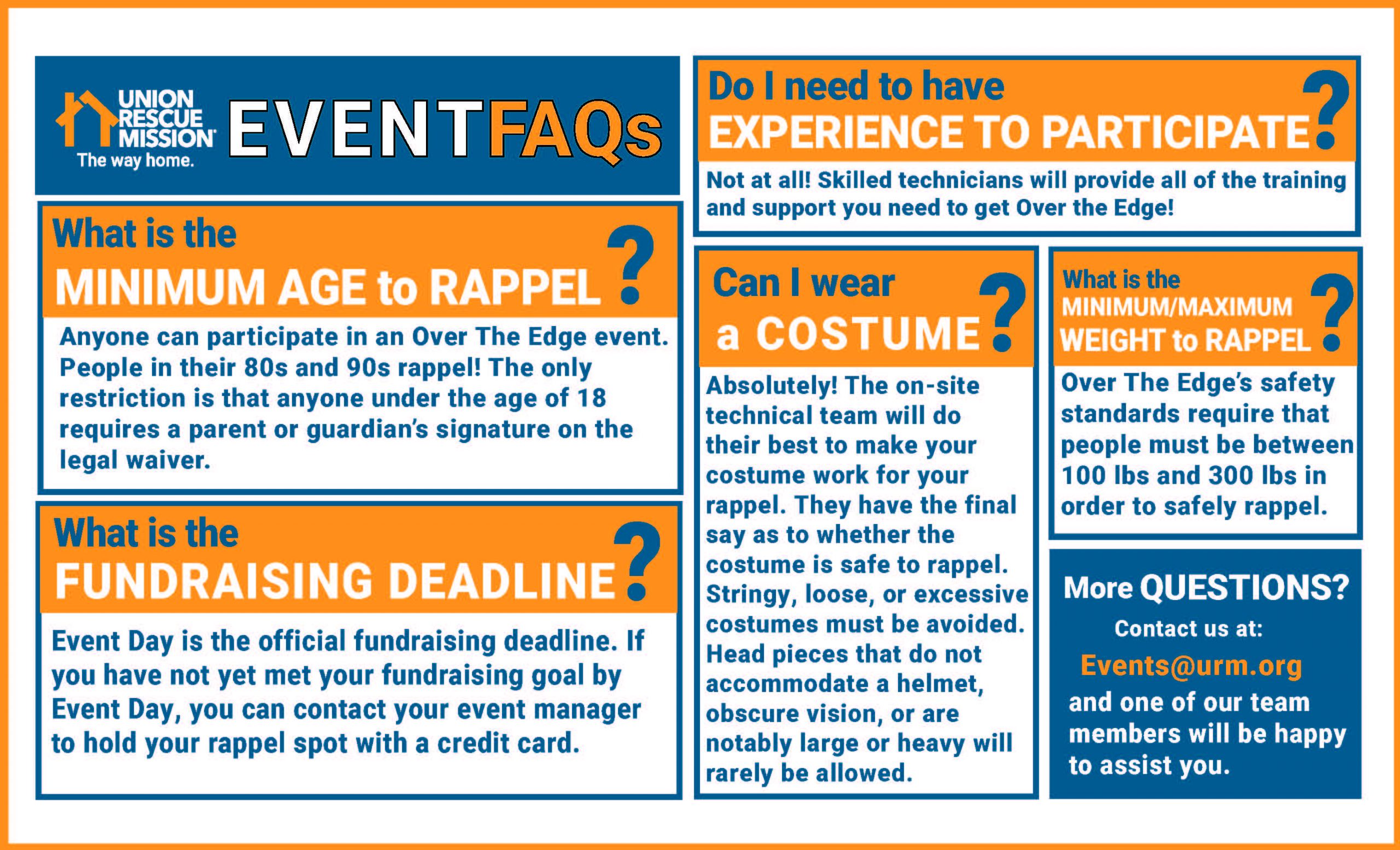
Wait, I can help by rappelling down a building?
Well, what can I do about it? Nothing, you're just one person. When has ONE person ever done anything? Actually, even though we all believe that, the fact of the matter is that ONE person is the only person who has ever done anything. It begins with a will, motivation, or inspiration to help. Now just find a way. Just help one. How about this?
On September 27 and 28, 2024, at the Hilton Los Angeles Universal City Hotel someone is going to get ready to go Over the Edge to fight homelessness
and help kick-off the Just Help 1 challenge!
What if everyone in Los Angeles could just help one struggling neighbor?
As (Saint) Mother Teresa famously stated,
“If you can’t feed a hundred people, then just feed one.”
Although the homeless numbers in LA feel insurmountable when we consider the total, if we break the problem down to one individual helping one other individual, one family helping one other family, things change — exponentially.
one friend to make sure one less child suffers from food insecurity
one family to ensure that another family doesn’t have to spend
one more night in their car
one church to make sure one woman can find shelter in a safe community.
By joining us and rappelling 25 stories down from the roof of the
Hilton Los Angeles/Universal City Hotel on
September 27 and September 28, 2024,
you can help get one more person, family, or child off the street for good.
I never want to stop helping others and myself.
Registration is FREE! Just raise $1,000 or more by 6:00 am on the day of your rappel, and you will qualify for this thrilling way to bring
new hope to the City of Angels.
YOU CAN Just Help 1 — and possibly many more — find their way home.
Become a sponsor, make a donation, or register for the event and start fundraising today! Every dollar will be MATCHED to have DOUBLE the IMPACT! *Match is up to $600,000.
ABOUT: Union Rescue Mission (URM) has for over 133 years provided safe shelter, meals, long-term rehabilitation programs, education, counseling, medical services, and spiritual encouragement to assist those wanting to escape the cycle of homelessness forever. Unfortunately, URM's work is far from over.
Spiritual gets physical, intention becomes deed.
As the world is changing, so has the state of homelessness in the city. People need more than just four walls, a meal, and a bed. They need what
URM is uniquely equipped for:
HOPE that lasting change and a transformed life are possible.
But URM can't do it alone. URM needs partners like YOU to join the Just Help 1 challenge -- a fresh approach to this on-going crisis.
All materials on this site are submitted by editors and readers. All images, unless otherwise noted, were taken from the Internet and are assumed to be in the public domain.
In the event that there is still a problem, issue, or error with copyrighted material, the break of the copyright is unintentional and noncommercial, and the material will be removed immediately upon presented proof.
Contact us by submitting a comment marked "private."
Do not follow this journal if you are under vinaya or parental restrictions. Secure protection by Sucuri.
Wisdom Quarterly: American Buddhist Journal is licensed under a Creative Commons Attribution-Noncommercial-Share Alike 3.0 United States License. Permissions beyond the scope of this license may be available at creativecommons.org/about/licenses.


_-_The_Day_of_the_Dead_(1859).jpg)


.jpg)




.jpg)