(Buddha's Wisdom) Transgendering the deva (shining one, god) Avalokiteshvara "who hears the cries of the world" into the Chinese devi (goddess) of compassion Kwan Yin (Guanyin Bodhisattva)
Dalai Lama reborn or not? The truth about his successor.
(༄།ནང་ཆོས།། ☸️) Dec. 12, 2025: The 14th Dalai Lama (dalailama.com) discusses his determination to take another human rebirth in this world [as there are many, many human worlds on this human plane]. What is the truth about his successor? Will it be him? Legend has it that it is always Avalokiteshvara taking rebirth out of infinite (boundless, universal) compassion for living beings. #dalailama #buddhistteachings #buddha #teaching #motivation #goodvibes #fypシ
Dalai Lama via ༄།ནང་ཆོས།།, Dec. 12, 2025; CC Liu, Crystal Quintero (eds.), Wisdom Quarterly
...“When he was reborn, [the being-bent-on-supreme-enlightenment] the Bodhisattva’s voice was clear, gentle, and harmonious like the voice of a kalaviṅka bird.”
The Buddha then spoke in verse:
“He was like the bird of the Himalayas
That drinks flower nectar and sings.
The most exalted of bipeds [the Buddha]
Had a voice that was just as clear.
“When he was reborn, the Bodhisattva’s vision could see clearly as far away as a yojana.”
The Buddha then spoke in verse:
“As a result of practicing pure deeds [good karma],
“When he was reborn, the Bodhisattva grew up to adulthood and was educated in the way [of governing] in the royal hall. His favor reached the common people, and his reputation for virtue was heard [about] far away.”
The Buddha then spoke in verse:
“In the royal hall, that young man
Educated the world with the way.
He made a variety of decisions,
So he was called Vipaśyin.
His pure knowledge was vast
And deep like the ocean.
He delighted the mass of beings
And improved their wisdom.
Gandhara=Scythia=Saka Land
“At that point, the Bodhisattva wanted to go out sight-seeing, so he ordered his driver to prepare a chariot and horses to go tour a forest park. Once the chariot and horses were ready, the driver returned and said, ‘Now is a good time.’ The prince then rode in the precious chariot to the scenic park. While they were on the road, they saw an elderly man. His hair was white, his teeth had fallen out, and his wrinkled body was bent. He walked wearily with a cane and was short of breath.
“The prince asked his aide, ‘What sort of man is that?’
“He answered, ‘This is an old man.’
“The prince also asked, ‘What is “old”?’
“He answered, ‘Old age happens as the end of one’s life approaches. When there aren’t many years left, it’s called being old.’
“The prince asked, ‘Will I be likewise? Will I not escape this hardship [inherent defect in rebirth]?’
“He answered, ‘Yes, anyone born is sure to become old. It doesn’t matter if they are rich or poor.’
“The prince was disturbed and unhappy at that point. He told his driver to turn the chariot around and go back to the palace. He silently thought to himself, ‘To think I’ll also have to suffer being old!’”
Thus have I heard: One time, the Buddha was at the Flowering Grove Hut in Jeta’s Grove of Śrāvastī [Savatthi]. He was accompanied by a large assembly of 1,250 monastics.
It was then that the monastics gathered in the Flowering Grove Hall after gathering alms. They engaged in a discussion with each other: “Venerables, the unsurpassed sage is so extraordinary! His miraculous powers are far-reaching, and his authority is tremendous. He has come to know the countless buddhas [supremely enlightened beings] of the past who have entered nirvāṇa, broken the bonds [of death], and eliminated idle speculation.”
“He also knows how many aeons [kalpas] ago those buddhas lived as well as their names, surnames, the clans to which they were reborn, the meals they had, the length of their lives, and what disappointment and happiness they experienced.”
“He also knows that those buddhas possessed such precepts, such principles, such wisdom, such liberation, and such abodes.”
“What do you think, friends? Does the Tathāgata [the Wayfarer, the Thus Come One, the Well Gone One, the Buddha] know this by discerning well the nature of things, or does he know these things because the gods (devas) come and tell him about them?”
The Bhagavān [the Blessed One, the Buddha] was in a quiet place at the time and clearly overheard the monastics having that discussion with his divine ear. He rose from his [meditation] seat, went to the Flowering Grove Hall, prepared a seat, and sat down.
He knew the answer, but the Bhagavān still asked them, “Monastics, what have you been discussing after gathering here?” The monastics then related to him what it had been.
The Bhagavān told them, “Good, good! With correct faith [saddha, confidence, conviction], you’ve left home to cultivate the path [to enlightenment and liberation], and you practice as you should. All of you have two types of conduct. The first is noble discussion of the Teaching, and the second is noble silence.
“This discussion of yours is as it should be: ‘The Tathāgata’s miraculous powers [are far-reaching,] and his authority are tremendous. He fully knows the events of countless aeons in the past. He knows it because he understands well the nature of things and because the gods come and tell him.’”
He again asked the monastics, “Would you like to hear about the circumstances of past buddhas that the Tathāgata knows with the knowledge of past lives? I’ll tell you about them.”
The monastics said: “Bhagavān, now would be a good time for it.” “We’d be glad to hear it.” “Excellent, Bhagavān!” “If there’s time for a discourse (sutra), we’ll approve of it.”
The Buddha told the monastics, “Listen closely! Listen closely, and consider it well. I’ll discern and explain.” The monastics then accepted the teaching and listened.
The Buddha told the monastics, “Ninety-one aeons ago, there was a buddha named Vipaśyin who was the Tathāgata, the Arhat [fully enlightened], who arose in the world. Furthermore, monastics, thirty-one aeons ago, there was a buddha named Śikhin who was the Tathāgata, the Arhat, who arose in the world. Furthermore, monastics, thirty-one aeons ago, there was another buddha named Viśvabhū who was the Tathāgata, the Arhat, who arose in the world. Furthermore, monastics, during this present fortunate aeon, there was a buddha named Krakucchanda, another who was named Kanakamuni, and another who was named Kāśyapa. [It is called a "fortunate aeon" for having four buddhas.] Now, I’ve also achieved the supreme and complete awakening during this present aeon of fortune.”
The AVA [Animal and Vegan Advocacy] Summit is an international conference series for advocates focusing on systemic change in how we eat. It is working on various strategies toward one shared vision: removing animals from the industrial food system and similar human uses.
The AVA Summit is being held in Los Angeles, California, from May 15 to 18, 2025. This summit is AVA's flagship event, bringing together over 800 advocates and activists for a dynamic, movement-building experience.
Join us in Los Angeles for expert-led sessions, hands-on workshops, and unparalleled networking designed to strengthen connections and advance the impact activists have to save farmed animals.
Standard registration is open now. Click "JOIN" to learn more and register. Exhibit Hall Registration is open now. Speaker applications closed on Feb. 15, 2025.
Travel Award Scholarship applications closed as on Jan. 15, 2025. More: AVA Summit | Animal Advocacy
I was once angry and full of ardor in India (Sharon on left), with Dipa, Dipa Ma, and Joseph G?
Mindfulness is attention, bare attention, but it's not just attention, which we advert to at will. Mindfulness (sati) is a dispassionate looking on without expectations or resistance but rather full of allowing and acceptance. That kind of looking and listening. People all over this country misuse the word "mindfulness" everyday, never realizing that when the Buddha used it, and he used it a lot, like about 14 times in the 37 Requisites of Enlightenment, he meant something that people understood from other things he had said. There's no sense in thinking that we know if we don't, as that will only frustrate us. Wrong mindfulness is a danger. Could make a person feel anxious or unpleasant or distressed. Real allowing, like Tara Brach talks about, is the immediate antidote to those kinds of temporary states.
Just some words of uplift from Wisdom Quarterly
I should probably practice the Path, right? - Ya think? Nah, let it practice you, doing through you, naturally. - What, by some kind word to a cashier? - No, just real being there, noticing without judging or evaluating, expecting or measuring, wanting anything to be any different than it actually is. Just presence. - Ugh. Sounds dreadful. - Yeah, Daria, y'know, we're alive anyway, what if we were to do the radical act of living it? We're there anyway, going through the motions.
By developing the practice of "mindfulness" (sati, satipatthana, "balanced effort," sthira-sukha, not too tight, not too lax, bare present moment awareness that is full of acceptance, gently abandoning resistance, internally letting go, nekkhkamma), it becomes effortless and habitual to stay in the present moment.
It is always the present moment, which is really all there is, as much as we miss the mark most of the time. We drag the past or future here to waste this moment with two infinite unrealities, going over the no-longer-existent or the not-yet-and-maybe-never-to-be-existent.
Rather than abandoning ourselves, let's be present with ourselves free of resistance. In this way we can open to our lives and realize our potential for the stages of enlightenment in this very life. Western lay practice is particularly suited to it; however, our mental habits of rushing, striving, objectifying, measuring, comparing, goal settling, muscling, striving, struggling, and forcing all get in the way. We have yang, okay.
The West has very much misunderstood one thing about the Path the Buddha pointed out. It does not need stronger and stronger determination, with the intensity to allow one's blood to dry up and bones become dust. This is sure to fail. This is exactly why the wandering ascetic Siddhartha kept failing to find what he was looking for. What he needed was balanced-effort which, therefore, meant balancing yang with yin, stiffness with softness, striving with allowing, contentment (santussita) over a sense of urgency (samvega). But ask around. It's as if no one has ever heard the oldest and most popular story in the world, the Allegory of the Buddha's Life or "Every Person's Quest"). It's not only about him and what he let go, overcame, saw for what it was, and awakened as a result, it is about us, too.
Let us now practice our powerful yin. Powerful? The Earth is very yin, wet and solid, sitting, observing without getting sucked in, sometimes immovable. It is not holding on with brute force or clinging as we might conclude. It is just allowing, and its nature is such.
We are not making up the Truth, memorizing it, but finding it and allowing it to reveal itself like a sitter at a still forest pool who need only sit still all ever so gentle breaths to come and go, and marveling at all the marvelous forest creatures who present themselves at the waterside to drink.
We are softly, vigilantly noticing, so much so that we may begin to notice what has been there to be found all along. It may reveal, it may not. Let it. Allow it either.
The Buddha did not create enlightenment (bodhi) or liberation (nirvana). They have always been, for they are unmade, unformed, unfabricated.
The path-of-practice to realize the liberating Truth, that he made known again finally allowing the jhanas and their purifying affects on his heart/mind then immediately undertaking systematic insight practices (fourfold sati-patthana). Mindfulness provides stability for the first by bringing back the wandering mind again and again, having noticed it is of a nature to wander off, then bringing laserlike attention on the Four Foundations of which one is mindful. (See the Maha Satipatthana Sutta for the details on this).
Now that it, the Truth, the Dhamma exists in the world and there are peaceful places to withdraw to and practice, now that we have peace, sufficient food, imperfect but sufficient health, and just the beginnings of clarity, let us determine to investigate. The Dhamma (Dharma) is inviting us to "come and see" for ourselves.
There is nothing to believe or accept ahead of time, just the willingness to persist to the culmination of serenity (samadhi, the jhanas) and insight (vipassana). The Kalama Sutta makes it all open and a great place to begin, not falling into misunderstanding by skimming but reading it to the end.
Sharon Salzberg is an amazing living teacher able to both explain and point from experience. - Wisdom Quarterly.
The place is? Mm, somewhere else? The time is? Ugh, some other time? If we never practice and make a persistent effort rather than waiting for a "perfect plan," we will wander aimlessly upcycling and downcycling without end.
Encouragement from the Buddha
Hey, where'd you come from, li'l guy?
Maybe this will be encouraging for the philosophical types, not that we Westerners suffer any of that tendency. No, not us. One time a conniving sophist came to the Buddha with a trick question, even though the Buddha could perfectly well see his heart and his motivation/intention. He innocently asked, something to the effect of:
"O, Great Aryan Guru-jii, those who practice your Path, will they all attain the goal, or half of them, or none of them, or how is it?" You'll never guess what the Buddha replied. Go on. Guess.
(Did he by any chance say 144,000? Because that would be quite a coincidence!) No, he didn't say that.
He remained silent. His attentive attendant monastic Ananda, one of the most beloved figures in all of Buddhism, became distressed. The Brahmin repeated his question a second and third time. Those times, too, the Buddha only replied passively with noble silence. The debater, insulted that his plan to engage the Buddha in some verbal wrangling and a debate he felt sure he was going to win, got up and left.
Fortunately for us, Ananda asked the Buddha why he had remained silent. He had tremendous psychic and intuitive powers beyond the scope of our understanding (an imponderable amount) and could discern the best answer to whatever was asked of him. Why not this innocent-enough question?
The Buddha explained that if he had said either all, some, or none, each answer would give rise to inaction, inactivity, not striving, not exerting, not letting go, and never mind that the Brahmin was more interested in eel-wriggling philosophical debater than real firsthand experience and understanding.
(Hey, Ananda, why? Well, if we're all going to eventually make it, why bother? It'll happen anyway. If some of us are never going to make it no matter if we strive and strive, why bother. We're not going to make it. If, yeah, well, some of us who endeavor are yet others who endeavor are not, what's the fairness in that, Ziggy? Why bother? There is not right answer as all lead to inaction and not setting off and persisting on the Path. (Ah, I get it. That Buddha was wise.)
Hey, but, psst, on the side, just between you and me, what is the correct answer? You know, just for historical purposes in case it ever comes up in real life. Yeah, right, the Buddha explains:
Then he answered humble Ananda to remove all his perplexity, and his answer was profound directly for us.
The Buddha answered by giving a simile of a marvelous and impenetrable fortress so well built that not even a very flexible cat could squeeze through its walls and ramparts to gain entrance. But there are four guarded and well-marked gates by which to freely enter.
Then he said: Ananda, just as a ruler, owner, or guard at the gate on duty is not interested in counting how many are inside now, or how many remain outside, or how many will eventually pass him coming in -- all of that he sets aside. But the one thing he does know with certainty is that if someone is inside, that person gained entrance by one of the four gates, alluding to the teachings he made known like, say, the Four Foundations of Mindfulness (AN 10.95).
Ananda was startled and in awe, at peace and rejoiced at the Buddha's words. So why do we do this to ourselves, piling up points of contention, fearfully "needing" to know everything in advance -- What will it take? How long will it take? If I fail, do I get all of my suffering back in full? -- a tangle of views and disputes, more clever questions than could possibly have ever been asked by any ancient before us. You know, they weren't as smart as us, those old seekers on their spiritual quest in millennia and aeons past?
Practice and see. It is of immediate benefit. If one is burdened by clinging, how long after letting go will I feel relief?
Immediate. Simultaneous. Just as soon as. It isn't the common, "Be good now, and be rewarded with a slice of heaven later" religious deal. It isn't, "Well, if I don't become a monastic and go all in, what's the point, Droopy Dog?"
You know what the man should have asked, and thank goodness someone else did? "What does it take to conduct this path-of-practice? Who can succeed? Who is it for that you have taught for 45 human years what you taught?" That question, remarkably, he did answer. It's for the average person or deva (light being, lit. "shining one" of which there are many kinds but presumably those closer to human plane of existence, of average intelligence, the manyfolk. He didn't attain in a deva world and come down from on high to tell people what's up and give commands and threats. He in fact said the human plane is the easiest place to attain enlightenment. Why? It is because there are worse worlds, like the animals, ghosts, and those suffering worse than we suffer. And there are much better worlds, the many planes of the various kinds of devas, where they party and celebrate, cavort and conduct entertainments so much and so pleasing, who's got time to strive or just sit there? I need a cool dress for the cotillion! A corsage, a suit, a cape to really make an entrance, and so on and so forth. But the human plane, which is not just this Earth, is like the seashore beach where the waves are tumbling and being tossed about in torments and tempests. We get swept away, sure, but we can usually swim back to the sort of safety of the beach. Inland, where the parties endlessly roar, as well as celestial wars and more troubles than one would think the long-lived devas (deus, Olympic gods, asuras, gandhabbas) would have to endure given their good but far from perfect previous karmic merit. Here we experience enough pain to remember why we need and want to practice for freedom and complete liberation; yet, here, too, we experience enough pleasures that it's kind of nice and devic sometimes. That's why it's best to practice here and not delude ourselves, imagining, "Oh, yeah, later, when I'm in the mood."
If it were not so, we would not bother to say all of this. As peace grows, the heart gains confidence (saddha) which gently impels us forward.
Which way will you turn tomorrow on the way to the whatchamacallit thingy? Yeah, that's the way you usually go, but what if that path is blocked by the remains of a bonfire or crowds in the crosswalk or heavy bumper-to-bumper traffic? Since you don't know for sure, you shouldn't leave the house. Too risky. Play it extra-safe. Stay in bed. Sleep in. Bliss (piti) can wait. It's always been waiting. 💖
Text by Teacher Seven for Wisdom Quarterly; animated video by Sharon Salzberg (sharonsalzberg.com, podcast, videos, all that jazz someone else has to manages), Ananda (Dharma Buddhist Meditation)
In an attempt to justify some Buddhists' ghoulish appetite for the bloody flesh of animals, some individuals allege that the Buddha allowed monastic disciples to eat slaughtered meat under three circumstances or that the Buddha himself ate pork.
These are patently specious claims. A Pali canon (Theravada Buddhist) discourse called the Jivaka Sutta is the source of the infamous “three purities” argument. It states:
“I proclaim that there are three circumstances when meat should not be eaten:
when it is seen,
heard, or
suspected [as being present?]
“I proclaim that meat should not be eaten under those three circumstances.”
Jīvaka questions the Buddha about meat eating, and he says: “Anyone who slays an animal for the use of a monastic and gives it to that monastic commits a terrible evil.” Jīvaka is pleased with this answer and declares himself a follower of the Buddha (M.i.368f.)
Note, if a monastic were to eat meat, he or she would not necessarily be guilty of killing or even encouraging anyone to kill IF he or she neither saw, heard, nor suspected that an animal was killed [for one's sake or for any misguided reason]. Of course, we don't blame recipients of someone else's giving/dana). For example, if we give to a homeless person, is that good or bad? Does it depend on what that person chooses to do with the money if we did not know when we offered it? If he buys a knife and stabs someone, are we guilty of murder? We acted, and he acted.
Further questioned by Jīvaka, the Buddha explains that a follower (upāsaka) is one who has "gone for guidance" to the Three Gem (Buddha, Dhamma, and [Noble] Sangha, what the Buddhist Teacher Seven translates as "the Teacher, Teaching, and [successfully] Taught") and undertaken the Five Precepts or lay training rules, and that such a person, by reason of these qualities, works for the benefit of oneself and others (A.iv.222f.)
One's virtue (sila) is "pure" if one follows the Five Precepts, which means abstaining from doing harm by killing or causing to kill, stealing or causing to steal, engaging in sexual misconduct or causing another to do so, engaging in false speech [which is the biggest one because this actually has four factors*] or causing another to do so, consuming intoxicants that occasion heedlessness (negligence, moral carelessness) or causing another to do so.
*"False speech" means bearing false witness or speaking divisive, idle, or harsh speech, all of which gets translated as "lying" when it is so much more.
Finally, a Buddhist or disciple avoids "wrong livelihood": business in arms, business in living beings (animals, people, insects), business in meat, business in alcohol, or business in poisons (A.V.177).
Clearly, the Buddha is stipulating that if a monasticdisciple (bhikkhu, bhikkhuni, samanera, samaneri, ormaechi and sometimes anagārikas-- monk, nun, male novice, female novice, white clad ten precept nuns or special probationers) inadvertently consumes meat that has been placed in one's alms bowl, one is not at fault.
All mothers are alike in raising kids
Guidelines are more lax in all things for lay Buddhists, who simply maintain the Five Precepts; however, those precepts include "not killing nor causing anyone else to kill." What is one doing when paying a butcher shop or supermarket for slaughtered flesh but hiring someone to slaughter, cut up, and sell the dead or their organs? That would be causing (asking, inducing, enticing, ordering, paying) someone else to kill for us. How can we be so deluded as to think that we did not order, cause, or contribute to that killing? The Godfather doesn't get his hands dirty but pays Guido to do his killing for him. Guido doesn't know the victims and is just doing the job he was paid to do. Is the Godfather guilty of murder for the people Guido's hands kill?
You're not going to slaughter me? - No! I'm going to pay my butcher to. - WHAT!?! - He's the killer.
One's action (intention, karma, deed) remains pure. However, if one sees, hears, or so much as suspects that there is meat in one's bowl, one must not eat it.
Later commentators gratuitously inserted the phrase [“that the living being has been slaughtered for oneself”] after each iteration of the word “suspected.”
That phrase does NOT appear in the original Pali text. It is a spurious addition, making it seem as if the Buddha allowed monastic disciples under his training to eat meat so long as an animal was not expressly killed to feed them, or at least when they did not see, hear, or suspect that such a killing (slaughtering, butchering) took place.
I live by Mafia rules, keep my hands clean
This interpolation is linguistically unwarranted. More importantly, it contradicts the unequivocal teaching of the historical Buddha on the matter.
The Buddha gives extensive arguments against meat (flesh, animal) eating in the Angulimaliya Sutra, Nirvana Sutra, Karma Sutra, Shurangama Sutra, Mahamegha Sutra, Lankavatara Sutra, Maha Parinirvana Sutra, and others.
In the “Net of All-Embracing Views Discourse” (Brahmajala Sutta), Shakyamuni (the historical Buddha Gautama) exhorts his disciples to adopt veganism:
“Monastics, should you willingly and knowingly eat flesh, you defile yourselves. Pray, let us not consume any flesh or whatsoever comes from sentient beings.”
Perhaps the most infamous of all revisionist interpretations is the one claiming that the Buddha passed away from eating contaminated pork (trichinosis, dysentery, cholera) offered by Cunda the Silversmith.
The term used in the Pali language “Great Final-Nirvana Discourse” (Mahaparinibbana Sutta) to describe the dish that Cunda served the Buddha at his last meal is sukara-maddava, which literally means “pig’s delight” — a clear reference to truffles, a type of mushroom (underground fungal fruiting body) that pigs delight in sniffing out, digging up, and eating as much of as possible.
The Pali term for “fatty pig meat, slaughtered swine flesh, or sliced stomach” is sukara-mamsa.
COMMENTS
(I. Rony) I think "pig's delight" means bloody pig, lard bacon, or hog's hair and eyes [aka hotdog or salami] because, think about it, when you order "Buddha's Delight" at a Chinese restaurant, it's Buddha flesh from that Fat Happy Guy at the door, isn't it? It has to be because it's right in the name.
(Capt. Obvious) Hey, General Tso's Chicken contains canned General Tso...cannibals who like MSG order it all the time...so Pig's Delight is probbly 'Delightful Pig' in blood sauce with soy with entrails or offal guts
The famous Buddhist scholarCarolyn Rhys-DaviesCaroline A.F. Rhys Davids -- wife and colleague of T.W. Rhys-Davids, founder of England's Pali Text Society), who served as its president from 1923 to 1942 -- clearly noted the discrepancy more than seven decades ago.
But proponents of human carnivory still trot out this fallacy today. Unless one is ignorant of the Pali language, or is willfully misleading oneself or others, it is impossible to assert that “pigs delight” means “delicious pork,” as if the Buddha had ordered a greasy dish in some Chinese restaurant.
Driving the news: Calm is hosting a live stream from the San Diego Zoo on Instagram so we can take a break from political doomscrolling to watch capybaras, meerkats, penguins, and other beautiful wildlife.
It starts at noon PT until polls close across the country.
Those humans are so full of fleas, ticks, and bugs because they won't clean each other.
.
Between the lines: Calm also has free "Election Season Support" content with breathing exercises, meditations and other mindfulness tools.
🐅 The intrigue: While he won't be featured on the livestream, a new tiger cub is out to play at the San Diego Zoo Safari Park.
Baby Barong, which means "king of spirits," stepped out of his den for the first time last week.
Watch him here or visit him in person at the park this weekend. More
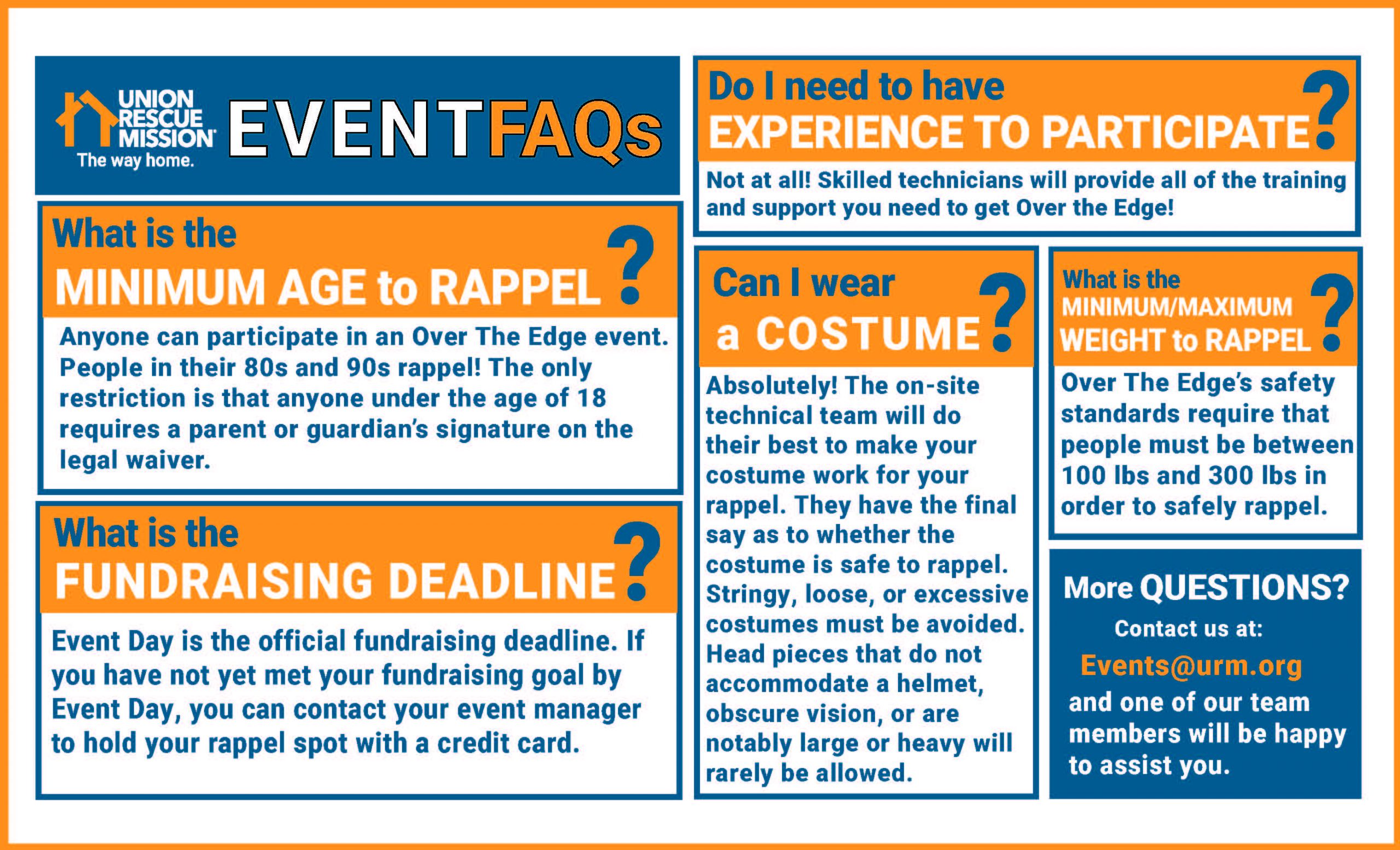
Two KFI 640 AM (an iHeart station, the largest talk radio station in the country) personalities rappelled down the 25 story Hilton Universal City (Los Angeles next to Hollywood) to bring attention to the unhoused situation in L.A. The succeeded in raising funds and not dying. The Just Feed 1 event continues Saturday, 9/8/24.
Beautiful Los Angeles -- with its Hollywood Land, Santa Monica, UCLA, USC, Caltech, beaches, mountains, woods, canyons, and rivers -- is the jewel of Southern California. It's big enough, with over ten million people in the county with about 4.8 million in the City of LA. One would never imagine how much homelessness and poverty exist here. It's a Tale of Two Cities.
Wait, I can help by rappelling down a building?
Well, what can I do about it? Nothing, you're just one person. When has ONE person ever done anything? Actually, even though we all believe that, the fact of the matter is that ONE person is the only person who has ever done anything. It begins with a will, motivation, or inspiration to help. Now just find a way. Just help one. How about this?
On September 27 and 28, 2024, at the Hilton Los Angeles Universal City Hotel someone is going to get ready to go Over the Edge to fight homelessness
and help kick-off the Just Help 1 challenge!
What if everyone in Los Angeles could just help one struggling neighbor?
As (Saint) Mother Teresa famously stated,
“If you can’t feed a hundred people, then just feed one.”
Although the homeless numbers in LA feel insurmountable when we consider the total, if we break the problem down to one individual helping one other individual, one family helping one other family, things change — exponentially.
one friend to make sure one less child suffers from food insecurity
one family to ensure that another family doesn’t have to spend
one more night in their car
one church to make sure one woman can find shelter in a safe community.
By joining us and rappelling 25 stories down from the roof of the
Hilton Los Angeles/Universal City Hotel on
September 27 and September 28, 2024,
you can help get one more person, family, or child off the street for good.
I never want to stop helping others and myself.
Registration is FREE! Just raise $1,000 or more by 6:00 am on the day of your rappel, and you will qualify for this thrilling way to bring
new hope to the City of Angels.
YOU CAN Just Help 1 — and possibly many more — find their way home.
Become a sponsor, make a donation, or register for the event and start fundraising today! Every dollar will be MATCHED to have DOUBLE the IMPACT! *Match is up to $600,000.
ABOUT: Union Rescue Mission (URM) has for over 133 years provided safe shelter, meals, long-term rehabilitation programs, education, counseling, medical services, and spiritual encouragement to assist those wanting to escape the cycle of homelessness forever. Unfortunately, URM's work is far from over.
Spiritual gets physical, intention becomes deed.
As the world is changing, so has the state of homelessness in the city. People need more than just four walls, a meal, and a bed. They need what
URM is uniquely equipped for:
HOPE that lasting change and a transformed life are possible.
But URM can't do it alone. URM needs partners like YOU to join the Just Help 1 challenge -- a fresh approach to this on-going crisis.
All materials on this site are submitted by editors and readers. All images, unless otherwise noted, were taken from the Internet and are assumed to be in the public domain.
In the event that there is still a problem, issue, or error with copyrighted material, the break of the copyright is unintentional and noncommercial, and the material will be removed immediately upon presented proof.
Contact us by submitting a comment marked "private."
Do not follow this journal if you are under vinaya or parental restrictions. Secure protection by Sucuri.
Wisdom Quarterly: American Buddhist Journal is licensed under a Creative Commons Attribution-Noncommercial-Share Alike 3.0 United States License. Permissions beyond the scope of this license may be available at creativecommons.org/about/licenses.


%20wiki.jpeg)




.jpg) ABOUT: Union Rescue Mission (URM) has for over 133 years provided safe shelter, meals, long-term rehabilitation programs, education, counseling, medical services, and spiritual encouragement to assist those wanting to escape the cycle of homelessness forever. Unfortunately, URM's work is far from over.
ABOUT: Union Rescue Mission (URM) has for over 133 years provided safe shelter, meals, long-term rehabilitation programs, education, counseling, medical services, and spiritual encouragement to assist those wanting to escape the cycle of homelessness forever. Unfortunately, URM's work is far from over.