Showing posts with label metta bhavana. Show all posts

Tuesday, April 28, 2026

Peace Class: Self-Love is World Service

LIVE for the first time a month ago. Mandy Kahn (mandykahn.com) Earth Day, April 22
 
Peace Class, Wednesdays, 6:00 pm on Zoom
Friends, Peace Class meets Wednesday nights. Join in via Zoom at 6:00 pm (Pacific). 
This is the text of the talk delivered at last week's class:
 
Self-love is world service
By Mandy Kahn at PRS, Earth Day 2026, edited by Dhr. Seven, Wisdom Quarterly

Holy Doors: Poems of Mandy Kahn
When we are kind to ourselves, when we have compassion for ourselves, when we love ourselves without reserve, we create the conditions in which to most easily evolve.

All of this evolution is towards a more peaceful and loving version of the [conventional] self.
 
Self-love creates a state in which one can hear the voice of our higher self and also feel that voice in the heart.
 
That higher voice points to the path ahead. The path ahead is always evolving [becoming] towards a more loving version of self. Self-love creates a kind of quiet in the mind/heart.

Lower mind
 
Not sex but symbolism of union
The lower mind is the place of judgment. That which is not love, that which is harsh, is loud in the lower mind. Self-love is the antidote to this loud voice. It balances and heals the harshness, restoring a kind of homeostasis, a calm, equitable ground [dzogchen]. Self-love creates neutrality in the self. It creates openness, and openness is peace. Into the true openness of peace, the presence of universal love, universal kindness, universal knowing arrives.

Tibetan Dharmacakra - Ground (Dzogchen)
All those who walk with universal love walk in service to all beings.

So self-love creates the conditions for one to more easily become peace, and into that peace of the self, the great wisdom of universal loving-kindness arrives. And the individual into which it arrives now carries it as a remarkable offering for all.

Higher mind

It is as if self-love builds the room. The empty room is peace. And universal love always arrives to fill it. Put simply:
This peace flows from the individual consciousness into the collective consciousness, where it heals that which has not been loved which has remained there as residue.
  • ["One-pointedness of mind/heart (cittass'ekaggatā), Ven. Visakha, is called concentration (samādhi, stillness, coherence)" (MN 44).]
Flower power made in the USA
When peace has flowed into the collective consciousness and has healed that which is not-love that is there, new possibilities emerge for humankind.
  • Old wounds are healed.
  • Old grievances are healed.
  • And more people, no longer held in bondage by old grievances, are able to hear their higher selves' voice, which is a loving voice.
  • And more people, hearing their highest voice, choose to act in love.
  • And things begin to change.
  • Old patterns suddenly end.
  • There is more harmony between people.
  • There is more peace.
  • And that peace, felt by any one person, enters the collective consciousness and heals another layer of what is there
    • calling to be loved,
    • calling to be witnessed,
    • calling to be healed,
    • calling to be honored for all that it is, exactly as it is.
  • Peace does that.
  • [EDITORIAL NOTE: When Goenka talks about observing sensations (feelings) in the body, he says to observe each one “AS IT IS.” The Pali phrase he uses is “yathā-bhūta.” Buddhist Sanskrit (tathātā) akin to the Chinese term rú zhēn (如眞) “suchness.”]
It's as if our hearts were burning as one at BM.
So all is honored, all is healed, and another wave of people feel called to lean into that voice at the center of their chests, their own heart's voice, the voice of a higher self, a voice that speaks of their purpose. That voice is loving, the font of love at the center of each being, what we can call the heart's voice. So it is better perceived, easier to hear and learn from.

An act of service to the world
Earth and every living being on it is so much more beautiful and unbelievable close up.
 
Our self-love is an ACT [karma] of service (sevā) to the world. Is builds our peace first, and our peace builds all peace.

Yes, it builds our neutrality (equanimity, unbiased looking on, upekṣā), which allows us to hear our higher voice. The peace it builds in our own heart/mind travels into the collective consciousness, where it heals and creates new opportunities for future peace, our own and the peace of others.

The "peacening" process
.
Goddess Sophia (Wisdom)
Our self-love powers this whole peacening [pacifying, cooling, slaking, quenching towards the highest peace of all, which is Nirvana or the "nirvanering"] process.
  • Our self-love is local -- planetary service to others.
  • Our self-love is holy.
  • Our self-love is a holy offering that changes things.
  • It changes us and everything else at once.
  • It loves us and everything into wholeness.
  • It loves you, it loves me, it loves everyone and everything at once (immediately, instantly, timelessly, akāliko). [The Gnostics knew it.]
  • Boho chicGirl in Yellow; text by Mandy Kahn, edited by Dhr. Seven, Wisdom Quarterly, Earth Day 2026

Tuesday, January 27, 2026

When Buddhists Attack (Zen of martial arts)

Theravada Buddhist Muay Thai champion versus Shaolin Kung Fu master from Far East

Buddhist Wisdom (Tuttle Publishing)
Uncover the historical truth about Buddhist warrior monks with this informative and enlightening book.

Exploring the origins of Buddhism and the ethos of the Japanese samurai, martial arts practitioner Professor Jeffrey Mann traces the close connection between the Buddhist way of compassion (karuna) and the way of the warrior.

This Zen book serves as a basic introduction to the history, philosophy, and current practice of Zen as it relates to the Japanese martial arts.

Maybe they'll be ghosts (kami)
It examines the elements of Zen that have found a place in budo (bujutsu or bugei)—the "Martial Way"—such as zazen, mushin, zanshin, and fudoshin, then goes on to discuss the ethics and practice of budo as a modern sport.
 
Offering insights into how qualities integral to the true martial artist are interwoven with this ancient religious philosophy, this book on Buddhism helps practitioners reconnect to an authentic spiritual discipline of martial arts.


Film, television, and popular fiction have long exploited the image of the serene Buddhist monk who is master of the deadly craft of hand-to-hand combat.

While these media overly romanticize the relationship between a philosophy of non-violence and the art of fighting, When Buddhists Attack: The Curious Relationship Between Zen and the Martial Arts shows this link to be nevertheless real, even natural.
Prof. Jeffrey Mann, Dept. of Religious Studies
ABOUT: The author Jeffrey K. Mann is a professor and the chair of the Religious Studies Department at [the Protestant Evangelical LutheranSusquehanna University (susqu.edu) in Pennsylvania. He earned his doctorate in religious studies from Vanderbilt University and has also served as a visiting professor of religion at Senshu University in Ikuta, Japan. A longtime student of Japanese martial arts, he has trained and competed in karate tournaments throughout North America, Japan, Okinawa, and the Philippines. He is an instructor of the Susquehanna Goju-ryu Karate-do Club, a school affiliated with the International Okinawan Goju-ryu Karate-do Federation.

Tuesday, July 1, 2025

Guided Loving Kindness Meditation 💖


Guided Loving Kindness Meditation | Buddhism in English
(Buddhism) Mettā (Sanskrit maitrī) means loving-kindness [2, 3], friendliness [3, 4], benevolence [1], amity [4], goodwill [5], and active interest in the welfare of others [4]. It is the first of the "Four Sublime Abidings" (Brahma Viharas) and one of the Ten Perfections (pāramīs) of the Theravāda Buddhist school. More
  • Mahamevnawa Bodhignana Monastery
  • Hewagama, Kaduwela, Sri Lanka
  • +94 112 571471
  • info@shraddha.lk shraddha.lk

Saturday, March 16, 2024

InsightLA: Youngish Adults Practice Group

InsightLA Meditation Practice Group - Santa Monica/Online; Dhr. Seven, Ananda (Dharma Buddhist Meditation) (eds.), Wisdom Quarterly

Interested in mindfulness meditation with a supportive hybrid in-person/online community of peer practitioners. Join us either by Zoom online or in-person at the Benedict Canyon Retreat House, within beautiful nature-rich environs. Share the collective wisdom related to sitting meditation practice.

**All weekly meetings beginning in January 2024 will be held Sundays from 7:00-830 pm PST. Attendees will have optional time for connection from 8:30-9:00 pm after the session finishes.**

Young-ish (in your 20s, 30s or 40s)?

What’s most alive in your practice? What are you struggling with? In a supportive group environment, we will meditate and explore practical application of the Buddhist wisdom tradition in daily life.

We’ll focus on the challenges you might be facing as a youngish adult, including:

  • How to live the teachings of mindfulness and compassion in daily life, navigating transitions, relationships, and careers.

If you have a topic that you would like to bring more mindfulness to, bring it up in the group!

Who is this practice group for?

The Young-ish Practice Group is for people in their 20s, 30s, and 40s who would like to deepen their mindfulness practice and understanding of Buddhist psychology in community. All are welcome, regardless of previous mindfulness or meditation experience.

Intentions:

  • Explore Buddhist psychology and mindfulness science to support practical integration in daily life. (There's no need to identify as a Buddhist because ALL are welcome).

  • Foster ongoing development of inclusive community and supportive friendship among younger practitioners.

  • Practice in support of the cultivation of wisdom and the alleviation of suffering for all beings, without exception.

Typical Group Activities/Format:

  • Welcome and introductions

  • 30-40 minute guided mindfulness meditation.

  • Variety of Buddhist Dharma talks, exploration of mindfulness science, small group discussion, other experiential exercises.

Scheduled Teachers:

  • March 17: Michael Karakashian

  • March 24: Eileen Ybarra

  • March 31: Lulu Toselli

Where is this event?

Santa Monica and online via Zoom. As weather permits, expect to be mostly outdoors.

For those attending in-person, find directions and accessibility information here.

Please consider carpooling as there is limited parking available (more info). Click Sign Up to the left for ride-share options.

> In keeping with the principles of the Dharma that underlie all InsightLA activities (primarily non-harming), we are requiring that all attendees be fully vaccinated in order to attend this in-person event. Masks are optional as all attendees are fully vaccinated. Attendance is limited to 30 to allow for social distancing.


Donation Based

Although this is a donation-based class, registration is required. Suggested donation: $20. If you cannot attend, please cancel your reservation so that others may attend in your place. Space is limited.

Wednesday, March 13, 2024

Enraged Buddhism: getting angry (Q&A)

Dhr. Seven, Mr. Like, Ananda (Dharma Budd Meditation), Pfc. Sandoval, Wisdom Quarterly
Sign language: "F.U., I'm walkin here, I'm walkin here!" - You call yourself a "monk," sir?
Who wants a holy water blessing? I'll beat the bad karma out of ya! Leave, demons, leave them!

I nodded off in Zen, better beat me, too, Guru!
  1. Q: Like, do Buddhist monks have emotions, like, do they get angry?
  2. WQ:  What do you mean?
  3. Q: Like, do they get angry?
  4. WQ: What, like, humans?
  5. Q: Yeah, like, or like regular non-monks.
  6. WQ: People? Are you asking if monks are people?
  7. Q: No, I'm asking, do they, like, have emotions?
  8. WQ: What do you mean?
  9. Q: Like, do they get angry?
  10. WQ: But isn't anger an emotion?
  11. Q: Yeah, like, exactly, right?
  12. WQ: So you mean you're asking if monks are humans, who have emotions, and one of those emotions is anger, so do Buddhist monks, who being human and therefore not beyond emotions, one of which is anger, will they experience that emotion?
  13. Q: Exactly.
  14. WQ: No.
  15. Q: No???!!! But, like, you just said they're human with normal emotions like any other humans.
  16. WQ: Yeah, sure, they have human emotions, and anger is a human emotion, but they don't have anger.
  17. Q: Like, how, how could they not have anger?
  18. WQ: Exactly, right? I mean, they must, if they're human. They're human, right?
  19. Q: Yeah, like, aren't they?
  20. WQ: They look human but I don't think they could have anger.
  21. Q: Like, how not?
  22. WQ: Exactly. You're right. I mean, but they're monks. I always see them so well behaved, well, not always.
  23. Q: Aha, like, so you have seen them angry?
  24. WQ: What the human ones?
  25. Q: Yeah, like, aren't they all human?
  26. WQ: I thought so, but then someone asked me if they get angry, so now I'm not so sure.
  27. Q: Like, wouldn't they, if they're all human?
  28. WQ: Yeah, I'm just yanking your chain. I've seen some angry. I've seen some so self-possessed as to be unflappable and they won't show it. Almost all of them are very well behaved. It's very odd to see one who isn't disciplined enough to behave. Except in Thailand, the temporary ordination novices look just like monks. People wouldn't know that's not a monk and so might think it is. But they're usually very well behaved, too, because they're just temporary and will soon revert to household life.
  29. Q: So, like, they get angry?
  30. Rev. Dr. MLK, Jr. and Thay/Thich Nhat Hanh
    WQ: I guess that depends on what we mean by "get angry" because for you and me, if we get angry, everybody's going to know it. We're going to yell, cry, sulk, act out with exasperation, sarcasm, or less than 100% loving kindness. There's Engaged Buddhism, which is good, following the social justice work of Thich Nhat Hanh and MLK Jr. during the secret U.S. War on Buddhist Vietnam, Laos, and Cambodia. And there's Enraged Buddhism, where some monks think it's okay to hurt people who hurt you -- rather than turning the other cheek, amping up the sympathy and special counter-emotions called The Four Supreme Abidings, which are positive emotions that counter our common base behavior of anger, callousness, envy/jealously, and favoritism.
  31. Q: Like, what could counter those?
  32. WQ: Anger is countered with loving-kindness (boundless-friendliness), callousness with compassion, envy with joy in the joy of others (mudita), and bias with equanimity or seeing everyone as the same in receiving these positive emotions and intentions from us, not more because we like them or less because we don't (which is called upekkha or "looking on at all with a sense of balance and ease, a fairness and impartiality).
  33. The miracle is not his bad choice but that he remains calm. He neither clings nor identifies, likes nor dislikes. It's only feeling, pain, body, like Bahiya of the Barkcloth. In jhana, one is safe. If enlightened, one is free of all suffering. Was Aaron Bushnell?
  34. Q: Like, can anyone really do that?
  35. WQ: Yeah, anyone can. Imagine if we had been practicing that since childhood. Do you think we'd have any good mental karma stored up?
  36. Q: Like, yeah.
  37. WQ: And we might even say nice things, pleasant things, friendly and inoffensive things, for good verbal karma?
  38. Q: Yeah, like, of course.
  39. WQ: Then might we even think good things about people and the living beings we meet for the generating of good mental karma?
  40. Q: Yeah, sure, like, if we're saying nice things and doing nice things, we're probably thinking nice things.
  41. WQ: ALL of us?
  42. Q: Well, like , anyone who practices.
  43. WQ: So you're saying the ones who practice?
  44. Q: Like...well,  yeah!
  45. WQ: But isn't it enough to be human?
  46. Q: No, humans, like have emotions, like anger, and like if they don't practice, they're going to think, say, and do harmful and offensive things sometimes.
  47. WQ: Like get angry?
  48. Q: Like, yeah.
  49. WQ: But isn't it enough to become a Buddhist monk?
  50. Q: I don't know, like, don't you have to practice?
  51. WQ: Yeah.
  52. Practice for self-control, not to control others.
    Q: So, like, I don't think it would be enough to be human or be a monk...but I think, like, it would be enough to practice.
  53. WQ: But wouldn't I still get angry?
  54. Q: Like, well, you might, but then it wouldn't get out of hand, or you could reel it in really fast if you slipped and it did.
  55. WQ: That sounds human, and doable, even for us non-monks. What was your question?
  56. Q: Like, do monks get angry?
  57. WQ: Human ones?
  58. Q: *Laughing* Yeah, human ones, like, that's the only kind, right?
  59. WQ: Right.
  60. Q: So, like, yeah, right?
  61. WQ: Naw, I don't think so. I mean they may act like it, but on the inside, after all that practice, it probably doesn't come up that much.
  62. Q: But they're still human, so like it'll probably come up a little?
  63. WQ: Well, yeah, I guess, a little, but with so much practice, they can probably reign it in really quickly or notice it arise and avert an outburst. That's probably why they can behave so well so much of the time.
  64. Q: Hey, like, I might want to be a monk.
  65. WQ: If you do, will you get angry?
  66. Q: Like, I don't know. I hope not. That's why I might want to try it, like, at least a temporary monk that you said.
  67. WQ: Yeah, good idea, then you can practice so much that even if you disrobe and return to the household life, you'll probably be a lot nicer.
  68. Q: Yeah, like, right?
  69. WQ: And if you practice so well that anger hardly comes up, your meditation will grow so great you may have a breakthrough so that it never comes up again.
  70. Q: Is that possible?
  71. WQ: Oh, yes. Fully enlightened beings, arhats, don't get angry, though they may have the habit, the residual, the custom of being annoyed, or the symptoms of aversion. But on the inside, it doesn't overtake them anymore. It can't. They can, however, act like it does. The Buddha says some things sometimes in some sutras that sure sound like he's upset or annoyed or finds some people wearisome and vexing, like his brother-in-law Devadatta or the monks of Kosambi who used to like to argue and debate rather than practicing and realizing. The Buddha would distinguish them from great examples of monks such as Ven. Kimbila, his fellow monks (Anuruddha and Nandiya), Ananda, and his ten principal disciples. Two Buddhist nuns, Ven. Khema and Ven. Uppalavanna, were always restrained and able to abide in the Four Supreme Abodes, even if they got sick or were attacked.
  72. Q: Like, attacked-attacked?
  73. There is no "punishment" for karma, just nature.
    WQ: One time this guy was praising how not-angry and wise Ven. Sariputta was, the male monastic declared foremost in wisdom, to this other guy who didn't believe him. So the other guy rolled his eyes and told his friend that the reason he didn't get angry was because his friend never saw Ven. Sariputta meet with a bad (anger-inspiring) situation. So to help his friend, he said he'd show him Ven. Sariputta's anger. The friend was surprised. Ven. Sariputta was a good monk, always practicing, a great disciple, a chief disciple, and a special assistant to the Buddha, teaching other monks and bringing them to the first stage of enlightenment before passing them on to the other chief male monastic, Ven. Maha Moggallana, who would continue to teach them and bring them to full enlightenment. (One has to think the same set up was happening with the female monastics, first taught by Ven. Khema, a great disciple, a chief disciple, the female disciple declared foremost in wisdom by the Buddha, then passed on to Ven. Uppalavanna, who brought nuns to full enlightenment just as Ven. Maha Moggallana did for monks). This is almost certainly why the Buddha had four chief monastic disciples helping him train and enlighten tens of thousands of people he met and countless devas most could not see but some could).
  74. Q: Like, what happened to that monk, like, did he get angry?
  75. He doesn't get angry? We'll see.
  76. WQ: Oh, the friend stood in the bushes by the path where Ven. Sariputta passed every morning on his way for alms. We he passed, the man stepped out behind him and punched him in the back of the head as hard as he could then was amazed when he heard Ven. Sariputta look up -- without turning around to see who hit him -- and exclaim, "I wonder what that was" as he continued on his way. The man, startled, started to burn up with remorse, in disbelief that this monk really didn't get angry or want to know who or what hit him or why, and didn't want retaliation, revenge, or even to criticize or condemn. He begged the monk's forgiveness, and Ven. Sariputta freely gave it. But the humans who saw him do it were not going to let it go. They moved in to apprehend him to drag him off to the king to request a death sentence for such a [blank] who would hit an innocent monk who wasn't hurting anyone. The man said he felt bad, and had apologized, and his apology had been accepted, and that he didn't want to be reported to the king and punished, certainly not beheaded. It was just an experiment. But the people were furious and were not going to let this matter go, they were not going to drop it, and they were forcibly going to drag him before the king that very day and see to it that the king imposed the higher punishment of death as the mob grabbed him. Ven. Sariputta had to intervene on the man's behalf to save him from the mob, allaying their anger and telling them everything was all right and that the man who hit him was fine with no need for anyone to do anything. The man was astonished. The monk he just punched as hard as he could was doing everything he could to calm the mob that would surely have him destroyed, because no doubt the king would sentence him to death over the mob's testimony.
  77. Q: Wow, like, did that really happen?
  78. WQ: It is written so I assume so. The question is, Do you think enlightened Ven. Sariputta got angry?
  79. Q: Not, like, if he didn't look back. Anybody would have immediately swerved around to look back and see what was happening just to save their lives. Do you think he did?
  80. WQ: I don't think so, even though he was human and had human emotions. Now he had superhuman positive responses to override human habits of reacting because the Buddha had taught him and the others The Parable of the Saw, a short sutra on how to respond if someone is hurting you.
  81. Q: How, like, run?
  82. WQ: That's a good idea. But, you know, if you run and get away from the immediate danger, you won't have outrun the feeling, the emotions, the anger over what happened to you, how unfair it was, how the person got away with it...
  83. Q: Yeah, like, there's that. What about that?
  84. Let's cut this one from limb to limb.
    WQ: The Parable of the Saw starts with a question. If someone hurt you, would you get upset -- angry, vengeful, want to strike back, want to force them to stop or not be able to do the same thing to someone else? It might cause you a lot of grief thinking like that, "He hurt me, he wronged me!" With thoughts like that, you're going to be upset and feel a lot of aversion for a long time. That's why it's a good remedy to bring The Parable of the Saw to mind again and again. Forgive (practice khanti, forbearance, tolerance) over and over, every time the feeling comes up. It's not nearly enough to forgive once and think that it's all gone. There's lots of residual, and new feelings of nonforgiveness are bound to arise many, many times. Unless we forgive and forgive again, our reaction to that one act will ruin is over and over again.
  85. Q: Like, what's the parable?
  86. WQ: Imagine someone comes up to you, grabs you, and starts cutting you limb from limb with a two-handled saw. If you were, toward that person doing it, to vent or give rise to thoughts of anger or revenge, you would not be following the Buddha's teaching on metta, "boundless friendliness." Even toward that person doing that at that time, you should cultivate thoughts of loving-kindness/
  87. Q: Like, will that save you?!
  88. WQ: It depends what we mean by "save."
  89. Q: C'mon, man, quit yanking me. Like, will you live doing that?
  90. WQ: You might not. I guess you were right. You should run. But if they catch you, stay friendly and kind. Cultivate sympathy, love, agape, concern, and interest in their welfare. Then, in that sense, what harm can they do you? They can't ruin you. Even though they take this body, cause this pain, commit this great injustice, you will not be disturbed if you have been following the Buddha's advice.
  91. Q: Like, but that takes practice.
  92. WQ: Practice.
  93. Q: Like, but how much practice?
  94. WQ: I don't know, but we should wait until it happens, right? When someone grabs you, holds you down, pulls out the saw, punches you in the back of the head by surprise, THAT'S when you should start practicing for the day someone might insult you.
  95. Q: Huh? Like, are you serious?
  96. WQ: No. It won't work then. What's the chance that never having practiced patience, forbearance, tolerance, boundless friendliness, and forgiveness you're going to be able to start when you're being accosted, assaulted, or threatened?
  97. Q: Like, not much.
  98. What, I get to choose between the two of you?
    WQ: Not much is right. None at all probably. So the time to practice is NOW. There's only now. There's ALWAYS only now. There is no other time. The past doesn't exist. The future doesn't exist. Look at your watch. What time is it? NOW. That's the only time it ever is. And if it ever happens those axe-, I mean saw-murderers come for you, you're ready. Now, it's not likely they will ever come. BUT, what do you think, if we practiced that way, that even for the sake of being sawed into pieces, we wouldn't allow ourselves to get angry or vent or give rise even to thoughts of revenge, what would happen if someone verbally assaulted us, insulted us, said something offensive? Could we bear it?
  99. Q: Hah, like, compared to being cut up, what are mere words?
  100. WQ: Right. Maybe the Buddha was onto something with this crazy teaching in this parable.
  101. Q: I think, like, he meant it.
  102. WQ: Yes, of course, but what's more likely to happen, that someone punches us or holds us down and saws us to pieces?
  103. Q: Like punches us.
  104. WQ: Not like punches us. Actually punches us. Even that's not likely to happen. But you know what is? Insults, verbal and mental. Someone's staring at us, giving us a hard look, the Evil Eye, smirking, puffing his chest...think you could handle that?
  105. Q: Of course, like, he didn't even do anything. He didn't even say anything. He's just thinking or using sign language or telepathy. Who cares about that?
  106. WQ: Well, you know, that's how it happens most of the time. And sometimes words get used. "Sticks and stones may break my bones, but words?" Thoughts? It'll be easy not to get mad IF?
  107. Q: If, like, it just stays at thoughts?
  108. WQ: No, even if it escalates to full on weaponized violence IF we practice.
  109. Q: Oh yeah, like, I forgot. If we practice.
  110. WQ:  When's that?
  111. Q: Like, later on?
  112. WQ: When?
  113. Q: Like in a little while?
  114. When I practice, anger doesn't arise to begin with.
    WQ: Oh, I was thinking now because "later on" and "in a little while" do not exist right now. They might exist or come into existence at some time. We only have control of ourselves right NOW. And if we do it now, we're likely to have control of ourselves at other times. Yeah?
  115. Q: Like, yeah. No, not like, for sure. Yeah.
  116. WQ: I like that. There's a short booklet about it called Positive Response: How to Meet Evil with Good by Acharya Buddharakkhita.
SELF-IMMOLATION: Though Buddhist monk Thich Quang Duc made a decision to protest the imperial US War on Vietnam, and it was a bad choice, yet he remained calm and unperturbed during this act of ritual suicide. Why? The US is the greatest purveyor of war in the world, as MLK told us. HOW? Because he does not identify with the pain, nor cling to this body nor to any feelings, pleasant or unpleasant, nor to any idea of "self," he can endure without complaint. He seems deep in meditative absorption (jhana), guaranteeing a good rebirth outcome if he is not yet liberated, in which case he is already free of all rebirth and suffering.

Monday, March 11, 2024

Metta is agape: loving unconditionally

LaKeisha Fleming, reviewed by Sabrina Romanoff, PsyD (verywellmind.comMarch 8, 2024); Ven. Sujato (SuttaCentral.net); expanded by Amber Larson and Dhr. Seven (eds.), Wisdom Quarterly
.
I mean, I eros you. - WHAT?! - I mean, I agape!
Imagine turning to your date and saying, "I love you." That person turns and says, "Ugh, whaddya mean?" The whole world stops, and your next few words will make or break everything.

The ancient Greeks had seven words for what we in English ambiguously term "love":
  1. eros
  2. philia
  3. erotoropia or ludus
  4. storge
  5. philautia
  6. pragma
  7. agápe.
All of them have different meanings with origins going back to about the seventh century B.C.E., says Dr. Marie-Claire Beaulieu, Ph.D. associate professor of classical studies at Tufts University. But the distinctions are relevant to our modern world. More

The Buddha on the benefits of metta (love)
Ven. Sujato (trans), Mettā Sutta (AN 11.15) edited by Dhr. Seven, Wisdom Quarterly
.
Love's a turnstile that requires no token (J Frank)
[The Buddha:] “Meditators, one can expect 11 benefits when the heart’s release by love has been practiced, cultivated, and developed, made a vehicle and a basis, kept up (persisted in), consolidated, and properly implemented. What are they?
Love is a light that gives 'n gives.
  1. One sleeps at ease.
  2. One wakes happily.
  3. One is not beset by bad dreams.
  4. Humans love one.
  5. Non-humans love one.
  6. Deities (devas) protect one.
  7. One cannot be harmed by fire, poison, or blade. [This is true when one enters or is in absorption because of the imponderable range of influence and power of the absorptions (jhanas).]
  8. One's mind quickly enters absorption (stillness, immersion, samadhi).
  9. One's face is clear and bright.
  10. One passes away with a clear and contented mind/heart.
  11. If one penetrates no higher [to the supramundane attainments through insight meditation], one will be reborn in a brahmā (divine) realm [if one enters and maintains one of the absorptions as one passes away, and which one will determine the world was is reborn in].
One can expect these 11 benefits when the heart’s release by love (metta/agape) has been practiced, cultivated, and developed, made a vehicle and a basis, kept up, consolidated, and properly implemented.” Source

Agape love: The art of loving unconditionally
An ancient concept for modern relationships
.
I love you, Human. I'll just sit here like you do.
Our companion animal dog means everything. He’s cute and cuddly and always there when we need him, so we love him. But it’s not the same way we love our sister, or how we love our spouses.

And it’s definitely not the way we love to listen to music, watch TV, football, or read a good book.

In fact, in the West, it seems only the Greek language, derived from the Ancient Greek language, has different words that speak to these different types of love.

I may look innocent, but...LOL
Eros love [cupidity] focuses on passion [and] is wrapped in attraction and desire. Storge love is a brotherly [fraternal] love, where affection is reciprocal. In Ludus, love, fun, and adventure are its purpose, combined with physical attraction,” explains clinical psychologist Aura De Los Santos [whose name, interestingly, means "Subtle-Light of the Saints"].

Agape love, however, is less focused on us and more focused on those around us. “Agape [metta, maitri, altruistic universal friendliness] love goes beyond physical attraction and desire because it thinks of others first. It does not focus on what it will receive but always satisfaction in giving and seeing how others feel,” De Los Santos states.

“In one of his works, the Greek philosopher Plato refers to the different types of love, with agape love being the most selfless and unconditional type of love.”

Agape love goes beyond physical attraction and desire because it thinks of others first.
— AURA DE LOS SANTOS, CLINICAL PSYCHOLOGIST

Often, agape love is referred to as the highest form of love because of its selfless ideals. It’s a historic concept for love that has endured to have a lasting impact.
Understanding agape love

i luv u not as much as my coffee
First used in the 1600s, agape (pronounced \ah-gah-pay\) is a Greek word that means “[universal, altruistic] love, charity.”

Agape love is used heavily in Buddhism, where it is called metta (boundless friendliness) and made much of by the Buddha as an antidote to one of the Poisons of the Mind called dosa, aversion, hatred, animosity, fear).

In Christianity it describes “the love of God for [humanity] and the love of [humans] for God.” [In Hinduism, the Sanskrit maitri means "all-welcoming friendliness."]

Disciples, love one another.
The word agape became synonymous with a meal associated with the Lord’s supper that was held by early Christians. They called the meal a “love feast” [1].

Keeping with its original purpose of charity and unselfish giving, agape’s definition has grown.

“Agape love is unconditional, never dependent on reciprocity [receiving in return], and given freely in the most challenging times," states Domenique Harrison, MPH, LMFT, LPCC.
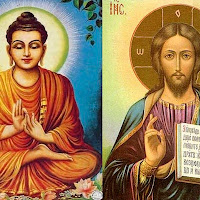
Two religions, one message: love everyone.
"The provider of agape love gives selflessly, expansively, and intentionally for the vitality of the receiver. Individuals who provide agape have a felt sense of loving responsibility and devotion [to] the receiver; they do not expect anything in return for their love," she explains.

While many kinds of love can have similar characteristics, the traits of agape love are unique: Agape love is filled with kindness [with metta most often being translated into English as "loving-kindness"] and wants only the best for the other person. Agape love accepts others unconditionally, with no expectations of being reciprocated.

Buddhism's Goddess of Compassion is a transformed Vedic Avalokiteshvara, a Mother Mary.
This would be tremendous merit if these monastics achieve absorption or any of the four stages of awakening. To give even to an ordinary person is merit; to give to a moral person is more powerful; to give to noble person (stream enterer to arhat) is merit stored up for many lives. See The Workings of Karma by the awakened Pa Auk Sayadaw).
.
Who is the greater beneficiary, giver or receiver?
Agape love sacrifices for the good of the other person. It can sometimes even be viewed as a thankless type of love. Agape love is not envious, proud, or boastful. Agape love is patient, giving others grace. It doesn’t hold grudges.

“Agape is a way to love someone that accepts and embraces the wholeness of each person without reservation,” notes Dr. Daniel Boscaljon, Ph.D., executive coach and founder of the Healthy Workplace Academy.
  • What is Greek for self-love? Biblical Onanism?
    [COMMENTARY: The key difference between Buddhist and Christian views of karma (the idea that "we reap what we sow") is that in Christianity it is God noticing and rewarding, whereas in Buddhism it is an impersonal law of the universe, as if we or the universe notice and we and the universe bring forth fruit of seeds previously sown. "God" by many Christians is understood to just be a way of personalizing and making comprehensible the transcendent, the imminent, the incomprehensible. Like, imagine a GOD so great, a Brahman (the Reality behind all of the illusion) as the Vedas and Hinduism would say, that works itself out, and in that sense, that GOD is not separate from us or the ego or the selfish sense-of-separation we call "I." Then not being different, Thou art that and That thou art (Tat Tvam Asi). So what is altruism in right view but self-love and love for other and the very same thing? And Jesus (Issa) said, "Love the other and hate yourself," right? The good rabbi said no such thing. He said, "Love the other just as you love yourself." Well, if I don't love myself first, how shall I love another? Probably as well as I love myself, which isn't well at all because I thought I was supposed to hate myself (and sacrifice with resentment and expectations) to love others better.
  • I better dig two ditches bcuz I want you to lose.
    There's a better view, a secular Western philosophical tenet dubbed "enlightened self-interest." It means realizing that helping others is helping ourselves. Any good guru will tell you it is us we are releasing when we forgive. Ask Jesus. Ask Krishna (the All Attractive), Vishnu (the Preserver), Brahma (the Creator), Mohammed (the Prophet), even Shiva (the Destroyer) knows it. Even a selfish person (the "I") might already realize it. In selfishness, I keep all the seeds and reap all the fruit and keep all the seeds from that fruit and get all the more fruit during the next reaping. No one else gets anything except that they beg it from me. I become a King Monsanto, King of Kings, and no one eats unless they pay me! I'll sure be popular then, won't I? Actually, until disaster strikes, even long before then, everyone will hate me.
  • I don't know. Both of you make so much sense.
    Instead, thinking ahead, I give seeds to everyone. And everyone had fruit, and everyone gave, and whenever disaster struck for anyone, we helped one another and were all strong. There was always fruit even when I didn't raise a finger of effort to plant any, and back then our collective "orchards" were called the Great Forest. Oh yeah. That's how nature works. And it is in my enlightened self-interest to help my neighbor and do unto others as I would have it done to me. Oh, maybe that's why the world calls that the Golden Rule. Everyone likes gold.
  • Ah, the religions agree: love, love, love
    This is summarized not only by the Buddha in many ways singing the praises of metta (universal friendliness) in this direction, in that direction, in every direction, all ten thousand directions, but very tersely in a nice Jewish story where a rabbi will win a convert if he can explain the whole of The Law (Halakha, all 613 Commandments that Judeo-Christianity turned into a handy stone tablet of Ten of the biggies to rule and oppress the subjects of the Holy Roman Empire), "The Way to Behave," in brief. The wise rabbi does: "What is hateful to you, don't do that. That's the whole of the Law; the rest is commentary" (The Forward). See Judaism’s Golden Rule (aish.com). Or the slogan, "Whatever you yourself like, treat others that way" serves as a shorthand so we always know what to do in any situation.]
Kwan Yin (Guanyin, Kwannon)
"It's intimate, able to recognize and appreciate someone’s wholeness — even if that person can’t."

The entire mindset behind agape love is selfless sacrificial service [called seva in Hinduism and Sikhism] to others.

While it may seem a lofty ideal, striving to exhibit this type of love can have a positive impact on our relationships, on our environment, and on society at large.
The impact of agape love
Modern Christianity emphasizes the God as Love message more than the Old Testament did.

Agape is skillful karma with happy results.
We don’t live in an ideal world. That is, our circumstances are less than ideal here. This is not the world of Platonic forms. We are, according to Buddhism, on the lowest of the 31 Planes of Existence (see right) that can be considered "good." It's a precarious place to be. It's all downhill below this, as regards rebirth, with unfortunate beings reborn on and falling into subhuman planes: ghosts, animals, demons, hellions (when all 31 are reduced to 6 general categories, adding humans and light beings or devas above us even though there are many more worlds than this would suggest).

People are human, and even the most disciplined, selfless individuals have rough days. But if we’re striving to think of others, trying to be considerate, kind people who exercises friendliness and even compassion (Buddhist karuna), and someone who works to show others agape (altruistic) love, it can have a positive impact on us physically, emotionally, and mentally.
.
Selfishness is not good, but self-love is.
“Agape love improves physical well-being because it eliminates much of the unneeded stress caused by repression and rigidity,” says Dr. Boscaljon.

“Because they experience agape love for themselves, it leads to a deep sense of true acceptance and belonging that leads to mental wellness,” he adds.

“The practice also improves someone’s emotional well-being, offering a sense of deep connection and meaningful belonging to each situation.”

Research backs this up, showing that being kind and helping others improves your mental health [2.]

We feel good when we can genuinely help someone else. That altruistic feeling shows up in many ways in our everyday lives.

Cultivating agape love

Avalokita hears the cries of the world
The popular “pay it forward” idea, where we’re in a fast-food line and pay for the person behind us without their knowledge, is a relatable example of agape love in action.

Watching a person in the grocery store line struggle to pay for his or her items and stepping up to provide payment with no motive other than wanting to help, is a gesture that shows agape love.

Putting aside what we’re doing to listen to someone who is going through a hard time or who is lonely is an act that demonstrates agape love.

When we extend that type of generosity into our relationships — whether it’s our friends, associates, parents, siblings, or significant other — it can have a revolutionary impact that extends beyond us.

From...Depression to Hope
“A commitment to agape love can absolutely transform one’s relationship with [oneself] or others,” Dr. Boscaljon states.

“The power of respectful acceptance overcomes feelings of guilt, shame, and hopelessness in one’s own life. It enhances a sense of communion and community. It can then extend this to others in meaningful and empowering ways,” he concludes. Original unedited version: verywellmind.com

Sources
  1. Online Etymology Dictionaryagape.
  2. Happy to help? A systematic review and meta-analysis of the effects of performing acts of kindness on the well-being of the actor. Journal of Experimental Social Psychology. 2018;76:320-329.
  • Verywell Mind uses only high-quality sources, including peer-reviewed studies, to support the facts within articles.
AUTHOR: LaKeisha Fleming is a prolific writer with over 20 years of experience writing film and television scripts, magazine articles and digital content. She is passionate about parenting and family as well as destigmatizing mental health issues. Her book, There Is No Heartbeat: From Miscarriage to Depression to Hope, is authentic, transparent, and provides hope to many.
























