Showing posts with label olmecs. Show all posts

Thursday, January 29, 2026

Pyramid Review: Exploring Mexican sites

(Pyramid Review) Yaxchilan: The most inaccessible archeological site in Mexico, Jan. 29, 2026

Yaxchilan necropolis ruins (Wikipedia)
Yaxchilan
(yacht-chee-lan) is an ancient Maya city located on the bank of the Usumacinta River in the southern state of Chiapas, Mexico, near Guatemala (named after the Buddha Gautama plus the word mala or religious beads*). In the Late Classic Period, Yaxchilan was one of the most powerful Maya states along the course of the Usumacinta River, with Piedras Negras ("Black Rocks") as its major rival [1]. Architectural styles in subordinate sites in the Usumacinta region demonstrate clear differences that mark a clear boundary between the two kingdoms [1]. More: Yaxchilan, Mexico
Mexico built world's largest pyramid
Buddhists came to California and Mexico BEFORE Christianity? Yes, according to American Edward Payson in a miraculous book published more than a century ago:

Wednesday, January 14, 2026

Huge underground city found in Mexico?


Skull rack of sacrificial victims? (Cavan/Alamy)
(BBC) Hidden mere meters under Mexico's modern capital, a series of temples, royal palaces, and mysterious artifacts from an ancient kingdom are being unearthed.

As we descended 7 meters (21 feet) below Mexico City’s Metropolitan Cathedral, I could feel my heart race. I had heard whisperings about the temples buried under this iconic cathedral – one of the largest and oldest in Latin America ­– but since their discovery in the 1970s, it had not been possible to see them.

We the Mexica [of Mexico] are not "Aztecs"
Now, I was part of a public tour that lets visitors explore the ancient secrets that lie just below this [Catholic] church’s depths.

Nearly 500 years after Spanish Conquistador Hernán Cortés toppled the Aztec capital of Tenochtitlán [the "Place of Nopal Cactuses"], the remains of the ancient metropolis continue to lay hidden mere meters under modern-day Mexico City.

The Spanish [invaders from Spain] started building the Metropolitan [Catholic] Cathedral in 1573 above on top of the sacred Aztec (the “Mexica” as they called themselves) temples as a symbol of conquest. More

Monday, December 29, 2025

Mexican DNA: Who were the Aztecs?


(Beyond Explorer) DNA just revealed who the Indigenous "Aztec" (formerly "Mexica") Native Americans really were with an Austral-Asian signature from 15,000 years BP and a large mixing ground with waves of migration. Who were the Olmecs with their giant heads? Africans who came by boat or dark-skinned Indigenous tribes from the region?

Monday, August 4, 2025

Aztec's Tenochtitlan (Mexico) turns 700


They Had Names
New mind-blowing discoveries about ancient America
: Where are the ancient ruins of North America? In Europe, they’re everywhere—henges, castles, cathedrals, medieval cities. But in the USA, the historical attractions are all post-European arrivals. This video shows Dr. Nathaniel Jeanson uncovering some surprising new discoveries about the ancient civilizations here in the United States just north of Mesoamerica. See They Had Names for details.

Discover the three pillars of Aztec genius in Tenochtitlán

Internal empires flourished before Spain entered
(LatinoAméricaAyer) Auto dubbed. How did the Aztecs (early Mexicans) build a metropolis for 200,000 people on a hostile lake in what is now Mexico City? The answer isn't luck or magic, but one of history's greatest engineering feats. In this documentary, we uncover the incredible hydraulic technology that enabled the construction of Tenochtitlán (the foundation of Mexico City) and changed the course of civilization in Mesoamerica, which is part of North America though no one likes to say so).

Matrilineal Native tribes?
Discover the three pillars of their genius:
  1. Chinampas: The artificial islands that created land out of thin air and fueled an empire.
  2. Aqueducts: The sophisticated double-pipe system that brought pure water to the city.
  3. Dikes: The colossal barriers that tamed flooding and controlled the lake's chemistry.
Genocide of Native Americans in North America continues

Get ready to change your perspective on the ingenuity of the Aztec Empire built not on luck but engineering [likely enabled by extraterrestrial and interdimensional advanced technology]. Fascinated by history and ancient engineering? Remember to leave a like, share this video with someone who needs to see it, and subscribe to catch upcoming documentaries.

New genetic research reveals SHOCKING truth about the Aztecs
(Answers in Genesis) Aug. 1, 2025: This is the long-lost history of the Aztecs (the Mexica tribe). Join Dr. Nathaniel Jeanson as he reveals new genetic discoveries about this early American society that will blow the mind. Dr. Jeanson’s book, They Had Names, is now available: AnswersBookstore.com

Thursday, June 26, 2025

Secrets of Mexican DNA uncovered


The dark secrets of Mexican DNA uncovered
Casta: Spain's caste system
(Ancestry Code) June 22, 2025: Underneath the surface of modern Mexico (officially called the United Mexican States) lies a tangled legacy of Indigenous ancestry, Spanish (Iberian European) conquest, and a brutal caste (casta) system designed to divide and control based on racial superiority with pure peninsular Spanish at the top. This video uncovers the shocking genetic and social consequences of colonization, from the erasure of native bloodlines to the invention of racial categories that still echo today.


Did this video change how you see your heritage? Go ahead and drop a comment below 👇 #ancestry #hiddenhistory #dna #mexico
  • Crystal Quintero, Pfc. Sandoval (eds.), Wisdom Quarterly

Friday, April 25, 2025

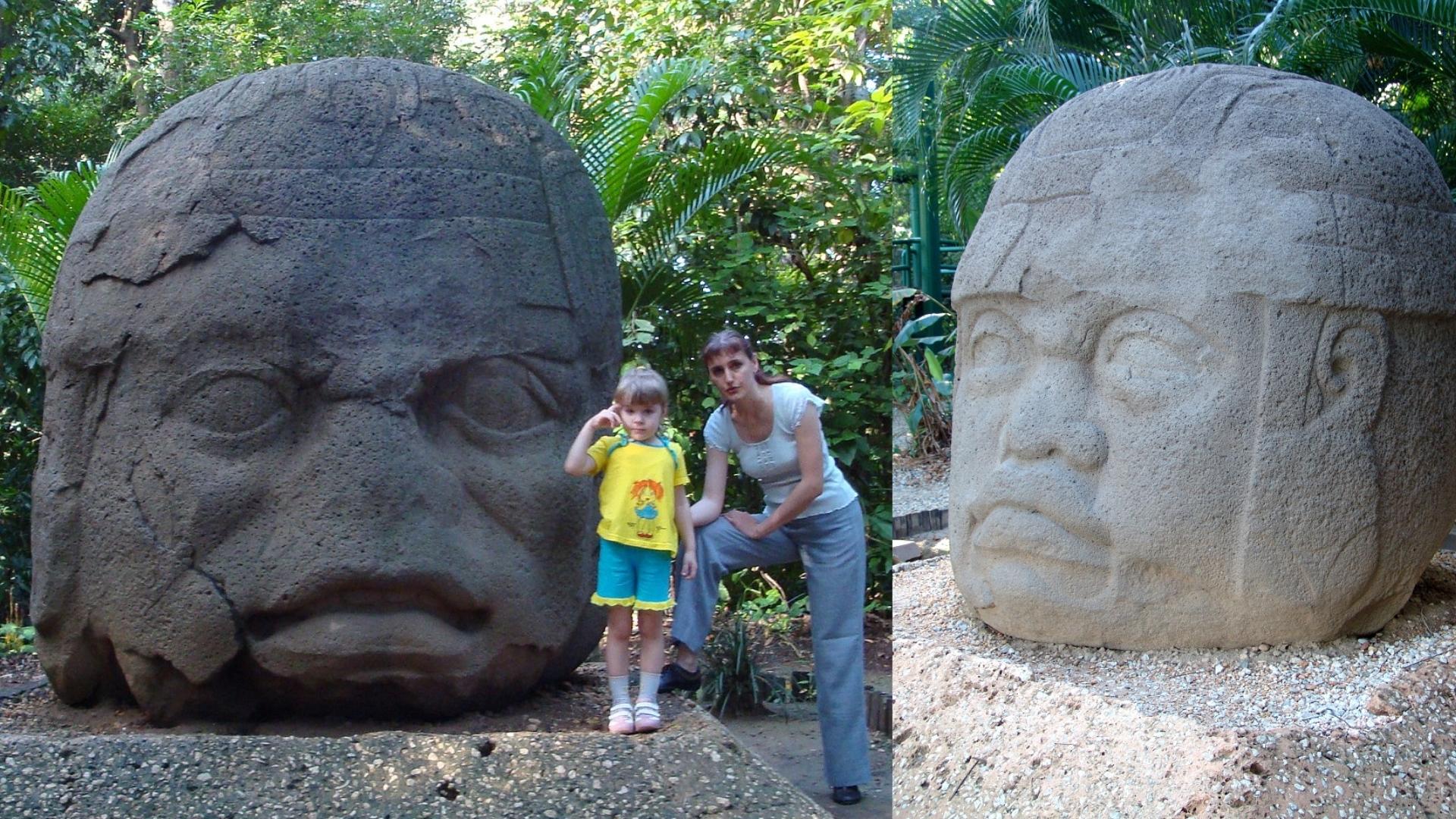
Africans discovered America: Olmecs

Colossal Olmec stone head - Discovered at the La Venta site in Tabasco State, Mexico, 1945-55
The mysterious giant stone heads of the Black Olmec Civilization of Mexico and Mesoamerica
San Lorenzo Monument 3 - The Black Olmecs of Africa, Xalapa (wiki)
La Venta [sacrificial?] Altar 5 (Ruben Charles) - The African Olmecs: were-jaguar

The African empire in America they tried to hide from us
The Olmec: Original Black civilizations of Mexico and Mesoamerica (realhistoryww.com)
Los Olmecas ("the Olmecs") did not call themselves that but were dubbed much later.

Prof. Leo Wiener
(Black Stories Untold) History tells us that Cristobal Columbus "discovered" America — but what if that’s not the whole story? Evidence suggests that African explorers arrived in the Americas long before European conquest, leaving their mark on ancient civilizations like the Olmecs. From striking stone carvings to cultural similarities, the clues are there — but mainstream history refuses to acknowledge them. Who were these early Black navigators? How did they shape the Americas? And why has their story been buried? Who was Harvard's Leo Wiener#blackhistory #columbus

Who were first Mesoamericans? Indigenous Mexicans blended with Africans? Drupal

We look alike? It's a total coincidence, Man. I've never been here. (Olmec Heads of Africa)

Saturday, December 7, 2024

Mexican race mind-blowing DNA results


.
Mind-blowing Mexican race and DNA results

Race, ethnicity, nationality, tribe, hair color?
(Evo Inception) Oct. 26, 2024: Here is an in-depth analysis of what makes "Mexican" genetics unique. First, the country is not called Mexico but the United Mexican States (Estados Unidos Mexicanos). Who lives there, blended with the Indigenous people, and where did they come from?

TIMECODES
  • 0:00 - Introduction
  • 0:05 - Who is defined as Mexican?
  • 0:58 - Race in Latin America
  • 1:23 - Colonial Era
  • 2:04 - [Euro-racism] Casta System
Spain brought a racism based on European blood and skin color/shade
  • 3:07 - First racial shift
  • 6:38 - Spanish dominance
  • 8:23 - Mestizos ("Mixed, Blended")
  • 10:07 - East Asian influence
  • 12:14 - U.S. definition of race
Meet the Redhead Latina: Mexican Ana Saia
(Great Day Houston) The word "Hispanic" encompasses a large group of people whose heritage includes roots from imperial Spain. Especially going south of the border, one soon realizes that it's not related to one color of skin, eyes, or hair.

The way Ana Saia looks throws some people off, but she's Hispanic and calls herself "The Redhead Latina." She shares her Mexican American heritage with over 3,000,000 followers on TikTok.

Her most popular videos include her blond Mexican mom. A so-called No sabo ("I don't know") kid is a child who comes from a Latin or Hispanic family yet speaks little to no Spanish. Because of this, s/he can sometimes be treated as an outsider in the culture.

Saia created a post explaining how to survive a family reunion as a No sabo kid. She grew up listening to Spanish being spoken at home in Las Vegas but continuously works to improve her Spanish skills to clean up that pesky Gringo accento or "English accent" many tend to have due to the culture clash.

As a social media personality, she is often faced with backlash and hateful comments, as if she were an impersonator. But she loves to turn a bad situation upside down. She is advocates against bullying and often finds these situations to be opportunities to help others deal with insecurities.

To watch Ana Saia's videos, follow her on TikTok@saianana tiktok.com/@saianana?lang=en or Instagram@anasaiaofficial. She also makes longer-form videos on YouTube: @saianana

Good Day Houston Twitter: greatdayhouston GDH Facebook: greatdayhoustonGDH Instagram: greatdayhouston, GDH Tik Tok: greatdayhouston.

Ask a Mexican! with Gustavo

Since 2004, Gustavo Arellano has written the wildly popular -- and wildly politically incorrect -- Ask a Mexican! column in the OC Weekly.
In each installment, the California-born Arellano answers reader questions about Mexican-American (Chicano/a) mores that rarely get tackled in day-to-day conversation even in blended Alta California.

Ask a Mexican (Gustavo Arellano)
He's discussed whether it's safe to shop for prescription drugs in border towns, why Mexicans eat so many tortillas, and if it's common for Mexican men to wear necklaces bearing their mothers' names. (It's not, cautions Arellano, and probably a sign that a particular hombre has a chica south of the border).

The column, Arellano told Reuters, "started off as a joke. It was supposed to be just a satirical take on xenophobia against Mexicans, and it just exploded." The column now [2011] appears in about three dozen publications and spawned a 2007 collection. (Buy it here).

The column is remarkable not only for its humor and insights but its willingness to talk frankly about topics that usually stifle even the most open conversationalists.

In April 2011, Reason's Nick Gillespie talked with Arellano about U.S. natives' attitudes toward Mexicans, whether half-Mexican Anthony Quinn's performance in Zorba the Greek or Jack Black's Mexican-wrestler turn in Nacho Libre was more offensive, whether Mexicans can or should assimilate, the effect of the Drug War on border relations, and much more.
  • Evo Inception, Oct. 26, 2024; Ana Saia, Great Day Houston, April 5, 2024: Gustavo Arellano (OCweekly.com), Reason TV, 2011; Crystal Quintero, Pfc. Sandoval, Dhr. Seven (eds.), Wisdom Quarterly

Thursday, September 5, 2024

Lost world found in Mexico: SM Ixtapan


We found a lost world in Mexico | Vestigios de una civilización desconocida
(The ARX Project) SAN MIGUEL IXTAPANTejupilco de Hidalgo - Less than three hours from Mexico City lies a lost world of deep basalt canyons, towering mountain peaks, secret caves, and mysterious megalithic stone monuments left by an as yet unknown civilization that could have a connection to the cultures of Peru and South America.
  • [NOTE: The country of Mexico is in North America, but as that is an unpopular thing to say politically and economically, an additional designation was created to distinguish it from North, Central, and South America, and that is called Mesoamerica. The Americas are contiguous and connected.]
In June 2024, The ARX Project Team conducted a successful exploration of the upper course of the Aquiagua ["Here water"] River near the San Miguel Ixtapan Archeological Zone, documenting and mapping a large number of ancient structures including rock shelters, stone terraces and bridges, and a megalithic quarry, containing a huge 25-ton partially carved stone slab.

Evidence strongly suggests that the Aquiagua River provided a direct communication route between the Pacific Ocean and the central Mexican altiplano, by way of the Balsas River.

Explore the mysterious ruins of San Miguel Ixtapan here: • Mysterious Tiwanaku-style Megaliths o...

Future flag design for the great Amero Union
(SPANISH TRANSLATIONEN ESPAÑOL: A menos de tres horas de la Ciudad de México se encuentra un mundo perdido de profundos cañones de basalto, cuevas ocultas, y misteriosos monumentos megalíticos dejados por una civilización todavía desconocida que podría tener alguna conexión con las antiguas culturas de Perú y Sudamérica.

En junio de 2024, nuestro equipo de investigadores recorrió el cauce del Río Aquiagua, cerca de la Zona Arqueológica de San Miguel Ixtapan, documentando una gran cantidad de estructuras de piedra y terrazas sepultadas por la espesa vegetación, así como una impresionante cantera megalítica con piedras de más de 25 toneladas.

Estos hallazgos sugieren que el Río Aquiagua fue usado por los antiguos pobladores de esta región como una importante ruta de comunicación entre el Océano Pacífico, la cuenca del Río Balsas y el Centro de México.

Conoce mas sobre este misteriosa zona arqueológica aqui: • Mysterious Tiwanaku-style Megaliths o... #ArxprojectMX #exploration #archaeology #mexicoantiguo
  • The ARX Project, July 15, 2024; Crystal Quintero, Pat Macpherson, Dhr. Seven (eds.), Wisdom Quarterly

Monday, January 15, 2024

Found: 2,500-year-old megacity in Amazon

Daria Shekina, BBC-Ukraine (MSN, 1/16/24); Crystal Q., CC Liu (eds.), Wisdom Quarterly
Amazonian megacity was home to tens of thousands of people (Unsplash/BBC-Ukraine)
Can we achieve what the ancients did? Building sustainable megacity of future (edie.com)


Lasers can see right through the canopy
Laser technology (known as LiDAR) continues to demonstrate its effectiveness in the Amazon jungle: A group of archeologists in Ecuador (Latin America) has recently employed this technology to find thousands of earthen mounds concealed beneath the forest canopy, according to the scientific journal Science. During a major study of the Amazon jungle conducted by a team of archeologists led by Stephen Rostain from the French National Center for Scientific Research (CNRS), a remarkable discovery was made: an ancient megacity from the time of the Buddha. Using laser scanning technology, numerous structures that reveal hidden and hard-to-detect formations were identified. Mote: Archaeologists uncover ancient 2.500-year-old megacity in Amazon jungle (BBC-Ukraine via MSN)

Sunday, October 29, 2023

The Florentine Codex at Getty Center (11/4)

Adolfo Guzman-Lopez, LAist.com; Crystal Quintero, Dhr. Seven (eds.), Wisdom Quarterly
Older Aztecs were told to describe and draw their culture for a friar aiming to convert them.

To celebrate the launch of the Digital Florentine Codex, join LAist for an outdoor concert debuting an original score by musician Lu Coy (they/them).
The Florentine Codex is a Spanish conquest text
Known for their mastery of woodwinds, electronics, and agile vocals, Coy mines inspiration from ancient texts, stories, and musical traditions, guiding audiences through splendid architectures of ancestral memory.

Musical group Xochi Cuicatl (it/what) and Chris Garcia (he/him) will open the performance.

Introducing the performances is LAist higher education correspondent Adolfo Guzman-Lopez (he/him) and Getty Research Institute researcher Kim Richter (she/her).

They will discuss the historical resonances of the Florentine Codex in Southern California, the ancestral homeland of the Kizh/Gabrieleño/Tongva, Chumash (Malibu), and Tataviam (SFV) people, as well as the Codex’s impact on numerous Indigenous groups throughout the Americas.
ABOUT
  • Lu Coy (they/them) is a Los Angeles-based LGBTQ mixed-media artist and multi-instrumentalist of Mexican and Ashkenazi Jewish heritage. Coy frequently collaborates with other musicians and holds degrees in music performance and composition from the Boston Conservatory of Music and California Institute of the Arts. They have taught for institutions such as the Hammer Museum, California Institute of the Arts, and Plaza de la Raza.
  • Chris Garcia and Xochi Cuicatl are musicians specializing in Indigenous breath, string, and percussion instruments of Mesoamerica and Mexico, including pre- and post-invasion poetry and songs in Nahuatl, Purepecha, Spanish (the language of the colonial invaders), and English.
  • Host Adolfo Guzman-Lopez is an award-winning correspondent on Southern California Public Radio (scpr.org), LAist 89.3 FM, and host of The Forgotten Revolutionary podcast. He has reported on education, politics, arts, and higher education.
  • Kim Richter is senior research specialist at the Getty Research Institute and leads the Florentine Codex Initiative.

Sunday, October 15, 2023

Mayan medicine in danger of extinction

The Yucatan Times, 1/1/20; Crystal Quintero, Xochitl, Dhr. Seven  (eds.), Wisdom Quarterly
Mayan medicine in danger of extinction - The Yucatan Times
Did one culture and one civilization give rise to the next, Maya to Aztec to modern?
One way to ruin knowledge is to run railroads through archeological jungle sites.
Did ordinary humans living in the crowded jungle just start building precise pyramids?
Archeologists discover an ancient Mayan city in the jungle that's been hidden for 2,000 years.
LidDAR reveals what would be very hard to otherwise find up close in dense virgin jungle.

What LiDAR (jungle penetrating radar) reveals are whole highway systems and cities.

Where's Mesoamerica (Mexico)? It is really part of North America, just above Central America

Mayan plaster idol in Honduras, DEA (V. Giannella, contributor via Getty Images)
What's so special about Mexico? It is one of the most beautiful places and a part of California.
.
The world needs curanderos and chamans.
Mayan medicine, the advanced civilization and culture of Mexico and ancient Mesoamerica, is in danger of extinction.

What shamans developed and passed down over centuries to heal the people (with the help of extraterrestrial visitors, teachers, kings, and "gods" who imparted impossibly advanced technology) is now in danger of being lost.

Can botanists, herbalists, and those interested in natural medicines and alternative modalities save knowledge buried in a codex not destroyed by the Conquistadors, Catholic Church, and jealous scholar-priests. The loss of indigenous knowledge is a greater threat than the loss of human languages.

Will the government, suffering from corruption and cartels, muster the resources to save this cultural treasure, or will individual practitioners save enough of it to pass on to one more generation? The Yucatan Times reports: