Showing posts with label edible plants. Show all posts

Friday, May 8, 2026

Wild Food Foraging Ethnobotanical Walk (5/9)


FORAGING WALK — WILD FOOD OUTING
Guide to Wild Foods Useful Plants
Hosted by prolific plant author Christopher Nyerges, nature guide, and founder of School of Self-Reliance: The Wild Food and Self-Reliance Discovery Meetup Group (with 4.9 out of 5.0 stars with 143 reviews) is leading a nature walk:
  • Wild Food Ethnobotanical Walk
  • Saturday, May 9, 2026 10:00 am
  • $65 (seniors and students $45)
To attend and for exact directions, register HERE. Join us for an outing in Los Angeles where we explore the edible, medicinal, and other useful qualities of many of the native plants found in the environment with many introduced (invasive) plants.
Foraging California (Foraging Series)
Both natives and non-native plants will be seen. This is a leisurely walk in the woods. All will also get a chance to taste some of the plants. We will introduce a few basics of systematic plant identification and ways to start a record of various species.

We’ll bring up an important point: Many of the wild plants we see — especially the non-natives — can easily be cultivated in our own yards for ease of harvesting.

There are also local native plant nurseries where we can obtain native plants — such as toyon berries, ceonothus, oak trees, mulefat (Baccharis salicifolia), elder, and so on — to grow them at home, where we can provide the ideal situation for them.

Wear comfortable footwear and bring water and a bowl for eating. This class can serve as credit towards the the School of Self-Reliance Ethnobotany Certificate. Directions sent upon registration.

Saturday, February 14, 2026

Wild Mushroom Fair 2026, Los Angeles


WHAT HAPPENED?
Mushroom heads for all: snug headwear for fans
The Arboretum sold out for everyone who failed to plan. It staggers entrance times, so while it was possible to get a ticket, one would miss most of the fair. The event was packed, the largest in years. Sun broke through the heavily chemtrail sprayed skies. Now the crisscross lines start with perfect X's, which would not happen in nature nor in ordinary flight paths overcrowded LA County. In any case, what was clear was soon covered over in an artificial and no doubt toxin mist. But the sun managed to break through at times. The Fair opened at 9:00 am, the Mushroom Hunt began at 10 with Olga from Smugtown, and it was followed by a fabulous Brando with a culinary demonstration that fed everyone -- hundreds of mushroom fans -- crowding the seating area. It was standing room only after a while, as the samples table was full of gawkers and vendors were hard at work keeping up with demand: medicinal tinctures, popular red-and-white mushroom hats (French berets), grow bags, dried delicacies, books, guide, posters, clothing, jewelry, and services. This is the only event that ever provided samples such as a choice of savory soup, sauteed morrells, black trumpets, or all three. There was a vegan food booth in the back with a line out the door. Then came the first speaker, Mycologist Else, talking about spores, which exists in the billions and trillions. "Spores are not seeds," she emphasized. Each needs a mate since one can create a small mat of tubule structures but must then meet with a partner spore to continue onto the mycelia phase. Mycelia is what keeps forest together, the Woodwide Web, breaking down matter and communicating between individual plants. (See Paul Stamets' Mycelium Running). A "mushroom" is the fruiting body of underground mycelia, what we see popping up from the ground or growing on trees. To study mushrooms and fungi soon becomes the study of trees and ecosystems. Our natural world would not be what it is without fungi.

EVENT DETAILS
LA Mycological Society (lamushrooms.org)
Where, oh where, do the wild things grow? We're determined to find out!

On Sunday, February 15, 2026, from 9:00 am to 4:00 pm, we're trekking over to Arcadia in the San Gabriel Valley, next to Pasadena, to the Los Angeles County Arboretum and Botanic Garden.
How could an entheogen bring out the divine?
It's time for the 42nd Los Angeles Mycological Society (LAMS) Wild Mushroom Fair. This event is FREE (with the price of admission to the Arboretum). RSVP:

Wild Mushroom Fair Schedule
  • 9:00 am - Wild Mushroom Fair opens
  • 10:00-11:00 am - Mushroom Walk with Olga Tzogas
  • 11:00 am - 12:00 pm (noon) - Culinary mushrooms of California cooking demo with Brando Farr
  • 1:00-2:30 pm - Fascinating mushroom spores keynote address by Else Vellinga
  • 2:30-3:00 pm - Art and photo contest winners announced
  • 3:00-4:00 pm - Feces, corpses, and the business of fungal decay talk by Sam Shoemaker
  • 4:00 pm - Fair closes
TICKETS: Admission to the Wild Mushroom Fair is FREE with admission to The Arboretum. Tickets are available online. Act now because time slots may sell out as they have before. Check ticket availability here: Hours and Admission (The Arboretum).

Admission to The Arboretum: $18 for adults, $14 for seniors (62 and over), $14 for students with school ID, $8 for children (ages 3-12), and children 2 and under $0 (free). Arboretum members: free. Parking is free. More info about LAMS events is available at lamushrooms.org/events.

DIRECTIONS: The Los Angeles Arboretum in Arcadia: lamushrooms.org/locations

Sunday, February 1, 2026

Plants are conscious, emit sounds, TALK


The Secret Life of Plants
Talk to plants? While we may not be able to hear them, plants could very well be talking back. [Perhaps they are not great listeners, after all, but they are conscious enough to "speak"]. They talk all the time and especially if they are having a bad day. (Did we forget to water them again?) For the first time in the world, Tel Aviv University (TAU) researchers recorded and analyzed sounds distinctly emitted by plants. The click-like sounds, resembling the snap of popcorn, are emitted at a volume similar to human speech but at higher frequencies, beyond the hearing range of the human ear.

Professors Yosi Yovel and Lilach Hadany (TAU)
Researchers: "We found that plants usually emit sounds when they are under stress, and that each plant and each type of stress is associated with a specific identifiable sound. [That is a distinctive mark of speech rather than just sound making.] While imperceptible to the human ear, the sounds emitted by plants can probably be heard by various animals, such as bats, mice, and insects." More
  • Science already knew plants "communicate" with chemical signals and scents (VOAs) through roots, leaves, stems:

Listen to sound plants make when 'stressed'

Indian scientist Bose proved it
(The Independent) April 3, 2023: Plants emit [high pitched] sounds when they are "stressed," a group of scientific researchers has discovered.

A team at Tel Aviv University in Israel recorded and analyzed click-like sounds resembling the popping of popcorn. They found that the sounds plants emitted are at a volume similar to human speech, but humans cannot hear them due to the high frequency.
Stone, metal, mineral, crystal are all conscious.
"Each plant and each type of stress is associated with a specific identifiable sound.

"While imperceptible to the [ordinary] human ear, the sounds emitted by plants can probably be heard by various [naturally more sensitive] animals, such as bats, mice, and insects," the researchers said.


Meditation? How conscious are plants?
Sujata helped Siddhartha become the Buddha because she thought he was a tree spirit.
.
Journeys with Plant Spirits
Meditation journeys with specific plant and tree spirits? Yes, Mugwort, Rosemary, Dandelion, Yew, Elder, and Wormwood do it. How can we [humans] achieve a calm mind, cleanse our energy fields, and connect with our hearts in preparation for meditating with plants?

Journeys with Plant Spirits includes a progressive series of introductory meditations, adapted from ancient wisdom traditions, to lay the foundation for working with plant spirits.

Emma Farrell explains how to take a connection and relationship with Nature to a deeper level to access plant spirit healing through meditation with plants.

Dryad (tree spirit) lives in tree
Exploring the nature of plant consciousness and how plants perceive, she details how to achieve a calm mind, cleanse an energy field, and connect with heart in preparation for meditating with plants and trees [dryads], showing how the plants can support us not only in the cleansing process but also in teaching us how to sense what is in our energy field.

Offering a progressive series of preparatory meditations adapted from shamanic and indigenous wisdom traditions, the author reveals how to lay the foundation for communicating, working, and developing relationships with plant and tree spirits -- for spiritual connection, personal development, and inner peace.

She then presents meditation journeys with specific plant spirits, focusing on the frequencies within the plant’s bioresonance that can assist us.

Siddhartha awakened with the help of a Tree.
For example, meditation with Mugwort works with the plant spirit’s qualities of alignment and self-awareness to assist with grounding and developing inner vision, whereas Dandelion helps break old habits by working with the plant’s qualities of release, reconnection, and fearlessness.

Each plant is an expression of the spiritual force of Mother Nature and carries a unique blend of her medicine and wisdom. This book details step-by-step how to effectively work with plant spirits for emotional and spiritual healing, enabling us to awaken spirit to become truly multidimensional and whole. More
ABOUTThe Independent: making change happen. The Independent is the world’s most free-thinking news brand, providing global news, commentary, and analysis for the independently-minded. Connect with The Independent (published in Britain): Check out full video catalog: theindependent. Videos, daily editorials, and more: theindy.comWatch more videos at the Independent TV: independent.co.uk/tv/edit... Subscribe to Independent.

'Must-Know Go-To Survival Plants' (book)

Must-Know Go-To Survival Plants of North America

American plant expert Christopher Nyerges
Local guide and prolific author Christopher Nyerges, founder of the School of Self-Reliance, and his wife Helen Nyerges have 4.0 out of 5 stars (with 1 review) with their guidebook Must-Know Go-To Survival Plants of North America.

This easy-to-read book includes a line drawing for each plant and photos that make identification easy. There is also a numerical graph that gives each plant a “score,” depending on how useful the plants are for
  • food,
  • medicine,
  • water,
  • fire,
  • shelter, and
  • other uses.
There is also a guide on how to use and store plants, showing whether a plant can be eaten raw or cooked, and whether it is best when stored dried, frozen, or pickled, or all three.

The authors include plants readers are likely to find anywhere across North America. They also include plants they use most of the time because these plants are widespread, common, easy to recognize, and good tasting.

Also available on Amazon
The book contains 29 entries, though it covers many more than 29 individual plants. For example, in the tree section, there is a discussion of elderberries, oaks, and willows. What they say about these three genera of trees is applicable to every species worldwide of elders, oaks, and willows.

There are 20 species of Sambucus (elder) worldwide, about 600 species of Quercus (oak trees) worldwide, and about 400 species of Salix (willows) worldwide. What is written about Rubus (blackberry) applies to all species, and comments about cattail apply to all 15 species worldwide.

The book talks about individual species used as food -- such as chickweed, lamb’s quarter, and purslane. Several in the section on herbaceous plants contain many individual species, such as grasses, with about 10,550 species worldwide, and onions of which there are about 500 species worldwide, and seaweeds.

Seaweeds are marine algae, divided into the three major categories: green, red, and brown for a combined total of about 10,000 species worldwide.

The book is a refreshing addition to any botanical collection whether one studies as a novice or expert.

Friday, January 16, 2026

Happy Int'l Hot and Spicy Food Day


Favorite: green curry over rice
There is a world of Buddhist vegetarian cuisine. What is so good about vegan and vegetarian Thai and Indian foods, Chinese and Korean? Curry? No, it's that they are spicy and flavorful. But even Chinese food has a hot source call Szechuan. Mexican food (like sauteed fajitas) is the most popular cuisine in the USA. Why? It might have something to do with the spicy, freshness, crispy crunch, and health benefits -- greens, chiles, lemon, peppers, beans, and whole grains (at least in the original indigenous form). Many Buddhist countries, which are renowned for their calm, cool, and collectedness -- sure do offer a lot of spice. It is the characteristic of hot place, particularly tropical ones like Theravada Sri Lanka.
Better than meat? Plant-based proteins

Monday, July 7, 2025

Happy World Chocolate Day (7/7)


I must be a hybrid space alien-terrestrial human Earthling because I love sweet cacao paste.
.
I'm a substitute love drug, so go easy.
Today is World Chocolate Day. But there's always tomorrow, which allows for the addition of almonds. What joy!
Chocolate in its rawest form: fruit
We look forward to National Chocolate with Almonds Day when it pops up on our calendar every July 8 (NATIONAL CHOCOLATE WITH ALMONDS DAY, July 8, 2025) and we celebrate one of the world’s most popular confections.
We at NT confess, this national day is not just another day we circle on our calendar. We also add this one to our to-do list for today so we don’t miss out. We know we really don’t need a special day on the calendar to indulge in one of our favorite guilty pleasures.


Mexico invented chocolate (Aztec Codex)
But doesn’t having a day on the calendar to celebrate such a heavenly confection help negate the guilty part of a guilty pleasure? We think so.

Today, we are indulging unashamedly because chocolate [Theobroma cacao fruit seeds or nibs] and almonds are incredibly satisfying. This makes us wonder if the reason we crave chocolate with almonds and find the combination so satisfying is because our bodies know what is good for us [like the "gods" or theo knew, presumably because they were advanced alien life forms looking for high antioxidant foods].

[Dark] Chocolate and almonds both are separately documented to have heart health benefits. More

Thursday, May 29, 2025

Dried plants bring dead land to life

Vegetation restoration and its environmental effects on the Loess Plateau, China (MDPI.com)

How could dead and dried plant matter bring a mountain and a dry, dusty desert plateau back to life, making a wasteland lush with green plants and a restored ecosystem after its manmade ruin?


The Loess Plateau
[a] is in north-central China. It is formed of loess, a clastic silt-like sediment formed by the accumulation of wind-blown dust. It is located southeast of the Gobi Desert and is surrounded by the Yellow River. It includes parts of the Chinese provinces of Qinghai, Gansu, Shaanxi and Shanxi [4].

The depositional setting of the Chinese Loess Plateau was shaped by the tectonic movement in the Neogene period, after which strong southeast winds caused by the East Asian Monsoon transported sediment to the plateau during the Quaternary period [5].

The three main morphological types in the Loess Plateau are loess platforms, ridges, and hills [4], formed by the deposition and erosion of loess.

How could dried plants give life to dead mountain?
Most of the loess comes from the Gobi Desert and other nearby deserts [6]. The sediments were transported to the Loess Plateau during interglacial periods by southeasterly prevailing winds and winter monsoon winds.

After the deposition of sediments on the plateau, they were gradually compacted to form loess under the arid climate [4]. Loess Plateau
What's happening in the world?
(DemocracyNow.org) World headlines for May 30, 2025

Friday, April 25, 2025

Africans discovered America: Olmecs

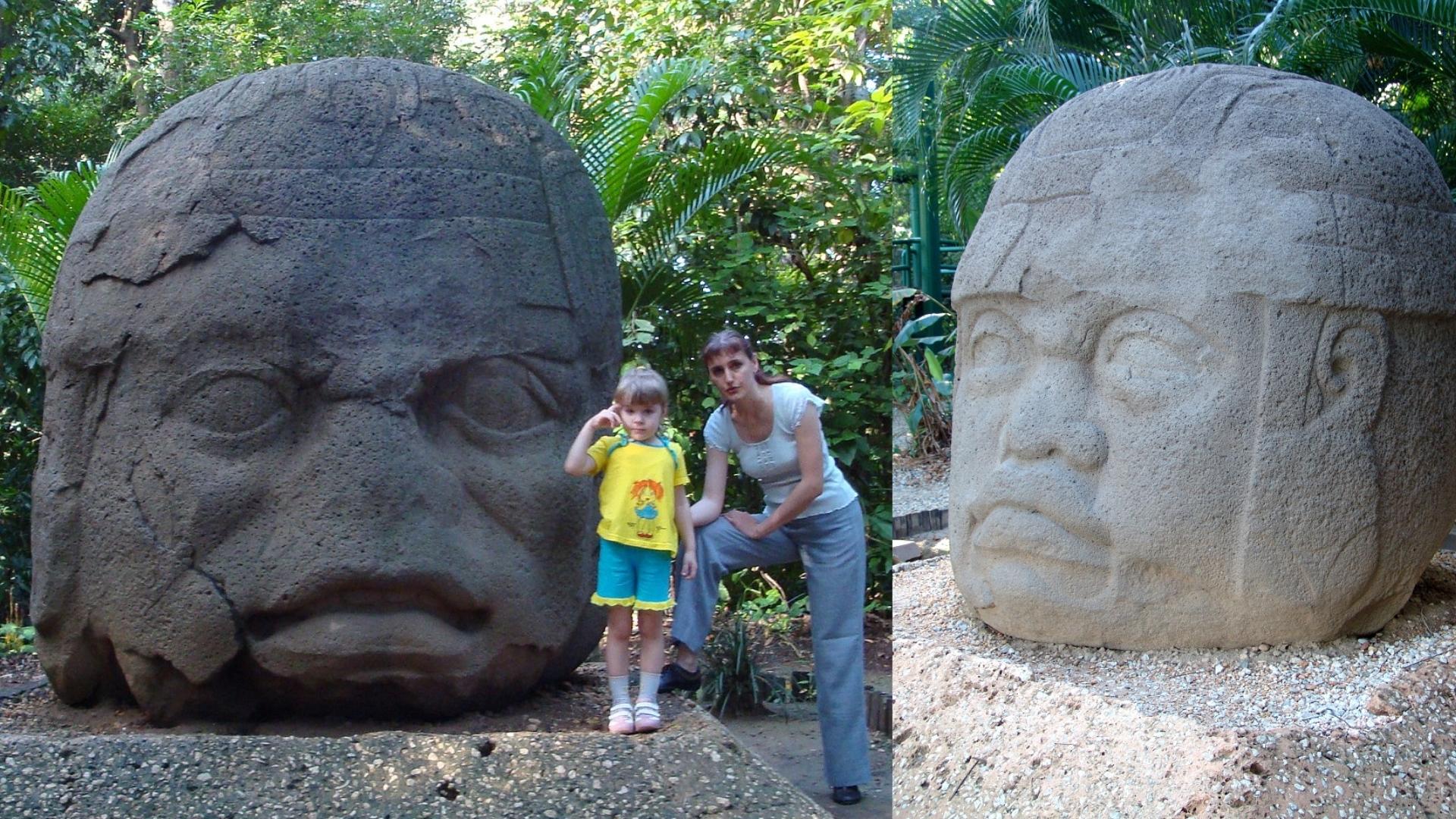
Colossal Olmec stone head - Discovered at the La Venta site in Tabasco State, Mexico, 1945-55
The mysterious giant stone heads of the Black Olmec Civilization of Mexico and Mesoamerica
San Lorenzo Monument 3 - The Black Olmecs of Africa, Xalapa (wiki)
La Venta [sacrificial?] Altar 5 (Ruben Charles) - The African Olmecs: were-jaguar

The African empire in America they tried to hide from us
The Olmec: Original Black civilizations of Mexico and Mesoamerica (realhistoryww.com)
Los Olmecas ("the Olmecs") did not call themselves that but were dubbed much later.

Prof. Leo Wiener
(Black Stories Untold) History tells us that Cristobal Columbus "discovered" America — but what if that’s not the whole story? Evidence suggests that African explorers arrived in the Americas long before European conquest, leaving their mark on ancient civilizations like the Olmecs. From striking stone carvings to cultural similarities, the clues are there — but mainstream history refuses to acknowledge them. Who were these early Black navigators? How did they shape the Americas? And why has their story been buried? Who was Harvard's Leo Wiener#blackhistory #columbus

Who were first Mesoamericans? Indigenous Mexicans blended with Africans? Drupal

We look alike? It's a total coincidence, Man. I've never been here. (Olmec Heads of Africa)