Showing posts with label carvings. Show all posts

Friday, August 14, 2026

Humans with undiscovered alien tech?

Carvings in Buddhist-Hindu Khmer temple walls in Cambodia show many strange things.
The Egyptian plateau has an underground world under the sand -- not built by humans.

Remarkable ancient carvings portray humans using undiscovered technology
Ancient carvings found across the planet are turning heads for good reason. They show human-like figures holding what looks like pieces of advanced technology no one can identify. From the lush jungles of the Americas (Turtle Island) to the dry plains of Turkey (Anatolia) to underground caverns beneath the Great Pyramid of Giza, each carving adds to the puzzle. What were Buddhist and Hindu artisans carving on temple walls all over Cambodia, Indonesia, Laos, and Thailand? Researchers continue to study these discoveries, hoping to understand what human beings thousands of years ago were really trying to show through stone and symbol. More: (MSN) Science: Remarkable ancient carvings portray humans using undiscovered [possibly alien] technology
  • Jay Marc Nojada, It's Blossom, 11/25/25; Seth Auberon, Pfc. Sandoval (eds.), Wisdom Quarterly

Thursday, January 29, 2026

Angkor Wat: LiDAR finds underworld? (PBS)


Naga city under ancient architecture?
WATCH FREE NOW: "Angkor: Hidden Jungle Empire" | full documentary | NOVA | PBS

The Khmer "Leper King"
(NOVA PBS Official) Premiered Jan. 28, 2026: New evidence sheds light on the remarkable life – and mysterious collapse – of the ancient Buddhist/Hindu jungle city (150+ square miles in size like Denver).

Uncover the lost secrets of a once-mighty empire. The massive capital City of Angkor [aka Yaśodharapura, City of Yasovarman I (or Yasodhara?), with more than one million inhabitants in ancient times], the seat of the great Khmer Empire in Southeast Asia for 500 years, was once the biggest city in the world.
Khmer Empire (Wiki)
For centuries, this incredible civilization flourished, building the largest religious monument on Earth, Angkor Wat (one square kilometer wat "Angkor Temple"), and mastering urban engineering in a challenging landscape. But then it was mysteriously abandoned, swallowed by the jungle.

Now, cutting-edge technology and new discoveries are finally revealing how this astounding empire rose to global prominence – and what likely led to its devastating collapse.

Follow a scientific detective story that is challenging everything we thought we knew about this ancient Buddhist-Hindu metropolis.

CHAPTERS
  • Angkor Wat (globetrottergirls.com)
    00:00 Introduction
  • 04:03 True size of Angkor Wat revealed by LiDAR
  • 15:45 Engineering a massive temple on a flood plain
  • 26:26 The kings of the Khmer Empire
  • 35:30 Why was Angkor and Angkor Wat abandoned?
  • 50:01 Conclusion
Danger: Russian tourist attacks

Official website: to.pbs.org/4bfXd12 | #novapbs. © 2026 WGBH Educational Foundation. All rights reserved. This program was produced by GBH, which is solely responsible for its content. This program is made possible by viewers. Support local PBS stations here: pbs.org/donate. Enjoy full episodes of favorite PBS shows anytime, anywhere with the free PBS app:  to.pbs.org/2QbtzhR. 📰 Stay up to date on the latest science discoveries, full episodes, articles, videos, and more by signing up for NOVA's newsletter here: to.pbs.org/4brCC7Y. 🛍️ Shop official NOVA 50th anniversary merch: nova-shop.org 🎙️ Watch NOVA PBS podcast, Particles of Thought, or listen wherever there are podcasts. TAGS: Theravada Buddhism, Mahayana, Hinduism, Khmer Empire, Cambodia, Asian Buddhist temple, LiDAR technology, water, rice agriculture, Angkor Thom, bubonic plague. Follow on social media for more NOVA content:

Tuesday, November 4, 2025

Rock-cut Buddhist temple cave: Karla


Carved Straight from the Bedrock: The Great Chaitya Cave of India
(Ancient Architects) Oct. 7, 2025: There are a number of famous examples of enigmatic rock-cut architecture in the world. India is one place in particular that is famous for its manmade (deva-made) caves.

There are the famous Buddhist Ellora Caves that date back to 600-1000 AD, which includes the breathtaking and seemingly impossible Kailasa Temple, the Ajanta caves, which are even older, but there are also the lesser-known Karla Caves.

They are not all as elaborate as the others, but it is a site that should certainly be on everyone's radar. The Karla Caves are located near Lonavala, Maharashtra, a complex of amazing ancient Buddhist Indian temples carved directly from bedrock, dating back from the 2nd century BC to the 5th century AD.

Maharashtra has many larger examples of artificial (human-made) cave networks, but Cave 8 at Karla, known as The Grand Chaitya Cave, is the largest and most completely preserved chaitya hall of the period with beautiful, ornate architecture, featuring many examples of fine sculpture. Watch this video to find out more about this human wonder of the world.

Subscribe to Ancient Architects, like the video, and leave a comment. All images were Googled and are used for educational purposes only. #AncientIndia #AncientArchitects #India #Buddhism

Buddhism's Karla Caves, India
Magnificent rock-cut hollow hall with stupa
The Karla Caves (also Karli Caves, Karle Caves, Karla Cells) are a complex of ancient Buddhist Indian rock-cut caves at Karli near Lonavala, Maharashtra State.

The site is 10.9 kms from Lonavala. Others in the area include Bhaja Caves, Patan Buddhist Cave, Bedse Caves, and Nasik Caves.

The shrines were developed over the period from the 2nd century BCE to the 5th century CE. The oldest of the cave shrines is believed to date back to 160 BCE, having arisen near a major ancient trade route, running eastward from the Arabian Sea into the Deccan.

The group at Karla is one of the older and smaller of the many rock-cut Buddhist sites in Maharashtra, India.

It is one of the best-known because of the famous "Grand Chaitya" (Cave 8), the largest and most completely preserved chaitya hall of the period, containing unusual quantities of fine sculpture on a large scale [1].

Cross section of Grand Hall with stupa (Karla)
Many traders, Western Satraps of Saka [aka Shakyian, Scythian] origin and Satavahana rulers made grants for construction and support of these caves.

Karla's location in Maharashtra places it in a region that marks the division between North India and South India [2].

Buddhists, having become identified with commerce and manufacturing through their early association with traders, tended to locate their monastic establishments in natural geographic formations close to major trade routes so as to provide lodging houses for travelling traders [3].

Today, the cave complex is a protected monument under the Archaeological Survey of India [4]. More

Wednesday, October 22, 2025

Philippines gold artifacts, no mines


AI depictions should not be taken literally.
(Time forge Stories) BUTUAN, Philippines. This city served as the former capital of the Rajahnate of Butuan before 1001 until about 1521. The city used to be known during that time as the best in gold and boat manufacturing in the entire Philippine archipelago, having traded with places as far as Champa, Ming, Srivijaya, Majapahit, and the Bengali coasts. It is located at the northeastern part of the Agusan Valley, Mindanao, sprawling across the Agusan River. It is bounded to the north, west, and south by Agusan del Norte, to the east by Agusan del Sur, and to the northwest by Butuan Bay. More

Wednesday, September 3, 2025

250K-year-old tools found in MX cave

There are many super-ancient human and alien mysteries throughout the Americas.


250,000-year-old tools in Mexico?! | Hueyatlaco mystery
(Awakened Epochs) What if humans arrived in the Americas not 12,000 years ago but 250,000 years ago? This is the forbidden story of Hueyatlaco, a Mesoamerican archeological site in central Mexico that mainstream history tried to erase.

Discovered in the 1960s and excavated by Smithsonian-backed archeologists, Hueyatlaco revealed stone tools buried beneath volcanic ash dated between 250,000 and 800,000 years old.

When scientists published their results, careers were destroyed, artifacts were confiscated and vanished, and armed men shut down the dig and hounded the participants.

From vanished bones displayed at the Smithsonian, to uranium-series dating, diatom analysis, and eyewitness accounts of suppression, this case challenges everything we think we know about the ancient peopling of the Americas.

Could humans or something like humans, have been in Mexico long before Homo sapiens sapiens supposedly left Africa? Or was this prehistory deliberately buried?

Watch as Awakened Epochs uncovers one of the most controversial and important archeological enigmas of all time.

CHAPTERS
  • 00:00 – Intro: The mystery of Hueyatlaco
  • 01:05 – A carved fossil [green] bone and a vanished artifact
  • 01:57 – Smithsonian and US Geological Survey join the excavation
  • 02:30 – Shocking dates: 22,000 to 800,000 years old
  • 03:06 – Suppression, missing evidence, and harassment
  • 03:42 – Independent dating confirms the impossible
  • 04:12 – Skeptics, flooding theory, and stratigraphy tests
  • 04:47 – Diatom analysis and the case for ancient occupation
  • 05:35 – Eyewitnesses, footprints, and local legends
  • 05:52 – Other evidence: Mastodon bones and white sands footprints
  • 06:15 – Outro: suppression or the truth of human origins?
🔔 Subscribe to Awakened Epochs for more deep dives into ancient mysteries and forgotten civilizations. #Hueyatlaco #LostCivilizations #AwakenedEpochs Connect with Awakened Epochs: 🔱 Exploring humanity's forgotten story 🔱 Uncovering ancient civilizations and lost technologies 🔱 Questioning mainstream historical narratives

DISCLAIMER: This content presents alternative archaeological theories and research findings. Viewers are encouraged to research these topics independently and form their own conclusions about ancient history and archaeological evidence.

Friday, April 25, 2025

Africans discovered America: Olmecs

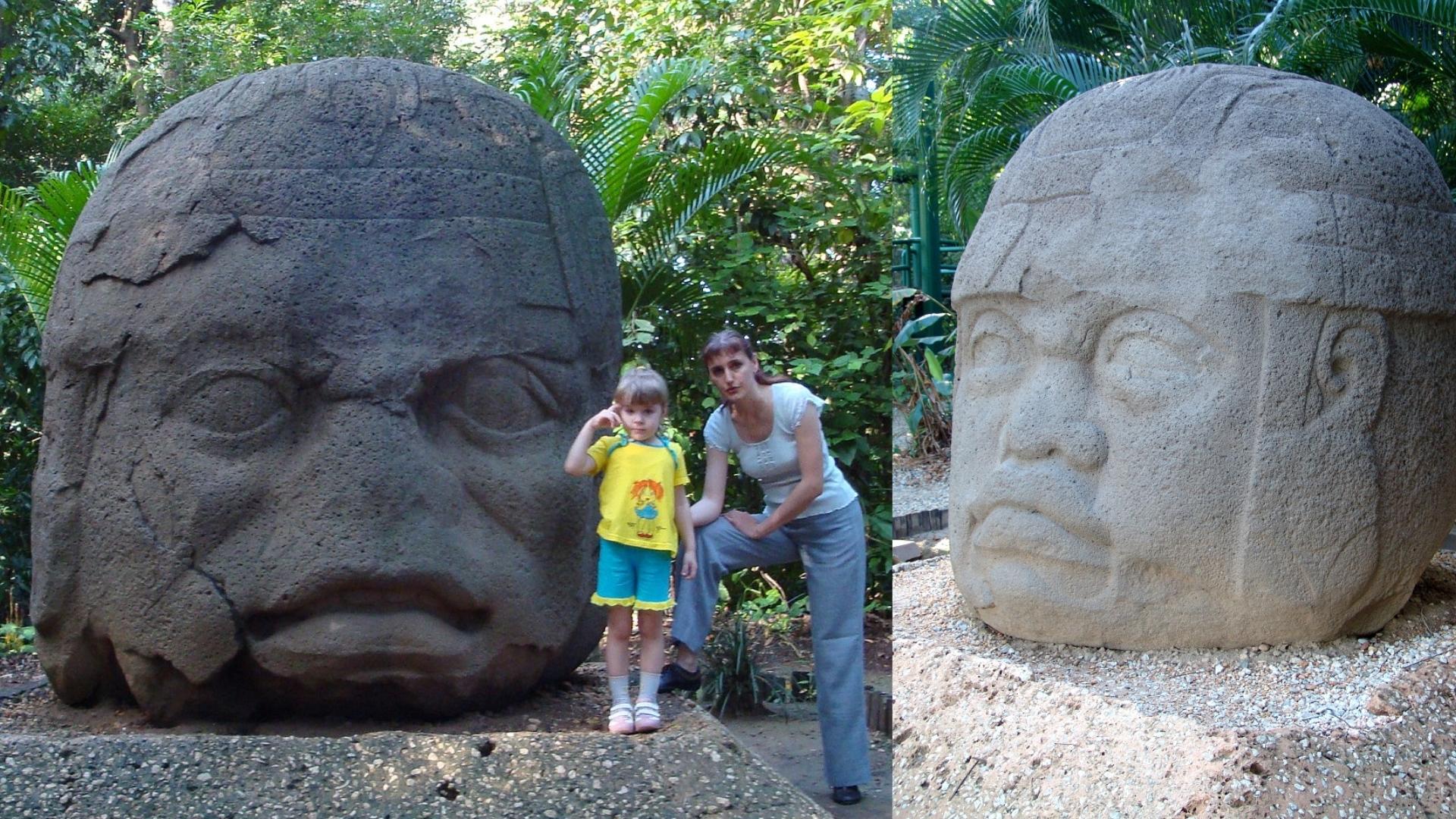
Colossal Olmec stone head - Discovered at the La Venta site in Tabasco State, Mexico, 1945-55
The mysterious giant stone heads of the Black Olmec Civilization of Mexico and Mesoamerica
San Lorenzo Monument 3 - The Black Olmecs of Africa, Xalapa (wiki)
La Venta [sacrificial?] Altar 5 (Ruben Charles) - The African Olmecs: were-jaguar

The African empire in America they tried to hide from us
The Olmec: Original Black civilizations of Mexico and Mesoamerica (realhistoryww.com)
Los Olmecas ("the Olmecs") did not call themselves that but were dubbed much later.

Prof. Leo Wiener
(Black Stories Untold) History tells us that Cristobal Columbus "discovered" America — but what if that’s not the whole story? Evidence suggests that African explorers arrived in the Americas long before European conquest, leaving their mark on ancient civilizations like the Olmecs. From striking stone carvings to cultural similarities, the clues are there — but mainstream history refuses to acknowledge them. Who were these early Black navigators? How did they shape the Americas? And why has their story been buried? Who was Harvard's Leo Wiener? #blackhistory #columbus

Who were first Mesoamericans? Indigenous Mexicans blended with Africans? Drupal

We look alike? It's a total coincidence, Man. I've never been here. (Olmec Heads of Africa)

Tuesday, October 22, 2024

Stargate found in Buddhist island jungle


Physicists discovered the last intact stargate in the jungle and it defies all logic
(LifesBiggestQuestions) Oct. 21, 2024: Hidden within the ruins of Lion's Rock (Sigiriya), deep in the jungles of the Buddhist island of Sri Lanka (formerly Ceylon and Serendib and often just called Lanka), exists a groundbreaking discovery: an ancient high energy "Stargate."

Let's explore the enigmatic Sakwala Chakraya, a stone carving believed to be a portal to other worlds, etched with unexplained symbols. Unravel the secrets of this marvel and delve into legends of extraterrestrial (ET) connections and advanced ancient alien technology.

#SakwalaChakraya #Stargate #Sigiriya #SriLanka. Subscribe to Life's Biggest Questions: bit.ly/2evqECe Most recent uploads: • Scientists Discover an Ancient City...


Witness the breathtaking beauty of Lion's Rock (Sigiriya), a UNESCO World Heritage Site, with its majestic reservoir (tank) and captivating frescoes. This ancient royal fortress city holds clues to a forgotten past, inviting us on an unforgettable adventure exploring the intersection of science, history, and the unexplained.
#SakwalaChakraya #Stargate #Sigiriya #SriLanka #AncientMysteries #Archaeology #LostCivilizations #history #lifesbiggestquestions #lbq. For business inquiries, please contact lifesbiggestquestion@gmail.com.

Wednesday, October 2, 2024

UFOs over Stonehenge: UK crop circles


Ancient Aliens: Interstellar PORTALS led to Stonehenge?!
(HISTORY) Oct. 2, 2024: A shocking DNA study released in 2018 reveals that the original builders of Stonehenge mysteriously vanished [from the face of the earth]. See more in Season 14, Episode 17, "The Secrets of Stonehenge." Ancient Aliens explores the controversial theory that extraterrestrials have visited Earth for millions of years.

Watch all new episodes of Ancient Aliens, Fridays at 9:00/8:00c, and stay up to date on all favorite shows on The HISTORY Channel website at history.com/schedule. #AncientAliens Subscribe for more from Ancient Aliens and other great The HISTORY Channel shows: http://histv.co/SubscribeHistoryYT. Find out more about the show and watch full episodes on website: histv.co/AncientAliens. Check out exclusive The HISTORY Channel content: History Newsletter: histv.co/newsletter. Website: histv.co/History. Facebook: histv.co/Facebook. Twitter: histv.co/Twitter.

Thursday, September 12, 2024

Easter Island pop never collapsed: study


The collapse of the population of Easter Island never happened, say scientists
How much proof of ET intervention is needed?
(WQ) Star People (space visitors) came down to help produce the culture we see on so-called "Easter Island" or Rapa Nui as it is actually named.

When Europeans arrived, they assumed the population had to bigger before and must have dwindled down to its size of a few thousand. A new study published in a peer-reviewed journal shows that that is a Western myth, a foolish assumption that never happened.

The Rapa Nui may have ruined their environment and chopped down all their trees. But that did not cause a collapse of its population. It's intensive gardening and farming techniques, which produce low yields in the best of seasons, were as they had always been.

So who built the Moai, the giant statues buried up to the chests? They obviously had help and no time or inclination to make such monoliths without prompting and help from somewhere out there off the isolated island.
Ecocide hypothesis

In his book Collapse: How Societies Choose to Fail or Succeed, Jared Diamond suggested that cannibalism took place on Easter Island after the construction of the moai (stone head statues that are actually whole bodies) contributed to environmental degradation when extreme deforestation (ecocide) destabilized an already precarious ecosystem [33].

The archeological record shows that at the time of the initial settlement the island was home to many species of trees, including at least three species which grew up to 49 feet (15 meters) or more: Paschalococos (possibly the largest palm trees in the world at the time), Alphitonia zizyphoides, and Elaeocarpus rarotongensis.

At least six species of land birds were known to live on the island. A major factor that contributed to the extinction of multiple plant species was the introduction of the Polynesian rat.

Studies by paleobotanists have shown rats can dramatically affect the reproduction of vegetation in an ecosystem. In the case of Rapa Nui, recovered plant seed shells showed markings of being gnawed on by rats [3]. This version of the history speculates a high former population to the island that had already declined before Europeans arrived.

Barbara A. West wrote, "Sometime before the arrival of Europeans on Easter Island, the Rapanui experienced a tremendous upheaval in their social system brought about by a change in their island's ecology... By the time of European arrival in 1722, the island's population had dropped to 2,000–3,000 from a high of approximately 15,000 just a century earlier" [34].

By that time, 21 species of trees and all species of land birds became extinct through some combination of over-harvesting, over-hunting, rat predation, and climate change. The island was largely deforested, and it did not have any trees taller than 9.8 ft. (3 m).

Loss of large trees meant that residents were no longer able to build seaworthy vessels, significantly diminishing their fishing abilities. According to this version of the history, the trees were used as rollers to move the moai statues to their place of erection from the quarry at Rano Raraku [35].

Deforestation also caused erosion which caused a sharp decline in agricultural production [3]. This was exacerbated by the loss of land birds and the collapse in seabird populations as a source of food.

By the 18th century, islanders were largely sustained by farming, with domestic chickens as the primary source of protein [36].

Birdmen replace warriors
.
As the island became overpopulated and resources diminished, warriors known as matatoa gained more power and the Ancestor Cult ended, making way for the Bird Man Cult.

Beverly Haun wrote, "The concept of mana (power) invested in hereditary leaders was recast into the person of the birdman, apparently beginning circa 1540, and coinciding with the final vestiges of the moai period" [37].

This cult maintained that, although the ancestors still provided for their descendants, the medium through which the living could contact the dead was no longer statues, but human beings chosen through a competition.

The god responsible for creating humans, Makemake, played an important role in this process. Katherine Routledge, who systematically collected the island's traditions in her 1919 expedition [38], showed that the competitions for Bird Man (Rapa Nui tangata manu) started around 1760, after the arrival of the first Europeans, and ended in 1878, with the construction of the first church by Roman Catholic missionaries who formally arrived in 1864.

Petroglyphs representing Bird Men on Easter Island are the same as some in Hawaii, indicating that this concept was probably brought by the original settlers; only the competition itself was unique to Easter Island.

According to Diamond and Heyerdahl's version of the island's history, the huri mo'ai – "statue-toppling" – continued into the 1830s as a part of fierce internal wars.

By 1838, the only standing moai were on the slopes of Rano Raraku, in Hoa Hakananai'a in Orongo, and Ariki Paro in Ahu Te Pito Kura.

Criticism of the ecocide hypothesis
Diamond and West's version of the history is highly controversial. A study headed by Douglas Owsley published in 1994 asserted that there is little archeological evidence of pre-European societal collapse.

Bone pathology and osteometric data from islanders of that period clearly suggest few fatalities can be attributed directly to violence [39].

Research by Binghamton University anthropologists Robert DiNapoli and Carl Lipo in 2021 suggests that the island experienced steady population growth from its initial settlement until European contact in 1722.

The island never had more than a few thousand people prior to European contact, and their numbers were increasing rather than dwindling [40][41].

Several works that address or counter Diamond's claims in Collapse have been published.

In Ecological Catastrophe and Collapse -The Myth of "Ecocide" on Rapa Nui (Easter Island), Hunt and Lipo set out a claim-by-claim rebuttal to Diamond's claims.

This includes, among other things:
  • that deforestation began immediately, but the population grew while the forest declined as the land was converted to more productive farmland;
  • that the island's population grew continuously up to the arrival of Europeans, with the only clear decline starting in the period of 1750–1800;
  • that studies from other islands show clearly that Polynesian settlement without Polynesian rats is only associated with minimal forest loss while the arrival of rats without human settlement is devastating to forest populations;
  • only species favored by the rats for consumption were lost, not for example the native Sophora toromiro;
  • that the island's drier, less predictable climate made it inherently more vulnerable to deforestation than other Polynesian islands; and that the population declines on Rapa Nui can be well attributed to the very mechanism described by Diamond in another of his books, Guns, Germs and Steel -- the devastating impact of introduced diseases, raids, slavery, and exploitation on indigenous populations [42].
In another work, Hunt and Lipo discuss more evidence against the ecocide hypothesis. In addition to focusing on the settlement chronology, they note that the island has an abnormally low amount of evidence of warfare compared to other Polynesian islands, only relatively small-scale intergroup conflict.

There are no fortifications, and the attributed obsidian mata'a "weapons" show rather evidence of having been used in agriculture, and indeed, match up with agricultural tools long recognized among artifacts of other Polynesian peoples [43]. More

Friday, August 23, 2024

Worlds below: Longyou Cave mystery


The Longyou Caves: An Unsolved Enigma (The Ancient Connection)

The most mysterious cave in the world
(Motech) July 30, 2024: Longyou Caves Mystery: For thousands of years, the Longyou Caves remained lost to time and history. No one even knew such a cave system existed. But all that changed one day when a curious local from Shiyan Beicun Village decided to put a popular legend to the test. Everyone said the ponds were bottomless, as deep as oceans. So he drained one and found massive manmade caverns no one knew anything about. #longyu #cave #mystery
ABOUT: Welcome to Motech. This channel shares everything about technology, space, and artificial intelligence. It helps explore cool advancements in science and innovation. Consider subscribing to get a sneak peek of the future world. Featured places: See more information in Google Maps on the Longyou Caves tourist attraction: Details.

Thursday, August 22, 2024

Inside Shiva's Egg: India's cosmic boulder

Cosmic egg reveals shocking secret of Shiva
The first yogi, Lord Shiva, in Rishikesh, India, set in the foothills of the Himalayas
The rock hewn castle wall of Thirumayam Fort Temple in South India
.
(PraveenMohan) A giant egg-shaped rock reveals a strange secret about Shiva. Did the Hindu god Lord Shiva physically come down from the heavens, the sky, the akasha and rule India? Was Thirumayam Fort Temple in South India chosen for such a landing due to gravity? Is the lingam (phallic shaft) a spacecraft out of which he emerged?
  • 0:00 - Secret Chamber – A Cosmic Egg
  • 1:19 - Negative Lingam
  • 2:20 - Impossible Construction
  • 4:21 - More Secret Chambers?
  • 4:53 - Thirumayam Fort
  • 5:40 - What’s HIDDEN Inside?
  • 6:11 - A Lingam
  • 7:54 - Lingam - NOT A Phallic Symbol
  • 9:08 - Arrival of GODS
  • 12:01 - Lord Shiva with Advanced Devices
  • 13:03 - WHY Thirumayam?
  • 14:04 - Lord Shiva Ruled South India?
  • 15:44 - Conclusion
Cosmic Egg
Phallic lingam with carving of deity, India
Imagine a giant boulder, a massive egg-shaped rock that stands ten feet off the ground. One cannot reach it to touch at that level, shiny and smooth like an egg. What if it were a secret chamber? What if hidden inside this rock there were a hollowed-out cavity impossible to create with modern technology with a precisely cut hidden doorway revealed only by an earthquake? That would be an insane theory, right?

Yet, this is exactly what happened a few centuries years ago. It looked like this, smooth and natural. Then, because of that earthquake, a stone door cracked off and fell. Only then did the locals realize it was hollowed out, that there was a chamber inside. The door was so well made and so perfectly fitted that nobody recognized it was a door.

They put up a metal ladder to access the entryway. The earthquake revealed this chamber. No one knows when it was created. There are no inscriptions pointing to its origin. Before analyzing the exterior further, let’s take a look at what's INSIDE.

.
There is only one thing inside today, a single lingam (sacred phallic stone). It is fascinating, a cylinder sitting on a square pedestal. Who carved it, carried it, and placed it here? No one. Normally people carve a shape, put it together, then place it in a certain location. This is the positive construction technique.

But this lingam was made through a negative construction technique. The lingam is carved out of the bedrock itself. Meaning that the lingam was not built up, rather it was created by taking rock away all around it. It was left over through removal all around it. We can call it a negative lingam.

Originally, there must have been other items inside, because what reason would there be to hide and seal this chamber if it only housed a lingam, right? Maybe it was studded with gold and diamonds, perhaps some advanced technology or electronic devices.

One may ask, Did they find some sophisticated devices here and remove them for study? How did anyone create such an advanced secret chamber hidden for many centuries in the past if we cannot do it even now? Such construction would be impossible without advanced alien technology.

Patreon: praveenmohan. Whatsapp Channel whatsapp.com/channel/0029Va9U. Instagram praveenet. Facebook praveenmohanfans. Twitter iampraveenmohan. Email: info.praveenmohan@gmail.com. #AncientTechnology #PraveenMohan #Hinduism
  • Praveen Mohan, YouTube, July 4, 2022; Pat Macpherson, Dhr. Seven, Amber Larson (eds.), Wisdom Quarterly